This lesson covers your critical responsibilities when encountering an emergency vehicle in Sweden. Understanding how to react safely and efficiently to sirens and flashing lights is paramount for both road safety and your Category B driving theory exam. We'll guide you through the correct procedures to ensure you always give way appropriately.
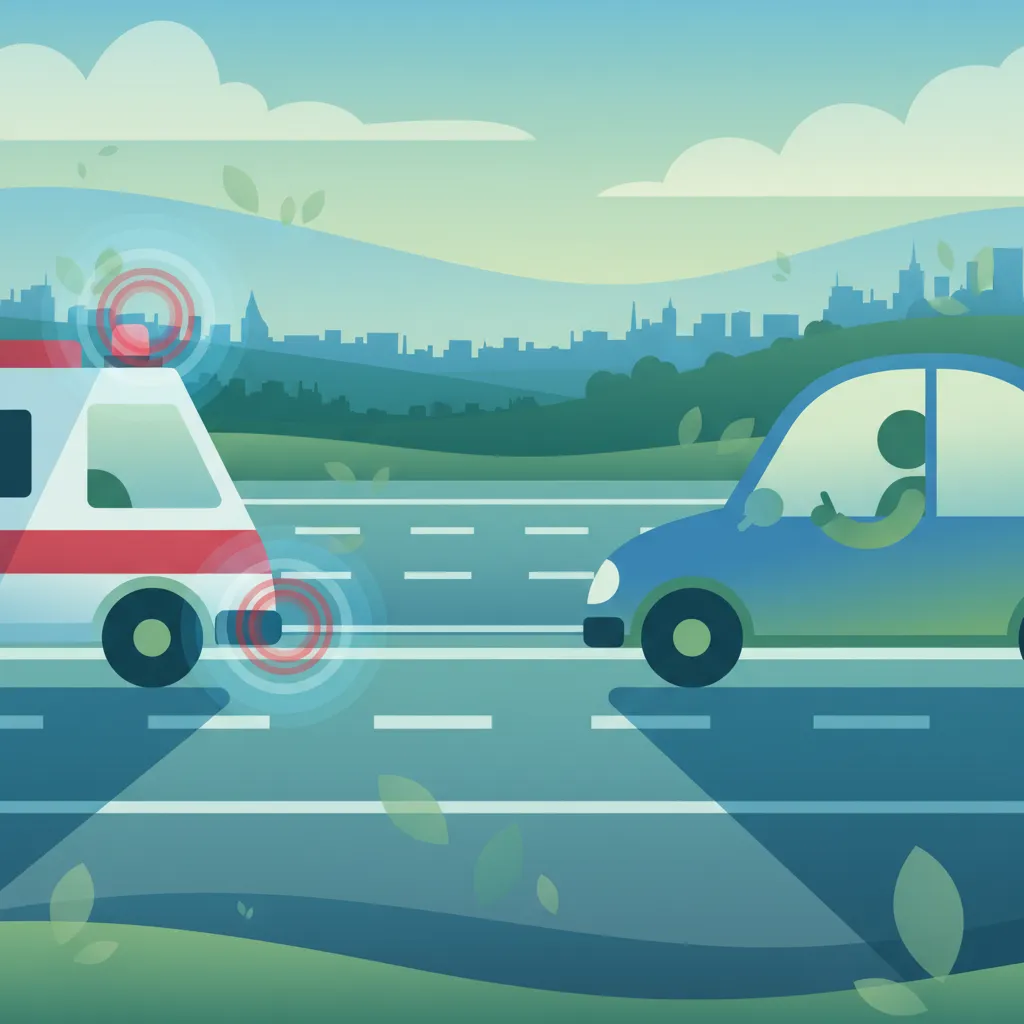
Responding correctly to an approaching emergency vehicle is a fundamental skill for every driver in Sweden. This lesson details your legal obligations, safe driving tactics, and the critical safety reasons behind these rules when encountering vehicles with active sirens and blue flashing lights. Understanding and applying these principles ensures the rapid and safe passage of emergency services, which can be a matter of life and death.
In Sweden, specific vehicles are granted special privileges to respond to emergencies, allowing them to bypass normal traffic rules when necessary. These are known as emergency vehicles, and they signal their urgent status using a combination of visual and audible warnings.
A vehicle authorized by law to respond to emergencies, typically equipped with blue flashing lights and an audible siren. This includes police, ambulance, fire engines, and authorized rescue service vehicles.
When driving on Swedish roads, you might encounter several types of emergency vehicles. It's crucial to recognize them all:
The combination of an audible siren and flashing blue lights is the universal signal that an emergency vehicle is on an urgent call and requires immediate right-of-way.
Always assume that an emergency vehicle displaying blue flashing lights, even without an audible siren, requires you to yield. While both signals are typically used, the lights alone are a sufficient trigger for your yielding obligation under Swedish law.
In some specific zones, particularly near hospitals or fire stations, you might encounter a traffic sign indicating an area where emergency vehicles frequently operate and have priority.
The obligation to yield to emergency vehicles is strictly enforced under Swedish traffic law. This rule exists not only to ensure rapid emergency response but also to protect the safety of all road users.
The legal duty to allow another vehicle priority passage by adjusting your speed or position, typically by moving aside and stopping.
The core of this duty is outlined in the Swedish Traffic Ordinance:
"Den som styr ett fordon skall, vid tilltagande eller färdigställd signal från ett räddningsfordon, med blått ljus eller siren, lämna fri körbana."
Translation and Explanation: This means: "The person driving a vehicle shall, upon an increasing or active signal from a rescue vehicle, with blue light or siren, clear the carriageway."
This legal text mandates that when an emergency vehicle uses its blue flashing lights and/or siren, you must provide a clear path. This usually involves moving to the right and stopping. If stopping is not immediately possible or safe, you must at least reduce your speed and keep as far right as safely feasible to facilitate the emergency vehicle's passage.
A key principle is to provide "maximum right-hand clearance." This means positioning your vehicle as far to the right side of the carriageway as safely possible. This includes:
The goal is to create the widest possible corridor for the emergency vehicle to pass without obstruction, minimizing their need to maneuver around you.
Your response to an approaching emergency vehicle must be calm, predictable, and systematic to ensure safety for everyone on the road.
Detect the Emergency Vehicle: The moment you hear a siren or see blue flashing lights, acknowledge the presence of an emergency vehicle. Use both auditory and visual cues.
Check Mirrors and Surroundings: Immediately check your rearview and side mirrors to assess traffic behind and beside you. Identify a safe spot to pull over.
Signal Your Intent: Use your right turn indicator (or left if you need to move left to then clear the right lane, though this is rare) to signal your intention to change position or pull over. This warns other drivers and the emergency vehicle of your actions.
Decelerate Smoothly: Begin to slow down gradually. Avoid sudden, harsh braking, which can cause rear-end collisions or destabilize your vehicle, especially in adverse conditions.
Move to the Rightmost Available Space: Guide your vehicle to the furthest right side of the road. This could be the hard shoulder, a dedicated turn lane, or simply as close to the curb or road edge as possible.
Stop Safely: Bring your vehicle to a complete stop. Ensure you are a safe distance from the road edge (typically about 0.5-1 meter) and that your vehicle does not obstruct the emergency vehicle's path. Ensure you do not stop in an intersection or on a pedestrian crossing.
Remain Stopped: Stay stationary until the emergency vehicle has fully passed you and its siren is no longer clearly audible, or its blue lights are out of sight. Keep your vehicle in gear (or 'Drive' for automatics) with your foot on the brake, ready to move if needed, but do not proceed prematurely.
After the first emergency vehicle passes, remain vigilant. Sometimes, other emergency vehicles might follow. Only re-enter traffic when you are certain the path is clear.
The Swedish Road Traffic Act (Vägtrafiklag 1998:70 3 kap. 1 §) states that drivers must act in a manner that does not endanger other road users. This principle is paramount when yielding to emergency vehicles.
The best way to yield can vary significantly depending on the type of road and traffic situation. Adapt your procedure to the specific environment you are in.
In city environments, space can be limited.
These roads often have shoulders, but they can be uneven.
On motorways, the hard shoulder is often the best option.
Yielding in a roundabout requires specific actions to avoid creating dangerous blockages.
Stopping at intersections is strictly regulated, especially with emergency vehicles.
Environmental factors and vehicle characteristics can impact how you safely yield.
Always ensure that your yielding maneuver does not endanger pedestrians, cyclists, or motorcyclists.
Incorrectly responding to emergency vehicles can have severe safety and legal ramifications. Be aware of these common violations to avoid them.
| Violation | Why It’s Wrong | Correct Behavior | Consequence (Legal / Safety) |
|---|---|---|---|
| Stopping behind the emergency vehicle | Blocks the emergency vehicle’s path and delays response. | Always pull over ahead of the emergency vehicle or to the right side of the road, then stop, leaving a clear path for them. | Fines, potential demerit points; increased risk of collision and delayed emergency response. |
| Abrupt, hard braking | Can cause rear-end collisions with following traffic. | Decelerate smoothly and progressively, giving ample warning and distance for vehicles behind you. | Potential injury, liability for accident, traffic congestion. |
| Changing lanes without signaling | Reduces predictability for the emergency vehicle and other drivers, increasing collision risk. | Use your turn signal early to clearly indicate your intended lane change or movement to the side. | Fines, higher crash probability. |
| Driving onto a bicycle lane to make space | Endangers cyclists and violates their right-of-way. | Stay on the main vehicular lane or move only to the very edge of the road; never invade or block a designated bicycle lane. | Fines, potential injury to cyclists. |
| Continuing through an intersection while an emergency vehicle approaches from a cross-road | Directly intersects the emergency vehicle's path, causing a high-risk conflict. | Stop before entering the intersection, on the right side, and wait for the emergency vehicle to clear the crossing. | Severe fines, risk of serious accidents. |
| Using hazard lights while yielding | Hazard lights are for stationary hazards or breakdowns and can confuse other drivers, including the emergency services. | Simply brake and stop; only use hazard lights if your vehicle itself becomes a hazard after stopping. | Minor penalties; potential for miscommunication. |
| Pulling over too far left | Blocks the emergency vehicle’s intended path (often the fast lane on a motorway). | Always pull over to the rightmost lane or hard shoulder. | Fines, potential collision. |
Understanding the physics and human factors involved in driving underscores the importance of prompt and predictable yielding.
The average human perception-response time – the time it takes to detect a stimulus (siren, lights), process it, and initiate a response (like moving your foot to the brake) – is typically between 0.7 and 1.5 seconds.
This highlights why early detection and immediate, calm action are crucial. The sooner you react, the more time you have to execute a safe maneuver.
Stopping distance is composed of reaction distance (distance traveled during reaction time) and braking distance (distance traveled while braking). Braking distance increases quadratically with speed.
While sirens are designed to be heard, their effective range can be limited by various factors:
Therefore, relying solely on hearing is insufficient. Always combine auditory cues with diligent mirror checks and visual scanning for blue flashing lights.
The sudden sound of a siren can induce a "startle reflex," causing some drivers to brake sharply or swerve unexpectedly. Training yourself to react calmly and predictably can mitigate this psychological effect, making you a safer driver.
Lesson content overview
Explore all units and lessons included in this driving theory course.
Explore search topics learners often look for when studying Emergency Vehicles and Sirens. These topics reflect common questions about road rules, driving situations, safety guidance, and lesson level theory preparation for learners in Sweden.
Browse additional driving theory lessons that cover connected traffic rules, road signs, and common driving situations related to this topic. Improve your understanding of how different rules interact across everyday traffic scenarios.
Understand your legal obligation to give way to emergency vehicles in Sweden. This lesson explains exactly how to react safely and correctly when you hear or see emergency sirens and lights, focusing on clear theory and practical application.
This lesson teaches the correct and legal response when encountering an emergency vehicle with active sirens or lights. It outlines the immediate obligation to give way by safely moving to the side of the road and stopping. The content provides practical advice on how to perform this maneuver calmly and predictably, ensuring a clear path for the emergency responders while maintaining the rider's own safety.
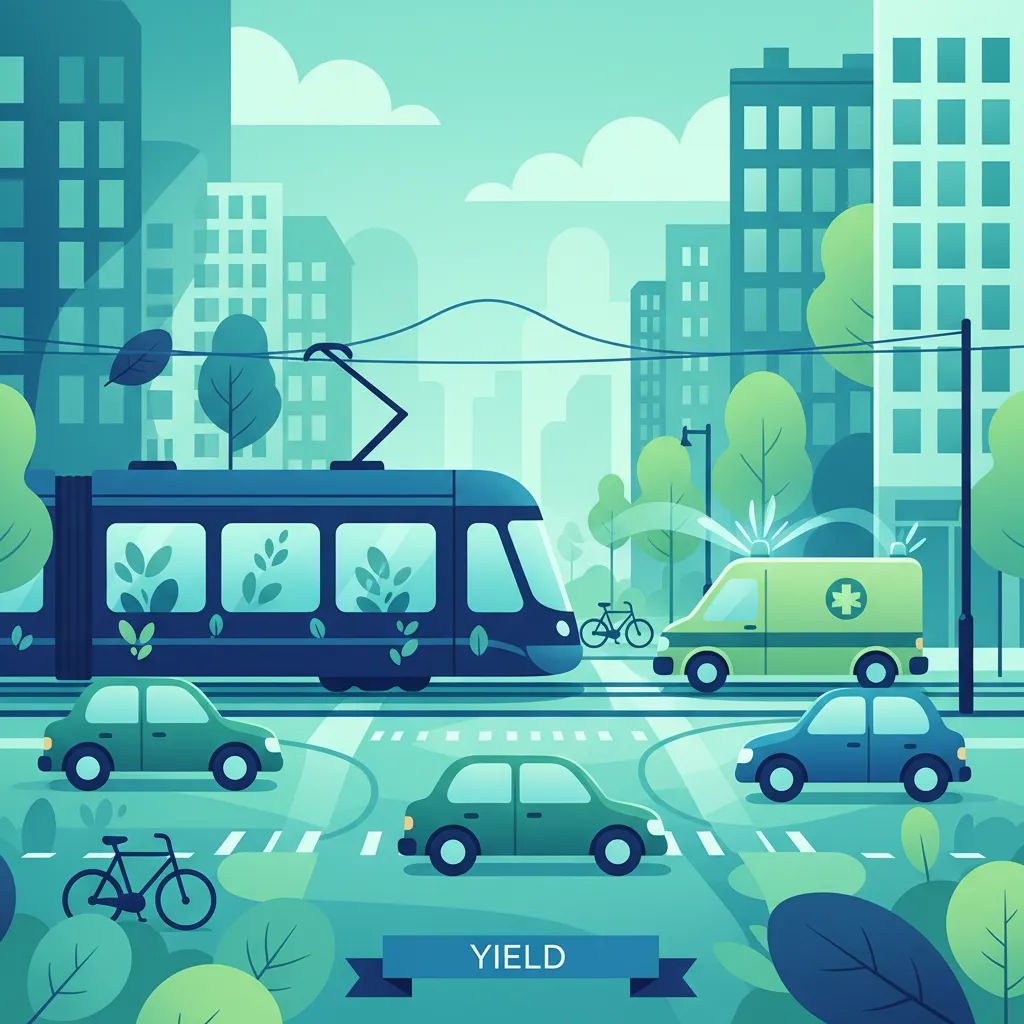
This lesson explains a motorcyclist's legal duty when encountering emergency vehicles with active sirens and lights. You will learn the correct procedure for yielding the right-of-way by safely pulling over and stopping. Additionally, the lesson covers the rules and best practices for sharing the road with public transport like buses and trams, including navigating around bus stops and respecting dedicated lanes, to ensure safety for all road users.
This lesson focuses on regulated intersections where priority is determined by signs indicating a main road (huvudled), a duty to yield (väjningsplikt), or a duty to stop (stopplikt). You will learn how to identify which road has priority and your legal obligation to give way to all traffic on that road before proceeding. The lesson covers proper procedures for approaching these junctions, assessing traffic, and entering the main road safely.
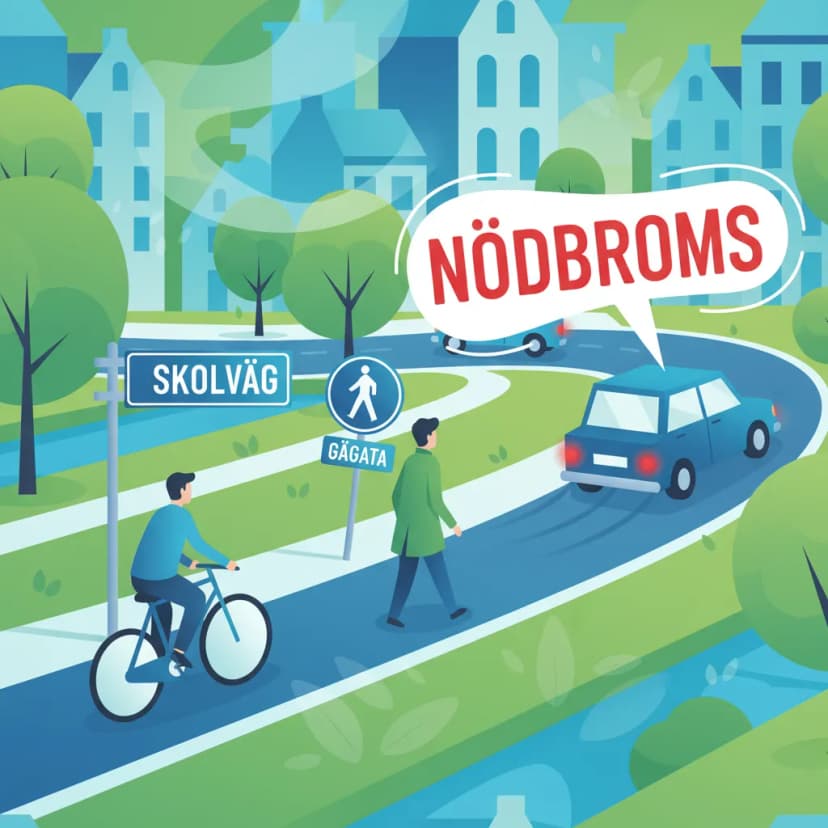
This lesson examines a variety of special situations where standard priority rules are modified. You will learn about the 'exit rule' (utfartsregeln) when entering a road from property, your duty to yield to buses indicating a departure from a stop, and the specific rules for pedestrian-only streets (gågata). The content also covers interactions with trams, emergency vehicles, and procedures at railway crossings, highlighting situations that demand maximum vigilance.
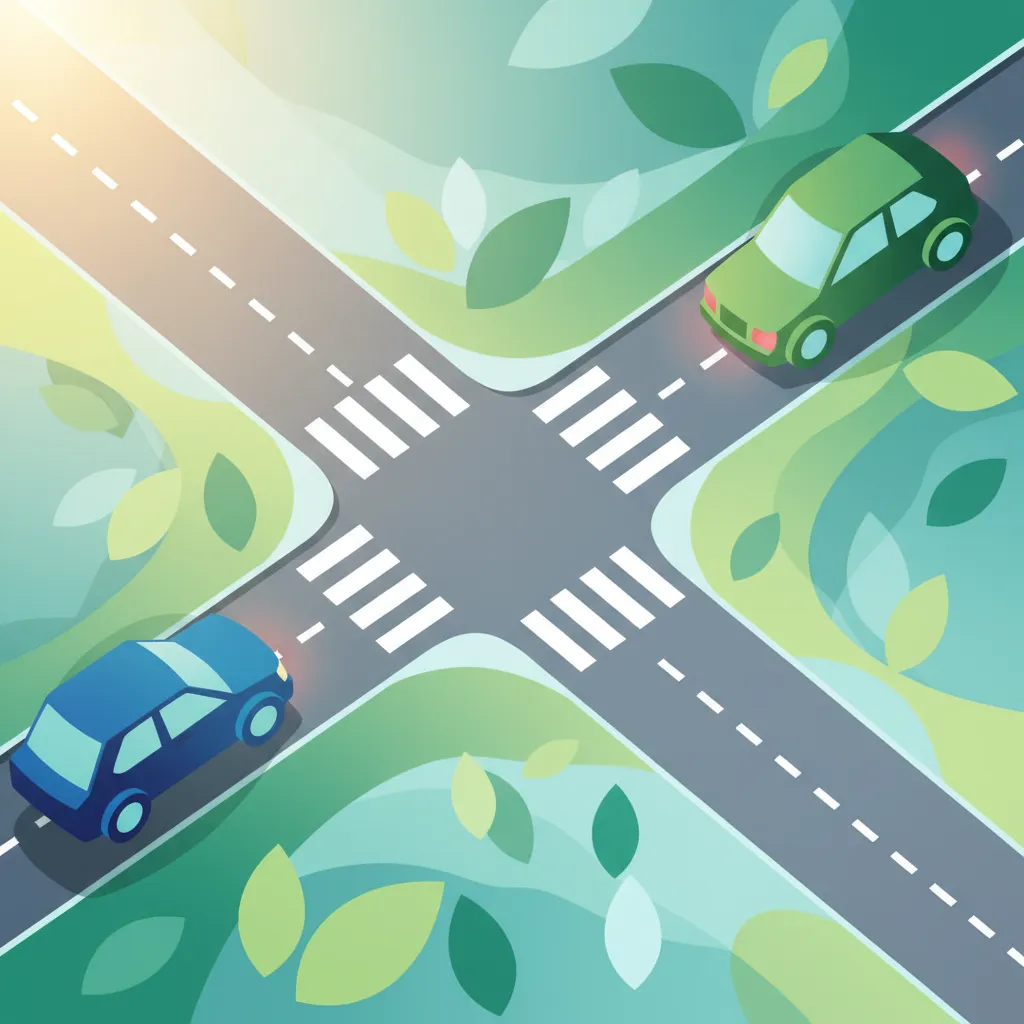
This lesson explains the two core principles of priority in Swedish traffic law: the right-hand rule (Högerregeln) and the duty to yield (Väjningsplikt). You will learn how to apply the right-hand rule at uncontrolled intersections and when to yield to other traffic as indicated by signs or road markings. Understanding this fundamental hierarchy is crucial for making correct and safe decisions in a wide variety of common traffic situations you will face as a motorcyclist.
This lesson introduces the core principles of right-of-way in Sweden, including the general duty to give way (Väjningsplikt) and the stricter stop duty (Stopplikt). It explains the concept of a priority road and how to apply the right-hand rule at uncontrolled intersections. By understanding this legal framework, riders can determine who has priority in any given situation and act predictably and safely.
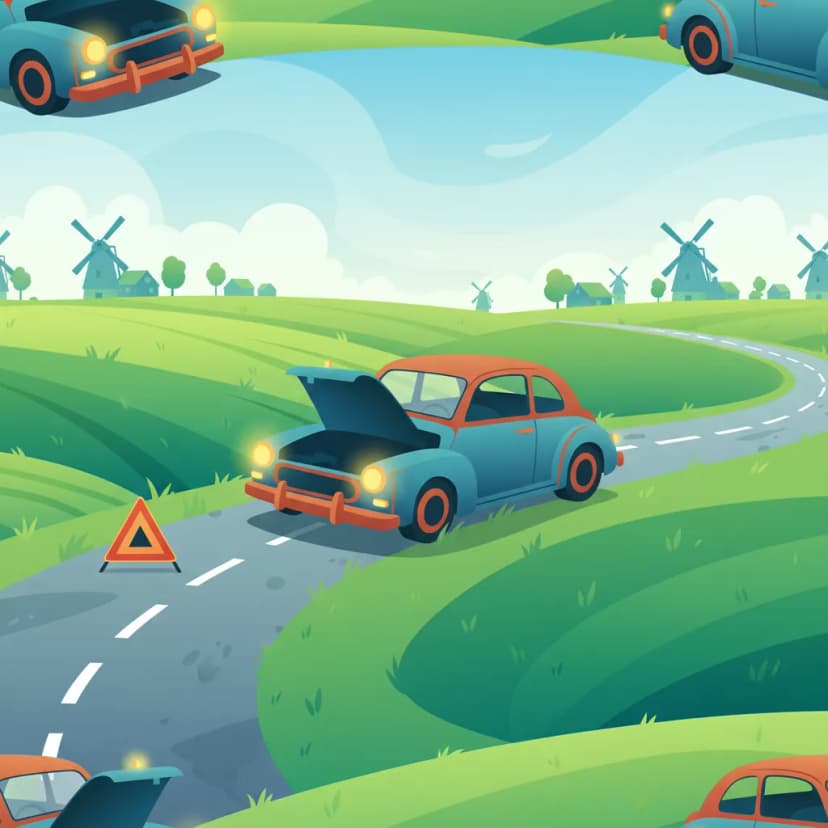
This lesson focuses on the correct use of warning devices to protect an accident or breakdown scene. You will learn to immediately activate your hazard lights (varningsblinkers). The main focus is on the proper placement of the warning triangle, explaining how the distance from the vehicle must be adapted based on the road's speed limit and visibility to give oncoming drivers adequate time to react.
This lesson covers the critical maneuvers of overtaking and merging, which require precise judgment and communication. You will learn how to assess traffic speed and gaps, the importance of checking blind spots, and the correct use of signals to indicate your intentions. The content includes procedures for merging onto motorways from an on-ramp and how to perform safe overtaking maneuvers on various types of roads, minimizing risk to yourself and others.
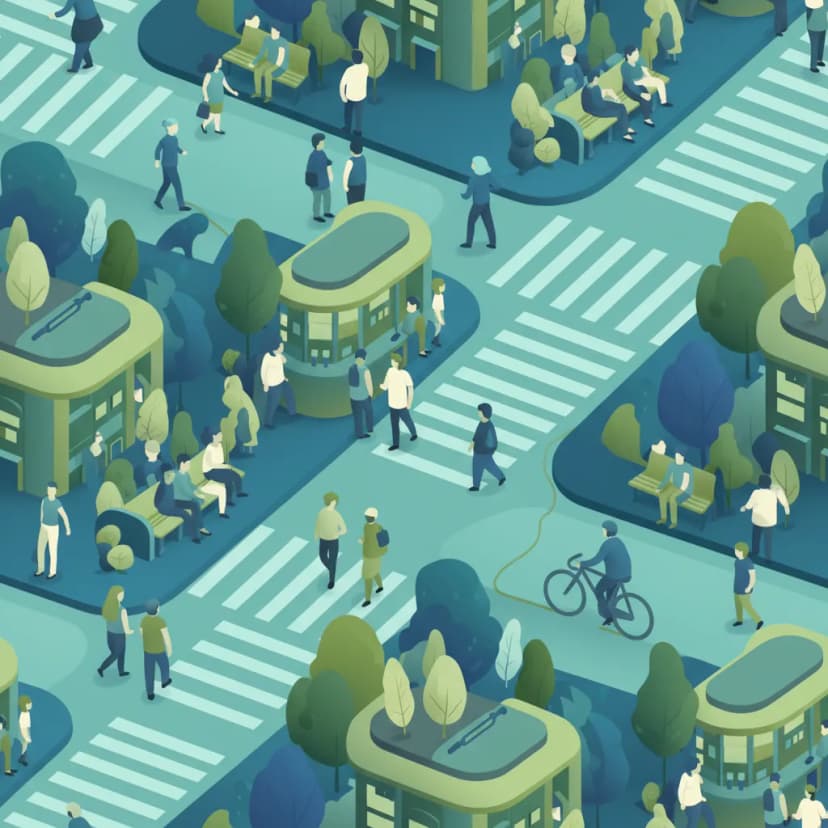
This lesson details a driver's responsibility towards pedestrians. You will learn the strict rule of yielding to pedestrians who are on or about to enter a marked, uncontrolled crosswalk. The content also covers the specific, highly restrictive rules for driving in designated pedestrian zones (gågata) and 'walking speed' areas (gångfartsområde), where pedestrians have complete priority and vehicle traffic is severely limited.
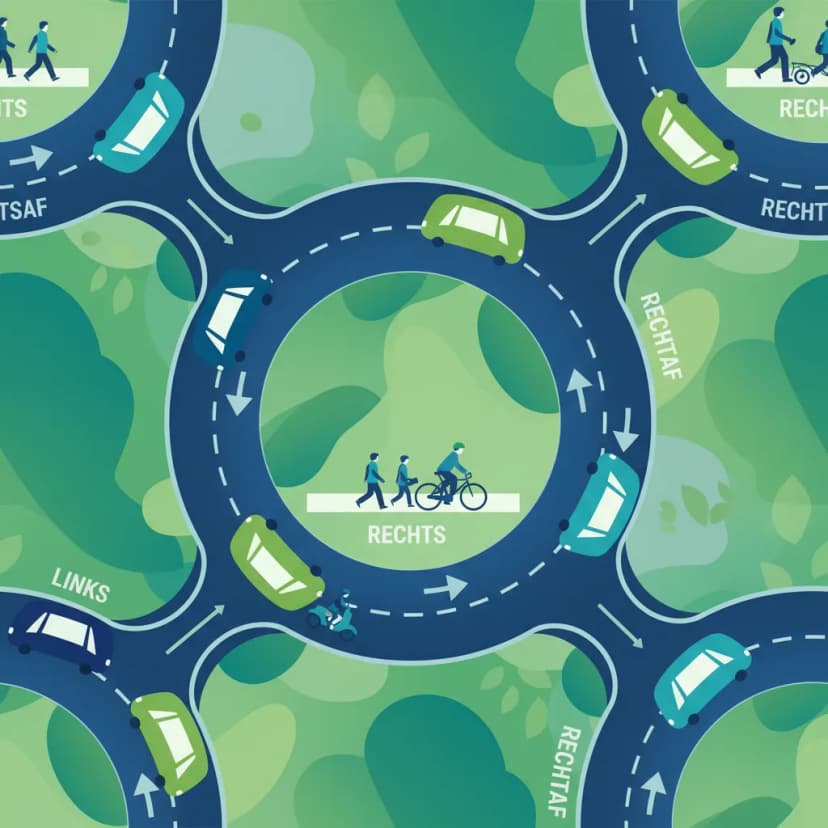
This lesson provides a detailed guide to navigating Swedish roundabouts (cirkulationsplatser). Key principles include always yielding to traffic already in the roundabout and choosing the correct lane based on your intended exit. You will learn the specific rules for signalling your intention to exit, how to safely interact with cyclists, and the techniques for maneuvering through multi-lane roundabouts to maintain traffic flow and prevent accidents.
Learn the broader principles of safe interaction on Swedish roads. This lesson covers how to safely yield to emergency vehicles and other road users, ensuring predictable behaviour and hazard avoidance in various traffic situations.
This lesson provides in-depth analysis of how to safely interact with the full spectrum of road users. You will learn about the specific characteristics of each, such as the large blind spots of trucks, the potential for sudden movements from cyclists, and the unpredictability of pedestrians. The content teaches strategies for communication, anticipation, and defensive positioning to ensure safe and respectful coexistence on the road for everyone.
This lesson focuses on the unique challenges of driving in urban environments. You will learn techniques for anticipating the actions of vulnerable road users like pedestrians and cyclists, especially near crossings and bus stops. The content covers how to navigate narrow streets, one-way systems, and areas with heavy traffic, emphasizing the need for lower speeds, heightened awareness, and a defensive mindset.
This lesson focuses on the correct use of warning devices to protect an accident or breakdown scene. You will learn to immediately activate your hazard lights (varningsblinkers). The main focus is on the proper placement of the warning triangle, explaining how the distance from the vehicle must be adapted based on the road's speed limit and visibility to give oncoming drivers adequate time to react.
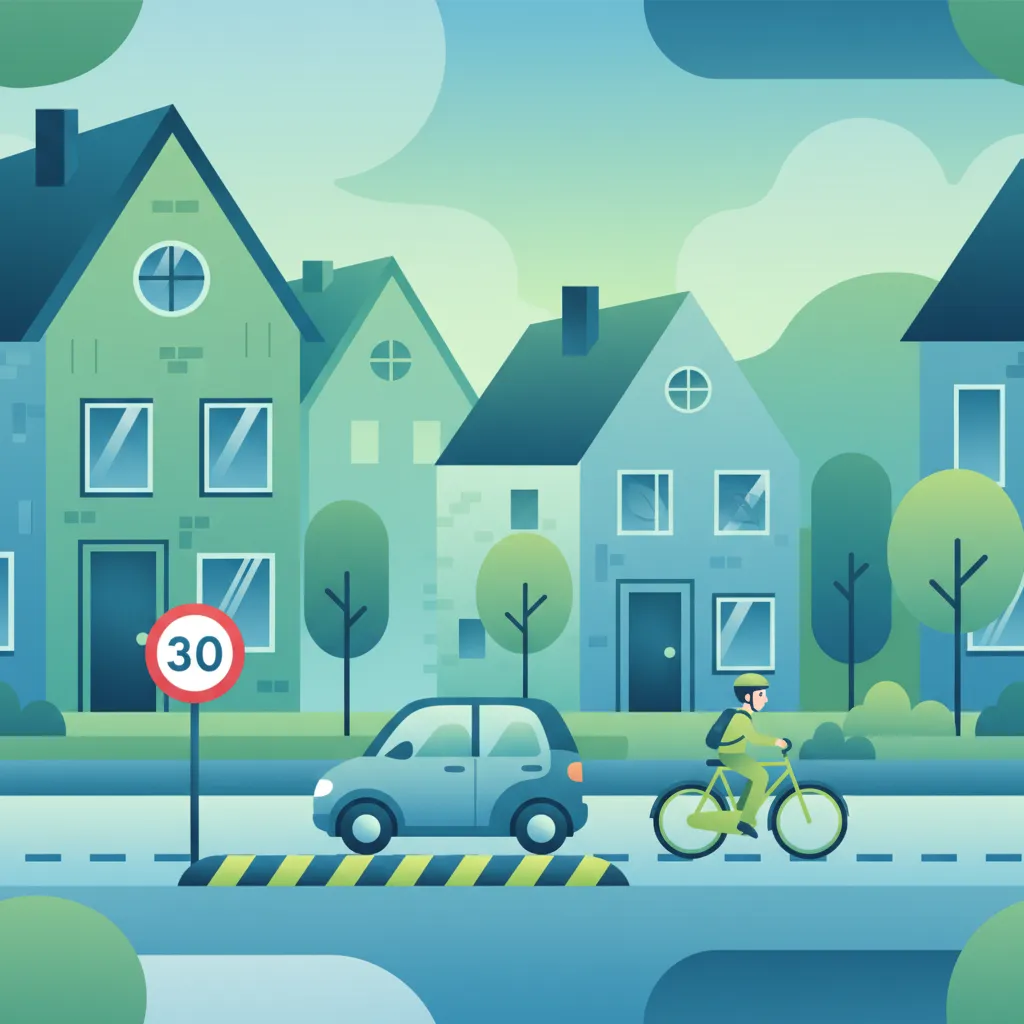
This lesson focuses on the high level of caution required when driving in residential areas. You will learn about the rules for special zones like 'gångfartsområde' (walking speed area) and the need to navigate around speed calming measures like speed bumps. The central theme is anticipating unpredictable behavior from residents, especially children, and managing the risks posed by parked cars that severely limit visibility.
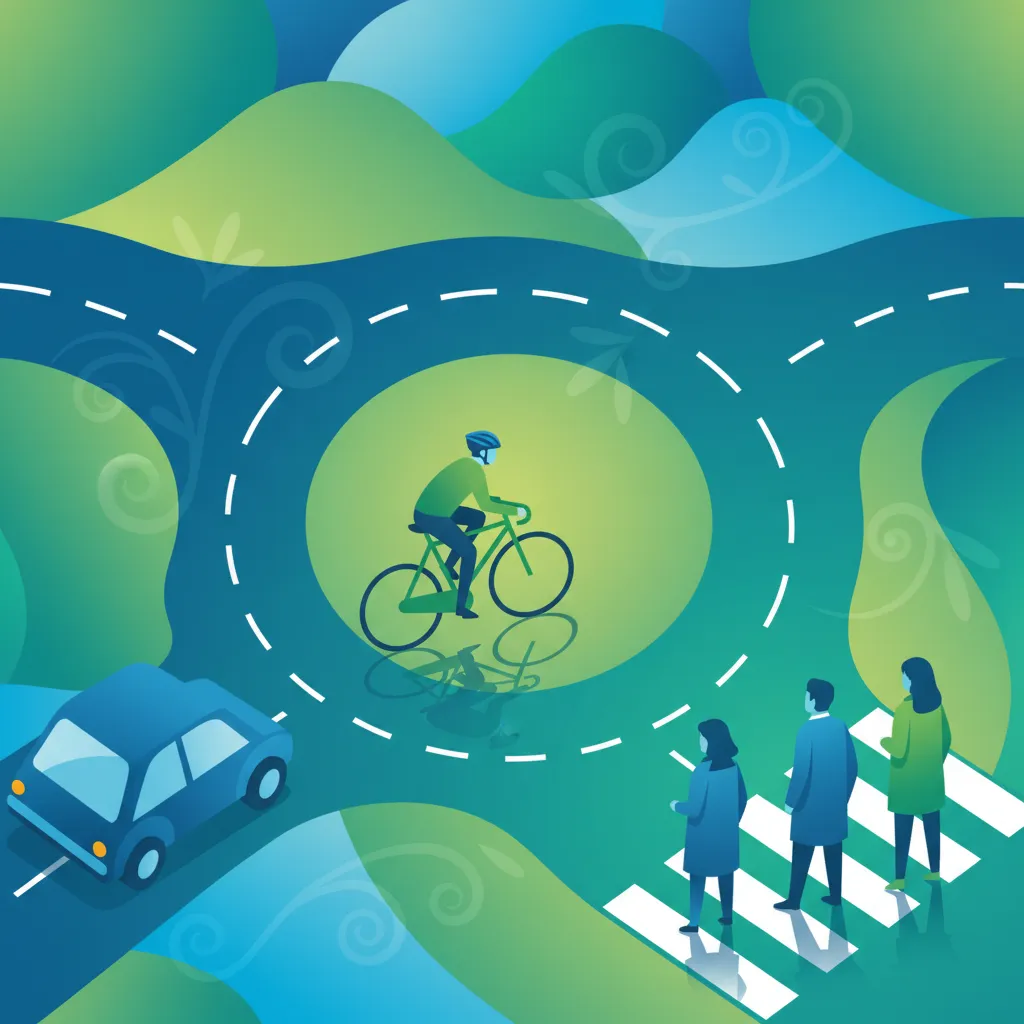
This lesson provides detailed guidance on navigating complex traffic points such as signalized intersections, multi-lane roundabouts, and pedestrian crossings. You will learn the correct procedures for entering and exiting roundabouts, the specific rules for yielding to pedestrians and cyclists at designated crossings, and how to interpret complex traffic light signals. These skills are vital for safe urban and suburban riding, where interaction with vulnerable road users is frequent.
This lesson details a driver's responsibility towards pedestrians. You will learn the strict rule of yielding to pedestrians who are on or about to enter a marked, uncontrolled crosswalk. The content also covers the specific, highly restrictive rules for driving in designated pedestrian zones (gågata) and 'walking speed' areas (gångfartsområde), where pedestrians have complete priority and vehicle traffic is severely limited.
This lesson provides a safety protocol for dealing with a vehicle breakdown. You will learn the importance of trying to move the vehicle as far off the road as possible, preferably onto the shoulder or into an emergency lay-by. The lesson stresses that on high-traffic roads, the occupants' personal safety is the top priority; this involves wearing a reflective vest and waiting for assistance in a safe location away from the vehicle and the flow of traffic.
This lesson addresses the specific risks associated with driving on rural roads (landsvägar). You will learn how to manage higher speeds on narrow, winding roads with limited visibility due to curves and hills. The lesson covers procedures for safely overtaking slow-moving agricultural vehicles, managing encounters with oncoming traffic on narrow sections, and being constantly vigilant for wildlife, especially at dawn and dusk.
This lesson explains a motorcyclist's legal duty when encountering emergency vehicles with active sirens and lights. You will learn the correct procedure for yielding the right-of-way by safely pulling over and stopping. Additionally, the lesson covers the rules and best practices for sharing the road with public transport like buses and trams, including navigating around bus stops and respecting dedicated lanes, to ensure safety for all road users.
This lesson covers the critical maneuvers of merging and changing lanes. You will learn the correct technique for using an acceleration lane to match the speed of motorway traffic before merging smoothly and safely. The lesson emphasizes the importance of checking mirrors and the blind spot, signaling in good time, and applying the 'zipper principle' (dragkedjeprincipen) where lanes merge to ensure efficient and courteous traffic flow.
Find clear answers to common questions learners have about Emergency Vehicles and Sirens. Learn how the lesson is structured, which driving theory objectives it supports, and how it fits into the overall learning path of units and curriculum progression in Sweden. These explanations help you understand key concepts, lesson flow, and exam focused study goals.
In Sweden, your legal obligation is to immediately yield the right-of-way to any emergency vehicle (like police, ambulance, or fire services) that is using its audible and visual signals. This means you must do everything possible to let it pass without delay.
The safest and most common procedure is to pull over to the right-hand edge of the road as far as is practical and safe, and then stop your vehicle. Ensure you do not block intersections or pedestrian crossings. Wait until the emergency vehicle has safely passed and you are sure the road ahead is clear before rejoining traffic.
No, you should never speed up. Sudden acceleration or braking can be unpredictable and dangerous. The correct action is to slow down, signal your intention to pull over, and move to the side smoothly and safely. The goal is to facilitate their passage, not to race them.
Even in confined spaces, you must yield. If pulling to the absolute right edge isn't possible or safe, position your vehicle to offer the clearest possible path. In some complex situations, you may need to cautiously proceed through an intersection if it's the only way to clear the path for the emergency vehicle, but always prioritize safety and clear signalling.
Yes, you still need to yield. While you don't need to pull over and stop in this specific scenario, you should slow down and keep to the right-hand side of your lane as much as safely possible to allow the emergency vehicle ample space to pass. Be prepared to stop if necessary to ensure they can proceed.
Yes, the Swedish theory test for Category B includes questions designed to assess your understanding of how to react to emergency vehicles. These questions often present scenarios requiring you to choose the correct response from several options, testing your knowledge of yielding rules and safe procedures.