
Welcome to the lesson on Rural Roads and Farm Vehicles, part of the 'Driving in Different Environments' unit in your Swedish Category B driving license theory course. On rural roads, you'll encounter unique challenges like higher speeds, limited visibility, and slow-moving agricultural machinery. This lesson prepares you to navigate these conditions safely and confidently, building on your knowledge of basic road rules.
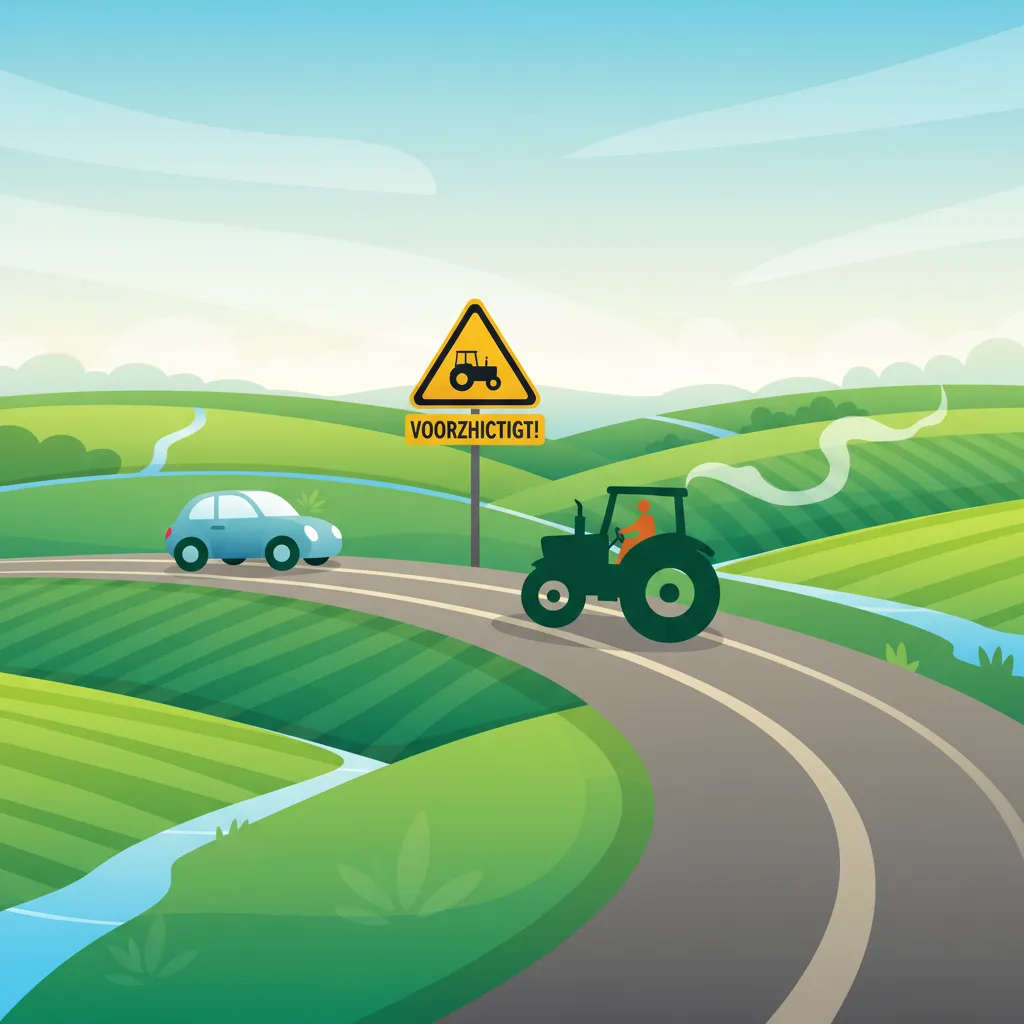
Driving on rural roads, often called landsbygdsvägar or landsvägar in Sweden, presents a unique set of challenges compared to urban environments. While offering scenic routes and often higher speed limits, these roads demand heightened vigilance and specific driving skills. This lesson, part of your Swedish Driving License Theory Course for Category B Cars, will equip you with the essential knowledge to safely navigate these less-trafficked but potentially more hazardous routes, particularly when encountering farm vehicles and wildlife.
Rural roads are critical arteries connecting towns and agricultural areas across Sweden. They differ significantly from motorways or urban streets due to their design, traffic mix, and environmental factors.
landsvägar are often 70 km/h, 90 km/h, or even 100 km/h. However, these limits are maximums, and drivers must constantly adapt their speed to actual conditions.Despite lower traffic volumes, landsvägar account for a disproportionately high number of serious and fatal collisions in Sweden. This is largely due to the combination of higher speeds and unpredictable elements like limited visibility, the presence of slow vehicles, and sudden wildlife appearances. Mastering the specific principles discussed in this lesson is not only vital for passing your Category B theory test but also for ensuring real-world safety on these roads.
Effective rural driving is built upon a foundation of key principles that address the unique risks of landsvägar. Understanding and applying these consistently will significantly enhance your safety.
Limited Sight Distance (LSD) is a critical concept on rural roads. Curves, hillcrests, and roadside vegetation can drastically reduce how far ahead you can see. If your stopping distance exceeds your available LSD, you are driving too fast for the conditions. This principle mandates a reduction in speed, earlier braking, and strict prohibition of overtaking whenever visibility is compromised.
The Single-Lane Overtaking Rule (SLOR) is paramount for preventing head-on collisions. On rural roads, you must have sufficient clear sight distance to complete an overtaking manoeuvre safely, without forcing oncoming traffic to brake or swerve. This requires evaluating road width, curve radius, and the speed of both your vehicle and any oncoming traffic.
Farm vehicles, due to their size, slow speed, and limited manoeuvrability, are treated differently under Swedish traffic law. The Farm Vehicle Priority (FVP) rule acknowledges these limitations, requiring other drivers to be patient and cautious. You must give way and only overtake agricultural machinery when it is entirely safe and legal to do so, respecting their need for uninterrupted travel.
Wildlife is a constant threat on Swedish rural roads. Wildlife Collision Mitigation (WCM) involves adopting a "watch-and-wait" posture, particularly in known wildlife corridors and during dawn or dusk. Adjusting your speed to allow for full stopping if an animal suddenly appears is a key component of this principle.
The Speed Adaptation to Road Geometry (SARG) principle emphasizes that the posted speed limit is a maximum, not a target. Your actual safe speed must align with the road's physical characteristics. On sharp bends, steep gradients, or narrow sections, the practical safe speed will often be significantly lower than the statutory limit to prevent loss of control.
The interplay between limited visibility and complex road geometry defines much of the challenge of rural driving. Your ability to anticipate and react depends entirely on what you can see.
Limited Sight Distance is a crucial factor influencing every decision on a rural road. It can be caused by various elements:
Always assume that beyond your visible horizon, there could be an unforeseen hazard, an oncoming vehicle, or a slow-moving obstacle. This assumption should automatically lead to a reduction in speed.
Posted speed limits rarely reflect the safe speed for every section of a rural road. Vägtrafiklag § 5 explicitly states that drivers must "drive at a speed that is appropriate for the road, traffic and weather conditions." This means you must actively apply SARG.
Overtaking on single-lane rural roads is one of the riskiest manoeuvres and must only be attempted with extreme caution and strict adherence to the Single-Lane Overtaking Rule (SLOR).
Before initiating an overtaking manoeuvre, you must rigorously assess the following:
According to Trafikförordning 2003:11 § 8, overtaking is explicitly prohibited where the driver cannot see far enough ahead to complete the manoeuvre without endangering oncoming traffic. This is a fundamental rule that prevents head-on collisions.
Farm vehicles are often very slow, making overtaking tempting. However, their size and limited field of vision for the operator demand extra care.
Agricultural and forestry machinery are integral to the rural landscape. Understanding their specific operating characteristics and legal status is crucial for safe interaction.
As per Trafikförordning 1998:4 § 13, farm vehicles traveling at or below 30 km/h on public roads are required to display orange flashing lights. These lights serve as a vital warning to other road users about their slow speed and often large dimensions.
When you encounter a farm vehicle displaying these lights, you must:
Collisions with wildlife, particularly large mammals like elk (älg), deer (rådjur), and wild boar (vildsvin), are a significant risk on Swedish rural roads.
Correct use of headlights is crucial for safety on rural roads, especially at night or in low light conditions. Trafikförordning 2007:12 § 5 provides clear guidelines:
Swedish traffic law places a strong emphasis on driver responsibility for safety. Several key regulations directly apply to rural driving:
Vägtrafiklag § 5 (Appropriate Speed): This fundamental law requires drivers to always adapt their speed to prevailing road, traffic, and weather conditions, regardless of the posted limit. This underpins the SARG principle.Vägtrafiklag § 3 (Collision Avoidance): Drivers have a general obligation to avoid any avoidable collision, whether with other road users, objects, or animals. This reinforces the need for WCM.Trafikförordning 2003:11 § 8 (Overtaking Restrictions): This detailed regulation prohibits overtaking in situations of limited visibility or where it could endanger oncoming traffic, directly supporting the SLOR.Trafikförordning 1998:4 § 13 (Farm Vehicle Signalling): This specifies the requirement for orange flashing lights on slow-moving farm vehicles, granting them a form of priority.Trafikförordning 1990:5 § 4 (Safe Distance): Always maintain a safe following distance that allows you to brake without endangering the vehicle behind or ahead, crucial on rural roads with variable speeds.Understanding common pitfalls can help you avoid them. Many accidents on rural roads stem from drivers underestimating risks or misapplying rules.
Safe rural driving is not static; it constantly adapts to changing conditions.
Rural roads, even without dedicated cycle paths, are used by cyclists and pedestrians.
Trafikförordning § 13). Slow down significantly and only overtake when there is ample space and no oncoming traffic.The principles and rules discussed are founded on fundamental physics, human factors, and legal imperatives designed to minimize risk.
Trafikverket) consistently shows that speed, impaired visibility, and interactions with slow-moving vehicles or wildlife are leading causes of severe accidents on landsvägar. Adherence to these principles directly addresses these statistical risks.Lesson content overview
Explore all units and lessons included in this driving theory course.
Explore search topics learners often look for when studying Rural Roads and Farm Vehicles. These topics reflect common questions about road rules, driving situations, safety guidance, and lesson level theory preparation for learners in Sweden.
Browse additional driving theory lessons that cover connected traffic rules, road signs, and common driving situations related to this topic. Improve your understanding of how different rules interact across everyday traffic scenarios.
Explore the unique challenges of driving on Swedish rural roads (landsvägar). This lesson covers managing reduced visibility, dealing with slow-moving agricultural vehicles, and crucial awareness strategies for wildlife encounters, essential for safe driving.
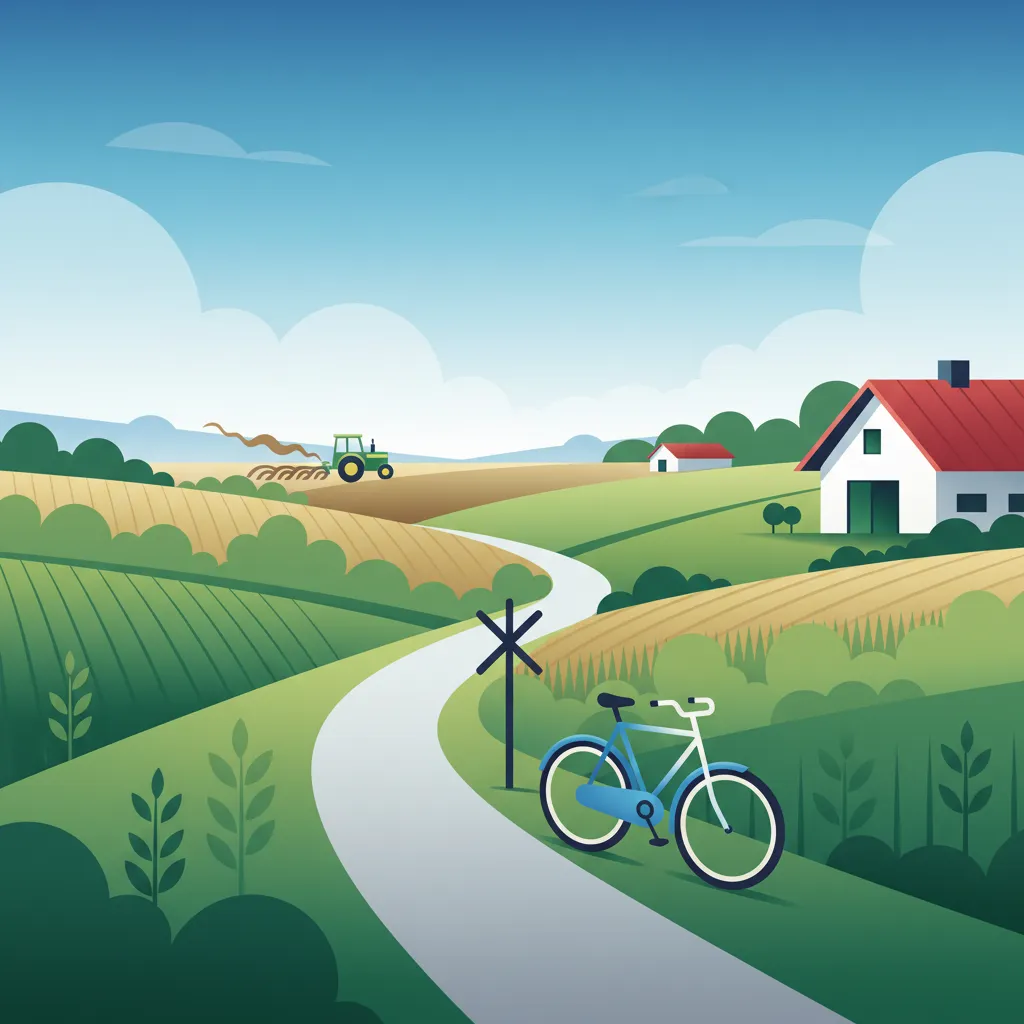
This lesson prepares you for the specific challenges of riding on rural roads in Sweden. You will learn how to read the road ahead for changes in surface quality, approach blind corners safely, and adjust your speed for narrow lanes with no shoulder. The content also covers how to anticipate and safely interact with slow-moving agricultural vehicles and the potential for wild animals on the road, ensuring you are prepared for the unpredictable nature of country riding.
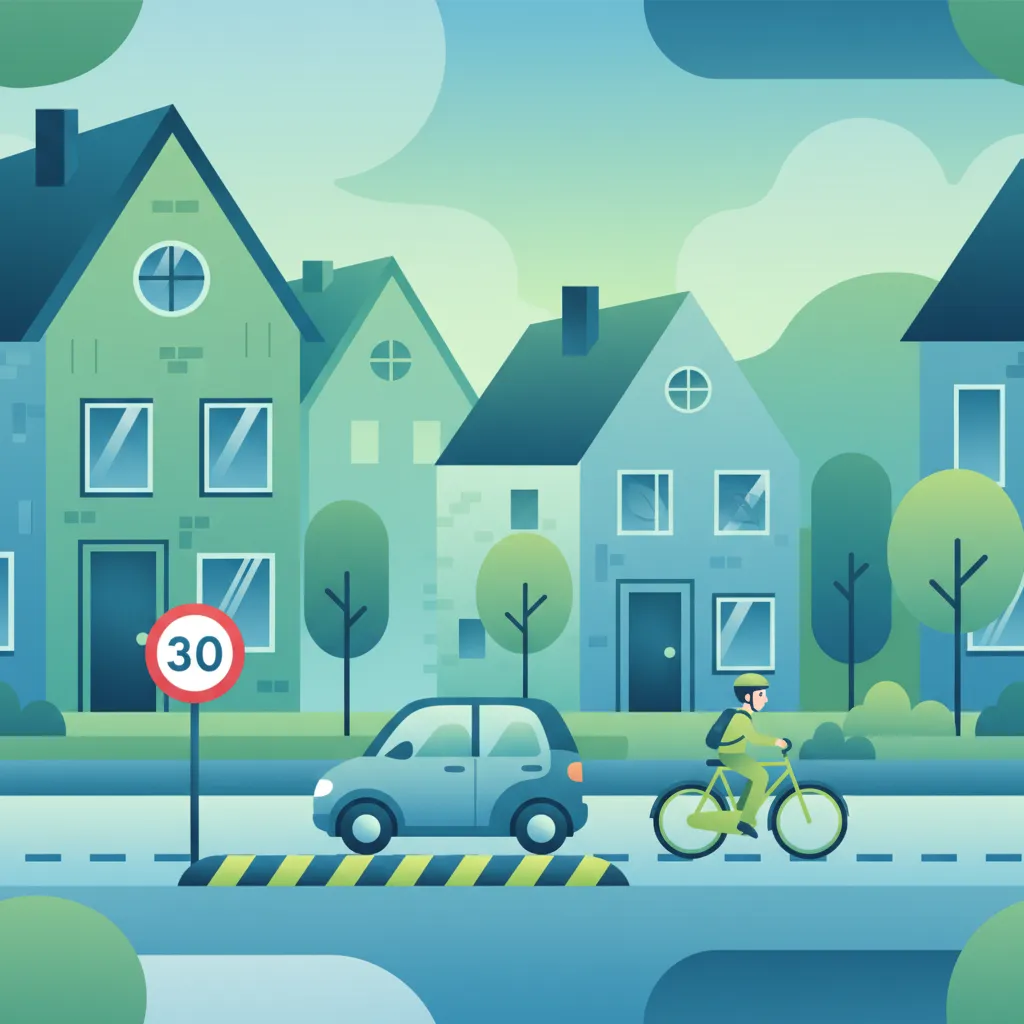
This lesson focuses on the high level of caution required when driving in residential areas. You will learn about the rules for special zones like 'gångfartsområde' (walking speed area) and the need to navigate around speed calming measures like speed bumps. The central theme is anticipating unpredictable behavior from residents, especially children, and managing the risks posed by parked cars that severely limit visibility.

This lesson covers strategies for driving safely when visibility is compromised. You will learn the correct use of different lighting systems: when to use low beams, high beams (helljus), and how to avoid dazzling other drivers. The lesson also explains the specific regulations for using front and rear fog lights and provides techniques for navigating safely in dense fog or heavy precipitation by reducing speed and using the road edge as a guide.
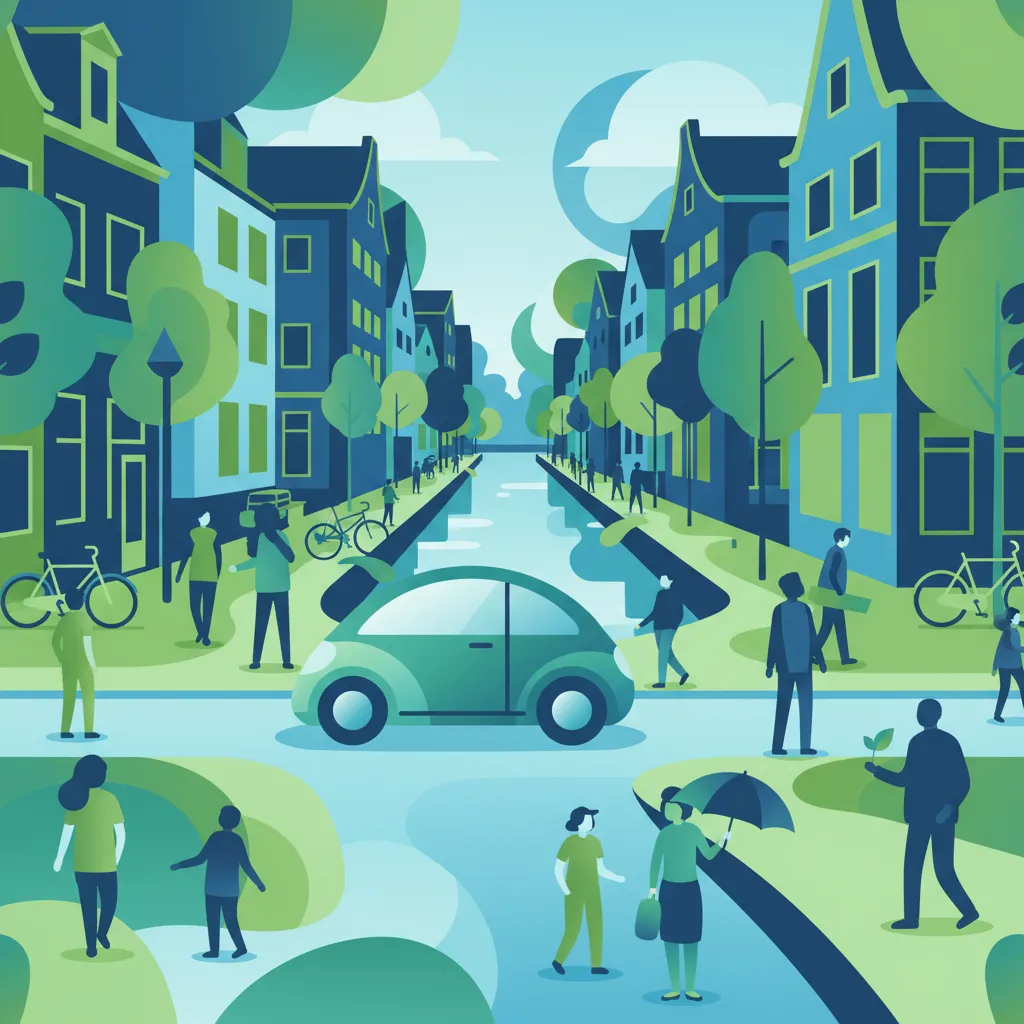
This lesson focuses on the unique challenges of driving in urban environments. You will learn techniques for anticipating the actions of vulnerable road users like pedestrians and cyclists, especially near crossings and bus stops. The content covers how to navigate narrow streets, one-way systems, and areas with heavy traffic, emphasizing the need for lower speeds, heightened awareness, and a defensive mindset.
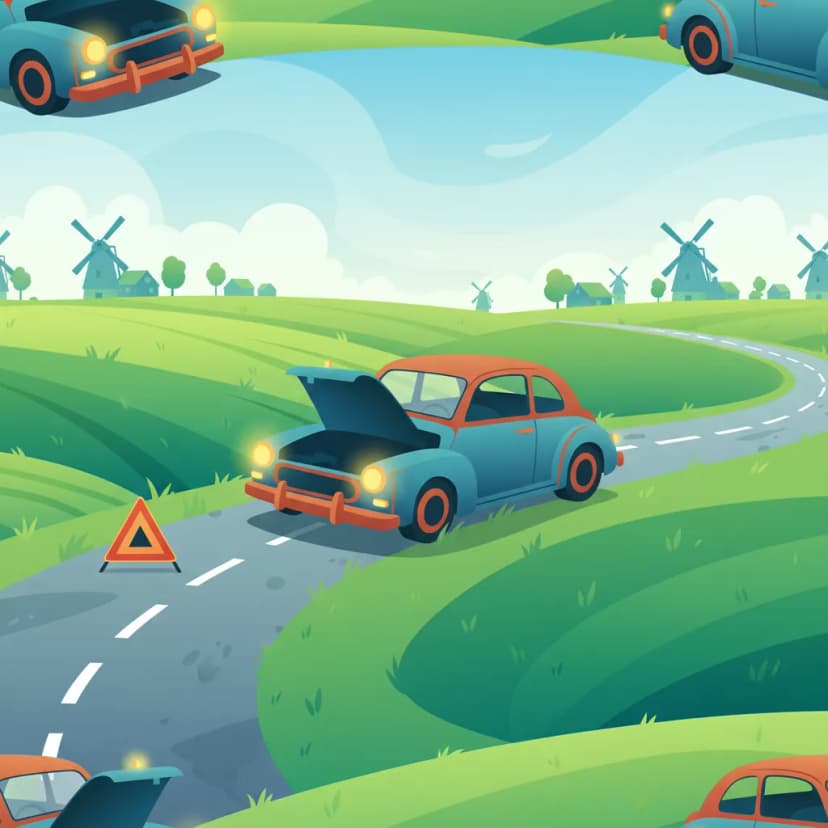
This lesson focuses on the correct use of warning devices to protect an accident or breakdown scene. You will learn to immediately activate your hazard lights (varningsblinkers). The main focus is on the proper placement of the warning triangle, explaining how the distance from the vehicle must be adapted based on the road's speed limit and visibility to give oncoming drivers adequate time to react.
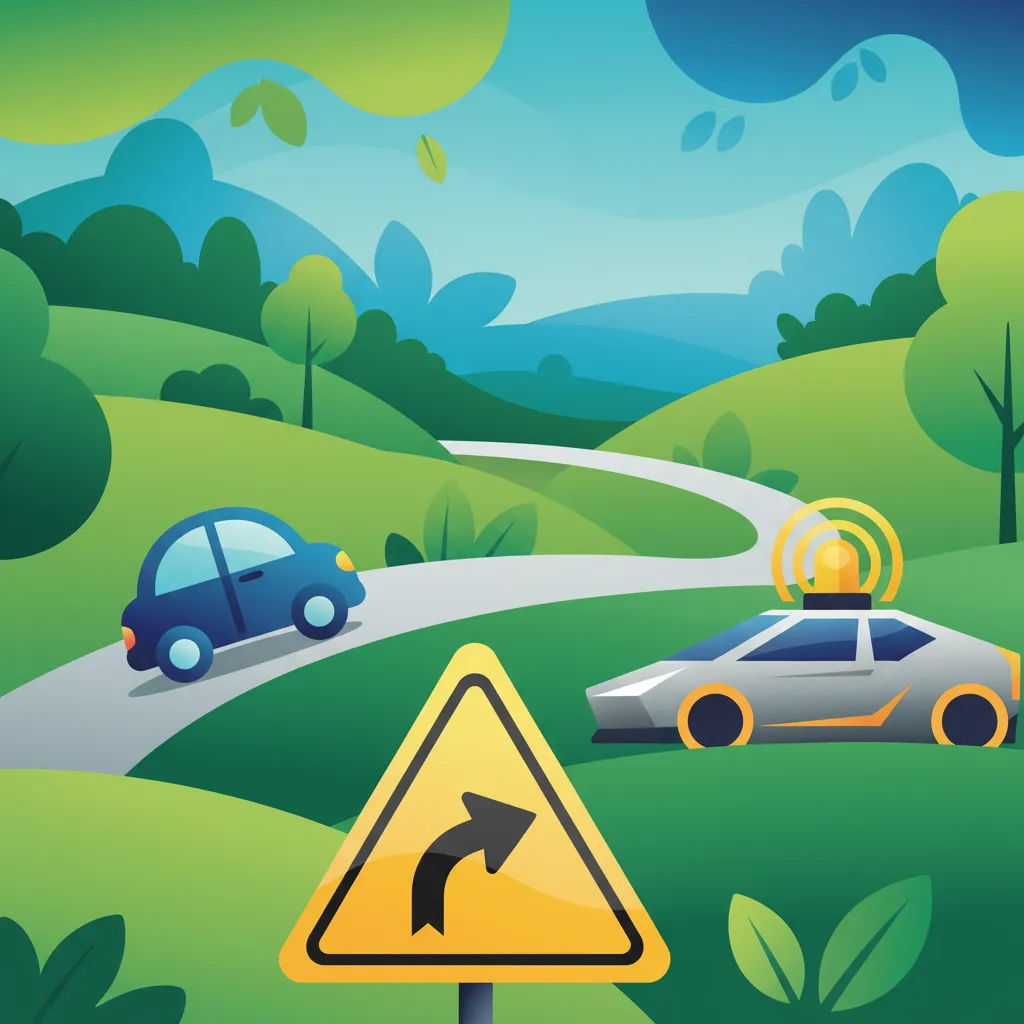
This lesson focuses on Swedish warning signs designed to alert drivers to potential dangers. You will study signs indicating sharp bends, slippery surfaces, animal crossings, and temporary hazards like road construction. Correctly interpreting these signs allows a motorcyclist to proactively adjust speed, lane position, and readiness to react, which is essential for maintaining control and safety, especially in adverse weather or on unfamiliar roads.
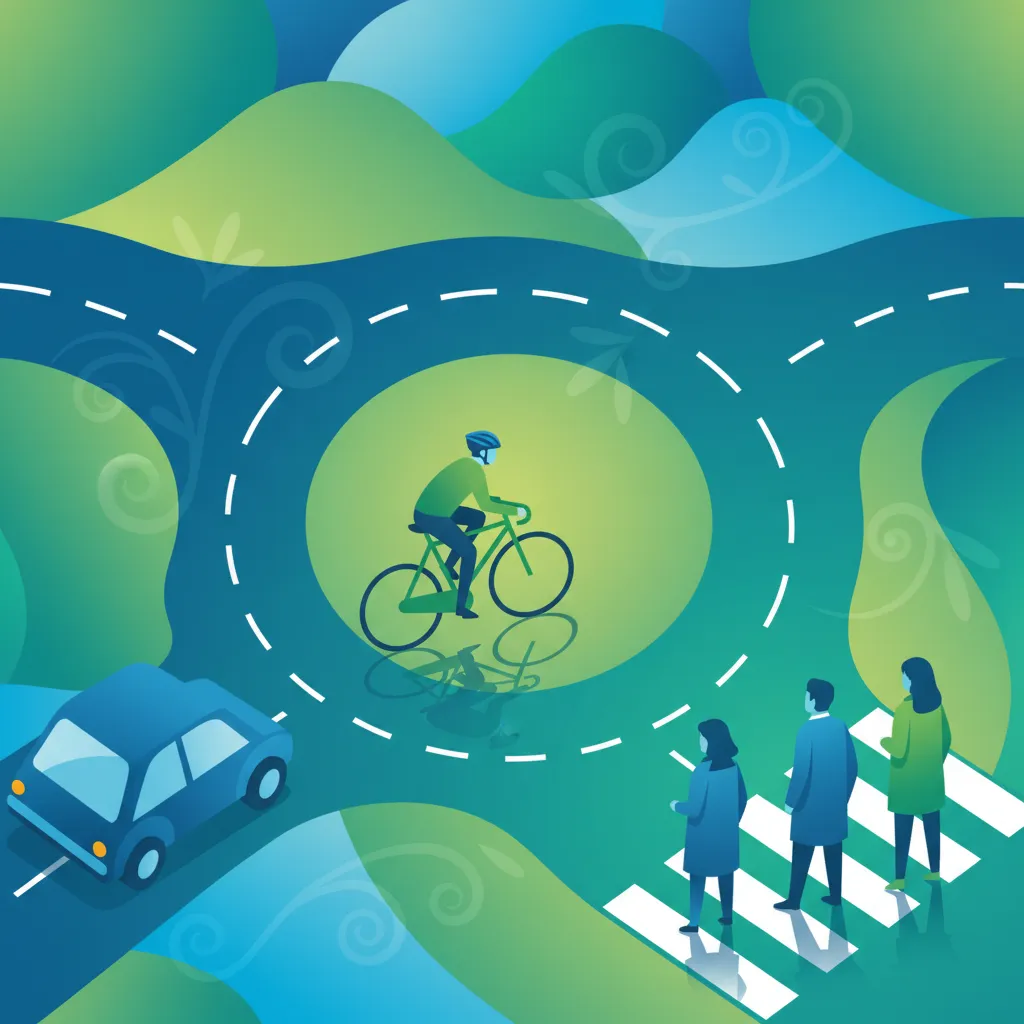
This lesson provides detailed guidance on navigating complex traffic points such as signalized intersections, multi-lane roundabouts, and pedestrian crossings. You will learn the correct procedures for entering and exiting roundabouts, the specific rules for yielding to pedestrians and cyclists at designated crossings, and how to interpret complex traffic light signals. These skills are vital for safe urban and suburban riding, where interaction with vulnerable road users is frequent.
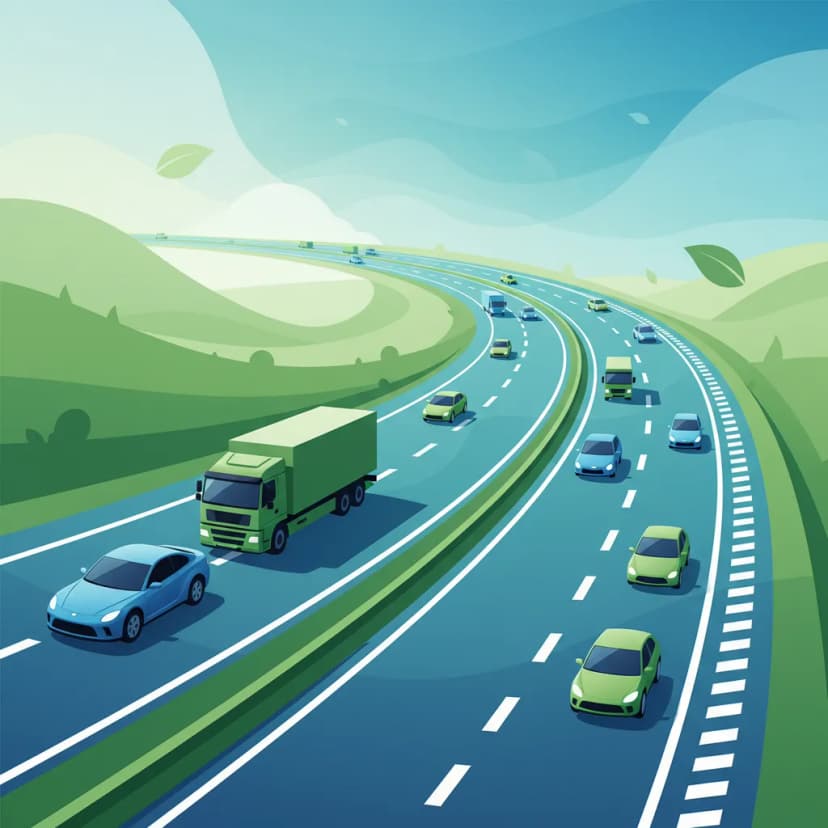
This lesson provides a complete guide to motorway driving in Sweden. You will learn the correct procedures for merging from an on-ramp, maintaining proper lane discipline by keeping right unless overtaking, and exiting safely via off-ramps. The content emphasizes the importance of maintaining large safety margins at high speeds, checking blind spots thoroughly before any lane change, and knowing the correct safety procedures in case of a breakdown.

This lesson reinforces the core safety principle of adapting your driving to the prevailing weather conditions. You will learn why you must significantly reduce speed in heavy rain to avoid aquaplaning, how strong crosswinds can affect vehicle stability, and why reduced visibility in fog necessitates slower speeds and greater following distances. The goal is to instill a proactive approach to risk management whenever the weather is less than ideal.

This lesson addresses the specific challenges of riding at night or in low-light conditions. You will learn how to use your headlights most effectively, how to cope with the glare from oncoming traffic, and how darkness affects your depth perception and ability to judge distances. Strategies for spotting nocturnal animals and the increased importance of wearing reflective gear to be seen by others are also key components of this essential safety lesson.
Learn the essential theory for safely navigating Swedish roads alongside slow-moving farm vehicles. Understand specific rules for approaching, overtaking, and anticipating their movements to ensure a safe journey for all road users.
This lesson explains how to identify and interact with various types of mopeds and other low-speed vehicles common on Swedish roads. You will learn the difference between Class I and Class II mopeds and their place on the road, as well as how to recognize A-tractors by their LGF (långsamtgående fordon) sign. The key focus is on managing the large speed differential and making safe judgments when deciding to overtake.
Find clear answers to common questions learners have about Rural Roads and Farm Vehicles. Learn how the lesson is structured, which driving theory objectives it supports, and how it fits into the overall learning path of units and curriculum progression in Sweden. These explanations help you understand key concepts, lesson flow, and exam focused study goals.
A 'landsväg' is generally a rural road outside of built-up areas, often with higher speed limits and fewer lanes than urban roads. They can include winding sections, poor visibility, and unexpected hazards like farm vehicles and wildlife, which are covered in this lesson.
You can overtake a tractor if you have a clear view ahead, there's no oncoming traffic, and the road conditions allow for a safe manoeuvre. Always check for signs indicating 'omkörningsförbud' (no overtaking) and be aware that tractors can be unpredictable. Ensure you leave ample space.
Immediately reduce your speed and be prepared to stop. Avoid sudden steering movements, as this can cause you to lose control or swerve into oncoming traffic. Scan the roadside for more animals, as they often travel in groups. The risk is highest at dawn and dusk.
On rural roads, the posted speed limit is often higher, but you must also adapt your speed to the actual conditions. This includes visibility (curves, hills), road surface quality, weather, and the presence of slow-moving vehicles or wildlife. Don't just drive the limit; drive to the conditions.
Farm vehicles, like tractors, are common on rural roads and are generally treated as slow-moving vehicles. They must adhere to traffic laws but may travel at very low speeds. Drivers must be patient and overtake only when it is safe and legal, similar to other slow vehicles.