
Driving in residential areas requires extra caution due to frequent pedestrian activity and potential hazards from parked vehicles. This lesson focuses on navigating 'gångfartsområde' (walking speed areas) and understanding the impact of speed calming measures. It’s a vital part of Unit 5: Driving in Different Environments, preparing you for the complexities of urban driving as covered in the Swedish Category B theory test.
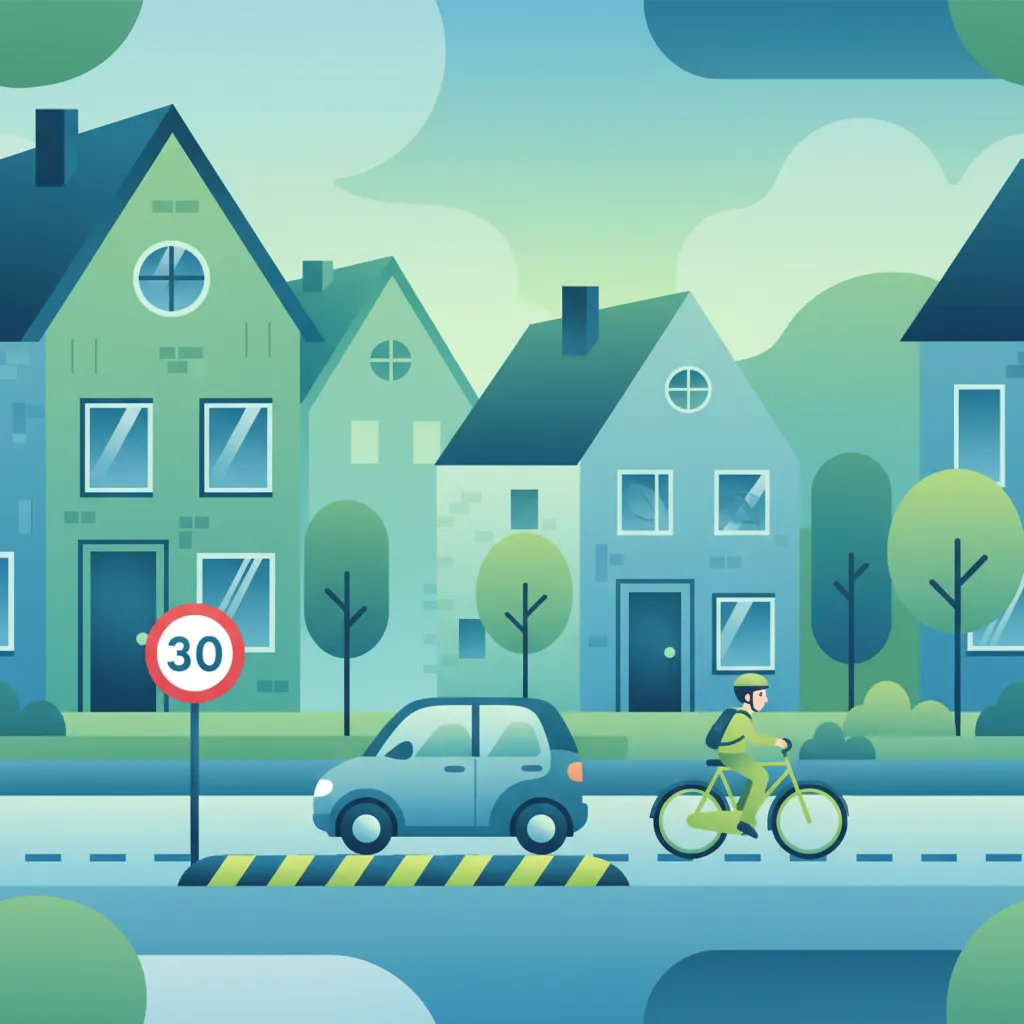
Driving in residential areas in Sweden demands a heightened level of caution, vigilance, and adherence to specific traffic regulations. These zones are designed to prioritize the safety of residents, especially vulnerable road users like children, pedestrians, and cyclists. Understanding and practicing safe driving techniques in these environments is crucial for all drivers, particularly for those preparing for the Swedish Driving License Theory Course for Category B Cars. This lesson will explore the unique challenges of residential driving, the purpose and application of speed calming measures, and the legal obligations drivers must uphold.
The speed limit is a fundamental aspect of road safety, and in residential areas, it is significantly reduced to mitigate risks. The lower speeds in these zones are a direct response to the increased potential for unexpected events and interactions with vulnerable road users.
In most urban and suburban residential areas across Sweden, the default maximum speed limit is 30 km/h, unless specific signage indicates otherwise. This limit is not arbitrary; it is carefully chosen based on scientific evidence regarding stopping distances and the severity of injuries in the event of a collision. At 30 km/h, a driver has a much better chance of stopping in time to avoid an accident, and if a collision does occur, the impact force and potential for severe injury are drastically reduced compared to higher speeds.
The purpose of this default limit is to create a safer environment where traffic flow is secondary to the well-being of residents. Drivers must consistently monitor their speed and be prepared to slow down even further, particularly when visibility is limited or hazards are present. Compliance with this limit is a legal obligation and a fundamental aspect of responsible driving.
The physics of kinetic energy dictate that the energy of a moving vehicle increases with the square of its speed. This means a small increase in speed can lead to a disproportionately large increase in destructive potential. For example, reducing speed from 50 km/h to 30 km/h dramatically decreases the vehicle's kinetic energy, which directly translates to a lower risk of severe injury or fatality in a collision.
Furthermore, lower speeds allow drivers more time to perceive hazards, react, and execute evasive maneuvers or controlled stops. This extended reaction window is particularly vital in residential areas where children might dart into the street, or pedestrians might unexpectedly cross from behind parked cars.
Beyond the standard 30 km/h residential limit, Sweden has introduced specific zones known as gångfartsområden, or walking-speed areas. These areas represent the highest level of pedestrian priority and demand the utmost caution from drivers.
A gångfartsområde is a specially designated zone where the maximum speed limit is a strict 7 km/h. This incredibly low limit is designed to create an environment where pedestrians, cyclists, and vehicles truly coexist, with pedestrians having unequivocal priority. These areas are often found around schools, playgrounds, shopping precincts, or other locations with heavy foot traffic.
The purpose of a gångfartsområde is to ensure that children and other vulnerable road users can move about freely and safely, without the constant threat of fast-moving vehicles. Drivers must operate their vehicles as if they are merely guests in a pedestrian zone, ready to stop instantly at any moment.
In a gångfartsområde, several critical rules apply:
gångfartsområden due to the narrowness and the constant presence of pedestrians.gångfartsområde unless specifically designated and marked by signs indicating permitted parking spaces.Treat gångfartsområden as shared spaces where pedestrians are the primary users. Your vehicle is an intruder, and you must drive accordingly.
Speed-calming devices, known in Swedish as hastighetsdämpare, are physical modifications to the road designed to enforce lower speeds. They serve as a physical reminder and an obstacle that drivers must navigate carefully, further enhancing safety in residential areas.
Several types of speed-calming devices are commonly deployed in Sweden:
When encountering hastighetsdämpare, drivers must:
Anticipate and Decelerate Early: Begin reducing your speed well before reaching the device. Look for warning signs and road markings that indicate an upcoming speed bump or raised table.
Maintain Controlled Speed: Cross speed bumps or raised tables at a very low, controlled speed, typically 20 km/h or less, depending on the severity of the bump and your vehicle's suspension. For chicanes, maintain a speed that allows for smooth, controlled steering without sudden movements.
Avoid "Jumping": Never attempt to maintain speed or accelerate over a speed bump. This can lead to loss of vehicle control, severe damage to your car's suspension and tires, and a harsh, uncomfortable ride.
Check Surroundings: As you slow down and traverse the device, remain highly aware of your surroundings. Pedestrians, cyclists, or other vehicles might be nearby, and your focus should not solely be on the bump itself.
Failing to adapt your speed to these physical devices is not only dangerous but also constitutes "careless driving" under Swedish traffic law.
Safe driving in residential areas goes beyond simply obeying speed limits and navigating speed bumps. It requires a proactive and defensive approach, constantly anticipating potential hazards and managing your vehicle's position and speed to mitigate risks.
Residential streets are often characterized by numerous obstructions that create blind spots (döda vinklar). These can include:
To manage visibility effectively:
Assume something or someone is always hidden behind a blind spot. Drive defensively, always expecting the unexpected.
Anticipatory behaviour is the cornerstone of safe driving in residential areas. It means constantly forecasting possible hazards before they materialize, rather than reacting only when they become immediate threats.
This proactive approach significantly reduces reliance on split-second reaction times, which can be insufficient to prevent accidents in complex residential environments.
Driving in residential areas is governed by specific articles within the Swedish Traffic Ordinance (Trafikförordning, RVV 1990). Understanding these legal frameworks is essential for responsible driving and for passing your theory test.
gångfartsområde to 7 km/h. It also defines the priority for pedestrians in these zones.Even experienced drivers can make mistakes in residential areas, often due to complacency or a misunderstanding of the unique risks. Being aware of these common pitfalls can help you develop safer driving habits.
Mistake: Driving faster than 30 km/h on a residential street, especially one with parked cars that restrict visibility. Why it's wrong: This violates the legal speed limit (§ 43 RVV 1990) and dramatically increases stopping distances and collision severity, particularly when visibility is compromised. Correct behaviour: Consistently monitor your speedometer and maintain a speed of 30 km/h or lower, adjusting downward further if conditions warrant.
Mistake: Driving 10 km/h or faster in a gångfartsområde, assuming the 7 km/h is merely a suggestion.
Why it's wrong: This is a direct violation of § 44 RVV 1990. The 7 km/h limit is mandatory and is critical for ensuring pedestrian safety where they have priority.
Correct behaviour: Slow down to a walking pace, ensuring you do not exceed 7 km/h, and be prepared to stop instantly.
Mistake: Approaching a speed bump at high speed, causing your vehicle to "jump" or lose contact with the road. Why it's wrong: This can lead to loss of vehicle control, severe damage to your car's suspension and tires, and creates a risk to any pedestrians or cyclists nearby. It also violates the duty to adapt speed to road conditions (§ 62 RVV 1990). Correct behaviour: Decelerate smoothly and significantly before the bump, traverse it at a low, controlled speed (often 10-20 km/h), and avoid any abrupt acceleration or braking.
Mistake: Proceeding at 30 km/h without actively looking for children, cyclists, or pedestrians emerging from behind parked cars or hedges. Why it's wrong: This is a clear breach of your duty of care (§ 3 RVV 1990) and significantly increases the risk of a collision with vulnerable road users who may not be easily seen. Correct behaviour: Constantly scan your surroundings, particularly focusing on areas of limited visibility. Reduce your speed proactively when you see signs of potential activity, such as toys, open gates, or children playing nearby.
Mistake: Attempting to overtake a slower vehicle in a narrow residential street, especially when approaching a speed bump or with parked cars obstructing the view. Why it's wrong: Overtaking is prohibited where visibility is limited or where it would be unsafe. Residential streets rarely provide the clear sightlines needed for safe overtaking, and combining this with obstacles like speed bumps creates extreme hazard. Correct behaviour: Remain behind the slower vehicle and wait for a safe opportunity to pass, which will likely be outside the residential area or on a wider road with clear visibility. In most residential streets, overtaking should simply not be attempted.
Mistake: Maintaining the posted speed limit (e.g., 30 km/h) during heavy rain, snow, or fog, or on slippery surfaces. Why it's wrong: The posted speed limit is for ideal conditions. In adverse weather, reduced friction and visibility necessitate a significant reduction in speed, often 20-30% below the limit, as mandated by § 62 RVV 1990. Correct behaviour: Reduce your speed proportionally to the reduced traction and visibility. Increase your following distance, use appropriate lighting (e.g., dipped beams in fog or heavy rain), and avoid sudden braking or steering.
Safe driving is highly contextual. In residential areas, external factors like weather, time of day, and the presence of specific user groups further demand adjustments to your driving behavior.
Mastering driving in residential areas is fundamental to becoming a safe and responsible driver in Sweden. It requires a combination of legal knowledge, practical skills, and a vigilant mindset.
hastighetsdämpare are designed to protect. Traverse them smoothly and at reduced speed.anticipatory behaviour by constantly scanning for hazards and predicting potential movements, especially those of children.By internalizing these principles, you will not only pass your Swedish driving theory test but, more importantly, contribute to a safer road environment for everyone in Sweden's residential communities.
Lesson content overview
Explore all units and lessons included in this driving theory course.
Explore search topics learners often look for when studying Residential Areas and Speed Calming. These topics reflect common questions about road rules, driving situations, safety guidance, and lesson level theory preparation for learners in Sweden.
Browse additional driving theory lessons that cover connected traffic rules, road signs, and common driving situations related to this topic. Improve your understanding of how different rules interact across everyday traffic scenarios.
Understand the specific Swedish traffic rules for residential areas, including gångfartsområde. Learn how to navigate speed bumps and manage visibility risks, crucial for safe urban driving and passing your theory test.
This lesson focuses on the unique challenges of driving in urban environments. You will learn techniques for anticipating the actions of vulnerable road users like pedestrians and cyclists, especially near crossings and bus stops. The content covers how to navigate narrow streets, one-way systems, and areas with heavy traffic, emphasizing the need for lower speeds, heightened awareness, and a defensive mindset.

This lesson details a driver's responsibility towards pedestrians. You will learn the strict rule of yielding to pedestrians who are on or about to enter a marked, uncontrolled crosswalk. The content also covers the specific, highly restrictive rules for driving in designated pedestrian zones (gågata) and 'walking speed' areas (gångfartsområde), where pedestrians have complete priority and vehicle traffic is severely limited.

This lesson emphasizes that the posted speed limit is a maximum, not a target. You will learn the principles of situational speed adaptation, which involves adjusting your speed based on factors like visibility, road geometry (curves and hills), traffic density, and potential hazards. The lesson covers specific strategies for managing speed in urban environments with pedestrians, on rural roads with hidden entrances, and on motorways to match the flow of traffic.
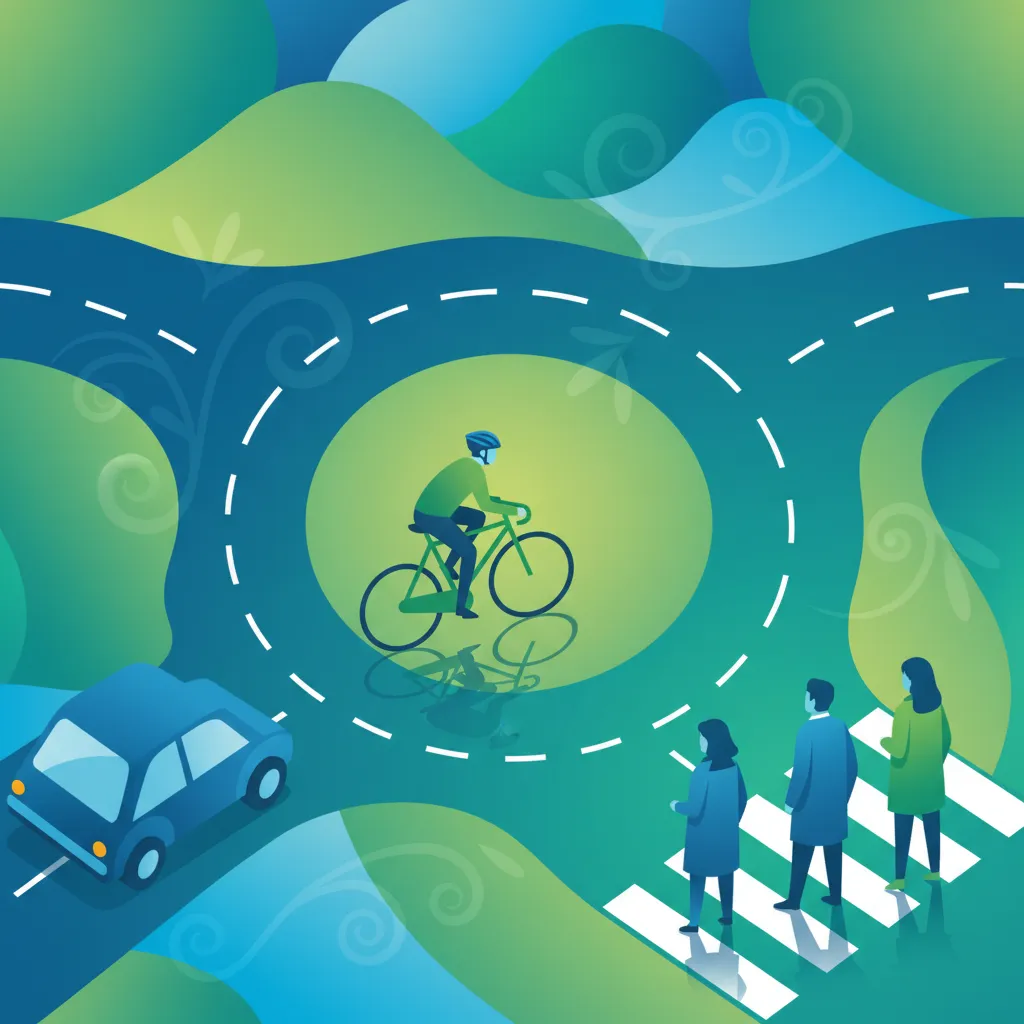
This lesson provides detailed guidance on navigating complex traffic points such as signalized intersections, multi-lane roundabouts, and pedestrian crossings. You will learn the correct procedures for entering and exiting roundabouts, the specific rules for yielding to pedestrians and cyclists at designated crossings, and how to interpret complex traffic light signals. These skills are vital for safe urban and suburban riding, where interaction with vulnerable road users is frequent.
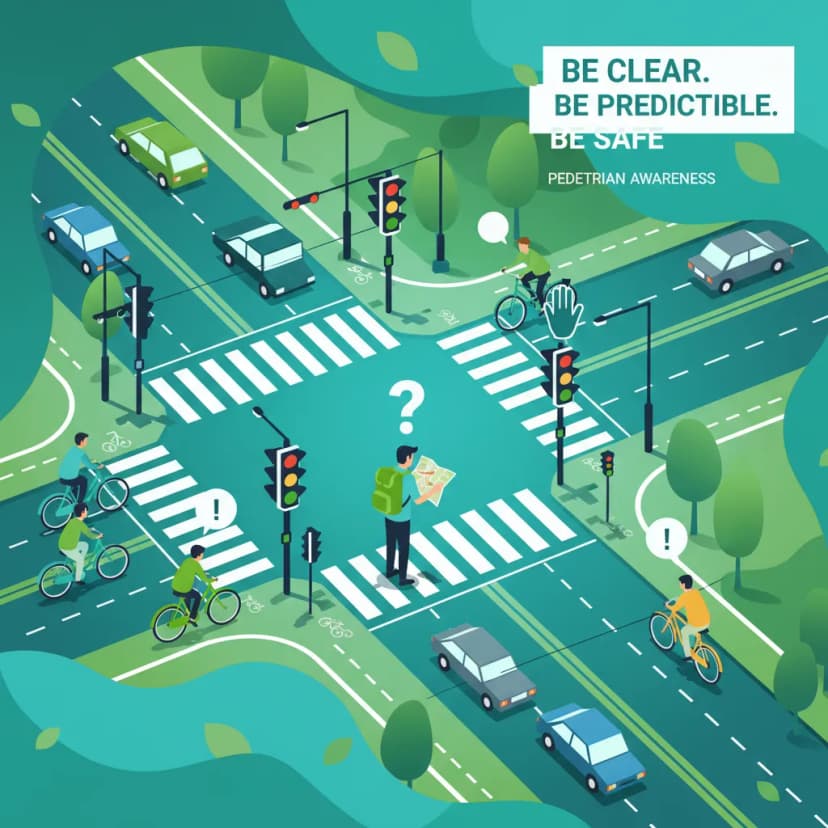
This lesson is dedicated to pedestrian safety, teaching riders to be constantly aware of people on foot, especially in busy urban environments. It reinforces the absolute duty to yield at marked crossings and encourages a cautious approach in areas like schools and shopping districts. The content stresses anticipating unpredictable actions, particularly from children or distracted pedestrians.
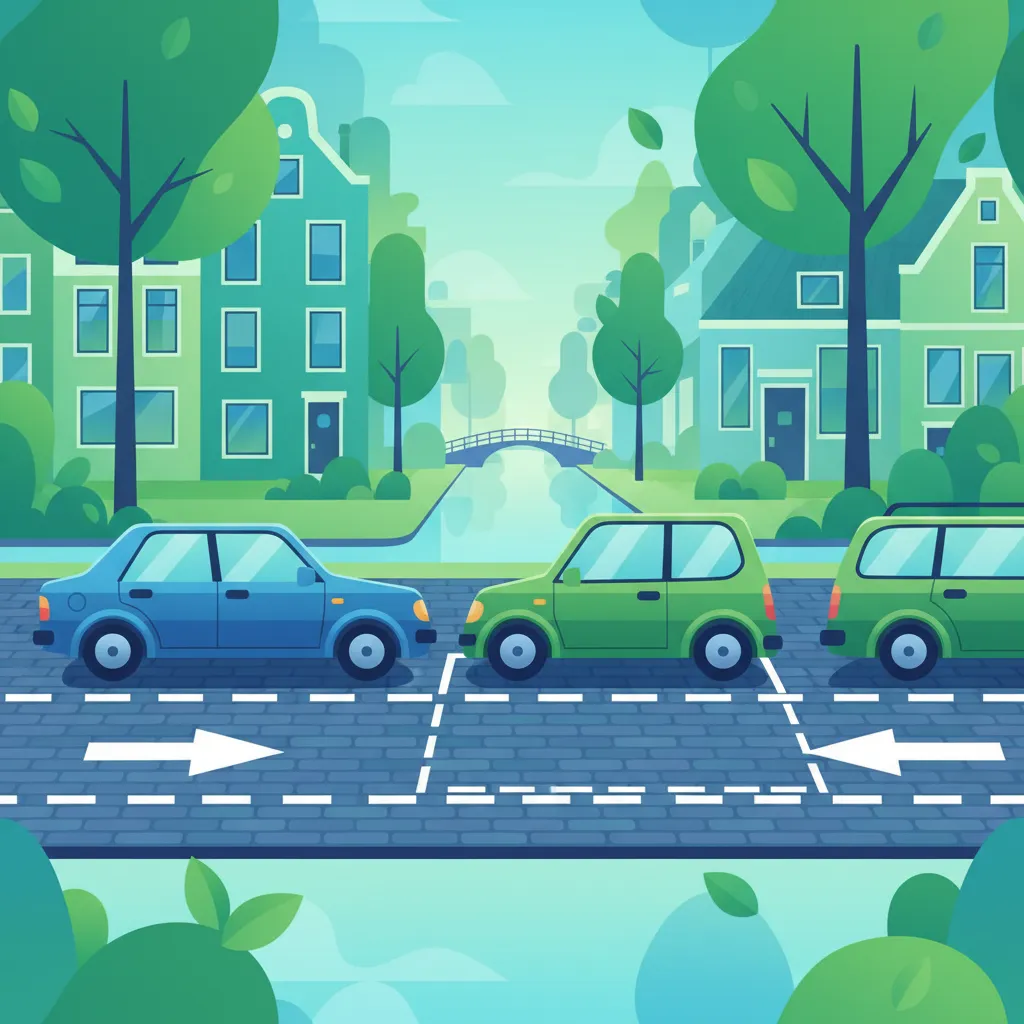
This lesson covers the general, nationwide rules that govern where you may and may not park or stop, even without specific signs. You will learn about the prohibitions on stopping near intersections, on pedestrian crossings, and at bus stops. The content clarifies the legal definitions and provides clear guidelines on maintaining safe distances and ensuring that your parked vehicle does not obstruct traffic or create a hazard.
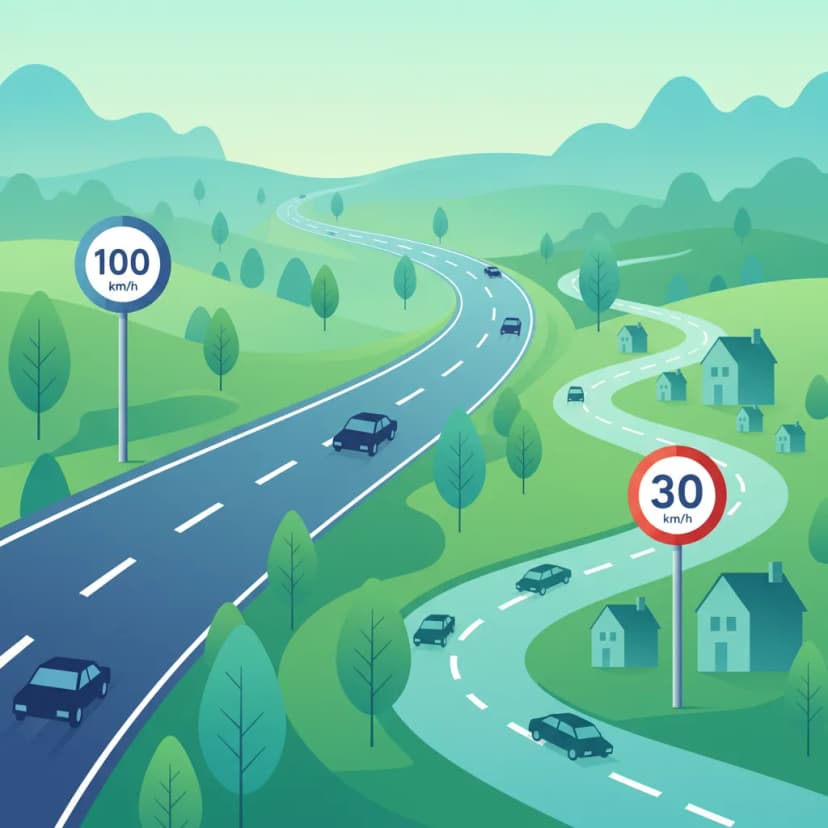
This lesson provides a comprehensive overview of the Swedish national speed limit system. You will learn the default speed limits applicable to different classes of roads, such as 50 km/h in built-up areas and 110 km/h on motorways. It also covers how to identify and comply with special zones, like residential areas (gångfartsområde), school zones, and temporary limits in construction areas, ensuring you always ride at a legal and appropriate speed.
This lesson teaches the crucial skill of adapting your speed to the dynamic and often congested conditions of urban riding. You will learn to modulate your speed smoothly in response to traffic flow, pedestrian activity, and complex intersections to maintain safety and control. Techniques covered include using engine braking effectively, anticipating the actions of other road users, and selecting a speed that maximizes your reaction time in a high-density environment.
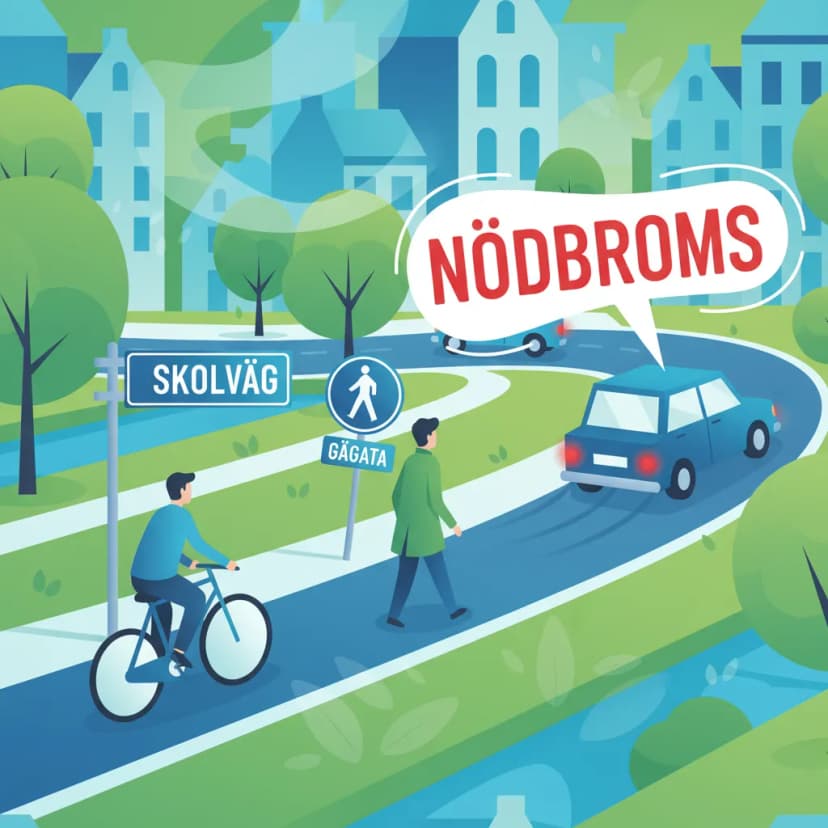
This lesson examines a variety of special situations where standard priority rules are modified. You will learn about the 'exit rule' (utfartsregeln) when entering a road from property, your duty to yield to buses indicating a departure from a stop, and the specific rules for pedestrian-only streets (gågata). The content also covers interactions with trams, emergency vehicles, and procedures at railway crossings, highlighting situations that demand maximum vigilance.

This lesson reinforces the core safety principle of adapting your driving to the prevailing weather conditions. You will learn why you must significantly reduce speed in heavy rain to avoid aquaplaning, how strong crosswinds can affect vehicle stability, and why reduced visibility in fog necessitates slower speeds and greater following distances. The goal is to instill a proactive approach to risk management whenever the weather is less than ideal.
Develop essential defensive driving skills to handle the hazards of limited visibility caused by parked cars and unpredictable road users like children in residential areas. Enhance your situational awareness for safer driving.
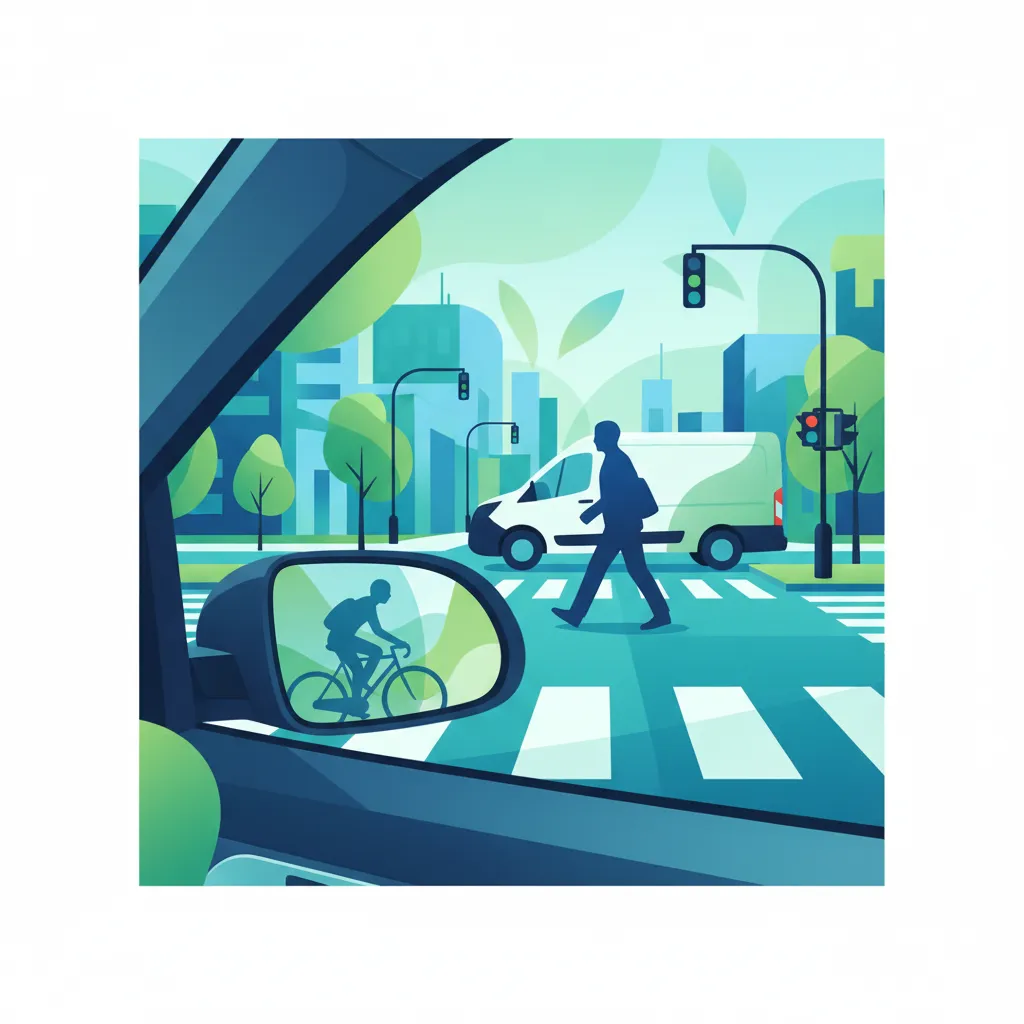
This lesson provides critical strategies for dealing with one of the biggest dangers in traffic: blind spots. You will learn the importance of the shoulder check and how to position yourself on the road to be more visible to other drivers. The lesson also trains you to scan the road surface ahead for hidden hazards like potholes, gravel, or oil spills that can pose a significant threat to a motorcycle's stability, teaching you to see and avoid them in time.

This lesson focuses on creating a complete awareness of the traffic situation around your vehicle. You will learn the correct procedure for using your interior and side mirrors in a continuous scanning pattern. Crucially, the lesson explains what the blind spot (döda vinkeln) is, where it is located, and why a physical head check over the shoulder is a non-negotiable safety step before any lateral movement like changing lanes or turning.

This lesson introduces the core concepts of defensive riding, which involves anticipating potential dangers and actively managing the space around your motorcycle. You will learn the technique of continuously identifying and maintaining an 'escape path'—an open space to move into if a threat suddenly appears. This proactive, forward-thinking approach dramatically reduces the chances of being trapped in a dangerous situation and is a key skill of advanced, safe riders.

This lesson teaches the correct methodology for negotiating curves and turns of varying sharpness. You will learn the principle of 'slow in, fast out,' involving braking before the curve and gently accelerating through it to maintain stability and grip. The lesson also covers how to choose the correct line (placering) through a bend and how to use your vision effectively to look far ahead for a safe and controlled passage.

This lesson teaches you how to analyze and assess risk when sharing the road with a variety of users, from large trucks to cyclists and pedestrians. You will learn to recognize common patterns of behavior and potential conflict points, allowing you to anticipate the actions of others before they create a dangerous situation. Developing this predictive mindset is a cornerstone of defensive riding and is key to staying safe in busy, complex traffic environments.

This lesson provides in-depth analysis of how to safely interact with the full spectrum of road users. You will learn about the specific characteristics of each, such as the large blind spots of trucks, the potential for sudden movements from cyclists, and the unpredictability of pedestrians. The content teaches strategies for communication, anticipation, and defensive positioning to ensure safe and respectful coexistence on the road for everyone.
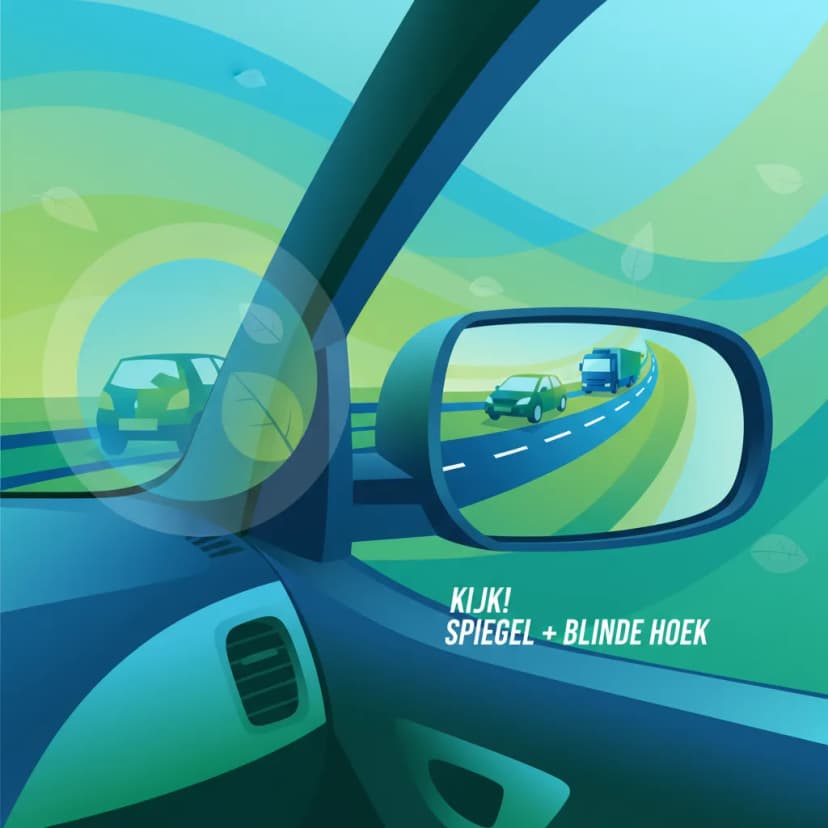
This lesson emphasizes the importance of a comprehensive visual scanning routine that includes regular mirror checks and mandatory head checks (shoulder checks) to cover blind spots. It explains that mirrors alone are not sufficient and that a physical turn of the head is required before any lateral movement. This habit is fundamental to preventing collisions during lane changes, merging, or turning.

This lesson focuses on strategies to make yourself more visible to other road users, a critical factor in motorcycle safety. You will learn how to use lane positioning strategically to stay out of other drivers' blind spots and to maximize your own line of sight through corners and intersections. The content also covers the effectiveness of high-visibility and reflective clothing, as well as the correct use of lights to ensure you are seen in all conditions.
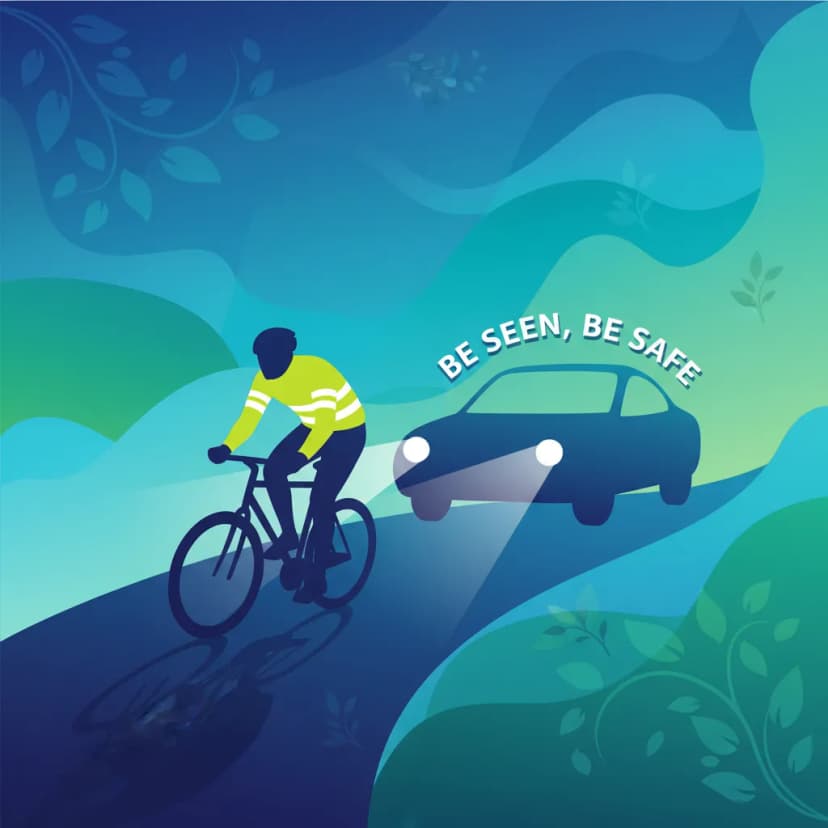
This lesson focuses on proactive strategies to increase a moped rider's visibility to other drivers. It strongly advocates for the use of high-visibility and reflective clothing, helmets, and accessories to stand out in traffic. Additionally, it revisits the concept of lane positioning as a tool to avoid being in other drivers' blind spots and to create a more prominent presence on the road.

This lesson covers strategies for driving safely when visibility is compromised. You will learn the correct use of different lighting systems: when to use low beams, high beams (helljus), and how to avoid dazzling other drivers. The lesson also explains the specific regulations for using front and rear fog lights and provides techniques for navigating safely in dense fog or heavy precipitation by reducing speed and using the road edge as a guide.
Find clear answers to common questions learners have about Residential Areas and Speed Calming. Learn how the lesson is structured, which driving theory objectives it supports, and how it fits into the overall learning path of units and curriculum progression in Sweden. These explanations help you understand key concepts, lesson flow, and exam focused study goals.
In a 'gångfartsområde' (walking speed area), your speed must be no more than what is safe for pedestrians, which is typically a walking pace, not exceeding 15 km/h. The focus is on shared space where pedestrians have priority. You must be prepared to stop if necessary and drive with extreme caution.
Speed bumps are designed to reduce speed. Always slow down significantly before reaching a speed bump and accelerate gently afterwards. Be aware that other drivers might brake suddenly to navigate them, and children might be present unexpectedly.
Parked cars severely limit your visibility, creating blind spots. Children or pets could run out from between cars without warning, and drivers exiting parking spots may not see you. Always drive slowly, be prepared to stop, and scan continuously for potential hazards.
Yes, in residential areas, and especially within a 'gångfartsområde', pedestrians have a very high priority. You must always be prepared to yield to pedestrians, even if they are not using a designated crossing. Your driving must be cautious and anticipate their movements.
Yes, Sweden uses specific signs. A 'gångfartsområde' sign indicates a walking speed area. Various signs and physical measures like speed bumps, raised crossings, and chicanes are used to calm traffic. It’s crucial to recognise these signs and features and adjust your driving accordingly.