
When a vehicle breaks down or is involved in an accident, securing the scene is paramount. This lesson in Unit 12 focuses on the vital procedures for using your vehicle's hazard warning lights (varningsblinkers) and, crucially, the correct placement of the warning triangle. Mastering these steps is essential for preventing further accidents and ensuring safety on Swedish roads.
When an unexpected vehicle breakdown or an accident occurs on a public road, it transforms your vehicle into a sudden and potentially dangerous obstruction for other road users. As a driver in Sweden, it is crucial to know how to effectively warn approaching traffic to prevent secondary collisions and ensure the safety of everyone involved. This lesson, part of the Swedish Driving License Theory Course for Category B Cars, focuses on the mandatory use and correct placement of hazard warning lights (varningsblinkers) and the emergency warning triangle (varningstriangel) according to Swedish traffic regulations. Mastering these procedures is not only vital for road safety but also a key component of your driving theory examination.
Emergency warning devices are designed to make a stationary or abnormally moving vehicle highly conspicuous, allowing other drivers ample time to react safely. These devices serve as critical visual cues, especially under conditions of low visibility or on high-speed roads where reaction times are significantly shorter.
Hazard warning lights, known as varningsblinkers in Swedish, are a vehicle-integrated system that causes all indicator lights (turn signals) to flash simultaneously. Activated by a dedicated switch, typically located on the dashboard or steering column and often marked with a red triangle symbol, they serve as an immediate signal of danger or an emergency situation.
When your vehicle is stopped on a public road due to an accident, a mechanical breakdown, or any other emergency that renders it an obstruction, activating your hazard lights is the very first step. These flashing amber lights provide an instant visual warning to surrounding traffic, indicating that your vehicle is not operating normally or is stationary in an unexpected location. It is imperative to activate them as soon as you come to a stop in an emergency situation and keep them on until the vehicle is moved to a safe location or the situation is resolved.
Hazard warning lights are specifically for emergencies. Using them while driving normally, for instance, to indicate you are "slow traffic" or "parking briefly" outside of a true emergency, is illegal and can confuse other road users, potentially leading to dangerous situations.
The emergency warning triangle, or varningstriangel, is a portable, reflective orange triangle that drivers are legally required to carry in their vehicle. With minimum side lengths of 80 cm, this device provides a static, highly visible warning sign that is crucial for alerting oncoming traffic from a distance, particularly when hazard lights might be obscured or insufficient on their own.
Unlike hazard lights, which provide an immediate, short-range signal, the warning triangle offers a long-range visual cue, especially effective in various lighting and weather conditions. Its reflective surface makes it visible even in darkness when illuminated by other vehicles' headlights. Deploying the triangle involves placing it on the road surface at a prescribed distance behind your stationary vehicle, specifically on the side from which traffic approaches. This ensures that drivers have sufficient time to perceive the hazard, reduce speed, and adjust their course safely.
Swedish traffic law, primarily outlined in the Trafikförordning (Traffic Ordinance), mandates the proper use of hazard warning lights and emergency warning triangles. These regulations are in place to ensure maximum safety on public roads and prevent preventable secondary accidents.
When a vehicle is stopped on a public road due to an accident, breakdown, or any other emergency that causes it to be an obstruction, the driver must immediately switch on the hazard warning lights.
This rule emphasizes the immediacy of activating hazard lights. It's not an optional step; it's a mandatory first action to alert other road users that your vehicle is a potential hazard. This applies whether you are on a motorway, a rural road, or within an urban area.
The driver must place a warning triangle on the road at a distance that allows oncoming traffic enough time to react safely. Specific minimum distances apply: 150 meters on motorways, 100 meters on rural roads, and 50 meters on urban roads.
The warning triangle is a critical complement to hazard lights, offering a more robust and long-range warning. Its placement is not arbitrary but strictly defined to correlate with typical stopping distances at varying speeds. The triangle must always be placed behind the vehicle, on the side from which traffic approaches, ensuring it is clearly visible to oncoming drivers. Never place it in front of your vehicle or on the same side as it, as this would diminish its effectiveness.
While standard distances are prescribed, the law also accounts for challenging conditions.
In situations of reduced visibility (such as fog, heavy rain, or darkness), if the standard distance for triangle placement would mean the triangle is not visible, the driver may place it at a minimum distance of 20 meters. However, the driver must still aim for the regular, longer distance if and where it becomes safely visible.
This conditional rule highlights the principle of ensuring visibility. If placing the triangle 100 or 150 meters away means it would be hidden by a bend, a hill, or dense fog, it serves no purpose. In such cases, a closer placement of at least 20 meters is allowed to ensure it is seen, followed by adjustments if visibility improves or the situation changes.
Hazard lights must not be used while the vehicle is in motion, except when proceeding slowly (at 20 km/h or less) in a traffic jam or when specifically directed by police or road personnel.
This regulation prevents confusion. Flashing lights primarily signal a stationary hazard. Using them while moving at normal speeds can mislead other drivers into believing there is a breakdown or accident ahead when there isn't, potentially causing unnecessary braking or sudden maneuvers.
The warning triangle must be removed as soon as the vehicle is no longer a hazard on the road.
Once your vehicle has been repaired, moved to a safe location, or towed away, the warning triangle becomes an unnecessary obstruction and a potential hazard itself. It is the driver's responsibility to retrieve it promptly.
Failure to comply with these obligations regarding hazard lights and warning triangles may result in fines and penalty points on your driving license.
These penalties underscore the seriousness of these regulations. Non-compliance not only endangers others but also carries legal consequences, including monetary fines and the accumulation of penalty points, which can lead to license suspension.
Effective use of emergency warning devices hinges on understanding how distance, speed, and visibility interact. The goal is always to provide approaching drivers with the earliest possible warning.
The legally mandated distances for warning triangle placement are carefully calculated to provide sufficient reaction time for drivers based on typical speeds for each road type:
To accurately estimate these distances, you can use landmarks, count steps (an average adult step is approximately 0.7-0.8 meters), or use vehicle markers if familiar with your car's dimensions relative to standard road features.
When placing the triangle, consider where oncoming drivers will first see it. Always place it on the side of the road that traffic is approaching from, ensuring it is not obstructed by other vehicles, roadside furniture, or terrain.
In challenging weather conditions or during night driving, visibility is significantly impaired, impacting how quickly a driver can spot a hazard.
Beyond the mandatory devices, drivers can take additional steps to enhance safety:
Misusing or failing to use emergency warning devices correctly can have severe consequences. Here are common pitfalls to avoid:
The precise application of emergency warning device rules can vary slightly depending on the specific context of the emergency.
The regulations surrounding emergency warning devices are not arbitrary bureaucratic requirements; they are fundamental to road safety.
The primary purpose of hazard lights and warning triangles is to prevent secondary collisions. An initial accident or breakdown can become far more tragic if other vehicles then collide with the stationary obstruction or with emergency personnel on the scene. By providing early and clear warnings, drivers are given the critical time needed to:
Without these warnings, especially on high-speed roads, drivers may only become aware of a stationary vehicle when it is too late to react, leading to devastating consequences.
In Sweden, as in many other countries, drivers have a legal "duty of care" to other road users. This includes taking reasonable steps to prevent foreseeable harm. When your vehicle becomes a hazard, correctly deploying warning devices is a direct fulfillment of this duty. Failure to do so not only increases the risk of further accidents but can also lead to legal liability. If a secondary collision occurs because you did not properly warn oncoming traffic, you could be held responsible for damages, injuries, and face severe legal penalties.
Road safety statistics from Transportstyrelsen (the Swedish Transport Agency) consistently show a significant reduction in secondary collisions when drivers adhere to proper warning device usage after an incident. This underscores the effectiveness and importance of these simple actions.
Let's explore some common situations to reinforce the correct procedures.
Your car breaks down on a rural road with an 80 km/h speed limit. It’s a clear day, but a light drizzle has started.
You are involved in a minor rear-end collision on a motorway with a 120 km/h speed limit. It is dark with a slight drizzle.
Your vehicle breaks down on a busy city street with a 30 km/h speed limit. Visibility is severely limited by dense fog (around 50 meters).
The correct and timely use of hazard warning lights and emergency warning triangles is a fundamental skill for every driver in Sweden. It reflects your responsibility towards yourself, your passengers, and all other road users.
Hazard lights provide an immediate, flashing, short-range warning. The warning triangle offers a static, reflective, long-range warning, giving approaching drivers ample reaction time to prevent secondary collisions. These devices work in conjunction to maximize the conspicuity of your stationary vehicle.
By diligently following these guidelines, you not only comply with Swedish law but also contribute significantly to the safety of all road users.
Lesson content overview
Explore all units and lessons included in this driving theory course.
Explore search topics learners often look for when studying Use of Emergency Triangle and Warning Lights. These topics reflect common questions about road rules, driving situations, safety guidance, and lesson level theory preparation for learners in Sweden.
Browse additional driving theory lessons that cover connected traffic rules, road signs, and common driving situations related to this topic. Improve your understanding of how different rules interact across everyday traffic scenarios.
Learn the official Swedish rules for vehicle breakdowns. Understand immediate actions like activating hazard lights and the correct placement of warning triangles to ensure safety and alert other drivers on Swedish roads. Covers accident scene protection and roadside procedures.
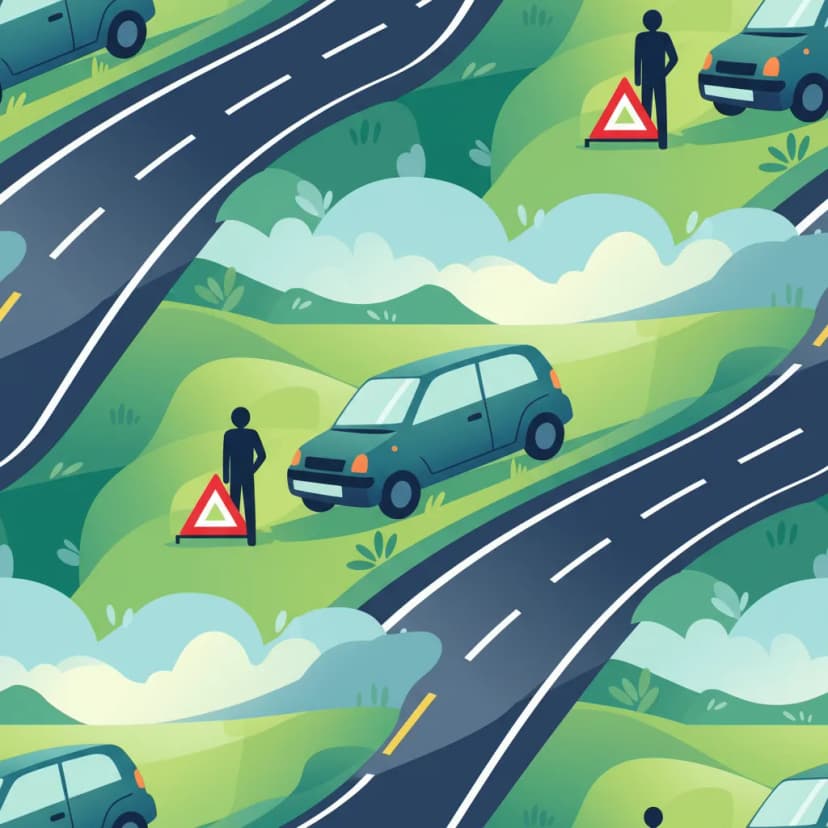
This lesson provides a safety protocol for dealing with a vehicle breakdown. You will learn the importance of trying to move the vehicle as far off the road as possible, preferably onto the shoulder or into an emergency lay-by. The lesson stresses that on high-traffic roads, the occupants' personal safety is the top priority; this involves wearing a reflective vest and waiting for assistance in a safe location away from the vehicle and the flow of traffic.
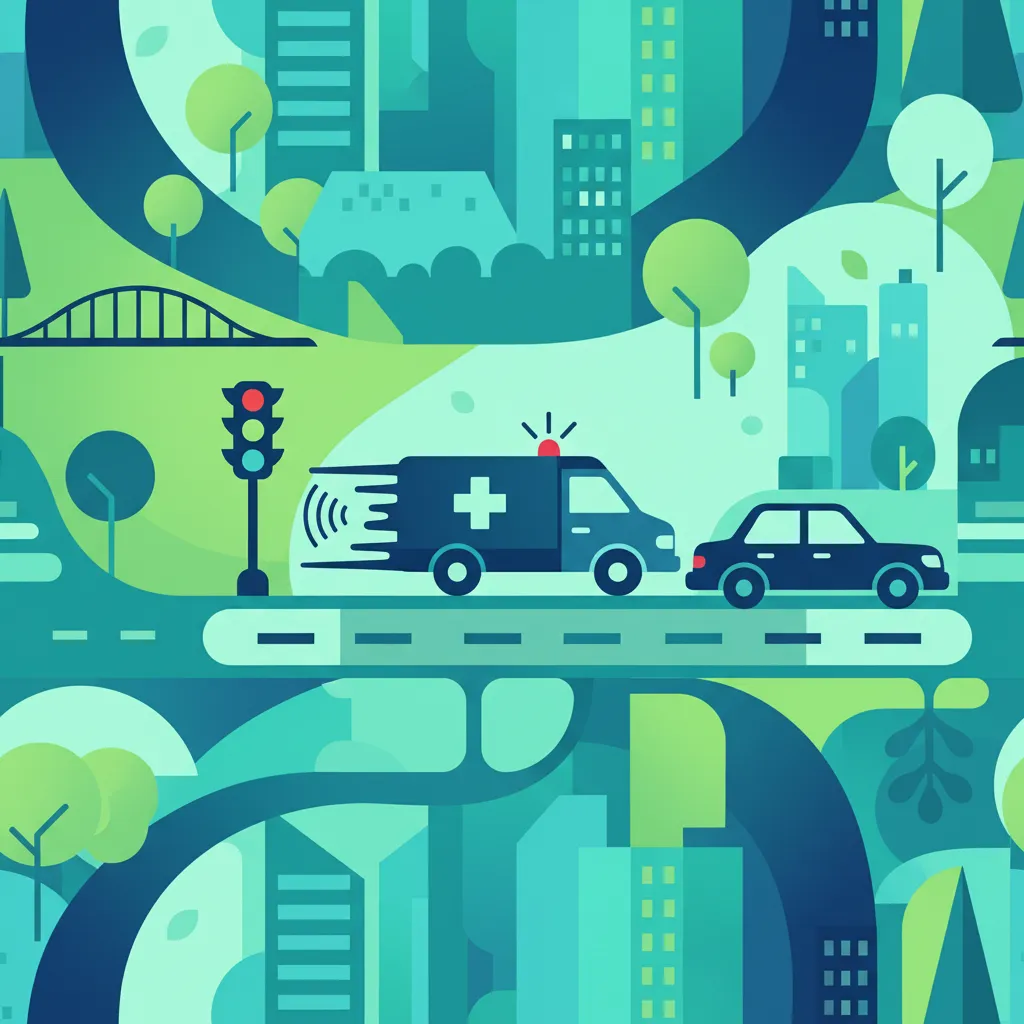
This lesson provides clear instructions on the correct response to an approaching emergency vehicle with its sirens and lights active. You will learn your absolute duty to give way and the best methods for doing so, which typically involve pulling over to the right and stopping. The lesson stresses the importance of acting calmly and predictably, avoiding sudden braking or swerving that could endanger the emergency vehicle or other traffic.
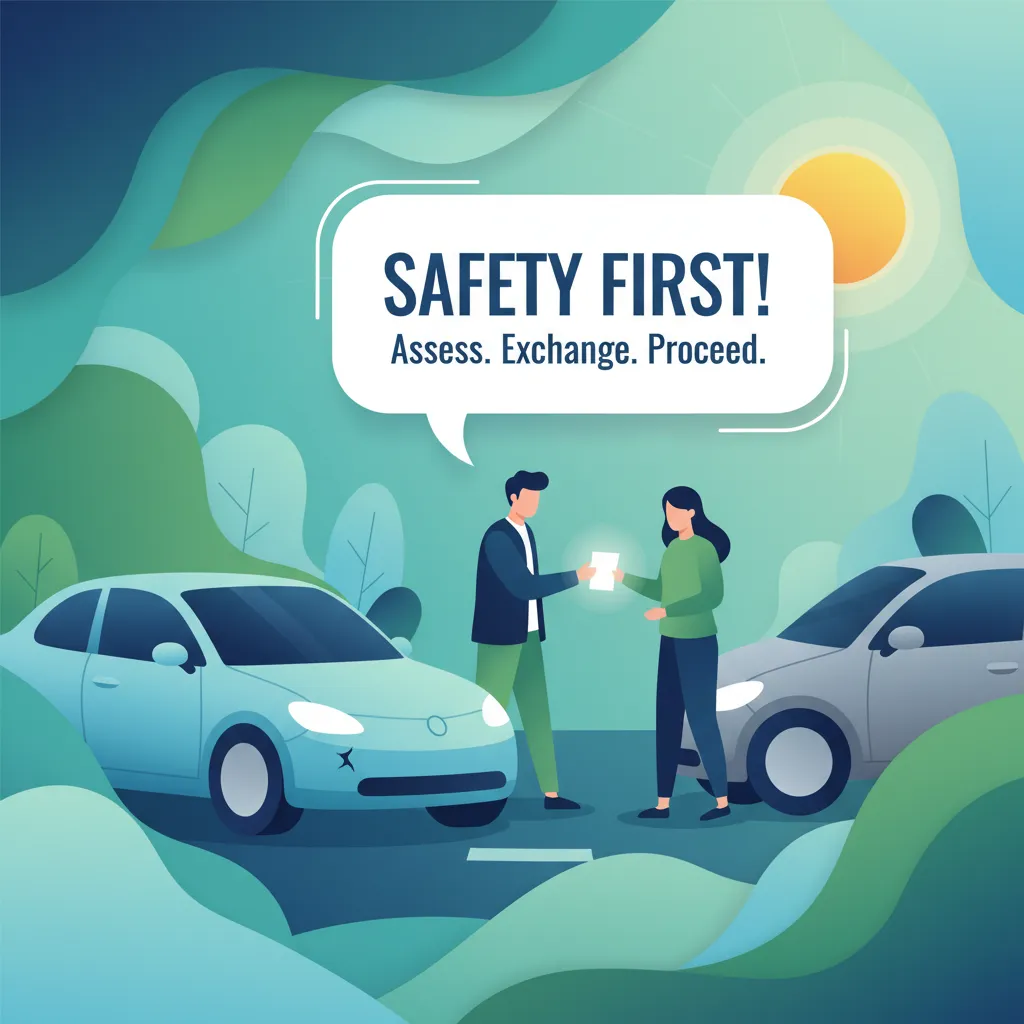
This lesson outlines the immediate, high-priority actions required at an accident scene. You will learn the 'stop, survey, secure' sequence: first, stopping and assessing the situation; second, warning other traffic by using hazard lights and placing a warning triangle; and third, taking steps to prevent further danger, such as switching off ignitions. These initial actions are crucial for the safety of everyone involved and for those approaching the scene.

This lesson provides a complete guide to motorway driving in Sweden. You will learn the correct procedures for merging from an on-ramp, maintaining proper lane discipline by keeping right unless overtaking, and exiting safely via off-ramps. The content emphasizes the importance of maintaining large safety margins at high speeds, checking blind spots thoroughly before any lane change, and knowing the correct safety procedures in case of a breakdown.
This lesson focuses on the high level of caution required when driving in residential areas. You will learn about the rules for special zones like 'gångfartsområde' (walking speed area) and the need to navigate around speed calming measures like speed bumps. The central theme is anticipating unpredictable behavior from residents, especially children, and managing the risks posed by parked cars that severely limit visibility.

This lesson covers the essential topic of communication in traffic using the vehicle's built-in signaling devices. You will learn the rules for using your turn indicators (körriktningsvisare) in good time before turning or changing lanes. The content also explains the proper use of hazard lights (varningsblinkers) in emergency situations and the very limited, specific circumstances in which using the horn (ljudsignal) is permitted to avert immediate danger.
This lesson covers the final phase of an emergency maneuver: coming to a safe, controlled stop and moving off the road. You will learn the procedure for finding a safe spot, signaling your intentions, and securing the motorcycle. It also addresses the important steps to take after the immediate danger has passed, including checking yourself and your vehicle for damage and taking a moment to regain your composure before continuing your journey.
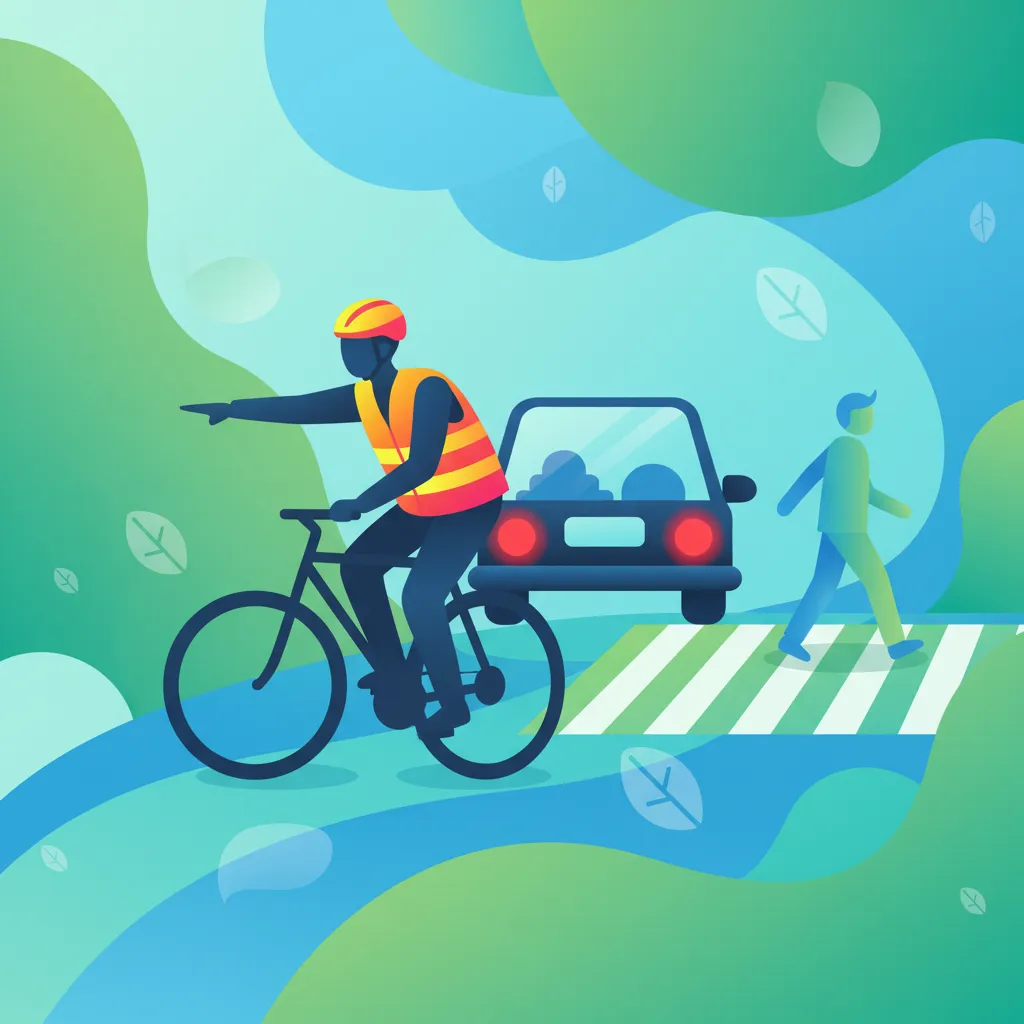
This lesson teaches you how to make an accident scene as safe as possible for yourself, any other involved parties, and approaching traffic. You will learn the correct use of hazard lights, the placement of warning triangles, and the importance of wearing a high-visibility vest. The content also covers how to identify and manage immediate post-crash hazards, such as spilled fuel or unstable vehicles, to prevent the situation from worsening.
This lesson covers the basics of providing first aid in an emergency, which is a legal duty for anyone arriving at an accident scene. You will be introduced to the L-ABCDE mnemonic (Life-threatening situation, Airway, Breathing, Circulation, Disability, Exposure) as a way to systematically assess and prioritize injuries. The content emphasizes that the most important role is often to ensure the person is breathing and to follow the instructions of the emergency operator until professional help arrives.
This lesson provides detailed guidance on navigating complex traffic points such as signalized intersections, multi-lane roundabouts, and pedestrian crossings. You will learn the correct procedures for entering and exiting roundabouts, the specific rules for yielding to pedestrians and cyclists at designated crossings, and how to interpret complex traffic light signals. These skills are vital for safe urban and suburban riding, where interaction with vulnerable road users is frequent.
Understand how to maximize visibility for stopped vehicles in Sweden. This lesson details the proper use of hazard warning lights and the strategic placement of the warning triangle according to road conditions and speed limits to prevent accidents. Essential theory for Swedish drivers.
This lesson covers the essential topic of communication in traffic using the vehicle's built-in signaling devices. You will learn the rules for using your turn indicators (körriktningsvisare) in good time before turning or changing lanes. The content also explains the proper use of hazard lights (varningsblinkers) in emergency situations and the very limited, specific circumstances in which using the horn (ljudsignal) is permitted to avert immediate danger.
This lesson covers strategies for driving safely when visibility is compromised. You will learn the correct use of different lighting systems: when to use low beams, high beams (helljus), and how to avoid dazzling other drivers. The lesson also explains the specific regulations for using front and rear fog lights and provides techniques for navigating safely in dense fog or heavy precipitation by reducing speed and using the road edge as a guide.
This lesson covers the correct interpretation and response to all forms of light and audible signals a motorcyclist will encounter. You will study the sequences of traffic lights, the rules for using turn indicators and hazard lights, and the legally permitted uses of the horn. Proper use of these signals is a fundamental aspect of safe riding, as it communicates your intentions clearly to other road users and helps prevent misunderstandings and collisions.
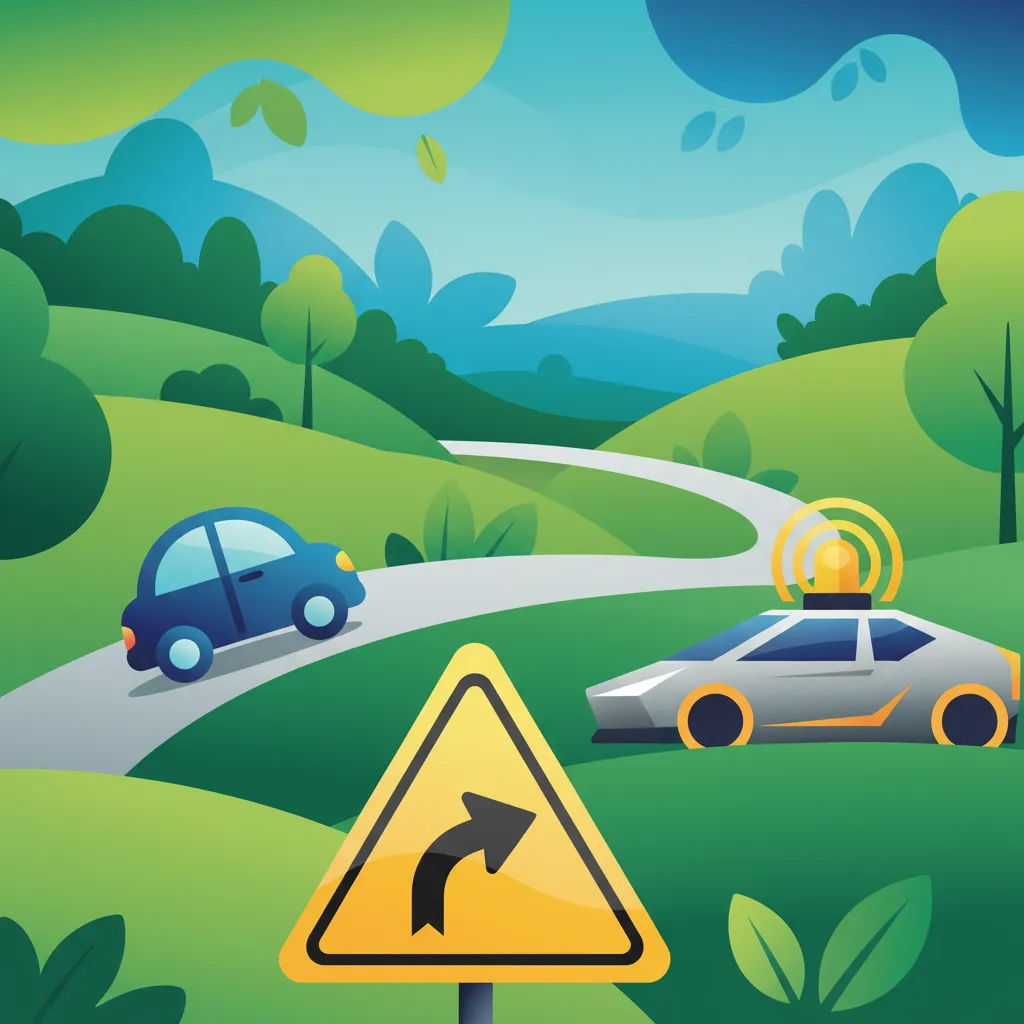
This lesson focuses on Swedish warning signs designed to alert drivers to potential dangers. You will study signs indicating sharp bends, slippery surfaces, animal crossings, and temporary hazards like road construction. Correctly interpreting these signs allows a motorcyclist to proactively adjust speed, lane position, and readiness to react, which is essential for maintaining control and safety, especially in adverse weather or on unfamiliar roads.
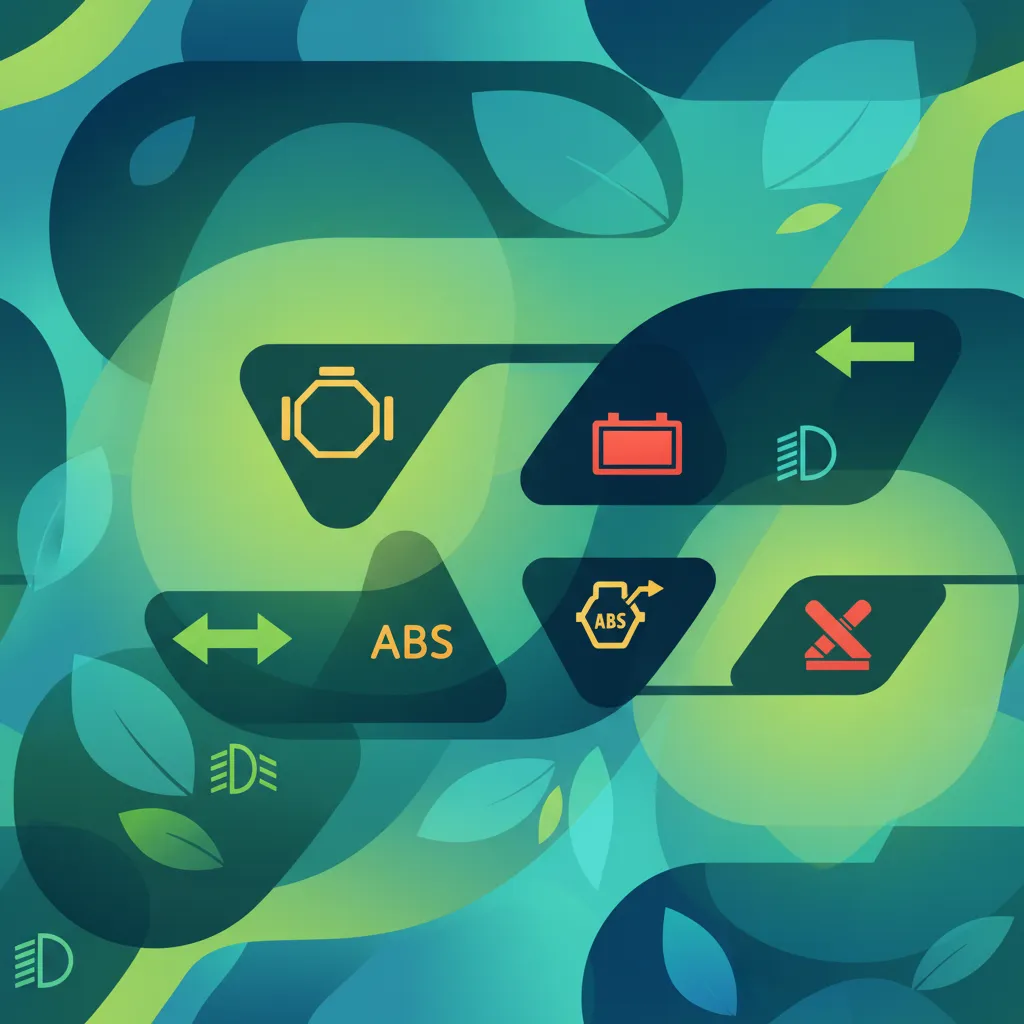
This lesson serves as a guide to the language of your car's instrument panel. You will learn the meaning of the most common warning lights, understanding the urgency indicated by their color: red for a critical issue requiring an immediate stop, yellow for a fault that needs attention soon, and green or blue for informational indicators. Knowing what these symbols mean is crucial for addressing mechanical problems before they become serious or unsafe.
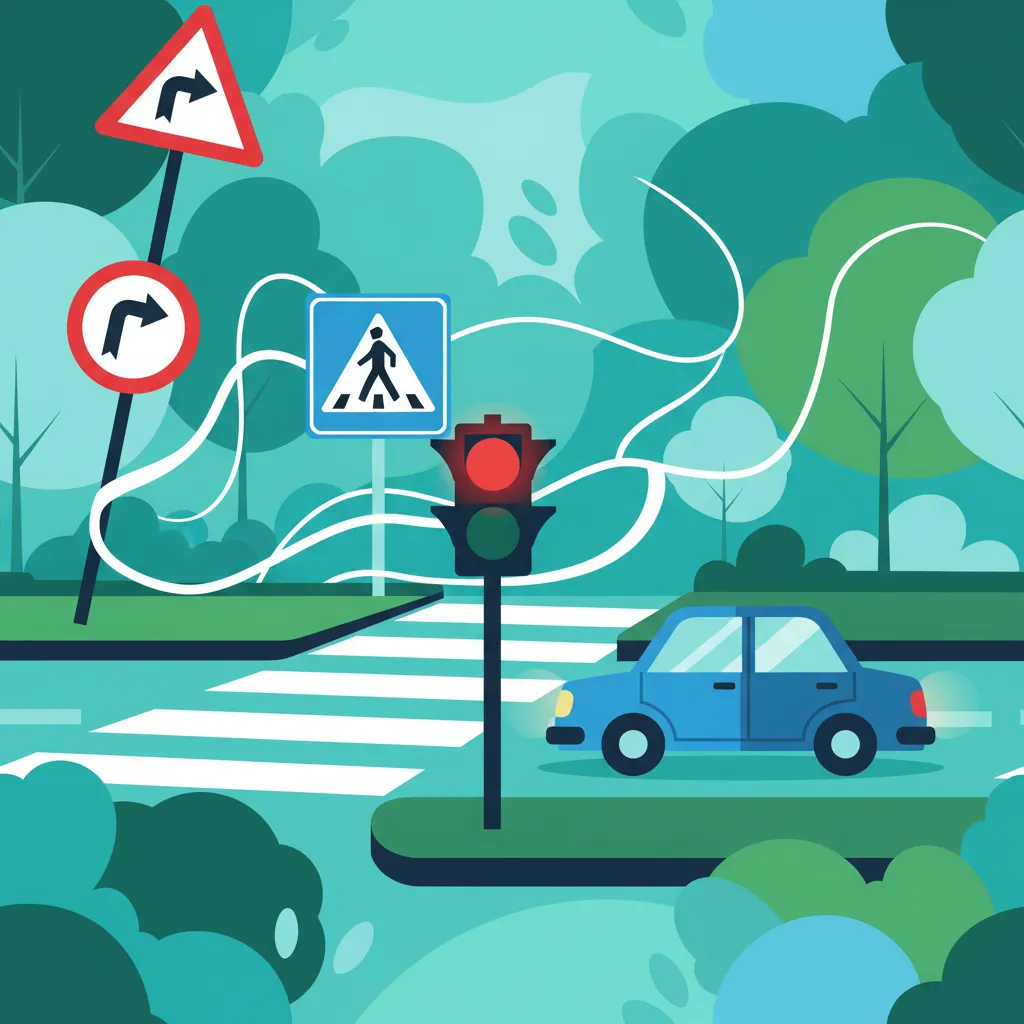
This lesson focuses on Swedish warning signs (varningsmärken), designed to alert drivers to potential dangers ahead. You will study the meaning of triangular signs indicating hazards such as sharp bends, pedestrian crossings, risk of animals on the road, or temporary road work. The objective is to develop proactive driving habits by understanding how to anticipate risks and adapt speed and positioning appropriately when a warning sign is present.
This lesson teaches you how to make an accident scene as safe as possible for yourself, any other involved parties, and approaching traffic. You will learn the correct use of hazard lights, the placement of warning triangles, and the importance of wearing a high-visibility vest. The content also covers how to identify and manage immediate post-crash hazards, such as spilled fuel or unstable vehicles, to prevent the situation from worsening.
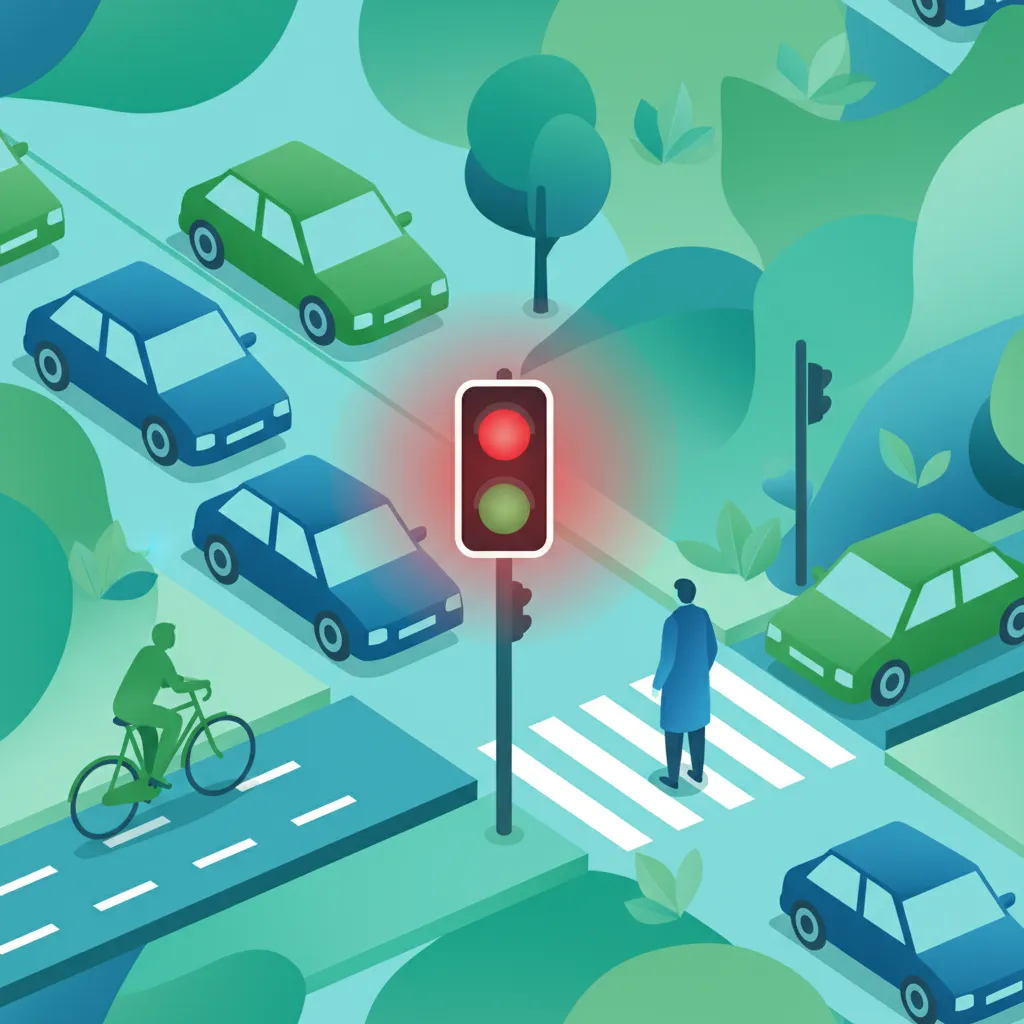
This lesson provides a detailed explanation of the Swedish traffic signal system. You will learn the precise legal meaning of solid red, yellow, and green lights, as well as green arrows which permit turning when oncoming traffic is stopped. It also covers procedures for flashing yellow signals and what to do when traffic lights are out of order, emphasizing that standard priority rules like the right-hand rule then apply.
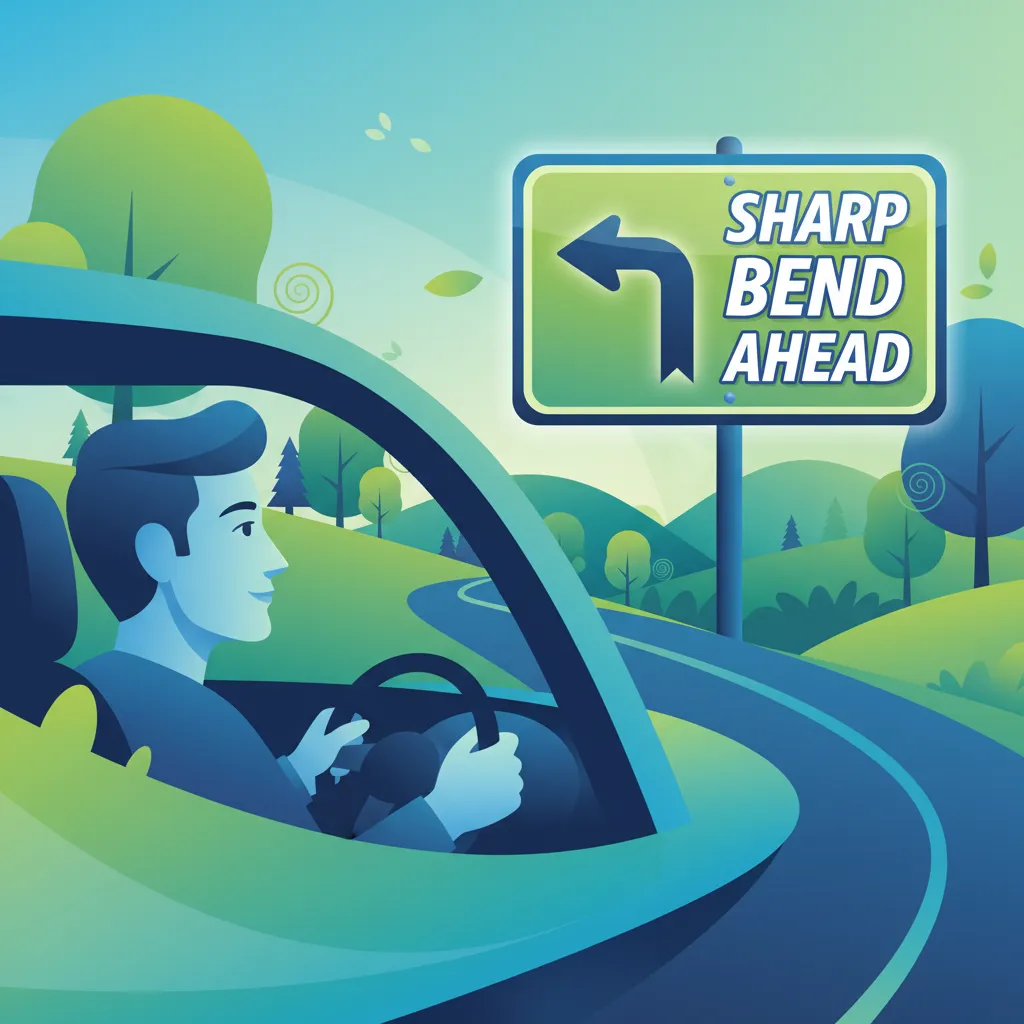
This lesson teaches riders to interpret warning signs (Varningsskyltar), which alert them to potential dangers on the road ahead. It covers a wide range of signs, including those for sharp curves, slippery surfaces, wildlife crossings, and upcoming roadworks. Understanding these triangular signs allows riders to anticipate hazards, adjust their speed and position proactively, and enhance their overall safety.

This lesson covers the correct use of a moped's communication tools: the turn signals and the horn. It explains that signals should be used well in advance of any turn or lane change to inform other road users of your intentions. The content also clarifies that the horn is primarily a warning device to alert others of your presence in potentially dangerous situations, not a tool to express frustration.
Find clear answers to common questions learners have about Use of Emergency Triangle and Warning Lights. Learn how the lesson is structured, which driving theory objectives it supports, and how it fits into the overall learning path of units and curriculum progression in Sweden. These explanations help you understand key concepts, lesson flow, and exam focused study goals.
You should activate your hazard warning lights whenever your vehicle is stopped due to an accident, breakdown, or any other situation where it may pose a danger or obstruction to other traffic. This immediately signals to other drivers that there is an unexpected hazard ahead.
The distance depends on the road type and speed limit. On motorways and main roads with high speeds, place it at least 100 meters behind your vehicle. On roads with lower speed limits, a distance of 50 meters is generally sufficient, but always ensure it's visible from a distance that allows other drivers ample time to react.
Yes, it is highly recommended, especially if visibility is poor or the road is winding. Even on rural roads, placing the triangle at a safe distance (e.g., 50 meters) helps alert approaching drivers to your stationary vehicle, preventing potential collisions.
Your safety is the priority. If it is unsafe to exit the vehicle or place the triangle (e.g., due to heavy traffic, poor visibility, or being on a busy motorway), stay inside your vehicle with your seatbelt on and hazard lights flashing, and call for professional assistance. Do not risk your life to place the triangle.
Theory test questions often present scenarios where a vehicle is stopped due to a breakdown or accident. You'll be asked about the correct procedure, including when to use hazard lights and the appropriate distance to place the warning triangle, considering factors like speed limits and road conditions.