
Encountering an emergency vehicle requires immediate, correct action. This lesson covers the specific rules and safe procedures for Category AM moped riders in Sweden when an emergency vehicle needs to pass. Understanding how to yield correctly is vital for both your safety and the swift response of emergency services, and is a common topic in the theory exam.
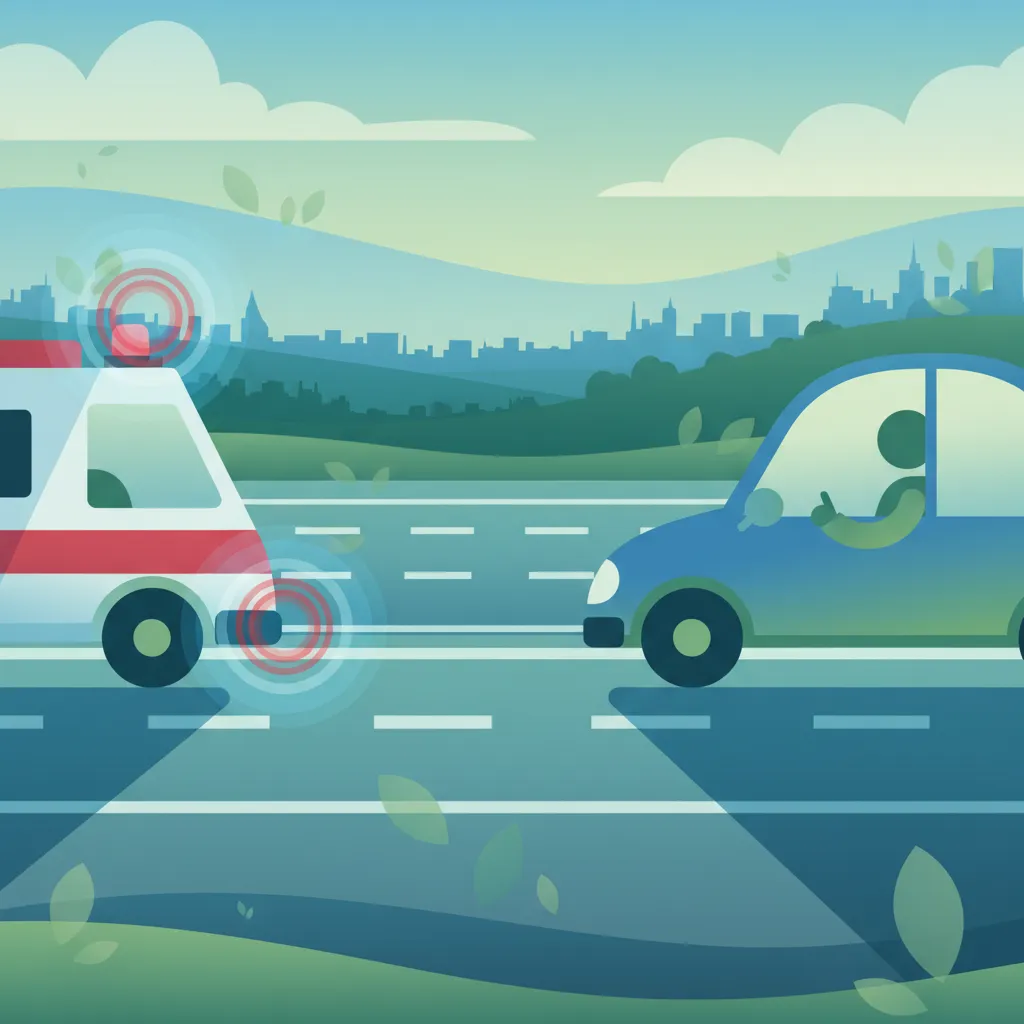
As a moped rider navigating Swedish roads, understanding your obligations regarding emergency vehicles is paramount. This lesson outlines the legal requirements and practical steps you must take when encountering an emergency vehicle that is actively using its warning signals. Prioritizing emergency responders is not just a legal duty under Swedish traffic law (Trafikförordning); it is a critical measure for ensuring public safety and facilitating timely assistance in urgent situations.
Failure to yield correctly can have severe consequences, including collisions, delayed emergency response, and significant legal penalties. Therefore, it is essential for all Category AM moped riders to master the appropriate yielding maneuvers, anticipate potential hazards, and act predictably to create a clear path for ambulances, fire engines, police cars, and rescue helicopters.
Emergency vehicles are specially designated vehicles that play a crucial role in maintaining public safety and responding to crises. Recognizing them and their specific warning signals is the first step in fulfilling your yielding obligation.
In Sweden, an emergency vehicle is any vehicle authorized by official bodies such as the Swedish Police Authority (Polismyndigheten), Swedish Rescue Services (Räddningstjänsten), or municipal fire services (kommunal räddningstjänst). These vehicles are specifically equipped with warning devices, which can be either audible (sirens) or visual (flashing lights), or both.
The presence of these active warning signals legally designates the vehicle as an emergency vehicle, requiring all other road users, including moped riders, to yield. It is a common misconception that only large vehicles like fire trucks qualify; however, any vehicle displaying active warning signals, regardless of its size, is an emergency vehicle to which you must give way.
A vehicle authorized for rescue services in Sweden, equipped with active siren and/or flashing lights. This includes ambulances, fire engines, police cars, and rescue helicopters.
Emergency vehicles use distinct signals to alert other road users to their urgent presence. These include:
Both types of signals serve to alert you to the approaching emergency vehicle. While both together signify high urgency, either signal used individually is enough to mandate your response. Always scan the road ahead and in your mirrors for flashing lights, especially in noisy environments or when your hearing might be impaired (e.g., due to wind noise or heavy traffic).
Yielding to emergency vehicles is not merely a courtesy; it is a fundamental and legally binding duty for every road user in Sweden. This obligation is enshrined in the country's road traffic laws to ensure the efficient and safe passage of emergency responders.
Swedish law, specifically the Trafikförordning (1998:5), mandates that every driver, including Category AM moped riders, must give way when an emergency vehicle with flashing lights or a siren approaches. This means you are required to move to the side of the carriageway and stop as soon as it is safe and possible to do so. The primary goal is to create a clear, unobstructed path for the emergency vehicle.
This rule applies universally on all public roads, regardless of whether you are in an urban area, on a rural road, or even, hypothetically, in a situation where mopeds might be prohibited (such as a motorway, though mopeds are generally not allowed on motorways in Sweden). Your immediate and decisive action can be life-saving, directly impacting the response time to an incident.
When yielding, your actions must be predictable and controlled. Abrupt or erratic maneuvers can endanger yourself, other road users, and even the emergency vehicle itself. Think of it as a coordinated effort: the emergency driver relies on your clear and anticipated response to safely navigate through traffic.
A smooth, non-panic approach minimizes surprise for surrounding vehicles and ensures you maintain control of your moped. This includes:
By acting predictably, you contribute to overall road safety and prevent secondary incidents that could hinder emergency operations.
Executing the yielding maneuver requires a series of coordinated steps to ensure both your safety and the unimpeded passage of the emergency vehicle.
When you detect an approaching emergency vehicle, follow these steps calmly and methodically:
Recognize the Signals: Immediately identify the audible siren and/or flashing lights of an emergency vehicle. Scan your mirrors and surroundings.
Assess the Situation: Evaluate your current position, the road conditions, surrounding traffic, and available space to move. Determine the safest place to pull over.
Signal Your Intent (if safe): If you need to change lanes or move significantly to the side, use your turn signals briefly to alert other drivers of your intention. Avoid using turn signals if it might confuse other road users in complex situations.
Decelerate Gradually: Smoothly reduce your speed. Avoid sudden braking, especially if there's traffic behind you or the road surface is slippery. Use both front and rear brakes proportionally.
Move Laterally to the Side: Safely steer your moped to the far right side of the carriageway, or to the left if road geometry (e.g., a central median on a multi-lane road) or specific instructions from emergency personnel dictate. The goal is to create the widest possible clear path.
Come to a Complete Stop: Bring your moped to a full stop. If you are behind a stopped emergency vehicle, maintain a safe distance of at least 3 metres. Activate your hazard warning lights to make your stopped position more visible to other traffic.
Remain Stopped: Stay stopped until the emergency vehicle has completely passed and it is safe to re-enter traffic flow. Do not move again until you are certain it is clear and no other emergency vehicles are approaching.
Your Minimum Safe Stopping Distance (MSSD) is the shortest distance required for your moped to come to a complete and controlled stop without losing stability. This distance is influenced by your speed, reaction time, the condition of your brakes and tires, and crucially, the road surface (dry, wet, icy) and gradient.
The shortest distance in which a moped can come to a complete stop without loss of control, considering factors such as speed, rider reaction time, vehicle condition, and road surface.
Speed (km/h) × 0.28 metres. So, at 45 km/h, your moped travels approximately 12.6 metres before you even start braking.Always begin your yielding maneuver early enough to account for your MSSD. This prevents sudden, dangerous braking and allows for a smooth, controlled stop, minimizing the risk of a rear-end collision or loss of control, especially when an emergency vehicle is rapidly approaching.
An often-misunderstood rule is the prohibition against overtaking a stopped emergency vehicle with its warning lights still active. According to Trafikförordning (1998:4), you must not pass an emergency vehicle that has halted on the roadway while its flashing lights are still activated.
This rule is critical for the safety of emergency personnel working around their vehicle (e.g., paramedics attending to a patient, firefighters setting up equipment, police officers directing traffic). Even if traffic appears to be moving around it, or if it's stopped at a traffic light, if the warning lights are on, it signifies ongoing emergency activity. Remain behind the vehicle until its lights are turned off or personnel explicitly signal that it is safe to proceed. Violating this rule can result in significant fines and penalty points.
While the core principles of yielding remain constant, real-world situations demand flexibility. Your yielding maneuver must adapt to varying conditions and specific road environments.
There are specific circumstances where performing the full yielding maneuver (moving to the side and stopping) might be impossible or unsafe. Even in these exception situations (undantag), your duty to prioritize the emergency vehicle remains.
Even in exception situations, the duty to facilitate the emergency vehicle's passage remains. Never assume the rule is completely waived; adapt your actions to give maximum possible priority safely.
The rules governing emergency vehicles are fundamental to traffic safety in Sweden. Non-compliance carries legal consequences.
The following regulations underscore the importance of yielding to emergency vehicles:
| Regulation | Rule Statement | Applicability | Legal Status | Rationale | Correct Example | Incorrect Example |
|---|---|---|---|---|---|---|
| Trafikförordning 1998:5 (Section 5) | "Every driver shall, when an emergency vehicle with flashing lights or siren approaches, give way by moving to the side of the carriageway and stopping as soon as possible." | All public roads, all vehicle categories, including Category AM. | Mandatory | Provides a clear, uniform response for emergency access. | A moped rider on a two-lane road hears a siren, reduces speed, signals, and pulls onto the shoulder, stopping before the ambulance passes. | Rider accelerates to overtake the ambulance, causing a near-miss. |
| Trafikförordning 1998:4 (Section 4) | "A driver must not overtake an emergency vehicle that has stopped on the roadway with its warning lights activated." | All public roads, regardless of vehicle size. | Mandatory | Protects emergency personnel working near the vehicle. | Rider slows and stays behind a stopped fire engine with flashing lights until it moves. | Rider passes the fire engine while its lights are flashing, creating a hazard for personnel. |
| Vägtrafiklag 1998:1 (Article 12) | "Failure to comply with the priority rules for emergency vehicles constitutes a traffic offense and may be punished with a fine and penalty points." | Nationwide, all traffic participants. | Mandatory | Enforces compliance through penalties. | Rider avoids penalty by correctly yielding. | Rider is fined for obstructing an ambulance. |
| Regulation on Hazard Warning Lights (Vägtrafikförordning 1965:29) | "If a driver stops his/her vehicle in order to yield to an emergency vehicle, hazard warning lights may be used to indicate the stopped position." | When stopping on the road is necessary. | Allowed (optional) | Increases visibility of a stopped vehicle for other road users, especially in poor visibility. | Rider activates hazard lights while stopped behind a police car with active warning signals. | Rider does not use hazard lights, making their stopped moped less visible to following traffic. |
| Exception – No-Stopping Zones (Trafikförordning 1998:3 §2) | "In zones where stopping is prohibited, a driver must still give way to emergency vehicles by reducing speed and, where possible, moving partially onto the adjacent lane without fully stopping." | Bus lanes, tram tracks, marked "Stopp förbjudet". | Mandatory (with specified limitation) | Balances safety of emergency response with traffic flow and avoiding new obstructions. | Rider slows, signals, and drifts onto the curb edge in a bus lane to let an ambulance pass. | Rider attempts to stop fully in a bus lane, obstructing traffic and risking a fine. |
Being aware of common mistakes can help you prevent dangerous situations and legal repercussions.
Understanding these key terms is crucial for any moped rider in Sweden.
Let's look at how these rules apply in various common situations.
The obligation to yield to emergency vehicles is built upon fundamental principles of safety and efficiency:
To ensure you are prepared for encountering emergency vehicles, keep these key points in mind:
Lesson content overview
Explore all units and lessons included in this driving theory course.
Explore search topics learners often look for when studying Emergency Vehicles and Yielding. These topics reflect common questions about road rules, driving situations, safety guidance, and lesson level theory preparation for learners in Sweden.
Browse additional driving theory lessons that cover connected traffic rules, road signs, and common driving situations related to this topic. Improve your understanding of how different rules interact across everyday traffic scenarios.
Understand the legal requirements and safe procedures for giving way to emergency vehicles in Sweden. This lesson details the expected rider actions when encountering sirens or lights, ensuring safe passage for emergency services and compliance with traffic law.
This lesson provides clear instructions on the correct response to an approaching emergency vehicle with its sirens and lights active. You will learn your absolute duty to give way and the best methods for doing so, which typically involve pulling over to the right and stopping. The lesson stresses the importance of acting calmly and predictably, avoiding sudden braking or swerving that could endanger the emergency vehicle or other traffic.
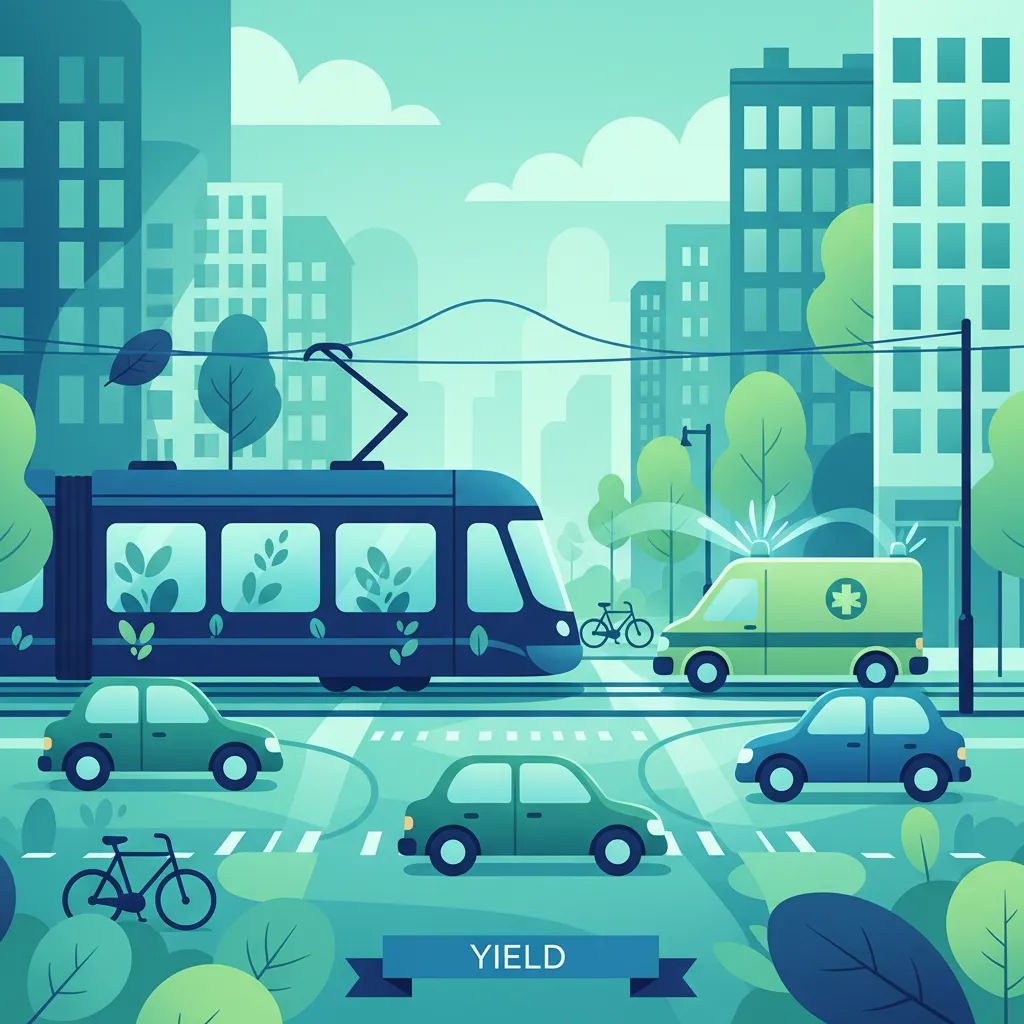
This lesson explains a motorcyclist's legal duty when encountering emergency vehicles with active sirens and lights. You will learn the correct procedure for yielding the right-of-way by safely pulling over and stopping. Additionally, the lesson covers the rules and best practices for sharing the road with public transport like buses and trams, including navigating around bus stops and respecting dedicated lanes, to ensure safety for all road users.
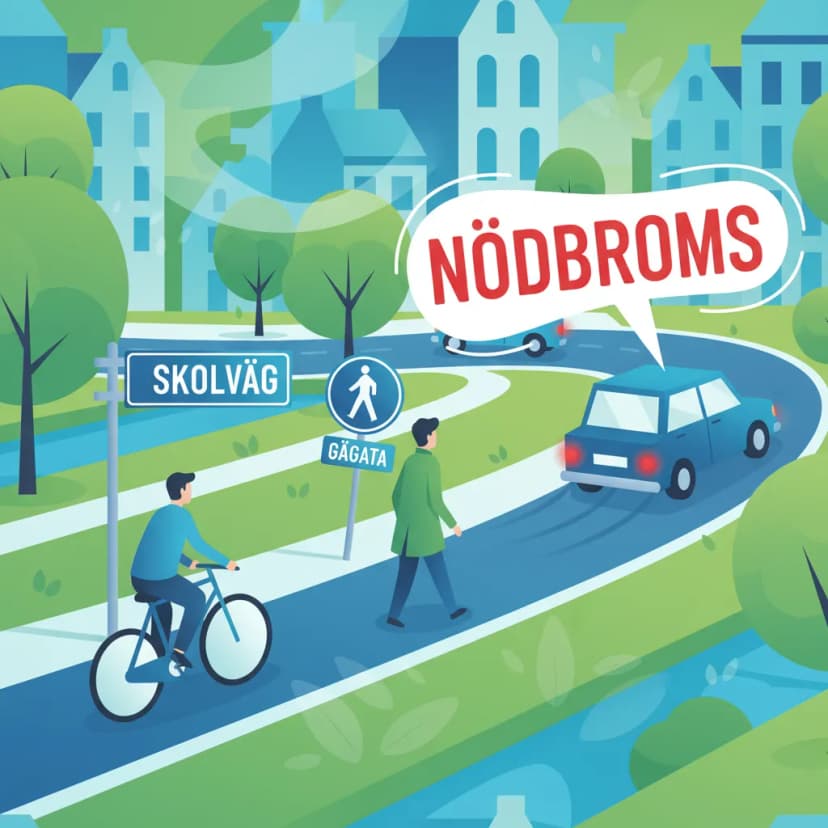
This lesson examines a variety of special situations where standard priority rules are modified. You will learn about the 'exit rule' (utfartsregeln) when entering a road from property, your duty to yield to buses indicating a departure from a stop, and the specific rules for pedestrian-only streets (gågata). The content also covers interactions with trams, emergency vehicles, and procedures at railway crossings, highlighting situations that demand maximum vigilance.
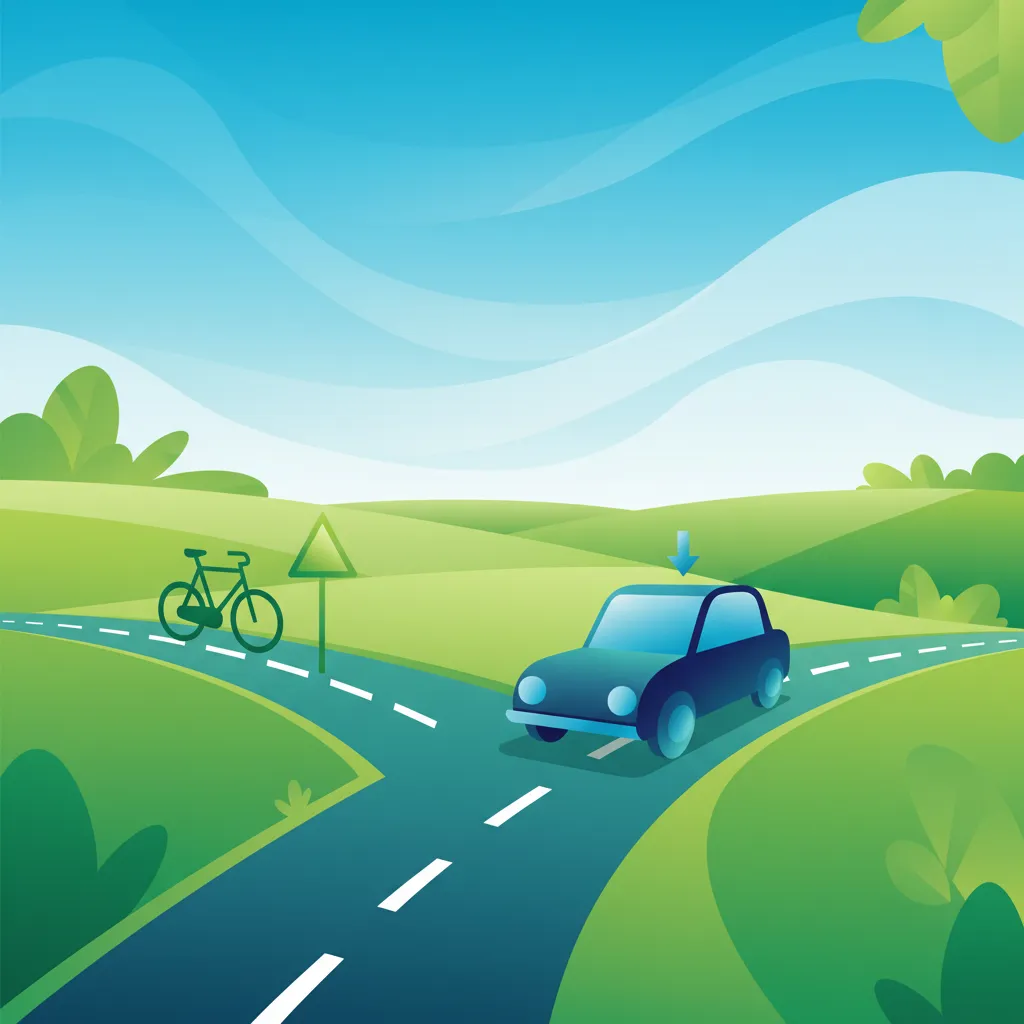
This lesson focuses on regulated intersections where priority is determined by signs indicating a main road (huvudled), a duty to yield (väjningsplikt), or a duty to stop (stopplikt). You will learn how to identify which road has priority and your legal obligation to give way to all traffic on that road before proceeding. The lesson covers proper procedures for approaching these junctions, assessing traffic, and entering the main road safely.
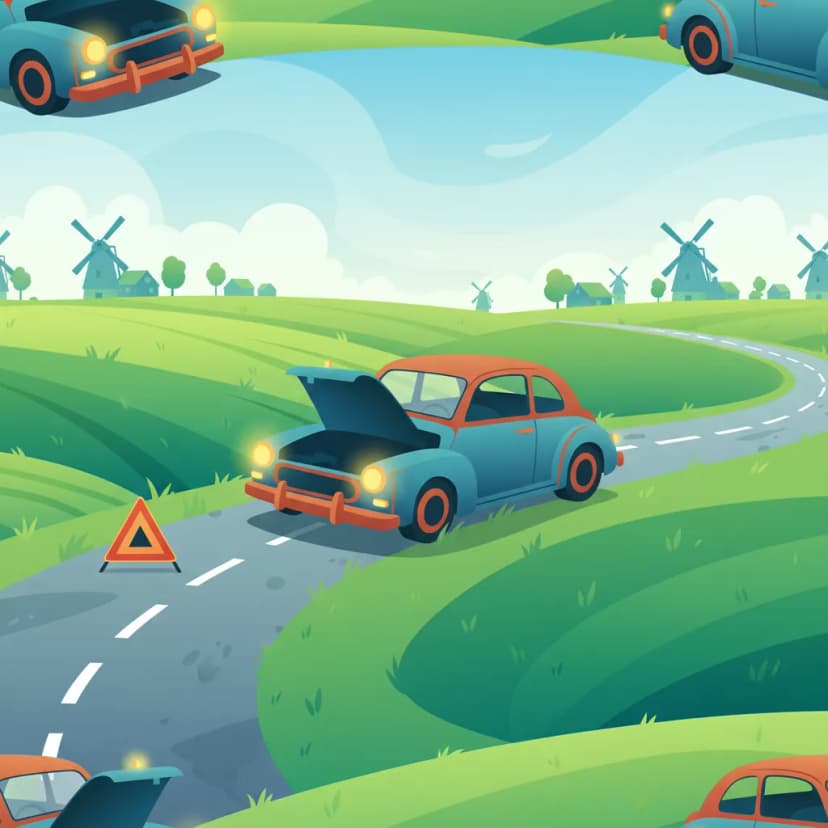
This lesson focuses on the correct use of warning devices to protect an accident or breakdown scene. You will learn to immediately activate your hazard lights (varningsblinkers). The main focus is on the proper placement of the warning triangle, explaining how the distance from the vehicle must be adapted based on the road's speed limit and visibility to give oncoming drivers adequate time to react.
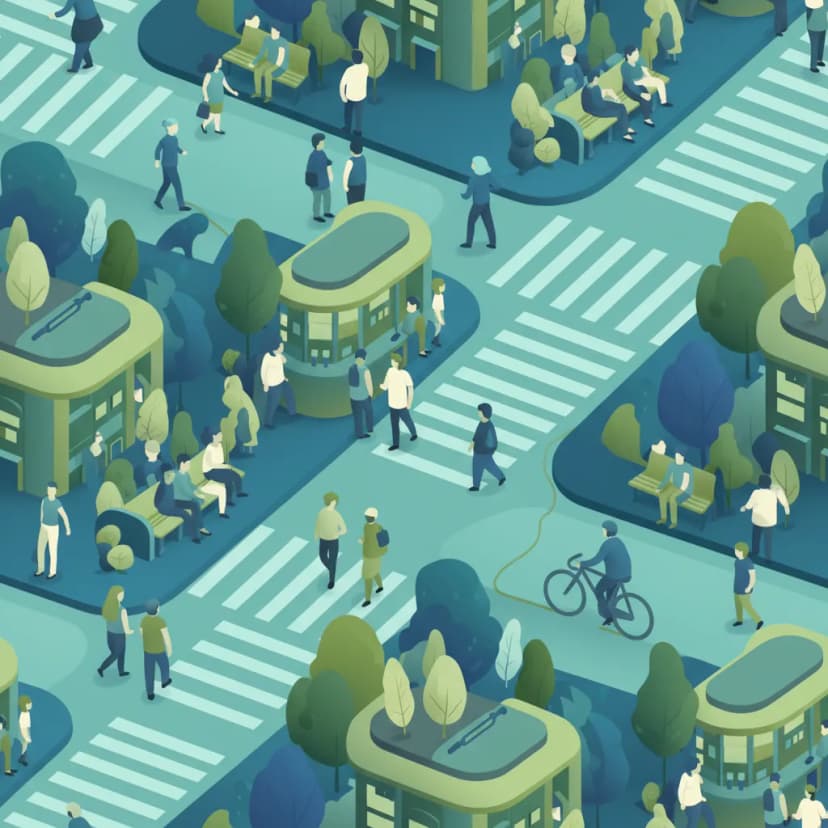
This lesson details a driver's responsibility towards pedestrians. You will learn the strict rule of yielding to pedestrians who are on or about to enter a marked, uncontrolled crosswalk. The content also covers the specific, highly restrictive rules for driving in designated pedestrian zones (gågata) and 'walking speed' areas (gångfartsområde), where pedestrians have complete priority and vehicle traffic is severely limited.
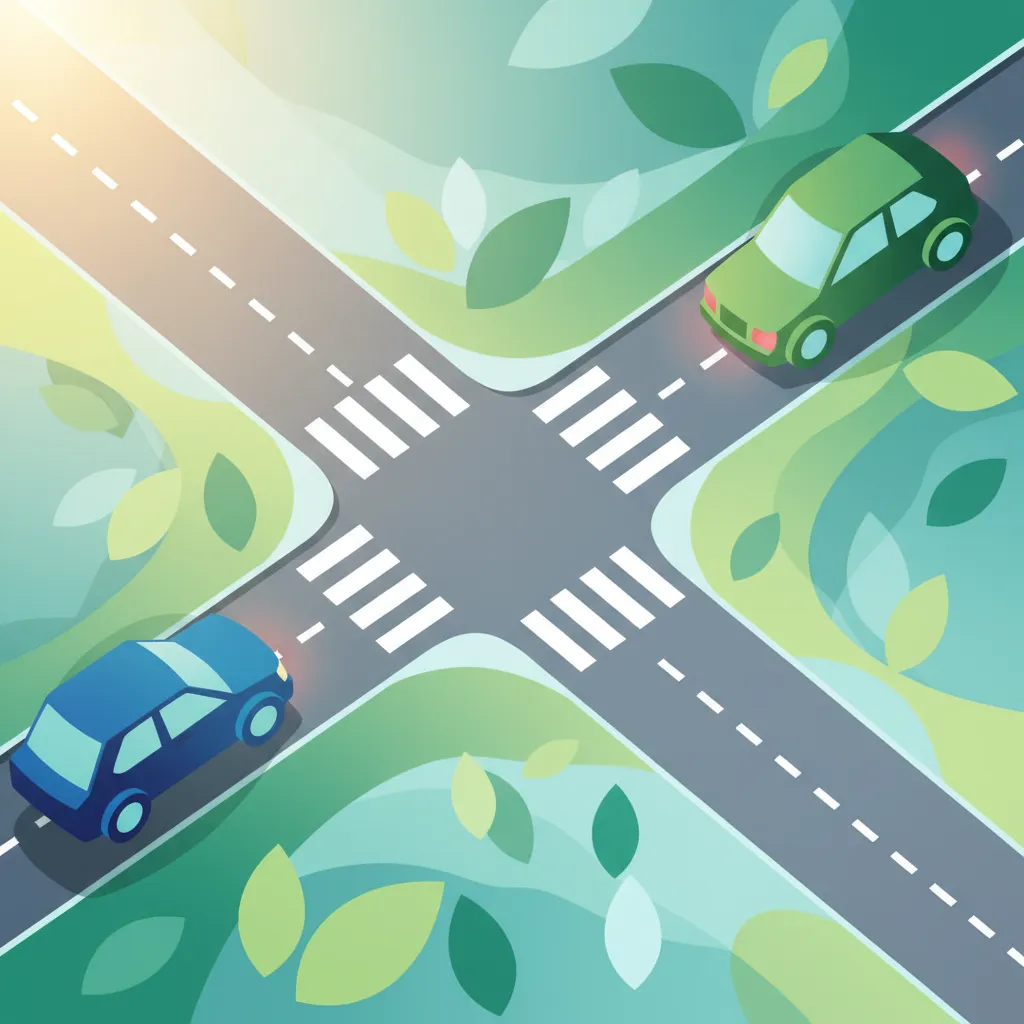
This lesson explains the two core principles of priority in Swedish traffic law: the right-hand rule (Högerregeln) and the duty to yield (Väjningsplikt). You will learn how to apply the right-hand rule at uncontrolled intersections and when to yield to other traffic as indicated by signs or road markings. Understanding this fundamental hierarchy is crucial for making correct and safe decisions in a wide variety of common traffic situations you will face as a motorcyclist.
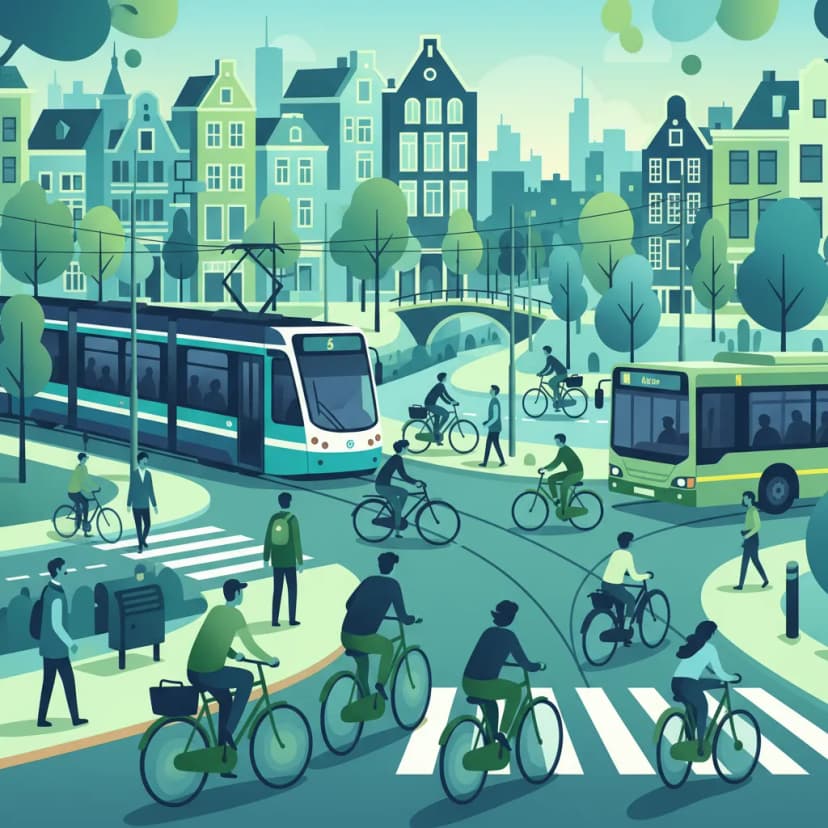
This lesson explains the specific traffic rules related to public transport vehicles. You will learn about your duty to yield to buses signaling to leave a stop (on roads with a speed limit of 50 km/h or less) and the fact that trams generally have priority. The lesson covers how to safely pass stopped buses and trams, being mindful of disembarking passengers who may cross the road unexpectedly.
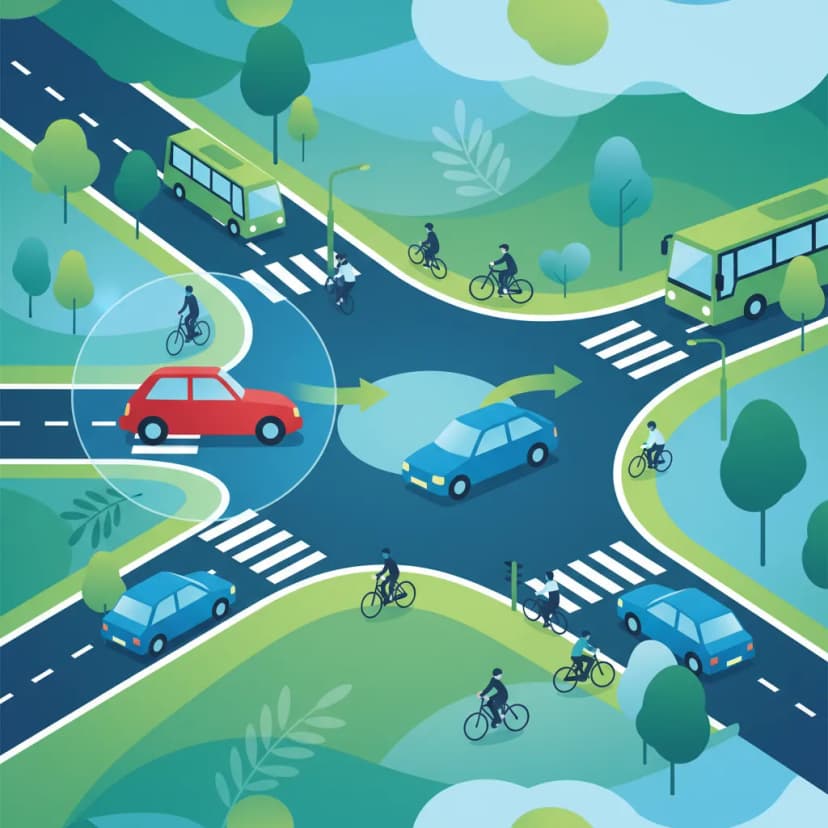
This lesson explains the foundational right-hand rule (högerregeln), which is the default priority rule at Swedish intersections where no other signs or signals regulate traffic. You will learn that you must always yield to vehicles approaching from your right in such situations. The content clarifies where this rule applies, such as in residential areas and on smaller rural roads, and covers the critical exceptions when signs or other rules take precedence.
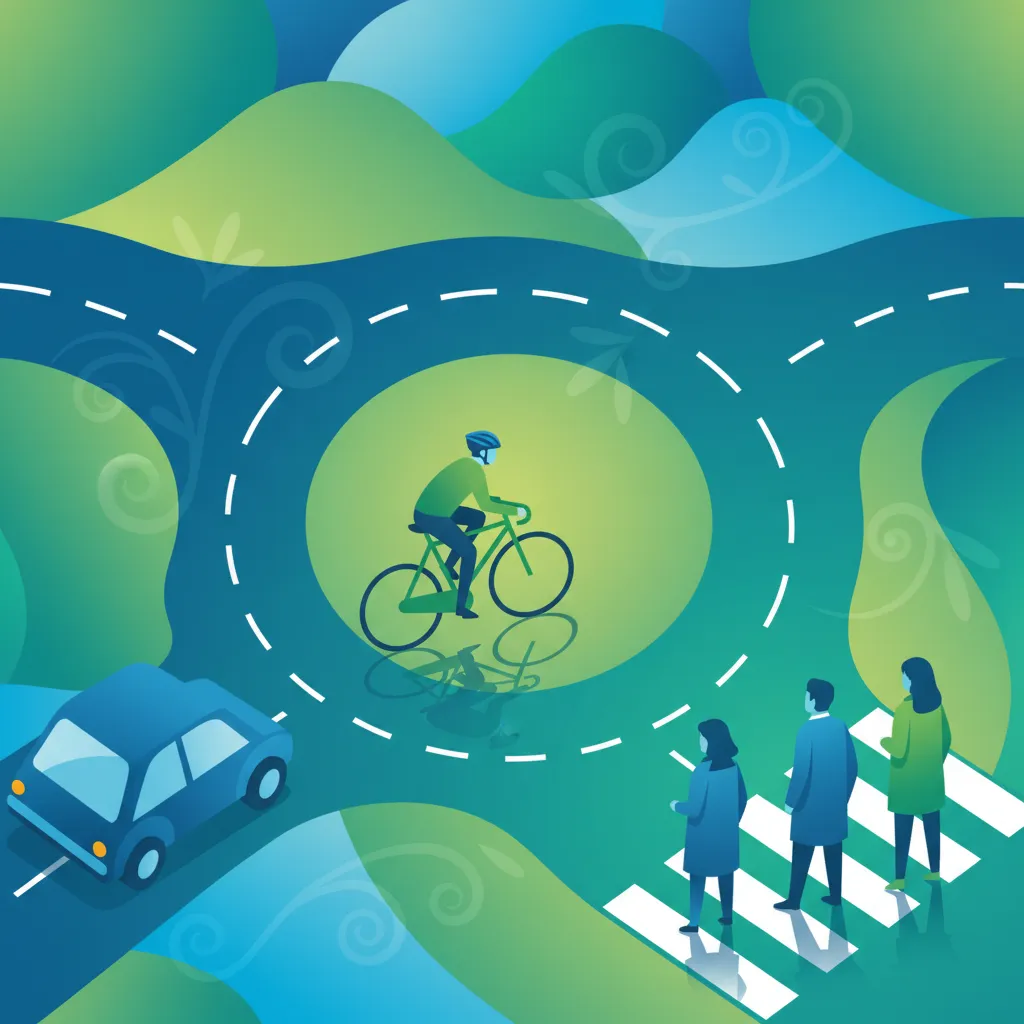
This lesson provides detailed guidance on navigating complex traffic points such as signalized intersections, multi-lane roundabouts, and pedestrian crossings. You will learn the correct procedures for entering and exiting roundabouts, the specific rules for yielding to pedestrians and cyclists at designated crossings, and how to interpret complex traffic light signals. These skills are vital for safe urban and suburban riding, where interaction with vulnerable road users is frequent.
Learn the fundamental principles of right-of-way in Swedish traffic. This lesson covers general priority rules at intersections, crossings, and in various traffic scenarios, building on the understanding of yielding to emergency vehicles.
This lesson introduces the core principles of right-of-way in Sweden, including the general duty to give way (Väjningsplikt) and the stricter stop duty (Stopplikt). It explains the concept of a priority road and how to apply the right-hand rule at uncontrolled intersections. By understanding this legal framework, riders can determine who has priority in any given situation and act predictably and safely.
This lesson explains the two core principles of priority in Swedish traffic law: the right-hand rule (Högerregeln) and the duty to yield (Väjningsplikt). You will learn how to apply the right-hand rule at uncontrolled intersections and when to yield to other traffic as indicated by signs or road markings. Understanding this fundamental hierarchy is crucial for making correct and safe decisions in a wide variety of common traffic situations you will face as a motorcyclist.
This lesson explains the foundational right-hand rule (högerregeln), which is the default priority rule at Swedish intersections where no other signs or signals regulate traffic. You will learn that you must always yield to vehicles approaching from your right in such situations. The content clarifies where this rule applies, such as in residential areas and on smaller rural roads, and covers the critical exceptions when signs or other rules take precedence.
This lesson examines a variety of special situations where standard priority rules are modified. You will learn about the 'exit rule' (utfartsregeln) when entering a road from property, your duty to yield to buses indicating a departure from a stop, and the specific rules for pedestrian-only streets (gågata). The content also covers interactions with trams, emergency vehicles, and procedures at railway crossings, highlighting situations that demand maximum vigilance.
This lesson focuses on regulated intersections where priority is determined by signs indicating a main road (huvudled), a duty to yield (väjningsplikt), or a duty to stop (stopplikt). You will learn how to identify which road has priority and your legal obligation to give way to all traffic on that road before proceeding. The lesson covers proper procedures for approaching these junctions, assessing traffic, and entering the main road safely.
This lesson details a driver's responsibility towards pedestrians. You will learn the strict rule of yielding to pedestrians who are on or about to enter a marked, uncontrolled crosswalk. The content also covers the specific, highly restrictive rules for driving in designated pedestrian zones (gågata) and 'walking speed' areas (gångfartsområde), where pedestrians have complete priority and vehicle traffic is severely limited.
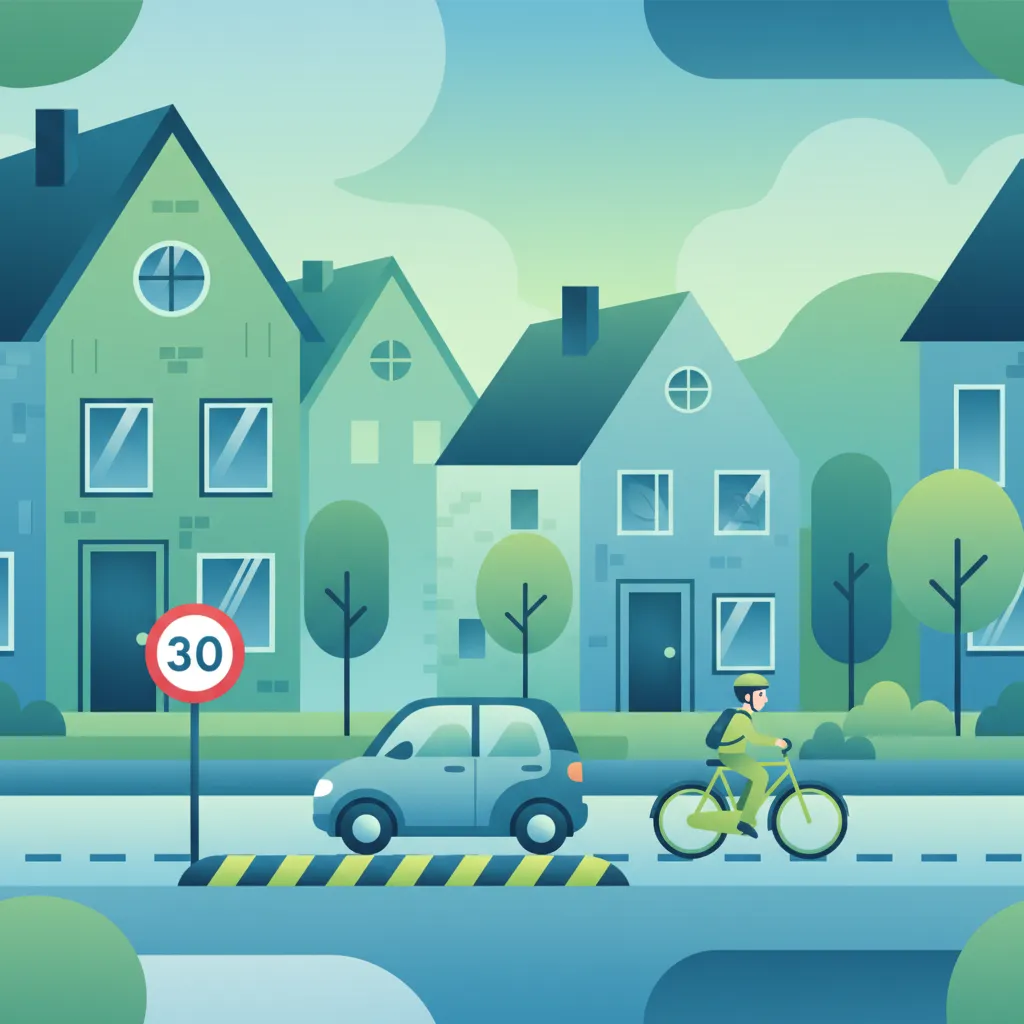
This lesson focuses on the high level of caution required when driving in residential areas. You will learn about the rules for special zones like 'gångfartsområde' (walking speed area) and the need to navigate around speed calming measures like speed bumps. The central theme is anticipating unpredictable behavior from residents, especially children, and managing the risks posed by parked cars that severely limit visibility.
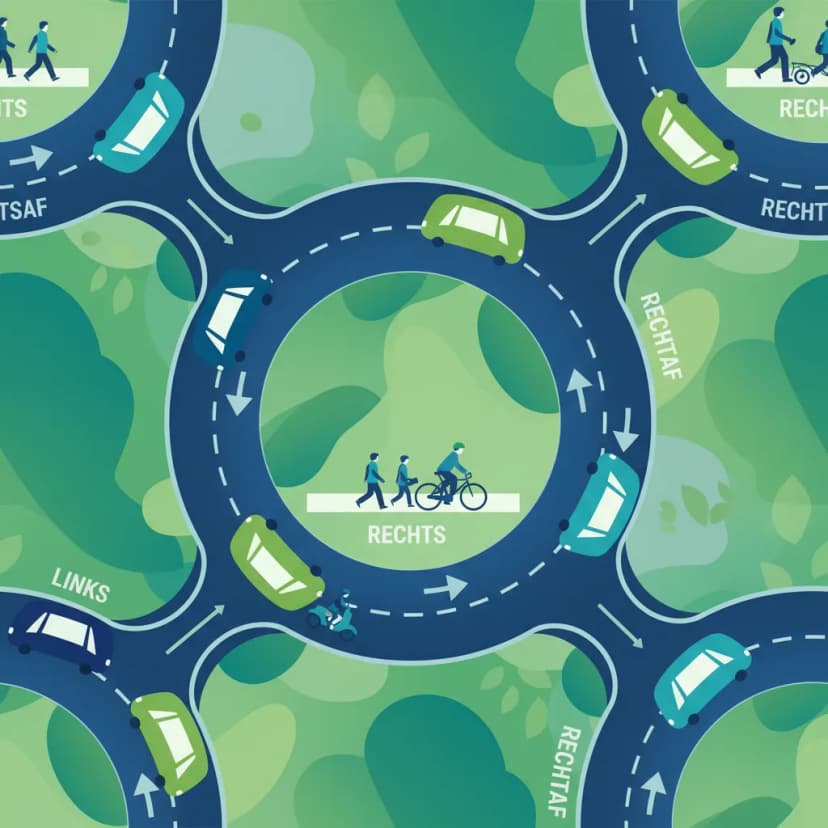
This lesson provides a detailed guide to navigating Swedish roundabouts (cirkulationsplatser). Key principles include always yielding to traffic already in the roundabout and choosing the correct lane based on your intended exit. You will learn the specific rules for signalling your intention to exit, how to safely interact with cyclists, and the techniques for maneuvering through multi-lane roundabouts to maintain traffic flow and prevent accidents.
This lesson provides detailed guidance on navigating complex traffic points such as signalized intersections, multi-lane roundabouts, and pedestrian crossings. You will learn the correct procedures for entering and exiting roundabouts, the specific rules for yielding to pedestrians and cyclists at designated crossings, and how to interpret complex traffic light signals. These skills are vital for safe urban and suburban riding, where interaction with vulnerable road users is frequent.
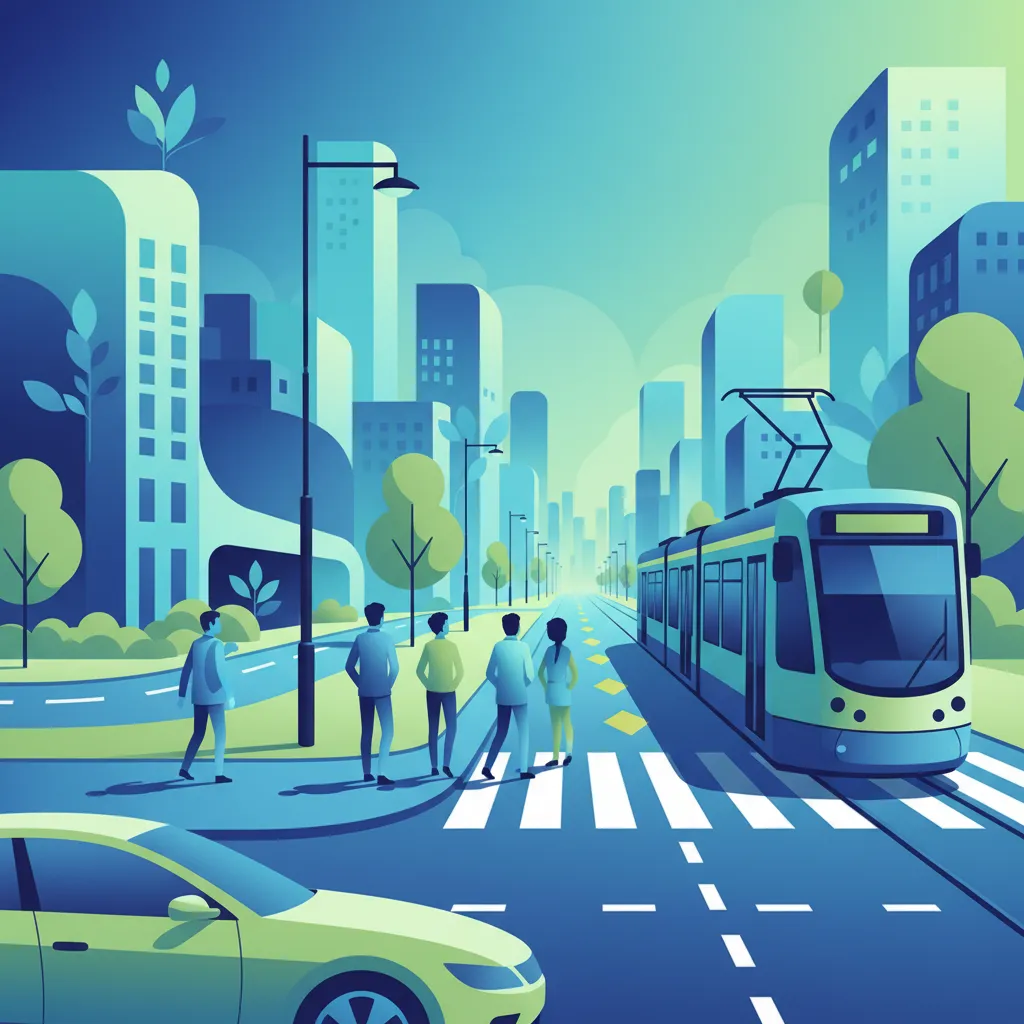
This lesson details the specific priority rules at pedestrian and tram crossings (Spårvagnskorsning). It reinforces the legal obligation for moped riders to stop for pedestrians at marked zebra crossings and explains that trams almost always have priority. Learners will understand the importance of approaching these crossings with caution, scanning for hazards, and being prepared to stop.
Find clear answers to common questions learners have about Emergency Vehicles and Yielding. Learn how the lesson is structured, which driving theory objectives it supports, and how it fits into the overall learning path of units and curriculum progression in Sweden. These explanations help you understand key concepts, lesson flow, and exam focused study goals.
The moment you see or hear an emergency vehicle (ambulance, police, fire engine) with active lights or sirens, your priority is to yield. This means you must stop making progress and move out of its path as soon as it is safe to do so. Look for a safe place to pull over to the side of the road, preferably on the right.
Ideally, you should pull over to the right side of the road. If that's not possible or safe, pull over to the left if it allows you to clear the path more quickly. Avoid stopping on pedestrian crossings, at intersections, or in narrow areas where you might block traffic or become a hazard yourself. Always make sure your maneuver is predictable for other road users.
In these situations, assess the best way to clear the path quickly and safely. If you are on a one-way street and the emergency vehicle is approaching from behind, pull over to the side that allows it to pass. If in heavy traffic, try to create space by moving out of the lane if safe, but do not make sudden or erratic movements. The primary goal is to facilitate their passage without creating new dangers.
Yes, you must come to a complete stop. Simply slowing down or moving slightly is not sufficient. You need to stop in a position that ensures the emergency vehicle can pass without obstruction. Continue to observe the emergency vehicle until it has passed completely before safely rejoining traffic.
The core principle of yielding remains the same: clear the path for emergency vehicles immediately and safely. For mopeds, this might involve slightly different maneuvers due to their agility, but the obligation to stop and allow passage is identical. Always prioritise safety when performing any maneuver.