This lesson focuses on the critical skills of overtaking and merging as a motorcyclist in Sweden. Understanding and applying the correct rules for these maneuvers is vital for ensuring safety and compliance on Swedish roads, especially when preparing for the Category A theory test. We'll cover everything from assessing traffic to signalling your intentions, building your confidence for complex traffic situations.
For any motorcyclist preparing for the Swedish Category A licence exam, mastering safe overtaking and lane merging techniques is crucial. These manoeuvres, while fundamental to traffic flow, are among the leading causes of collisions if executed incorrectly. This lesson, part of your Swedish Motorcycle Theory Course, will equip you with the essential knowledge and principles to perform these actions safely, efficiently, and in full compliance with Swedish traffic regulations. You will learn to assess traffic speed and gaps, understand the critical importance of checking blind spots, and apply correct signalling protocols to communicate your intentions clearly.
Overtaking, or passing, involves moving laterally to proceed beyond a slower-moving vehicle travelling in the same direction, and then returning to your original lane. It is an active manoeuvre that places a significant responsibility on the driver initiating it. In Sweden, as in most of Europe, overtaking typically occurs on the left side of the vehicle you are passing.
Successful overtaking requires precise judgment of speed, distance, and the intentions of other road users. It's not merely about accelerating past another vehicle; it's about executing a controlled, communicated, and safe manoeuvre.
Assess the Situation: Before initiating, check road conditions, speed limits, traffic density, and the road ahead for potential hazards or prohibited zones. Ensure you have sufficient power and space to complete the manoeuvre.
Check Mirrors and Blind Spots: Look into your mirrors and perform a decisive head turn (shoulder check) to confirm no vehicle is in your blind spot or rapidly approaching from behind.
Signal Your Intention: Activate your left turn indicator well in advance –
at least 30 metres on ordinary roads, but always giving ample notice.
Accelerate and Overtake: Move into the adjacent lane, maintaining a safe distance from the vehicle you are passing. Your overtaking speed must not exceed the posted speed limit, and you should only accelerate modestly if necessary to complete the manoeuvre swiftly and safely.
Maintain Clearance: Ensure you have passed the vehicle with sufficient lateral clearance before returning to your lane.
Signal to Return: Once you can see the vehicle you've overtaken clearly in your right-hand mirror (indicating a safe following distance), activate your right turn indicator.
Return to Lane: Smoothly steer back into your original lane, maintaining a safe following distance from the vehicle you just passed. This gap should be at least a 3-second buffer.
Certain areas are designated as "no-overtake zones" due to inherent risks such as limited visibility, potential conflicts with crossing traffic, or the presence of vulnerable road users. Overtaking in these zones is not only illegal but extremely dangerous.
Always respect solid lines and traffic signs. Even if the road appears clear, these markings and signs are in place for safety reasons, often indicating hidden hazards or conditions not immediately visible.
Overtaking is generally prohibited in the following situations:
Lane merging involves entering an existing traffic lane from a different lane, such as from a motorway on-ramp (påfart) or a slip road (avfart), or when joining traffic from a side street. This manoeuvre requires adapting your speed and position to seamlessly integrate into the flow of existing traffic.
The core principle of merging is to yield to traffic already in the lane you intend to enter. This means the primary responsibility lies with the merging driver to find a safe gap and adjust their speed accordingly, rather than forcing existing traffic to slow down or swerve.
A dedicated lane designed to allow vehicles entering a high-speed road (like a motorway) to increase their speed to match that of the main carriageway traffic before merging.
Identify Your Target Lane and Gap: Look ahead and in your mirrors early to identify a suitable gap in the traffic flow of the main road.
Use the Acceleration Lane Effectively: Accelerate to match the speed of the traffic in the lane you are entering. On motorways, aim to reach approximately 90% of the main lane's speed. Do not stop in the acceleration lane unless absolutely necessary due to an emergency or completely stopped traffic.
Signal Your Intention Early: Activate your turn indicator well in advance –
at least 150 metres before the merge point on motorways and major highways. This gives other drivers ample warning of your intentions.
Check Blind Spots: Just before merging, perform a head turn (shoulder check) to verify that no vehicle is hidden in your blind spot.
Adjust Speed and Merge Smoothly: Make small, controlled speed adjustments to fit into the identified gap. Aim for a smooth, gradual merge, avoiding abrupt braking or acceleration that could disrupt traffic flow or create a hazard.
Maintain Safe Distance: Once merged, establish and maintain a safe following distance from the vehicle ahead.
Motorways (motorvägar) present unique challenges due to higher speeds and greater traffic volumes. The principles of early signalling, speed matching, and yielding are even more critical here.
The foundation of safe driving, particularly for manoeuvres like overtaking and merging, rests on several core principles. Understanding these goes beyond mere rule-following; it provides the rationale behind the regulations.
The driver who initiates an overtaking or merging manoeuvre carries the primary responsibility for its safe execution. This means you must guarantee that the manoeuvre can be completed without endangering any other road user. This aligns with the Swedish concept of Väjningsplikt (yielding duty), which often applies to the driver entering a new traffic situation. Before you even begin to move, you must be certain that you have identified a safe path, communicated your intentions, and allowed for potential reactions from others.
A "gap" refers to the temporal and spatial distance required to complete an overtaking or merging manoeuvre while maintaining necessary clearance. Accurate gap assessment is vital to prevent collisions.
The time it takes for a driver to perceive a hazard, process the information, and initiate a physical response (e.g., applying brakes). For most drivers, this averages around 1.5 seconds.
Key variables for gap assessment:
A widely recommended guideline is the 2-second rule for following distance under normal, dry conditions. When overtaking, you should ensure a minimum 3-second gap after you have completed the pass before returning to your original lane. This allows sufficient braking and reaction time for both yourself and the vehicle you have overtaken. On wet or icy roads, increase these gaps by at least 30-50%.
A blind spot is an area around your vehicle that is not visible through your mirrors alone. For motorcyclists, due to riding position and mirror design, blind spots can be particularly significant.
Always remember: "Mirrors, Signal, Manoeuvre, Head Check". The head check is the final, crucial verification just before you initiate any lateral movement.
Before any lateral movement – whether changing lanes, overtaking, or merging – you must perform a physical head turn (shoulder check) to verify that no vehicle, especially another motorcycle or cyclist, occupies your blind spot. Relying solely on mirrors is insufficient and illegal, as it directly compromises safety.
Clear and timely signalling is paramount for road safety. Your turn indicators are your primary means of communicating your intentions to other road users, allowing them to anticipate your movements and react safely.
While overtaking often requires a temporary increase in speed to complete the manoeuvre efficiently, it is an absolute legal requirement that you do not exceed the posted speed limit at any point. Accelerate only modestly (e.g., typically no more than 10 km/h above the vehicle you are passing, provided it remains within the legal limit) to ensure you can return safely to your lane and maintain control. Excessive speed dramatically increases braking distances and the severity of any potential collision.
Swedish traffic law, primarily outlined in the Trafikförordningen (Road Traffic Ordinance), provides strict guidelines for overtaking and merging. Adherence to these rules is mandatory for your safety and to avoid legal penalties.
The law specifies minimum distances for activating your turn indicators:
As discussed, certain areas are legally off-limits for overtaking:
The fundamental rule for merging is Right-Lane Priority (Högerregeln for lanes): vehicles already travelling in the lane you wish to enter always have priority. This means you, as the merging driver, are responsible for adjusting your speed and position to find a safe gap without forcing other drivers to brake or swerve. You must yield.
While the general rule in Sweden is to overtake on the left, there are specific, conditional exceptions where overtaking on the right is permitted:
Unless explicitly allowed by specific road markings, signs, or congested traffic conditions, overtaking on the right on a two-lane rural road is prohibited and dangerous.
Overtaking and merging are rarely performed in ideal conditions. It's vital to adapt your strategy based on environmental factors, road type, and the presence of other road users.
Ignoring the rules for overtaking and merging can have severe consequences, ranging from fines and licence points to serious collisions and fatalities.
| Violation | Why It Is Wrong | Correct Behaviour | Typical Consequence |
|---|---|---|---|
| Overtaking in a solid double-line zone | Eliminates safety buffers, limited visibility; illegal. | Remain behind the slower vehicle until a legal passing zone appears. | Fine, 2 licence points; high risk of head-on collision. |
| Cutting in too early on a motorway merge | Forces main-lane drivers to brake sharply, causing rear-end collision risk. | Use acceleration lane to match speed, signal early, and wait for a 3-second gap. | Fine, possible crash, loss of licence points. |
| Failing to check blind spot | Invisible vehicle may be struck; legal requirement not met. | Perform a decisive shoulder check (head turn) in addition to using mirrors. | Fine, licence points, potential collision. |
| Signalling after starting the manoeuvre | Other road users receive no warning; illegal. | Activate indicator at least 30 m (or 150 m on motorways) before lane departure. | Fine, points, increased crash risk. |
| Overtaking too close to a pedestrian crossing | Pedestrians may be hidden or stepping out; violates 30 m rule. | Stay behind the vehicle until well past the crossing (≥30 m). | Fine, points, endangering pedestrians. |
| Speeding while overtaking | Reduces reaction time, increases braking distance, illegal. | Keep speed at or below the posted limit; accelerate only modestly if needed within limits. | Fine, points, higher kinetic energy in a crash. |
| Stopping in the acceleration lane | Blocks traffic flow, creates turbulence, illegal. | Continue to the end of the lane, then pull into the hard shoulder if forced to stop. | Fine, points, possible rear-end collisions. |
| Overtaking on the right on a two-lane road | Contravenes Swedish 'keep-left' principle (unless specified); illegal. | Use the left lane for passing, or wait for a legal overtaking zone. | Fine, points, side-impact risk. |
| Neglecting weather-adjusted gaps | Braking distance increases significantly; static gap may be insufficient. | Add at least 30% to the normal gap under wet/icy conditions. | Higher probability of skidding or collision. |
A deeper understanding of the physics and psychology involved in driving can significantly enhance your safety awareness.
Lesson content overview
Explore all units and lessons included in this driving theory course.
Explore search topics learners often look for when studying Priority when Overtaking and Lane Merging. These topics reflect common questions about road rules, driving situations, safety guidance, and lesson level theory preparation for learners in Sweden.
Browse additional driving theory lessons that cover connected traffic rules, road signs, and common driving situations related to this topic. Improve your understanding of how different rules interact across everyday traffic scenarios.
Explore complex scenarios and advanced techniques for overtaking and merging on Swedish roads. This lesson covers nuanced priority situations, challenging gap assessment, and strategies for safe maneuvers in varied traffic conditions, building on fundamental principles.
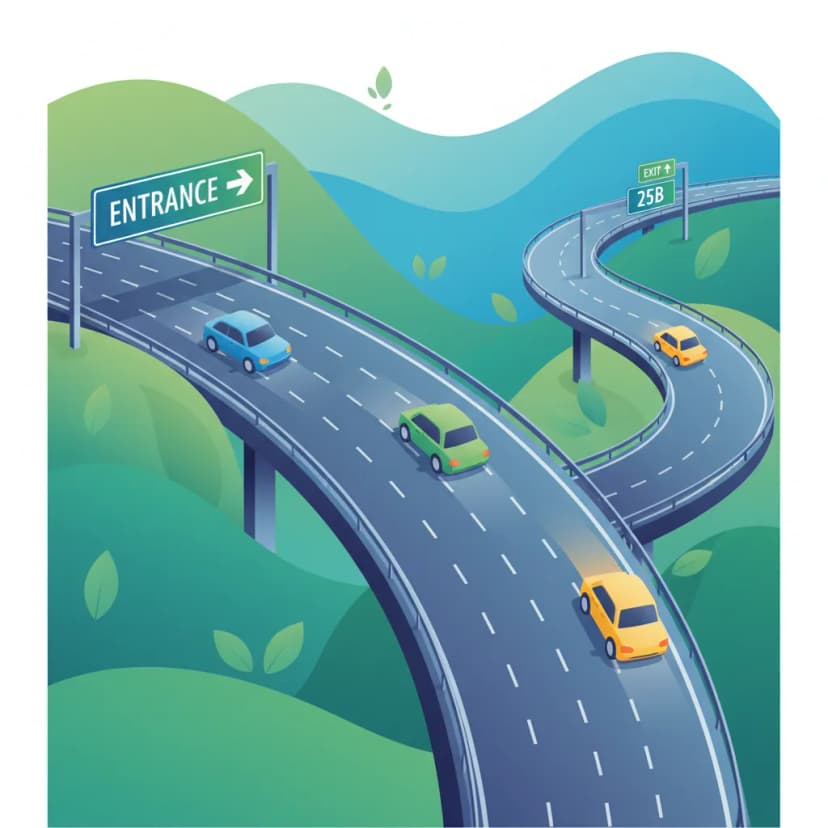
This lesson provides a step-by-step guide to motorway riding. You will learn the correct technique for accelerating on an on-ramp and merging smoothly into high-speed traffic. The content also covers maintaining proper lane discipline, executing safe overtakes, keeping a safe following distance at speed, and planning for your exit well in advance to ensure a smooth and stress-free experience on Sweden's fastest roads.
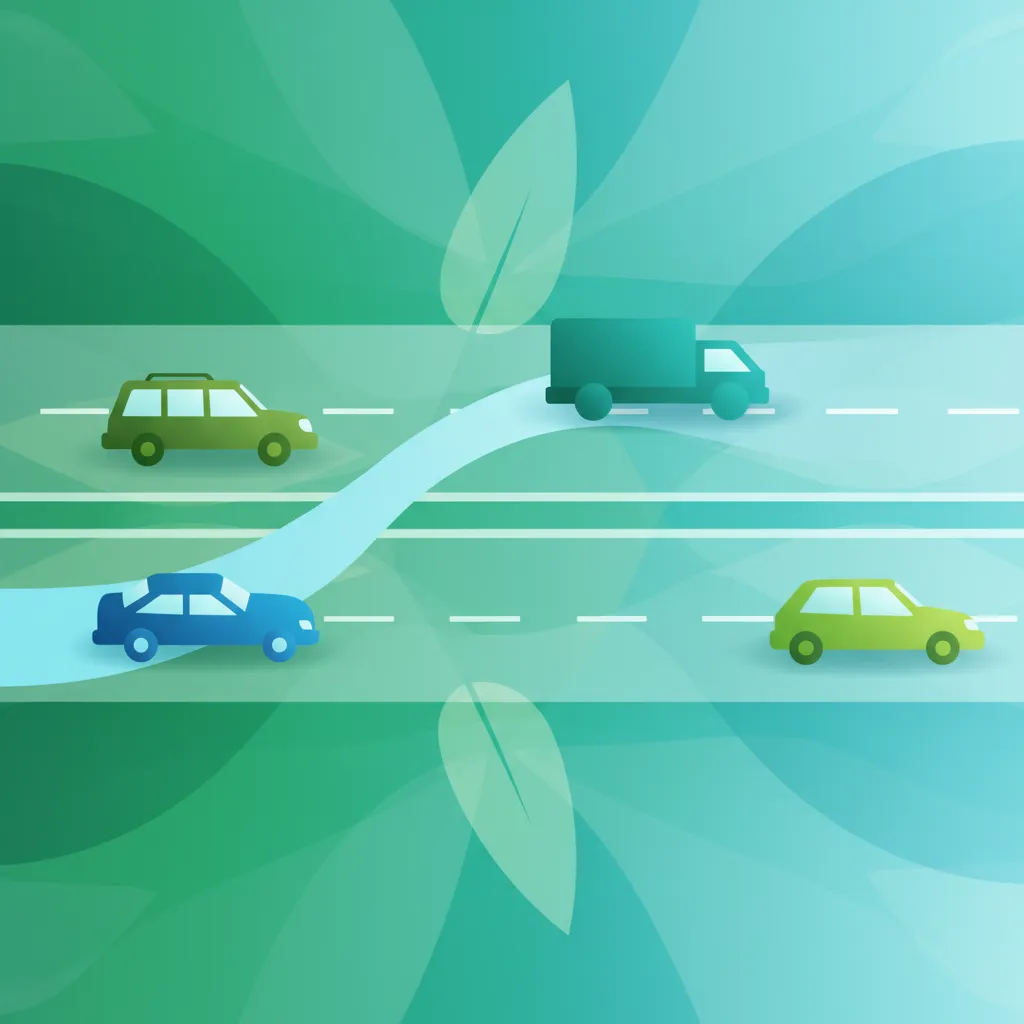
This lesson covers the critical maneuvers of merging and changing lanes. You will learn the correct technique for using an acceleration lane to match the speed of motorway traffic before merging smoothly and safely. The lesson emphasizes the importance of checking mirrors and the blind spot, signaling in good time, and applying the 'zipper principle' (dragkedjeprincipen) where lanes merge to ensure efficient and courteous traffic flow.

This lesson provides a complete guide to motorway driving in Sweden. You will learn the correct procedures for merging from an on-ramp, maintaining proper lane discipline by keeping right unless overtaking, and exiting safely via off-ramps. The content emphasizes the importance of maintaining large safety margins at high speeds, checking blind spots thoroughly before any lane change, and knowing the correct safety procedures in case of a breakdown.
This lesson tackles the challenge of navigating some of the most complex road features, such as large multi-lane roundabouts and grade-separated interchanges. You will learn the importance of advance planning, choosing the correct lane on approach, clear signaling, and comprehensive observation to safely move through these busy areas. Mastering these junctions is a key indicator of an advanced and competent rider who can handle any road layout.
This lesson provides clear guidance on selecting the appropriate lane on multi-lane roads to match your intended direction of travel. It covers the rules and best practices for moving into turning lanes, positioning for overtakes, and maintaining a steady course. The focus is on making early, predictable decisions to ensure smooth integration with surrounding traffic.

This lesson focuses on the variety of road markings used on Swedish roads and their meaning for motorcyclists. You will learn the difference between solid and broken lines regarding overtaking, how to position yourself correctly at intersections based on markings, and how to interpret symbols painted on the road surface. Adhering to these markings is essential for maintaining correct lane discipline and ensuring predictability for other road users.
This lesson provides detailed guidance on navigating complex traffic points such as signalized intersections, multi-lane roundabouts, and pedestrian crossings. You will learn the correct procedures for entering and exiting roundabouts, the specific rules for yielding to pedestrians and cyclists at designated crossings, and how to interpret complex traffic light signals. These skills are vital for safe urban and suburban riding, where interaction with vulnerable road users is frequent.

This lesson focuses on the unique demands of managing speed in high-speed environments like motorways. You will learn techniques for maintaining a steady, appropriate speed that matches the flow of traffic, how to perform smooth overtakes, and the importance of increasing your following distance. It also covers physical factors such as managing wind blast and maintaining stability when riding near large trucks, ensuring a safe and controlled high-speed riding experience.
This lesson focuses on the specific techniques required for riding in busy city and town environments. You will learn how to maintain correct lane positioning amidst dense traffic, navigate complex intersections with multiple signals, and manage the motorcycle at low speeds in stop-and-go conditions. Emphasis is placed on heightened awareness of pedestrians, cyclists, and vehicles making sudden maneuvers, which are common hazards in urban settings.

This lesson prepares you for the specific challenges of riding on rural roads in Sweden. You will learn how to read the road ahead for changes in surface quality, approach blind corners safely, and adjust your speed for narrow lanes with no shoulder. The content also covers how to anticipate and safely interact with slow-moving agricultural vehicles and the potential for wild animals on the road, ensuring you are prepared for the unpredictable nature of country riding.
Understand the critical importance of checking blind spots and maintaining visibility when overtaking and merging. This lesson provides detailed guidance on rider positioning, mirror usage, and communication techniques to ensure safety in mixed traffic environments on Swedish roads.

This lesson focuses on strategies to make yourself more visible to other road users, a critical factor in motorcycle safety. You will learn how to use lane positioning strategically to stay out of other drivers' blind spots and to maximize your own line of sight through corners and intersections. The content also covers the effectiveness of high-visibility and reflective clothing, as well as the correct use of lights to ensure you are seen in all conditions.
This lesson provides critical strategies for dealing with one of the biggest dangers in traffic: blind spots. You will learn the importance of the shoulder check and how to position yourself on the road to be more visible to other drivers. The lesson also trains you to scan the road surface ahead for hidden hazards like potholes, gravel, or oil spills that can pose a significant threat to a motorcycle's stability, teaching you to see and avoid them in time.
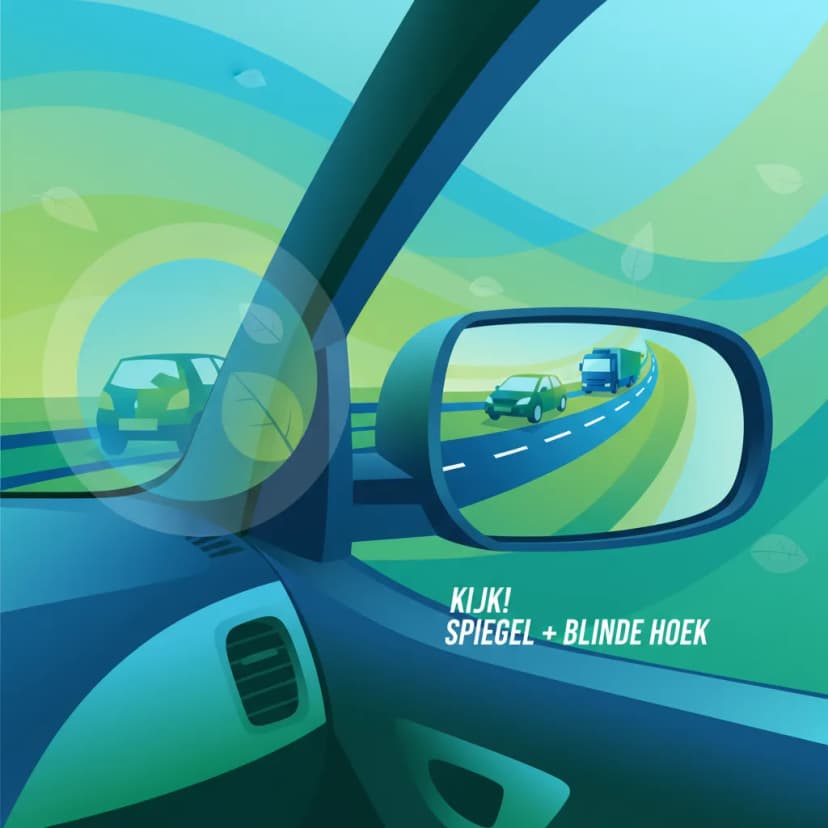
This lesson emphasizes the importance of a comprehensive visual scanning routine that includes regular mirror checks and mandatory head checks (shoulder checks) to cover blind spots. It explains that mirrors alone are not sufficient and that a physical turn of the head is required before any lateral movement. This habit is fundamental to preventing collisions during lane changes, merging, or turning.

This lesson focuses on creating a complete awareness of the traffic situation around your vehicle. You will learn the correct procedure for using your interior and side mirrors in a continuous scanning pattern. Crucially, the lesson explains what the blind spot (döda vinkeln) is, where it is located, and why a physical head check over the shoulder is a non-negotiable safety step before any lateral movement like changing lanes or turning.
This lesson focuses on proactive strategies to increase a moped rider's visibility to other drivers. It strongly advocates for the use of high-visibility and reflective clothing, helmets, and accessories to stand out in traffic. Additionally, it revisits the concept of lane positioning as a tool to avoid being in other drivers' blind spots and to create a more prominent presence on the road.

This lesson provides in-depth analysis of how to safely interact with the full spectrum of road users. You will learn about the specific characteristics of each, such as the large blind spots of trucks, the potential for sudden movements from cyclists, and the unpredictability of pedestrians. The content teaches strategies for communication, anticipation, and defensive positioning to ensure safe and respectful coexistence on the road for everyone.

This lesson teaches you how to analyze and assess risk when sharing the road with a variety of users, from large trucks to cyclists and pedestrians. You will learn to recognize common patterns of behavior and potential conflict points, allowing you to anticipate the actions of others before they create a dangerous situation. Developing this predictive mindset is a cornerstone of defensive riding and is key to staying safe in busy, complex traffic environments.
This lesson covers the critical maneuvers of merging and changing lanes. You will learn the correct technique for using an acceleration lane to match the speed of motorway traffic before merging smoothly and safely. The lesson emphasizes the importance of checking mirrors and the blind spot, signaling in good time, and applying the 'zipper principle' (dragkedjeprincipen) where lanes merge to ensure efficient and courteous traffic flow.

This lesson introduces the core concepts of defensive riding, which involves anticipating potential dangers and actively managing the space around your motorcycle. You will learn the technique of continuously identifying and maintaining an 'escape path'—an open space to move into if a threat suddenly appears. This proactive, forward-thinking approach dramatically reduces the chances of being trapped in a dangerous situation and is a key skill of advanced, safe riders.
This lesson focuses on Swedish warning signs designed to alert drivers to potential dangers. You will study signs indicating sharp bends, slippery surfaces, animal crossings, and temporary hazards like road construction. Correctly interpreting these signs allows a motorcyclist to proactively adjust speed, lane position, and readiness to react, which is essential for maintaining control and safety, especially in adverse weather or on unfamiliar roads.
Find clear answers to common questions learners have about Priority when Overtaking and Lane Merging. Learn how the lesson is structured, which driving theory objectives it supports, and how it fits into the overall learning path of units and curriculum progression in Sweden. These explanations help you understand key concepts, lesson flow, and exam focused study goals.
In Sweden, motorcyclists must adhere to general overtaking prohibitions. This includes overtaking at junctions, pedestrian crossings, level crossings, and when visibility is limited. Always ensure you have a clear view and sufficient space before starting an overtake, and never overtake if it could endanger yourself or others.
When merging onto a motorway, accelerate on the on-ramp to match the speed of the traffic on the main road. Look for a safe gap in the traffic flow and signal your intention to merge. Perform a final blind spot check before smoothly entering the lane. Remember that traffic on the motorway has priority.
Overtaking on the right (e.g., between a car and the curb) is generally prohibited in Sweden, particularly on motorways and roads with multiple lanes for the same direction of travel. Always overtake on the left, unless specific road markings or signs indicate otherwise.
Blind spot checks are critically important for motorcyclists during overtaking and lane changes. Due to the rider's exposed position and the motorcycle's narrow profile, blind spots are significant. A quick but thorough head check just before moving is essential to ensure no vehicle is hidden in your blind spot.
If multiple vehicles, including motorcycles, wish to merge at the same point, standard right-of-way rules apply, though courtesy often dictates allowing others to merge. Generally, the vehicle already on the main road has priority. If merging from different on-ramps simultaneously, assess the situation carefully and yield to those who can merge more easily or who have a clearer path.
While the fundamental principles of safe overtaking remain the same, the context differs. Rural roads may have higher speeds and fewer opportunities to overtake safely. Urban areas often have more complex intersections and varied traffic, increasing the need for caution and clear signalling when overtaking.