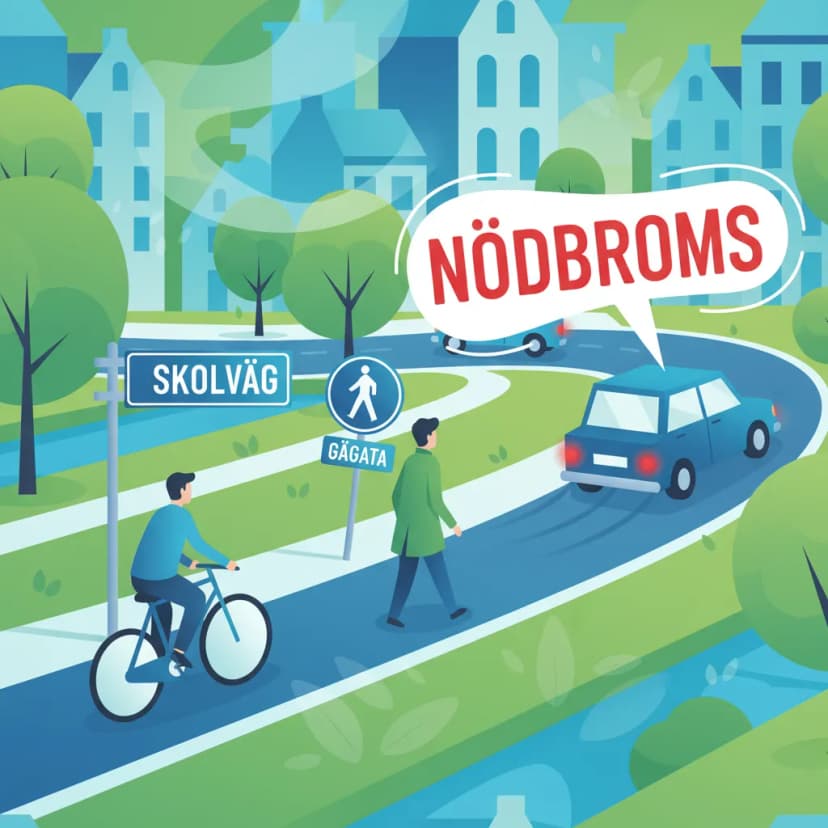
This lesson focuses on your crucial responsibilities towards pedestrians and the specific regulations for designated pedestrian zones (gågata) and walking speed areas (gångfartsområde). Understanding these rules is vital for safe urban driving and mastering the Swedish driving theory test for Category B.

Navigating Sweden's roads as a driver requires a deep understanding of how to interact safely with pedestrians, who are among the most vulnerable road users. This lesson, part of your Swedish Driving License Theory Course for Category B Cars, delves into the specific rules governing driver conduct around pedestrians, particularly at marked crossings, in designated pedestrian zones (gågata), and in walking-speed zones (gångfartsområde). Mastery of these rules is not only crucial for passing your theory test but also for ensuring safety and compliance on Swedish roads every day.
The core principle underpinning Swedish traffic law regarding pedestrians is their inherent vulnerability. Unlike vehicles, pedestrians have no protective shell, and even low-speed collisions can result in severe injuries or fatalities. Consequently, Swedish traffic regulations, primarily outlined in the Trafikförordning (Traffic Ordinance), grant pedestrians absolute priority in specific situations, mandating that drivers yield and adjust their behavior significantly.
This legal framework serves as a preventive safety measure. By requiring vehicles to stop or drastically reduce speed, the potential kinetic energy involved in a collision is minimized, thereby reducing the severity of potential injuries. It places a significant responsibility on drivers to anticipate, react, and actively protect pedestrians.
A marked, uncontrolled pedestrian crossing, known in Sweden as an obevakad övergångsställe, is a critical point where driver responsibility for pedestrian safety is paramount. These crossings are identified by distinct alternating white longitudinal stripes (often referred to as zebra stripes) on the road surface, without the presence of traffic lights or other active control devices like police officers or crossing guards.
You will recognize an uncontrolled pedestrian crossing by its prominent white "zebra" stripes painted across the road. There will be no traffic signals (red, yellow, green lights) regulating the flow of traffic or pedestrians at this specific point. It is essential to distinguish these from controlled crossings, where traffic lights dictate when vehicles and pedestrians can proceed.
The most vital rule at these crossings is that drivers must yield to pedestrians. This means that if a pedestrian is on the crossing, or clearly intends to step onto it (e.g., waiting at the curb, making eye contact, showing intent to cross), the driver must stop the vehicle completely before the crossing line.
Crucial Rule: You must stop your vehicle fully before the marked crossing line if a pedestrian is on the crossing or clearly indicating an intent to enter it. This rule has no "first-to-go" exceptions; pedestrians always have precedence at these locations.
This rule applies regardless of your speed or how far across the pedestrian has already moved. You must wait until the pedestrian has fully cleared your lane of travel before proceeding. Failing to do so is a serious traffic violation and significantly increases the risk of a collision.
Understanding the physics of driving is essential for safe interaction with pedestrians. When you perceive a hazard, such as a pedestrian stepping onto a crossing, there is a delay before you can react and apply the brakes. This is known as perception-reaction time, which averages around 1 second for most drivers under normal conditions (0.7 seconds for perception and 0.3 seconds for reaction).
During this 1-second interval, your vehicle continues to travel at its current speed. For instance:
After your reaction, the braking distance is the distance your vehicle travels while the brakes are applied until it comes to a complete stop. This distance is heavily influenced by:
Therefore, you must approach marked pedestrian crossings at a speed that allows you to stop safely and completely before the crossing line if a pedestrian appears. This requires early anticipation and a readiness to brake.
Drivers often make mistakes at uncontrolled crossings due to misjudgment or misunderstanding:
Safe Practices:
A gågata, meaning "pedestrian street" in Swedish, is a special type of urban zone where pedestrians have almost exclusive priority. These areas are designed to create safe, walkable environments, free from the hazards and noise of regular vehicle traffic. Entering and driving in a gågata is subject to highly restrictive rules.
A gågata is clearly identified by a blue square sign featuring a white pictogram of a pedestrian. It signifies an area primarily intended for foot traffic.
Generally, motor vehicles are prohibited from entering a gågata. There are, however, very specific exceptions:
Even when permitted to enter, the conditions are stringent.
For any vehicle that is permitted to be present in a gågata, the maximum speed limit is 5 km/h. This is a walking pace, emphasizing that pedestrians have absolute priority. Drivers must proceed with extreme caution, ready to stop instantly, and yield to all pedestrians within the zone.
Remember: Even if you have a permit or are an emergency vehicle, the speed limit in a gågata is strictly 5 km/h for all non-stationary movement.
Within a gågata, pedestrians have absolute priority over any vehicle present. You must not drive in a way that endangers, obstructs, or causes discomfort to pedestrians. This means being constantly vigilant, anticipating their movements, and being prepared to stop or wait. Overtaking pedestrians is generally discouraged and should only be done if absolutely necessary and without causing any disturbance or risk.
Horn Usage (Trafikförordning 70 §): In a gågata, the use of a horn is severely restricted. It may only be used to warn of an immediate and imminent danger. Using the horn simply to "alert" pedestrians or to urge them to move is prohibited and can result in a fine. The goal is to create a peaceful and safe environment for pedestrians.
Loading/Unloading Permits: If you are permitted to enter a gågata for loading or unloading, ensure you display any required permits clearly. Always minimize your time spent in the zone and ensure your vehicle is parked in a way that causes the least possible obstruction to pedestrians.
A gångfartsområde, or "walking-speed zone," is another type of area designed to integrate pedestrian safety with limited vehicle access. It represents a shared space where both vehicles and pedestrians are allowed, but with a highly restricted speed limit and a clear priority for those on foot.
These zones are indicated by a white circular sign with a black number "5" and a pedestrian symbol. This signifies that the maximum speed limit within the entire area is 5 km/h. They are often found in residential areas, near schools, or in town centers where a lively mix of pedestrian and vehicle traffic is expected.
The most defining characteristic of a gångfartsområde is its mandatory 5 km/h speed limit for all motor vehicles. This is not a recommendation but a strict legal requirement. This extremely low speed allows drivers ample time to perceive and react to pedestrians, dramatically reducing the severity of any potential collision.
Within a gångfartsområde, pedestrians still have priority. Drivers must continuously adjust their speed and position to ensure the safety and comfort of pedestrians. You are expected to:
The philosophy here is one of shared space where the vehicle is the guest, and pedestrians are the primary users.
A gångfartsområde embodies the concept of a shared space. While vehicles are allowed, they must adapt entirely to the pedestrian environment. Drivers should drive slowly, be constantly alert, and be prepared for unpredictable movements from pedestrians, especially children. The focus is on mutual respect and caution, with the legal framework firmly prioritizing the safety of those on foot.
Beyond specific marked crossings and designated zones, the Trafikförordning also includes a broader principle (Trafikförordning 3 §) that states pedestrians have priority over motor vehicles at any crossing, walkway, or zone where the pedestrian is lawfully present. This serves as a general safety measure, covering situations not explicitly detailed by other specific rules.
This general rule applies even at unmarked intersections where pedestrians might be crossing. While a driver may technically have the right-of-way based on other priority rules, the overriding principle of pedestrian safety means you should always be prepared to yield to a pedestrian if there's any potential for conflict.
Always assume pedestrians might not see your vehicle or might act unpredictably. Be particularly vigilant around schools, parks, shopping areas, and bus stops, where pedestrian traffic is higher and movements more varied. This includes looking for pedestrians emerging from behind parked vehicles, between buildings, or stepping off sidewalks.
Safe driving around pedestrians requires constant adaptation to prevailing conditions. The legal requirements remain, but your practical application of them must be more cautious in challenging environments.
At night, pedestrians are much harder to see, especially if they are wearing dark clothing. Even with streetlights, shadows can conceal them.
Failing to adhere to pedestrian safety rules can lead to severe consequences, including fines, penalty points (körkortspoäng), and in serious cases, license suspension or even criminal charges if a collision occurs.
Sweden operates a system of penalty points (körkortspoäng) for various traffic offenses. Accumulating too many points within a certain period can lead to your driving license being revoked. Violations related to pedestrian safety, such as failing to yield at a marked crossing or speeding in a pedestrian zone, typically incur significant fines and penalty points.
The safety of pedestrians is a cornerstone of Swedish traffic law. As a driver, you have a crucial responsibility to protect these vulnerable road users.
Mastering these rules and adopting a proactive, safety-first mindset will make you a responsible and competent driver on Swedish roads, ensuring the safety of everyone.
Lesson content overview
Explore all units and lessons included in this driving theory course.
Explore search topics learners often look for when studying Pedestrians and Gågata Rules. These topics reflect common questions about road rules, driving situations, safety guidance, and lesson level theory preparation for learners in Sweden.
Browse additional driving theory lessons that cover connected traffic rules, road signs, and common driving situations related to this topic. Improve your understanding of how different rules interact across everyday traffic scenarios.
Understand your legal obligations towards pedestrians in Sweden. This lesson covers yielding at crosswalks and the strict rules for driving in pedestrian-only streets (gågata) and walking speed zones (gångfartsområde).
This lesson examines a variety of special situations where standard priority rules are modified. You will learn about the 'exit rule' (utfartsregeln) when entering a road from property, your duty to yield to buses indicating a departure from a stop, and the specific rules for pedestrian-only streets (gågata). The content also covers interactions with trams, emergency vehicles, and procedures at railway crossings, highlighting situations that demand maximum vigilance.
This lesson introduces the core principles of right-of-way in Sweden, including the general duty to give way (Väjningsplikt) and the stricter stop duty (Stopplikt). It explains the concept of a priority road and how to apply the right-hand rule at uncontrolled intersections. By understanding this legal framework, riders can determine who has priority in any given situation and act predictably and safely.

This lesson details the specific priority rules at pedestrian and tram crossings (Spårvagnskorsning). It reinforces the legal obligation for moped riders to stop for pedestrians at marked zebra crossings and explains that trams almost always have priority. Learners will understand the importance of approaching these crossings with caution, scanning for hazards, and being prepared to stop.
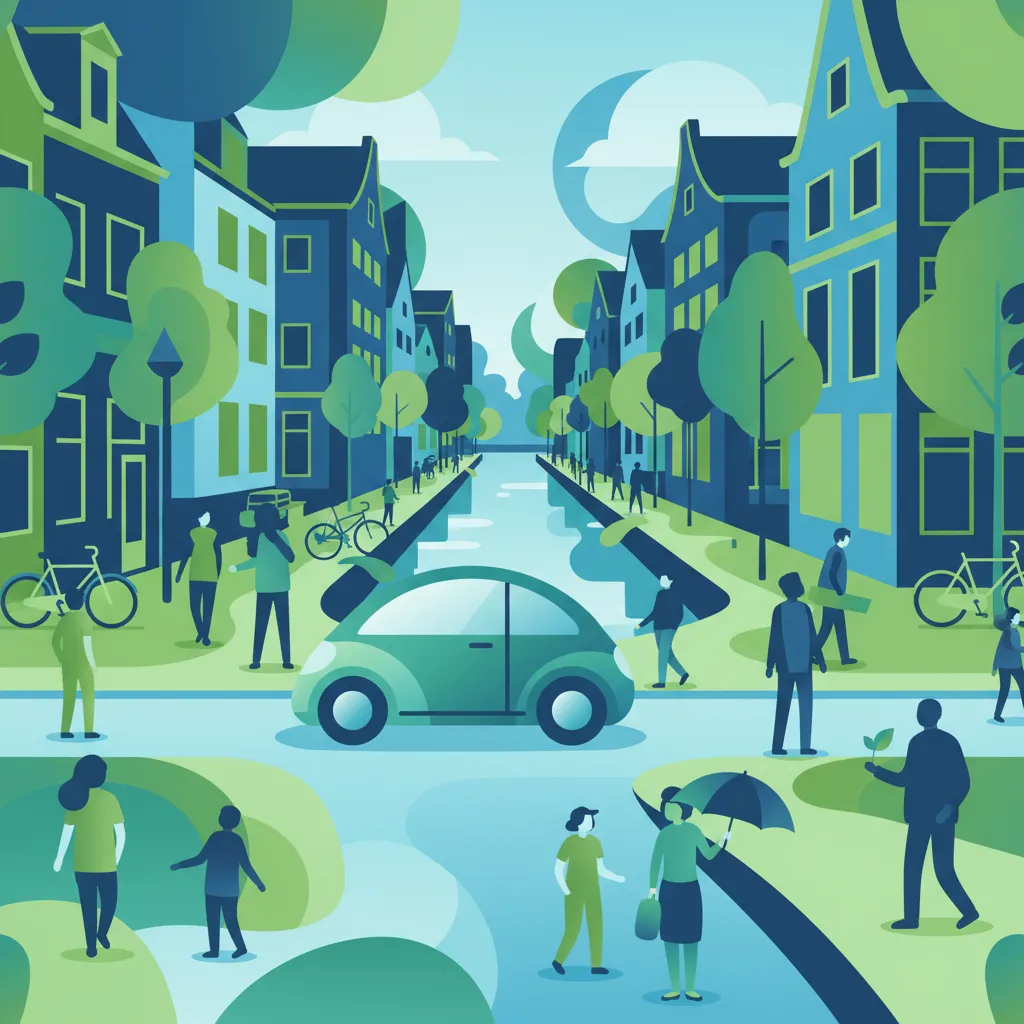
This lesson focuses on the unique challenges of driving in urban environments. You will learn techniques for anticipating the actions of vulnerable road users like pedestrians and cyclists, especially near crossings and bus stops. The content covers how to navigate narrow streets, one-way systems, and areas with heavy traffic, emphasizing the need for lower speeds, heightened awareness, and a defensive mindset.
This lesson focuses on regulated intersections where priority is determined by signs indicating a main road (huvudled), a duty to yield (väjningsplikt), or a duty to stop (stopplikt). You will learn how to identify which road has priority and your legal obligation to give way to all traffic on that road before proceeding. The lesson covers proper procedures for approaching these junctions, assessing traffic, and entering the main road safely.
This lesson focuses on the high level of caution required when driving in residential areas. You will learn about the rules for special zones like 'gångfartsområde' (walking speed area) and the need to navigate around speed calming measures like speed bumps. The central theme is anticipating unpredictable behavior from residents, especially children, and managing the risks posed by parked cars that severely limit visibility.
This lesson provides detailed guidance on navigating complex traffic points such as signalized intersections, multi-lane roundabouts, and pedestrian crossings. You will learn the correct procedures for entering and exiting roundabouts, the specific rules for yielding to pedestrians and cyclists at designated crossings, and how to interpret complex traffic light signals. These skills are vital for safe urban and suburban riding, where interaction with vulnerable road users is frequent.
This lesson explains the two core principles of priority in Swedish traffic law: the right-hand rule (Högerregeln) and the duty to yield (Väjningsplikt). You will learn how to apply the right-hand rule at uncontrolled intersections and when to yield to other traffic as indicated by signs or road markings. Understanding this fundamental hierarchy is crucial for making correct and safe decisions in a wide variety of common traffic situations you will face as a motorcyclist.
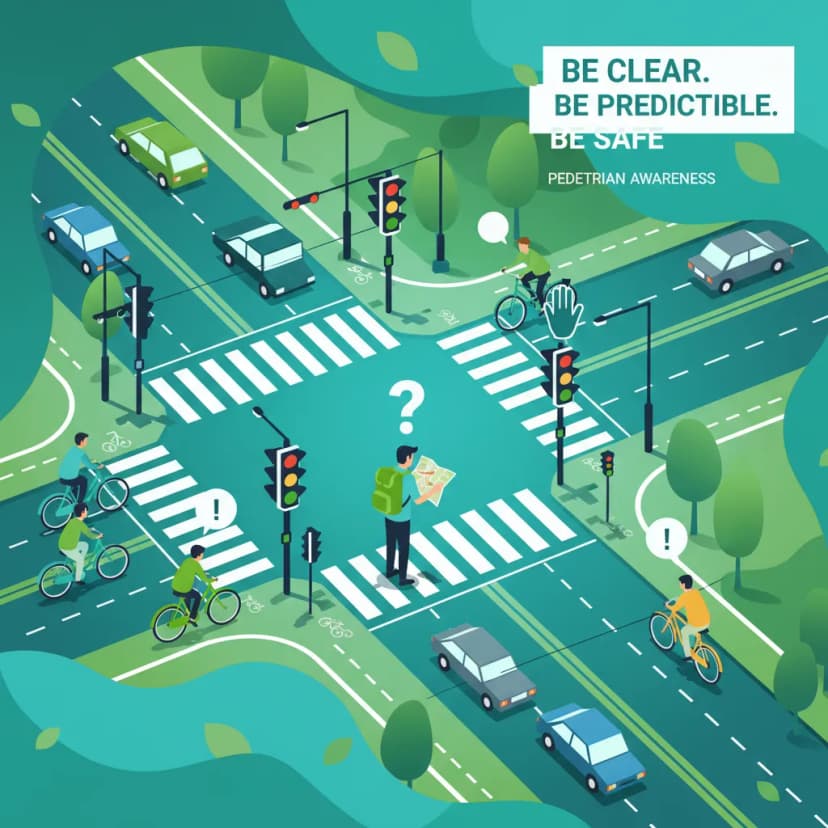
This lesson is dedicated to pedestrian safety, teaching riders to be constantly aware of people on foot, especially in busy urban environments. It reinforces the absolute duty to yield at marked crossings and encourages a cautious approach in areas like schools and shopping districts. The content stresses anticipating unpredictable actions, particularly from children or distracted pedestrians.
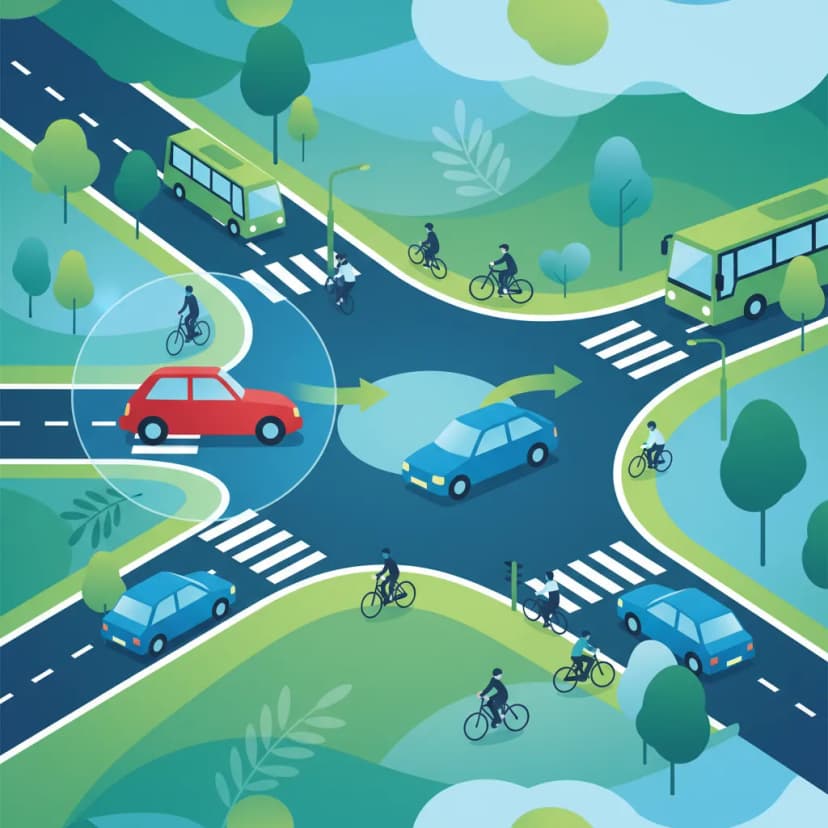
This lesson explains the foundational right-hand rule (högerregeln), which is the default priority rule at Swedish intersections where no other signs or signals regulate traffic. You will learn that you must always yield to vehicles approaching from your right in such situations. The content clarifies where this rule applies, such as in residential areas and on smaller rural roads, and covers the critical exceptions when signs or other rules take precedence.
Learn to safely navigate Swedish roads alongside pedestrians, cyclists, and other vulnerable road users. Covers pedestrian crossings, gågata rules, and general principles for sharing the road in urban environments.

This lesson provides in-depth analysis of how to safely interact with the full spectrum of road users. You will learn about the specific characteristics of each, such as the large blind spots of trucks, the potential for sudden movements from cyclists, and the unpredictability of pedestrians. The content teaches strategies for communication, anticipation, and defensive positioning to ensure safe and respectful coexistence on the road for everyone.
This lesson is dedicated to pedestrian safety, teaching riders to be constantly aware of people on foot, especially in busy urban environments. It reinforces the absolute duty to yield at marked crossings and encourages a cautious approach in areas like schools and shopping districts. The content stresses anticipating unpredictable actions, particularly from children or distracted pedestrians.
This lesson focuses on the unique challenges of driving in urban environments. You will learn techniques for anticipating the actions of vulnerable road users like pedestrians and cyclists, especially near crossings and bus stops. The content covers how to navigate narrow streets, one-way systems, and areas with heavy traffic, emphasizing the need for lower speeds, heightened awareness, and a defensive mindset.
This lesson details the best practices for sharing the road with cyclists, who are even more vulnerable than moped riders. It explains the legal requirements and safe etiquette for overtaking cyclists, emphasizing the need to provide ample space. The content also reviews the rules of interaction on designated cycle paths (Cykelbana) where both may be present.
This lesson provides detailed guidance on navigating complex traffic points such as signalized intersections, multi-lane roundabouts, and pedestrian crossings. You will learn the correct procedures for entering and exiting roundabouts, the specific rules for yielding to pedestrians and cyclists at designated crossings, and how to interpret complex traffic light signals. These skills are vital for safe urban and suburban riding, where interaction with vulnerable road users is frequent.
This lesson addresses the unique hazards associated with public transportation. It explains how to safely navigate around buses that are stopping to pick up or drop off passengers and the importance of watching for pedestrians. It also covers the physical danger of slippery tram tracks, especially when wet, and reiterates that trams typically have absolute priority.
This lesson explains how to identify and interact with various types of mopeds and other low-speed vehicles common on Swedish roads. You will learn the difference between Class I and Class II mopeds and their place on the road, as well as how to recognize A-tractors by their LGF (långsamtgående fordon) sign. The key focus is on managing the large speed differential and making safe judgments when deciding to overtake.

This lesson clarifies the regulations for operating a moped on cycle paths (Cykelbana) and other shared spaces in Sweden. It explains which types of mopeds are permitted on these paths and the specific rules that apply, such as lower speed limits and the duty to yield to cyclists. The content focuses on safe interaction and communication to ensure peaceful coexistence with other users in these environments.
This lesson focuses on the high level of caution required when driving in residential areas. You will learn about the rules for special zones like 'gångfartsområde' (walking speed area) and the need to navigate around speed calming measures like speed bumps. The central theme is anticipating unpredictable behavior from residents, especially children, and managing the risks posed by parked cars that severely limit visibility.
This lesson focuses on the specific challenges mopeds face when interacting with cars and heavy vehicles. It highlights the significant blind spots (or 'no-zones') around trucks and buses and teaches riders how to position themselves to remain visible. The content also covers the dangers of wind turbulence when near large vehicles and the importance of maintaining a generous space cushion.
Find clear answers to common questions learners have about Pedestrians and Gågata Rules. Learn how the lesson is structured, which driving theory objectives it supports, and how it fits into the overall learning path of units and curriculum progression in Sweden. These explanations help you understand key concepts, lesson flow, and exam focused study goals.
'Gågata' (pedestrian street) is a zone where pedestrians have absolute priority, and vehicles are generally prohibited except for essential services or specific times. 'Gångfartsområde' (walking speed area) also gives pedestrians priority, but vehicles are allowed with a strict maximum speed of 'walking speed' (usually 5-10 km/h), and drivers must always yield to pedestrians. Both require extreme caution and prioritisation of pedestrians.
You must always yield to pedestrians who are on or about to enter a marked pedestrian crossing (becoming 'väjningspliktig'). Even at unmarked crossings, you should exercise extreme caution and be prepared to stop if a pedestrian intends to cross. In 'gågata' and 'gångfartsområde', pedestrians always have priority.
Generally, no. 'Gågatat' are primarily for pedestrians. Vehicle access is usually restricted to specific times, for deliveries, or for emergency services. Always check for signs that indicate permitted access times or conditions. When permitted, you must drive at walking speed and yield to all pedestrians.
'Walking speed' is not precisely defined by a number but implies a very low speed, typically not exceeding 5-10 km/h. The key is to drive slowly enough to immediately stop if a pedestrian or cyclist is present or about to enter your path. Your speed must allow for complete control and immediate reaction.
Yes, the Swedish driving theory exam frequently includes questions on pedestrian priority and special zones like 'gågata' and 'gångfartsområde'. Scenarios often involve interpreting signs and deciding how to proceed safely when pedestrians are present or have priority.