Understanding Legal Blood-Alcohol Limits for Driving in Sweden
Driving in Sweden demands a high degree of responsibility and adherence to strict regulations, especially concerning alcohol consumption. The nation's approach to alcohol and driving is rooted in a commitment to road safety, aiming for a "Vision Zero" where no one is killed or seriously injured in traffic. This lesson will thoroughly explain the legal blood-alcohol content (BAC) limits, the profound impact of alcohol on driving ability, and the severe legal consequences for those who violate these critical rules. Understanding these stringent laws is fundamental for all drivers, particularly those preparing for the Swedish Driving License Theory Course for Category B Cars.
The Dangers of Alcohol: Impairment and Road Safety
Alcohol is a central nervous system depressant that significantly impairs a driver's abilities, even in small amounts. Its effects are far-reaching, compromising critical functions necessary for safe driving. These impairments escalate with increasing blood alcohol content, making the act of driving progressively more hazardous.
Even a small quantity of alcohol can dramatically alter a driver's cognitive and physical functions:
- Judgment and Decision-Making: Alcohol blunts a driver's ability to assess risks, make sound decisions, and react appropriately to changing traffic situations. This can lead to reckless behavior, misinterpretation of road signs, or underestimation of speed and distance.
- Coordination and Motor Skills: Fine motor control, essential for steering, braking, and gear shifting, deteriorates. Drivers may experience difficulty maintaining a steady lane position or executing smooth maneuvers.
- Reaction Time: The time it takes for a driver to perceive a hazard and react to it (e.g., applying brakes) significantly increases. Even a delay of a fraction of a second can be critical in preventing an accident.
- Vision: Alcohol can impair visual acuity, depth perception, and peripheral vision. It also affects the eyes' ability to adjust to light and darkness, making night driving particularly dangerous.
- Concentration and Attention: Sustaining focus on the driving task becomes challenging. Drivers may become easily distracted, miss important traffic cues, or fail to monitor their surroundings effectively.
- Risk Perception and Overconfidence: Paradoxically, alcohol can lead to a false sense of confidence, making drivers more likely to take unnecessary risks, such as speeding or making aggressive maneuvers, while their actual abilities are compromised.
The cumulative effect of these impairments means that even a driver who "feels fine" after a drink may be operating a vehicle with significantly reduced capacity, posing a grave risk to themselves and other road users.
Sweden's Strict Blood-Alcohol Content (BAC) Limit: 0.2 Per Mille
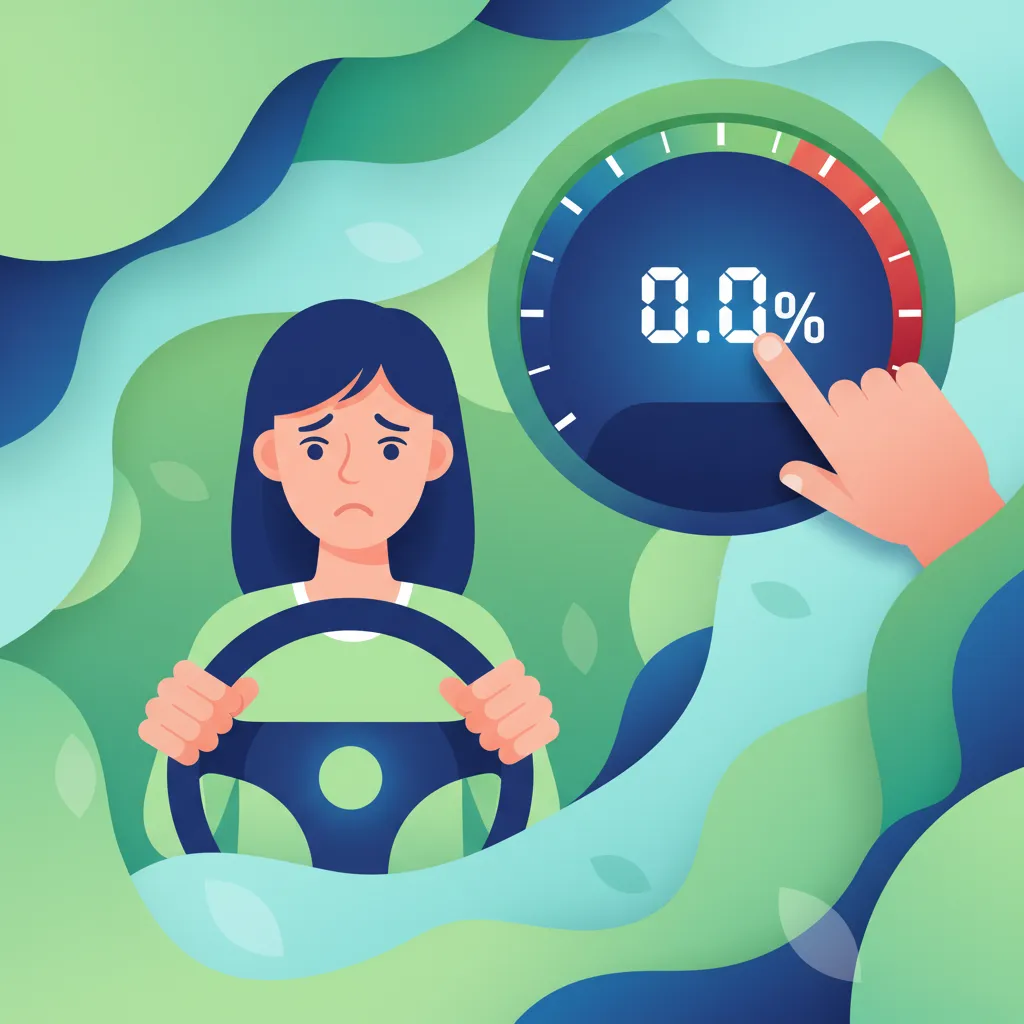
Sweden maintains one of the strictest legal blood-alcohol content (BAC) limits in the world for drivers: 0.2 per mille (0.2‰). This is equivalent to 0.02 percent blood alcohol, meaning there are 0.2 grams of ethanol per litre of blood. This very low limit effectively implements a near-zero tolerance policy, aiming to prevent any measurable impairment before it can compromise road safety.
A unit of measurement meaning "per thousand". In the context of Blood-Alcohol Content (BAC), 0.2‰ signifies 0.2 parts of alcohol per 1,000 parts of blood.
This strict threshold applies to all motor vehicle operators, including those driving Category B cars, regardless of their experience level or the type of road. The rationale behind such a low limit is clear: to ensure that drivers abstain from alcohol before getting behind the wheel, thereby significantly reducing the risk of alcohol-related incidents. Even a single standard alcoholic drink can potentially raise a driver's BAC close to or above this limit, depending on individual factors.
How Blood-Alcohol Content (BAC) is Measured
Blood-Alcohol Content (BAC) is the primary legal metric used to determine alcohol impairment in drivers. In Sweden, BAC can be measured through:
- Breathalyzers (Alkoholtest): These portable devices measure the concentration of alcohol in a driver's exhaled breath, providing an immediate estimate of their BAC. This is the most common method used by police at roadside checks.
- Blood Tests: If a breathalyzer reading indicates a BAC above the legal limit, or if the driver is unable to provide a breath sample, a blood test may be administered. Blood tests provide a precise and legally definitive measurement of BAC.
- Urine Tests: Less common than blood or breath tests, urine tests can also be used to detect alcohol, particularly in specific circumstances or when other tests are not feasible.
The measured BAC is then used as objective evidence in legal proceedings, forming the basis for charges of driving under the influence.
Rattfylleri: Driving Under the Influence (0.2‰ to 1.0‰ BAC)
In Sweden, driving with a BAC above the legal limit is a serious criminal offense. The specific classification and associated penalties depend on the measured BAC level.
The criminal offence of driving a motor vehicle with a Blood-Alcohol Content (BAC) that is greater than 0.2 per mille (‰) but not exceeding 1.0 per mille (‰).
The offense of Rattfylleri (Driving Under the Influence) is committed when a driver operates a vehicle with a BAC that is greater than 0.2 per mille (0.2‰) but does not exceed 1.0 per mille (1.0‰). This offense is codified in the Swedish Criminal Code (Brottsbalken), specifically Chapter 3, Section 2.
Consequences of Rattfylleri
The penalties for Rattfylleri are significant and are designed to deter drunk driving effectively:
- Fines: The driver will face substantial monetary fines. The amount is often calculated based on a daily fine system, considering the driver's income.
- Imprisonment: Depending on the circumstances and the exact BAC level within this range, imprisonment for up to two years is a possible penalty.
- License Suspension: The driver's driving license will be suspended for a minimum period of six months. This disqualification can extend for much longer, sometimes up to several years, based on the severity and specific details of the case.
- Mandatory Programs: Courts may also mandate participation in alcohol awareness programs or rehabilitation courses aimed at addressing problematic alcohol use and preventing repeat offenses.
It is crucial to understand that the offense of Rattfylleri is established solely by the measured BAC being above the limit, irrespective of whether the driver caused an accident or exhibited outwardly impaired behavior. The law operates on a principle of presumption of impairment, where exceeding the legal limit is considered sufficient proof of impairment.
Grovt Rattfylleri: Severe Driving Under the Influence (Over 1.0‰ BAC)
For more severe cases of drunk driving, Swedish law defines a distinct and much graver offense.
Definition
Grovt Rattfylleri
The severe criminal offence of driving a motor vehicle with a Blood-Alcohol Content (BAC) that is greater than 1.0 per mille (‰).
The offense of Grovt Rattfylleri (Severe Driving Under the Influence) occurs when a driver operates a vehicle with a BAC exceeding 1.0 per mille (1.0‰). This level of intoxication represents a profound impairment of driving ability and poses an extreme danger to all road users. This offense is also defined in the Swedish Criminal Code (Brottsbalken), Chapter 3, Section 4.
Consequences of Grovt Rattfylleri
The penalties for Grovt Rattfylleri are considerably harsher than for Rattfylleri, reflecting the elevated risk associated with such high levels of intoxication:
- Higher Fines: While fines still apply, they may be even more substantial than for Rattfylleri.
- Imprisonment: Imprisonment is a very common outcome for Grovt Rattfylleri, with potential sentences ranging up to five years.
- License Revocation: The driver's license will be revoked for a much longer period, typically for a minimum of one year and often up to five years. In some cases, a driver may face permanent disqualification from driving, especially for repeat offenses or if severe harm was caused.
- Mandatory Programs and Interlocks: Participation in rehabilitation programs is frequently ordered. In some instances, an ignition interlock device may be mandated, preventing the vehicle from starting if the driver's breath contains alcohol.
Aggravating circumstances, such as reckless driving, causing injury or death, or having previous drunk driving convictions, will lead to even more severe penalties under both Rattfylleri and Grovt Rattfylleri classifications.
Understanding how the body processes alcohol is crucial for responsible decision-making. Alcohol metabolism refers to the physiological processes, primarily in the liver, that break down ethanol and remove it from the bloodstream.
Key Factors Affecting BAC and Elimination
- Elimination Rate: On average, an adult's body eliminates alcohol at a rate of approximately 0.15 per mille (0.15‰) per hour. However, this is merely an average, and individual rates can vary significantly.
- Individual Variation: Many factors influence how quickly alcohol is metabolized:
- Body Weight: Heavier individuals generally have more body water, which dilutes alcohol more, potentially leading to a lower BAC for the same amount consumed.
- Gender: Women typically metabolize alcohol more slowly than men due to differences in body composition and enzyme activity, often resulting in higher BACs from the same amount of alcohol.
- Food Intake: Consuming alcohol on an empty stomach allows for faster absorption, leading to a quicker rise in BAC. Food slows down absorption.
- Liver Health: Individuals with liver disease or other health conditions may metabolize alcohol differently.
- Medication: Certain medications can interact with alcohol, affecting its metabolism or intensifying its effects.
Important: There is no reliable "rule of thumb" like "one drink per hour" that guarantees a BAC below 0.2‰. Factors like drink strength, serving size, and individual metabolism make such calculations highly unreliable for legal compliance.
Drivers must not rely on subjective feelings of sobriety. Feeling "fine" is not an indicator of being below the legal limit. The only safe and legally compliant approach is to abstain from alcohol completely before driving or to allow ample time for all alcohol to be eliminated from the system. It is always safer to wait longer than you think is necessary or to use alternative transportation.
Police Enforcement: Field Sobriety Tests and Breathalysers
Swedish law grants police broad powers to enforce drunk driving regulations, prioritizing public safety. These enforcement tools are designed to objectively assess a driver's sobriety and ensure compliance with BAC limits.
Roadside Procedures
When a police officer suspects a driver of being under the influence, they may initiate several procedures:
- Field Observations: The officer will first make observations of the driver's behavior, such as slurred speech, unsteady gait, erratic driving, or the smell of alcohol. These observations can provide grounds for further testing.
- Preliminary Field Sobriety Tests: While less common as a primary legal basis in Sweden compared to BAC tests, officers may ask a driver to perform simple physical tasks (e.g., walking a straight line, balancing on one foot) to assess coordination and impairment. These tests supplement other evidence.
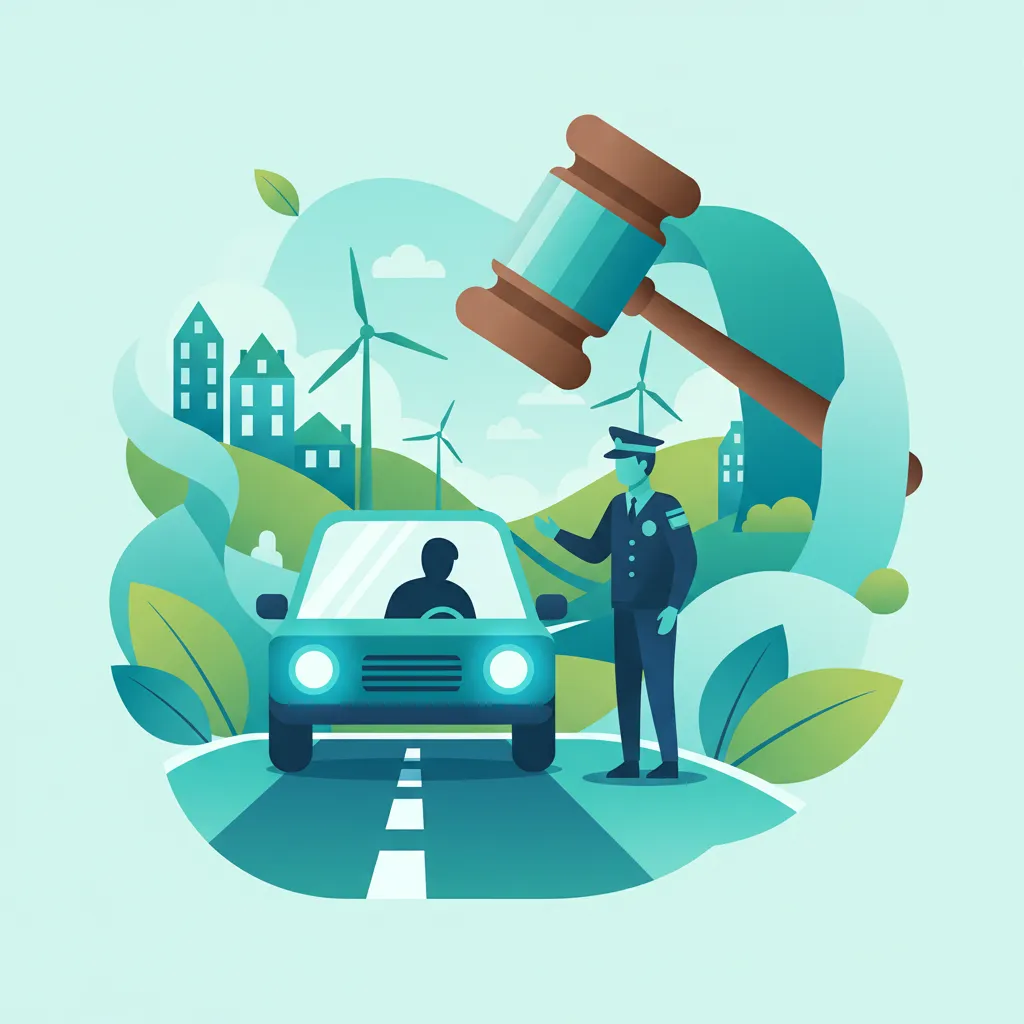
- Breathalyzer Test (Alkoholtest): Under the Police Act (Polislagen), specifically Chapter 6, Section 5, police officers have the authority to demand a breath test from any driver if there is a suspicion of intoxication or as part of routine roadside checks. This test provides a quick and accurate estimate of BAC.
- Confirmatory Blood/Urine Test: If the breathalyzer test indicates a BAC above the legal limit, or if the officer has strong reasons to believe the driver is impaired despite a low breathalyzer reading, the driver will be taken for a more precise blood or urine test at a medical facility.
Refusal to Cooperate
Refusal to comply with a police demand for a breath test or blood test has severe and immediate consequences in Sweden. A driver who refuses a test faces an automatic 60-day license suspension. Furthermore, the refusal itself can be used as evidence in court, often interpreted as an admission of guilt, strengthening the prosecution's case. It is a common misconception that refusing a test will prevent prosecution; under Swedish law, it effectively guarantees legal repercussions.
Penalties for Drunk Driving in Sweden: Fines, Imprisonment, and License Revocation
The penalties for drunk driving in Sweden are outlined in various statutes, most notably the Road Traffic Penalties Act (Lag (1970:1071)) and the Criminal Code (Brottsbalken). These penalties are designed to be proportional to the offense's severity and to serve as strong deterrents.
Penalties for Rattfylleri (BAC 0.2‰ - 1.0‰)
For drivers convicted of Rattfylleri:
- Fines: The fines are calculated based on a system of "daily fines" (dagsböter), which consider the individual's income. The number of daily fines can range from 30 up to 150, with each daily fine typically being between 50 SEK and 1,000 SEK.
- Imprisonment: In more serious cases or for repeat offenders, imprisonment for up to two years is a possible sentence.
- License Suspension/Revocation: The driver's license will be suspended or revoked for a minimum period of six months, and often longer, depending on the specific circumstances of the offense.
- Conditional Sentence/Probation: For less severe cases, particularly first-time offenders, a conditional sentence or probation with conditions (e.g., alcohol treatment programs) may be imposed instead of direct imprisonment.
Penalties for Grovt Rattfylleri (BAC Over 1.0‰)
For drivers convicted of Grovt Rattfylleri:
- Fines: While fines may still be part of the penalty, the focus shifts more towards imprisonment and license revocation.
- Imprisonment: Imprisonment is a very common outcome, with sentences ranging up to five years.
- License Revocation: The driver's license will be revoked for a much longer period, typically for a minimum of one year and up to five years. Regaining a license after revocation often requires a new theory and practical test, and potentially an ignition interlock program.
- Ignition Interlock Program: Drivers convicted of Grovt Rattfylleri, or even Rattfylleri in some cases, may be offered or mandated to participate in an ignition interlock program. This involves installing a device in their vehicle that prevents it from starting if it detects alcohol on the driver's breath. While it allows driving sooner, it comes with strict conditions and costs.
It is important to note that these penalties are often combined. For example, a driver might receive a fine, a period of imprisonment, and a license revocation. The exact sentence will be determined by the court, considering all factors of the case, including the BAC level, driving behavior, any damage or injury caused, and the driver's previous record.
Common Mistakes and Misunderstandings About Alcohol and Driving
Despite the clear legal framework and public awareness campaigns, several common misconceptions persist regarding alcohol and driving. Dispelling these myths is crucial for promoting safe and legal conduct on Swedish roads.
- "A Small Amount of Alcohol is Safe": This is perhaps the most dangerous misunderstanding. The 0.2‰ limit in Sweden means that even a single standard drink can put a driver over the legal limit. There is no "safe" amount of alcohol to consume before driving, as individual reactions vary.
- "I Feel Fine, So I Can Drive": Subjective feeling of sobriety is an unreliable and dangerous indicator. Alcohol impairs judgment and can lead to a false sense of well-being, meaning a driver might feel capable of driving even when their BAC is well above the legal limit and their abilities are compromised.
- "Coffee or Cold Showers Sober You Up": These methods do not accelerate the rate at which the liver metabolizes alcohol. While they might make you feel more alert, your BAC remains unchanged. Only time can reduce BAC.
- "Refusing a Breath Test Means No Consequences": As explained, refusing a breath or blood test in Sweden leads to an automatic 60-day license suspension and can be used as evidence against you in court. Cooperation is legally mandated.
- "Only Heavy Drinking Leads to Drunk Driving Charges": Many drivers are caught with a BAC just above 0.2‰ after consuming only one or two drinks. The law makes no distinction based on perceived "heaviness" of drinking, only on the measured BAC.
- "Low-Alcohol Beer is Harmless": Even beverages labeled "low-alcohol" (e.g., 0.5% ABV) contain ethanol. Consuming several such drinks in a short period can cumulatively raise BAC above the 0.2‰ limit, leading to a Rattfylleri charge.
- "Medication Doesn't Count": Some medications, particularly certain cough syrups or tinctures, contain ethanol. Drivers must check medication labels and consult with pharmacists if they plan to drive, as these can contribute to BAC.
- "Sleep Will Eliminate Alcohol": While sleep helps the body rest, it does not significantly speed up alcohol metabolism. Many people wake up hours after a night of heavy drinking with a BAC still above the legal limit. It's often referred to as "morning-after" drunk driving.
How Environmental and Situational Factors Amplify Risks
While the legal BAC limit remains constant regardless of external conditions, several environmental and situational factors can significantly amplify the dangers of driving under the influence. Alcohol's impairing effects become even more critical when combined with challenging driving conditions.
- Adverse Weather Conditions: Rain, snow, ice, or fog already reduce visibility, increase stopping distances, and demand greater concentration and vehicle control. Alcohol impairment, by slowing reaction time and reducing judgment, makes navigating these conditions exponentially more dangerous.
- Nighttime Driving and Low Light: Driving at night inherently reduces visibility and makes it harder to perceive hazards. Alcohol can worsen night vision, cause pupil dilation, and further impair the eyes' ability to adapt to changes in light, increasing the risk of not seeing pedestrians, cyclists, or obstacles.
- Urban vs. Motorway Driving: While BAC limits are the same, the risks differ. In urban environments, the presence of numerous intersections, pedestrians, cyclists, and complex traffic situations demands constant vigilance and quick decision-making, which are severely compromised by alcohol. On motorways, high speeds mean that even small delays in reaction time can lead to catastrophic outcomes.
- Vehicle Load and Dynamics: Driving a vehicle with a heavy load or towing a trailer requires enhanced control, longer braking distances, and more careful maneuvering. Alcohol impairment reduces a driver's ability to manage these complex vehicle dynamics safely, making the vehicle more unstable and harder to control.
- Presence of Vulnerable Road Users: Pedestrians, cyclists, and motorcyclists are highly vulnerable in traffic. Alcohol-impaired drivers are more likely to fail to correctly yield, misjudge distances, or simply not see these road users, leading to severe injuries or fatalities. The law prioritizes the protection of vulnerable road users, and any incident involving them while driving under influence will result in escalated penalties.
- Novice Drivers: While the 0.2‰ limit applies to all drivers, novice drivers (those with learner or provisional licenses) already have less experience and skill. The combination of inexperience and alcohol impairment dramatically increases their crash probability, even if their BAC is just over the limit. Although Sweden does not have a separate "zero-tolerance" limit for novice drivers, police may exercise heightened scrutiny.
- Medical Conditions and Medications: Certain medical conditions or medications can affect how the body processes alcohol, potentially leading to a faster rise in BAC or amplifying the intoxicating effects. Drivers with such conditions must be extra cautious and consult medical professionals.
- Use of In-Vehicle Alcohol Detection Systems (Ignition Interlock): While not a contextual variation, these systems (sometimes mandated by court or used voluntarily) serve to prevent driving if alcohol is detected. They are a technological aid to enforce the existing limits but do not change the legal requirement.
Key Takeaways for Responsible Driving in Sweden
Understanding and adhering to Sweden's legal blood-alcohol limits is a cornerstone of responsible driving. The stringent 0.2 per mille (‰) limit reflects a profound commitment to road safety and aims to prevent any alcohol-related impairment from jeopardizing lives.
Final Concept Summary
- Legal BAC Limit: The maximum permissible Blood-Alcohol Content for driving in Sweden is 0.2 per mille (0.2‰) for all drivers and vehicle categories, including Category B cars. This is effectively a near-zero tolerance policy.
- Offence Classification:
- Rattfylleri: Driving with a BAC between >0.2‰ and ≤1.0‰. Penalties include significant fines, potential imprisonment up to two years, and license suspension for at least six months.
- Grovt Rattfylleri: Driving with a BAC >1.0‰. This severe offense carries much harsher penalties, including imprisonment up to five years and license revocation for up to five years.
- Physiological Impact: Even small amounts of alcohol severely impair crucial driving abilities such as judgment, reaction time, coordination, and vision, leading to a dramatic increase in crash risk. Subjective feelings of sobriety are unreliable.
- Testing & Enforcement: Police are empowered to conduct breath tests (alkoholtest) and demand blood or urine samples if intoxication is suspected. Refusing these tests results in an automatic 60-day license suspension and can be used as evidence of guilt.
- Alcohol Metabolism: The body metabolizes alcohol at an average rate of approximately 0.15‰ per hour, but this varies significantly between individuals. There are no quick fixes to reduce BAC; only time helps.
- Comprehensive Penalties: Penalties for drunk driving offenses include monetary fines (based on daily fines), imprisonment, and mandatory license suspension or revocation. Rehabilitation programs or ignition interlock devices may also be mandated.
- Contextual Factors: Challenging driving conditions such as adverse weather, nighttime, urban traffic, or heavy vehicle loads significantly amplify the dangers posed by alcohol impairment, even though the legal BAC limit remains unchanged.
- Prevention: The safest approach is to abstain from alcohol entirely before driving. Always plan alternative transportation if you intend to consume alcohol.
By internalizing these principles, you will not only comply with Swedish law but also contribute to a safer road environment for everyone.
Blood-Alcohol Content (BAC)
The amount of ethanol present in a deciliter of blood, expressed in per mille (‰).
Per mille (‰)
A unit of measurement meaning 'one part per thousand'; the standard unit for BAC in Sweden.
Rattfylleri
The criminal offense of driving with a BAC between >0.2‰ and ≤1.0‰.
Grovt rattfylleri
The severe criminal offense of driving with a BAC >1.0‰.
Zero-tolerance principle
The legal approach of imposing a very low or no detectable alcohol limit, such as Sweden's 0.2‰ BAC.
Presumption of impairment
A legal principle where a driver is assumed to be impaired if their BAC exceeds the legal limit, regardless of observable behavior.
Strict liability
A legal concept where an offense is established solely by the act itself (e.g., driving over the BAC limit), without requiring proof of intent or negligence.
Alcohol metabolism
The physiological process, mainly in the liver, by which the body breaks down and eliminates alcohol.
Breathalyzer (Alkoholtest)
A device used by police to measure the concentration of alcohol in a driver's exhaled breath.
Ignition interlock
A device installed in a vehicle that prevents the engine from starting if it detects alcohol on the driver's breath.
License suspension
A temporary loss of driving rights for a specified period.
License revocation
A more permanent loss of driving rights, often requiring reapplication and retesting after a specified disqualification period.
Trafikförordning
The Swedish Traffic Ordinance, which contains many of the fundamental rules for road traffic.
Brottsbalken
The Swedish Criminal Code, which defines criminal offenses including drunk driving.
Learn more with these articles
Check out these practice sets