
Vehicle breakdowns can happen unexpectedly. This lesson is part of Unit 12: Emergency Situations and Accident Procedures, equipping you with vital knowledge for managing a breakdown safely on Swedish roads. Understanding these protocols is essential for both passing your Category B theory exam and ensuring your personal safety and that of other road users.
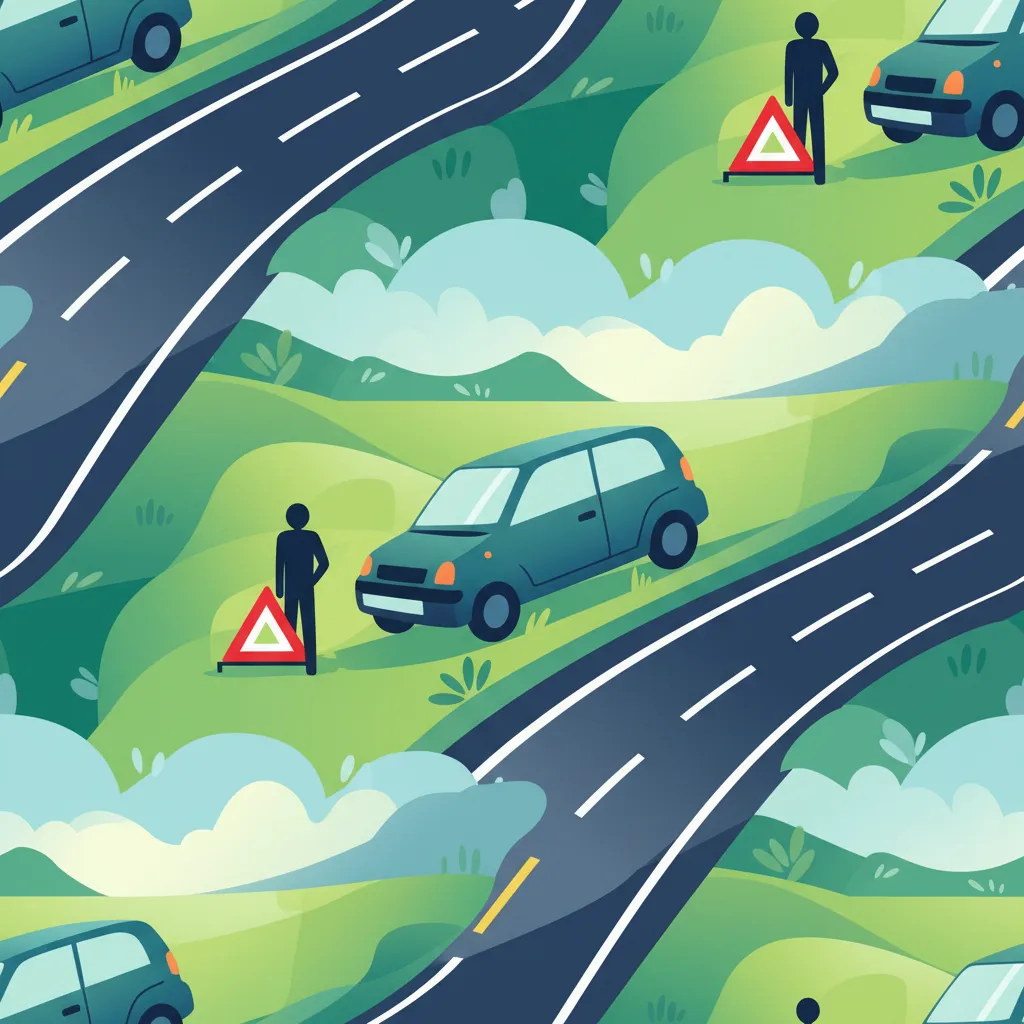
Encountering a vehicle breakdown on a Swedish road can be a stressful and potentially dangerous situation. Knowing the correct safety protocol is crucial for protecting yourself, your passengers, and other road users. This lesson, part of your Swedish Driving License Theory Course for Category B Cars, provides a comprehensive guide to handling breakdowns safely, efficiently, and in accordance with Swedish law. You will learn how to mitigate risks, deploy emergency equipment, and communicate effectively, ensuring you are prepared for unexpected vehicle immobilisation.
A vehicle breakdown is more than just an inconvenience; it transforms your car into a stationary obstacle that can pose a significant hazard to flowing traffic. Understanding the nature of breakdowns and the risks they present is the first step towards effective roadside safety.
A breakdown is any situation where your vehicle cannot be driven under its own power due to a mechanical failure, loss of fuel, a flat tyre, battery depletion, or any other malfunction. Breakdowns can range from minor issues, such as a simple flat tyre where the vehicle might still be moved a short distance, to major failures like engine seizing, which render the vehicle completely immobile. Your immediate actions will depend on the type and severity of the breakdown and, crucially, your surrounding environment.
A stationary vehicle on a road designed for moving traffic creates an unexpected obstruction. This situation rapidly escalates in danger due to several factors:
Proper handling of a breakdown is not just good practice; it is a legal and moral obligation to ensure the safety of everyone on the road.
The most critical principle in any breakdown situation is to ensure the personal safety of the driver and all passengers. Your well-being must always take precedence over attempting to repair the vehicle or worrying about traffic flow.
If you need to leave your vehicle on a public road, wearing a high-visibility, reflective vest is mandatory under Swedish law (§ 31-6 of the Trafikförordning). This vest, typically orange or fluorescent yellow with reflective strips, dramatically increases your visibility to other road users, especially in low-light conditions or bad weather.
Always put on your reflective vest before exiting the vehicle when stopped on a road. This simple step can prevent serious injury or fatality by making you visible to approaching traffic.
Never assume that a regular jacket is sufficient; only approved high-visibility vests meet the necessary legal standards for retro-reflectivity. Keeping a reflective vest easily accessible in the vehicle (e.g., in the glove compartment or door pocket) is highly recommended for quick deployment.
Once you have donned your reflective vest, the next step is to move yourself and your passengers to a safe location. This means getting as far away from the flow of traffic as possible.
The goal is to minimise your exposure to moving vehicles. Do not attempt to stand between your vehicle and oncoming traffic, or in any position that puts you at risk.
After ensuring personal safety, the next priority is to make your vehicle as safe as possible for other road users. This often involves relocating it.
If your vehicle can still be moved, even for a short distance, your primary goal should be to get it as far off the carriageway (the main part of the road where vehicles drive) as possible.
Even if your vehicle has limited power, try to coast or slowly steer it to the safest possible location. This small effort can significantly reduce the risk of a secondary collision.
On motorways (E-roads), stopping on the carriageway is strictly prohibited except in emergencies. You must use the shoulder or an emergency lay-by if at all possible (§ 10-5 of the Trafikförordning).
There will be situations where the vehicle cannot be moved at all due to the nature of the breakdown. In such cases, your immediate priority shifts to making the stationary vehicle as visible as possible and protecting occupants.
Swedish law requires you to carry and know how to use specific emergency equipment to signal a breakdown. These tools are vital for alerting other drivers and preventing accidents.
Your vehicle's hazard warning lights (emergency flashers) illuminate all turn signals simultaneously. They are your first line of defence when your vehicle is stationary and cannot be moved to a safe location immediately.
Activate your hazard warning lights as soon as your vehicle stops unexpectedly on a road. This alerts other drivers that your vehicle is a temporary hazard.
According to § 32-8 of the Trafikförordning, these lights must be activated whenever your vehicle stops on a road and cannot be moved to a safe place immediately. They signal danger and provide an initial warning before you can deploy the warning triangle.
A warning triangle is a portable, orange-red reflective device (with a minimum base width of 60 cm) designed to warn approaching traffic. Proper placement is crucial for its effectiveness.
Assess the Situation: After activating hazard lights and wearing your reflective vest, carefully exit your vehicle.
Identify Safe Path: Walk cautiously along the side of the road, away from traffic, to the appropriate distance behind your vehicle.
Place the Triangle: Position the warning triangle on the same side of the carriageway as your vehicle, ensuring it is clearly visible to approaching traffic. Consider road curvature, hills, and any obstacles that might obscure its view. If on a downhill slope, place it before the incline starts.
Maintain Distance: The placement distance varies by road type and speed limit as per § 31-13 of the Trafikförordning:
Never remove the warning triangle until your vehicle has been cleared or fully repaired and is ready to move. The warning must remain in place as long as the hazard exists.
Adhering to the legal requirements for breakdown equipment is not just about avoiding fines; it's about saving lives. The Trafikförordning is clear on the mandatory use of both the reflective vest and the warning triangle in specific situations. These regulations are designed to provide sufficient warning to other drivers, compensating for the inherent dangers of a stationary vehicle.
Once you and your vehicle are as safe as possible, the next crucial step is to contact for help.
The emergency number 112 should be called immediately if your vehicle creates a dangerous obstruction or if there are any injuries. This aligns with § 30-3 of the Trafikförordning, which obliges drivers to inform police or responsible authorities if their vehicle creates a dangerous obstruction.
When calling 112, be prepared to provide:
Swift communication allows emergency services to manage traffic, dispatch appropriate assistance, and ensure overall safety.
For non-emergency breakdowns (e.g., a flat tyre on a quiet residential street where traffic is not severely obstructed), you might choose to contact your roadside assistance provider (e.g., your insurance company's service). However, if there's any doubt about safety or obstruction, always call 112 first. Keep your assistance provider's number readily available in your phone or glove compartment.
Breakdown procedures are not static; they must be adapted to the specific conditions of the road, traffic, and weather. A breakdown on a busy motorway demands a different response than one on a quiet street.
On motorways or major roads with high speed limits (e.g., 100-120 km/h), the risk is significantly higher.
On residential streets or rural roads with lower speed limits (e.g., 30-50 km/h) and sparse traffic, you may have more time to react.
Poor weather conditions dramatically reduce visibility and driver reaction times, making breakdown situations even more perilous.
Bridges often lack shoulders, and tunnels present confined spaces with unique dangers.
The primary objective of all breakdown safety protocols is the prevention of secondary collisions – crashes caused by other vehicles hitting your stationary vehicle or its occupants.
Attempting to repair your vehicle while it is still on the carriageway or even a narrow shoulder is extremely hazardous. You and your vehicle are exposed to fast-moving traffic, and your actions can distract other drivers. Unless absolutely necessary to prevent imminent danger (e.g., containing a fuel leak), always wait for professional assistance or move your vehicle to a completely safe location (e.g., off the road, in a designated parking area) before attempting any repairs.
Understanding the specific laws governing breakdowns in Sweden is vital for every driver.
The Swedish Road Traffic Regulations, which detail the rules for all road users, including breakdown procedures.
Compliance with these regulations protects you from legal penalties and, more importantly, from serious accidents.
Being aware of common errors can help you react correctly in a breakdown situation.
Handling a vehicle breakdown effectively is a crucial skill for every driver in Sweden. It demands a systematic approach that prioritises safety, adheres to legal requirements, and adapts to the specific circumstances of the road and weather.
Key takeaways for breakdown safety:
By mastering these protocols, you contribute significantly to road safety and ensure you are prepared for unexpected events on Swedish roads.
Lesson content overview
Explore all units and lessons included in this driving theory course.
Explore search topics learners often look for when studying Breakdowns and Roadside Safety. These topics reflect common questions about road rules, driving situations, safety guidance, and lesson level theory preparation for learners in Sweden.
Browse additional driving theory lessons that cover connected traffic rules, road signs, and common driving situations related to this topic. Improve your understanding of how different rules interact across everyday traffic scenarios.
Learn the essential steps for handling a vehicle breakdown safely on Swedish roads, including high-speed motorways. Understand critical safety measures and how to protect yourself and others while waiting for assistance, focusing on the theory required for the driving exam.
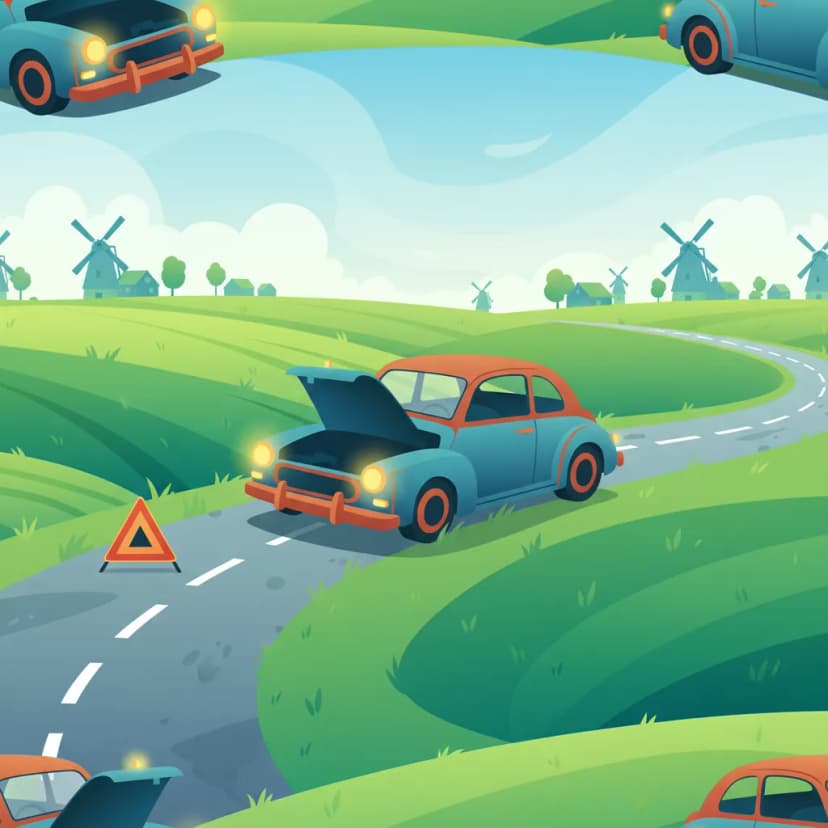
This lesson focuses on the correct use of warning devices to protect an accident or breakdown scene. You will learn to immediately activate your hazard lights (varningsblinkers). The main focus is on the proper placement of the warning triangle, explaining how the distance from the vehicle must be adapted based on the road's speed limit and visibility to give oncoming drivers adequate time to react.
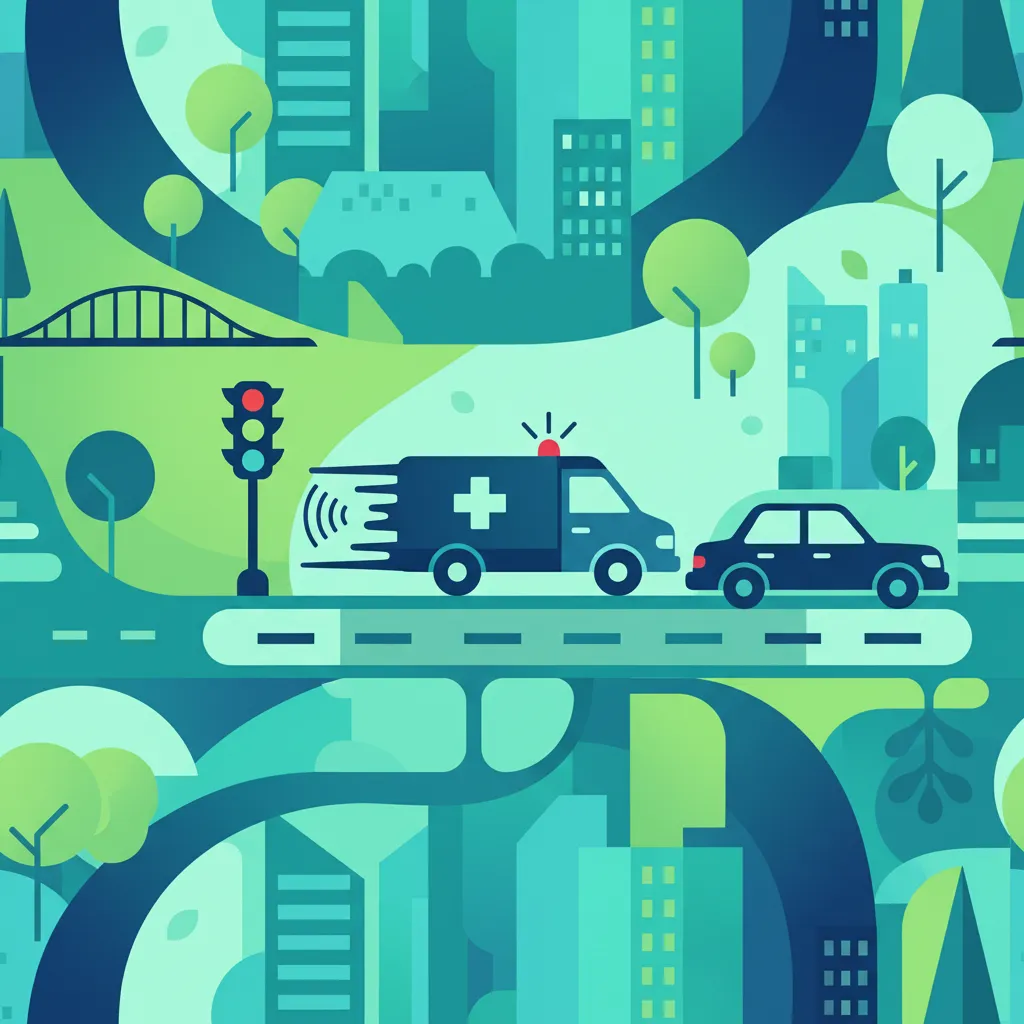
This lesson provides clear instructions on the correct response to an approaching emergency vehicle with its sirens and lights active. You will learn your absolute duty to give way and the best methods for doing so, which typically involve pulling over to the right and stopping. The lesson stresses the importance of acting calmly and predictably, avoiding sudden braking or swerving that could endanger the emergency vehicle or other traffic.
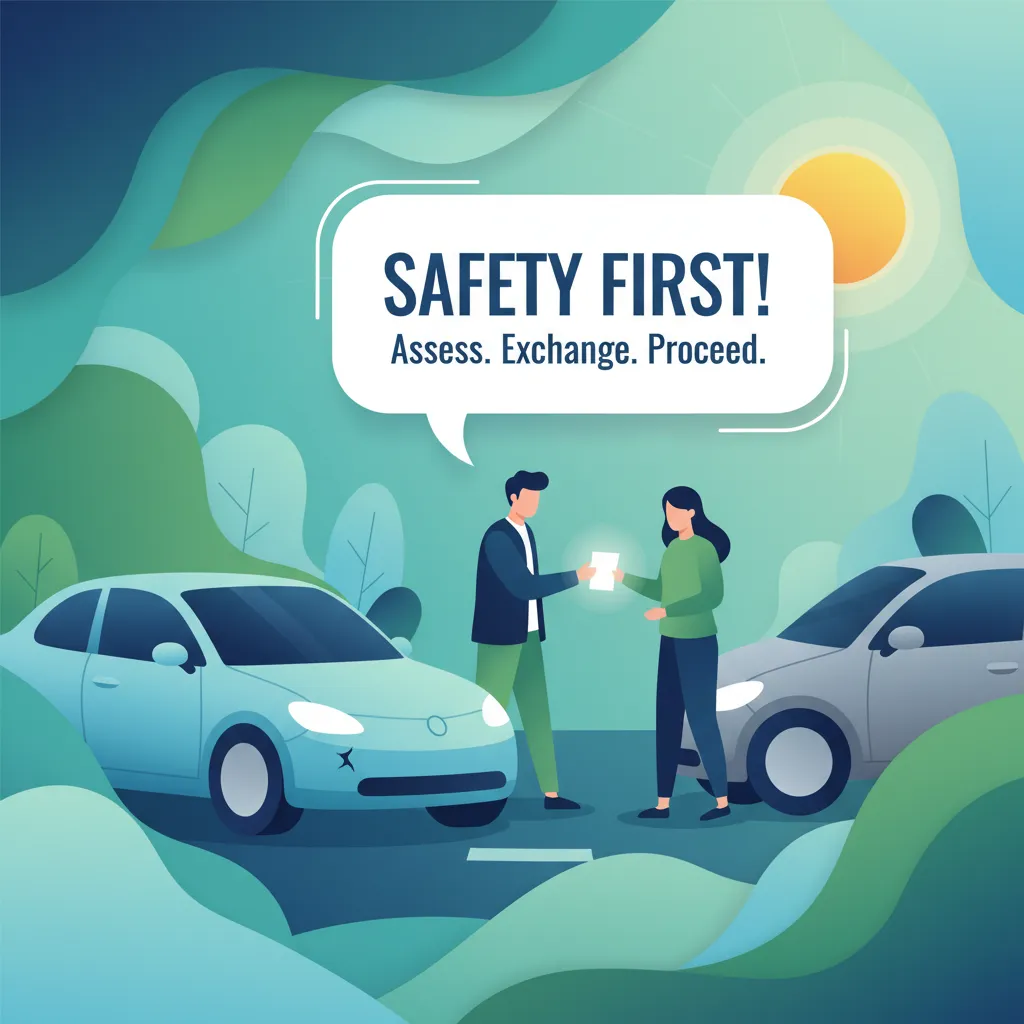
This lesson outlines the immediate, high-priority actions required at an accident scene. You will learn the 'stop, survey, secure' sequence: first, stopping and assessing the situation; second, warning other traffic by using hazard lights and placing a warning triangle; and third, taking steps to prevent further danger, such as switching off ignitions. These initial actions are crucial for the safety of everyone involved and for those approaching the scene.
This lesson teaches the correct and legal response when encountering an emergency vehicle with active sirens or lights. It outlines the immediate obligation to give way by safely moving to the side of the road and stopping. The content provides practical advice on how to perform this maneuver calmly and predictably, ensuring a clear path for the emergency responders while maintaining the rider's own safety.
Understand how to react when encountering breakdowns, accidents, or emergency vehicles on Swedish roads. This lesson covers safety protocols for various situations, including signalling, positioning your vehicle, and interacting safely with first responders and other road users.
This lesson focuses on the correct use of warning devices to protect an accident or breakdown scene. You will learn to immediately activate your hazard lights (varningsblinkers). The main focus is on the proper placement of the warning triangle, explaining how the distance from the vehicle must be adapted based on the road's speed limit and visibility to give oncoming drivers adequate time to react.
This lesson provides clear instructions on the correct response to an approaching emergency vehicle with its sirens and lights active. You will learn your absolute duty to give way and the best methods for doing so, which typically involve pulling over to the right and stopping. The lesson stresses the importance of acting calmly and predictably, avoiding sudden braking or swerving that could endanger the emergency vehicle or other traffic.
This lesson outlines the immediate, high-priority actions required at an accident scene. You will learn the 'stop, survey, secure' sequence: first, stopping and assessing the situation; second, warning other traffic by using hazard lights and placing a warning triangle; and third, taking steps to prevent further danger, such as switching off ignitions. These initial actions are crucial for the safety of everyone involved and for those approaching the scene.
This lesson teaches the correct and legal response when encountering an emergency vehicle with active sirens or lights. It outlines the immediate obligation to give way by safely moving to the side of the road and stopping. The content provides practical advice on how to perform this maneuver calmly and predictably, ensuring a clear path for the emergency responders while maintaining the rider's own safety.
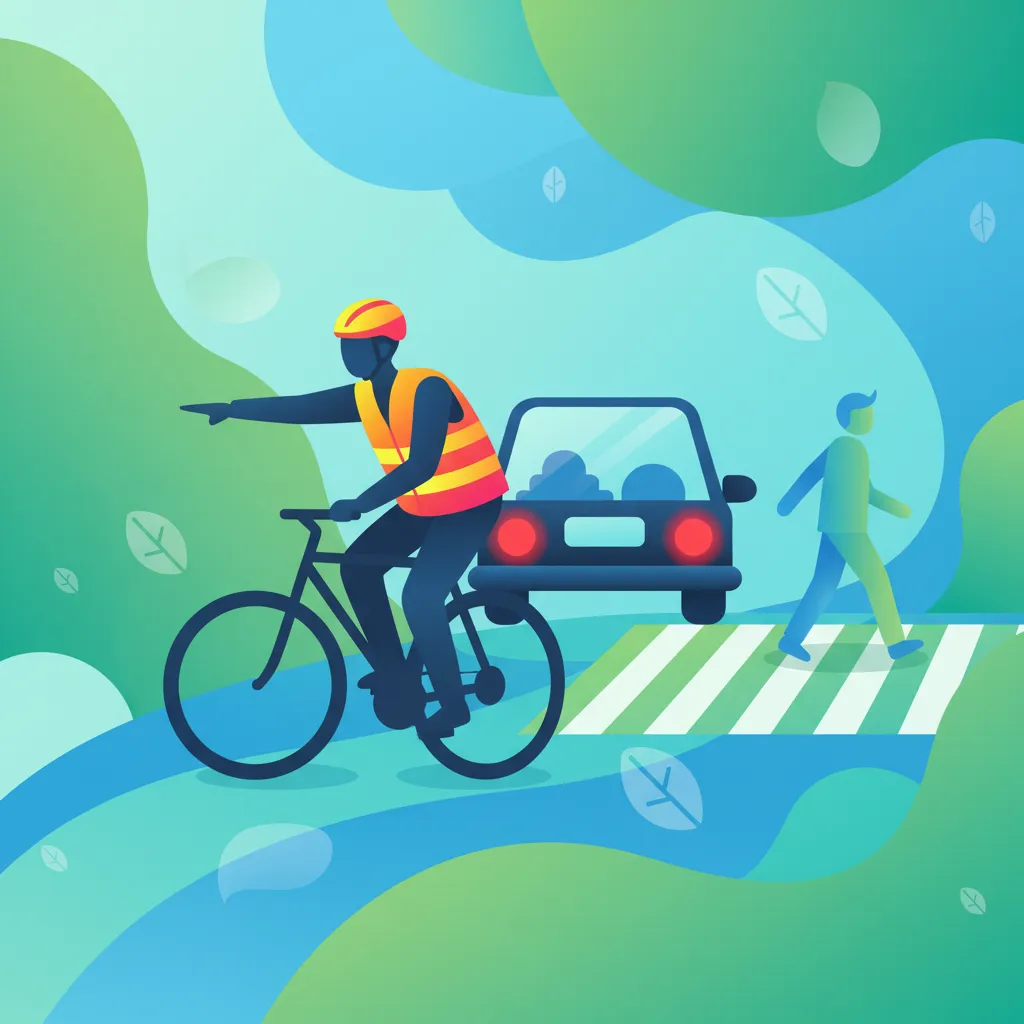
This lesson teaches you how to make an accident scene as safe as possible for yourself, any other involved parties, and approaching traffic. You will learn the correct use of hazard lights, the placement of warning triangles, and the importance of wearing a high-visibility vest. The content also covers how to identify and manage immediate post-crash hazards, such as spilled fuel or unstable vehicles, to prevent the situation from worsening.

This lesson provides a clear, step-by-step guide for what to do in the immediate aftermath of a collision. It prioritizes safety by explaining how to secure the scene to prevent further incidents. The content covers the importance of checking for injuries, calling for emergency help if needed, and remaining calm while fulfilling initial legal obligations.
This lesson explains a motorcyclist's legal duty when encountering emergency vehicles with active sirens and lights. You will learn the correct procedure for yielding the right-of-way by safely pulling over and stopping. Additionally, the lesson covers the rules and best practices for sharing the road with public transport like buses and trams, including navigating around bus stops and respecting dedicated lanes, to ensure safety for all road users.
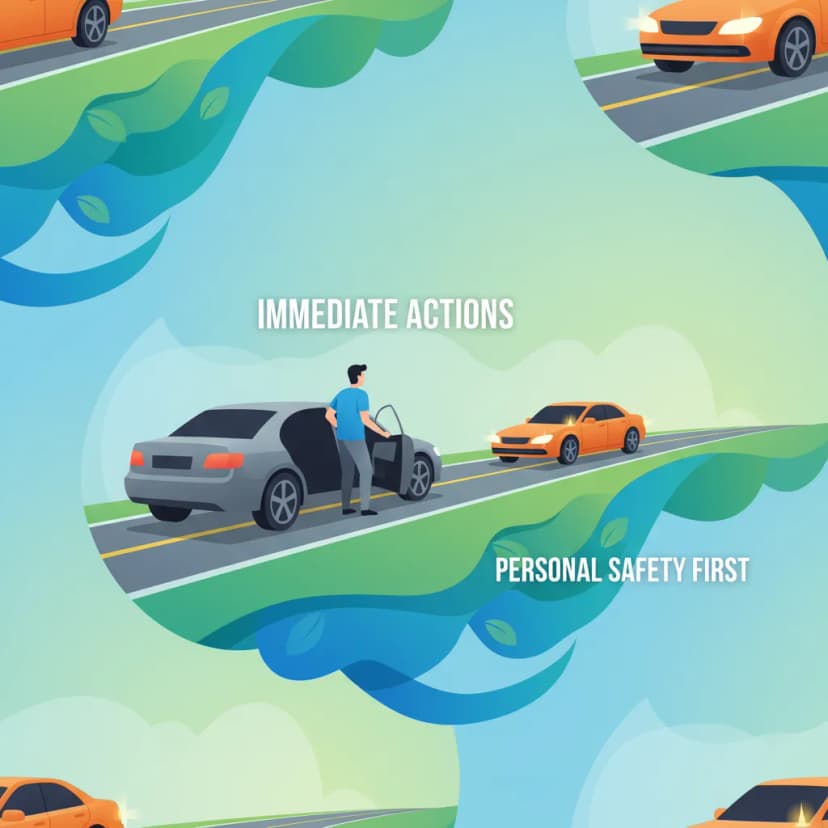
This lesson outlines the absolute first priorities after a crash, with the primary rule being to ensure your own safety and avoid further harm. You will learn how to conduct a quick self-assessment for injuries, the importance of moving out of the line of traffic if possible, and how to begin assessing the scene for immediate dangers like fuel leaks or oncoming vehicles. These initial actions are vital for managing the immediate aftermath of an incident.
This lesson covers the administrative and legal obligations following a collision. You will learn under which circumstances you are legally required to notify the police, such as when there are injuries or significant property damage. The content details the essential information that must be exchanged between all involved parties—names, contact details, vehicle registration, and insurance information—and the importance of documenting the scene and gathering witness details for insurance claims.
This lesson covers the basics of providing first aid in an emergency, which is a legal duty for anyone arriving at an accident scene. You will be introduced to the L-ABCDE mnemonic (Life-threatening situation, Airway, Breathing, Circulation, Disability, Exposure) as a way to systematically assess and prioritize injuries. The content emphasizes that the most important role is often to ensure the person is breathing and to follow the instructions of the emergency operator until professional help arrives.
Find clear answers to common questions learners have about Breakdowns and Roadside Safety. Learn how the lesson is structured, which driving theory objectives it supports, and how it fits into the overall learning path of units and curriculum progression in Sweden. These explanations help you understand key concepts, lesson flow, and exam focused study goals.
If your car breaks down on a busy Swedish road, your absolute first priority is personal safety. Try to move the vehicle as far to the right as possible, ideally onto the shoulder or into an emergency lay-by. If you cannot move the vehicle, stay inside with your seatbelt on and put on your hazard warning lights. Then, carefully exit the vehicle on the side away from traffic, put on your high-visibility (reflective) vest, and move to a safe location away from the vehicle and the road, such as behind a safety barrier.
You should activate your hazard warning lights immediately if your vehicle becomes a hazard to other road users, which includes breaking down. The reflective vest (often called a 'reflexväst' in Swedish) is mandatory to wear whenever you exit your vehicle on the roadside in a situation where you might be endangered by traffic. This applies to all breakdowns and emergency stops, especially on motorways and main roads.
The safest place to wait for assistance depends on the location. If you are on a motorway or a road with fast-moving traffic, it is safest to exit the vehicle on the side away from traffic, put on your reflective vest, and move to a safe place away from the road itself, such as behind a guardrail or up an embankment. If you are on a quieter road and have safely pulled over, you might be able to wait inside the car, but always assess the risk from passing traffic first. Never stand directly behind or in front of your broken-down vehicle.
Yes, if your vehicle has broken down and is causing an obstruction or hazard, you must place a warning triangle ('varningstriangel') to alert other drivers. Place it at a sufficient distance behind your vehicle to give approaching traffic enough time to react. The exact distance can vary depending on the road type and speed limit, but generally, it should be placed well in advance of your vehicle, especially on high-speed roads.
Breaking down in a tunnel or on a bridge requires extreme caution. Do not attempt to carry out any repairs yourself. If possible, drive to the nearest emergency exit or lay-by within the tunnel. If you cannot move the vehicle, switch on hazard lights, put on your reflective vest, and evacuate the vehicle via the safest route, usually indicated by emergency signage. Follow instructions from any tunnel personnel or emergency services. Do not wait in the vehicle.