
Navigate Sweden's roads with confidence by mastering its unique traffic sign system. This unit provides motorcyclists with a comprehensive understanding of regulatory, warning, and informational signs, alongside crucial knowledge of road markings and light signals. It’s vital for safe riding and passing your Category A theory exam.
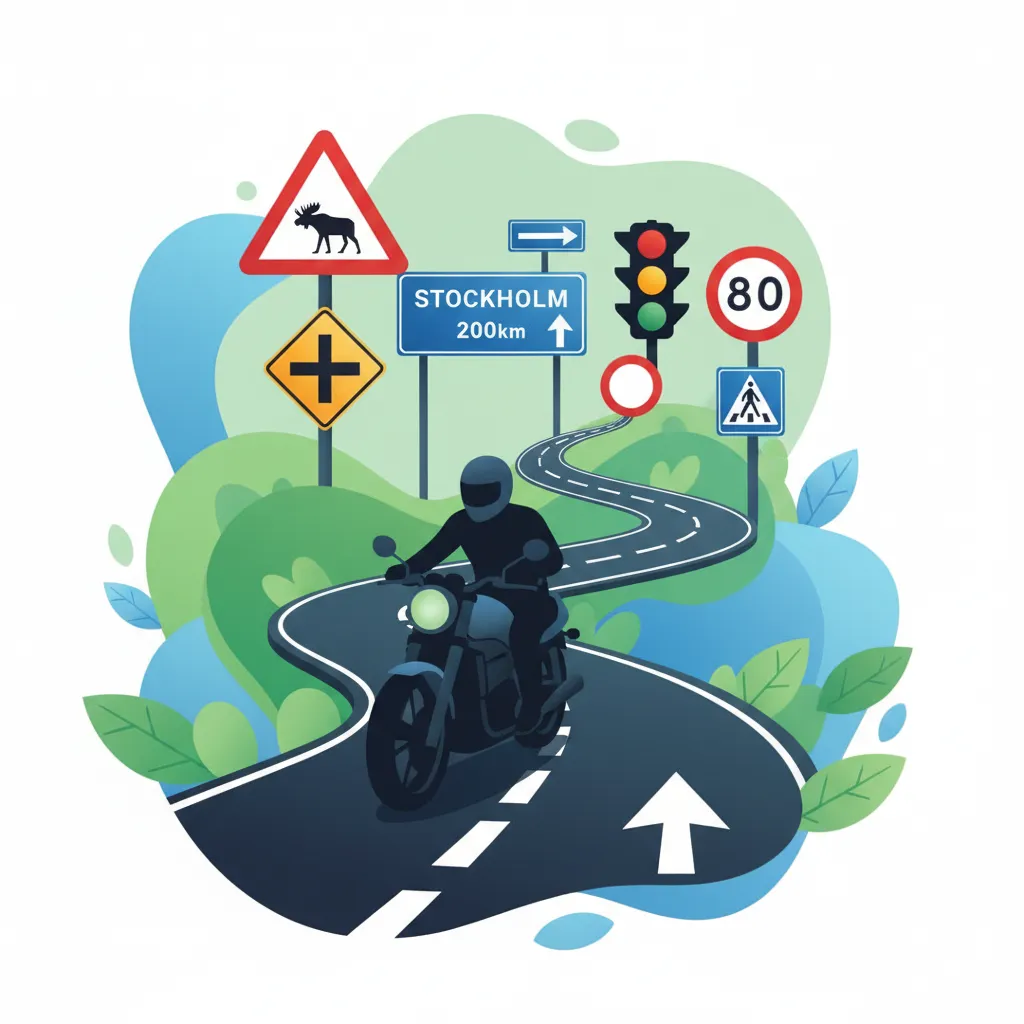
Browse all lessons that make up Swedish Road Signs & Signals for Motorcyclists. Each lesson focuses on specific topics, learning objectives, and core concepts, helping you build essential knowledge and follow a clear, structured progression toward your study goals in Sweden.
This lesson details the full range of Swedish regulatory signs, which dictate mandatory actions and prohibitions for all road users. You will learn to identify signs that establish speed limits, restrict access, prohibit overtaking, and define parking rules. Understanding these signs is critical for legal compliance and safe interaction with other traffic, as they form the basis of enforceable road law under the Trafikförordning regulations.
This lesson focuses on Swedish warning signs designed to alert drivers to potential dangers. You will study signs indicating sharp bends, slippery surfaces, animal crossings, and temporary hazards like road construction. Correctly interpreting these signs allows a motorcyclist to proactively adjust speed, lane position, and readiness to react, which is essential for maintaining control and safety, especially in adverse weather or on unfamiliar roads.
This lesson explains how to read and use Swedish informational and directional signs for effective route planning and navigation. You will learn to follow signs for specific destinations, identify road numbers, and recognize indicators for services such as fuel stations and rest areas. For motorcyclists on long journeys, this knowledge is crucial for making timely decisions about lane changes, exits, and stops without causing disruption to traffic flow.
This lesson focuses on the variety of road markings used on Swedish roads and their meaning for motorcyclists. You will learn the difference between solid and broken lines regarding overtaking, how to position yourself correctly at intersections based on markings, and how to interpret symbols painted on the road surface. Adhering to these markings is essential for maintaining correct lane discipline and ensuring predictability for other road users.
This lesson covers the correct interpretation and response to all forms of light and audible signals a motorcyclist will encounter. You will study the sequences of traffic lights, the rules for using turn indicators and hazard lights, and the legally permitted uses of the horn. Proper use of these signals is a fundamental aspect of safe riding, as it communicates your intentions clearly to other road users and helps prevent misunderstandings and collisions.
Explore high-intent keywords and long-tail search topics learners use when researching Swedish Road Signs & Signals for Motorcyclists. These terms reflect how people search for reliable study materials, structured explanations, and unit-level theory preparation support in Sweden.
Find clear answers to the most common questions learners ask about Swedish Road Signs & Signals for Motorcyclists. Understand how the unit is organized, what learning goals it supports, and how it contributes to your study progression with structured explanations and practical guidance tailored for learners in Sweden.
Swedish road signs themselves are the same for all vehicle types, including motorcycles. However, this unit focuses on how motorcyclists must interpret and react to them, considering factors like visibility, maneuverability, and the specific hazards a rider might encounter. Understanding the context for a motorcycle is key.
Road markings and signals are critically important. The theory exam extensively tests your understanding of what they mean and how to act upon them. Misinterpreting road markings or signals can lead to dangerous situations and is a common reason for failing the exam.
Regulatory signs (förbudsmärken, påbudsmärken) indicate what you must or must not do, often carrying legal penalties for non-compliance. Warning signs (varningsmärken) alert you to potential hazards ahead. Informational signs (vägvisningsmärken) provide guidance for navigation, destinations, and services. Understanding these categories is fundamental.
Yes, you need to be able to recognize and understand the meaning of all standard Swedish road signs. This unit breaks them down into logical categories (regulatory, warning, informational) to make learning manageable and connects them to practical riding scenarios.
Traffic light signals are universal. However, as a motorcyclist, you must be particularly aware of your position in relation to other vehicles, especially when filtering or approaching intersections. This unit will cover how to interpret signals correctly within the context of motorcycle riding.
'Högerregeln' (right-hand rule) is a general priority rule, while 'Väjningsplikt' (duty to yield) is indicated by specific signs like the inverted triangle or a stop sign. Understanding these signs and their associated rules is crucial for navigating intersections safely.
All included lessons
Lessons in Swedish Road Signs & Signals for Motorcyclists
See who benefits most from studying Swedish Road Signs & Signals for Motorcyclists. This overview explains how the unit supports different learning needs, what level of knowledge is helpful before starting, and how it fits into the overall study path in Sweden.
This unit is essential for all aspiring Category A motorcycle licence holders in Sweden, from beginners to those needing a refresher. It is particularly beneficial for learners who want to ensure they understand Swedish road signs, signals, and markings thoroughly to pass their theory test and ride safely.

See how Swedish Motorcycle Theory A is structured, with key topics, learning objectives, and a step-by-step path for theory preparation in Sweden.
Explore all units and lessons included in this driving theory course.