
Welcome to the 'Special Situations' lesson, part of the 'Priority Rules and Intersections' unit in your Swedish Category B Driving License Theory Course. While basic priority rules are essential, this lesson dives into nuanced scenarios like entering roads from private property, yielding to buses, and navigating pedestrian streets (Gågata). Understanding these exceptions is crucial for safe driving and passing your theory test.
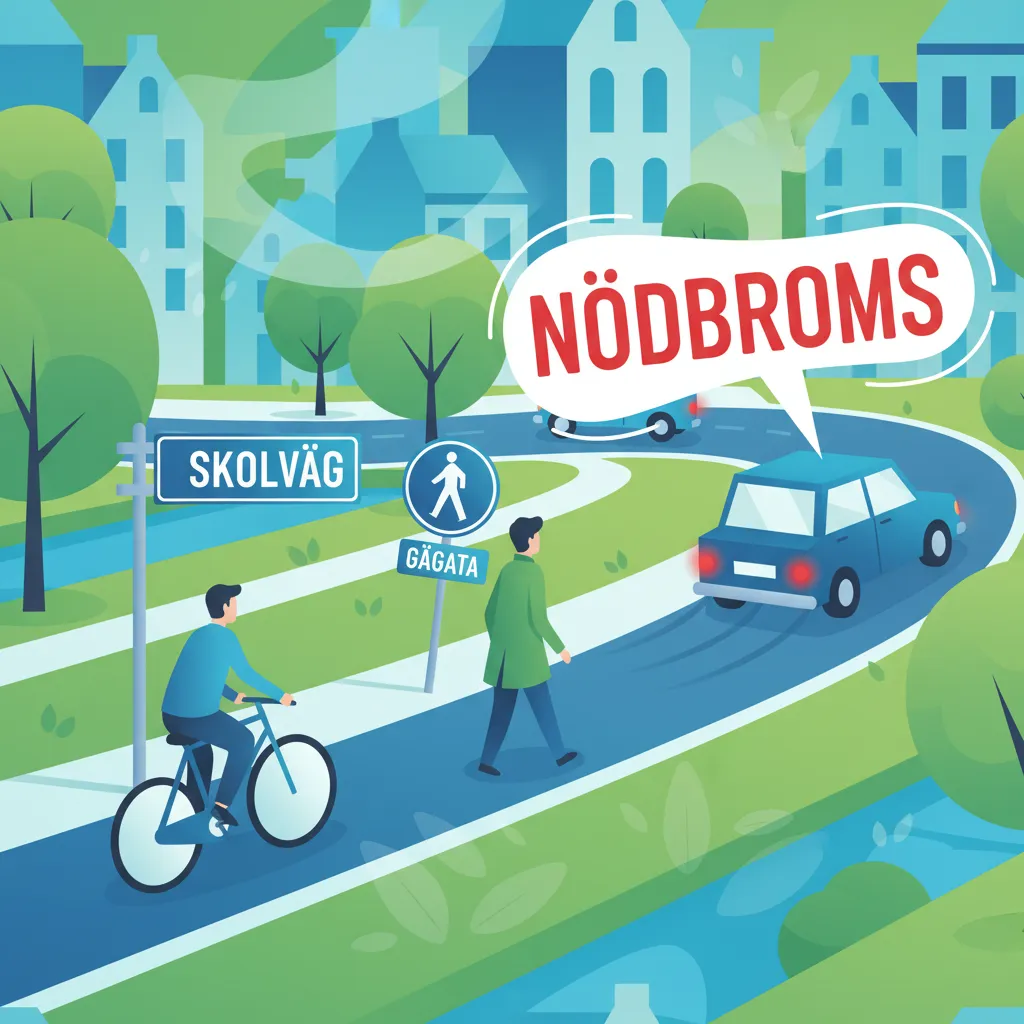
Navigating the roads in Sweden requires more than just knowing basic right-of-way rules. Certain special situations demand heightened vigilance and specific priority adjustments to ensure the safety of all road users, especially vulnerable ones. This comprehensive lesson, part of your Swedish Driving License Theory Course for Category B Cars, delves into these critical scenarios, including the 'exit rule' (Utfartsregeln), school zones (Skolväg), pedestrian streets (Gågata), emergency braking (Nödbroms), and interactions with emergency vehicles, trams, and railway crossings. Mastery of these rules is not only crucial for passing your theory test but, more importantly, for safe and responsible driving on Swedish roads.
The Exit Rule (Utfartsregeln) is a fundamental principle in Swedish traffic law that dictates how drivers must behave when transitioning from private property or specific types of access points onto a public road. This rule places an absolute duty on the driver to yield to all traffic already present on the public road they are entering.
A mandatory rule requiring drivers exiting a private drive, parking place, property, or specific types of access points to yield to all traffic on the public road they are entering.
This principle applies broadly, covering scenarios such as exiting a private garage, a parking lot, a petrol station, a factory area, or a minor road turning onto a major one where specific priority signs are absent. The core idea is to prevent unexpected conflicts where a vehicle suddenly appears from a less predictable access point.
Before moving onto the main carriageway, you must come to a complete stop, look carefully in both directions (left and right), and only proceed when you are certain that no vehicle is within a dangerous stopping distance. This includes not only oncoming vehicles but also cyclists and pedestrians who may be using the public road or adjacent footpaths. Failure to observe the Utfartsregeln is a direct infringement of right-of-way, carrying significant legal consequences and a high risk of collision.
Consider a situation where you are leaving a supermarket parking lot onto a busy street with a 50 km/h speed limit. Even if the street appears momentarily clear, you must stop your vehicle at the exit point before the public road. Take the time to scan for vehicles, bicycles, and pedestrians. Only when you can safely merge into the traffic flow without forcing other road users to brake or swerve should you proceed. This patient and cautious approach is key to safe application of the Utfartsregeln.
School zones, often marked as Skolväg, are areas demanding utmost caution due to the unpredictable presence of children. Swedish law implements specific rules here, including reduced speed limits and absolute priority for school buses.
A Skolväg is a designated road or section of road near a school or an area where children frequently cross or play. These zones are signposted to alert drivers to the increased presence of young pedestrians.
In a designated Skolväg, the speed limit is almost always lowered, typically to 30 km/h, unless a different limit is clearly indicated by signage. This reduced speed limit is not merely a suggestion; it is a mandatory legal requirement. The primary purpose is to give drivers more reaction time in case a child steps into the road unexpectedly. Children, being smaller and often less aware of traffic, are highly vulnerable, and even a small reduction in speed can drastically reduce the severity of a potential collision. Exceeding the posted speed limit in a Skolväg is considered a serious traffic violation.
Drivers must not only adhere strictly to the speed limit but also maintain an increased level of awareness, constantly scanning for children near the road, on pavements, and around parked vehicles.
One of the most critical aspects of driving in school zones is understanding school-bus priority. This rule grants absolute right-of-way to a school bus that has stopped to allow children to board or alight.
When a school bus stops and activates its flashing orange lights and/or deploys a specific "stop" sign (often located on the side of the bus), it signals that children are actively getting on or off the bus. In this situation, all approaching vehicles, from both directions, must stop at a safe distance.
You must stop at a minimum safe distance (typically 5 meters) from the school bus. Overtaking a school bus that is flashing its orange lights and/or displaying a stop sign is strictly prohibited until the bus resumes motion and its lights are turned off.
This rule protects children who may run across the road without looking, or whose view may be obstructed by the bus itself. It is paramount for drivers to exercise patience and wait for the bus to complete its operation and move on before proceeding. Failure to stop for a school bus with active signals is a serious offense that endangers children and carries severe penalties.
It's important to note that this special priority only applies when the school bus is actively loading or unloading children, indicated by its specific hazard signals. If a school bus is simply stopped at a traffic light or in regular traffic without its orange flashing lights activated, normal road rules apply.
Pedestrian Streets (Gågata) are designated urban areas designed to prioritize pedestrians, offering a safer and more pleasant environment for walking and social activities. While primarily for foot traffic, motor vehicles may have limited access under strict conditions.
A street signposted as a "Gågata" is fundamentally a public space reserved primarily for pedestrians. The signage typically indicates a "walking speed area."
Motor vehicles may only use a Gågata for very specific purposes:
When a motor vehicle is permitted to enter a Gågata, it must adhere to extremely strict rules:
The intent behind Gågata regulations is to encourage vibrant, walkable city centers and to shield pedestrians from the hazards and noise of motor traffic. Drivers must treat these zones with the utmost respect for pedestrians' safety and comfort.
In some Gågata areas, trams may also operate. Trams often have special rights and are generally not subject to the same speed restrictions as other motor vehicles within these zones. Drivers of cars must be particularly vigilant for trams, listening for their bells and observing their movements. You must not impede a tram's passage and should only cross its tracks at designated points, always yielding to the tram.
Cyclists in a Gågata are often treated similarly to pedestrians, meaning they must also adapt their speed to walking pace and yield to pedestrians. Motor vehicles must, in turn, yield to cyclists just as they would to pedestrians, recognizing them as vulnerable road users in this shared space.
There are situations where a driver must stop abruptly to avoid an imminent hazard. This critical maneuver is known as Emergency Braking (Nödbroms) and is often coupled with the immediate activation of hazard warning lights to prevent subsequent collisions.
Emergency Braking (Nödbroms) refers to the rapid, controlled application of a vehicle's braking system to achieve the shortest possible stopping distance without losing control. This is required when a sudden, unexpected hazard appears, such as:
Modern vehicles equipped with ABS (Anti-lock Braking System) allow drivers to apply full, firm pressure to the brake pedal without the wheels locking up, thereby maintaining steering control. Drivers should be familiar with their vehicle's braking characteristics and practice emergency braking in a safe environment if possible. The goal is to maximize deceleration while maintaining stability.
If an emergency stop results in your vehicle remaining stationary for more than a couple of seconds, it is a legal and safety obligation to activate your hazard warning lights.
Simultaneous flashing of all turn signal lights on a vehicle, used to indicate a temporary obstruction, a broken-down vehicle, or an emergency stop, alerting other drivers to a potential hazard.
This warning alerts following traffic to your unexpected stationary position, significantly reducing the risk of a rear-end collision. Failing to signal a sudden stop can be classified as negligent driving. For example, if you brake hard at a railway crossing due to a red signal, you should immediately switch on your hazard lights and keep them on until it is safe to proceed and traffic flow resumes.
Emergency vehicles, identified by their distinctive blue flashing lights and audible sirens, play a vital role in responding to critical incidents. All other road users have a mandatory duty to yield to these vehicles to ensure they can reach their destinations as quickly and safely as possible.
When you see or hear an emergency vehicle approaching with active signals:
Never try to outrun an emergency vehicle or block its path. Your priority is to create a safe, clear passage for them without causing danger to yourself or other road users.
This rule is enshrined in Trafikförordning (§ 3, paragraph 7) and is critical for facilitating prompt emergency response, which can be life-saving.
Railway level crossings are inherently high-risk areas where traffic rules are designed to prevent catastrophic collisions between vehicles and trains. Due to a train's immense mass and extremely long stopping distances, any conflict is almost always devastating for road vehicles.
Railway crossings can be categorized into two main types:
At an active railway crossing, the rule is unambiguous: if any active signal is engaged (flashing red lights, ringing bells, or lowering/lowered barriers), you must stop immediately.
When you see flashing red lights or hear bells, stop your vehicle before the white stop line on the road, or at a safe distance from the barrier if no line is present.
Do not proceed or attempt to cross while any signal is active, even if you believe you can "beat" the train. This is extremely dangerous and illegal.
Wait patiently until all signals have ceased (lights turn off, bells stop, barriers are fully raised).
Before proceeding, quickly scan the tracks again to ensure no other train is approaching unexpectedly.
Violating a railway crossing signal or barrier is one of the most serious traffic offenses in Sweden, punishable by heavy fines and potentially even imprisonment, given the extreme danger posed. This is also a scenario where emergency braking (Nödbroms) might be immediately required if you approach an activating signal too quickly.
Trams, as a form of public transport, often operate with specific priority rules that differ from those for other motor vehicles. These rules are designed to ensure the smooth flow of public transportation and enhance safety.
In Sweden, trams generally have priority over other road users at intersections where tram tracks cross roads, unless specific signage dictates otherwise. This means that if you are approaching an intersection and a tram is also approaching on its tracks, you must typically yield to the tram and allow it to pass before proceeding.
Always be aware of tram tracks, overhead lines, and tram signals (such as bells or specific traffic lights for trams). Trams cannot swerve and have long stopping distances, making driver vigilance crucial.
This general tram priority can also extend to special zones, such as some Gågata areas, where trams might be the only motorized traffic allowed to travel at normal speeds, while other vehicles must adhere to walking speed limits and yield to both pedestrians and trams.
The rules discussed in this lesson are not merely guidelines; they are legally binding obligations under the Swedish Trafikförordning (Traffic Ordinance) and Vägtrafiklag (Road Traffic Act). Non-compliance carries significant legal consequences.
| Situation | Why It Is Wrong | Correct Behavior | Typical Consequence |
|---|---|---|---|
| Failing to stop for a flashing school bus | Endangers children boarding/disembarking. | Stop ≥ 5m, wait until flashing lights cease. | Fine, penalty points, increased insurance risk. |
| Exceeding speed limit in a Skolväg | Reduces reaction time, increases collision risk. | Observe 30 km/h limit, reduce further if children are present. | Fine, penalty points. |
| Driving >10 km/h in a Gågata | Jeopardizes pedestrians, violates rule. | Enter at ≤ 10 km/h, stay near curb, yield to all pedestrians. | Fine, penalty points. |
| Neglecting hazard lights after emergency stop | Fails to warn following traffic of stationary hazard. | Activate hazard lights within 2 seconds of stopping. | Fine, penalty points, increased rear-end crash risk. |
| Proceeding through a red railway crossing signal | High-risk collision with train, direct legal breach. | Stop, wait for signals to clear, verify no train approaching. | Heavy fine, potential imprisonment, licence suspension. |
| Not yielding to an approaching emergency vehicle | Hinders emergency response, violates law. | Move to side, stop if needed, keep clear until vehicle passes. | Fine, penalty points, civil liability for delayed aid. |
| Entering a public road from a driveway without yielding (Utfartsregeln) | May cause side-collision, violates law. | Full stop, check all directions, proceed only when safe. | Fine, penalty points, collision risk. |
These penalties underscore the seriousness with which Swedish law treats adherence to these special priority situations. Each rule exists to mitigate specific, often severe, risks associated with vulnerable road users and unique traffic scenarios.
Driving responsibly in special priority situations also means adapting your behavior to various environmental conditions and understanding your vehicle's capabilities.
The core principles underlying these special priority rules are rooted in a "safety-first" rationale:
Statistical evidence consistently shows that enforcing these rules significantly reduces accidents involving vulnerable users. For example, studies by the Swedish Transport Administration have highlighted a substantial reduction in child-pedestrian collisions where school-bus priority and reduced speed limits in school zones are rigorously applied. Hazard signaling, when properly used, also plays a crucial psychological role by acting as a visual "alert" cue for following drivers, preventing secondary collisions.
Lesson content overview
Explore all units and lessons included in this driving theory course.
Explore search topics learners often look for when studying Special Situations (Skolväg, Gågata, Nödbroms). These topics reflect common questions about road rules, driving situations, safety guidance, and lesson level theory preparation for learners in Sweden.
Browse additional driving theory lessons that cover connected traffic rules, road signs, and common driving situations related to this topic. Improve your understanding of how different rules interact across everyday traffic scenarios.
Understand complex priority rules beyond the basics. This lesson covers specific Swedish scenarios like the exit rule (utfartsregeln), yielding to buses, navigating pedestrian streets (Gågata), and interactions with trams and railway crossings.
This lesson explains the specific traffic rules related to public transport vehicles. You will learn about your duty to yield to buses signaling to leave a stop (on roads with a speed limit of 50 km/h or less) and the fact that trams generally have priority. The lesson covers how to safely pass stopped buses and trams, being mindful of disembarking passengers who may cross the road unexpectedly.
This lesson details the specific priority rules at pedestrian and tram crossings (Spårvagnskorsning). It reinforces the legal obligation for moped riders to stop for pedestrians at marked zebra crossings and explains that trams almost always have priority. Learners will understand the importance of approaching these crossings with caution, scanning for hazards, and being prepared to stop.
This lesson introduces the core principles of right-of-way in Sweden, including the general duty to give way (Väjningsplikt) and the stricter stop duty (Stopplikt). It explains the concept of a priority road and how to apply the right-hand rule at uncontrolled intersections. By understanding this legal framework, riders can determine who has priority in any given situation and act predictably and safely.
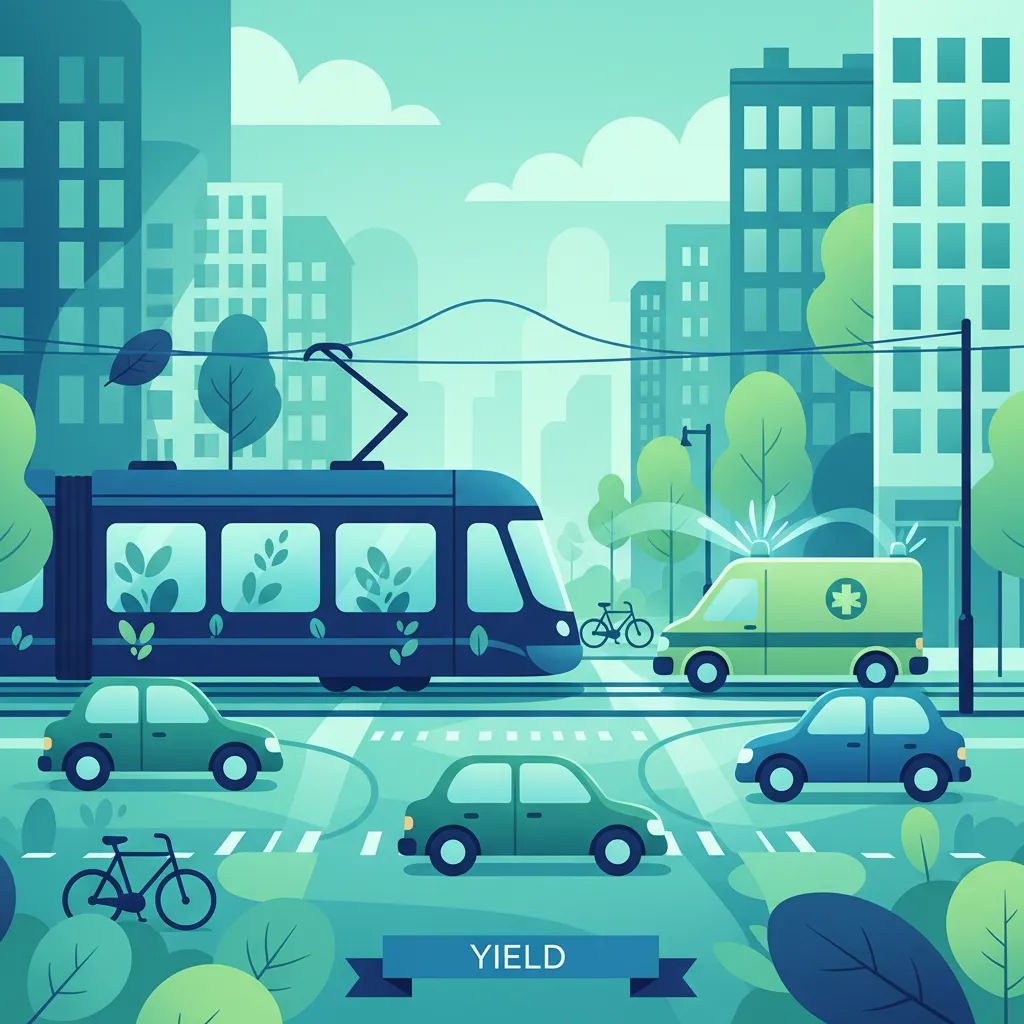
This lesson explains a motorcyclist's legal duty when encountering emergency vehicles with active sirens and lights. You will learn the correct procedure for yielding the right-of-way by safely pulling over and stopping. Additionally, the lesson covers the rules and best practices for sharing the road with public transport like buses and trams, including navigating around bus stops and respecting dedicated lanes, to ensure safety for all road users.
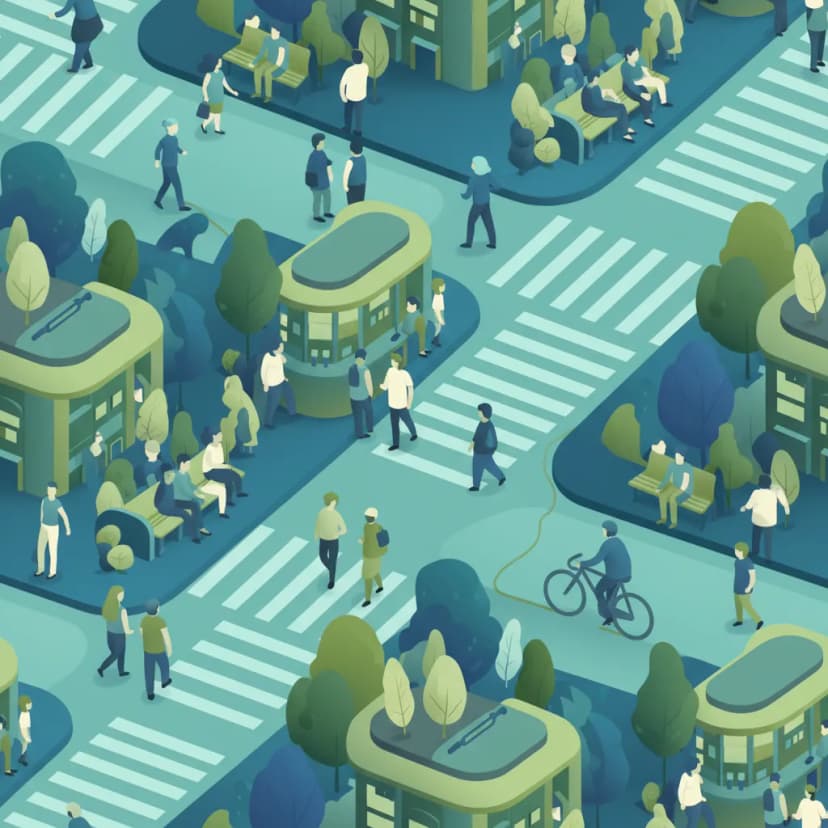
This lesson details a driver's responsibility towards pedestrians. You will learn the strict rule of yielding to pedestrians who are on or about to enter a marked, uncontrolled crosswalk. The content also covers the specific, highly restrictive rules for driving in designated pedestrian zones (gågata) and 'walking speed' areas (gångfartsområde), where pedestrians have complete priority and vehicle traffic is severely limited.
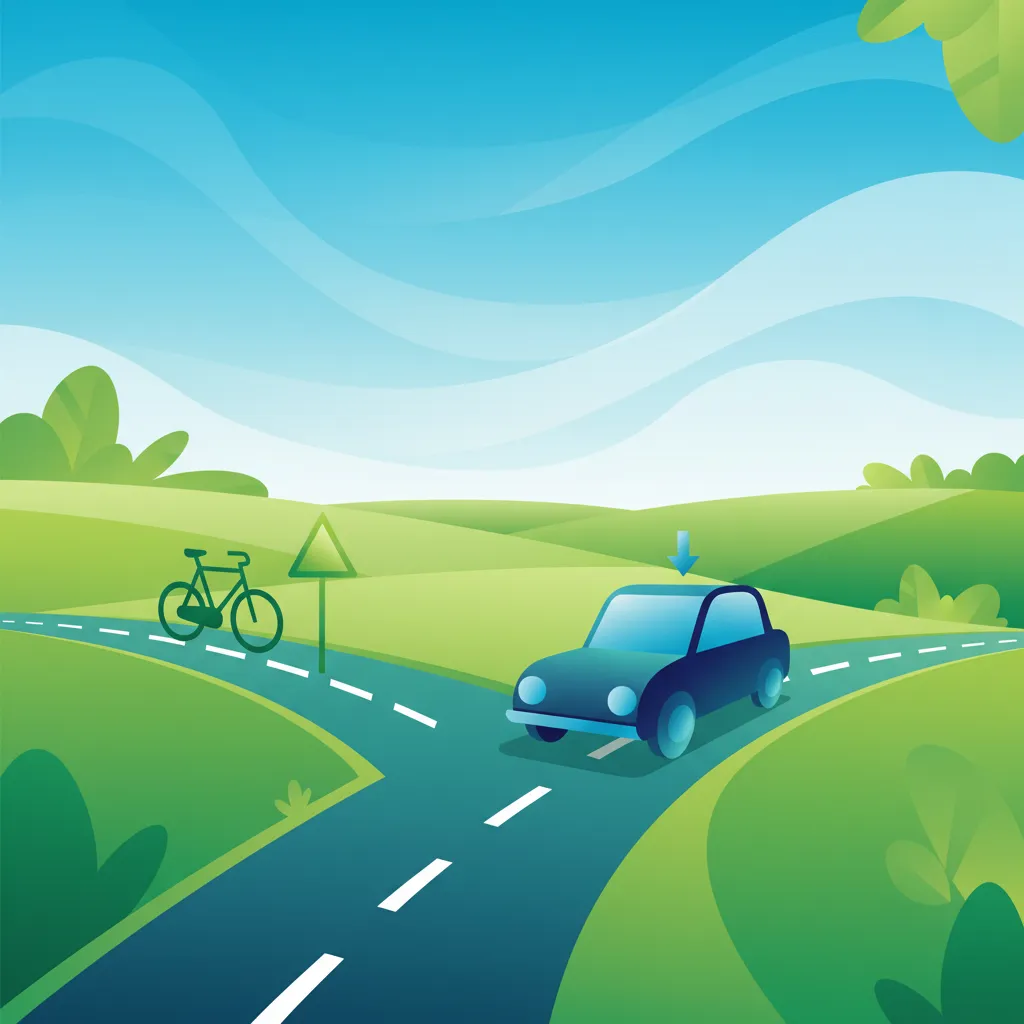
This lesson focuses on regulated intersections where priority is determined by signs indicating a main road (huvudled), a duty to yield (väjningsplikt), or a duty to stop (stopplikt). You will learn how to identify which road has priority and your legal obligation to give way to all traffic on that road before proceeding. The lesson covers proper procedures for approaching these junctions, assessing traffic, and entering the main road safely.
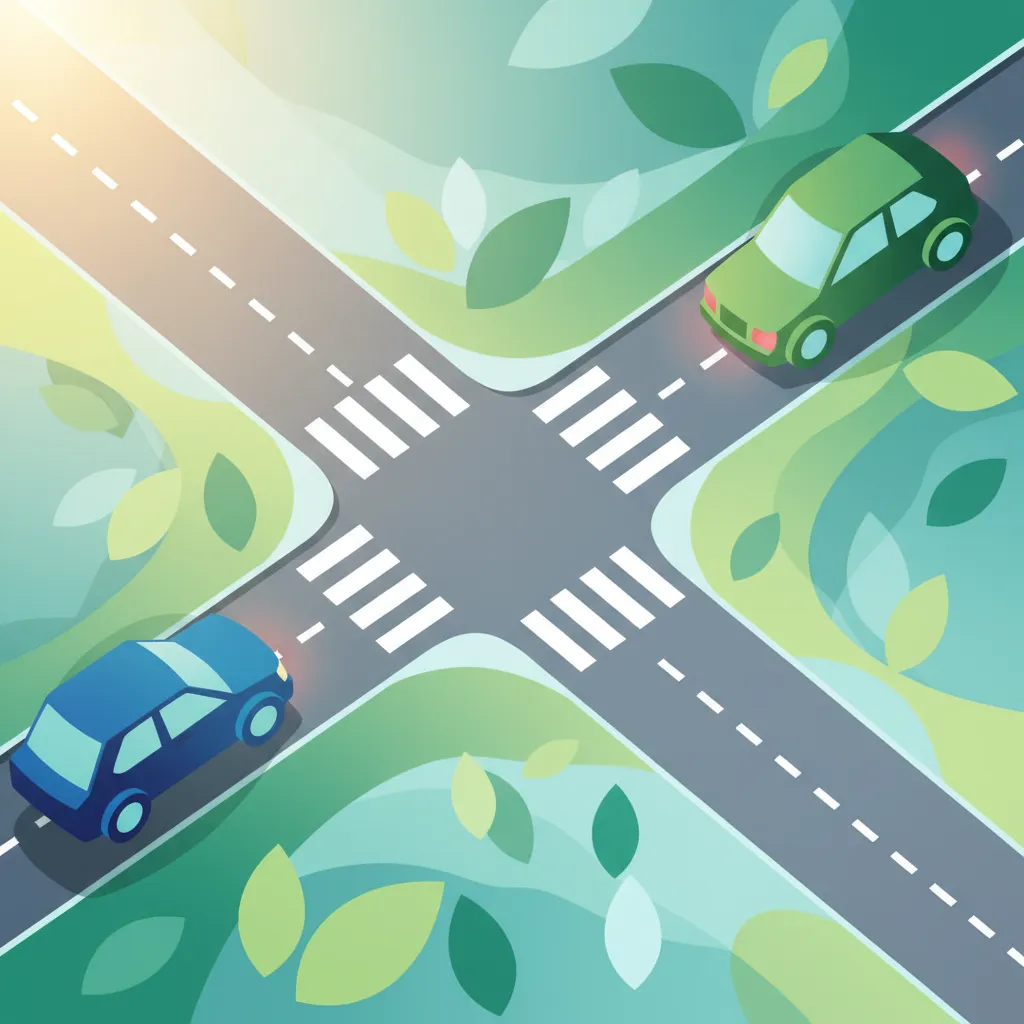
This lesson explains the two core principles of priority in Swedish traffic law: the right-hand rule (Högerregeln) and the duty to yield (Väjningsplikt). You will learn how to apply the right-hand rule at uncontrolled intersections and when to yield to other traffic as indicated by signs or road markings. Understanding this fundamental hierarchy is crucial for making correct and safe decisions in a wide variety of common traffic situations you will face as a motorcyclist.
This lesson addresses the unique hazards associated with public transportation. It explains how to safely navigate around buses that are stopping to pick up or drop off passengers and the importance of watching for pedestrians. It also covers the physical danger of slippery tram tracks, especially when wet, and reiterates that trams typically have absolute priority.
This lesson provides detailed guidance on navigating complex traffic points such as signalized intersections, multi-lane roundabouts, and pedestrian crossings. You will learn the correct procedures for entering and exiting roundabouts, the specific rules for yielding to pedestrians and cyclists at designated crossings, and how to interpret complex traffic light signals. These skills are vital for safe urban and suburban riding, where interaction with vulnerable road users is frequent.
This lesson focuses on the unique challenges of driving in urban environments. You will learn techniques for anticipating the actions of vulnerable road users like pedestrians and cyclists, especially near crossings and bus stops. The content covers how to navigate narrow streets, one-way systems, and areas with heavy traffic, emphasizing the need for lower speeds, heightened awareness, and a defensive mindset.
Learn how to safely interact with pedestrians, cyclists, and other vulnerable road users in special Swedish traffic zones. Covers rules for Skolväg (school zones), Gågata (pedestrian streets), and yielding to emergency vehicles, emphasizing heightened awareness.
This lesson details a driver's responsibility towards pedestrians. You will learn the strict rule of yielding to pedestrians who are on or about to enter a marked, uncontrolled crosswalk. The content also covers the specific, highly restrictive rules for driving in designated pedestrian zones (gågata) and 'walking speed' areas (gångfartsområde), where pedestrians have complete priority and vehicle traffic is severely limited.
This lesson focuses on the unique challenges of driving in urban environments. You will learn techniques for anticipating the actions of vulnerable road users like pedestrians and cyclists, especially near crossings and bus stops. The content covers how to navigate narrow streets, one-way systems, and areas with heavy traffic, emphasizing the need for lower speeds, heightened awareness, and a defensive mindset.
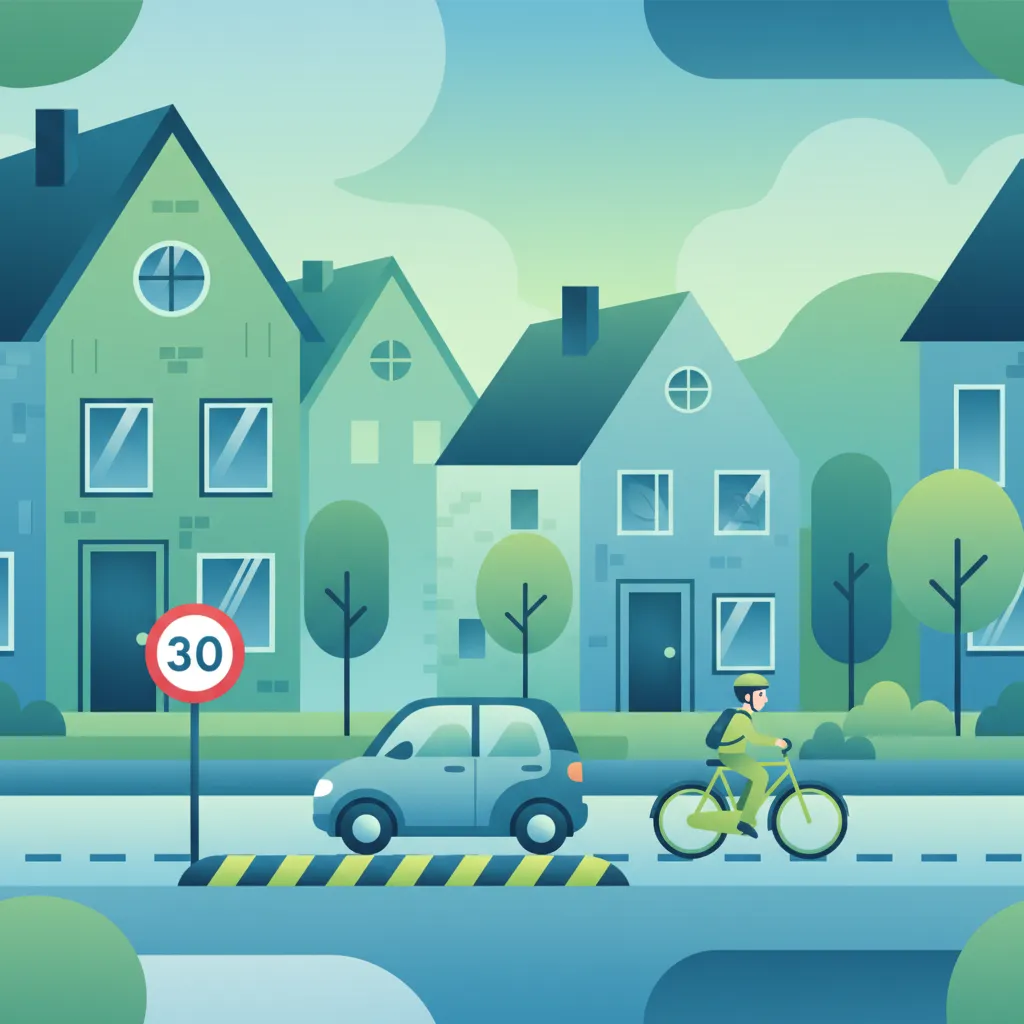
This lesson focuses on the high level of caution required when driving in residential areas. You will learn about the rules for special zones like 'gångfartsområde' (walking speed area) and the need to navigate around speed calming measures like speed bumps. The central theme is anticipating unpredictable behavior from residents, especially children, and managing the risks posed by parked cars that severely limit visibility.
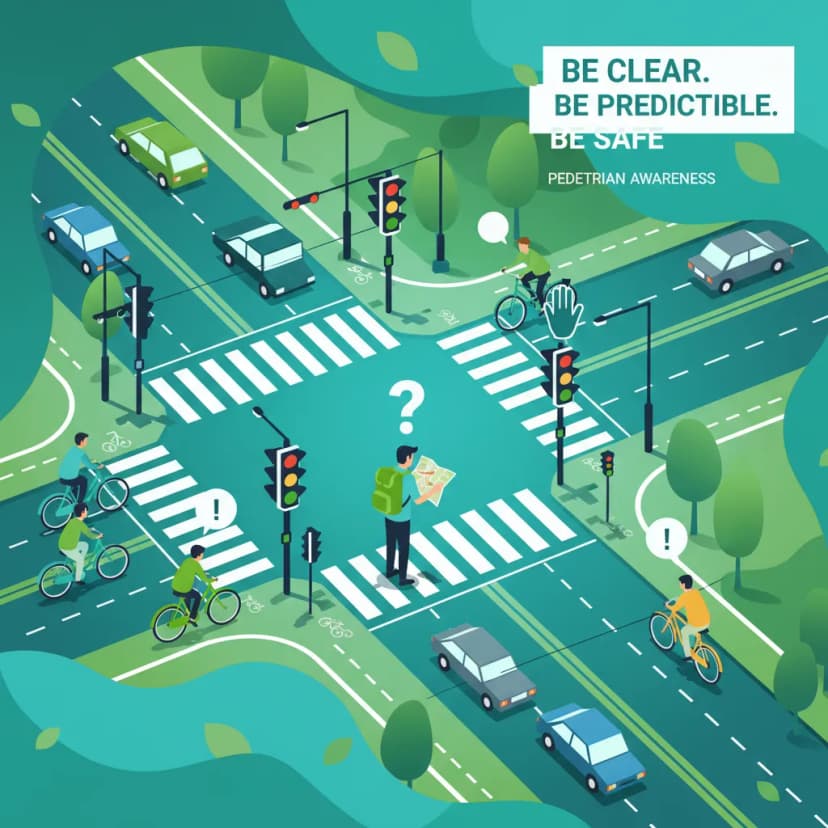
This lesson is dedicated to pedestrian safety, teaching riders to be constantly aware of people on foot, especially in busy urban environments. It reinforces the absolute duty to yield at marked crossings and encourages a cautious approach in areas like schools and shopping districts. The content stresses anticipating unpredictable actions, particularly from children or distracted pedestrians.
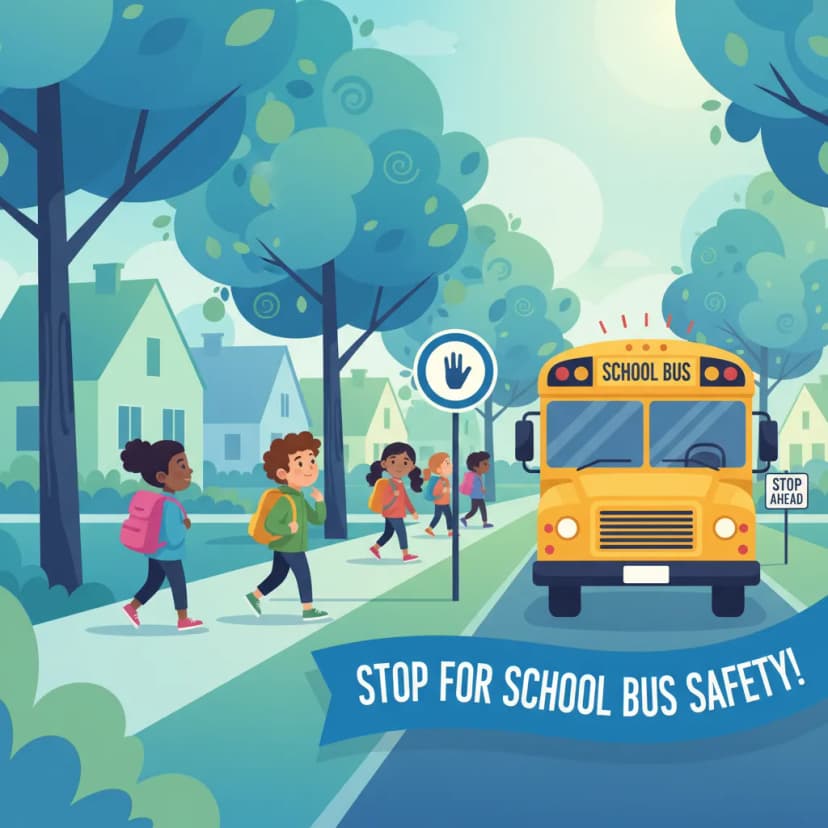
This lesson highlights the extreme caution needed in areas where children are present. You will learn to recognize school zone signs and the specific sign for a school bus, and understand your duty to slow down and be prepared to stop when a school bus has stopped for passengers. The lesson emphasizes that children can be impulsive and have poor risk judgment, requiring drivers to be exceptionally vigilant and maintain very low speeds.
This lesson provides detailed guidance on navigating complex traffic points such as signalized intersections, multi-lane roundabouts, and pedestrian crossings. You will learn the correct procedures for entering and exiting roundabouts, the specific rules for yielding to pedestrians and cyclists at designated crossings, and how to interpret complex traffic light signals. These skills are vital for safe urban and suburban riding, where interaction with vulnerable road users is frequent.
This lesson explains the specific traffic rules related to public transport vehicles. You will learn about your duty to yield to buses signaling to leave a stop (on roads with a speed limit of 50 km/h or less) and the fact that trams generally have priority. The lesson covers how to safely pass stopped buses and trams, being mindful of disembarking passengers who may cross the road unexpectedly.
This lesson provides clear instructions on the correct response to an approaching emergency vehicle with its sirens and lights active. You will learn your absolute duty to give way and the best methods for doing so, which typically involve pulling over to the right and stopping. The lesson stresses the importance of acting calmly and predictably, avoiding sudden braking or swerving that could endanger the emergency vehicle or other traffic.
This lesson details the specific priority rules at pedestrian and tram crossings (Spårvagnskorsning). It reinforces the legal obligation for moped riders to stop for pedestrians at marked zebra crossings and explains that trams almost always have priority. Learners will understand the importance of approaching these crossings with caution, scanning for hazards, and being prepared to stop.
This lesson covers parking areas that are reserved for specific purposes or permit holders. The primary focus is on spaces designated for people with disabilities, explaining the requirement of a valid permit. It also addresses other restricted areas such as residential parking zones (boendeparkering), loading zones, and areas that must be kept clear for emergency vehicles, highlighting the legal and ethical reasons for respecting these designations.
Find clear answers to common questions learners have about Special Situations (Skolväg, Gågata, Nödbroms). Learn how the lesson is structured, which driving theory objectives it supports, and how it fits into the overall learning path of units and curriculum progression in Sweden. These explanations help you understand key concepts, lesson flow, and exam focused study goals.
The 'exit rule' (utfartsregeln) means you must yield to traffic on the main road when you are exiting from a property, such as a driveway, parking lot, or private road. This applies even if the road you are entering is not a main road, and you must be particularly careful if it's a pedestrian street (Gågata).
You must yield to a bus that is signalling its intention to leave a bus stop and re-enter the traffic flow. This rule is in place to ensure buses can merge safely back into traffic, especially on busier roads. However, this rule does not apply if the bus stop is located on the right side of the road and the bus is leaving from its right side, or if there is a separate lane for buses.
In a pedestrian street (Gågata), pedestrians have absolute priority. You may drive through a Gågata, but only at walking speed. You must not stop or park there unless it's a designated parking area, and you must always yield to pedestrians and cyclists. You may also need to yield to traffic exiting the Gågata.
Trams generally have priority on the road. While they are considered vehicles, they often operate on fixed tracks and cannot easily deviate. You must yield to trams at intersections and when they are signalling to change lanes or are otherwise on a path that conflicts with yours. Always be aware of tram tracks and their movements.
The main danger at railway crossings is the high speed and silence of approaching trains, combined with the possibility of sudden barrier closures. Always check carefully in both directions for trains before crossing, even if barriers are up. Never try to cross if barriers are lowering or if a train is approaching. Some crossings have a 'stop' sign (stopplikt) where you must stop and check.
You must yield to emergency vehicles (police, ambulance, fire brigade) that are using their blue flashing lights and audible sirens. Pull over to the side of the road and stop, or otherwise facilitate their passage safely and promptly. Do not follow emergency vehicles closely, and be aware that they may behave unexpectedly.