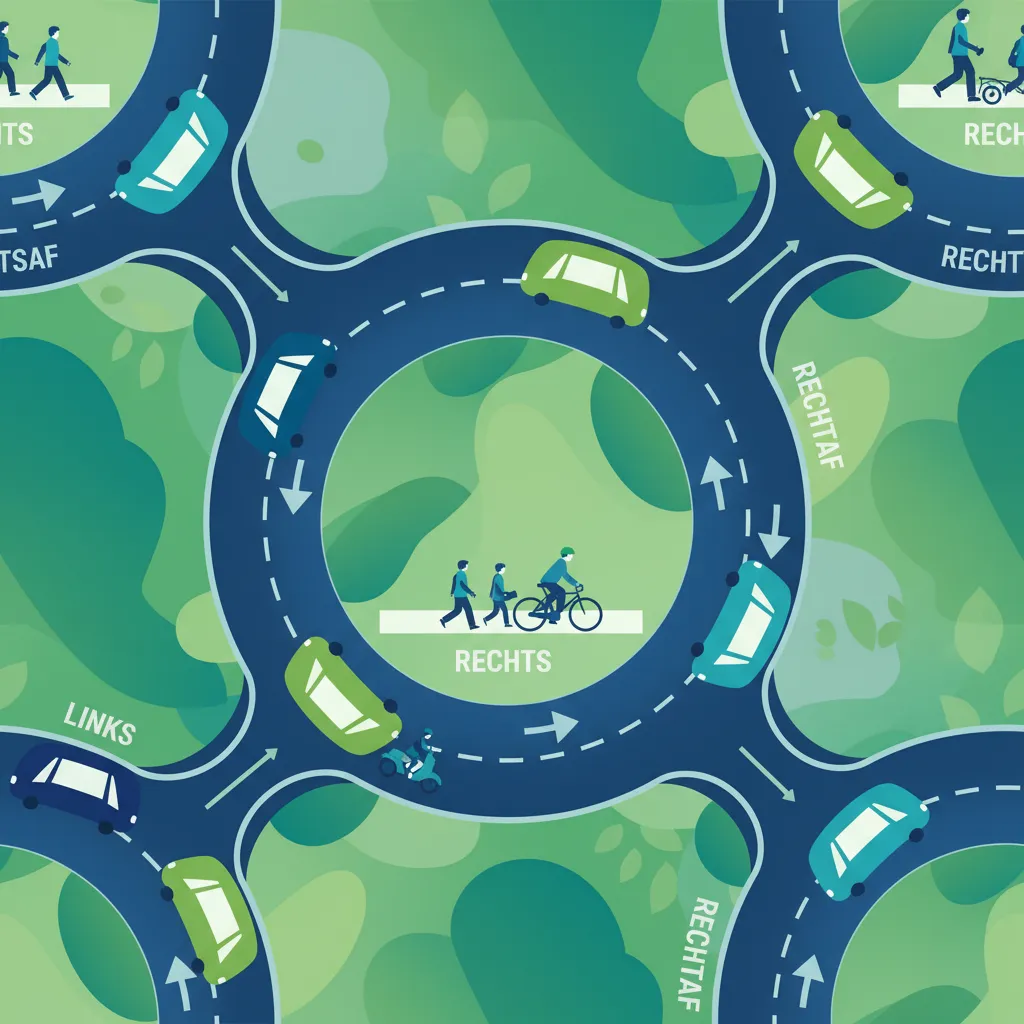
Welcome to the lesson on Roundabouts and Circulationsplats (Rondell)! This module is crucial for understanding traffic flow and right-of-way within the Priority Rules and Intersections unit. Mastering roundabouts is essential for safe driving in Sweden and for passing your Category B theory exam.
Roundabouts, known in Sweden as cirkulationsplatser or colloquially rondeller, are fundamental elements of the Swedish road network. They are designed to improve traffic flow, reduce congestion, and enhance safety by minimizing potential conflict points compared to traditional intersections. Mastering the rules for navigating these circular intersections is crucial for all drivers and is a key component of the Swedish Driving License Theory Course for Category B Cars. This detailed guide will equip you with the knowledge needed to approach, enter, circulate, and exit Swedish roundabouts safely and efficiently.
A cirkulationsplats is a circular intersection where traffic flows in a single direction around a central island. Unlike a standard intersection where drivers might stop and wait for a green light, roundabouts promote continuous, steady movement, significantly reducing delays. Their design inherently encourages lower speeds, which in turn reduces the severity of potential collisions.
The underlying logic of roundabouts prioritizes safety and predictability. By ensuring vehicles already circulating have the right-of-way, abrupt speed changes are minimized, and side-swipe collisions become less likely. Maintaining a constant speed and curvature helps all road users negotiate the intersection smoothly. Legally, the Swedish Trafikförordning (Road Traffic Ordinance) explicitly defines priority rules and mandates clear signalling to prevent ambiguity and ensure all road users understand each other's intentions.
This lesson builds upon your existing knowledge of general right-of-way rules (Högerregeln) and priority at T-junctions, and is essential for understanding more complex topics like merging and safe interaction with vulnerable road users.
Successful navigation of Swedish roundabouts relies on adhering to several core principles designed for safety and efficiency. These principles dictate how you should interact with the roundabout itself and with other road users.
The most fundamental rule in Swedish roundabouts is that vehicles already inside the roundabout always have the right-of-way over traffic approaching the entry. This principle is crucial for maintaining continuous flow and preventing conflicts at entry points. As a driver approaching a roundabout, you must yield to any vehicle already circulating, even if they are far away but clearly established in their trajectory.
Choosing the correct lane before and during your entry into a multi-lane roundabout is vital. Your lane selection should always correspond to your intended exit. Once inside, you must maintain your lane and avoid unnecessary lane changes. This predictability minimizes conflicts and helps maintain a smooth traffic flow for everyone. Incorrect lane choice can force you to make unsafe lane changes, significantly increasing the risk of a collision.
Clear and timely signalling is paramount in Swedish roundabouts. You must use your turn signals to clearly communicate your intention to exit to other road users, including other drivers, cyclists, and pedestrians. Signalling ensures that those waiting to enter, or those alongside you, can anticipate your movement and react appropriately, thereby reducing surprise maneuvers and potential collisions.
Roundabouts often feature marked pedestrian crossings (zebra crossings) at their exits, and sometimes cycle lanes running alongside. You must always give way to pedestrians who are on or about to enter a marked crossing. Similarly, you must yield to cyclists when they are using the roundabout lane adjacent to your intended exit, especially when they are already established in that lane. Protecting these vulnerable users is a statutory requirement and a critical aspect of safe driving.
Approaching and circulating within a roundabout requires careful speed management. You should adjust your speed to a safe, steady level that allows you to comfortably negotiate the roundabout's curvature. This ensures vehicle stability, provides sufficient time to react to unexpected situations, and allows you to yield effectively when necessary. Excessive speed can lead to loss of control, overshooting your exit, or an inability to yield safely.
The legal framework for priority at Swedish roundabouts is clearly defined in the Trafikförordning. Understanding these rules is essential for safe entry and navigation.
The Trafikförordning § 2 explicitly states that "All vehicles approaching a cirkulationsplats shall give way to vehicles already on the cirkulationsplats." This means that as you approach a roundabout, you must be prepared to stop at the entry line if there is any traffic already circulating that would be within a safe following distance of your entry point. This is often indicated by a Väjningsplikt (Yield) sign.
When approaching a roundabout, scan left for circulating traffic. If there are vehicles approaching from your left, be prepared to stop. Only proceed when there is a safe gap in the circulating traffic.
The "yield zone" is not a fixed distance but rather a dynamic assessment of the speed and proximity of circulating vehicles. It's generally wise to consider a vehicle within approximately one vehicle length plus a safety buffer as requiring you to yield. You should never force your way into a roundabout, as this disrupts traffic flow and creates a high risk of side-impact collisions.
A common misunderstanding is that the "first-come-first-served" principle applies, or that a red light at the entry (which is rare for roundabouts themselves but might occur at a preceding intersection) implies a different priority. In roundabouts, the priority is always to those already in motion within the circle.
Proper lane selection is critical, especially in multi-lane roundabouts, to ensure smooth traffic flow and prevent dangerous last-minute maneuvers. Your choice of lane should be determined well in advance of entering the roundabout, based on your intended exit.
In a single-lane roundabout, lane selection is straightforward: you use the single lane for all exits. However, you still need to position your vehicle appropriately on approach, making sure you are centred in the lane.
For roundabouts with multiple lanes, the Trafikförordning § 3 guides drivers to "keep to the lane that corresponds to their intended exit."
vändning) or take a left turn.Never change lanes inside a roundabout unless it is absolutely necessary and can be done with complete safety, without interfering with other traffic. Changing lanes within the roundabout is a major cause of collisions. If you find yourself in the wrong lane, it is safer to continue around the roundabout and exit at a later point, then find a safe place to adjust your direction.
Effective signalling is paramount for clear communication in roundabouts, as mandated by the Trafikförordning § 5. Your signals inform other drivers, cyclists, and pedestrians of your intentions, allowing them to anticipate your actions.
The rule is straightforward: you must signal just before the exit you intend to take. This usually means activating your turn signal approximately 2–3 seconds before reaching that specific exit.
Even if you are continuing "straight" through a roundabout, in Swedish practice, you should still signal your intent to exit using your right-turn signal after passing the exit immediately before yours. Signalling left upon entry helps indicate you are passing earlier exits.
Swedish roundabouts are often shared with cyclists and pedestrians, making careful interaction with these vulnerable road users (VRUs) a critical safety aspect. The Trafikförordning provides specific protections for them.
Cyclists may use dedicated cycle lanes or, if absent, may occupy the outermost vehicle lane of the roundabout. Your behavior around cyclists must be extremely cautious.
Trafikförordning § 4 states that "Motor vehicles shall give way to cyclists when a cyclist occupies the lane the vehicle intends to leave." This means if you are exiting and a cyclist is in the outer lane (or dedicated cycle lane) intending to continue or take the same exit, you must yield to them. Never cut in front of a cyclist when exiting.Many roundabout exits feature marked pedestrian crossings, commonly known as zebra crossings. These crossings grant pedestrians absolute priority.
Trafikförordning § 7 clearly states, "Pedestrians on a marked crossing at a cirkulationsplats shall be given right-of-way." This means if a pedestrian is on the crossing or clearly indicating their intention to cross (e.g., waiting at the curb), you must stop before the crossing line and allow them to pass safely.A marked area on the road, typically with white stripes, where pedestrians have the legal right-of-way when crossing.
Even if the roundabout lane you are in is clear, you must still check for and yield to pedestrians at the exit's zebra crossing before proceeding. Their safety is your responsibility.
Beyond the basic rules, strategic positioning, maintaining visibility, and adapting to various conditions enhance your safety and efficiency in roundabouts.
Maintaining optimal visibility is crucial. Your vehicle's position and your own posture within the vehicle affect your ability to see other road users.
The speed at which you enter and circulate within a roundabout directly impacts vehicle stability and your reaction time.
steady-state speed, allows for smooth navigation of the roundabout's curvature, preventing excessive lateral forces that could compromise stability.The rules governing Swedish roundabouts are primarily found in the Trafikförordning (Road Traffic Ordinance). Adhering to these regulations is mandatory for all drivers.
Yield to Circulating Traffic (Trafikförordning § 2): Always give way to vehicles already present in the roundabout. This is indicated by the Väjningsplikt sign (B1).
Correct Lane Selection (Trafikförordning § 3): Choose the lane that corresponds to your intended exit before entering. Avoid unnecessary lane changes inside the roundabout.
Signalling Exit Intent (Trafikförordning § 5): Signal right just before your intended exit. For later exits or straight-through travel, signal left upon entry, then switch to a right signal after passing the exit prior to yours.
Yield to Cyclists (Trafikförordning § 4): Give way to cyclists who are occupying the lane you intend to leave when exiting the roundabout. Maintain at least 1.5 meters of lateral clearance.
Yield to Pedestrians (Trafikförordning § 7): Always give absolute right-of-way to pedestrians on marked crossings at roundabout exits. Stop before the crossing line.
Maintain Safe Speed and Distance: Although not explicitly codified with a specific speed limit for all roundabouts, the general rule of adapting your speed to conditions and maintaining a safe following distance always applies. Overly high speeds can lead to loss of control.
Familiarity with common errors can help you avoid them, ensuring safer driving practices and preventing potential legal penalties.
The fundamental rules of roundabout navigation remain constant, but your approach and execution must adapt to varying conditions.
Trafikförordning § 5-2. You are still fully responsible for yielding and communicating your intentions.Mastering roundabouts is about predictability and communication. By consistently applying these principles, you contribute to a safer and more efficient traffic environment for everyone on Swedish roads.
Trafikförordning §§ 2, 3, 4, 5, 7 which govern these actions.Lesson content overview
Explore all units and lessons included in this driving theory course.
Explore search topics learners often look for when studying Roundabouts and Circulationsplats (Rondell). These topics reflect common questions about road rules, driving situations, safety guidance, and lesson level theory preparation for learners in Sweden.
Browse additional driving theory lessons that cover connected traffic rules, road signs, and common driving situations related to this topic. Improve your understanding of how different rules interact across everyday traffic scenarios.
Understand the core principles of yielding and lane discipline for Swedish roundabouts (cirkulationsplatser). This lesson clarifies right-of-way rules and safe lane choices for navigating complex junctions efficiently.
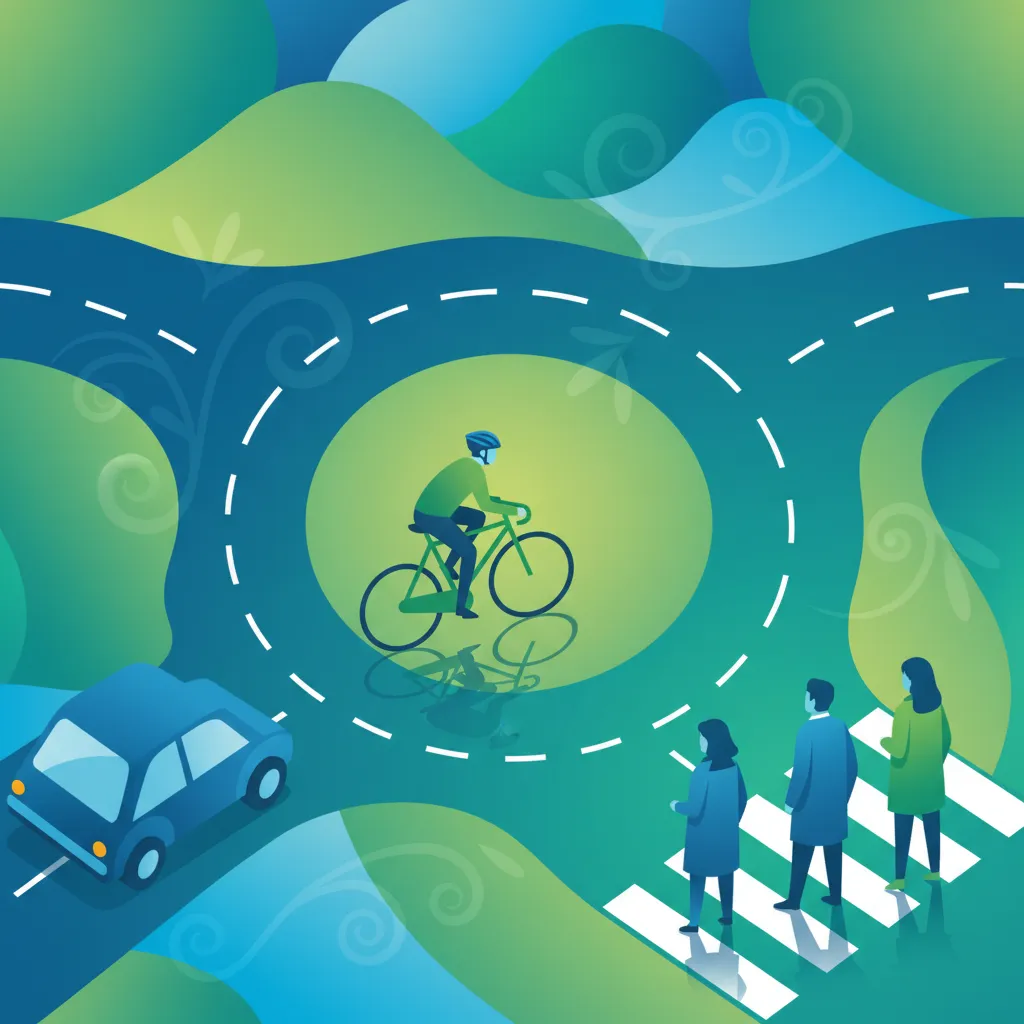
This lesson provides detailed guidance on navigating complex traffic points such as signalized intersections, multi-lane roundabouts, and pedestrian crossings. You will learn the correct procedures for entering and exiting roundabouts, the specific rules for yielding to pedestrians and cyclists at designated crossings, and how to interpret complex traffic light signals. These skills are vital for safe urban and suburban riding, where interaction with vulnerable road users is frequent.
This lesson focuses on regulated intersections where priority is determined by signs indicating a main road (huvudled), a duty to yield (väjningsplikt), or a duty to stop (stopplikt). You will learn how to identify which road has priority and your legal obligation to give way to all traffic on that road before proceeding. The lesson covers proper procedures for approaching these junctions, assessing traffic, and entering the main road safely.
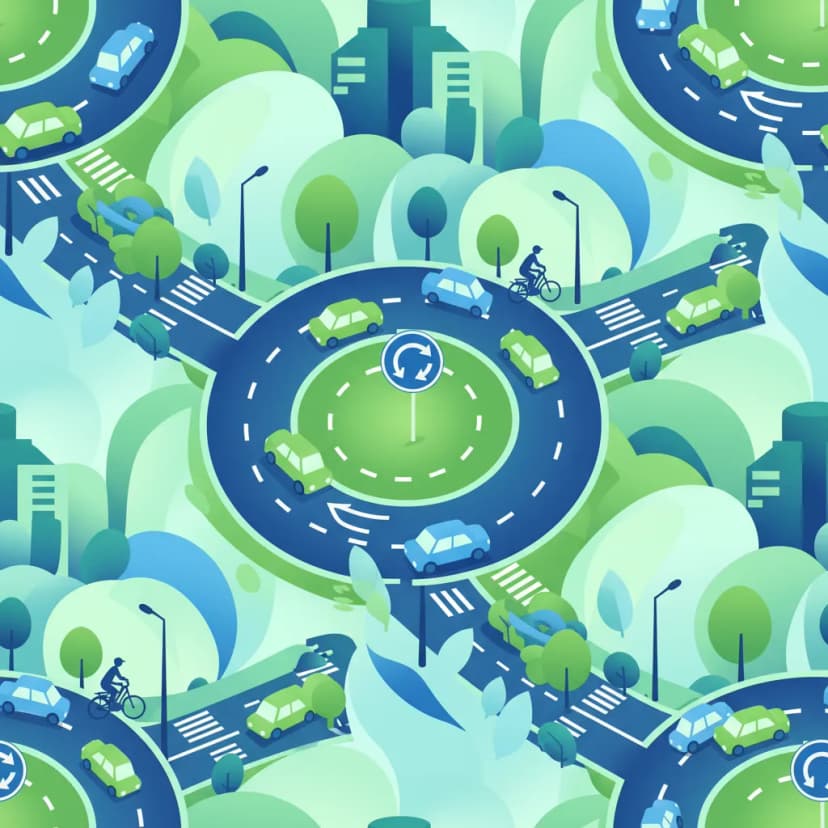
This lesson provides practical instructions for safely navigating different types of intersections and roundabouts. It covers procedures for approaching, entering, and exiting roundabouts, emphasizing the rule to yield to traffic already circulating. The content also addresses how to handle signal-controlled and uncontrolled intersections, ensuring riders select the correct lane and manage their speed appropriately.
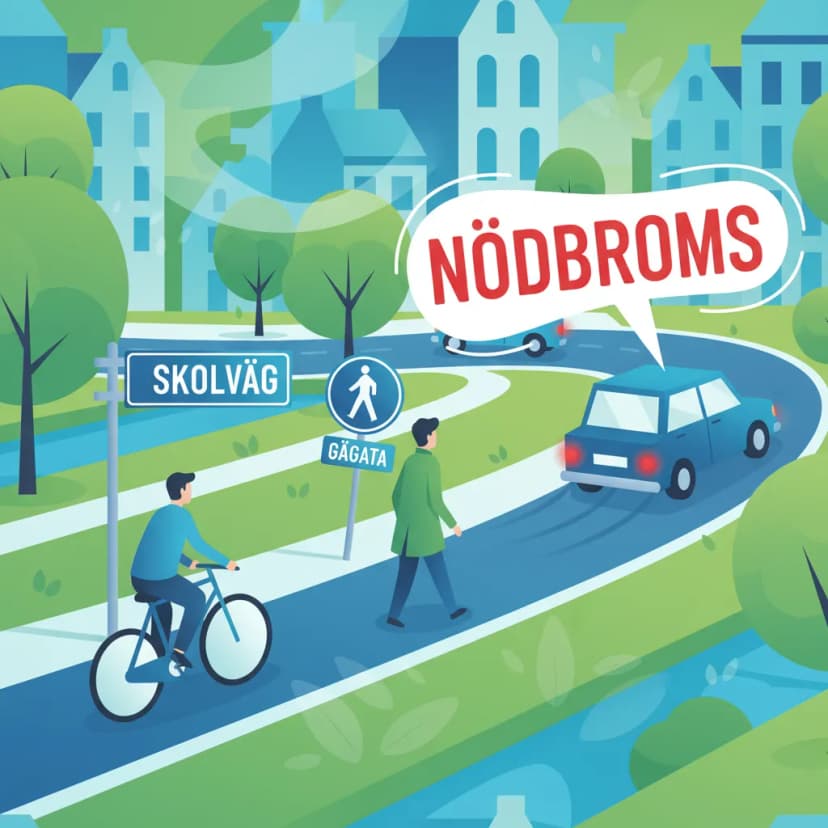
This lesson examines a variety of special situations where standard priority rules are modified. You will learn about the 'exit rule' (utfartsregeln) when entering a road from property, your duty to yield to buses indicating a departure from a stop, and the specific rules for pedestrian-only streets (gågata). The content also covers interactions with trams, emergency vehicles, and procedures at railway crossings, highlighting situations that demand maximum vigilance.
This lesson covers the critical maneuvers of merging and changing lanes. You will learn the correct technique for using an acceleration lane to match the speed of motorway traffic before merging smoothly and safely. The lesson emphasizes the importance of checking mirrors and the blind spot, signaling in good time, and applying the 'zipper principle' (dragkedjeprincipen) where lanes merge to ensure efficient and courteous traffic flow.
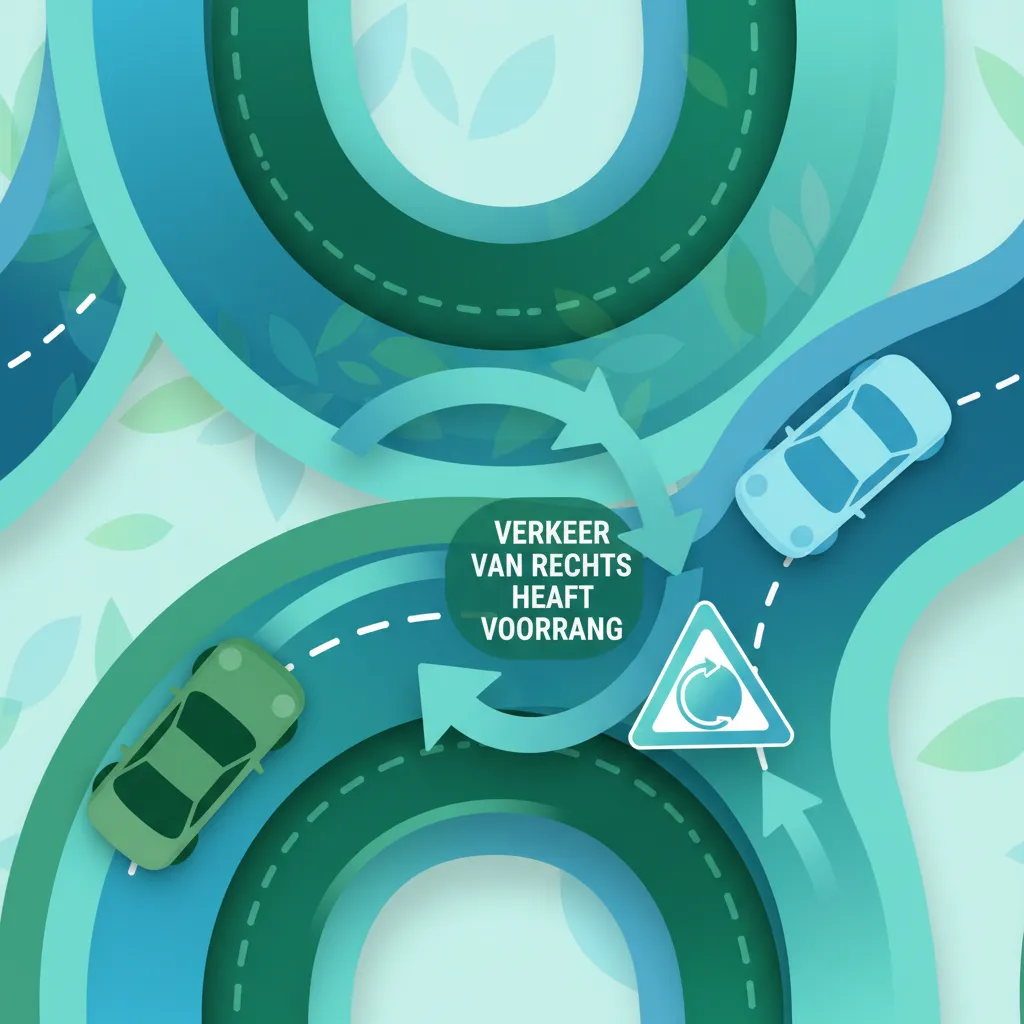
This lesson covers the critical maneuvers of overtaking and merging, which require precise judgment and communication. You will learn how to assess traffic speed and gaps, the importance of checking blind spots, and the correct use of signals to indicate your intentions. The content includes procedures for merging onto motorways from an on-ramp and how to perform safe overtaking maneuvers on various types of roads, minimizing risk to yourself and others.
This lesson explains the two core principles of priority in Swedish traffic law: the right-hand rule (Högerregeln) and the duty to yield (Väjningsplikt). You will learn how to apply the right-hand rule at uncontrolled intersections and when to yield to other traffic as indicated by signs or road markings. Understanding this fundamental hierarchy is crucial for making correct and safe decisions in a wide variety of common traffic situations you will face as a motorcyclist.
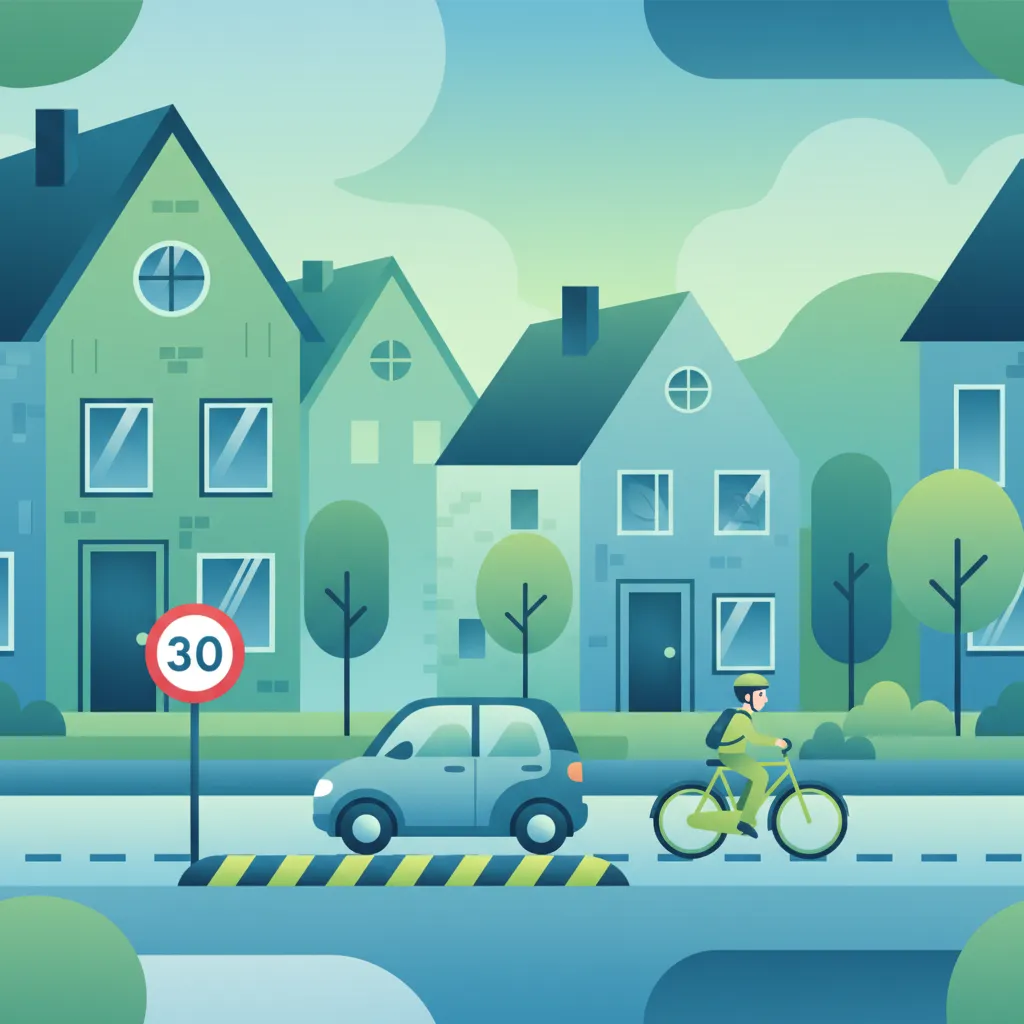
This lesson focuses on the high level of caution required when driving in residential areas. You will learn about the rules for special zones like 'gångfartsområde' (walking speed area) and the need to navigate around speed calming measures like speed bumps. The central theme is anticipating unpredictable behavior from residents, especially children, and managing the risks posed by parked cars that severely limit visibility.
This lesson introduces the core principles of right-of-way in Sweden, including the general duty to give way (Väjningsplikt) and the stricter stop duty (Stopplikt). It explains the concept of a priority road and how to apply the right-hand rule at uncontrolled intersections. By understanding this legal framework, riders can determine who has priority in any given situation and act predictably and safely.
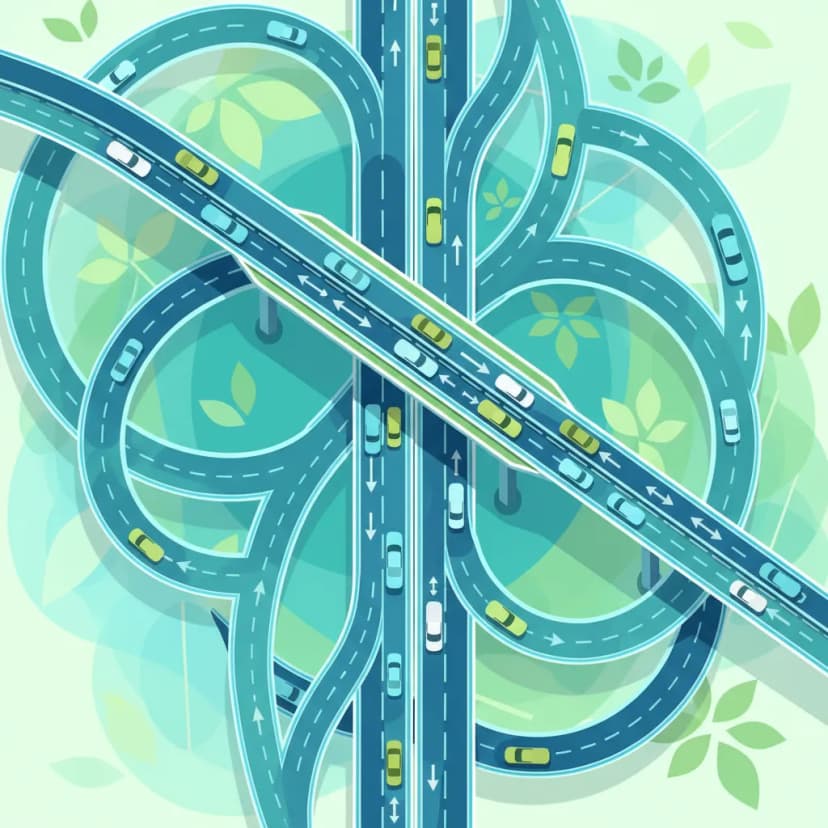
This lesson tackles the challenge of navigating some of the most complex road features, such as large multi-lane roundabouts and grade-separated interchanges. You will learn the importance of advance planning, choosing the correct lane on approach, clear signaling, and comprehensive observation to safely move through these busy areas. Mastering these junctions is a key indicator of an advanced and competent rider who can handle any road layout.
Explore common situations and potential challenges encountered in Swedish roundabouts. Learn how to safely anticipate and react to other road users, including cyclists and pedestrians, in various roundabout configurations.
This lesson provides detailed guidance on navigating complex traffic points such as signalized intersections, multi-lane roundabouts, and pedestrian crossings. You will learn the correct procedures for entering and exiting roundabouts, the specific rules for yielding to pedestrians and cyclists at designated crossings, and how to interpret complex traffic light signals. These skills are vital for safe urban and suburban riding, where interaction with vulnerable road users is frequent.
This lesson focuses on the high level of caution required when driving in residential areas. You will learn about the rules for special zones like 'gångfartsområde' (walking speed area) and the need to navigate around speed calming measures like speed bumps. The central theme is anticipating unpredictable behavior from residents, especially children, and managing the risks posed by parked cars that severely limit visibility.
This lesson provides practical instructions for safely navigating different types of intersections and roundabouts. It covers procedures for approaching, entering, and exiting roundabouts, emphasizing the rule to yield to traffic already circulating. The content also addresses how to handle signal-controlled and uncontrolled intersections, ensuring riders select the correct lane and manage their speed appropriately.
This lesson tackles the challenge of navigating some of the most complex road features, such as large multi-lane roundabouts and grade-separated interchanges. You will learn the importance of advance planning, choosing the correct lane on approach, clear signaling, and comprehensive observation to safely move through these busy areas. Mastering these junctions is a key indicator of an advanced and competent rider who can handle any road layout.
This lesson focuses on the unique challenges of driving in urban environments. You will learn techniques for anticipating the actions of vulnerable road users like pedestrians and cyclists, especially near crossings and bus stops. The content covers how to navigate narrow streets, one-way systems, and areas with heavy traffic, emphasizing the need for lower speeds, heightened awareness, and a defensive mindset.
This lesson addresses the specific risks associated with driving on rural roads (landsvägar). You will learn how to manage higher speeds on narrow, winding roads with limited visibility due to curves and hills. The lesson covers procedures for safely overtaking slow-moving agricultural vehicles, managing encounters with oncoming traffic on narrow sections, and being constantly vigilant for wildlife, especially at dawn and dusk.

This lesson focuses on creating a complete awareness of the traffic situation around your vehicle. You will learn the correct procedure for using your interior and side mirrors in a continuous scanning pattern. Crucially, the lesson explains what the blind spot (döda vinkeln) is, where it is located, and why a physical head check over the shoulder is a non-negotiable safety step before any lateral movement like changing lanes or turning.
This lesson focuses on regulated intersections where priority is determined by signs indicating a main road (huvudled), a duty to yield (väjningsplikt), or a duty to stop (stopplikt). You will learn how to identify which road has priority and your legal obligation to give way to all traffic on that road before proceeding. The lesson covers proper procedures for approaching these junctions, assessing traffic, and entering the main road safely.

This lesson prepares you for the specific challenges of riding on rural roads in Sweden. You will learn how to read the road ahead for changes in surface quality, approach blind corners safely, and adjust your speed for narrow lanes with no shoulder. The content also covers how to anticipate and safely interact with slow-moving agricultural vehicles and the potential for wild animals on the road, ensuring you are prepared for the unpredictable nature of country riding.
This lesson provides a complete guide to motorway driving in Sweden. You will learn the correct procedures for merging from an on-ramp, maintaining proper lane discipline by keeping right unless overtaking, and exiting safely via off-ramps. The content emphasizes the importance of maintaining large safety margins at high speeds, checking blind spots thoroughly before any lane change, and knowing the correct safety procedures in case of a breakdown.
Find clear answers to common questions learners have about Roundabouts and Circulationsplats (Rondell). Learn how the lesson is structured, which driving theory objectives it supports, and how it fits into the overall learning path of units and curriculum progression in Sweden. These explanations help you understand key concepts, lesson flow, and exam focused study goals.
In Sweden, traffic already in the roundabout always has priority. You must yield to vehicles approaching from your left within the roundabout before you enter. This rule applies regardless of whether it's a single or multi-lane roundabout.
For exits to the right or going straight ahead, generally use the right lane. For exits to the left or U-turns, use the left lane. Always check road markings and signs, as these may indicate specific lane usage. Signal your intention clearly before changing lanes or exiting.
You should signal right when you intend to exit the roundabout. If you are taking an exit that requires you to go beyond straight ahead (e.g., turning left or making a U-turn), you should signal left upon entering the roundabout. If going straight, you typically do not signal on entry but signal right before your intended exit.
Cyclists may use dedicated cycle paths or ride on the road, sometimes within the roundabout lanes. Always be aware of cyclists, especially when changing lanes or exiting. Give them ample space and be prepared for them to proceed straight or turn. Never overtake a cyclist within the roundabout if it means compromising their safety or space.
A common mistake is failing to yield to traffic already in the roundabout, leading to collisions. Another is not signalling their exit, causing confusion or unsafe maneuvers for other drivers. Incorrect lane positioning for the intended exit is also a frequent error.