
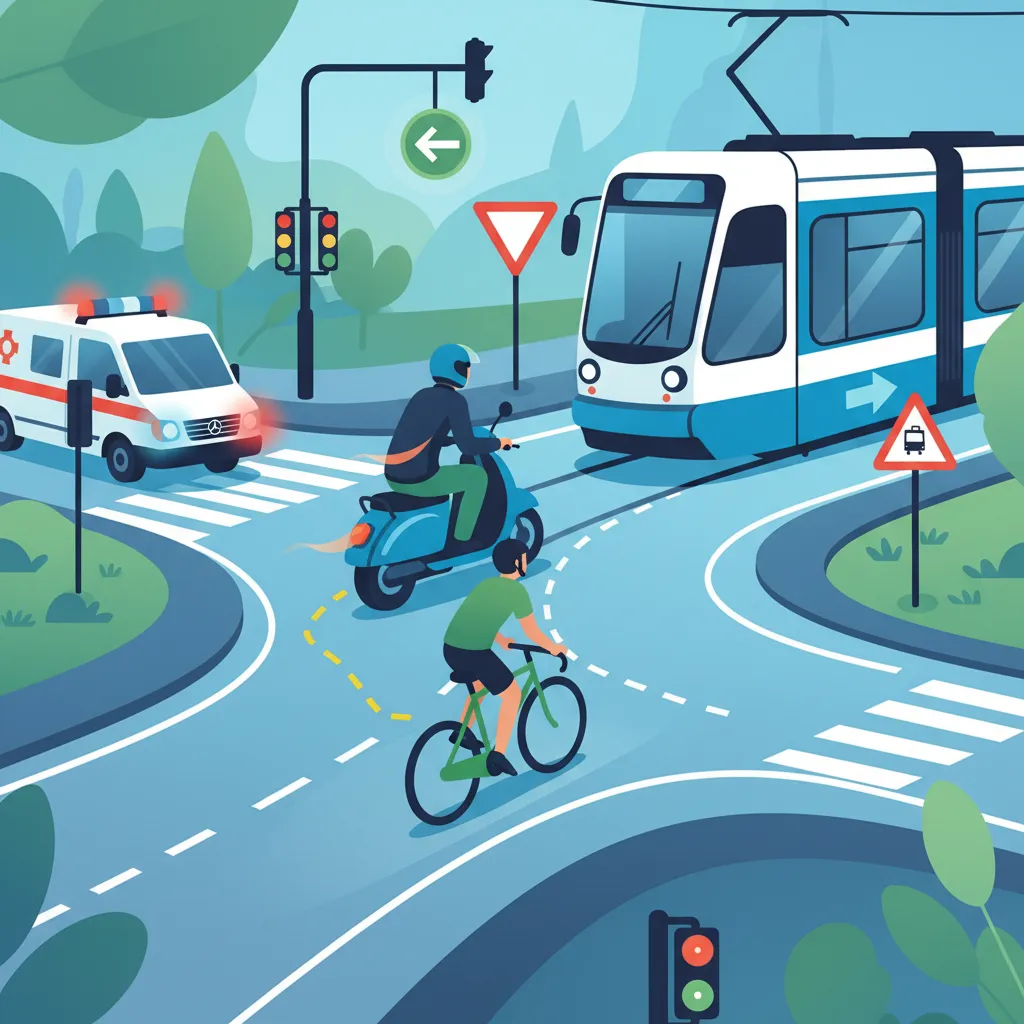
Navigate Swedish traffic with confidence by mastering right-of-way rules (Väjningsregler). This unit delves into the critical principles of yielding and priority, essential for preventing accidents and passing your AM moped theory exam. You'll learn how to handle complex scenarios at intersections, roundabouts, and when encountering emergency vehicles, cyclists, and trams.
Browse all lessons that make up Priority and Right-of-Way Rules. Each lesson focuses on specific topics, learning objectives, and core concepts, helping you build essential knowledge and follow a clear, structured progression toward your study goals in Sweden.
This lesson introduces the core principles of right-of-way in Sweden, including the general duty to give way (Väjningsplikt) and the stricter stop duty (Stopplikt). It explains the concept of a priority road and how to apply the right-hand rule at uncontrolled intersections. By understanding this legal framework, riders can determine who has priority in any given situation and act predictably and safely.
This lesson provides practical instructions for safely navigating different types of intersections and roundabouts. It covers procedures for approaching, entering, and exiting roundabouts, emphasizing the rule to yield to traffic already circulating. The content also addresses how to handle signal-controlled and uncontrolled intersections, ensuring riders select the correct lane and manage their speed appropriately.
This lesson details the specific priority rules at pedestrian and tram crossings (Spårvagnskorsning). It reinforces the legal obligation for moped riders to stop for pedestrians at marked zebra crossings and explains that trams almost always have priority. Learners will understand the importance of approaching these crossings with caution, scanning for hazards, and being prepared to stop.
This lesson clarifies the regulations for operating a moped on cycle paths (Cykelbana) and other shared spaces in Sweden. It explains which types of mopeds are permitted on these paths and the specific rules that apply, such as lower speed limits and the duty to yield to cyclists. The content focuses on safe interaction and communication to ensure peaceful coexistence with other users in these environments.
This lesson teaches the correct and legal response when encountering an emergency vehicle with active sirens or lights. It outlines the immediate obligation to give way by safely moving to the side of the road and stopping. The content provides practical advice on how to perform this maneuver calmly and predictably, ensuring a clear path for the emergency responders while maintaining the rider's own safety.
Explore high-intent keywords and long-tail search topics learners use when researching Priority and Right-of-Way Rules. These terms reflect how people search for reliable study materials, structured explanations, and unit-level theory preparation support in Sweden.
Find clear answers to the most common questions learners ask about Priority and Right-of-Way Rules. Understand how the unit is organized, what learning goals it supports, and how it contributes to your study progression with structured explanations and practical guidance tailored for learners in Sweden.
The main right-of-way rules (Väjningsregler) for mopeds in Sweden follow general traffic principles. Generally, you must yield to traffic coming from your right at uncontrolled intersections, unless signs indicate otherwise. You also must yield to vehicles already in a roundabout, and always to pedestrians at crossings. Specific situations like yielding to trams and emergency vehicles have their own rules that this unit covers in detail.
When approaching a roundabout in Sweden, you generally must yield to traffic already in the roundabout, coming from your left. Always check for cyclists and pedestrians, especially at the entrance and exit. This unit explains the nuances of roundabout priority for mopeds, ensuring you can navigate them safely.
You must generally yield to trams when they are in a tram crossing (spårvagnskorsning) or if they have priority established by signs or markings. Trams often have a right-of-way, especially when entering or within intersections. This unit clarifies the specific rules for giving way to trams to avoid dangerous situations.
In Sweden, you must always yield to emergency vehicles (emergency services) when they are using their siren and/or flashing blue lights. Pull over to the side of the road safely and as far to the right as possible, or stop if necessary, to let them pass. This unit emphasizes the critical importance of immediate and safe yielding.
For the most part, mopeds in Sweden follow the same general right-of-way rules as cars, particularly concerning intersections and roundabouts. However, understanding how to interact safely with larger vehicles and specific road user groups like cyclists is crucial. This unit highlights these interactions for AM license holders.
The Swedish theory exam for mopeds includes questions specifically designed to test your understanding of Väjningsregler. These often present scenarios at intersections or other traffic situations, requiring you to choose the correct action based on priority rules. This unit provides practice and explanations to help you master these questions.
All included lessons
Lessons in Priority and Right-of-Way Rules
See who benefits most from studying Priority and Right-of-Way Rules. This overview explains how the unit supports different learning needs, what level of knowledge is helpful before starting, and how it fits into the overall study path in Sweden.
This unit is designed for all learners preparing for the Swedish Category AM moped license theory exam. It is particularly beneficial for those who find right-of-way rules confusing or who want to ensure they can confidently handle complex intersection scenarios and interactions with other road users.

See how Swedish Moped Theory AM is structured, with key topics, learning objectives, and a step-by-step path for theory preparation in Sweden.
Explore all units and lessons included in this driving theory course.