Welcome to the essential unit on Swedish priority rules (Väjningsregler) for Category AM moped riders. Understanding who has the right-of-way is critical for safe riding and passing your theory exam. This lesson lays the groundwork by introducing the fundamental principles that govern traffic flow at intersections and other conflict points, ensuring you can navigate Sweden's roads with confidence.
Navigating Swedish roads safely and effectively as a Category AM (moped) rider requires a thorough understanding of priority rules, known in Swedish as Väjningsregler. These principles dictate who has the right to proceed first in various traffic situations, preventing conflicts and ensuring a predictable flow. This lesson, part of your Swedish Category AM (Moped) driving license theory course, will delve into the core concepts, from the general duty to give way to specific rules for priority roads and vulnerable road users.
Mastering these rules is not just about passing your theoretical exam; it's fundamental for your safety and the safety of others on the road. Correct priority decisions prevent collisions, especially in bustling urban environments where mopeds share space with cars, bicycles, and pedestrians.
Priority, or väjningsrätt, is the legal framework that determines the order of movement when different traffic streams intersect or merge. It's designed to minimize conflict points, reduce the risk of accidents, and promote efficient traffic flow. The underlying logic is simple: by clearly assigning who goes first, road users can anticipate each other's actions, leading to safer and more predictable journeys.
This lesson builds upon your foundational knowledge of Swedish traffic signs and road markings. The principles covered here are crucial for understanding more complex scenarios discussed in subsequent lessons, such as specific rules for intersections, roundabouts, pedestrian crossings, and interaction with emergency vehicles.
The term Väjningsplikt refers to a legal obligation to yield to other traffic that has priority. This duty requires you to adjust your speed, position, or even stop if necessary, to allow other vehicles or road users to proceed without obstruction. It's a general principle that guides behavior at many junctions and merges.
Unlike Stopplikt, Väjningsplikt does not always demand a complete halt. If the way is clear and you can proceed safely without impeding traffic with priority, you may do so. However, the onus is on you to ensure the road is clear before continuing. Failing to stop when a vehicle with priority is too close, or misjudging its speed, constitutes a violation.
This duty is often indicated by specific traffic signs, such as the triangular "Give Way" sign.
When you see a "Give Way" sign, you are obligated to slow down, carefully check for traffic on the intersecting road, and only proceed when it is safe and clear to do so. This rule applies whether the intersecting road is a main road or another secondary street where your path would create a conflict.
Stopplikt represents a stricter obligation than Väjningsplikt. It is an absolute requirement to bring your moped to a complete and full stop at a designated stop line or before entering the conflicting traffic path. This stop is mandatory, regardless of whether you can see other traffic or if the road appears empty.
This crucial rule is primarily indicated by the octagonal "STOP" sign.
When encountering a STOP sign, you must:
Stopplikt is commonly found at intersections with limited visibility, at railway crossings, or where traffic volumes are high, making a full stop essential for safety. Failure to comply can result in severe legal consequences and a high risk of collisions.
A Priority Road, known as Huvudled in Sweden, is a specific type of road segment where traffic generally has the right-of-way over traffic on intersecting roads. These roads are designated to facilitate continuous, uninterrupted flow on main arteries, making travel more efficient.
A Priority Road is indicated by a distinctive blue sign with a white capital "H".
While riding on a Priority Road, you can typically proceed through intersections without needing to yield to traffic emerging from side roads, provided those side roads do not also have priority (which is rare, but possible at intersections between two priority roads, where other rules apply). This simplifies decision-making and maintains higher average speeds.
However, your priority is not absolute. You must still yield to pedestrians at marked crossings and to emergency vehicles. Additionally, the status of a Priority Road is not indefinite; it always ends. The end of a Priority Road is indicated by a specific sign:
When you pass the "End of Priority Road" sign, the road reverts to standard priority rules. This means you must then apply the right-hand rule or respond to any other signs or markings present. It's crucial to be aware of this transition, especially at higher speeds, as misjudging it can lead to dangerous situations.
The Right-Hand Rule, or Högerregeln, is a fundamental priority principle in Sweden that applies at uncontrolled intersections. An uncontrolled intersection is any junction where there are no traffic lights, stop signs, give way signs, or priority road signs to dictate the right of way.
The rule states: At an uncontrolled intersection, traffic approaching from your right has priority.
This means if you are approaching such an intersection and another vehicle is coming from your right, you must yield to that vehicle. The Högerregeln is a default rule designed to provide a clear protocol where explicit signs are absent, ensuring predictability even in less regulated environments, such as residential areas or rural crossroads.
For moped riders, this rule is particularly important as many smaller streets and local intersections lack specific signage. Always be prepared to yield to traffic from your right, even if you perceive yourself to be on a "straight" or more prominent path. Do not assume that larger vehicles will automatically yield to you; always ride defensively.
Common Misunderstandings:
While priority roads and the right-hand rule govern vehicle-to-vehicle interactions, certain road users are given absolute priority due to their vulnerability or operational characteristics. These include pedestrians, cyclists, and trams.
Pedestrians are among the most vulnerable road users. At marked zebra crossings (zebrakorsning), indicated by white stripes on the road, pedestrians have absolute priority. This means that if a pedestrian steps onto the crossing, or is about to, you must stop and allow them to complete their crossing before you proceed. This rule applies regardless of any other priority rules that might otherwise apply to your vehicle, such as being on a priority road.
It's critical to anticipate pedestrians, especially in urban areas. Slow down as you approach any marked crossing, and be prepared to stop. Failing to yield to a pedestrian at a zebra crossing is a serious offense and can have tragic consequences.
Cyclists often have dedicated cycle paths (cykelbana) that sometimes intersect with roads or moped lanes. If a cycle path intersects a road and there are no specific signs (like a give way sign for the cycle path), the general rule is that the cyclist has priority if they are already within the intersection area. However, specific signage can alter this. If the cycle path has a yield sign, the cyclist must yield to road traffic. As a moped rider, always exercise caution and assume a cyclist might not see you, or might misinterpret priority.
Trams operate on fixed tracks and have limited maneuverability and braking capabilities. Therefore, trams are almost always given priority over other road traffic, especially at tram crossings (spårvagnskorsning). This is typically indicated by a specific warning sign:
When you approach a tram crossing, you must yield to any approaching tram. Stop before the crossing line and wait until the tram has passed and it is safe to proceed. Never attempt to "beat" a tram across the tracks; the risks are extremely high.
Emergency vehicles—such as police cars, ambulances, and fire engines—have a critical role in responding to urgent situations. When these vehicles are using their audible signals (sirens) and/or visual signals (blue flashing lights), all other road users must immediately yield the right-of-way and allow them to pass unobstructed.
This rule is absolute and overrides all other priority rules.
How to React:
Your quick and correct response can make a significant difference in saving lives or responding to critical incidents.
Ignoring or misinterpreting priority rules is a leading cause of traffic accidents. For moped riders, who are more vulnerable than car drivers, collisions stemming from priority violations can lead to serious injuries. Here are some common violations and their potential consequences:
While the rules provide a clear framework, real-world driving conditions require adaptable judgment. Several factors can influence how you apply priority principles:
The strict enforcement and consistent application of priority rules are cornerstones of road safety. There are several deep-seated reasons why these rules are so critical:
Ultimately, understanding and consistently applying these priority principles means you are not just a compliant rider, but a safe and responsible participant in the Swedish traffic system.
To deepen your understanding of priority rules and prepare for your Swedish Category AM (Moped) driving license exam, explore related topics and practice scenarios.
Lesson content overview
Explore all units and lessons included in this driving theory course.
Explore search topics learners often look for when studying General Priority Principles (Väjningsregler). These topics reflect common questions about road rules, driving situations, safety guidance, and lesson level theory preparation for learners in Sweden.
Browse additional driving theory lessons that cover connected traffic rules, road signs, and common driving situations related to this topic. Improve your understanding of how different rules interact across everyday traffic scenarios.
Expand your understanding of right-of-way beyond basic principles. This lesson covers complex intersection scenarios, multi-lane roundabouts, and specific situations where priority rules (väjningsregler) may differ in Swedish traffic.
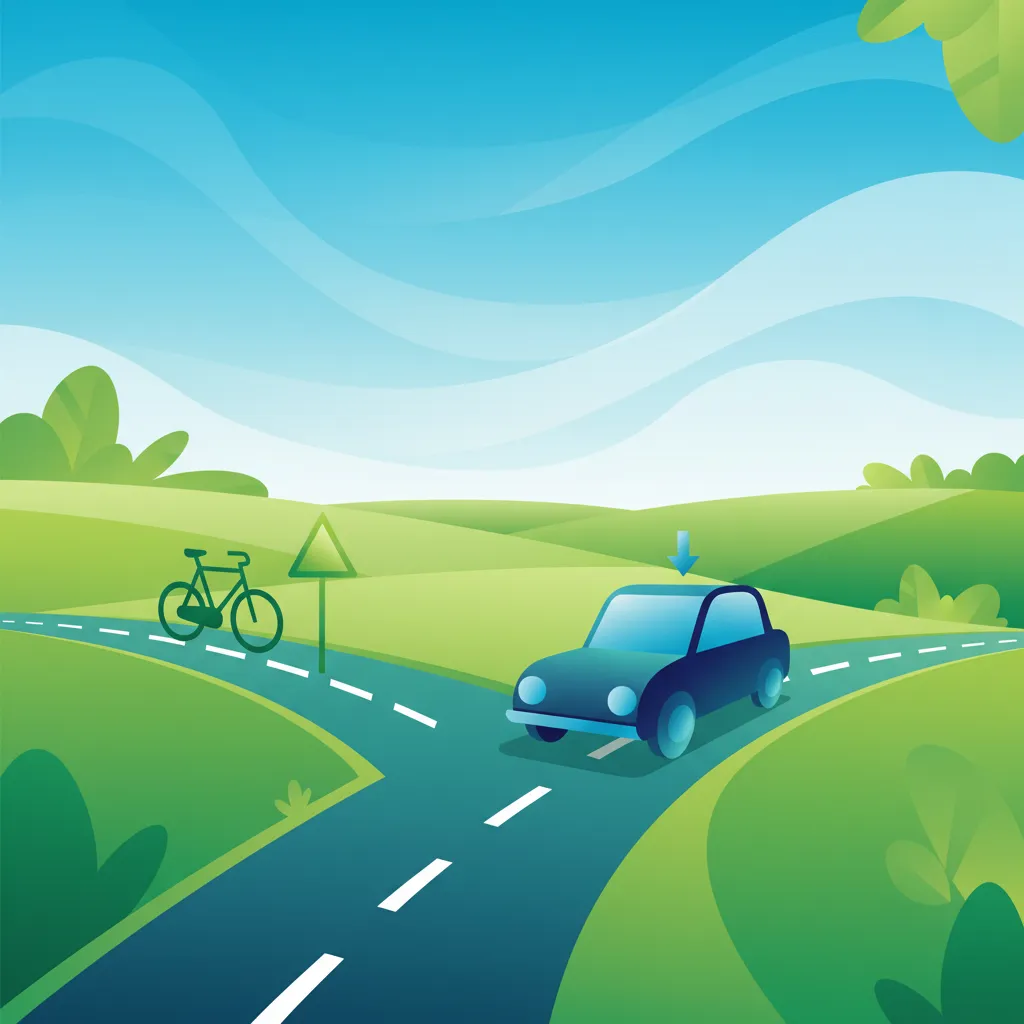
This lesson focuses on regulated intersections where priority is determined by signs indicating a main road (huvudled), a duty to yield (väjningsplikt), or a duty to stop (stopplikt). You will learn how to identify which road has priority and your legal obligation to give way to all traffic on that road before proceeding. The lesson covers proper procedures for approaching these junctions, assessing traffic, and entering the main road safely.
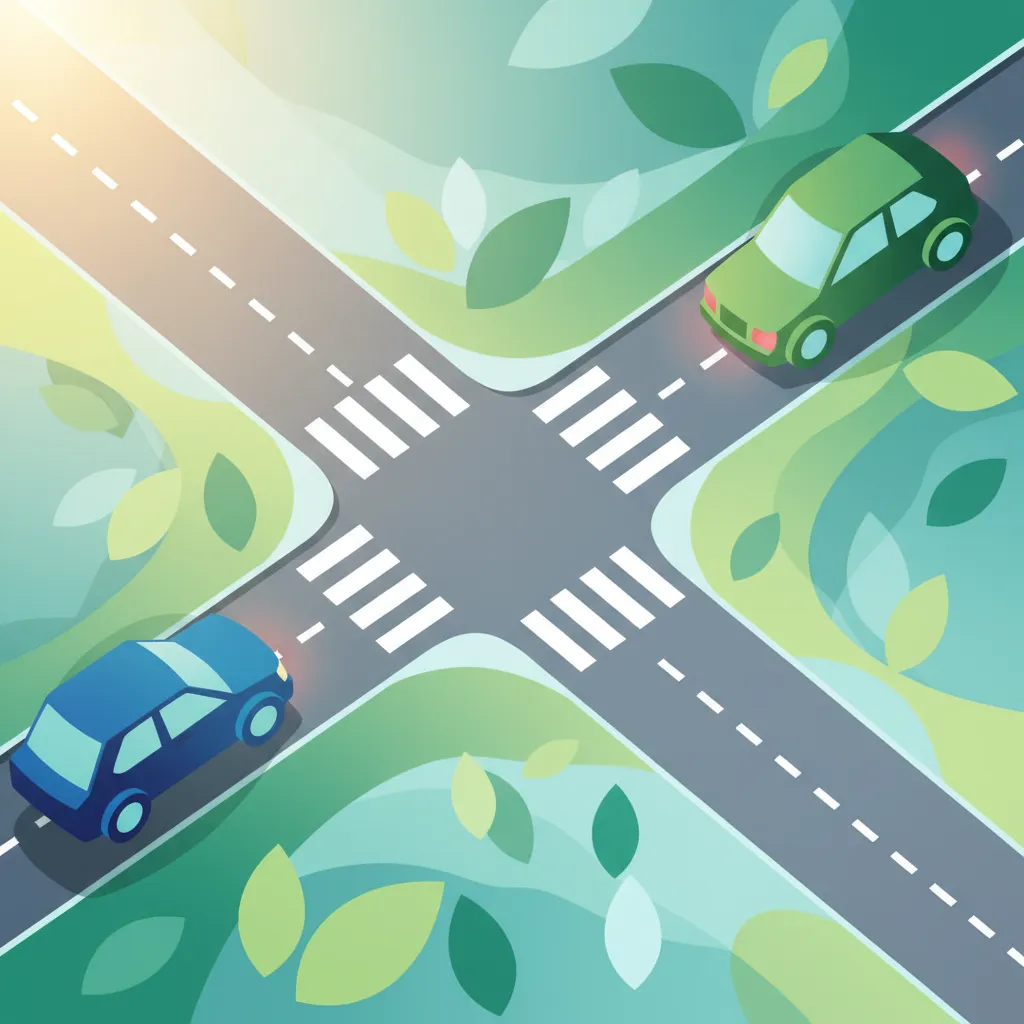
This lesson explains the two core principles of priority in Swedish traffic law: the right-hand rule (Högerregeln) and the duty to yield (Väjningsplikt). You will learn how to apply the right-hand rule at uncontrolled intersections and when to yield to other traffic as indicated by signs or road markings. Understanding this fundamental hierarchy is crucial for making correct and safe decisions in a wide variety of common traffic situations you will face as a motorcyclist.
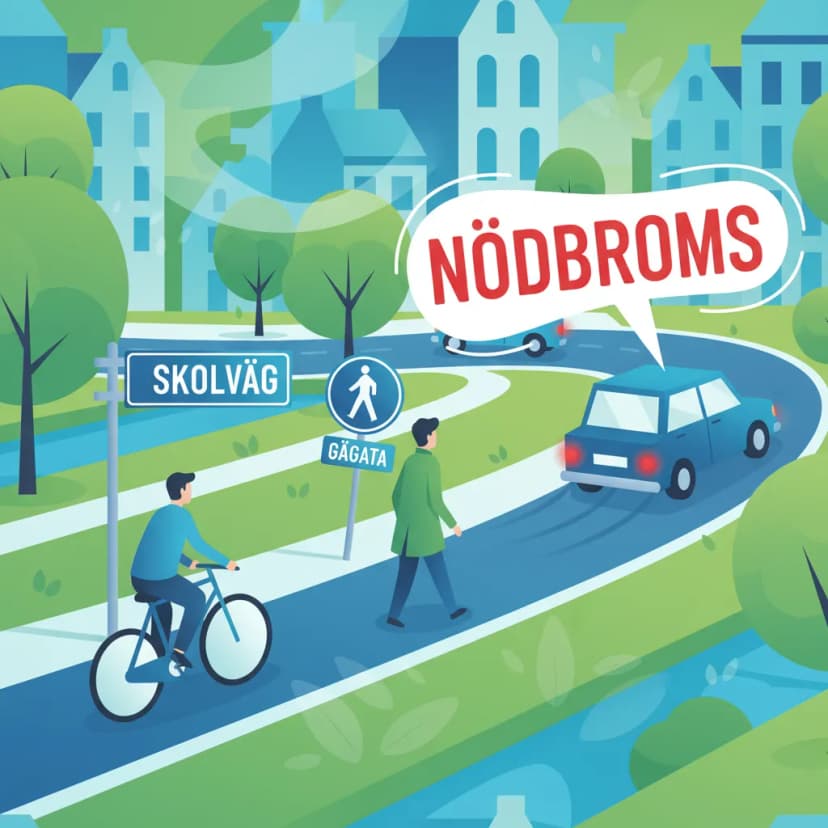
This lesson examines a variety of special situations where standard priority rules are modified. You will learn about the 'exit rule' (utfartsregeln) when entering a road from property, your duty to yield to buses indicating a departure from a stop, and the specific rules for pedestrian-only streets (gågata). The content also covers interactions with trams, emergency vehicles, and procedures at railway crossings, highlighting situations that demand maximum vigilance.
This lesson provides detailed guidance on navigating complex traffic points such as signalized intersections, multi-lane roundabouts, and pedestrian crossings. You will learn the correct procedures for entering and exiting roundabouts, the specific rules for yielding to pedestrians and cyclists at designated crossings, and how to interpret complex traffic light signals. These skills are vital for safe urban and suburban riding, where interaction with vulnerable road users is frequent.
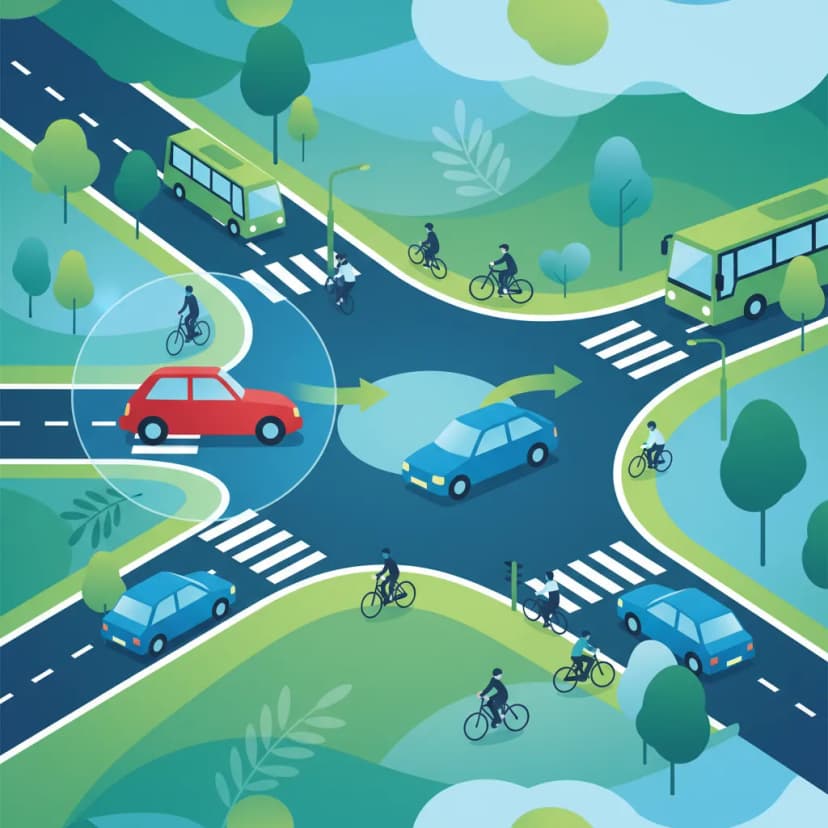
This lesson explains the foundational right-hand rule (högerregeln), which is the default priority rule at Swedish intersections where no other signs or signals regulate traffic. You will learn that you must always yield to vehicles approaching from your right in such situations. The content clarifies where this rule applies, such as in residential areas and on smaller rural roads, and covers the critical exceptions when signs or other rules take precedence.
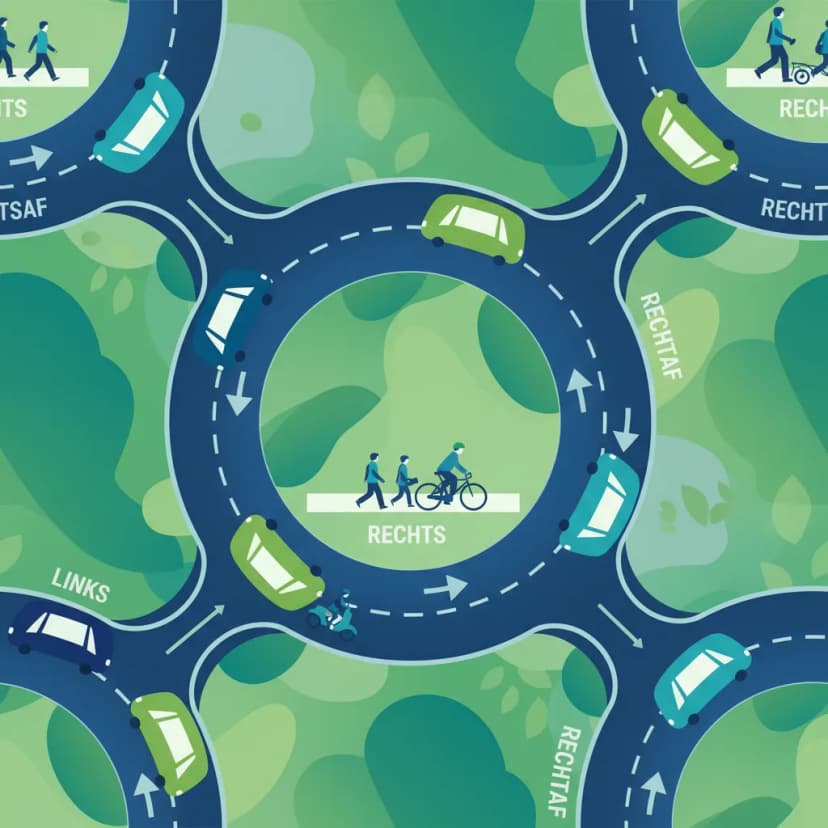
This lesson provides a detailed guide to navigating Swedish roundabouts (cirkulationsplatser). Key principles include always yielding to traffic already in the roundabout and choosing the correct lane based on your intended exit. You will learn the specific rules for signalling your intention to exit, how to safely interact with cyclists, and the techniques for maneuvering through multi-lane roundabouts to maintain traffic flow and prevent accidents.
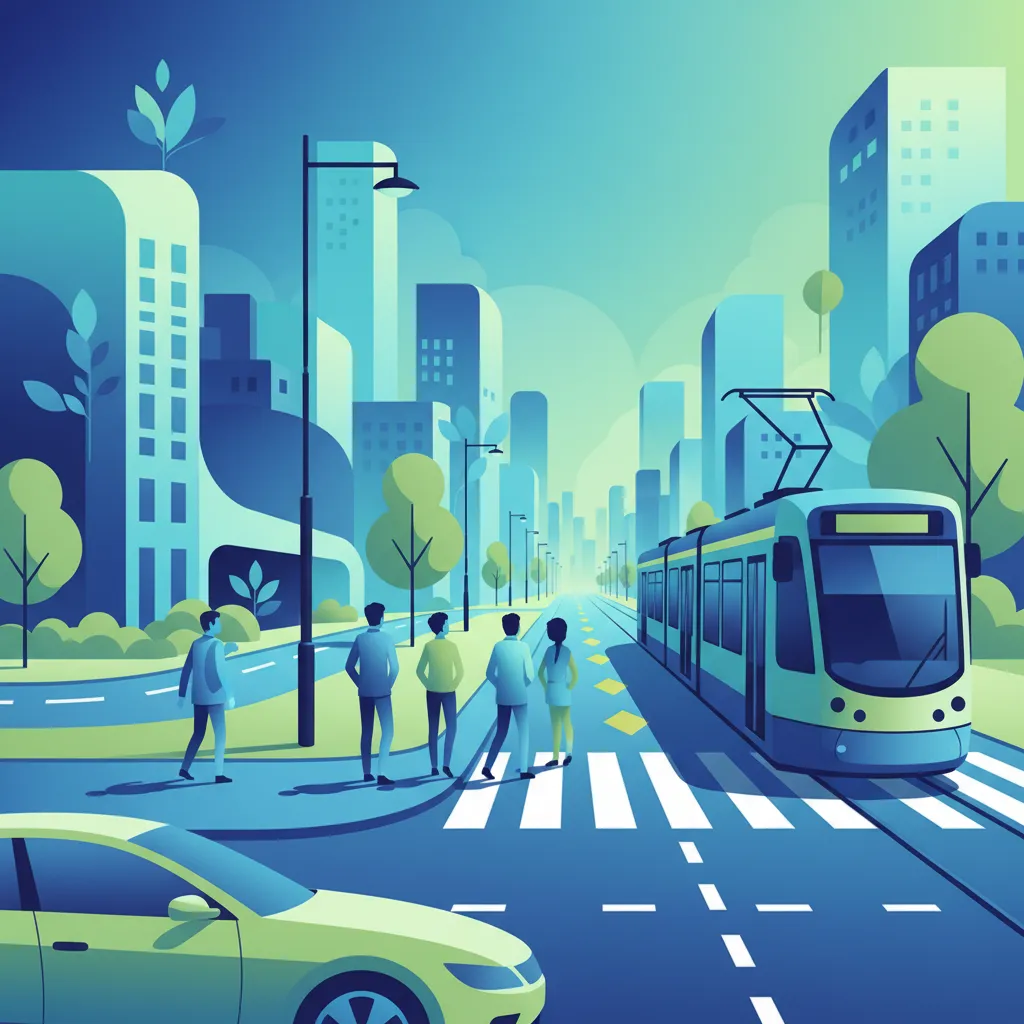
This lesson details the specific priority rules at pedestrian and tram crossings (Spårvagnskorsning). It reinforces the legal obligation for moped riders to stop for pedestrians at marked zebra crossings and explains that trams almost always have priority. Learners will understand the importance of approaching these crossings with caution, scanning for hazards, and being prepared to stop.
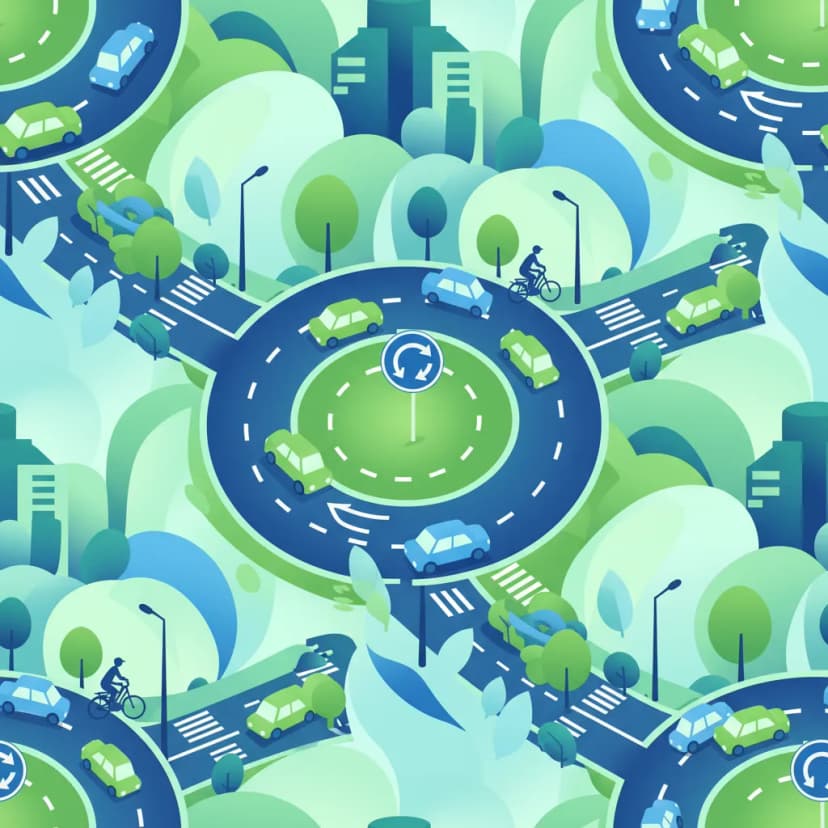
This lesson provides practical instructions for safely navigating different types of intersections and roundabouts. It covers procedures for approaching, entering, and exiting roundabouts, emphasizing the rule to yield to traffic already circulating. The content also addresses how to handle signal-controlled and uncontrolled intersections, ensuring riders select the correct lane and manage their speed appropriately.
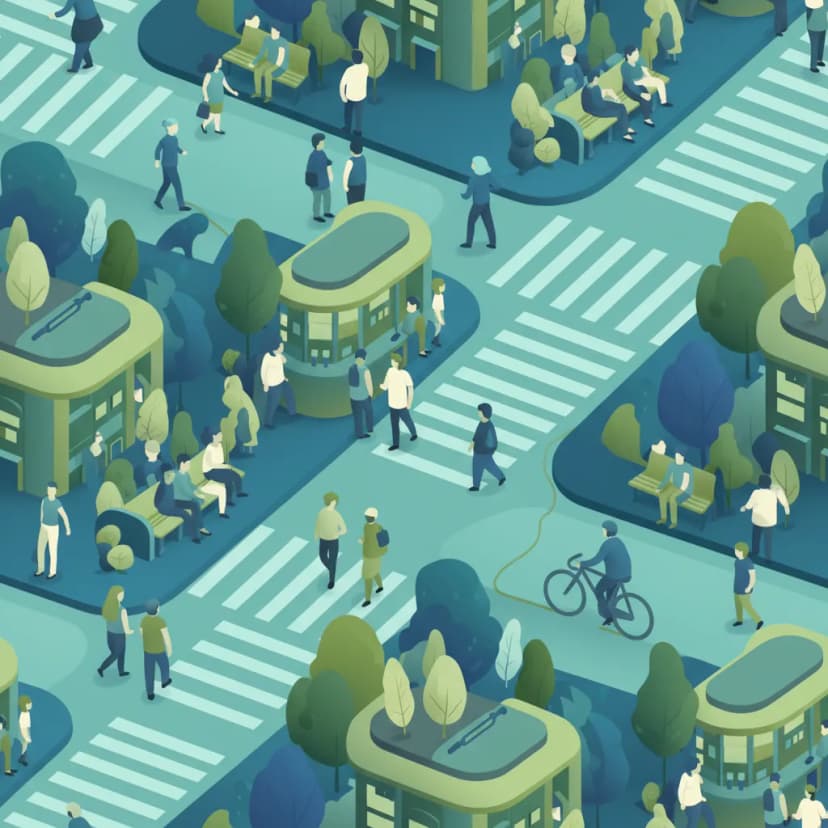
This lesson details a driver's responsibility towards pedestrians. You will learn the strict rule of yielding to pedestrians who are on or about to enter a marked, uncontrolled crosswalk. The content also covers the specific, highly restrictive rules for driving in designated pedestrian zones (gågata) and 'walking speed' areas (gångfartsområde), where pedestrians have complete priority and vehicle traffic is severely limited.
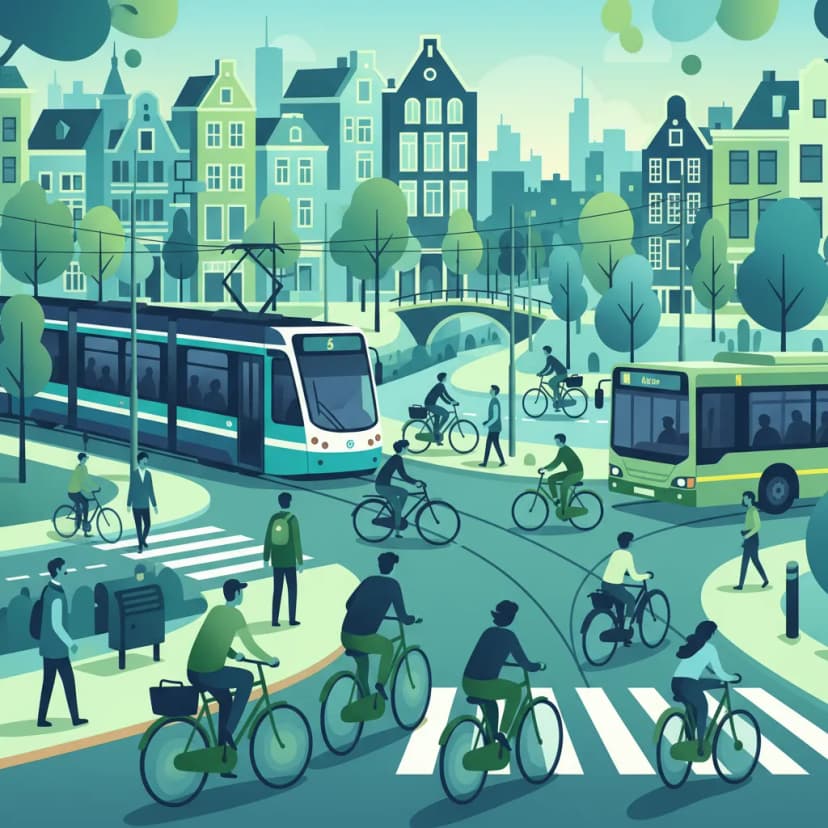
This lesson explains the specific traffic rules related to public transport vehicles. You will learn about your duty to yield to buses signaling to leave a stop (on roads with a speed limit of 50 km/h or less) and the fact that trams generally have priority. The lesson covers how to safely pass stopped buses and trams, being mindful of disembarking passengers who may cross the road unexpectedly.
Learn how general priority rules (väjningsregler) specifically apply when encountering pedestrians at crossings, cyclists on bike paths, and trams in Swedish urban environments. Understand how to safely yield and navigate these shared spaces.
This lesson details the specific priority rules at pedestrian and tram crossings (Spårvagnskorsning). It reinforces the legal obligation for moped riders to stop for pedestrians at marked zebra crossings and explains that trams almost always have priority. Learners will understand the importance of approaching these crossings with caution, scanning for hazards, and being prepared to stop.
This lesson explains the specific traffic rules related to public transport vehicles. You will learn about your duty to yield to buses signaling to leave a stop (on roads with a speed limit of 50 km/h or less) and the fact that trams generally have priority. The lesson covers how to safely pass stopped buses and trams, being mindful of disembarking passengers who may cross the road unexpectedly.
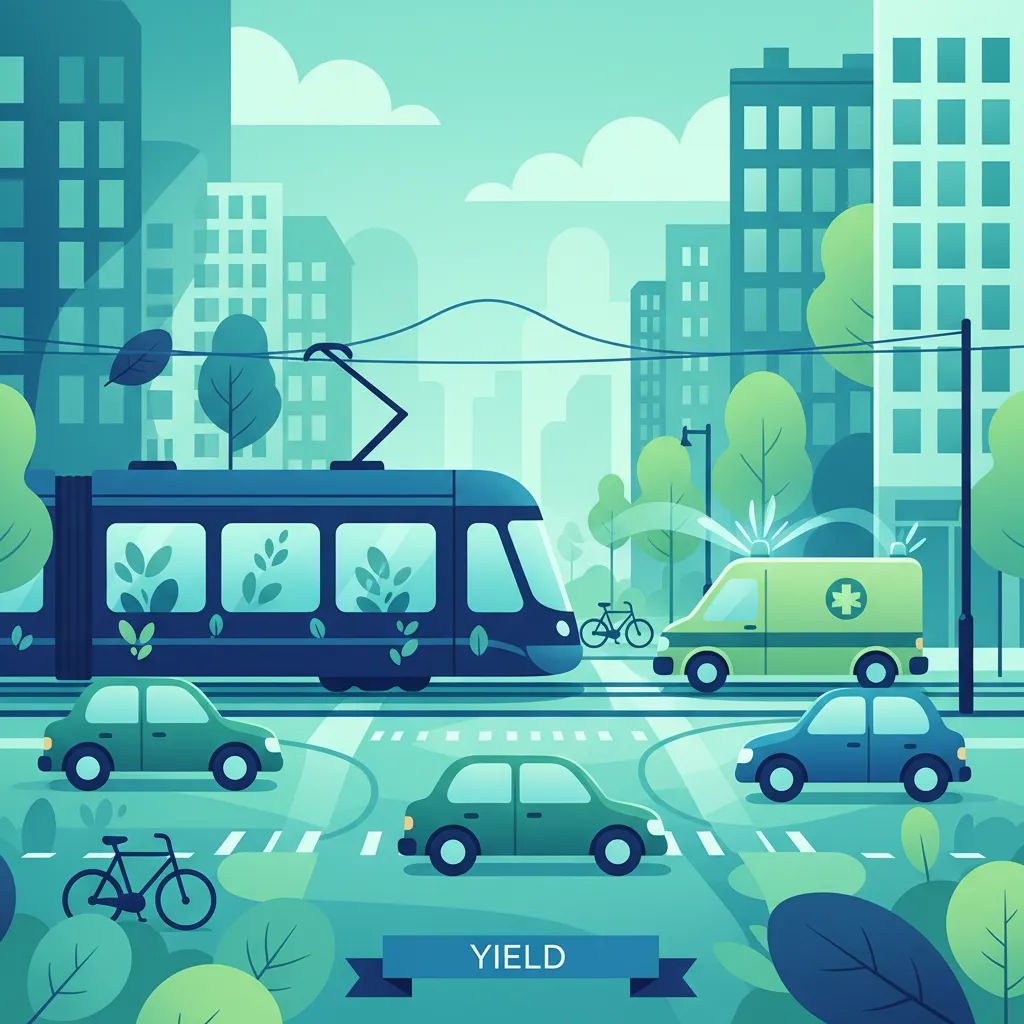
This lesson explains a motorcyclist's legal duty when encountering emergency vehicles with active sirens and lights. You will learn the correct procedure for yielding the right-of-way by safely pulling over and stopping. Additionally, the lesson covers the rules and best practices for sharing the road with public transport like buses and trams, including navigating around bus stops and respecting dedicated lanes, to ensure safety for all road users.
This lesson examines a variety of special situations where standard priority rules are modified. You will learn about the 'exit rule' (utfartsregeln) when entering a road from property, your duty to yield to buses indicating a departure from a stop, and the specific rules for pedestrian-only streets (gågata). The content also covers interactions with trams, emergency vehicles, and procedures at railway crossings, highlighting situations that demand maximum vigilance.
This lesson details a driver's responsibility towards pedestrians. You will learn the strict rule of yielding to pedestrians who are on or about to enter a marked, uncontrolled crosswalk. The content also covers the specific, highly restrictive rules for driving in designated pedestrian zones (gågata) and 'walking speed' areas (gångfartsområde), where pedestrians have complete priority and vehicle traffic is severely limited.
This lesson addresses the unique hazards associated with public transportation. It explains how to safely navigate around buses that are stopping to pick up or drop off passengers and the importance of watching for pedestrians. It also covers the physical danger of slippery tram tracks, especially when wet, and reiterates that trams typically have absolute priority.
This lesson explains the two core principles of priority in Swedish traffic law: the right-hand rule (Högerregeln) and the duty to yield (Väjningsplikt). You will learn how to apply the right-hand rule at uncontrolled intersections and when to yield to other traffic as indicated by signs or road markings. Understanding this fundamental hierarchy is crucial for making correct and safe decisions in a wide variety of common traffic situations you will face as a motorcyclist.
This lesson provides detailed guidance on navigating complex traffic points such as signalized intersections, multi-lane roundabouts, and pedestrian crossings. You will learn the correct procedures for entering and exiting roundabouts, the specific rules for yielding to pedestrians and cyclists at designated crossings, and how to interpret complex traffic light signals. These skills are vital for safe urban and suburban riding, where interaction with vulnerable road users is frequent.
This lesson focuses on the unique challenges of driving in urban environments. You will learn techniques for anticipating the actions of vulnerable road users like pedestrians and cyclists, especially near crossings and bus stops. The content covers how to navigate narrow streets, one-way systems, and areas with heavy traffic, emphasizing the need for lower speeds, heightened awareness, and a defensive mindset.
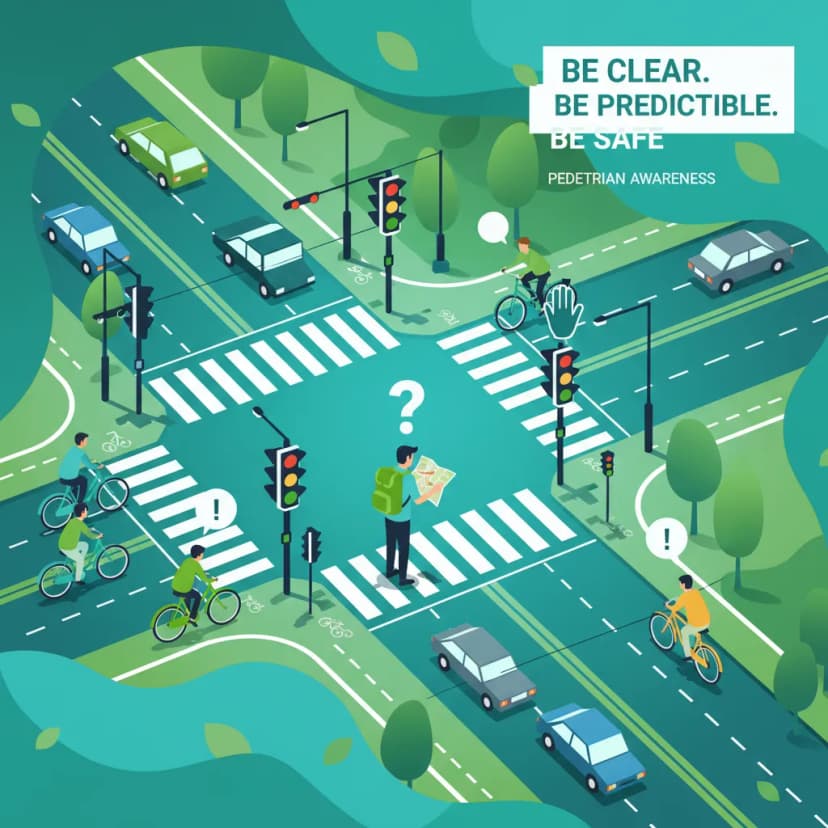
This lesson is dedicated to pedestrian safety, teaching riders to be constantly aware of people on foot, especially in busy urban environments. It reinforces the absolute duty to yield at marked crossings and encourages a cautious approach in areas like schools and shopping districts. The content stresses anticipating unpredictable actions, particularly from children or distracted pedestrians.
Find clear answers to common questions learners have about General Priority Principles (Väjningsregler). Learn how the lesson is structured, which driving theory objectives it supports, and how it fits into the overall learning path of units and curriculum progression in Sweden. These explanations help you understand key concepts, lesson flow, and exam focused study goals.
Väjningsplikt means you must yield to other traffic, slowing down or stopping if necessary, but you don't necessarily have to stop if the way is clear. Stopplikt (a stop sign) requires you to come to a complete stop at the line or edge of the intersection before proceeding, checking for traffic in all directions and yielding to anyone on the main road or coming from the left.
At an intersection where no signs or markings indicate otherwise, the right-hand rule applies. This means you must give way to any vehicle or pedestrian approaching from your right. For mopeds, this rule is just as critical as for car drivers.
If a sign indicates you are on a priority road, other vehicles approaching from side roads must give way to you. You still need to be aware of your surroundings and ensure other drivers are yielding to you, especially if they might misinterpret the signage.
The fundamental principles of Väjningsplikt, Stopplikt, and the högerregeln are the same for mopeds as for cars in Sweden. However, mopeds may sometimes be more vulnerable, so extra caution and clear communication of your intentions are always advised.
The theory exam frequently features scenario-based questions where you must determine who has the right-of-way. You'll see images of intersections or road situations and be asked to choose the correct action or identify the vehicle that must yield.