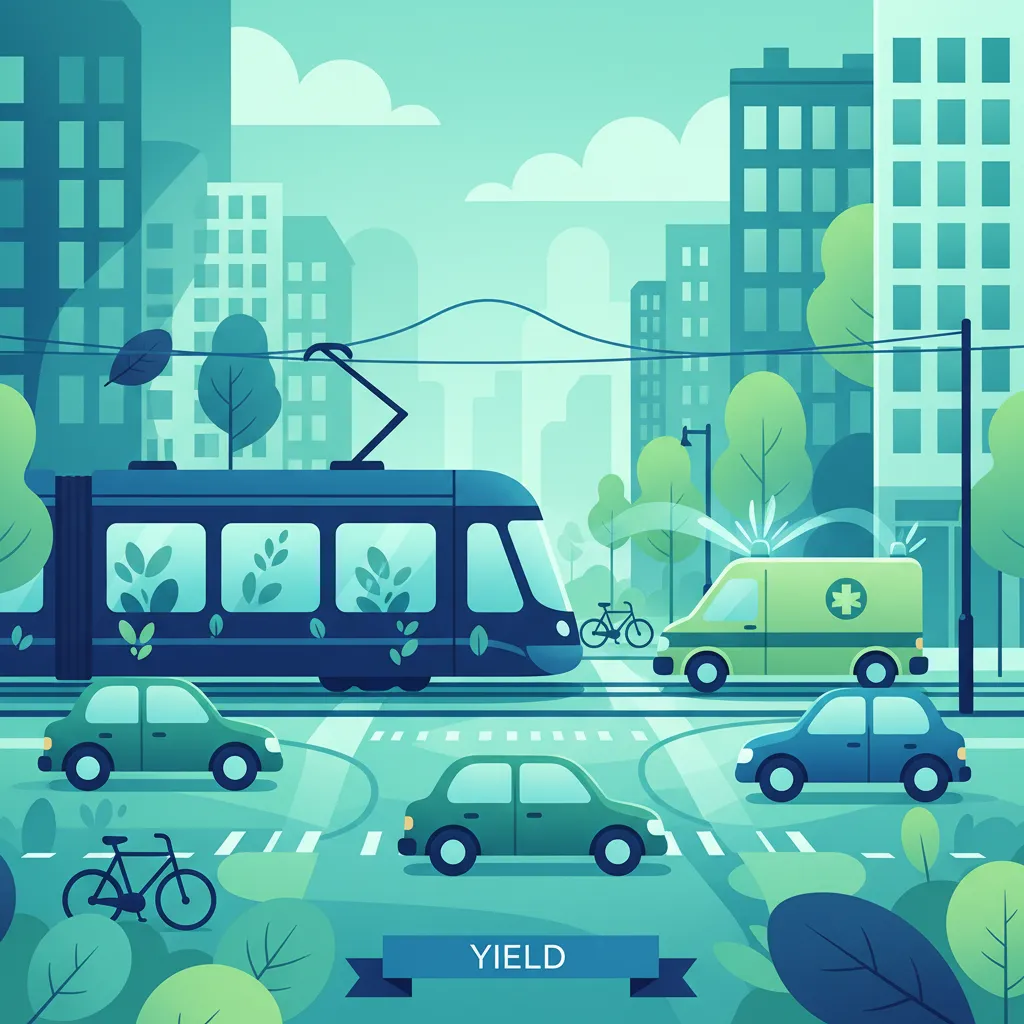
Understanding how to correctly yield to emergency vehicles and interact safely with public transport is a key part of mastering right-of-way rules for your Swedish Category A motorcycle licence. This lesson builds on general priority principles by focusing on these specific, often critical, situations. It’s designed to equip you with the knowledge to act safely and legally when encountering these larger vehicles.
Motorcyclists share the road with a diverse range of vehicles, from small cars to large trucks, but a special duty of care and understanding applies when interacting with emergency vehicles and public transport. This lesson, part of your Swedish Motorcycle Theory Course, will equip you with the essential knowledge and legal obligations to safely navigate these encounters. Understanding priority rules not only ensures your safety but also allows emergency services to perform their critical functions unimpeded and helps maintain the smooth operation of public transport systems.
When an emergency vehicle is on an urgent mission, every second counts. As a motorcyclist, your actions directly impact their ability to reach an incident swiftly and safely. This section details your legal duties when you encounter police, ambulance, fire, or rescue vehicles using active warning signals.
An emergency vehicle, known in Sweden as an utryckningsbil, is defined as any police, ambulance, fire engine, or rescue vehicle that is actively using both audible sirens and flashing blue or red lights. This combination signifies that the vehicle is on an urgent operational mission and requires immediate right-of-way.
In some situations, an emergency vehicle might use only flashing lights (e.g., in heavy traffic where a siren would cause excessive noise or confusion) or, rarely, only a siren (e.g., in fog where lights are less visible). Regardless of whether both are active, any single active warning signal from an emergency vehicle indicates a need for priority, though the urgency may vary. Always prepare to yield.
Upon hearing a siren or seeing flashing lights, a motorcyclist's primary duty is to yield immediately and safely. This legal obligation, known as Väjningsplikt, is critical for preventing collisions and ensuring rapid emergency response. The Swedish Traffic Ordinance (Trafikförordningen) explicitly states that all road users must give way to emergency vehicles with active warning signals.
Failure to yield can lead to severe penalties, endanger emergency personnel, and, most importantly, delay critical assistance to those in need. For motorcyclists, the inherent vulnerability of being on two wheels makes predictable and decisive yielding actions even more vital to avoid dangerous situations.
When an emergency vehicle approaches, you must perform a controlled and safe pull-over maneuver. The goal is to create a clear, unobstructed path for the emergency vehicle while maintaining your motorcycle's stability and your own safety.
Detect Early: As soon as you hear a siren or see flashing lights, begin to assess the situation. Identify the direction of the emergency vehicle.
Check Mirrors and Blind Spots: Before changing position, quickly check your rearview mirrors and perform a shoulder check (dödavinkelkoll) to ensure no other vehicles are in your blind spots or attempting to maneuver.
Signal Your Intention: Activate your right-turn indicator to signal your intention to move to the right side of the road.
Decelerate Gently: Use both front and rear brakes smoothly and progressively to reduce your speed. Avoid sudden, harsh braking that could destabilize the motorcycle, especially in wet or slippery conditions.
Move to the Right: Gradually steer towards the right-hand edge of the carriageway. If a hard shoulder or safe area exists, move onto it.
Stop Safely: Come to a complete stop, keeping your motorcycle parallel to the curb or road edge. Ensure you maintain balance and are not obstructing other lanes or the emergency vehicle's path. Keep both hands on the handlebars.
Maintain Distance: Remain stopped until the emergency vehicle has passed completely and it is safe to re-enter traffic. If multiple emergency vehicles are present, wait for all of them to pass.
Never attempt to overtake an emergency vehicle that is stopped or slow-moving at an incident scene. Stay well clear and await instructions from emergency personnel if you cannot pass safely.
Your ability to stop safely is directly linked to your minimum safe stopping distance. This distance includes your reaction time (typically around 1.5 seconds for an experienced rider) and the actual braking distance, which varies significantly with speed, road surface conditions, tire grip, and your motorcycle's braking system (e.g., ABS).
When an emergency vehicle approaches, you must factor in these distances to initiate your pull-over maneuver early enough. Overestimating grip or underestimating your stopping distance, especially in adverse weather, can lead to dangerous last-minute braking or an inability to yield in time.
Public transport vehicles—city buses, regional buses, and trams—operate on fixed schedules and carry many passengers. Swedish traffic law grants them specific priorities to ensure efficiency and safety, especially during passenger boarding and alighting. Motorcyclists must be fully aware of these rules to prevent collisions and avoid disruption.
Buses stopped at designated bus stops to pick up or drop off passengers have an absolute right-of-way in their immediate vicinity. This is particularly crucial for protecting vulnerable pedestrians who may be entering or exiting the bus and crossing the road.
Many urban areas feature dedicated lanes for buses and trams. These lanes are typically marked with specific road markings, often blue striping, and signs indicating "BUS" or a tram symbol. Their purpose is to separate public transport from general traffic, thereby improving speed and reliability.
Intersections involving trams, in particular, require special attention due to trams' limited maneuverability and braking capabilities.
Buses and trams are large vehicles with significant blind spots. As a motorcyclist, it is imperative to assume that the driver of a bus or tram may not see you, especially if you are directly alongside, immediately behind, or directly in front of their vehicle at certain angles.
To reinforce safe practices and legal compliance, here is a summary of core rules, common violations, and underlying safety reasoning.
| # | Rule Statement | Applicability | Legal Status | Correct Example | Incorrect Example |
|---|---|---|---|---|---|
| 1 | Yield to any emergency vehicle displaying active warning signals (sirens + flashing lights). | All road types, any speed. Must stop if safe. | Mandatory (Trafikförordningen §5, §9). | Pulling over to the right and stopping for an ambulance. | Continuing to ride while an ambulance passes in the same lane. |
| 2 | When yielding, move to the right-hand side of the carriageway and stop, if possible. | Motorways, dual carriageways, city streets with a shoulder. | Mandatory. | Safely stopping on the hard shoulder for a fire engine. | Slowing down but staying in the middle of the lane. |
| 3 | If no safe shoulder, reduce speed and keep safe lateral distance (min. 2m) from emergency vehicle. | Narrow urban streets, alleyways. | Mandatory. | Slowing to a crawl and hugging the right curb for a police car. | Maintaining normal speed on a one-lane street. |
| 4 | Buses and trams stopped for passenger boarding/alighting have absolute right-of-way. | At designated stops, on any road type. | Mandatory (TFV §12). | Waiting behind a bus with open doors at a stop. | Overtaking a bus with doors open. |
| 5 | Do not overtake a bus or tram that is stopped at a bus stop unless the stop is cleared and the vehicle moves. | Same as rule 4. | Mandatory. | Waiting until the bus pulls away before passing. | Riding around the rear of a stationary bus. |
| 6 | Do not ride in exclusive bus/tram lanes unless local signage explicitly permits motorcycles. | Lanes marked with blue striping and “BUS” signs. | Mandatory. | Staying in general traffic lanes even during congestion. | Riding in a blue-striped bus lane during rush hour. |
| 7 | Maintain a minimum lateral clearance of 1m when passing a stationary bus or tram on the left side. | When overtaking on the left (if permitted). | Recommended (Swedish Transport Agency safety guidelines). | Passing a bus with ample space to avoid door openings. | Passing within 0.5m of a bus door. |
| 8 | When approaching a tram signalized intersection, give right-of-way to a tram with a green signal. | Tram-controlled intersections. | Mandatory (TFV §13). | Stopping and waiting for a tram with a green signal to pass. | Turning across the tram’s path on a green for cars. |
| 9 | Check mirrors and perform a quick shoulder check before pulling over for an emergency vehicle. | All yielding situations. | Recommended (Safety guideline). | Looking back before initiating a pull-over. | Blindly pulling over without checking surrounding traffic. |
| 10 | Maintain awareness of blind spots around buses and trams; never assume the driver sees you. | Ongoing while riding near large public-transport vehicles. | Recommended. | Adjusting position to stay visible in bus/tram mirrors. | Overtaking a bus on the right without looking. |
Understanding common mistakes helps you avoid them. Here are typical violations and edge cases specific to motorcyclists:
| Violation / Edge Case | Why It’s Wrong | Correct Behaviour | Potential Consequence |
|---|---|---|---|
| Riding alongside a bus stop without stopping | Assumes passenger safety is not a concern; passengers may step out unexpectedly. | Slow down, give space, and wait until the bus has moved away before passing. | Fine, points on licence, possible collision with exiting passenger, serious injury. |
| Pulling over onto the hard shoulder on a motorway while an ambulance is approaching from behind | Abrupt stopping on the shoulder can cause rear-end collisions from fast-moving traffic, or the shoulder might be occupied. | Safely decelerate, signal, move to the far right, and stop only if the shoulder is clear; otherwise, maintain reduced speed and give more distance in your lane. | High-speed crash, severe injury, obstruction of emergency services. |
| Overtaking a stationary tram on the left side in a narrow city street | Left-side overtaking is illegal unless explicitly permitted; tram doors may open into the rider’s path. | Remain behind the tram, wait for it to move, or use a legally permitted passing zone. | Fine, possible collision with opening door or pedestrian. |
| Entering an exclusive bus lane to bypass traffic congestion | Violates lane-restriction rules; creates conflict with buses that have priority and operate on a schedule. | Use the general traffic lanes; only ride in a bus lane if a local sign explicitly permits motorcycles. | Fine, points on licence, endangerment of bus operations and passengers. |
| Assuming "lights only" on an emergency vehicle means no need to stop | Misinterpretation of warning signal hierarchy; lights alone often indicate urgency. | Treat any active flashing light as requiring yielding; stop if the vehicle is close and poses an immediate impedance. | Possible fine, delayed emergency response. |
| Failing to check blind spot before overtaking a bus on a two-lane road | A passenger may open a door, or the bus driver may change lanes without seeing you. | Perform a shoulder check, ensure a clear gap, and give at least 1 meter lateral clearance. | Collision with door, serious injury, crash. |
| Pulling over too late because of overestimation of braking distance on wet road | Underestimation of stopping distance leads to insufficient space for the emergency vehicle to pass without sharp braking. | Adjust stopping distance calculations for weather; aim to stop earlier and more smoothly. | Rear-end collision with emergency vehicle, loss of control. |
| Riding at speed through a tram crossing while the tram signal is amber | Assumes amber permits crossing; the tram may still have priority or require more stopping distance. | Stop and await a clear green for your direction; obey tram signals regardless of other traffic lights. | Fine, possible severe crash with tram. |
| Using a hand signal instead of a turn signal when pulling over for an ambulance | Hand signals may not be visible to drivers behind, especially at night, in rain, or through tinted windows. | Activate the right-turn indicator, then pull over, ensuring electronic signals are used. | Confusion for following traffic, increased risk of rear-end collision. |
| Attempting to overtake a bus that is stopped at a stop but partially in the adjacent lane | Reduces safety margin, may affect pedestrians or other traffic. | Wait until the bus fully clears the lane and moves before attempting to overtake. | Points on licence, possible collision with pedestrians or other vehicles. |
Safe riding is about adapting to conditions. Here’s how various factors influence your interactions with emergency and public transport vehicles:
| Condition | Variation in Principle / Rule | Reasoning |
|---|---|---|
| Weather – Rain / Snow / Ice | Increase required stopping distance by 30–50%; apply "early yielding" (stop farther from emergency vehicle). | Reduced tire grip, longer braking distances, and reduced visibility of signals. |
| Time of Day – Night | Ensure headlights are on (dipped beam in traffic); be extra cautious of blind spots of buses/trams due to reduced visibility. | Lower ambient light makes warning signals harder to detect; your visibility to others is reduced. |
| Road Type – Motorway | Mandatory full stop on the right shoulder; overtaking on the left for an emergency vehicle is prohibited. | High speeds leave little reaction time; the shoulder provides a safe space for yielding. |
| Road Type – Urban Residential Street (single lane each direction) | If no shoulder exists, slow down, maintain lateral distance, and if possible, pull onto the curb (if safe and legal). | Limited space; safe yielding may require utilizing any available safe space. |
| Vehicle Load – Fully loaded motorcycle (passenger & luggage) | Longer braking distance; may need to start yielding earlier due to increased weight affecting maneuverability. | Added weight reduces maneuverability and increases stopping distance. |
| Vehicle State – ABS malfunction | Rider must rely on progressive braking; may need to increase distance further and use more caution. | ABS provides controlled stopping; loss means higher risk of wheel lock-up during hard braking. |
| Interaction with Vulnerable Users – Pedestrians crossing at a bus stop | Must stop well before the bus stop, allowing pedestrians to cross before considering overtaking. | Pedestrians are least protected; the bus stop area is a high-risk zone for pedestrian-vehicle conflicts. |
| Presence of a Tram on a Shared Track with Road Traffic | Trams have priority over all road traffic when the signal for the tram is green; motorcycles must wait even if car lights are green. | Trams cannot stop quickly; their movement is constrained to tracks. |
| Emergency Vehicle on Approach but Siren Silent (e.g., in a construction zone) | Still required to yield if flashing lights are on; if both siren and lights are off, treat as a regular vehicle but remain prepared for sudden acceleration. | Some jurisdictions allow silent approach; the rider must stay alert and react to visual cues. |
Beyond the rules, understanding the why behind them fosters a safer riding mindset.
To recap the most critical points regarding priority with emergency vehicles and public transport for motorcyclists in Sweden:
Lesson content overview
Explore all units and lessons included in this driving theory course.
Explore search topics learners often look for when studying Priority with Emergency Vehicles and Public Transport. These topics reflect common questions about road rules, driving situations, safety guidance, and lesson level theory preparation for learners in Sweden.
Browse additional driving theory lessons that cover connected traffic rules, road signs, and common driving situations related to this topic. Improve your understanding of how different rules interact across everyday traffic scenarios.
Explore detailed explanations of Swedish traffic laws regarding yielding to emergency vehicles and navigating around buses and trams. Learn the critical procedures and responsibilities for motorcyclists in these specific situations to ensure road safety and compliance.
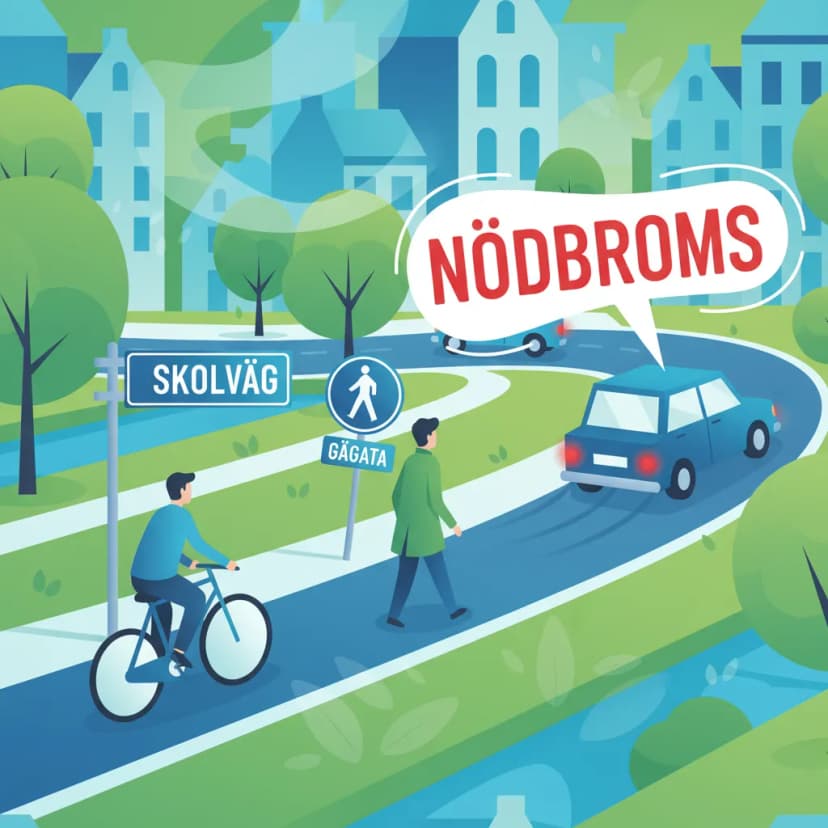
This lesson examines a variety of special situations where standard priority rules are modified. You will learn about the 'exit rule' (utfartsregeln) when entering a road from property, your duty to yield to buses indicating a departure from a stop, and the specific rules for pedestrian-only streets (gågata). The content also covers interactions with trams, emergency vehicles, and procedures at railway crossings, highlighting situations that demand maximum vigilance.
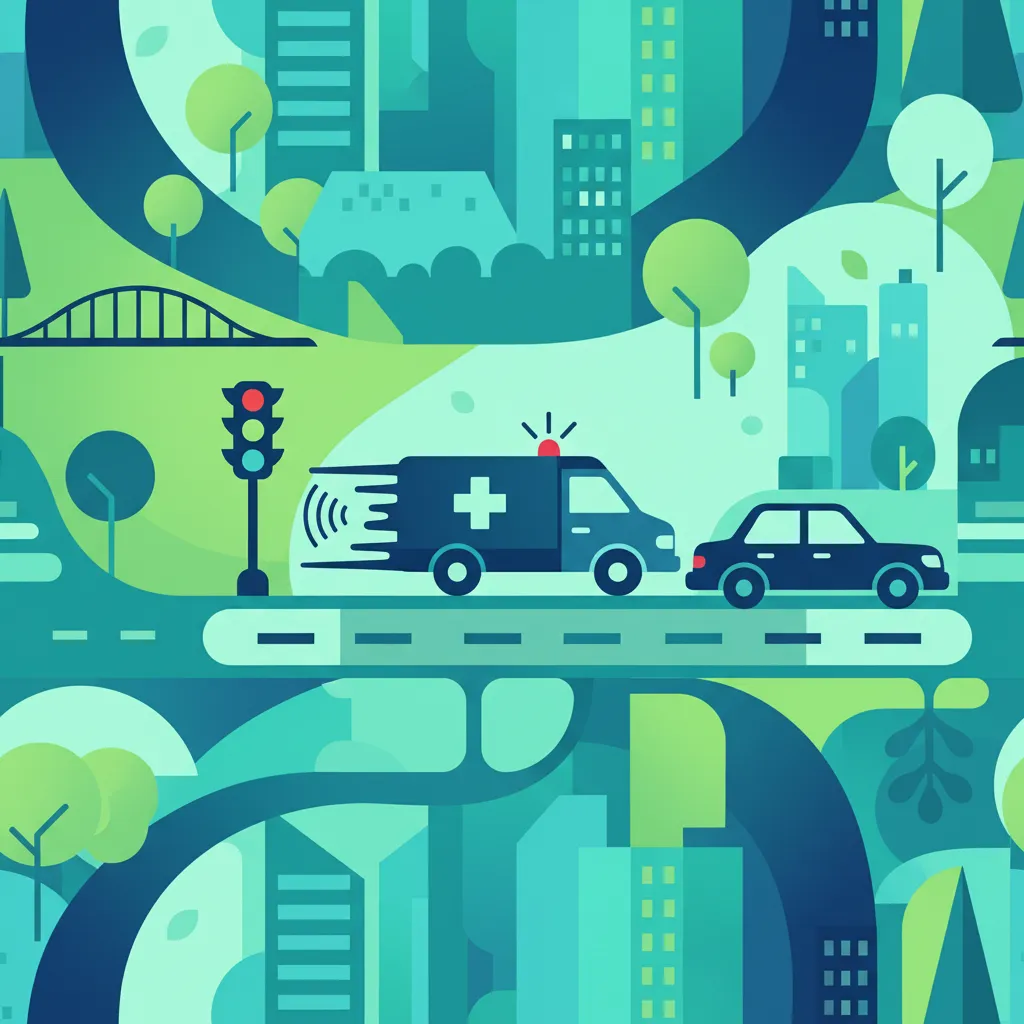
This lesson provides clear instructions on the correct response to an approaching emergency vehicle with its sirens and lights active. You will learn your absolute duty to give way and the best methods for doing so, which typically involve pulling over to the right and stopping. The lesson stresses the importance of acting calmly and predictably, avoiding sudden braking or swerving that could endanger the emergency vehicle or other traffic.
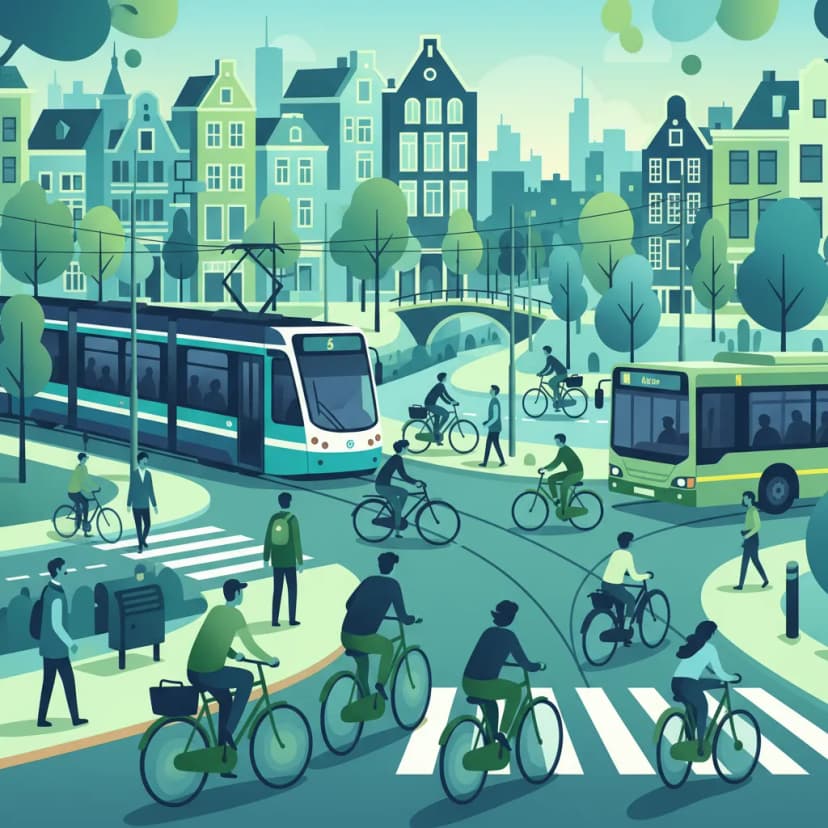
This lesson explains the specific traffic rules related to public transport vehicles. You will learn about your duty to yield to buses signaling to leave a stop (on roads with a speed limit of 50 km/h or less) and the fact that trams generally have priority. The lesson covers how to safely pass stopped buses and trams, being mindful of disembarking passengers who may cross the road unexpectedly.
This lesson introduces the core principles of right-of-way in Sweden, including the general duty to give way (Väjningsplikt) and the stricter stop duty (Stopplikt). It explains the concept of a priority road and how to apply the right-hand rule at uncontrolled intersections. By understanding this legal framework, riders can determine who has priority in any given situation and act predictably and safely.
This lesson focuses on regulated intersections where priority is determined by signs indicating a main road (huvudled), a duty to yield (väjningsplikt), or a duty to stop (stopplikt). You will learn how to identify which road has priority and your legal obligation to give way to all traffic on that road before proceeding. The lesson covers proper procedures for approaching these junctions, assessing traffic, and entering the main road safely.
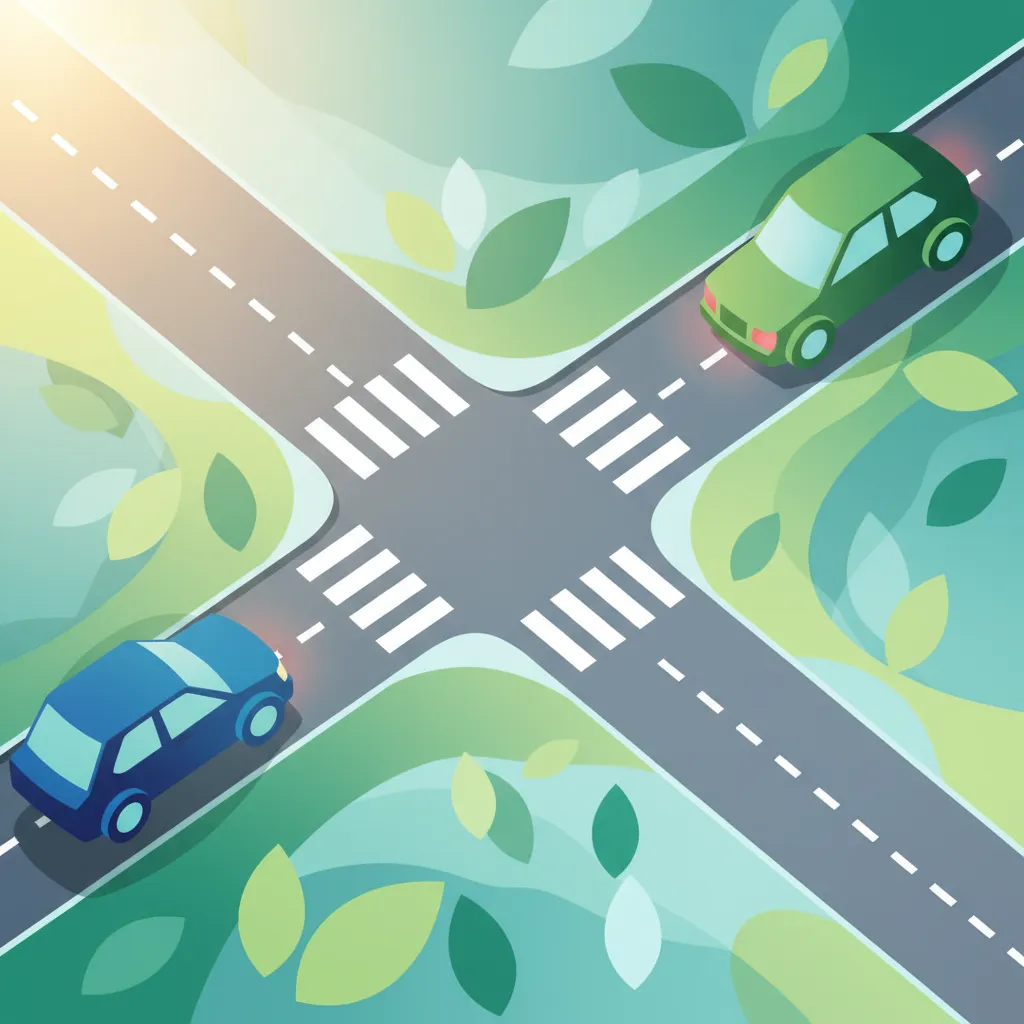
This lesson explains the two core principles of priority in Swedish traffic law: the right-hand rule (Högerregeln) and the duty to yield (Väjningsplikt). You will learn how to apply the right-hand rule at uncontrolled intersections and when to yield to other traffic as indicated by signs or road markings. Understanding this fundamental hierarchy is crucial for making correct and safe decisions in a wide variety of common traffic situations you will face as a motorcyclist.
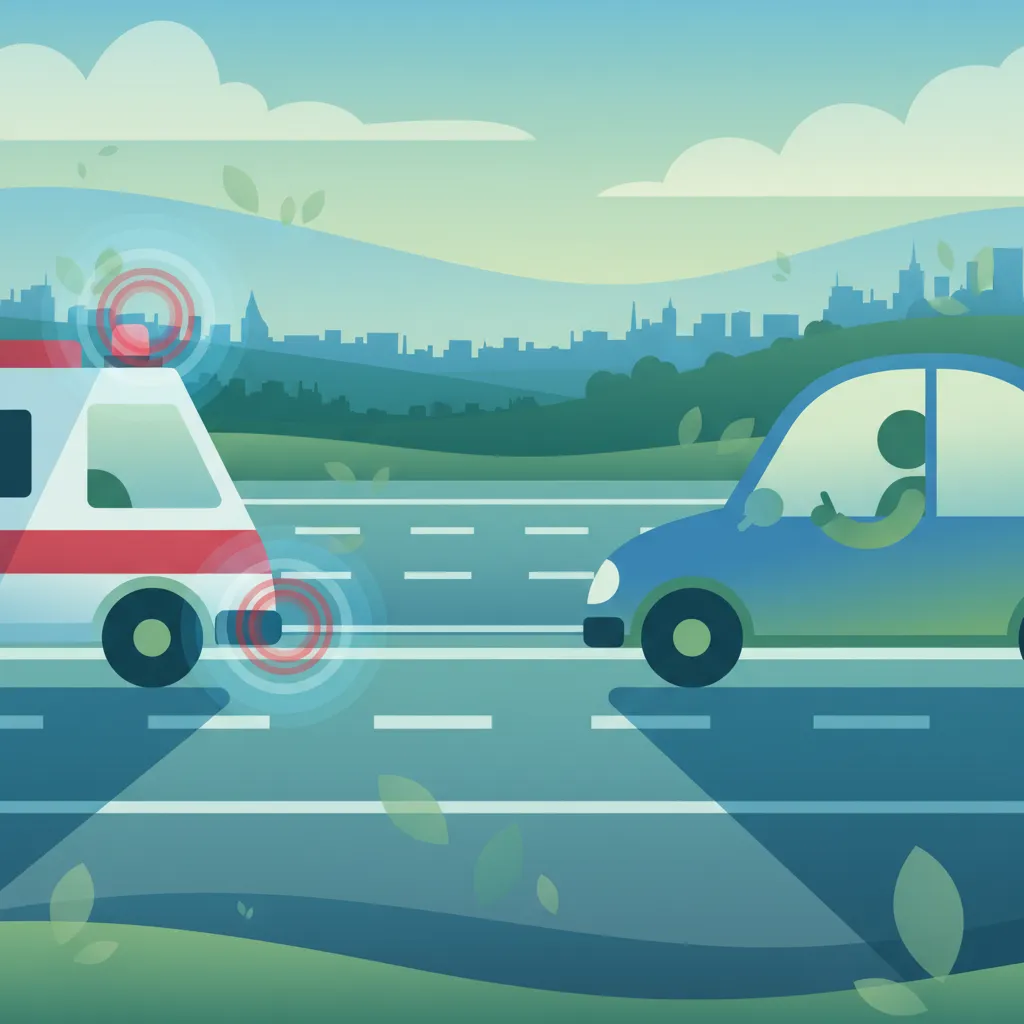
This lesson teaches the correct and legal response when encountering an emergency vehicle with active sirens or lights. It outlines the immediate obligation to give way by safely moving to the side of the road and stopping. The content provides practical advice on how to perform this maneuver calmly and predictably, ensuring a clear path for the emergency responders while maintaining the rider's own safety.
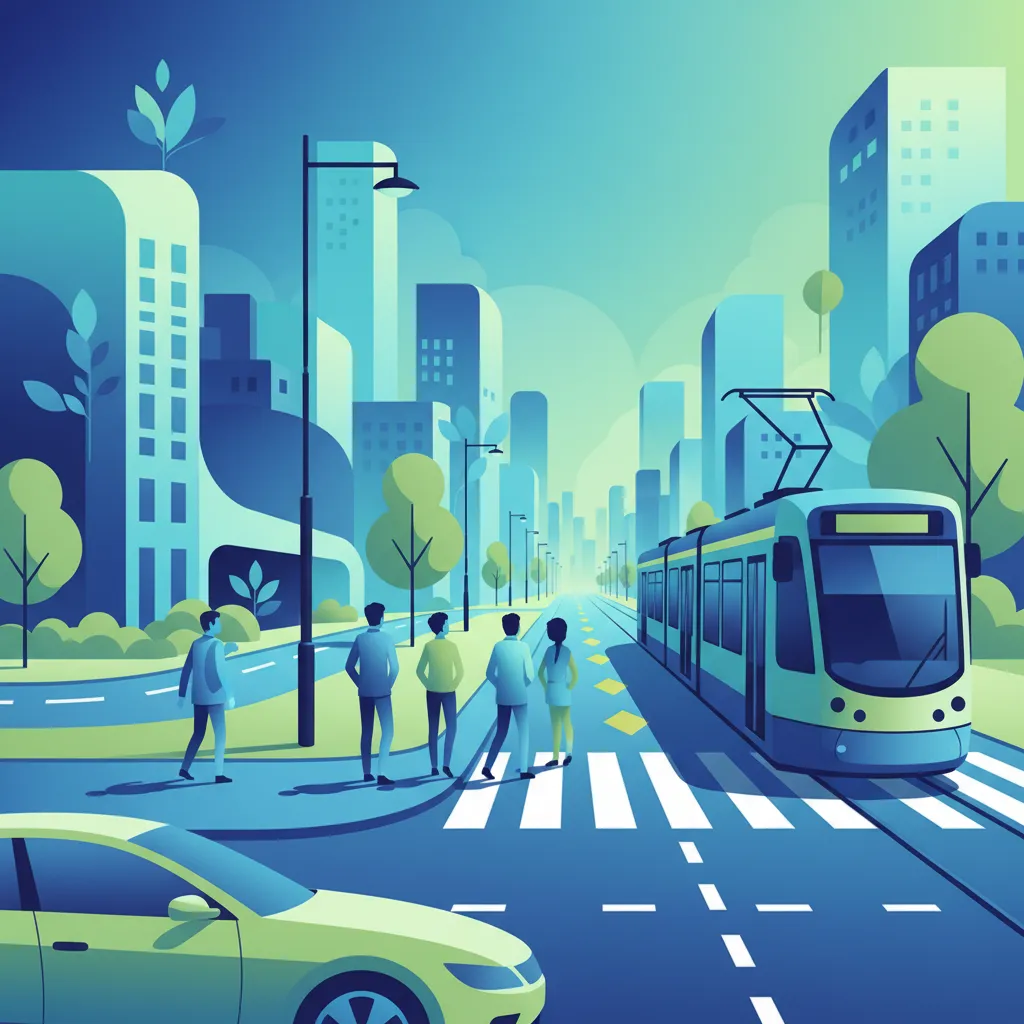
This lesson details the specific priority rules at pedestrian and tram crossings (Spårvagnskorsning). It reinforces the legal obligation for moped riders to stop for pedestrians at marked zebra crossings and explains that trams almost always have priority. Learners will understand the importance of approaching these crossings with caution, scanning for hazards, and being prepared to stop.
This lesson focuses on the unique challenges of driving in urban environments. You will learn techniques for anticipating the actions of vulnerable road users like pedestrians and cyclists, especially near crossings and bus stops. The content covers how to navigate narrow streets, one-way systems, and areas with heavy traffic, emphasizing the need for lower speeds, heightened awareness, and a defensive mindset.
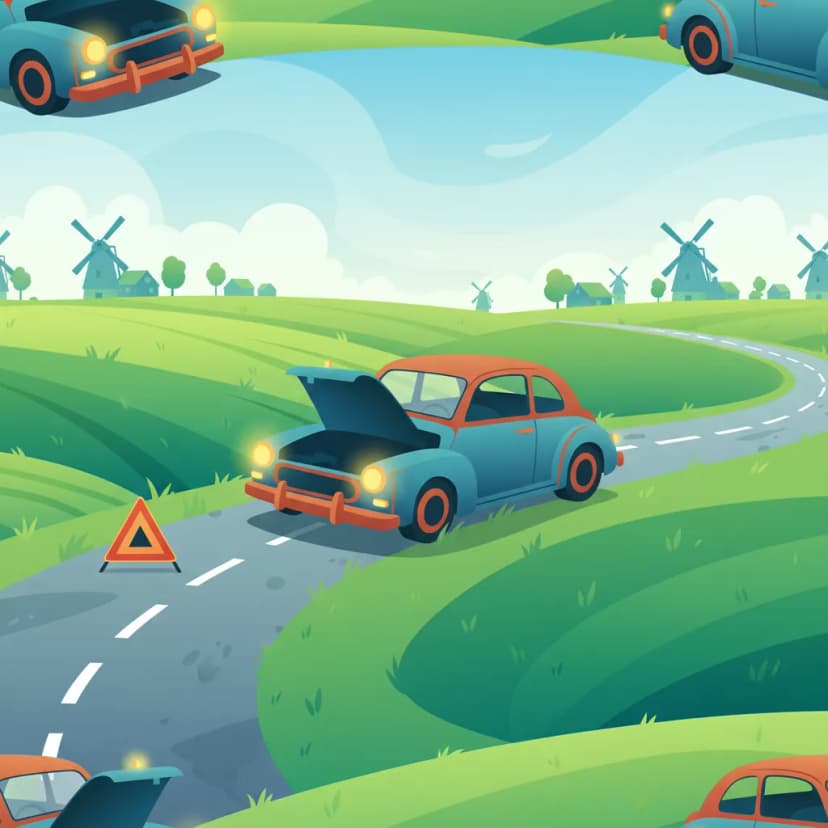
This lesson focuses on the correct use of warning devices to protect an accident or breakdown scene. You will learn to immediately activate your hazard lights (varningsblinkers). The main focus is on the proper placement of the warning triangle, explaining how the distance from the vehicle must be adapted based on the road's speed limit and visibility to give oncoming drivers adequate time to react.
Master the fundamental principles of right-of-way in Swedish traffic, focusing on intersections, roundabouts, and the specific rules for interacting with public transport like buses and trams. Enhance your understanding of safe and legal road user behaviour.
This lesson focuses on regulated intersections where priority is determined by signs indicating a main road (huvudled), a duty to yield (väjningsplikt), or a duty to stop (stopplikt). You will learn how to identify which road has priority and your legal obligation to give way to all traffic on that road before proceeding. The lesson covers proper procedures for approaching these junctions, assessing traffic, and entering the main road safely.
This lesson introduces the core principles of right-of-way in Sweden, including the general duty to give way (Väjningsplikt) and the stricter stop duty (Stopplikt). It explains the concept of a priority road and how to apply the right-hand rule at uncontrolled intersections. By understanding this legal framework, riders can determine who has priority in any given situation and act predictably and safely.
This lesson explains the two core principles of priority in Swedish traffic law: the right-hand rule (Högerregeln) and the duty to yield (Väjningsplikt). You will learn how to apply the right-hand rule at uncontrolled intersections and when to yield to other traffic as indicated by signs or road markings. Understanding this fundamental hierarchy is crucial for making correct and safe decisions in a wide variety of common traffic situations you will face as a motorcyclist.
This lesson provides a detailed guide to navigating Swedish roundabouts (cirkulationsplatser). Key principles include always yielding to traffic already in the roundabout and choosing the correct lane based on your intended exit. You will learn the specific rules for signalling your intention to exit, how to safely interact with cyclists, and the techniques for maneuvering through multi-lane roundabouts to maintain traffic flow and prevent accidents.
This lesson examines a variety of special situations where standard priority rules are modified. You will learn about the 'exit rule' (utfartsregeln) when entering a road from property, your duty to yield to buses indicating a departure from a stop, and the specific rules for pedestrian-only streets (gågata). The content also covers interactions with trams, emergency vehicles, and procedures at railway crossings, highlighting situations that demand maximum vigilance.
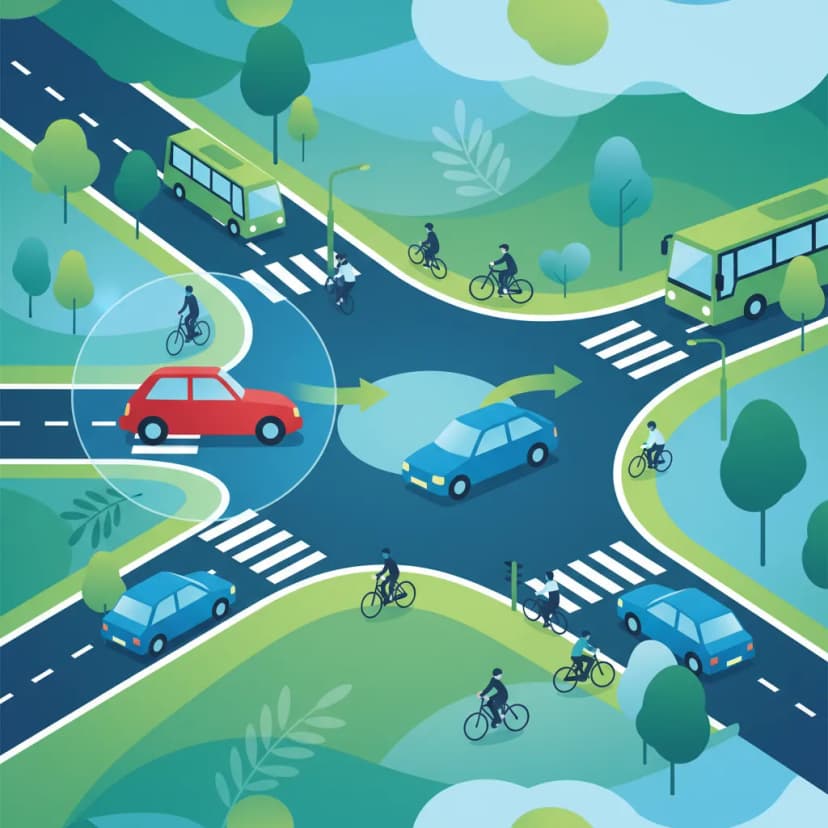
This lesson explains the foundational right-hand rule (högerregeln), which is the default priority rule at Swedish intersections where no other signs or signals regulate traffic. You will learn that you must always yield to vehicles approaching from your right in such situations. The content clarifies where this rule applies, such as in residential areas and on smaller rural roads, and covers the critical exceptions when signs or other rules take precedence.
This lesson provides detailed guidance on navigating complex traffic points such as signalized intersections, multi-lane roundabouts, and pedestrian crossings. You will learn the correct procedures for entering and exiting roundabouts, the specific rules for yielding to pedestrians and cyclists at designated crossings, and how to interpret complex traffic light signals. These skills are vital for safe urban and suburban riding, where interaction with vulnerable road users is frequent.
This lesson provides practical instructions for safely navigating different types of intersections and roundabouts. It covers procedures for approaching, entering, and exiting roundabouts, emphasizing the rule to yield to traffic already circulating. The content also addresses how to handle signal-controlled and uncontrolled intersections, ensuring riders select the correct lane and manage their speed appropriately.
This lesson details the specific priority rules at pedestrian and tram crossings (Spårvagnskorsning). It reinforces the legal obligation for moped riders to stop for pedestrians at marked zebra crossings and explains that trams almost always have priority. Learners will understand the importance of approaching these crossings with caution, scanning for hazards, and being prepared to stop.
This lesson covers the critical maneuvers of overtaking and merging, which require precise judgment and communication. You will learn how to assess traffic speed and gaps, the importance of checking blind spots, and the correct use of signals to indicate your intentions. The content includes procedures for merging onto motorways from an on-ramp and how to perform safe overtaking maneuvers on various types of roads, minimizing risk to yourself and others.
Find clear answers to common questions learners have about Priority with Emergency Vehicles and Public Transport. Learn how the lesson is structured, which driving theory objectives it supports, and how it fits into the overall learning path of units and curriculum progression in Sweden. These explanations help you understand key concepts, lesson flow, and exam focused study goals.
As a motorcyclist in Sweden, you must immediately yield the right-of-way to emergency vehicles with active sirens and flashing lights. The safest action is to slow down, check your surroundings for a safe place to pull over, and stop your motorcycle completely off the travelled portion of the road, or as far to the side as safely possible. Do not speed up to get out of the way, and wait until the emergency vehicle has passed completely before rejoining traffic.
Yes, in Sweden, you must give way to buses that are signalling their intention to depart from a bus stop. If a bus has its hazard lights flashing and is preparing to merge into traffic from a designated stop, you should slow down, be prepared to stop, and allow the bus to enter the traffic flow safely. This rule is in place to protect passengers boarding and alighting, as well as the bus itself.
Trams generally have priority on the road, especially when they are on their designated tracks. You should always be aware of tram tracks and be prepared to yield to trams. While specific rules can vary slightly depending on the context of the intersection or road layout, the general principle is that trams often have priority and you must not impede their progress.
The requirement to yield is the same for all emergency vehicles, including police cars, ambulances, and fire trucks, when they are using their audible and visual signals to indicate an emergency response. The priority granted is for the emergency itself, not for the specific type of vehicle.
Filtering between lanes to pass a bus stopped at a bus stop is generally not advised and can be dangerous. You must yield to buses signalling to depart. Always maintain a safe distance and ensure you have clear visibility before proceeding, and be particularly cautious of pedestrians who may be crossing or approaching the bus.