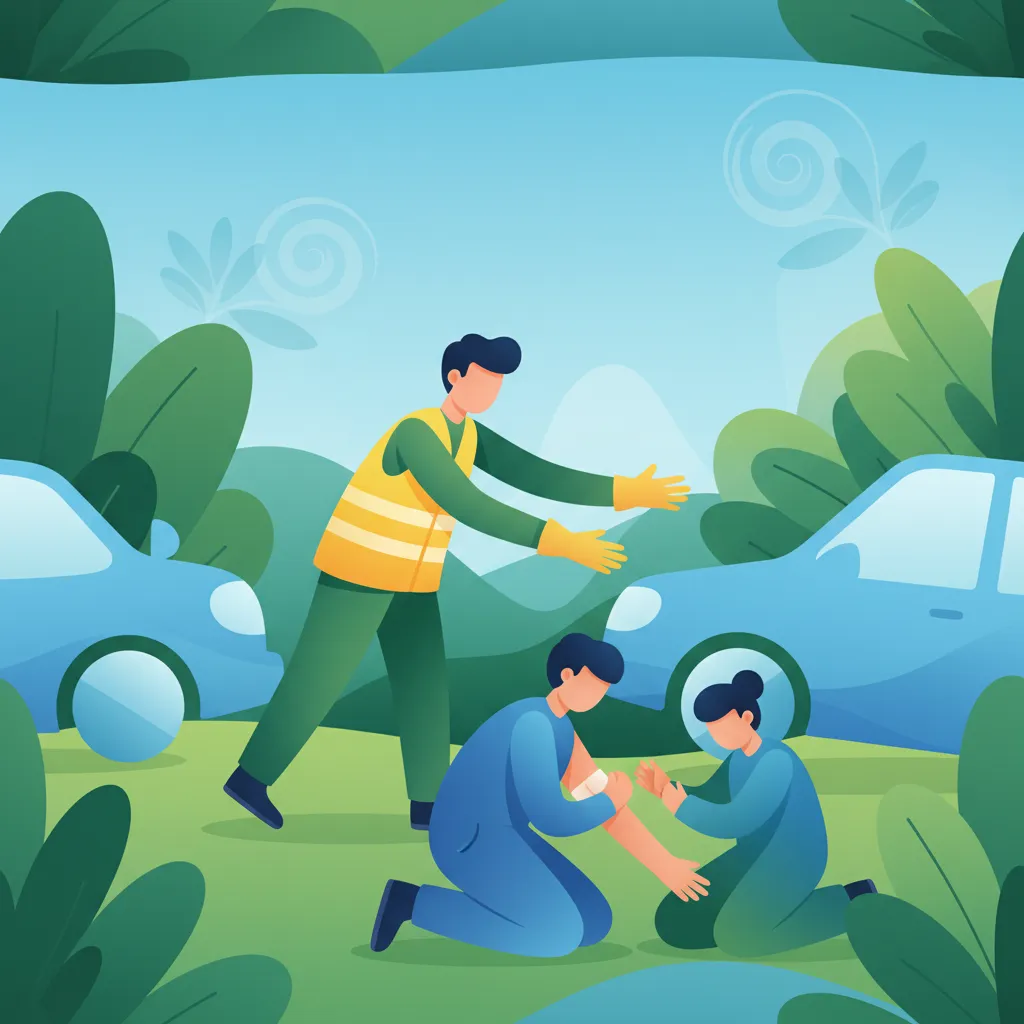
This crucial final unit prepares you for the unexpected. Learn the essential steps for responding safely and effectively to an accident scene, securing the area, providing immediate assistance, and fulfilling your legal reporting duties. Mastering these skills is vital for rider safety and responsible conduct on Swedish roads.
Browse all lessons that make up Accident Response & Roadside Safety. Each lesson focuses on specific topics, learning objectives, and core concepts, helping you build essential knowledge and follow a clear, structured progression toward your study goals in Sweden.
This lesson outlines the absolute first priorities after a crash, with the primary rule being to ensure your own safety and avoid further harm. You will learn how to conduct a quick self-assessment for injuries, the importance of moving out of the line of traffic if possible, and how to begin assessing the scene for immediate dangers like fuel leaks or oncoming vehicles. These initial actions are vital for managing the immediate aftermath of an incident.
This lesson teaches you how to make an accident scene as safe as possible for yourself, any other involved parties, and approaching traffic. You will learn the correct use of hazard lights, the placement of warning triangles, and the importance of wearing a high-visibility vest. The content also covers how to identify and manage immediate post-crash hazards, such as spilled fuel or unstable vehicles, to prevent the situation from worsening.
This lesson provides crucial, basic first aid knowledge tailored to the types of injuries common in motorcycle accidents. You will learn the L-ABC (Läge, Andning, Blödning, Chock) protocol for assessing a casualty. The content covers how to control severe bleeding, how to treat for shock, and the critical rule of when and why you should not remove a rider's helmet unless absolutely necessary to maintain an airway, enabling you to provide effective help until professionals arrive.
This lesson details the procedural and legal steps for reporting an accident. You will learn when you are legally obligated to report a crash to the police, what information to exchange with other involved parties, and the importance of documenting the scene with photographs and witness details. This information is vital for ensuring any subsequent insurance claims and legal proceedings are handled smoothly and fairly.
This final lesson addresses the longer-term aftermath of an accident. You will learn about the importance of having your motorcycle professionally inspected for hidden damage before riding it again. The content also touches on the psychological aspects of recovery, offering advice on how to regain confidence, and covers the final steps in the legal and insurance processes, ensuring you have a clear understanding of the entire post-accident journey.
Explore high-intent keywords and long-tail search topics learners use when researching Accident Response & Roadside Safety. These terms reflect how people search for reliable study materials, structured explanations, and unit-level theory preparation support in Sweden.
Find clear answers to the most common questions learners ask about Accident Response & Roadside Safety. Understand how the unit is organized, what learning goals it supports, and how it contributes to your study progression with structured explanations and practical guidance tailored for learners in Sweden.
Your primary priorities are your own safety and the safety of others. First, assess if you are in immediate danger and move to a safe location if possible. Then, check for injuries and, if safe to do so, secure the scene by using hazard lights, warning triangles, or by signaling other road users to slow down or stop. Do not move an injured person unless there is an immediate threat to their life.
In Sweden, you are generally required to report accidents involving personal injury, significant property damage, or if a party involved leaves the scene. For personal injury, call 112 immediately. For less severe accidents, you may need to contact the police directly through their non-emergency number or website. The exact procedure depends on the severity and circumstances, which will be detailed in this unit.
Essential first aid for motorcyclists includes knowing how to check for responsiveness, control severe bleeding (using direct pressure), perform CPR if trained, and manage shock. This unit covers these critical skills, emphasizing what can be done safely before professional medical help arrives.
If your vehicle is damaged in an accident, you have a legal responsibility to ensure it does not pose a hazard to other road users. This may involve moving it to the side of the road if drivable or arranging for it to be removed. You must also follow procedures for reporting the damage to the police and your insurance company as required by Swedish law.
After an accident, you'll need to notify your insurance company promptly. This unit outlines the information you'll typically need to provide, such as details of the accident, other parties involved, and any police reports. Understanding these initial steps will help streamline the claims process.
All included lessons
Lessons in Accident Response & Roadside Safety
See who benefits most from studying Accident Response & Roadside Safety. This overview explains how the unit supports different learning needs, what level of knowledge is helpful before starting, and how it fits into the overall study path in Sweden.
This unit is essential for all Category A licence applicants preparing for the Swedish theory exam. It's particularly vital for those who want to be fully equipped to handle stressful emergency situations with confidence and competence, ensuring they know their responsibilities in an accident.

See how Swedish Motorcycle Theory A is structured, with key topics, learning objectives, and a step-by-step path for theory preparation in Sweden.
Explore all units and lessons included in this driving theory course.