Navigating city streets requires special attention. This lesson dives into the unique challenges of urban driving in Sweden, covering everything from speed limits and right-of-way in busy areas to interacting safely with pedestrians and cyclists. Understanding these rules is crucial for passing your Category B theory exam and for safe driving.
Driving in urban environments presents a unique set of challenges for motorists. Unlike rural roads or motorways, city streets are characterized by a high density of diverse road users, complex layouts, and dynamic interactions. This lesson for the Swedish Driving License Theory Course for Category B Cars will equip you with the knowledge and strategies necessary to navigate urban traffic and pedestrian zones confidently and safely, significantly reducing collision risks and legal penalties.
Urban areas in Sweden are bustling hubs where vehicles share limited space with pedestrians, cyclists, public transport, and delivery services. This intricate environment demands heightened awareness, excellent anticipation skills, and strict adherence to traffic regulations. A significant portion of road collisions occurs in urban settings, often involving vulnerable road users. Mastering urban driving techniques is not just about passing your theory test; it's about safeguarding lives and contributing to a smoother, safer traffic flow in our cities.
Urban traffic environments distinguish themselves through three primary characteristics:
The fundamental principle guiding urban driving is risk reduction. Lower speeds allow more time for perception, decision-making, and action. Defensive driving, which involves anticipating the behavior of vulnerable users, helps mitigate the consequences of potential conflicts. Legal provisions, such as the Trafikförordning (Swedish Traffic Ordinance), codify these safety priorities, emphasizing the protection of those most at risk.
Successful urban driving relies on a set of core principles that prioritize safety and efficiency.
Speed adaptation is crucial in urban environments. It means adjusting your vehicle speed not just to the posted limit, but also to the prevailing conditions, road design, and traffic density. Lower kinetic energy significantly reduces the severity of a crash and shortens braking distances.
Drivers must always observe statutory speed limits (typically 30, 40, or 50 km/h in urban areas) and voluntarily reduce speed further when conditions demand it, such as in crowded areas, near schools, or where sightlines are limited.
The law prioritizes the protection of the most vulnerable users. This means consistently yielding to pedestrians on designated crossing points and to cyclists where the law grants them priority. In Sweden, this is particularly important at marked crosswalks.
Defensive driving involves proactively scanning the environment for potential hazards and planning your maneuvers accordingly. This includes looking for pedestrians about to cross, cyclists emerging from side streets, or sudden stops by vehicles ahead. Continuous peripheral scanning, early signaling, and maintaining a safe following distance are vital for compensating for human reaction-time limits and avoiding last-minute braking.
Recognizing and respecting special urban zones is a legal and safety requirement. These include pedestrian zones (gångfartsområden), shared spaces (delade utrymmen), bus-only lanes, and loading zones (lastningsområden). Misuse of these zones can obstruct public transport, endanger pedestrians, or result in fines. Pay close attention to road markings, signage, and pavement changes.
In congested urban environments, clear and timely communication is essential. Use your turn indicators, brake lights, and, sparingly, your horn to signal your intentions predictably. Signal at least 3 seconds before a turn or lane change to give other road users ample time to react. The horn should be used only to alert others to danger, not to intimidate.
Visibility management involves ensuring that your vehicle is seen by others and that you can clearly see other road users. This includes proper use of vehicle lighting, keeping windows clean, and knowing when to use dipped-beam (halvljus) versus high-beam (helljus). Always use dipped-beam headlights within 200 meters of pedestrians or other vehicles to avoid glare.
Swedish traffic law, particularly the Trafikförordning, outlines specific rules for urban areas. Understanding these regulations and the characteristics of different urban zones is fundamental to safe driving.
Vulnerable Road Users (VRUs) are individuals with limited protection in a crash, primarily pedestrians, cyclists, and users of mobility aids. They are often less visible and may move unpredictably.
In Sweden, pedestrians have specific rights at crossings. According to § 25 of the Trafikförordning, drivers must stop before the stop line when a pedestrian is present on a marked crosswalk (zebrastreck). This priority applies regardless of traffic light color. Even at unmarked crossings, if a pedestrian has already entered the carriageway, you must stop and yield (§ 26). A common misunderstanding is believing a green traffic light releases the driver from stopping for pedestrians. Always be prepared to stop.
Cyclists are common in Swedish urban traffic and may use the road, not just dedicated bicycle lanes. When overtaking a cyclist, you must ensure a safe passing distance. § 24 stipulates a minimum distance of 1.5 meters when overtaking a cyclist on a lane that is 3.5 meters wide or less. If the lane is wider, 0.5 meters may be sufficient, provided it is safe. Cyclists may also occupy the full lane when necessary for their safety, such as avoiding drains or potholes. Always anticipate their movements and give them ample space.
Assuming cyclists will always stay on the far right of the lane or on a separate bicycle lane at all times is a dangerous misconception. They may need to move into the traffic lane for various reasons.
A Gångfartsområde is an urban area where pedestrians have exclusive right-of-way. Motor vehicles are either completely prohibited or may only pass when necessary, typically for deliveries or authorized services, and at a very low speed, generally not exceeding 10 km/h. These zones are often marked by distinct blue pavement or clear signage. Vehicles must stop before entering these zones unless explicitly permitted. Driving through a pedestrian zone because a traffic light appears green, or ignoring "delivery-only" signs outside of permitted hours, are common violations.
Bus stops are designated locations for public transport to board and alight passengers. They are typically marked with a "B" sign and often a white line on the road.
According to § 55 of the Trafikförordning, overtaking a bus that has stopped at a designated bus stop is prohibited if passengers are boarding or alighting. This rule is in place to protect passengers who may step onto the road unexpectedly. You must wait behind the bus until all passengers have cleared and the bus is preparing to move. You must also not stop or park in a bus stop area, even briefly, as this obstructs public transport.
One-way streets (enkelriktade gator) are roads where traffic is permitted in only one direction, indicated by specific arrow signs. You must always adhere to the indicated direction. Entering a one-way street against the flow of traffic is a serious violation (§ 44) and can lead to head-on collisions.
Narrow streets (smala gator) and shared lanes (delade körfält) are common in older city centers. These are urban roads where the lane width may be insufficient for side-by-side traffic, sometimes requiring alternating flow or shared use with cyclists and pedestrians. You must yield to oncoming traffic or cyclists according to road markings and signs, or by mutual agreement if not explicitly regulated (§ 38). Always approach these areas with reduced speed and heightened vigilance, ready to communicate with other road users.
Speed limits in Swedish urban areas are typically 30, 40, or 50 km/h, with lower limits in pedestrian zones (e.g., 10 km/h) or near schools. You must adjust your speed instantly when entering a zone with a different limit, as indicated by signs or pavement markings (§ 7 and § 8).
Traffic calming measures (trafikdämpande anordningar) are physical or regulatory tools designed to reduce vehicle speeds and improve safety. These include speed humps (fartgupp), raised intersections, chicanes, and narrowed lanes. You must treat these as static obstacles, reducing your speed appropriately to avoid damage to your vehicle and to maintain control. Never accelerate immediately after crossing a speed hump.
Loading and unloading zones (lastnings- och lossningsområden) are designated roadside areas where commercial vehicles may stop briefly to load or unload goods. They are usually marked by an "L" sign and often have time restrictions (e.g., "08:00–09:00"). Private vehicles are generally prohibited from stopping or parking in these zones, as this obstructs commercial traffic and violates § 67. Using a loading zone for a "quick stop" is illegal.
You have a legal obligation to yield the right-of-way to police, ambulance, and fire-engine vehicles using audible and visual signals (sirens and flashing lights). According to § 33, you must pull to the right and stop, unless doing so would cause danger. You must never block access to bus stops or pedestrian zones when yielding to an emergency vehicle. Even in a pedestrian zone, you must make a safe maneuver to allow the emergency vehicle to pass.
In areas where trams share road space with other vehicles, they generally have priority unless signs indicate otherwise. This is a critical rule to prevent collisions with these large, less maneuverable vehicles. Always be aware of tram tracks and yield to trams, especially when entering an intersection or changing lanes across tracks.
Understanding common violations helps drivers avoid them and maintain safety.
Driving conditions are rarely static, especially in urban areas. Safe drivers constantly adapt their behavior to varying circumstances.
Be aware of temporary road closures, diversions, or reduced speed limits due to street fairs, market stalls, or construction. Always obey temporary signs and any directions from police or traffic wardens. These situations require extra caution and a willingness to adapt your planned route.
Many urban traffic rules are rooted in fundamental physics and human psychology. Understanding the "why" behind the rules reinforces their importance.
The average driver reaction time is approximately 1.5 seconds. At 50 km/h, your vehicle will travel about 21 meters before you even begin to brake. Reducing your speed to 30 km/h cuts that reaction distance to around 12 meters, dramatically improving your chances of avoiding a collision. Lower speeds provide crucial extra seconds for perception, decision, and action, especially when interacting with unpredictable vulnerable road users.
Kinetic energy is proportional to the square of your speed (Energy ∝ v²). This means that halving your speed, for example, from 50 km/h to 25 km/h, reduces the collision energy to one-quarter. This vastly lowers the potential for severe injuries or fatalities in the event of an accident. This principle is why speed limits are so low in areas with high pedestrian activity.
Drivers often fall prey to "optimism bias," underestimating the likelihood of pedestrians stepping into traffic or cyclists making unexpected moves. Training yourself to anticipate these "unpredictable" actions and always assuming the least safe scenario helps counter this bias and promotes a truly defensive driving mindset. Research from the Swedish Transport Agency (Transportstyrelsen) consistently highlights that a large percentage of urban collisions involving pedestrians and cyclists occur at speeds above 30 km/h.
To excel at urban driving in Sweden, always prioritize safety and vigilance.
By internalizing these principles and practices, you will become a safer, more responsible, and more confident driver in Sweden's diverse urban environments.
Lesson content overview
Explore all units and lessons included in this driving theory course.
Explore search topics learners often look for when studying Urban Traffic and Pedestrian Zones. These topics reflect common questions about road rules, driving situations, safety guidance, and lesson level theory preparation for learners in Sweden.
Browse additional driving theory lessons that cover connected traffic rules, road signs, and common driving situations related to this topic. Improve your understanding of how different rules interact across everyday traffic scenarios.
Understand Swedish traffic rules for interacting safely with pedestrians and cyclists in city environments. This lesson covers pedestrian zones, crossings, and vulnerable road user awareness for the Category B driving theory exam.
This lesson provides detailed guidance on navigating complex traffic points such as signalized intersections, multi-lane roundabouts, and pedestrian crossings. You will learn the correct procedures for entering and exiting roundabouts, the specific rules for yielding to pedestrians and cyclists at designated crossings, and how to interpret complex traffic light signals. These skills are vital for safe urban and suburban riding, where interaction with vulnerable road users is frequent.
This lesson details a driver's responsibility towards pedestrians. You will learn the strict rule of yielding to pedestrians who are on or about to enter a marked, uncontrolled crosswalk. The content also covers the specific, highly restrictive rules for driving in designated pedestrian zones (gågata) and 'walking speed' areas (gångfartsområde), where pedestrians have complete priority and vehicle traffic is severely limited.
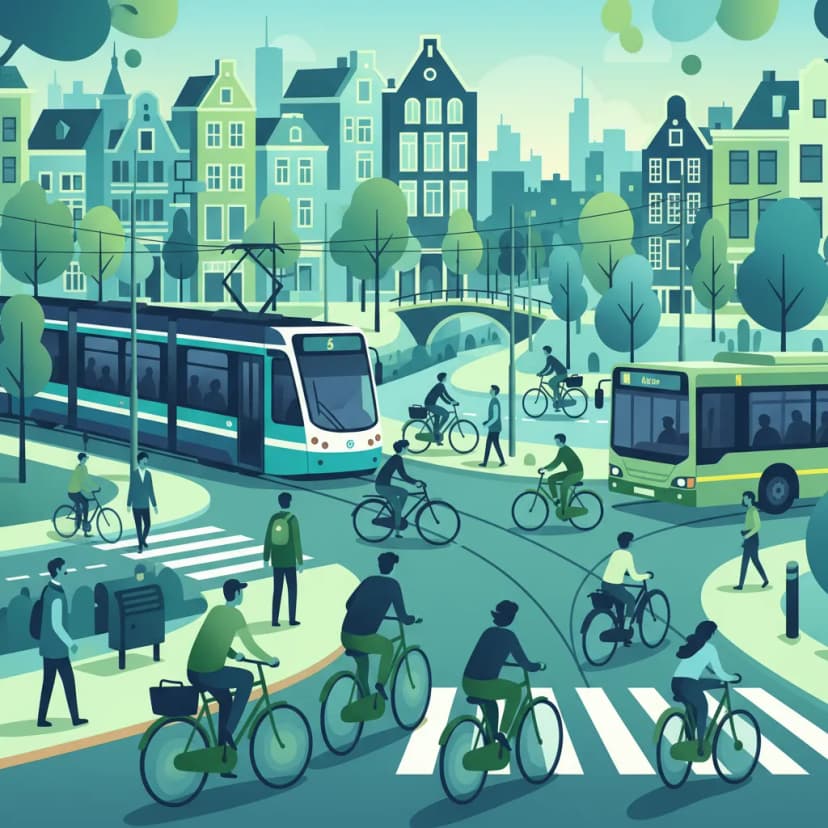
This lesson explains the specific traffic rules related to public transport vehicles. You will learn about your duty to yield to buses signaling to leave a stop (on roads with a speed limit of 50 km/h or less) and the fact that trams generally have priority. The lesson covers how to safely pass stopped buses and trams, being mindful of disembarking passengers who may cross the road unexpectedly.
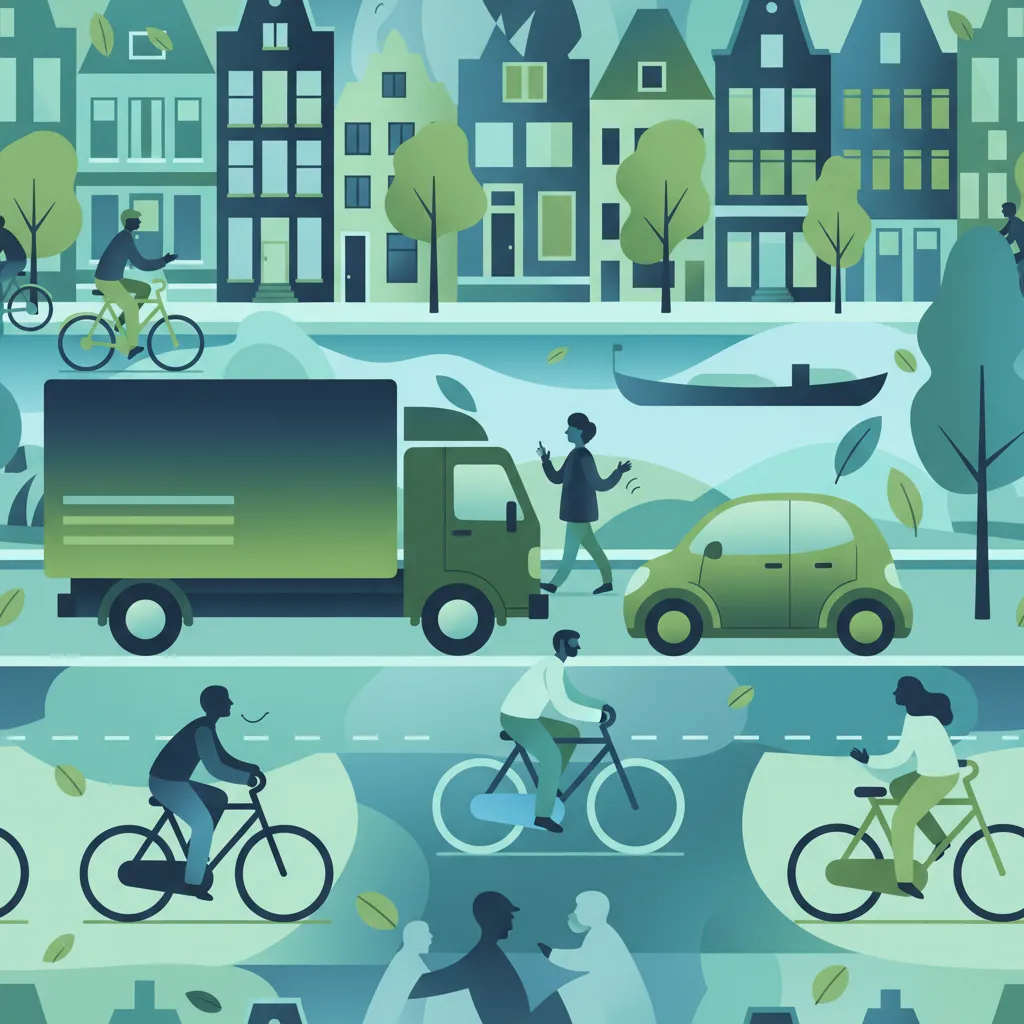
This lesson provides in-depth analysis of how to safely interact with the full spectrum of road users. You will learn about the specific characteristics of each, such as the large blind spots of trucks, the potential for sudden movements from cyclists, and the unpredictability of pedestrians. The content teaches strategies for communication, anticipation, and defensive positioning to ensure safe and respectful coexistence on the road for everyone.
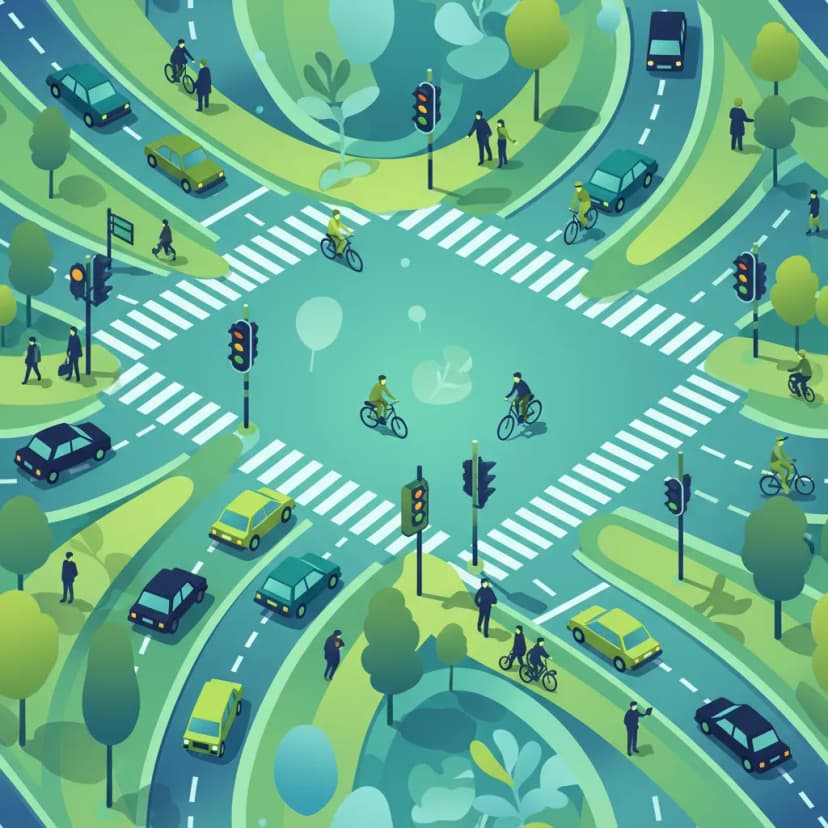
This lesson focuses on the specific techniques required for riding in busy city and town environments. You will learn how to maintain correct lane positioning amidst dense traffic, navigate complex intersections with multiple signals, and manage the motorcycle at low speeds in stop-and-go conditions. Emphasis is placed on heightened awareness of pedestrians, cyclists, and vehicles making sudden maneuvers, which are common hazards in urban settings.
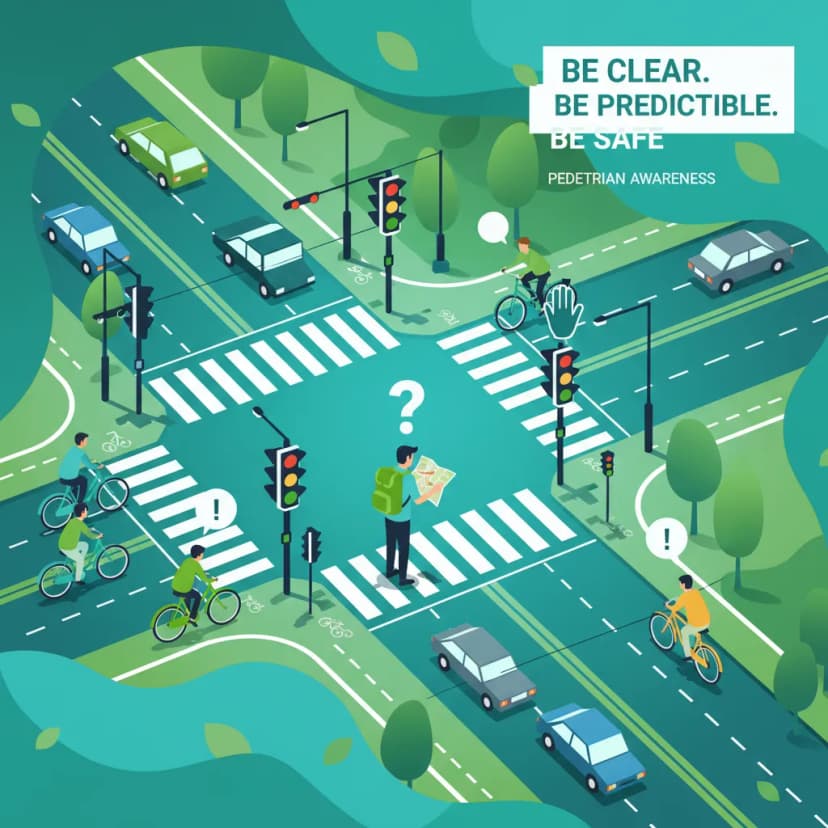
This lesson is dedicated to pedestrian safety, teaching riders to be constantly aware of people on foot, especially in busy urban environments. It reinforces the absolute duty to yield at marked crossings and encourages a cautious approach in areas like schools and shopping districts. The content stresses anticipating unpredictable actions, particularly from children or distracted pedestrians.
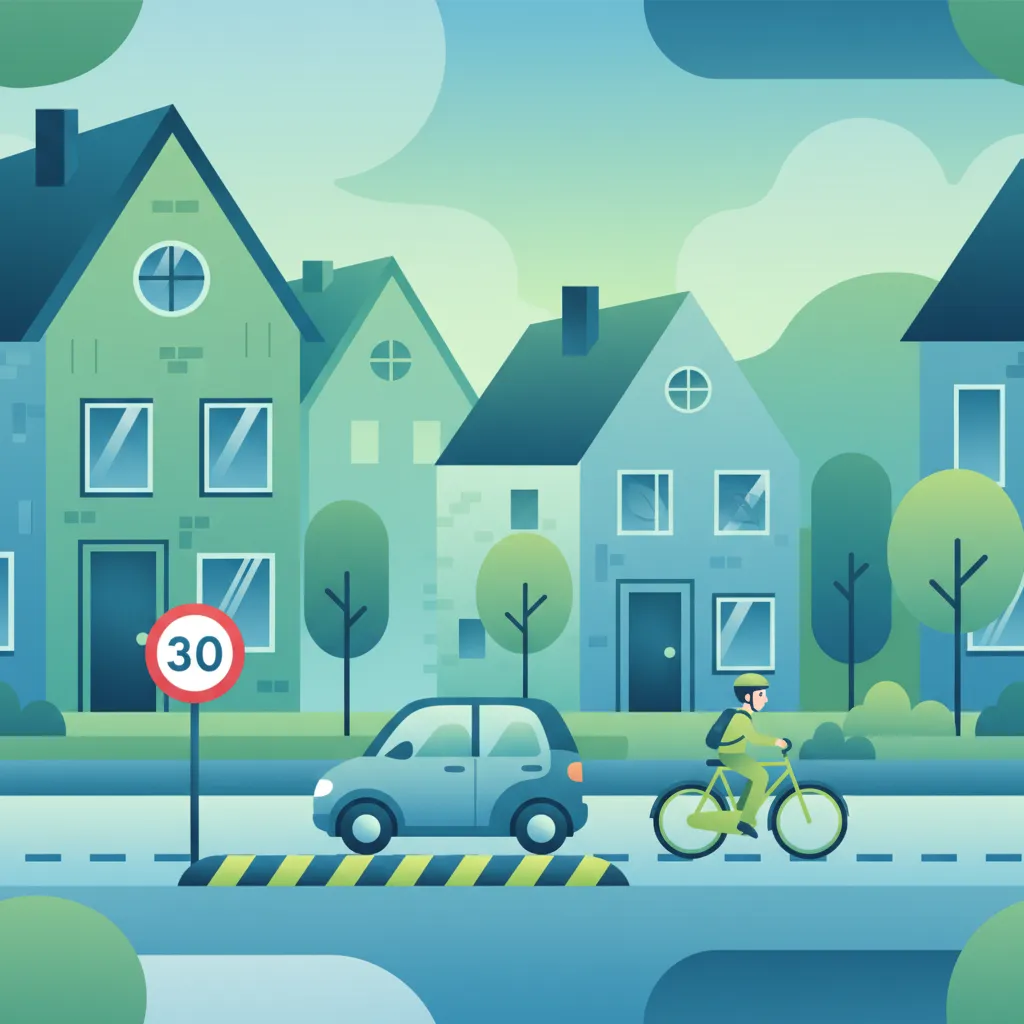
This lesson focuses on the high level of caution required when driving in residential areas. You will learn about the rules for special zones like 'gångfartsområde' (walking speed area) and the need to navigate around speed calming measures like speed bumps. The central theme is anticipating unpredictable behavior from residents, especially children, and managing the risks posed by parked cars that severely limit visibility.
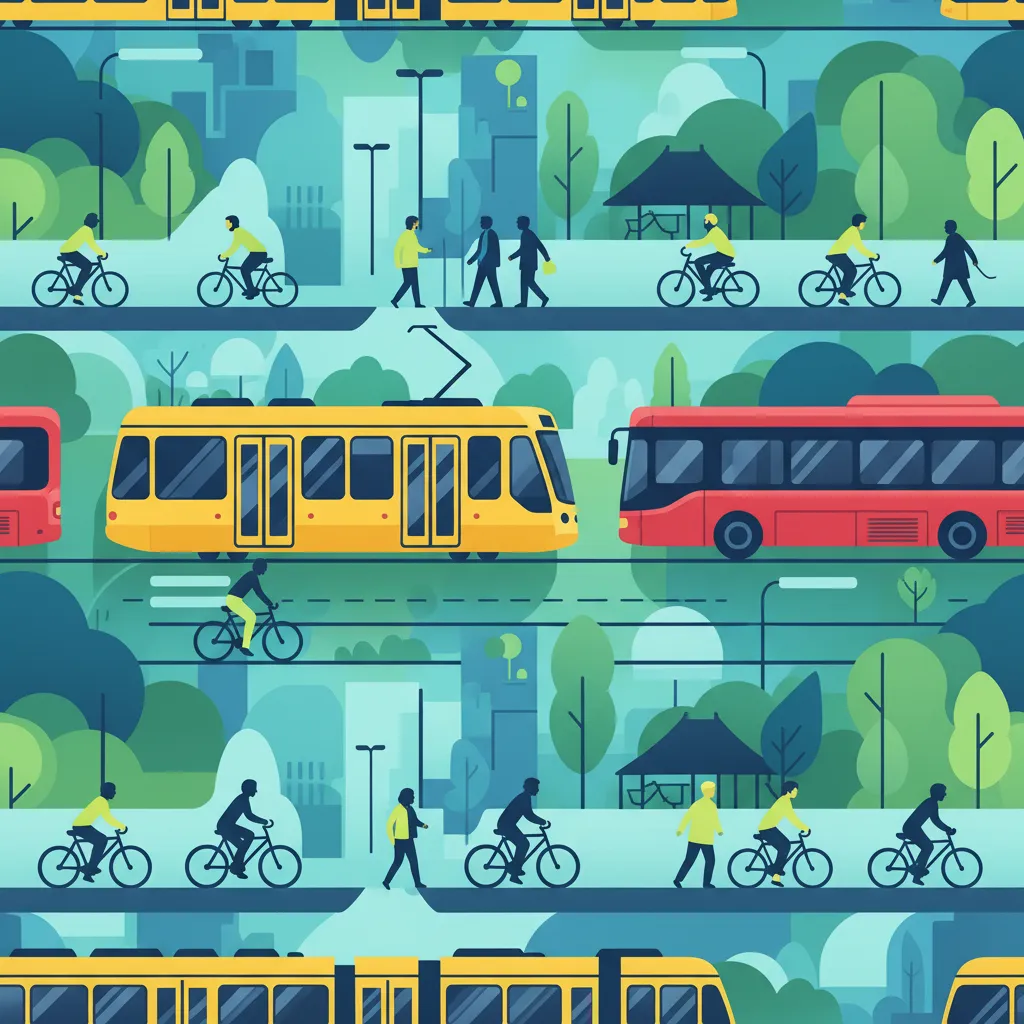
This lesson addresses the unique hazards associated with public transportation. It explains how to safely navigate around buses that are stopping to pick up or drop off passengers and the importance of watching for pedestrians. It also covers the physical danger of slippery tram tracks, especially when wet, and reiterates that trams typically have absolute priority.
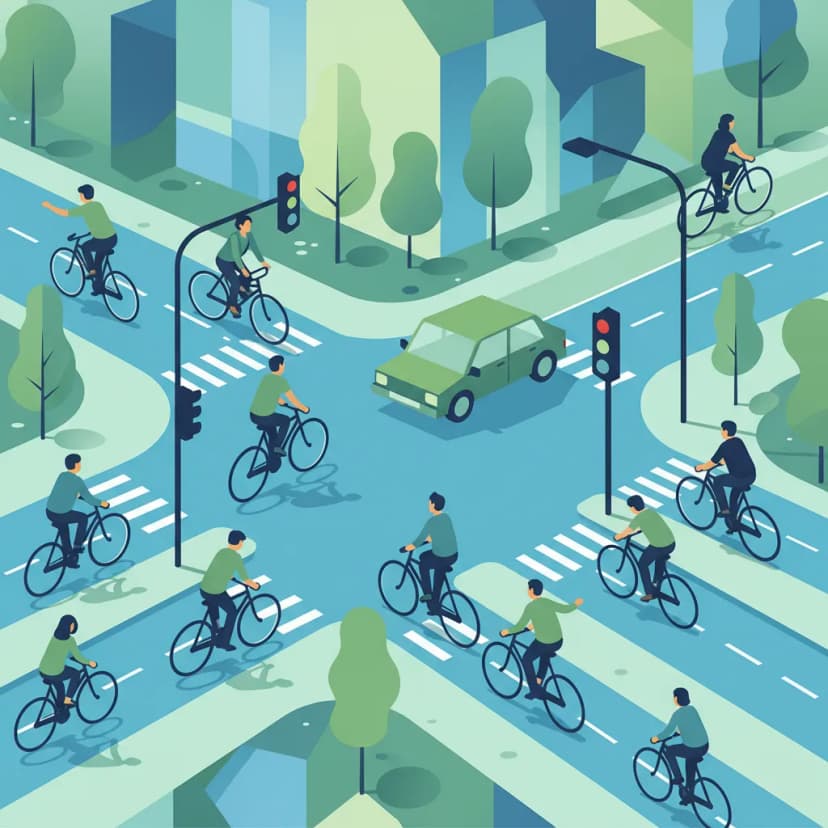
This lesson focuses on safe interaction with cyclists. You will learn to differentiate between a 'bicycle crossing' (cykelöverfart), where you have a duty to yield, and a 'bicycle passage' (cykelpassage), where specific priority rules apply. The content stresses the importance of leaving adequate space when overtaking cyclists and the critical danger of the 'right-hook' accident, emphasizing the need to check mirrors and blind spots carefully before turning right.
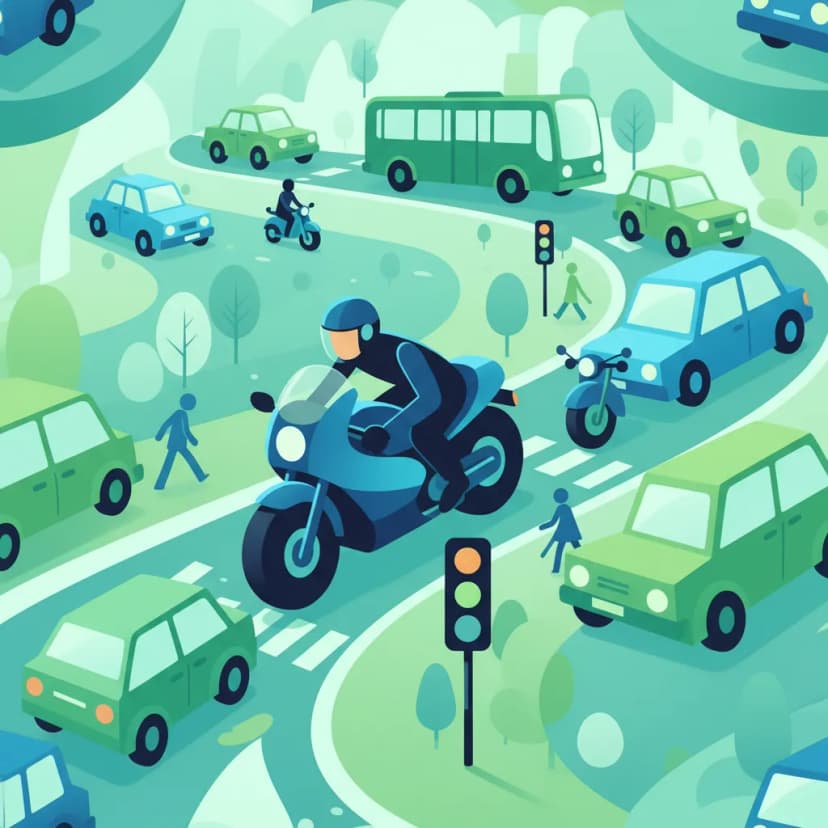
This lesson teaches the crucial skill of adapting your speed to the dynamic and often congested conditions of urban riding. You will learn to modulate your speed smoothly in response to traffic flow, pedestrian activity, and complex intersections to maintain safety and control. Techniques covered include using engine braking effectively, anticipating the actions of other road users, and selecting a speed that maximizes your reaction time in a high-density environment.
Learn essential theory for handling complex urban traffic scenarios. This covers narrow streets, one-way systems, heavy traffic, and maintaining a defensive driving mindset in city environments according to Swedish regulations.
This lesson focuses on the high level of caution required when driving in residential areas. You will learn about the rules for special zones like 'gångfartsområde' (walking speed area) and the need to navigate around speed calming measures like speed bumps. The central theme is anticipating unpredictable behavior from residents, especially children, and managing the risks posed by parked cars that severely limit visibility.
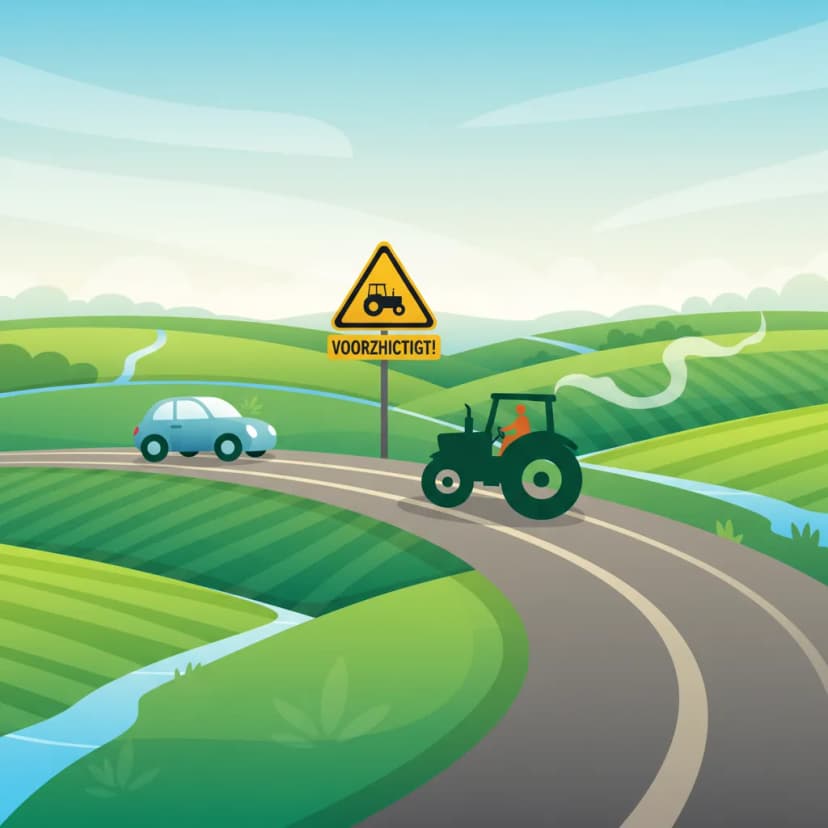
This lesson addresses the specific risks associated with driving on rural roads (landsvägar). You will learn how to manage higher speeds on narrow, winding roads with limited visibility due to curves and hills. The lesson covers procedures for safely overtaking slow-moving agricultural vehicles, managing encounters with oncoming traffic on narrow sections, and being constantly vigilant for wildlife, especially at dawn and dusk.
This lesson emphasizes that the posted speed limit is a maximum, not a target. You will learn the principles of situational speed adaptation, which involves adjusting your speed based on factors like visibility, road geometry (curves and hills), traffic density, and potential hazards. The lesson covers specific strategies for managing speed in urban environments with pedestrians, on rural roads with hidden entrances, and on motorways to match the flow of traffic.
This lesson provides detailed guidance on navigating complex traffic points such as signalized intersections, multi-lane roundabouts, and pedestrian crossings. You will learn the correct procedures for entering and exiting roundabouts, the specific rules for yielding to pedestrians and cyclists at designated crossings, and how to interpret complex traffic light signals. These skills are vital for safe urban and suburban riding, where interaction with vulnerable road users is frequent.
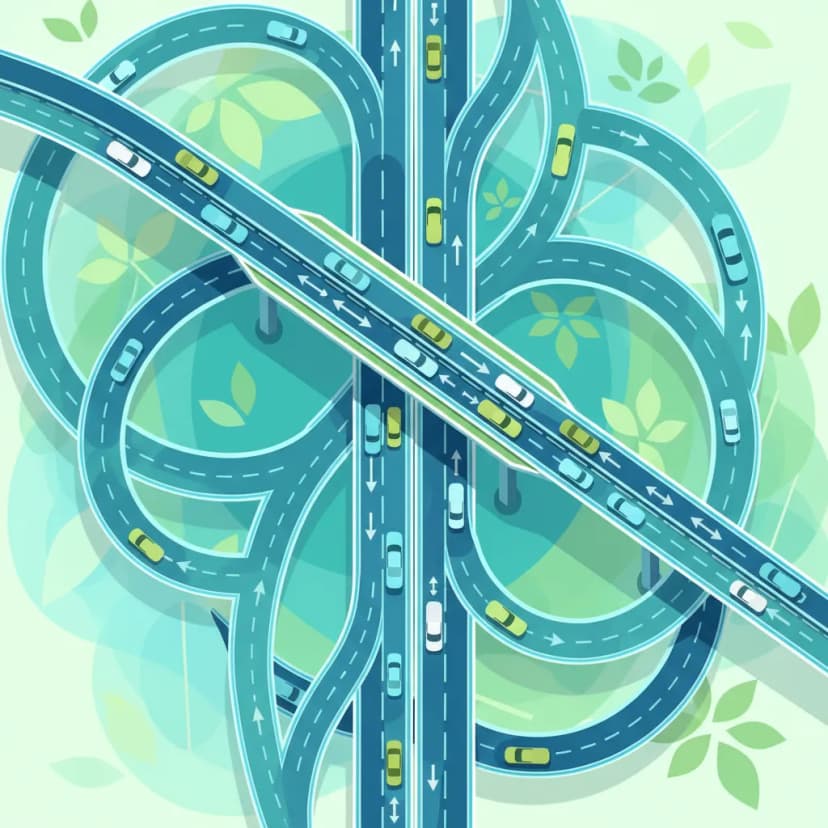
This lesson tackles the challenge of navigating some of the most complex road features, such as large multi-lane roundabouts and grade-separated interchanges. You will learn the importance of advance planning, choosing the correct lane on approach, clear signaling, and comprehensive observation to safely move through these busy areas. Mastering these junctions is a key indicator of an advanced and competent rider who can handle any road layout.
This lesson focuses on the specific techniques required for riding in busy city and town environments. You will learn how to maintain correct lane positioning amidst dense traffic, navigate complex intersections with multiple signals, and manage the motorcycle at low speeds in stop-and-go conditions. Emphasis is placed on heightened awareness of pedestrians, cyclists, and vehicles making sudden maneuvers, which are common hazards in urban settings.

This lesson prepares you for the specific challenges of riding on rural roads in Sweden. You will learn how to read the road ahead for changes in surface quality, approach blind corners safely, and adjust your speed for narrow lanes with no shoulder. The content also covers how to anticipate and safely interact with slow-moving agricultural vehicles and the potential for wild animals on the road, ensuring you are prepared for the unpredictable nature of country riding.
This lesson covers the critical maneuvers of merging and changing lanes. You will learn the correct technique for using an acceleration lane to match the speed of motorway traffic before merging smoothly and safely. The lesson emphasizes the importance of checking mirrors and the blind spot, signaling in good time, and applying the 'zipper principle' (dragkedjeprincipen) where lanes merge to ensure efficient and courteous traffic flow.
This lesson explains the function and legal significance of various road markings (vägmarkeringar) in Sweden. You will learn the difference between broken lines that permit overtaking and solid lines that forbid it, as well as the meaning of stop lines, pedestrian crossings, and lane direction arrows. These markings work in conjunction with signs to organize traffic flow, separate lanes, and provide critical information directly on the road surface.
This lesson teaches the crucial skill of adapting your speed to the dynamic and often congested conditions of urban riding. You will learn to modulate your speed smoothly in response to traffic flow, pedestrian activity, and complex intersections to maintain safety and control. Techniques covered include using engine braking effectively, anticipating the actions of other road users, and selecting a speed that maximizes your reaction time in a high-density environment.
Find clear answers to common questions learners have about Urban Traffic and Pedestrian Zones. Learn how the lesson is structured, which driving theory objectives it supports, and how it fits into the overall learning path of units and curriculum progression in Sweden. These explanations help you understand key concepts, lesson flow, and exam focused study goals.
A pedestrian zone (gågata) is an area primarily for pedestrians, often with restricted vehicle access. Typically, you may only enter if directed by signs, and often only during specific hours for loading or unloading. Speed limits are very low (usually walking pace), and you must always yield to pedestrians. Always check specific signage for exact rules.
Swedish urban areas usually have a general speed limit of 50 km/h unless otherwise indicated by signs. However, the Trafikförordning emphasizes adapting speed to conditions. In dense city traffic, near schools, crossings, or where visibility is limited, you must reduce speed significantly, often below 30 km/h, to be able to stop quickly if needed and to reduce the severity of any potential impact.
When passing cyclists or mopeds in urban areas, you must maintain a safe distance. The general rule is to give them at least 1.5 meters of space. On roads with dedicated cycle lanes, ensure you don't cross into the lane unless necessary and safe to do so. Always be prepared for them to change direction unexpectedly.
When approaching a bus stop or tram stop, be aware that pedestrians might be crossing to or from the stop. If a bus has its hazard lights on and is picking up or dropping off passengers, you must drive past it at a very low speed, ready to stop if someone steps out into the road. For tram stops, follow the specific signage, but always be cautious of passengers.
Urban driving involves higher traffic density, more vulnerable road users (pedestrians, cyclists), complex intersections, and generally lower speed limits. Rural roads often have higher speed limits, fewer road users, and different hazards like farm vehicles, animals, and poor road surfaces. Awareness of immediate surroundings and anticipating sudden actions are critical in cities, while maintaining appropriate speeds and being aware of potential wildlife are key on rural roads.