This section focuses on essential traffic signals given by police officers and other authorised traffic controllers. These signals are of utmost importance as they legally override all other traffic signs, lights, and right-of-way rules. Mastering these instructions is crucial for your theory test success and for navigating complex traffic situations safely, such as intersections or during traffic stops.
An explanation of how Signals by Police Officer (P) road signs apply in real traffic situations in Sweden. Learn where these signs are typically placed, what drivers are expected to do when they appear, and how correct reactions help you stay safe, avoid fines, and succeed in your Swedish driving theory exam.
You will encounter police signals primarily in situations where normal traffic flow needs to be managed or controlled manually. This is common at busy intersections during peak hours, during traffic accidents, roadworks, or special events where conventional traffic lights might be insufficient or overwhelmed. Police may also direct traffic at routine roadside checks or to guide vehicles into specific areas, such as an inspection zone. It's vital to be constantly aware of police presence and their signals, as failing to comply can lead to dangerous situations and is a serious traffic offense. Always be prepared to stop, slow down, or proceed based on their instructions, regardless of what other signs or lights might indicate.
An overview of the key learning outcomes when studying the Signals by Police Officer (P) road sign category. Understand the main concepts, sign meanings, and traffic situations covered here so you can recognise patterns, answer theory questions more confidently, and build a solid foundation for safe driving in Sweden.
Browse every road sign in the Signals by Police Officer (P) category. Each sign includes a clear meaning, purpose, and examples of how it is used in Sweden, helping you build strong recognition skills and a detailed understanding of this group of Swedish traffic signs.

Stop Your Vehicle Immediately If an Officer is Facing You or Your Rear

Understand the Police 'Proceed' Signal (P4) and How to React Safely
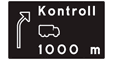
P7 Advance Information: Control Ahead warns you of an upcoming checkpoint.

What to do when a police vehicle signals you to follow and stop.

You must stop when the police officer's palm faces you.

Understand the P3 'Stop' Sign with a Police Lantern

P5: Slow Down When You See the Officer Facing You

P6 Control Sign: You Must Enter the Inspection Area

Understand the P8 'Reduce Speed' signal from a police vehicle

P9: Reduce Speed When Meeting an Oncoming Police Vehicle

P11: Pull Over and Stop for Police Vehicle Instructions
Clear answers to common questions about the Signals by Police Officer (P) road sign category. Use this FAQ to review tricky rules, understand how these signs appear in exam scenarios, and remove confusion that often leads to mistakes in the Swedish driving theory exam in Sweden.
Failing to obey a police officer's traffic signal is a serious offense. It can lead to immediate penalties, including fines, and points on your driving record. More importantly, it can create dangerous situations for yourself, other road users, and the officer. Always prioritise the officer's instructions.
Police signals always override traffic lights and road signs. If a police officer is directing traffic, their hand or light signals take precedence. For example, an officer might signal you to proceed through a red light if they are directing traffic flow, or signal you to stop at a green light to allow other traffic to pass. Always watch the officer, not the traffic lights.
If a police officer faces you with their palm directed towards you, it means you must stop. This is a clear 'stop' signal. You should halt your vehicle safely before the officer or at the designated stopping point, and wait for further instructions or a signal to proceed.
If a police officer is using a lantern, the signal is interpreted similarly to hand signals. If the lantern is facing you and indicates a stop, you must stop. The light simply makes the signal visible during periods of low light or at night. Always look at the direction the officer is facing and the movement of the lantern.
A 'Stop' signal (like a palm facing you or a raised hand) requires you to bring your vehicle to a complete halt. A 'Reduce Speed' signal, often indicated by arm movements like a side-to-side sweeping motion or an officer facing you and gesturing downwards with their arm, means you should slow down significantly, but not necessarily stop unless instructed to do so, often in preparation for a stop or control point.