
This lesson focuses on the crucial distinctions between stopping and parking your moped, along with understanding designated waiting areas. Learning these rules is vital for safe urban navigation and passing your AM theory exam, especially as they relate to traffic flow and priority situations.

Riding a moped in Sweden requires a thorough understanding of specific traffic regulations, especially concerning how and where you can stop or wait. This lesson clarifies the crucial legal distinctions between a temporary halt (stopping) and leaving your vehicle stationary for a longer period (parking). Mastering these rules is vital not only for passing your Category AM (moped) driving license theory exam but also for ensuring your safety and contributing to smooth traffic flow on Swedish roads.
The Swedish Traffic Ordinance (Trafikförordning, TF) and the Road Traffic Act (Vägtrafiklag, VTL) define precise guidelines to prevent obstruction, maintain visibility, and reduce the risk of collisions, particularly with vulnerable road users. As a moped rider, you will frequently encounter situations at intersections, pedestrian crossings, and busy urban streets where correct stopping and waiting behavior is paramount.
The core of managing your moped when it's temporarily immobile lies in distinguishing between "stopping" and "parking." While these terms might seem interchangeable in everyday language, Swedish traffic law treats them with distinct definitions and associated rules.
Stopping, or "stanna" in Swedish, refers to a brief cessation of movement. The primary intention behind a stop is to perform an immediate maneuver, such as waiting for a traffic signal to change, yielding to pedestrians, or adjusting your position to continue your journey safely. A stop is inherently temporary and should only last long enough to fulfill its purpose.
Legally, a momentary stop might be defined as less than 3 seconds (e.g., at a stop sign), while a brief wait, such as at a red traffic light, could extend up to about 30 seconds. The key is that the rider remains with the vehicle, prepared to move again as soon as circumstances permit.
Parking, or "parkera," involves leaving your moped stationary for a duration exceeding the immediate need to continue your journey. This typically means more than 30 seconds, and often with the engine switched off. Parking implies a longer-term storage of the vehicle, usually in a location specifically designated or permitted for stationary vehicles.
The legal difference between stopping and parking is critical because different rules, signs, and penalties apply to each. For example, you may stop at a red traffic light, but you must not park in the travel lane while waiting. Misinterpreting this distinction can lead to fines and, more importantly, create hazardous situations for other road users. Correctly identifying whether you are stopping or parking helps you comply with regulations and contributes to overall road safety.
Designated waiting areas, known as "väntplats" in Sweden, are specific spaces on the road designed to enhance the safety and flow of traffic for cyclists and moped riders. These areas are strategically placed, typically at intersections equipped with traffic lights.
A designated waiting area is an explicitly marked space where mopeds and cyclists can pause while waiting for a traffic signal to turn green. These areas are usually positioned in front of the stop line for motor vehicles, allowing mopeds and bicycles to move forward and gain a safer, more visible position at the front of the queue.
You can identify a designated waiting area by specific road markings, which often include a white "C" symbol (for cyclists) or an "M" symbol (for mopeds), sometimes both, painted on the road surface. These markings clearly delineate the boundaries of the waiting area. Some waiting areas may be standard, located directly in front of the vehicle stop line, while others might be shared with cycle lanes but still clearly demarcated.
The primary purpose of a designated waiting area is to offer a protected spot for riders. By positioning yourself in a väntplats, you:
Correct Use: When approaching a traffic light with a väntplats, decelerate and enter the designated area. Stop your moped within the marked boundaries, usually in the front-most position. Wait for the signal to turn green, then accelerate smoothly back into the travel lane. Switching off your engine while waiting is an option if you prefer, but you must be ready to move immediately.
A frequent mistake is to treat a designated waiting area as a parking spot. The väntplats is strictly for temporary waiting while a signal is red. Leaving your moped unattended or using it as a prolonged rest stop after the light has turned green is considered illegal parking and can result in a fine, as it obstructs the area for other riders.
Certain sections of the road are designated as "no-stopping zones," meaning any halt, even a momentary one, is strictly prohibited. These zones are established to maintain critical visibility corridors, ensure pedestrian safety, and prevent traffic obstruction.
You must learn to recognize the signs and road markings that indicate a no-stopping zone:
In a no-stopping zone, even a momentary stop to check your phone, pick up a passenger, or consult a map is illegal. You must either keep moving or, if stopping is unavoidable, find a legally permitted area before halting. Violating no-stopping rules can result in a fine and potential penalty points on your license. The rationale is clear: stopping in these areas can create blind spots, force other road users to take evasive action, and severely disrupt traffic flow, leading to increased accident risk.
While no-stopping zones are strictly enforced, Swedish traffic law acknowledges situations where a temporary halt is necessary to prevent immediate danger. This is a critical exception that moped riders must understand.
The Swedish Traffic Ordinance (TF 3 kap. 12 §) allows for stopping "för att förebygga fara" (to prevent danger). This means you are permitted to stop briefly if there is an immediate and unexpected hazard that necessitates stopping to ensure safety, provided that your stop does not, in itself, create a new and greater hazard.
Examples of such situations include:
It's important to stress that this exemption is for temporary, unscheduled halts solely to avoid an immediate danger. It does not grant permission for prolonged stops in prohibited zones. As soon as the hazard is cleared or the immediate danger subsides, you must move your moped to a legal and safe stopping or parking location.
For example, if an animal suddenly crosses the road, you may brake and stop briefly to avoid hitting it. Once the animal has passed, you must continue your journey. You cannot then remain stopped in that location to make a phone call, as the immediate danger has passed. Always prioritize moving to the safest possible location as soon as the emergency permits.
Interactions with pedestrian crossings and intersections are among the most critical scenarios where precise stopping and waiting behavior is required for moped riders. These rules ensure the safety of pedestrians, cyclists, and other vehicles.
When approaching a pedestrian crossing (e.g., a zebra crossing) or an intersection with a traffic light:
A fundamental principle of Swedish traffic law is the obligation to yield. When you have stopped, whether at a traffic light, a stop sign, or to allow pedestrians to cross, you must always yield to traffic with higher priority before moving forward.
Failing to yield after a lawful stop is a serious offense that can lead to right-of-way violations and potentially severe collisions. Always double-check your surroundings and confirm that it is safe and permissible to proceed.
Understanding the specific legal framework governing stopping and waiting behavior is crucial for any moped rider in Sweden. These rules are primarily found in the Swedish Traffic Ordinance (Trafikförordning, TF) and the Road Traffic Act (Vägtrafiklag, VTL).
Here's a summary of key regulations:
| Rule # | Rule Statement | Legal Status & Rationale | Correct Example | Incorrect Example |
|---|---|---|---|---|
| 1 | Do not stop on a pedestrian crossing, zebra crossing, or any solid white line marking a crossing. | Mandatory (TF 3 kap. 13 §). Prevents obstruction of pedestrians and maintains clear sightlines. | A rider stops on the white line of a zebra crossing to let a friend board. | |
| 2 | Do not stop within 5 metres of a marked pedestrian crossing unless you are behind a stop line waiting for a traffic signal. | Mandatory (TF 3 kap. 15 §). Ensures pedestrians are not forced to navigate around stationary vehicles. | A moped stops 3 metres before a zebra crossing while the traffic light is red. | |
| 3 | Stopping is permitted at a designated waiting area (väntplats) only for awaiting a traffic signal. | Mandatory (TF 5 kap. 22 §). Provides a safe, predictable spot that does not impede the travel lane. | A rider parks in a waiting area for 10 minutes after the light turns green. | |
| 4 | No-stopping zones indicated by a "Stanna förbudet" sign or solid white line must be kept clear of any halt, even momentarily. This also applies to defined distances like 5m before crossings and 10m before stop lines. | Mandatory (TF 3 kap. 12 §). Keeps critical visibility corridors open for all users. | A rider briefly stops on a solid white line to check a phone notification. | |
| 5 | A temporary stop to avoid danger is allowed if no other safe alternative exists, provided the stop does not create a new hazard. | Conditional (TF 3 kap. 12 §, "för att förebygga fara"). Enables rapid response to immediate threats without endangering others. | A rider stops on a narrow lane for 2 minutes because a vehicle ahead is stuck, blocking traffic. | |
| 6 | After stopping at a traffic signal, the rider must yield to pedestrians already on the crossing and to any vehicle with the right of way before moving. | Mandatory (VTL 5 kap. 16 §). Guarantees safe re-entry into traffic flow. | Rider accelerates forward while a pedestrian is still crossing. | |
| 7 | Parking (leaving the vehicle stationary for more than 30 seconds) is only allowed where explicitly permitted (e.g., marked parking bays, "P" signs). | Mandatory (VTL 5 kap. 15 §). Prevents obstruction of traffic lanes and maintains orderly vehicle storage. | Rider leaves the moped parked on a bike lane for 5 minutes. |
These rules are in place to manage traffic flow, prevent accidents, and ensure predictable behavior from all road users. Compliance with these regulations is not just about avoiding fines; it's about making Swedish roads safer for everyone.
Moped riders sometimes unintentionally violate stopping and waiting regulations. Understanding these common mistakes can help you prevent them and ensure safer riding.
Here are some typical violations, why they are wrong, and the correct behavior:
| Violation | Why It’s Wrong | Correct Behaviour | Typical Consequence |
|---|---|---|---|
| Stopping on a solid white line at a zebra crossing | Obstructs pedestrian path and violates TF 3 kap. 13 §. | Stop behind the crossing line, on the travel lane or designated waiting area. | Fine + possible penalty points. |
| Parking in a designated waiting area | Waiting area is not a parking bay; violates TF 5 kap. 22 §. | Use waiting area only while the light is red; move off as soon as it turns green. | Fine. |
| Stopping within 5 metres of a pedestrian crossing to let a friend board | Breaks distance rule; creates hidden obstacle for pedestrians (TF 3 kap. 15 §). | Move to a legally allowed stopping spot (e.g., a side street) before the crossing. | Fine + possible warning. |
| Halting on a "Stanna förbudet" sign because of a phone call | No-stop sign explicitly forbids any halt (TF 3 kap. 12 §). | Pull over to a legal parking spot before answering your phone. | Fine. |
| Leaving the moped unattended in a waiting area after the light turns green | Turns the waiting area into illegal parking; may block traffic. | Re-enter traffic promptly; if unable, move to a legal parking zone. | Fine. |
| Stopping on a cycle lane to wait for a green light (where no waiting area is marked) | Cycle lanes are for moving cyclists; stopping creates a hazard. | Use the adjoining travel lane or a marked waiting spot. | Fine + potential collision risk. |
| Stopping in a narrow lane during heavy rain to avoid splashing | Even in adverse weather, stopping in a no-stop zone breaches TF rules unless an immediate danger exists. | Reduce speed, keep moving, or pull into a safe side lane if available. | Fine; increased accident risk. |
| Stopping too close to a bus stop while the bus is loading passengers | Obstructs bus maneuver and may force pedestrians onto the roadway. | Keep a safe distance (at least 5 metres) from the bus stop edge; wait behind the stop line. | Fine; possible collision. |
By being aware of these common pitfalls and consciously choosing correct behavior, you can significantly reduce your risk of accidents and legal penalties.
The rules for stopping and waiting remain constant, but their application requires careful consideration of various contextual factors. As a moped rider, you must adapt your approach based on weather conditions, the type of road you are on, and the presence of vulnerable road users.
Mopeds share the road with many vulnerable users, whose safety must be prioritized during stopping and waiting.
Every action you take as a moped rider has a ripple effect on the road. Proper stopping and waiting behavior contributes significantly to overall road safety and the efficiency of traffic flow, while violations can have serious consequences.
| Action | Direct Effect | Indirect / Long-Term Effect |
|---|---|---|
| Stopping correctly in a designated waiting area | Rider remains visible, traffic flow continues, no obstruction. | Fewer near-misses, lower risk of fines, improved traffic efficiency, safer intersections. |
| Stopping illegally on a pedestrian crossing | Pedestrians forced to step around vehicle, reduced reaction time for other drivers. | Increased collision risk (especially for pedestrians), possible severe injuries, legal penalties. |
| Parking in a no-stop zone | Immediate obstruction of traffic, reduced lane capacity. | Congestion, heightened driver frustration, higher accident probability, legal fines. |
| Failing to yield after a lawful stop | Sudden vehicle movement into pedestrian’s or another vehicle's path. | Potential collision, severe injury, loss of license points, increased insurance premiums. |
| Using a waiting area as a "rest stop" | Vehicle remains stationary longer than permitted, may block area for other riders. | Accumulated violations, potential road-closure or redesign if many riders misuse the area. |
| Stopping to avoid a hazard (e.g., slippery patch) | Prevents loss of control, protects rider from immediate danger. | If done in a no-stop zone, may still temporarily create blockage – requires quick and safe relocation. |
Understanding these key terms is fundamental to navigating Swedish traffic laws related to stopping and waiting:
To solidify your understanding, let's explore a few applied scenarios that demonstrate correct and incorrect stopping and waiting behaviors for moped riders.
Setting: You are approaching a busy urban intersection with a traffic light. The light turns red, and you notice a clearly marked designated waiting area (väntplats) with both 'C' and 'M' symbols painted on the road, located in front of the car stop line. Correct Behaviour: You smoothly decelerate, enter the designated waiting area, and stop your moped within its boundaries. You wait for the light to turn green, then accelerate and proceed through the intersection. Incorrect Behaviour: You stop your moped in the main travel lane next to the waiting area, blocking the car behind you. Alternatively, you enter the waiting area, but then step off your moped and check your phone for several minutes after the light has turned green, treating it as a parking spot. Why it matters: Correct use ensures you are visible and safe, and it keeps the main travel lane clear. Misuse can lead to fines and obstruct other riders or vehicles.
Setting: You are riding on a residential street. Ahead, you see a zebra crossing. There's no traffic light, and a friend waves for you to stop 3 meters before the crossing. Correct Behaviour: You either continue through the crossing (if clear) or move past the crossing to find a legal stopping spot (e.g., a side street or a legal parking bay) that is more than 5 meters away from the crossing. Incorrect Behaviour: You stop your moped 3 meters before the zebra crossing to let your friend board. Consequence: This action is illegal as it violates the 5-meter rule (TF 3 kap. 15 §) and creates a hidden obstruction for pedestrians who might be about to cross, leading to a potential fine and safety risk.
Setting: You are riding on a country road at dusk. Suddenly, a deer darts onto the road a few meters ahead of you. Correct Behaviour: You immediately brake firmly and stop your moped safely just before the deer's path. Once the deer has cleared the road, you carefully proceed. Incorrect Behaviour: You swerve sharply into the opposite lane without checking for oncoming traffic, risking a head-on collision. Alternatively, you stop and then remain stopped in the middle of the lane for a prolonged period to check for other animals, even after the immediate danger has passed. Why it matters: A temporary stop to avoid danger is allowed, but it must be brief and not create new hazards.
Mastering the rules for stopping and waiting is fundamental for safe and legal moped riding in Sweden. As you prepare for your Swedish Category AM driving license theory exam, remember these essential points:
By consistently applying these principles, you will not only comply with Swedish traffic law but also contribute to a safer, more efficient road environment for everyone. This understanding also builds a strong foundation for more complex scenarios, such as navigating temporary roadwork and detours, which you will encounter in future lessons.
Lesson content overview
Explore all units and lessons included in this driving theory course.
Explore search topics learners often look for when studying Stopping and Waiting at Designated Areas. These topics reflect common questions about road rules, driving situations, safety guidance, and lesson level theory preparation for learners in Sweden.
Browse additional driving theory lessons that cover connected traffic rules, road signs, and common driving situations related to this topic. Improve your understanding of how different rules interact across everyday traffic scenarios.
Understand the legal differences between stopping and parking in Sweden. Learn about prohibited stopping zones and safe designated waiting areas for mopeds, crucial for AM license theory.
This lesson focuses on the specific activity of stopping for the purpose of passenger embarkation/disembarkation or loading/unloading goods. You will learn that this is often permissible in areas marked with a 'no parking' sign, as long as the stop is brief and continuous. The lesson distinguishes this from a 'no stopping' zone, where any voluntary stop is prohibited, ensuring you understand the nuanced difference.
This lesson covers the general, nationwide rules that govern where you may and may not park or stop, even without specific signs. You will learn about the prohibitions on stopping near intersections, on pedestrian crossings, and at bus stops. The content clarifies the legal definitions and provides clear guidelines on maintaining safe distances and ensuring that your parked vehicle does not obstruct traffic or create a hazard.
This lesson introduces the core principles of right-of-way in Sweden, including the general duty to give way (Väjningsplikt) and the stricter stop duty (Stopplikt). It explains the concept of a priority road and how to apply the right-hand rule at uncontrolled intersections. By understanding this legal framework, riders can determine who has priority in any given situation and act predictably and safely.
This lesson focuses on the high level of caution required when driving in residential areas. You will learn about the rules for special zones like 'gångfartsområde' (walking speed area) and the need to navigate around speed calming measures like speed bumps. The central theme is anticipating unpredictable behavior from residents, especially children, and managing the risks posed by parked cars that severely limit visibility.

This lesson details the specific priority rules at pedestrian and tram crossings (Spårvagnskorsning). It reinforces the legal obligation for moped riders to stop for pedestrians at marked zebra crossings and explains that trams almost always have priority. Learners will understand the importance of approaching these crossings with caution, scanning for hazards, and being prepared to stop.
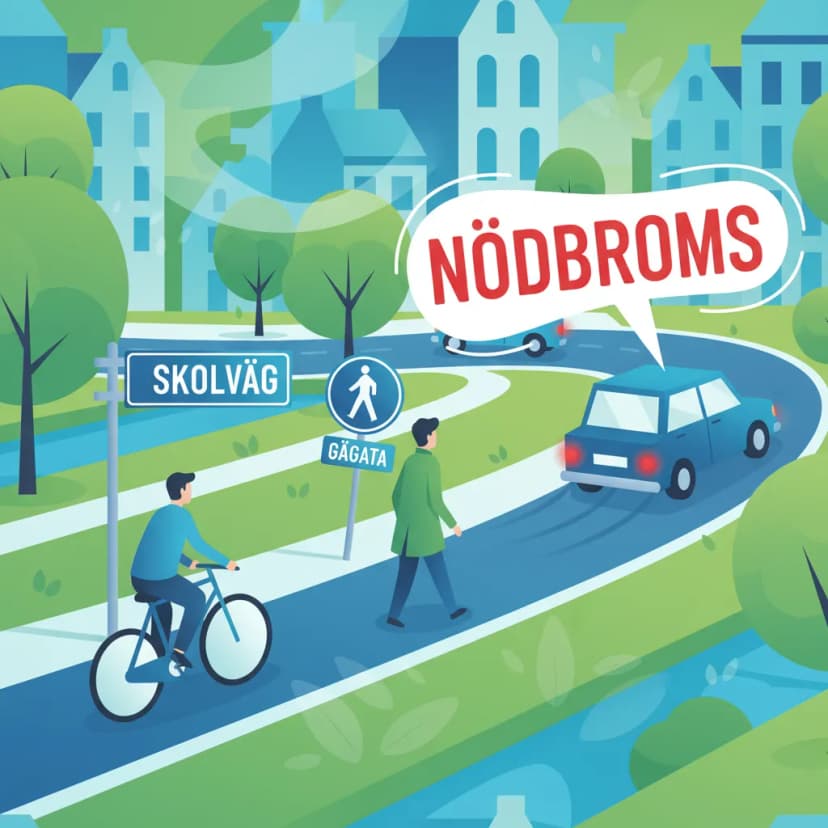
This lesson examines a variety of special situations where standard priority rules are modified. You will learn about the 'exit rule' (utfartsregeln) when entering a road from property, your duty to yield to buses indicating a departure from a stop, and the specific rules for pedestrian-only streets (gågata). The content also covers interactions with trams, emergency vehicles, and procedures at railway crossings, highlighting situations that demand maximum vigilance.

This lesson focuses on regulated intersections where priority is determined by signs indicating a main road (huvudled), a duty to yield (väjningsplikt), or a duty to stop (stopplikt). You will learn how to identify which road has priority and your legal obligation to give way to all traffic on that road before proceeding. The lesson covers proper procedures for approaching these junctions, assessing traffic, and entering the main road safely.
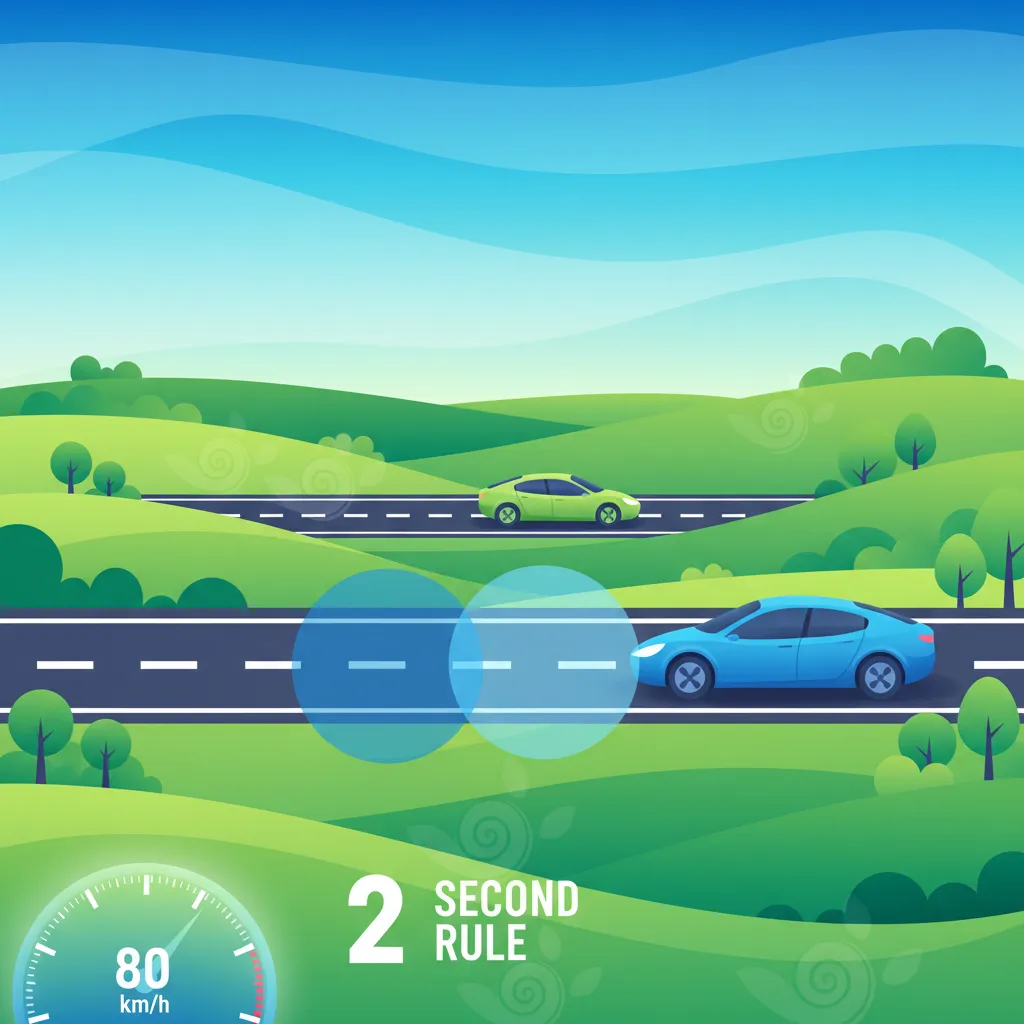
This lesson teaches practical methods for maintaining a safe buffer to the vehicle ahead, with a primary focus on the universally recommended 'three-second rule'. You will learn how to apply this rule by picking a fixed point and counting the seconds until you pass it. The content also explains why this distance must be increased significantly in adverse conditions such as rain, snow, or when following large vehicles that obstruct your view.
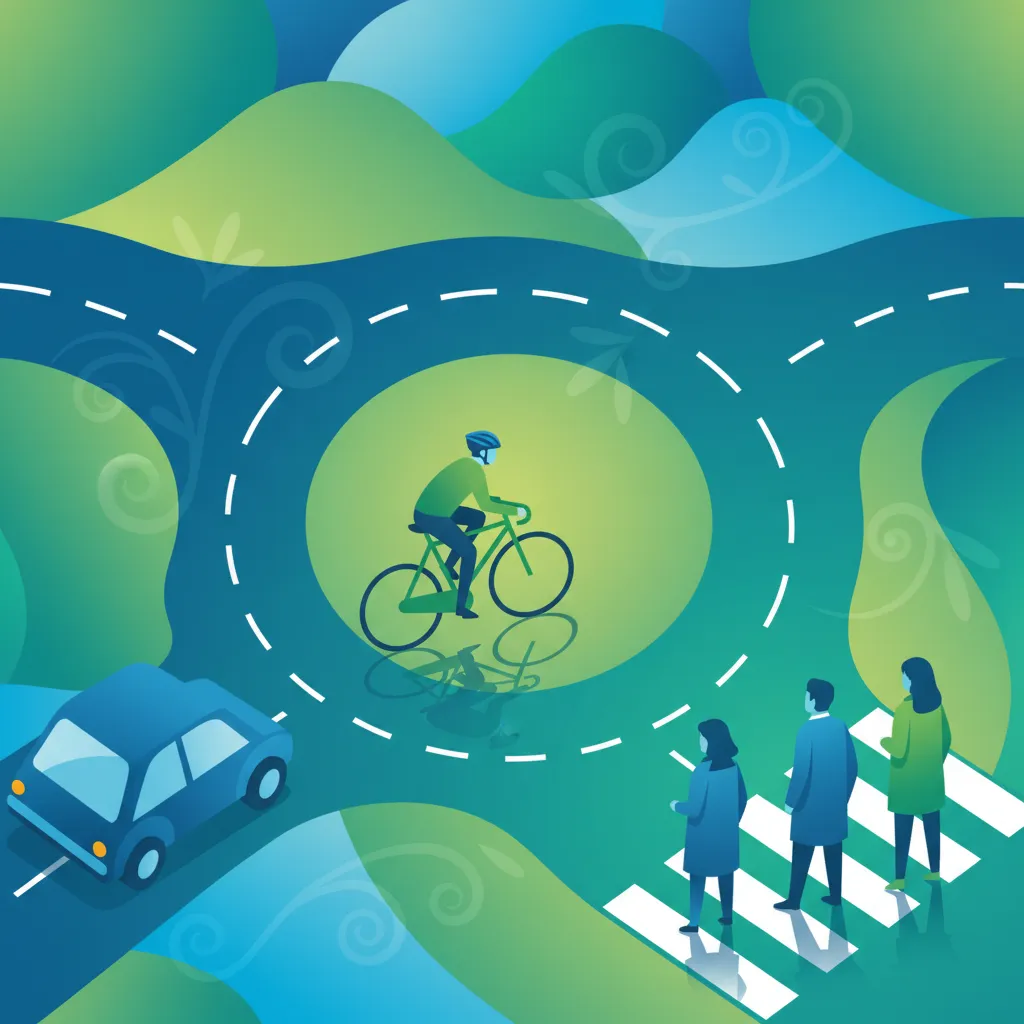
This lesson provides detailed guidance on navigating complex traffic points such as signalized intersections, multi-lane roundabouts, and pedestrian crossings. You will learn the correct procedures for entering and exiting roundabouts, the specific rules for yielding to pedestrians and cyclists at designated crossings, and how to interpret complex traffic light signals. These skills are vital for safe urban and suburban riding, where interaction with vulnerable road users is frequent.
This lesson details a driver's responsibility towards pedestrians. You will learn the strict rule of yielding to pedestrians who are on or about to enter a marked, uncontrolled crosswalk. The content also covers the specific, highly restrictive rules for driving in designated pedestrian zones (gågata) and 'walking speed' areas (gångfartsområde), where pedestrians have complete priority and vehicle traffic is severely limited.
Explore how understanding designated stopping and waiting areas, and the rules around them, is essential for maintaining traffic flow and ensuring safety for moped riders in Sweden. Covers urban and rural contexts.
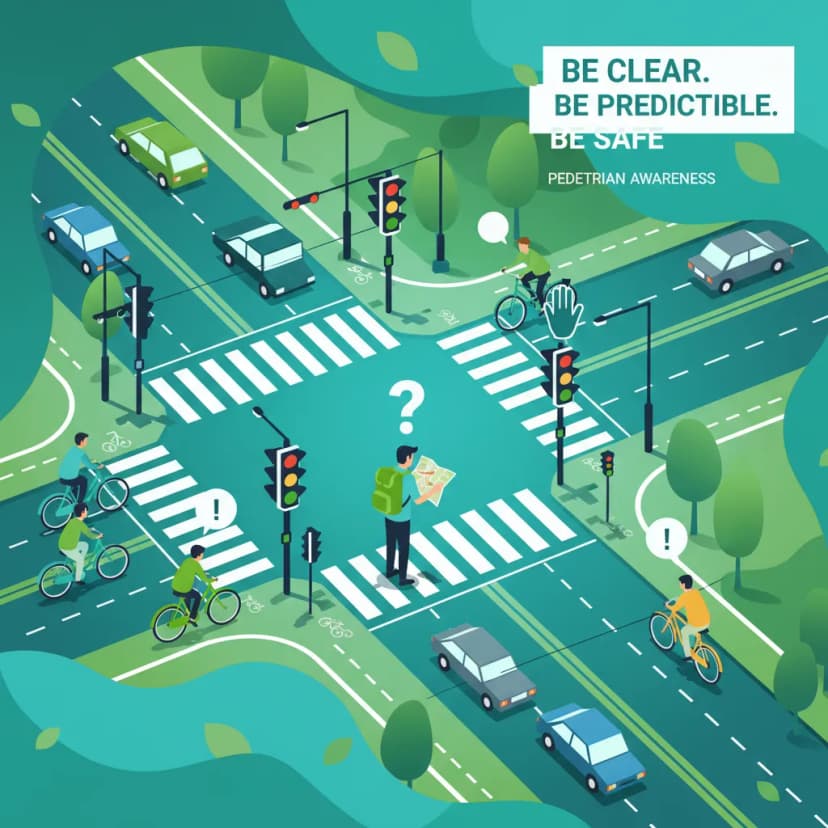
This lesson is dedicated to pedestrian safety, teaching riders to be constantly aware of people on foot, especially in busy urban environments. It reinforces the absolute duty to yield at marked crossings and encourages a cautious approach in areas like schools and shopping districts. The content stresses anticipating unpredictable actions, particularly from children or distracted pedestrians.

This lesson provides practical instructions for safely navigating different types of intersections and roundabouts. It covers procedures for approaching, entering, and exiting roundabouts, emphasizing the rule to yield to traffic already circulating. The content also addresses how to handle signal-controlled and uncontrolled intersections, ensuring riders select the correct lane and manage their speed appropriately.

This lesson focuses on developing the fine control needed for low-speed maneuvering, a common challenge in urban environments. It covers techniques for making tight turns, such as U-turns, by using a combination of clutch, throttle, and rear brake control. The goal is to build the rider's skill and confidence in handling the moped in parking lots, heavy traffic, and other confined areas.
This lesson explains how to identify and interact with various types of mopeds and other low-speed vehicles common on Swedish roads. You will learn the difference between Class I and Class II mopeds and their place on the road, as well as how to recognize A-tractors by their LGF (långsamtgående fordon) sign. The key focus is on managing the large speed differential and making safe judgments when deciding to overtake.
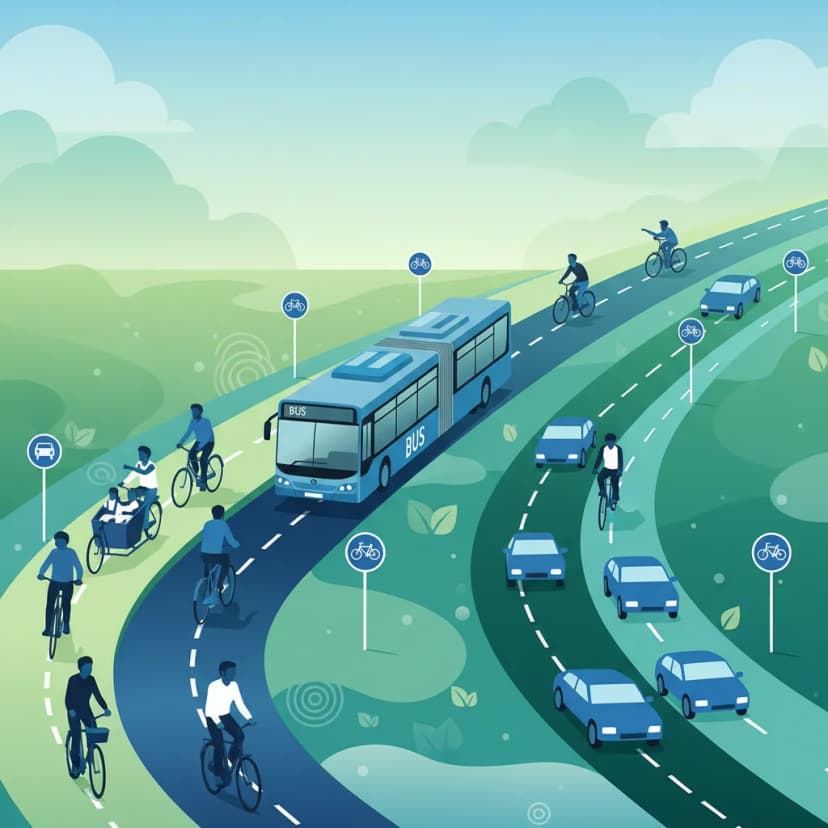
This lesson explains the specific regulations for lanes designated for particular users, such as buses or cyclists. It clarifies under what circumstances a moped is permitted to enter these lanes and the rules that must be followed while in them. Understanding these regulations is key to navigating complex urban environments legally and safely.
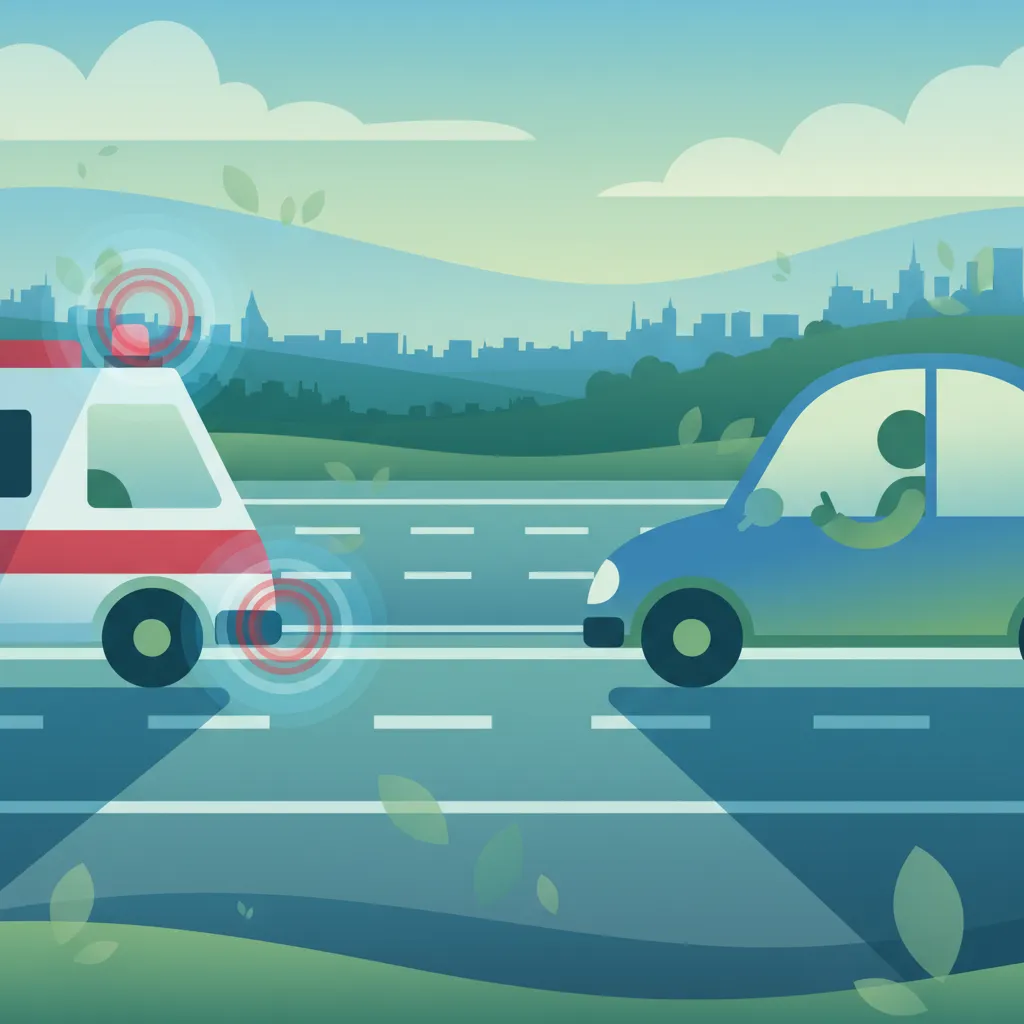
This lesson teaches the correct and legal response when encountering an emergency vehicle with active sirens or lights. It outlines the immediate obligation to give way by safely moving to the side of the road and stopping. The content provides practical advice on how to perform this maneuver calmly and predictably, ensuring a clear path for the emergency responders while maintaining the rider's own safety.
This lesson focuses on the specific techniques required for riding in busy city and town environments. You will learn how to maintain correct lane positioning amidst dense traffic, navigate complex intersections with multiple signals, and manage the motorcycle at low speeds in stop-and-go conditions. Emphasis is placed on heightened awareness of pedestrians, cyclists, and vehicles making sudden maneuvers, which are common hazards in urban settings.

This lesson clarifies the regulations for operating a moped on cycle paths (Cykelbana) and other shared spaces in Sweden. It explains which types of mopeds are permitted on these paths and the specific rules that apply, such as lower speed limits and the duty to yield to cyclists. The content focuses on safe interaction and communication to ensure peaceful coexistence with other users in these environments.
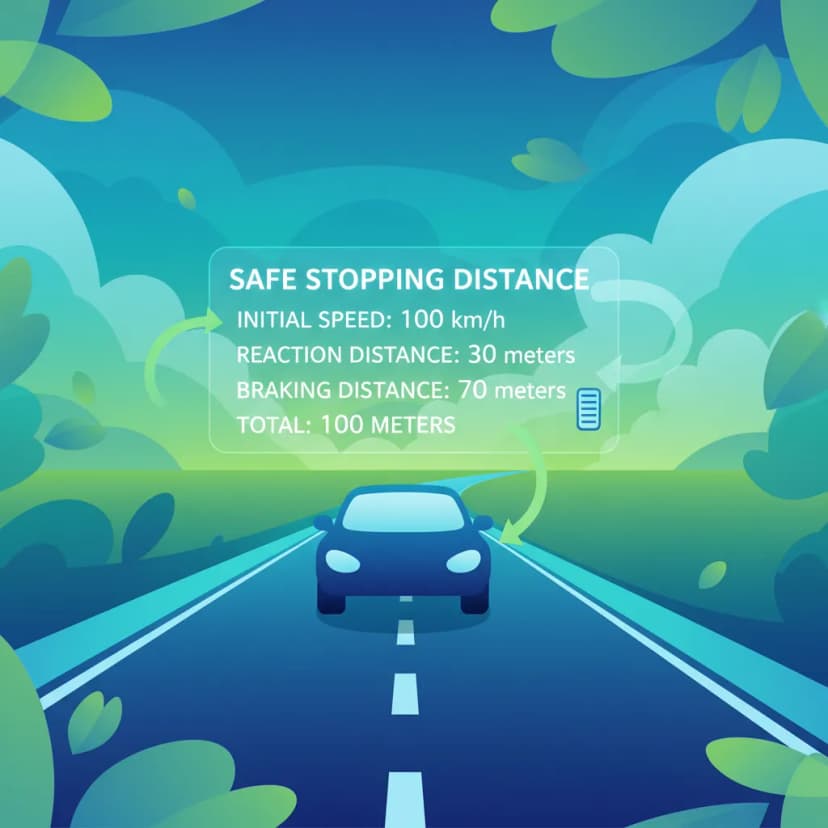
This lesson provides a practical understanding of the physics behind stopping a moped. It breaks down the total stopping distance into two key components: reaction distance (the distance traveled before applying the brakes) and braking distance (the distance covered while braking). Learners will explore how factors like speed, road conditions, and rider alertness dramatically affect these distances.
This lesson provides detailed guidance on navigating complex traffic points such as signalized intersections, multi-lane roundabouts, and pedestrian crossings. You will learn the correct procedures for entering and exiting roundabouts, the specific rules for yielding to pedestrians and cyclists at designated crossings, and how to interpret complex traffic light signals. These skills are vital for safe urban and suburban riding, where interaction with vulnerable road users is frequent.
Find clear answers to common questions learners have about Stopping and Waiting at Designated Areas. Learn how the lesson is structured, which driving theory objectives it supports, and how it fits into the overall learning path of units and curriculum progression in Sweden. These explanations help you understand key concepts, lesson flow, and exam focused study goals.
In Sweden, stopping generally refers to a temporary halt to pick up or drop off passengers or cargo, or to wait for traffic signals. Parking means leaving the moped unattended for a longer duration. The key distinction is the driver's immediate intention and presence. Swedish traffic law has specific rules for both actions, and it's crucial to understand which applies in different situations.
It is forbidden to stop or park your moped in many areas to ensure traffic safety and flow. This includes crossing or junction approaches, pedestrian crossings, cycle paths, on tram tracks, too close to intersections or road bends, and anywhere it obstructs other traffic or visibility. Always look for signs or road markings indicating prohibited areas.
Designated waiting areas, often marked with specific signs or road markings, are typically located at traffic lights. These areas are designed to allow mopeds and cyclists to position themselves safely ahead of other vehicles, improving visibility and enabling them to move off quickly when the light changes. They help keep these smaller vehicles out of the main traffic flow.
No, you must never stop or park your moped on a pedestrian crossing or anywhere that obstructs visibility for pedestrians or other road users. Pedestrian crossings are solely for people on foot, and blocking them is dangerous and illegal.
While many fundamental rules are the same, mopeds have specific considerations due to their size and speed. For instance, mopeds may be permitted in certain waiting areas that cars cannot use. However, the core principles of not obstructing traffic, ensuring visibility, and obeying prohibition signs apply equally to all vehicle types.