
This lesson clarifies the specific rules for stopping your vehicle temporarily to let passengers on or off, or to load/unload goods. It builds on basic parking regulations from Unit 9, distinguishing permissible stops from prohibited ones, ensuring you can navigate these common situations safely and legally on Swedish roads.

Understanding the precise rules for stopping your vehicle to pick up or drop off passengers, or to load and unload goods, is crucial for safe and lawful driving in Sweden. This lesson, part of your Swedish Driving License Theory Course for Category B Cars, delves into the specific distinctions between stopping and parking, particularly in zones marked by "No Parking" (P-förbud) and "No Stopping" (Stopp förbjudet) signs. Misinterpreting these rules is a common cause of traffic fines and can lead to significant safety hazards, especially in busy urban environments.
Swedish traffic law makes a clear and important distinction between "stopping" (stoppning) and "parking" (parkering). Grasping this difference is fundamental to navigating restricted areas correctly.
Bringing your vehicle to a halt for a brief, continuous period, with the driver remaining in immediate control, ready to resume motion instantly.
A stop is typically performed for specific, short-term activities like allowing a passenger to embark or disembark, or for the quick loading or unloading of goods. The defining characteristic is the driver's active presence and readiness to move the vehicle.
Leaving your vehicle stationary for a period longer than a brief stop, often with the driver exiting the vehicle, or the vehicle being left without immediate driver control.
Parking implies a more prolonged cessation of movement where the vehicle is not expected to move immediately. This can include leaving your car to run an errand, even for a short duration, if you are not actively in control of the vehicle.
The purpose of this legal distinction is to balance the need for efficient traffic flow with the practical requirements of everyday travel. Brief, controlled stops are often permissible where parking is prohibited, allowing flexibility for necessary activities without turning a roadway into a long-term storage area for vehicles.
"No Parking" zones are common in commercial areas, main streets, and residential areas where constant traffic flow is important. It is essential to correctly interpret the sign that designates such an area.
In a P-förbud zone, parking is strictly forbidden. This means you cannot leave your vehicle unattended, switch off the engine and step out for even a moment (unless it's an emergency). However, the law provides an exception for brief, continuous stops for specific purposes:
Even when stopping is allowed, strict conditions apply to ensure safety and minimize traffic disruption:
Always have a mental checklist when stopping in a "No Parking" zone: Am I in the driver's seat? Is the stop truly brief? Am I blocking anyone? Are my hazard lights on if needed?
The "No Stopping" sign imposes a much stricter prohibition than the "No Parking" sign.
In a Stopp förbjudet zone, you are forbidden from making any voluntary stop for any reason, including picking up passengers or loading goods. The only exceptions are involuntary stops forced by traffic conditions or emergencies:
Never assume a brief stop is permissible in a "No Stopping" zone. Even a momentary halt to drop off a letter or let someone quickly jump out is a violation.
These zones are typically located in areas where any stationary vehicle would significantly impede traffic flow, create dangerous blind spots, or pose a high risk of collision, such as busy intersections, tunnels, or approaches to critical road structures.
The ability to stop for passengers or to load/unload goods is a practical necessity. These actions fall under the definition of "stopping" rather than "parking," provided specific criteria are met.
Identify a safe location: Look for a curb in a "No Parking" zone (P-förbud) or an unrestricted area. Avoid "No Stopping" zones (Stopp förbjudet), intersections, or areas with poor visibility.
Signal your intentions: Use your turn signal well in advance to alert other drivers that you intend to pull over.
Pull over completely: Position your vehicle as close to the curb as safely possible without hitting it, ensuring it doesn't obstruct the main traffic lane or a cycle path.
Maintain control: Remain in the driver's seat, engine running (or immediately actionable), and be ready to move.
Activate hazard lights (if needed): Turn on your hazard warning lights if visibility is poor (dusk, night, fog, heavy rain) or if your stop could be an unexpected obstacle for other road users.
Expedite the activity: Encourage passengers to embark/disembark quickly or load/unload goods as efficiently as possible.
Check surroundings and depart safely: Before moving, check mirrors and blind spots for pedestrians, cyclists, and vehicles. Signal and re-enter traffic smoothly.
Hazard warning lights are designed to make your stationary vehicle more visible to other road users, especially when it might pose a risk.
Simultaneously flashing indicator lights on all corners of a vehicle, activated by the driver to warn others of a stationary vehicle that may create a safety hazard or obstruction.
While not every brief stop requires hazard lights, their use is mandated under certain conditions as per the Swedish Traffic Ordinance (§ 5, Chapter 3):
It is always better to be safe than sorry. When in doubt, activate your hazard lights to increase your conspicuity.
Road signs are your primary source of information regarding stopping and parking regulations. They are often accompanied by supplementary panels (tilläggstavlor) that modify or clarify the main sign's meaning.
Always read the main sign and any accompanying supplementary panels carefully to understand the full extent of the restriction. Ignoring supplementary panels is a common mistake that can lead to fines.
The rules governing stopping and parking in Sweden are primarily laid out in the Trafikförordning (1998:1276), specifically Chapter 3, which details general rules for vehicles.
These regulations are designed to ensure safety, promote efficient traffic flow, and allow for necessary short-term activities on the road network.
Many drivers inadvertently commit violations related to stopping and loading due to misunderstanding the regulations.
Remember: Just because you can physically stop somewhere, doesn't mean it's legal or safe. Always prioritize safety and adherence to regulations.
The rules for stopping and loading are applied with consideration for various environmental and situational factors.
Let's consider a few scenarios to solidify your understanding.
Situation: You are driving in an urban area during the evening. You see a "P-förbud" sign at a bus stop and need to pick up a friend.
Correct Behavior: You slow down, signal your intention, and pull up precisely alongside the curb. You ensure you are close enough for your friend to enter quickly but not so close as to hit the curb. You activate your hazard lights due to the dim lighting. You remain in the driver's seat, engine running. Your friend quickly opens the door, gets in, and you check your mirrors, signal, and smoothly pull back into traffic. The stop lasts approximately 15 seconds.
Reasoning: This is a permissible "passenger stop" in a "No Parking" zone. The stop is brief, continuous, the driver maintains control, and hazard lights are used for safety in low light, fulfilling the requirements of Trafikförordning Chapter 3, §§ 4 and 5.
Situation: You are making a delivery on a busy street, and the only available space near your destination is marked with a "Stopp förbjudet" sign. You have heavy boxes to unload.
Correct Behavior: You recognize the "Stopp förbjudet" sign and understand that any voluntary stop is prohibited. You continue driving, looking for a legal loading bay or a "No Parking" zone further down the street where you can make a brief stop. If no such place exists, you might have to park legally further away and carry the goods to the destination, or re-plan the delivery.
Reasoning: A "No Stopping" zone permits no voluntary stops, regardless of purpose or duration. Attempting to unload here would be an illegal stop and could create severe traffic congestion and a safety hazard.
The regulations concerning stopping for passengers and loading are not arbitrary; they are designed with critical safety and efficiency principles in mind.
By adhering to these regulations, you contribute to a safer, more efficient, and predictable traffic environment for everyone.
Successfully stopping for passengers or loading goods requires diligence and a clear understanding of Swedish traffic law. Always identify the specific road sign, consider the surrounding conditions, and prioritize safety and traffic flow.
Lesson content overview
Explore all units and lessons included in this driving theory course.
Explore search topics learners often look for when studying Stopping for Passengers and Loading. These topics reflect common questions about road rules, driving situations, safety guidance, and lesson level theory preparation for learners in Sweden.
Browse additional driving theory lessons that cover connected traffic rules, road signs, and common driving situations related to this topic. Improve your understanding of how different rules interact across everyday traffic scenarios.
Understand when and where you can stop your vehicle briefly for loading or unloading goods in Sweden. This lesson clarifies rules in 'no parking' zones and distinguishes them from 'no stopping' zones.

This lesson clarifies the legal distinction between stopping temporarily and parking. It identifies areas where stopping is prohibited, such as near intersections or on pedestrian crossings, to maintain traffic flow and safety. The content also discusses designated waiting areas at traffic lights, often marked for cyclists and mopeds, which can offer a safer position.
This lesson covers the general, nationwide rules that govern where you may and may not park or stop, even without specific signs. You will learn about the prohibitions on stopping near intersections, on pedestrian crossings, and at bus stops. The content clarifies the legal definitions and provides clear guidelines on maintaining safe distances and ensuring that your parked vehicle does not obstruct traffic or create a hazard.
This lesson covers parking areas that are reserved for specific purposes or permit holders. The primary focus is on spaces designated for people with disabilities, explaining the requirement of a valid permit. It also addresses other restricted areas such as residential parking zones (boendeparkering), loading zones, and areas that must be kept clear for emergency vehicles, highlighting the legal and ethical reasons for respecting these designations.

This lesson examines a variety of special situations where standard priority rules are modified. You will learn about the 'exit rule' (utfartsregeln) when entering a road from property, your duty to yield to buses indicating a departure from a stop, and the specific rules for pedestrian-only streets (gågata). The content also covers interactions with trams, emergency vehicles, and procedures at railway crossings, highlighting situations that demand maximum vigilance.
This lesson explains the specific traffic rules related to public transport vehicles. You will learn about your duty to yield to buses signaling to leave a stop (on roads with a speed limit of 50 km/h or less) and the fact that trams generally have priority. The lesson covers how to safely pass stopped buses and trams, being mindful of disembarking passengers who may cross the road unexpectedly.

This lesson details a driver's responsibility towards pedestrians. You will learn the strict rule of yielding to pedestrians who are on or about to enter a marked, uncontrolled crosswalk. The content also covers the specific, highly restrictive rules for driving in designated pedestrian zones (gågata) and 'walking speed' areas (gångfartsområde), where pedestrians have complete priority and vehicle traffic is severely limited.

This lesson focuses on regulated intersections where priority is determined by signs indicating a main road (huvudled), a duty to yield (väjningsplikt), or a duty to stop (stopplikt). You will learn how to identify which road has priority and your legal obligation to give way to all traffic on that road before proceeding. The lesson covers proper procedures for approaching these junctions, assessing traffic, and entering the main road safely.
This lesson focuses on the high level of caution required when driving in residential areas. You will learn about the rules for special zones like 'gångfartsområde' (walking speed area) and the need to navigate around speed calming measures like speed bumps. The central theme is anticipating unpredictable behavior from residents, especially children, and managing the risks posed by parked cars that severely limit visibility.

This lesson explains the function and legal significance of various road markings (vägmarkeringar) in Sweden. You will learn the difference between broken lines that permit overtaking and solid lines that forbid it, as well as the meaning of stop lines, pedestrian crossings, and lane direction arrows. These markings work in conjunction with signs to organize traffic flow, separate lanes, and provide critical information directly on the road surface.
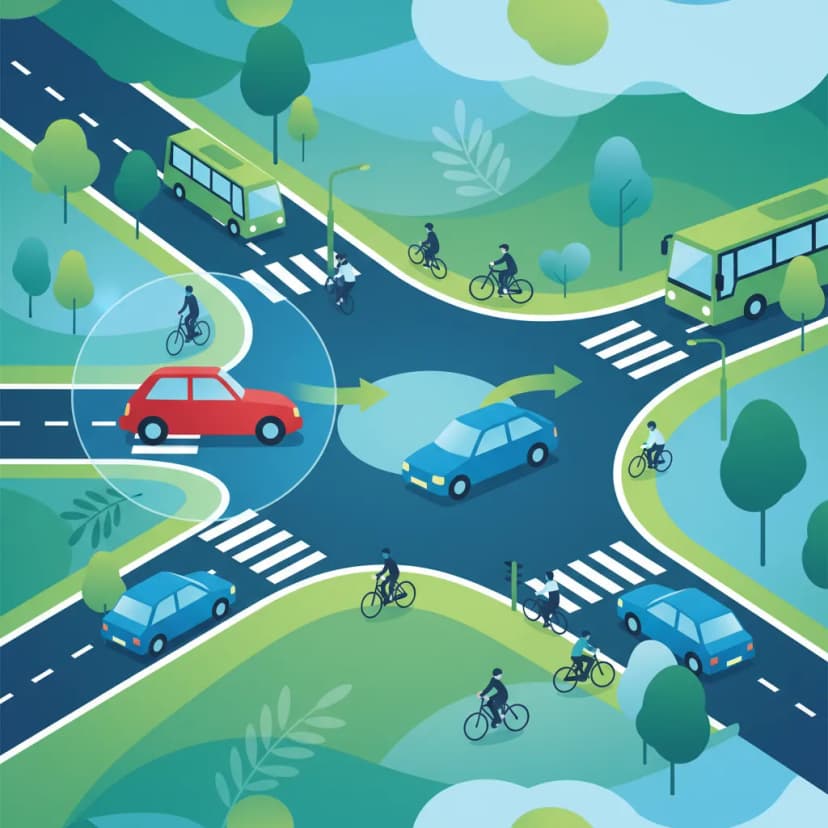
This lesson explains the foundational right-hand rule (högerregeln), which is the default priority rule at Swedish intersections where no other signs or signals regulate traffic. You will learn that you must always yield to vehicles approaching from your right in such situations. The content clarifies where this rule applies, such as in residential areas and on smaller rural roads, and covers the critical exceptions when signs or other rules take precedence.
Learn the critical differences between stopping to let passengers in or out and actual parking under Swedish traffic regulations. Clarify permitted stopping locations even in restricted areas, focusing on continuous and brief stops.
This lesson clarifies the legal distinction between stopping temporarily and parking. It identifies areas where stopping is prohibited, such as near intersections or on pedestrian crossings, to maintain traffic flow and safety. The content also discusses designated waiting areas at traffic lights, often marked for cyclists and mopeds, which can offer a safer position.
This lesson covers the general, nationwide rules that govern where you may and may not park or stop, even without specific signs. You will learn about the prohibitions on stopping near intersections, on pedestrian crossings, and at bus stops. The content clarifies the legal definitions and provides clear guidelines on maintaining safe distances and ensuring that your parked vehicle does not obstruct traffic or create a hazard.
This lesson covers parking areas that are reserved for specific purposes or permit holders. The primary focus is on spaces designated for people with disabilities, explaining the requirement of a valid permit. It also addresses other restricted areas such as residential parking zones (boendeparkering), loading zones, and areas that must be kept clear for emergency vehicles, highlighting the legal and ethical reasons for respecting these designations.

This lesson explains the various systems used to regulate parking duration and payment. You will learn how to correctly set and display a parking disc (P-skiva) in time-limited zones and how to operate parking meters and mobile payment apps. The lesson also demystifies 'date parking' (datumparkering), a rule used in some areas for street cleaning, and clarifies the difference between a public parking fine (parkeringsanmärkning) and a private control fee (kontrollavgift).
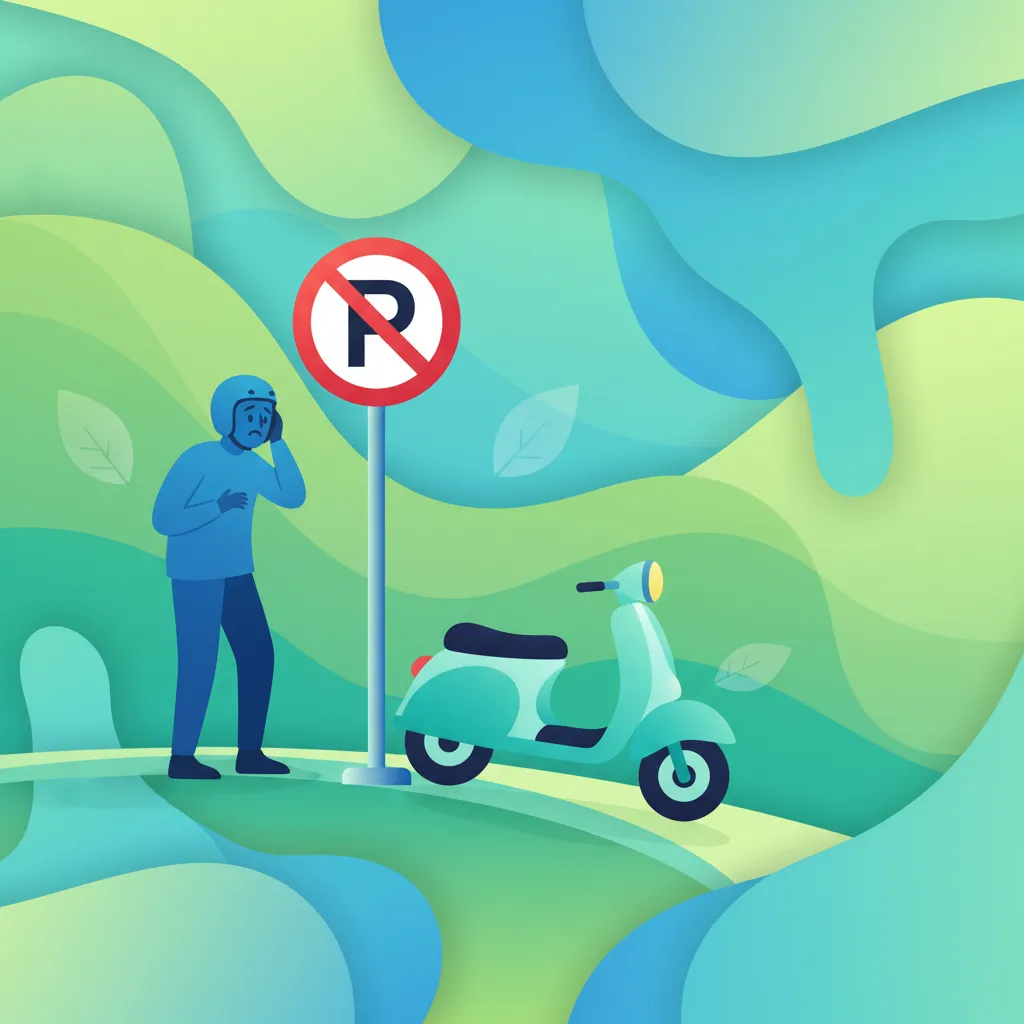
This lesson focuses on the often-confusing topic of moped parking. It covers how to interpret parking signs, including those indicating prohibitions (Parkeringsförbud), and where to find designated parking spots for two-wheelers. The content provides practical advice on where it is legal to park and how to do so without causing an obstruction, thereby avoiding fines.
This lesson details a driver's responsibility towards pedestrians. You will learn the strict rule of yielding to pedestrians who are on or about to enter a marked, uncontrolled crosswalk. The content also covers the specific, highly restrictive rules for driving in designated pedestrian zones (gågata) and 'walking speed' areas (gångfartsområde), where pedestrians have complete priority and vehicle traffic is severely limited.
This lesson explains the specific traffic rules related to public transport vehicles. You will learn about your duty to yield to buses signaling to leave a stop (on roads with a speed limit of 50 km/h or less) and the fact that trams generally have priority. The lesson covers how to safely pass stopped buses and trams, being mindful of disembarking passengers who may cross the road unexpectedly.
This lesson examines a variety of special situations where standard priority rules are modified. You will learn about the 'exit rule' (utfartsregeln) when entering a road from property, your duty to yield to buses indicating a departure from a stop, and the specific rules for pedestrian-only streets (gågata). The content also covers interactions with trams, emergency vehicles, and procedures at railway crossings, highlighting situations that demand maximum vigilance.
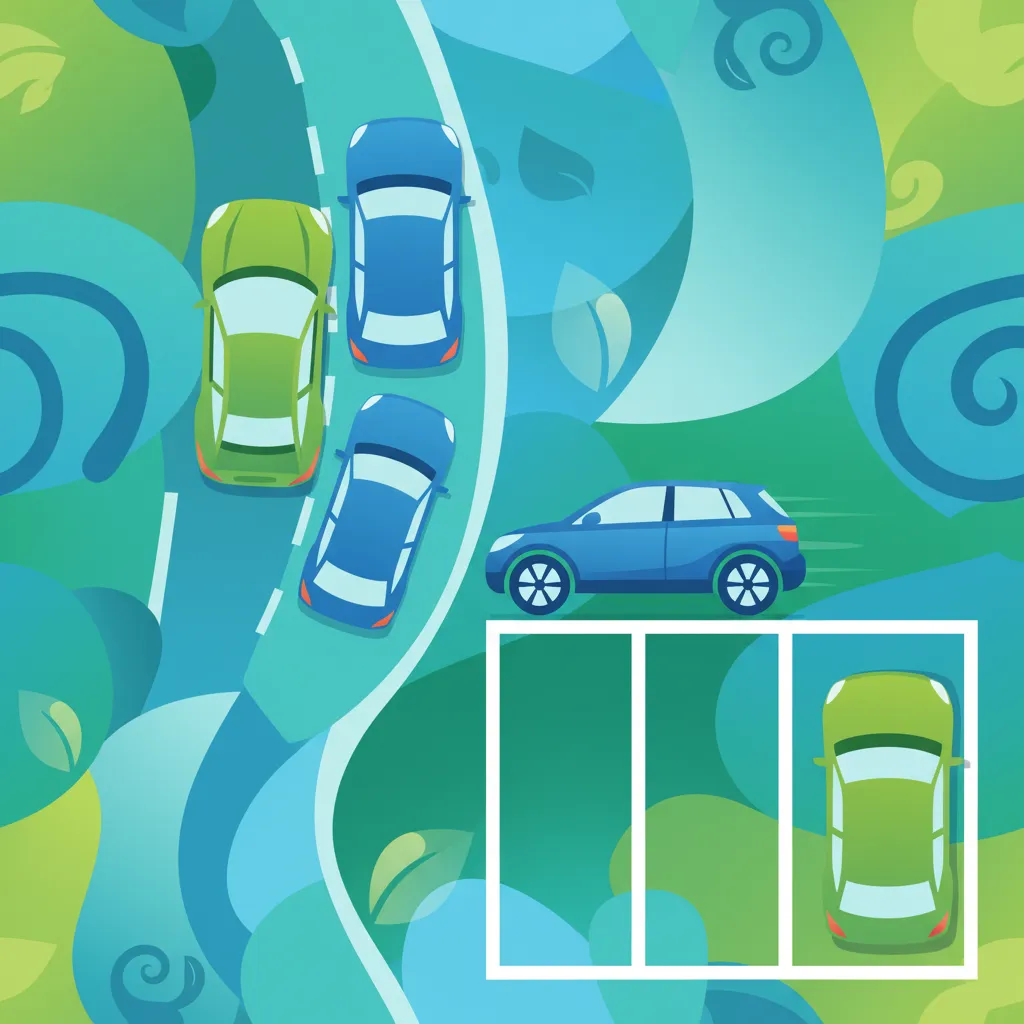
This lesson revisits the practical skills of positioning a vehicle within a designated space. It describes the characteristics of the three main parking styles: parallel (fickparkering), angled, and perpendicular. The content focuses on the conceptual steps for each maneuver, such as approach, turning points, and final positioning, reinforcing the importance of slow, controlled movements and constant observation of the surroundings.
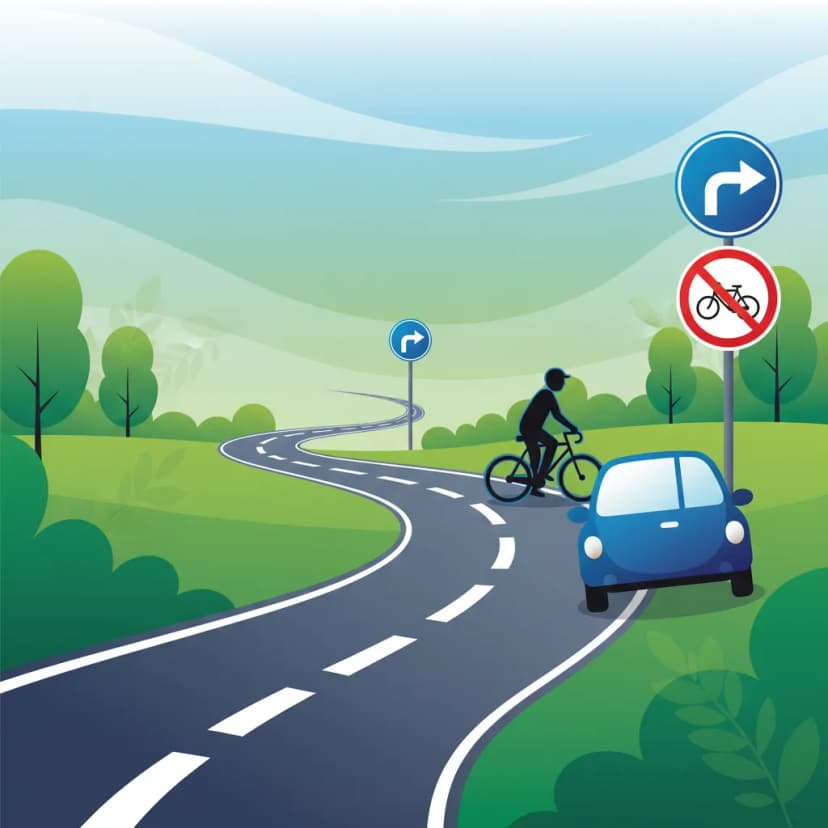
This lesson details the full range of Swedish regulatory signs, which establish legally enforceable rules for all road users. You will learn to interpret prohibitory signs (förbudsmärken) such as speed limits and no-entry signs, as well as mandatory signs (påbudsmärken) that dictate direction or lane usage. Understanding these signs is crucial as they directly regulate traffic flow, ensure safety at critical points, and carry legal consequences if ignored.
Find clear answers to common questions learners have about Stopping for Passengers and Loading. Learn how the lesson is structured, which driving theory objectives it supports, and how it fits into the overall learning path of units and curriculum progression in Sweden. These explanations help you understand key concepts, lesson flow, and exam focused study goals.
In Sweden, 'stanna' refers to any stop, even a brief one, such as letting a passenger alight or loading goods. 'Parkera' means to leave the vehicle unattended or for a longer duration. The key distinction for this lesson is that stopping for passengers or loading is often permitted where parking is forbidden, but only if it's a continuous, brief stop.
You are generally permitted to stop in a 'no parking' zone specifically to let passengers on or off, or to load or unload goods, as long as the stop is continuous and brief. The vehicle must not cause obstruction, and you should resume driving as soon as the task is complete.
A 'no stopping' zone is more restrictive than a 'no parking' zone. In these areas, you are prohibited from making any voluntary stop, even for picking up or dropping off passengers or for loading/unloading. This rule applies to prevent any obstruction or hazard, even for very short periods.
The 'no stopping' sign (E20) indicates a zone where stopping is forbidden. This applies to all kinds of stops, including those for passengers or loading. You must always heed this sign and find an alternative location to stop for such purposes.
While the general principle of stopping for loading applies, if the process is excessively long or causes significant obstruction, it may be considered parking. Always aim to be as efficient as possible and ensure you are not blocking traffic or access. If a specific sign indicates a loading zone (lastplats), use that instead.
This lesson focuses on voluntary stops for passengers and loading. Emergency stops, such as pulling over due to a vehicle malfunction or a medical emergency, are governed by different rules related to safety and hazard avoidance, which are covered in other lessons.