
Parking a moped correctly is crucial for avoiding fines and ensuring smooth traffic flow. This lesson focuses on Swedish parking regulations specific to mopeds, covering how to interpret signs and identify legal parking locations. Understanding these rules will help you avoid common mistakes and ensure you park legally and safely, contributing to a better road environment for everyone.
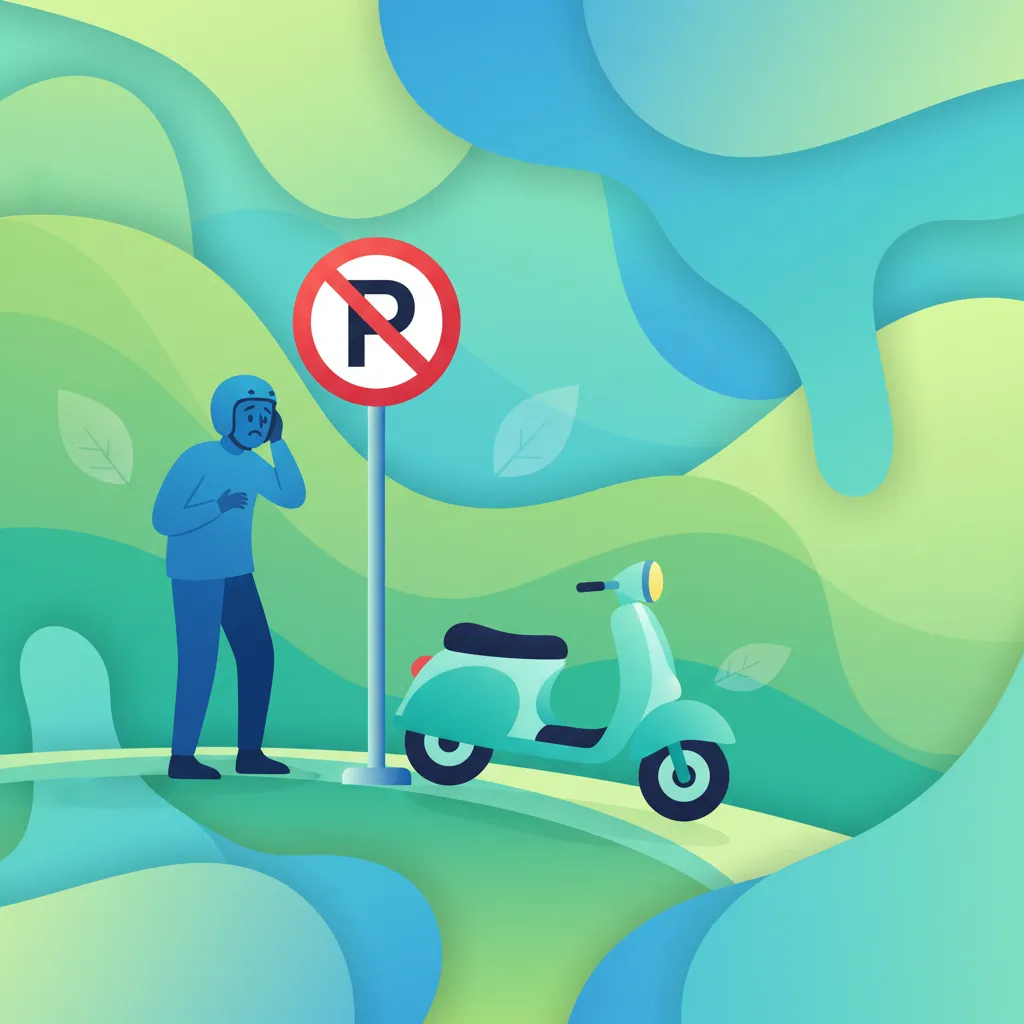
As a moped rider in Sweden, understanding parking regulations is crucial for both your safety and avoiding unnecessary fines. Moped parking rules can sometimes seem complex, combining general traffic laws with specific provisions for two-wheelers. This lesson will comprehensively guide you through the intricacies of parking your Category AM moped legally and responsibly, focusing on interpreting signs, identifying designated areas, and differentiating between stopping, waiting, and parking.
The legal framework for parking mopeds in Sweden is designed to ensure smooth traffic flow, prevent obstructions, and protect vulnerable road users such as pedestrians and cyclists. These regulations are primarily outlined in the Swedish Traffic Regulations (Trafikförordningen) and supplemented by local ordinances and road signage. A solid grasp of these rules is not only essential for passing your Swedish Category AM theory exam but also for safe and considerate riding in daily life.
Incorrect parking is a frequent cause of traffic disruption, accidents involving pedestrians and cyclists, and monetary penalties. A poorly parked moped can block access, reduce visibility, or even force other road users into dangerous situations. By mastering these regulations, you contribute directly to road safety, demonstrate responsible conduct, and avoid legal repercussions. It’s about more than just finding a spot; it’s about understanding the impact your parked vehicle has on the shared public space.
Several core principles underpin Sweden's parking laws for mopeds. These foundational ideas help explain the "why" behind specific rules and guide riders in various situations.
A legal restriction that forbids leaving a vehicle unattended on the curb or road surface in the indicated area.
Specific marked areas, often blue zones with an "M" symbol, where mopeds are expressly allowed to park.
Distinguishes between a brief halt for a maneuver (stopping), a temporary pause while preparing to continue (waiting), and leaving a vehicle unattended for an extended period (parking).
Parking allowed only within specified hours, indicated by signboards or road markings.
Any vehicle positioned such that it hinders the normal movement of other road users or emergency services is considered an obstruction.
Understanding traffic signs is fundamental to legal parking. In Sweden, "Parkeringsförbud" signs are critical for all road users, including moped riders.
The most common parking prohibition sign indicates that parking is forbidden in the area it covers. This sign applies to all vehicles, including mopeds, unless an explicit exemption is indicated.
Parking prohibition signs can also be accompanied by supplementary plates that modify the restriction, making it conditional based on time, day, or even vehicle type.
Always check for supplementary plates below a parking sign. These plates often modify the main sign's meaning and can specify times, days, or exceptions, which are critical for legal parking.
While many areas prohibit parking, Swedish cities and towns often provide specific areas where mopeds are explicitly allowed to park. These designated zones are the safest and most legal places to leave your moped.
Designated moped parking zones are typically clearly marked, making them easy to identify. These zones are designed to accommodate the size and number of mopeds, keeping them off pedestrian paths and out of the way of larger traffic.
Even within a designated "M" zone, proper placement of your moped is important to maximize space and avoid obstruction.
The Swedish traffic regulations make clear distinctions between a brief halt, a short pause, and leaving your vehicle unattended for a longer period. Understanding these differences is crucial, as different rules and prohibitions apply to each.
The key difference between waiting and parking often hinges on whether the rider remains in control of the vehicle and is ready to move immediately, or if the vehicle is left unattended.
Many parking regulations, including those for mopeds, are not static 24/7. They often include time restrictions that allow for varied use of public space throughout the day or week.
Time limits are typically communicated through supplementary plates placed below the main parking sign or via painted markings on the ground. These plates specify the hours or days during which parking is permitted or prohibited.
Moped riders must be vigilant and check all signage upon parking, as well as if they plan to leave their vehicle for an extended period.
Beyond general prohibitions and designated moped areas, there are several special zones with specific rules that moped riders must be aware of. Misusing these zones can lead to significant penalties.
These spaces are reserved exclusively for individuals with specific mobility needs, marked with a distinctive symbol.
These areas are designated for quick stops to load or unload goods, not for general parking.
If you are loading or unloading, ensure you are actively engaged in the process and that your moped is not causing an obstruction. Keep your stop as brief as possible, ideally under 15 minutes.
Road conditions and usage can change temporarily due to construction, public events, or emergencies. These temporary changes always take precedence.
Beyond specific signs, certain areas are universally prohibited for parking to ensure safety and accessibility, regardless of whether a "no parking" sign is explicitly posted. These rules are part of the general traffic regulations.
The "Obstruction Principle" is a cornerstone of Swedish traffic law. Parking that hinders movement or access is always illegal.
Mopeds are motor vehicles and must generally park in designated vehicle parking areas, not on paths intended for non-motorized traffic or pedestrians.
Despite clear rules, certain parking violations are frequently observed among moped riders. Understanding these common pitfalls can help you avoid fines and ensure safer roads.
Parking rules are generally fixed, but practical application requires situational awareness.
Let's look at practical examples to solidify your understanding of moped parking regulations in Sweden.
Scenario 1: Urban "M" Zone with Time Limit
Scenario 2: No Parking Sign Adjacent to a Bike Lane
Scenario 3: Temporary Event Parking Ban
Scenario 4: Loading Zone Overstay
Scenario 5: Disabled Spot Misuse
Lesson content overview
Explore all units and lessons included in this driving theory course.
Explore search topics learners often look for when studying Parking Regulations for Mopeds (Parkeringsförbud). These topics reflect common questions about road rules, driving situations, safety guidance, and lesson level theory preparation for learners in Sweden.
Browse additional driving theory lessons that cover connected traffic rules, road signs, and common driving situations related to this topic. Improve your understanding of how different rules interact across everyday traffic scenarios.
Learn the specific meaning of Parkeringsförbud and other parking prohibition signs relevant to mopeds in Sweden. This lesson clarifies where parking is not allowed to help you avoid fines and understand Swedish road rules for mopeds.

This lesson clarifies the legal distinction between stopping temporarily and parking. It identifies areas where stopping is prohibited, such as near intersections or on pedestrian crossings, to maintain traffic flow and safety. The content also discusses designated waiting areas at traffic lights, often marked for cyclists and mopeds, which can offer a safer position.

This lesson focuses on regulatory signs (Regulationsskyltar), which issue mandatory instructions and prohibitions that all road users must follow. It details common signs such as speed limits, stop and give way signs, and mandatory direction arrows. Special attention is given to signs directly affecting mopeds, like 'no moped' signs and those indicating designated moped lanes, ensuring riders can navigate legally and safely.
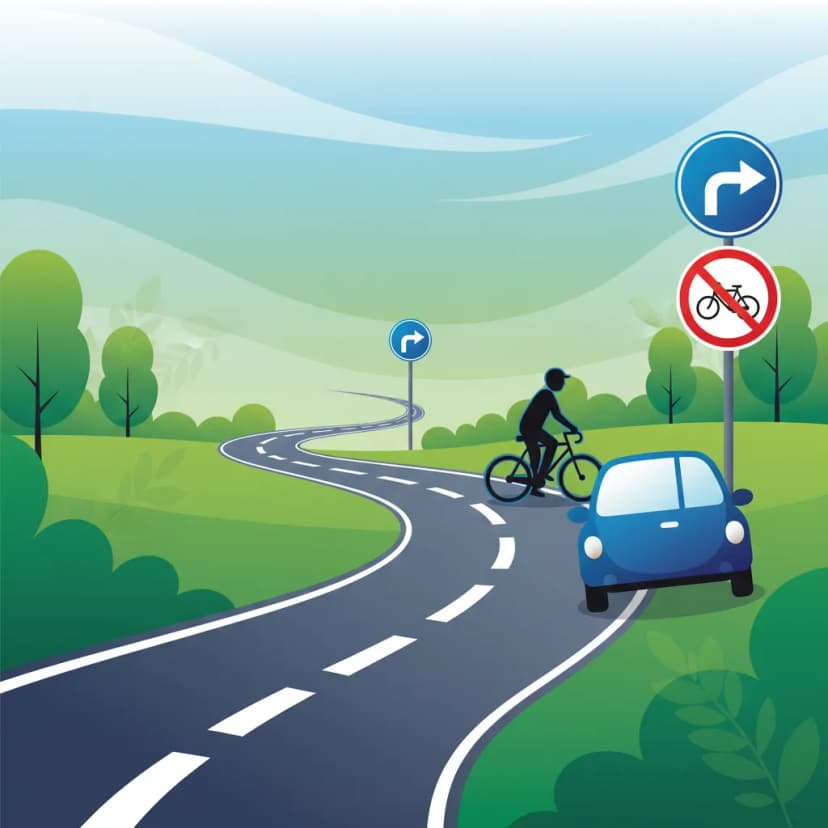
This lesson details the full range of Swedish regulatory signs, which establish legally enforceable rules for all road users. You will learn to interpret prohibitory signs (förbudsmärken) such as speed limits and no-entry signs, as well as mandatory signs (påbudsmärken) that dictate direction or lane usage. Understanding these signs is crucial as they directly regulate traffic flow, ensure safety at critical points, and carry legal consequences if ignored.
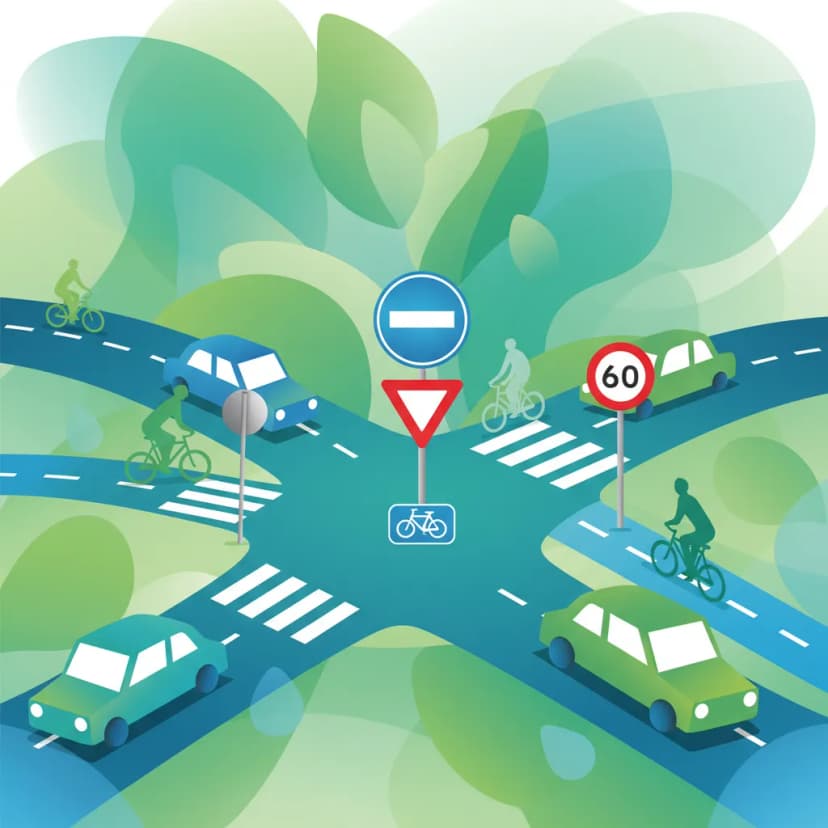
This lesson details the full range of Swedish regulatory signs, which dictate mandatory actions and prohibitions for all road users. You will learn to identify signs that establish speed limits, restrict access, prohibit overtaking, and define parking rules. Understanding these signs is critical for legal compliance and safe interaction with other traffic, as they form the basis of enforceable road law under the Trafikförordning regulations.
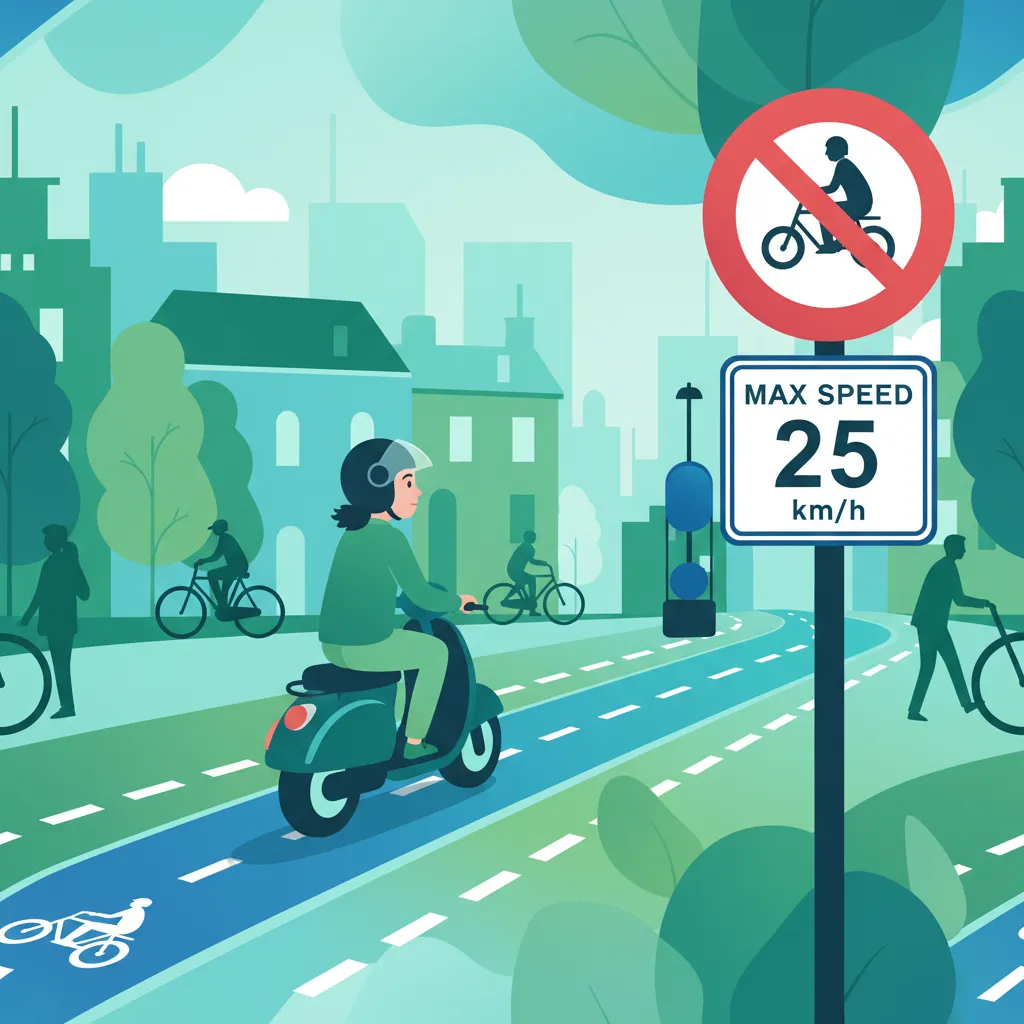
This lesson consolidates the key regulations that apply specifically to moped operation in Sweden. It covers mandatory rules such as speed limits, helmet use, and requirements for vehicle lighting and reflectors. Furthermore, the lesson explains the legal consequences of violations, including the system of fines and potential demerit points, ensuring riders understand their full range of legal responsibilities on the road.
This lesson covers parking areas that are reserved for specific purposes or permit holders. The primary focus is on spaces designated for people with disabilities, explaining the requirement of a valid permit. It also addresses other restricted areas such as residential parking zones (boendeparkering), loading zones, and areas that must be kept clear for emergency vehicles, highlighting the legal and ethical reasons for respecting these designations.
This lesson covers the general, nationwide rules that govern where you may and may not park or stop, even without specific signs. You will learn about the prohibitions on stopping near intersections, on pedestrian crossings, and at bus stops. The content clarifies the legal definitions and provides clear guidelines on maintaining safe distances and ensuring that your parked vehicle does not obstruct traffic or create a hazard.
This lesson explains the function of informational signs (Informationsskyltar), which provide guidance for navigation and access to services. It covers signs indicating distances to destinations, route numbers, and locations of fuel stations or parking areas. For moped riders, this includes identifying signs for designated moped or cycle lanes, helping them to plan and follow routes efficiently and legally.

This lesson explains the various systems used to regulate parking duration and payment. You will learn how to correctly set and display a parking disc (P-skiva) in time-limited zones and how to operate parking meters and mobile payment apps. The lesson also demystifies 'date parking' (datumparkering), a rule used in some areas for street cleaning, and clarifies the difference between a public parking fine (parkeringsanmärkning) and a private control fee (kontrollavgift).
This lesson focuses on the importance of road markings (Vägmarkering) for guiding traffic flow and ensuring safety. It explains the meaning of different line types, such as solid and broken lines, and the function of stop lines and pedestrian crosswalks. The content highlights markings specific to cycle and moped lanes, teaching riders how to correctly position themselves on the road based on these visual cues.
Explore the rules for legal moped parking in Sweden. This lesson covers identifying designated parking zones, understanding when parking is permitted, and the correct placement of your moped to comply with Swedish traffic regulations.
This lesson clarifies the legal distinction between stopping temporarily and parking. It identifies areas where stopping is prohibited, such as near intersections or on pedestrian crossings, to maintain traffic flow and safety. The content also discusses designated waiting areas at traffic lights, often marked for cyclists and mopeds, which can offer a safer position.
This lesson covers parking areas that are reserved for specific purposes or permit holders. The primary focus is on spaces designated for people with disabilities, explaining the requirement of a valid permit. It also addresses other restricted areas such as residential parking zones (boendeparkering), loading zones, and areas that must be kept clear for emergency vehicles, highlighting the legal and ethical reasons for respecting these designations.
This lesson covers the general, nationwide rules that govern where you may and may not park or stop, even without specific signs. You will learn about the prohibitions on stopping near intersections, on pedestrian crossings, and at bus stops. The content clarifies the legal definitions and provides clear guidelines on maintaining safe distances and ensuring that your parked vehicle does not obstruct traffic or create a hazard.
This lesson explains the various systems used to regulate parking duration and payment. You will learn how to correctly set and display a parking disc (P-skiva) in time-limited zones and how to operate parking meters and mobile payment apps. The lesson also demystifies 'date parking' (datumparkering), a rule used in some areas for street cleaning, and clarifies the difference between a public parking fine (parkeringsanmärkning) and a private control fee (kontrollavgift).

This lesson clarifies the regulations for operating a moped on cycle paths (Cykelbana) and other shared spaces in Sweden. It explains which types of mopeds are permitted on these paths and the specific rules that apply, such as lower speed limits and the duty to yield to cyclists. The content focuses on safe interaction and communication to ensure peaceful coexistence with other users in these environments.
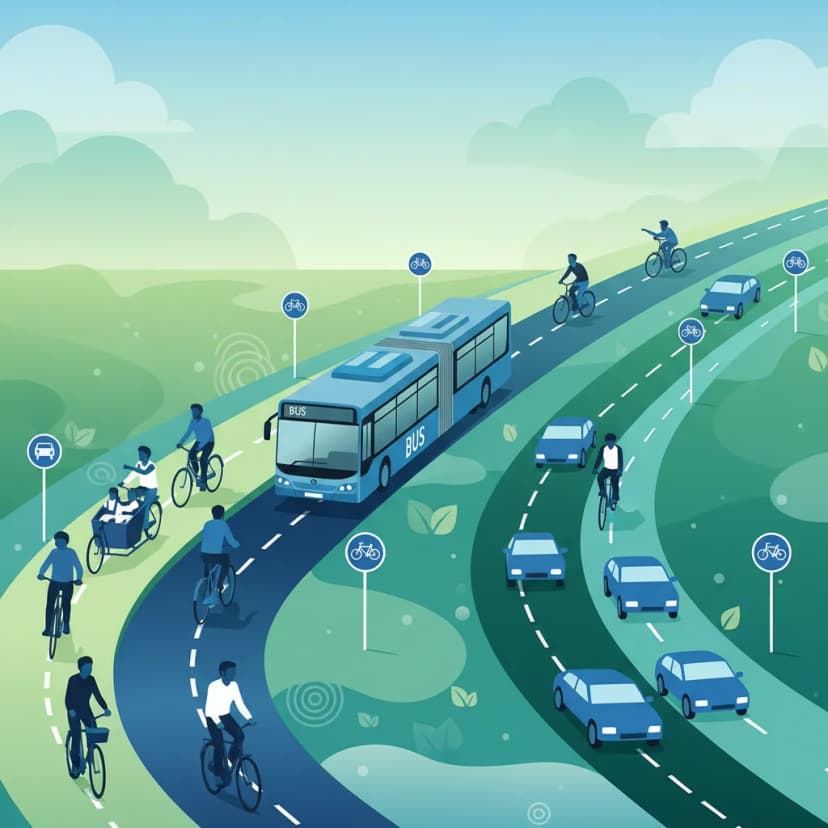
This lesson explains the specific regulations for lanes designated for particular users, such as buses or cyclists. It clarifies under what circumstances a moped is permitted to enter these lanes and the rules that must be followed while in them. Understanding these regulations is key to navigating complex urban environments legally and safely.
This lesson consolidates the key regulations that apply specifically to moped operation in Sweden. It covers mandatory rules such as speed limits, helmet use, and requirements for vehicle lighting and reflectors. Furthermore, the lesson explains the legal consequences of violations, including the system of fines and potential demerit points, ensuring riders understand their full range of legal responsibilities on the road.
This lesson analyzes the legal definitions that determine where mopeds can operate within the Swedish road network. It covers the rules for using urban streets, rural roads, and designated cycle paths (Cykelbana), while clearly identifying prohibited zones like motorways. The content explains how to interpret signs indicating moped permissions or restrictions, enabling riders to plan legally compliant routes and navigate shared spaces correctly.

This lesson outlines the essential administrative responsibilities of a moped owner and rider. It covers the legal requirement to have valid third-party liability insurance and to ensure the vehicle is properly registered. The content also reminds riders of the documents they must carry with them at all times, such as their driving license and registration certificate.
This lesson focuses on the importance of road markings (Vägmarkering) for guiding traffic flow and ensuring safety. It explains the meaning of different line types, such as solid and broken lines, and the function of stop lines and pedestrian crosswalks. The content highlights markings specific to cycle and moped lanes, teaching riders how to correctly position themselves on the road based on these visual cues.
Find clear answers to common questions learners have about Parking Regulations for Mopeds (Parkeringsförbud). Learn how the lesson is structured, which driving theory objectives it supports, and how it fits into the overall learning path of units and curriculum progression in Sweden. These explanations help you understand key concepts, lesson flow, and exam focused study goals.
Parkeringsförbud is a prohibition sign indicating that parking is not allowed. For mopeds, this means you must not leave your vehicle unattended in the marked area. Always look for alternative legal parking spots or consider if stopping briefly is permitted rather than parking.
Yes, sometimes you will find designated parking areas specifically for two-wheeled vehicles, including mopeds. These are often marked with signs indicating 'MC' or 'Moped'. If no such specific parking is available, you must find a general legal parking spot according to the standard road rules.
Generally, parking on a sidewalk is prohibited as it obstructs pedestrians. Mopeds must be parked in designated parking areas or at the roadside where parking is permitted and does not cause an obstruction. Always ensure your moped does not impede the flow of pedestrian traffic.
If there is no specific prohibition sign (Parkeringsförbud) and no restriction sign (e.g., 'Endast parkering'), and you are not obstructing traffic, pedestrians, or driveways, you can usually park. However, always exercise caution and consider if your parking could cause inconvenience or danger.
You must not park your moped too close to an intersection or a pedestrian crossing, as this can obstruct visibility for other road users. Specific distances are often implied by general rules against obstructing sightlines and creating hazards. When in doubt, choose a spot further away.