
Logo
Swedish Driving Theory Courses

Lesson 4 of the Priority and Right-of-Way Rules unit

Swedish Moped Theory AM: Cycle Paths (Cykelbana) and Shared Spaces

Welcome to the lesson on Cycle Paths (Cykelbana) and Shared Spaces, part of the Swedish Road Sign System for Mopeds unit. Understanding where and how to ride your moped in these areas is crucial for safety and compliance with Swedish traffic law. This lesson builds on your knowledge of general road rules and prepares you for specific scenarios you'll encounter in mixed traffic environments.

cycle pathsshared spacesmoped rulesAM licenceSweden
Swedish Moped Theory AM: Cycle Paths (Cykelbana) and Shared Spaces
Swedish Moped Theory AM

Navigating Cycle Paths (Cykelbana) and Shared Spaces with a Moped in Sweden

Operating a moped in Sweden requires a thorough understanding of where you are permitted to ride and how to interact safely with other road users, especially on infrastructure primarily designed for cyclists and pedestrians. This lesson, part of your Swedish Driving License Theory Course – Category AM (Moped), will clarify the specific regulations for moped use on cycle paths (Cykelbana) and in shared spaces (gemensamma områden), ensuring both your safety and that of vulnerable road users.

Understanding Swedish Cycle Paths (Cykelbana)

Cycle paths, known as Cykelbana in Sweden, are dedicated lanes or strips of pavement intended primarily for bicycle traffic. Their design aims to separate cyclists from faster motor vehicles, enhancing safety for two-wheeled transport. However, specific rules dictate whether mopeds, particularly different classifications, are allowed to use these paths.

What is a Cycle Path?

A cycle path is typically identified by a solid white line separating it from the main carriageway and a distinctive road marking featuring a bicycle symbol. These paths are integral to Sweden's urban and rural infrastructure, providing safe routes for cyclists. Moped riders must learn to distinguish between general cycle paths and those where moped access is specifically permitted.

Moped Classifications and Cycle Path Access

In Sweden, mopeds are divided into two main categories, and this classification is crucial for determining access to cycle paths:

  • Moped Class I: These mopeds have a maximum design speed of up to 45 km/h and an engine size of up to 50 cc (or equivalent electric power).
  • Moped Class II: These mopeds have a maximum design speed of up to 25 km/h and an engine size of up to 50 cc (or equivalent electric power).

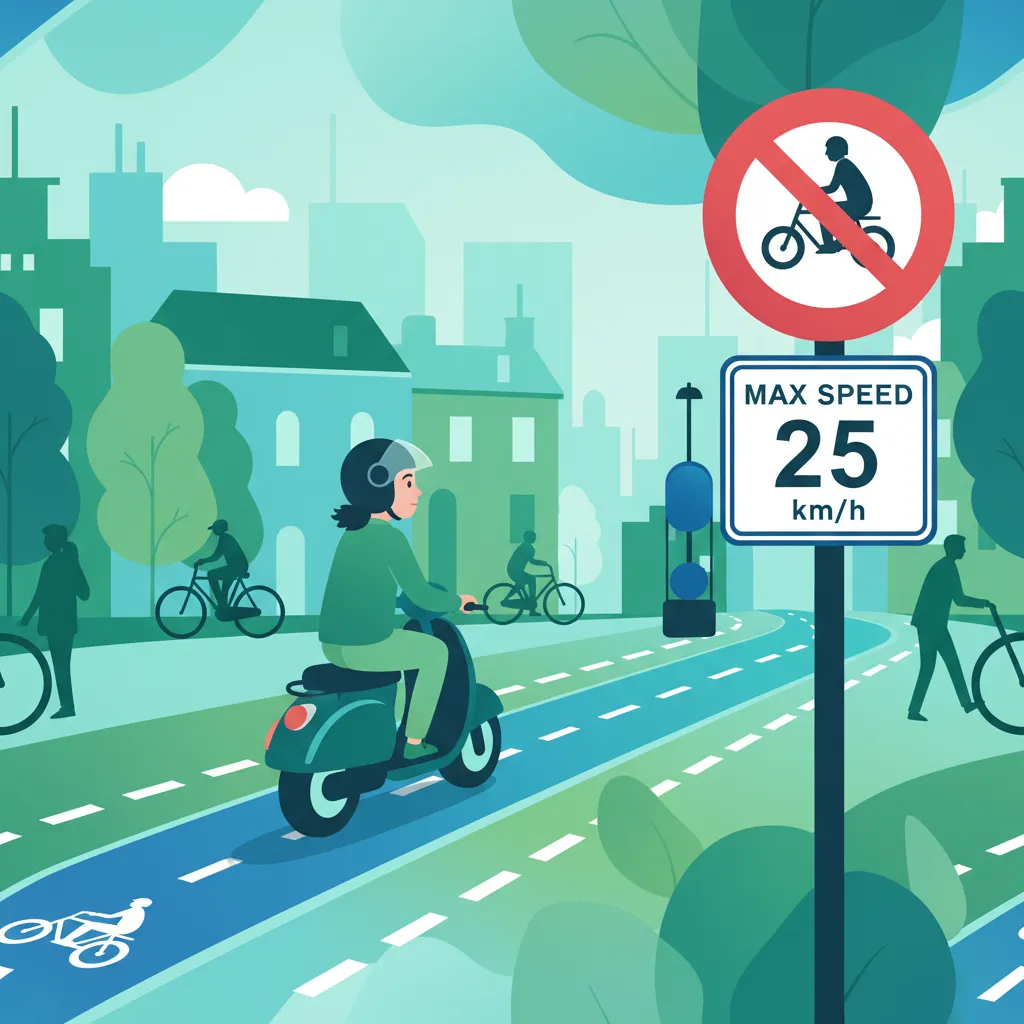
The general rule is that Class I mopeds are prohibited from using any cycle path unless there is an extremely rare, explicit sign permitting "Moped (klass I) tillåten." Conversely, Class II mopeds may only use a cycle path when a specific sign explicitly permits their use, usually stating "Moped klass II tillåten" or "Moped (≤ 25 km/h) tillåten." Without such a sign, even Class II mopeds must remain on the main carriageway. This strict class-specific access is designed to ensure speed compatibility and prevent faster mopeds from endangering cyclists.

Specific Signage for Moped-Allowed Cycle Paths

Identifying the correct signage is paramount. You must be able to recognise the standard cycle path sign and the signs that grant mopeds access.

The standard "Cycle Path" sign (D4) indicates a path solely for bicycles, and mopeds are not permitted. For Class II mopeds to gain access, a supplementary sign must be present.

This "Moped Class II Allowed" sign explicitly grants permission for Class II mopeds to use the cycle path. Without this specific additional sign, a cycle path remains exclusive to bicycles. Drivers must always confirm the presence of this supplementary sign before entering any cycle path.

Rules for Operating a Moped in Shared Spaces (Gemensamma Områden)

Shared spaces, known in Swedish as gemensamma områden or delad gång- och cykelväg, are distinct environments where different road users—motor vehicles, cyclists, and pedestrians—share the same area without traditional lane demarcations. These areas prioritize the safety and comfort of pedestrians and vulnerable road users.

Defining Shared Spaces

A shared space is an area designed to promote interaction between users at low speeds, typically found in urban centers, plazas, or residential streets. These areas might be marked with specific road signs or markings like "Gång- och Cykelväg" (Pedestrian and Cycle Path). The absence of clear lanes means drivers must be highly attentive and adjust their behavior significantly.

Moped Priority and Yielding in Shared Zones

In shared spaces, the principle of yielding to vulnerable users is amplified. Mopeds must always be prepared to stop for pedestrians, who generally have priority in these zones. Cyclists and pedestrians may move unpredictably, so constant vigilance and a readiness to stop are crucial. Unlike on a cycle path where cyclists might have some expectation of continuous movement, in a shared space, pedestrians have the right to occupy any part of the area.

When entering a shared space, even if there's no explicit yield sign at your entry point, the fundamental principle is to give way to users already within that space. This is a critical safety practice, as vulnerable users often assume they have priority and may not check for approaching vehicles.

Speed Limits and Safe Riding Practices for Mopeds

Speed limits are rigorously enforced on cycle paths and in shared spaces, reflecting the increased risk associated with mixed traffic and vulnerable users. Adhering to these limits is not just a legal requirement but a fundamental safety measure.

Mandatory Speed Reductions

On any permitted cycle path, the maximum speed for mopeds is 30 km/h, unless a lower limit is explicitly posted, such as 20 km/h. Similarly, in shared spaces, the default speed limit for all motor vehicles, including mopeds, is 30 km/h, or 20 km/h if indicated by a sign.

It is imperative to note that simply adhering to the posted speed limit might not always be safe. In conditions of poor visibility, high pedestrian volume, or complex interactions, you must reduce your speed even further to ensure you can stop safely within your visible distance. The physics of speed dictate that higher speeds exponentially increase stopping distances and the severity of potential impacts. Reducing your speed significantly lowers the kinetic energy, giving you more time to react and reducing the force of any collision.

Maintaining Safe Distance and Overtaking

When riding on a cycle path alongside cyclists, maintaining a safe lateral clearance is essential. A minimum lateral clearance of 1.5 metres is generally recommended when passing a cyclist, if the path width permits. This distance accounts for sudden movements by the cyclist and potential wind buffeting. Never attempt to overtake a cyclist on a narrow cycle path if there isn't enough space to do so safely without compromising their stability or your own. In such situations, it's safer to slow down and follow behind until a wider section or an appropriate opportunity arises.

Visibility and Communication with Vulnerable Road Users

Effective communication and ensuring your visibility are paramount when sharing infrastructure with pedestrians and cyclists. Vulnerable road users (VRUs) such as pedestrians, cyclists, and individuals with reduced mobility do not have the protective shell of a vehicle and are at a much higher risk of severe injury in an accident.

Ensuring You Are Seen

Always use appropriate lighting (headlamp on) and reflective devices when riding on cycle paths or shared spaces during periods of reduced visibility. This includes dawn, dusk, night, and foggy or rainy conditions. Even during daylight hours, having your headlamp on significantly improves your visibility to others. Reflective vests or elements on your clothing can also make a substantial difference in how quickly other users detect you, especially in low light.

Effective Communication and Horn Usage

Use your horn only when necessary to alert other road users to an immediate danger. Excessive or aggressive use of the horn is prohibited, especially in shared spaces, as it can startle pedestrians and cyclists, potentially causing them to react unpredictably or feel intimidated. Instead, rely on visual communication, maintaining eye contact where possible, and making your intentions clear through predictable riding behavior.

Key Swedish Traffic Signs for Cycle Paths and Shared Spaces

Understanding and correctly interpreting relevant road signs and markings is a critical skill for safe moped operation. Here are the key signs you'll encounter:

  • Cykelbana (Bicycle Path) Sign (D4): Blue circular sign with a white bicycle symbol. Prohibits mopeds unless a specific supplementary sign is present.
  • Moped klass II tillåten Sign (Y2): White rectangular supplementary sign, usually below D4, with a moped silhouette and "klass II" or "≤ 25 km/h" text. Permits Class II mopeds.
  • Speed Limit Signs (C31): Circular signs with a red border, indicating maximum speeds like 30 km/h or 20 km/h. These limits are mandatory for mopeds on permitted cycle paths and in shared spaces.
  • Väjningsplikt (Yield) Sign (B1): Triangular sign with a red border pointing downwards. Requires you to yield to traffic on the intersecting road or area. Often found at entries to shared spaces.

Road markings also play a role:

  • Continuous White Line: Separates a cycle path from the carriageway.
  • Dashed Lines: May indicate shared-use zones or allow crossing points.
  • "Gång- och Cykelväg" Marking: Painted on the surface of shared spaces, indicating a path for both pedestrians and cyclists, which mopeds may access if permitted by signs.

Always remember that the presence of a specific sign or road marking overrides any generic rule for that location. Your ability to read and interpret these correctly before entering any facility is essential for compliance and safety.

Common Violations and Their Consequences

Failing to adhere to the regulations for cycle paths and shared spaces can lead to significant risks and legal penalties. Here are some common violations:

  1. Unauthorized Cycle Path Use: Riding a Class I moped on a standard cycle path, or a Class II moped on a cycle path without the explicit "Moped klass II tillåten" sign. This violates legal access rules, increases accident risk due to speed mismatch, and can result in fines.
  2. Speeding: Exceeding the 30 km/h default limit, or any lower posted limit (e.g., 20 km/h), on cycle paths or in shared spaces. This reduces reaction time for both the moped rider and vulnerable users, significantly increasing collision severity.
  3. Failing to Yield: Not giving way to cyclists already on a permitted cycle path, or to pedestrians in a shared space. This directly leads to collision risk, especially with less protected users.
  4. Unsafe Overtaking: Passing a cyclist on a narrow cycle path without sufficient lateral clearance (less than 1.5 metres), causing the cyclist to swerve or lose balance.
  5. Lack of Situational Awareness: Not reducing speed appropriately when visibility is limited (e.g., at blind corners in shared spaces) or when pedestrian volume is high. This prevents the ability to stop safely for sudden movements.
  6. Misuse of Horn/Lights: Using the horn excessively in shared spaces to intimidate or riding without required lighting at dusk/night, which reduces detection by others.

Violations of traffic regulations can lead to fines (böter), penalty points (prickar) on your driving license, and in severe cases, even license suspension. Furthermore, in the event of an accident, legal liability often falls heavily on the motorized vehicle operator when they have failed to yield or observe regulations in shared environments.

Adapting to Conditions: Weather, Night, and Urban Environments

Safe moped riding on cycle paths and in shared spaces requires constant adaptation to changing conditions and environments.

  • Poor Weather (Rain, Snow, Ice): Reduce your speed significantly below the posted limit. Wet or icy surfaces drastically reduce tire grip and increase braking distances. Increase your following distance to cyclists and leave more space when passing.
  • Nighttime / Low Visibility: Always use your headlamps and ensure your reflective gear is visible. In very low visibility (e.g., heavy fog, torrential rain, or deep darkness) where visibility is less than 50 metres, you may need to reduce your speed even further than typical limits to ensure safety.
  • High Pedestrian Volume: In shared spaces with many pedestrians, be prepared for frequent stops. Your speed should be at a level that allows you to stop almost instantly for unexpected movements. Maintain a "stop-and-go" cadence rather than attempting to maintain a continuous flow.
  • Urban vs. Rural Paths: Urban cycle paths are more likely to have explicit "Moped klass II tillåten" signs due to denser traffic and more developed infrastructure. Rural paths may lack such signage, meaning default prohibition for mopeds unless otherwise stated. Always check signs.
  • Mopeds with Trailers or Heavy Loads: The added mass and altered balance of a trailer or heavy load will increase your stopping distance and reduce maneuverability. Account for this by driving at a lower speed, even if the posted limit is higher, and increasing your following distance.

The regulations governing moped use on cycle paths and in shared spaces are fundamentally rooted in safety. Sweden’s commitment to Vision Zero (Nolltrafikvisionen) emphasizes the ethical imperative to eliminate deaths and serious injuries in road traffic. This principle guides traffic law, particularly concerning vulnerable road users.

  • Reduced Collision Severity: Lowering moped speeds on cycle paths and in shared spaces directly reduces the kinetic energy involved in potential collisions. A smaller impact force means less severe injuries for cyclists and pedestrians, who lack the protection of a vehicle.
  • Increased Reaction Time: Slower speeds provide more time for both the moped rider and other users to perceive hazards and react. Human reaction time is a critical factor; even a small reduction in speed translates to significantly less distance traveled before a driver can physically respond to an unexpected event.
  • Protecting Vulnerable Users: Cyclists and pedestrians are the most vulnerable on the road. The law prioritizes their safety by granting them right-of-way in shared spaces and setting strict rules for motor vehicle interaction on shared infrastructure.
  • Predictability and Flow: Clear rules regarding access, speed, and yielding create a predictable environment. This reduces cognitive load for all road users, minimizes sudden maneuvers, and contributes to smoother traffic flow, even in mixed environments.
  • Legal Compliance and Responsibility: Adhering to these rules is a legal obligation outlined in the Swedish Traffic Ordinance (Trafikförordning 1998:4). Violations not only carry penalties but also imply a failure of responsibility towards fellow road users, which can have severe legal consequences in the event of an accident.

Essential Vocabulary for Moped Riders

Cykelbana
A dedicated pavement or lane for cyclists, often marked with a bicycle symbol. Mopeds may only use it if specifically permitted by signage.
Shared Space (Gemensamt Område)
An area where motor vehicles, cyclists, and pedestrians share the same surface without explicit lane separation, typically with a low speed limit.
Moped Class I
A moped with a maximum design speed of 45 km/h. Generally prohibited from cycle paths.
Moped Class II
A moped with a maximum design speed of 25 km/h. Permitted on cycle paths only where a specific 'Moped klass II tillåten' sign is present.
Väjningsplikt (Yield)
The legal obligation to give way to another road user who has priority, such as cyclists on a cycle path or pedestrians in a shared space.
Lateral Clearance
The minimum safe distance, usually recommended at 1.5 metres, to maintain when passing a cyclist or other vulnerable road user.
Vulnerable Road Users (VRUs)
Road users who are at a higher risk of injury in a collision due to lack of external protection, such as pedestrians, cyclists, and moped riders.
Trafikförordning
The Swedish Traffic Ordinance, the primary legal document governing traffic rules in Sweden.
Vision Zero (Nolltrafikvisionen)
Sweden's long-term goal of eliminating all deaths and serious injuries in road traffic, guiding its traffic safety policies.
Penalty Points (Prickar)
Points added to a driver's license for traffic violations, which can lead to license suspension if too many accumulate.
Hazard Perception
The rider’s ability to identify and react to potential dangers, enhanced by reduced speed and continuous scanning of the environment.

Applying the Rules: Practical Moped Scenarios

Let's consider some practical scenarios to solidify your understanding of these rules.

Scenario 1: Entering a Permitted Cycle Path You are riding a Class II moped on an urban street during daylight. You see a cycle path sign (D4) with a supplementary "Moped klass II tillåten" sign (Y2) and a 30 km/h speed limit. The pavement is dry.

  • Correct Action: You slow down to 30 km/h, activate your turn signal if entering, check carefully for cyclists already on the path, and yield if necessary. You then smoothly enter the path, maintaining a safe distance from other users.
  • Incorrect Action: You continue at 40 km/h, assuming your moped's design speed is allowed, and quickly merge onto the path without checking for cyclists.

Scenario 2: Navigating a Busy Shared Space It's evening, and you're riding a Class II moped through a town square marked as a shared space with a 30 km/h speed limit. The square is bustling with people walking, some children playing, and outdoor café seating.

  • Correct Action: You reduce your speed to below 30 km/h, perhaps 15-20 km/h, due to the high pedestrian volume and low light. You turn on your low-beam headlamp and wear a reflective vest. You proceed cautiously, constantly scanning for pedestrians and are ready to stop instantly if someone steps into your path. You avoid using your horn unless absolutely necessary for immediate danger.
  • Incorrect Action: You maintain 30 km/h, thinking it's the limit, and don't bother with your lights or reflective gear. You impatiently honk at pedestrians who are in your perceived path.

Scenario 3: Unexpected Hazard on a Cycle Path You're on a permitted Class II moped cycle path, traveling at 25 km/h. Suddenly, a small child runs out from behind a parked car onto the path, directly in front of you.

  • Correct Action: Because you were maintaining a safe speed and actively scanning, you have enough time to apply your brakes firmly and perform an evasive maneuver if safe, avoiding the child.
  • Incorrect Action: You were traveling at 30 km/h, distracted, and failed to anticipate the potential hazard. You brake too late, resulting in a collision.

Comprehensive Summary: Moped Use on Cycle Paths and Shared Spaces

Navigating cycle paths and shared spaces safely and legally as a Category AM moped rider in Sweden hinges on a few core principles:

  • Moped Classification is Key: Only Class II mopeds (max 25 km/h design speed) may use cycle paths, and only when a specific "Moped klass II tillåten" sign is present. Class I mopeds are generally prohibited.
  • Read the Signs: Always identify and obey specific road signs and markings. A standard "Cykelbana" sign does not permit mopeds.
  • Observe Speed Limits: The default speed limit on permitted cycle paths and in shared spaces is 30 km/h, but always obey lower posted limits (e.g., 20 km/h) and reduce your speed further in adverse conditions or high pedestrian density.
  • Yield to Vulnerable Users: Always give way to cyclists already on the path and to pedestrians in shared spaces. They have priority, and you bear the greater responsibility for preventing collisions.
  • Prioritize Visibility: Use your headlamp and reflective gear in low light or poor weather to ensure you are seen by others.
  • Communicate Safely: Use your horn sparingly and only for immediate danger. Rely on predictable riding and visual communication.
  • Maintain Safe Clearance: When overtaking cyclists, ensure ample lateral clearance (at least 1.5 metres).

By diligently following these rules, you contribute to a safer road environment for everyone and avoid potential legal consequences.

Learn more with these articles

Check out these practice sets


Search topics related to Cycle Paths (Cykelbana) and Shared Spaces

Explore search topics learners often look for when studying Cycle Paths (Cykelbana) and Shared Spaces. These topics reflect common questions about road rules, driving situations, safety guidance, and lesson level theory preparation for learners in Sweden.

moped on cycle path sweden rulescan mopeds use cykelbana in swedenspeed limit moped cycle path swedenshared spaces traffic rules sweden mopedam licence theory test cycle path questionshow to yield to cyclists sweden mopeddriving theory category am sweden cykelbanawhat to do on a shared path with moped

Related driving theory lessons for Cycle Paths (Cykelbana) and Shared Spaces

Browse additional driving theory lessons that cover connected traffic rules, road signs, and common driving situations related to this topic. Improve your understanding of how different rules interact across everyday traffic scenarios.

Interacting with Cyclists and Pedestrians in Shared Spaces

Understand the specific rules for interacting with cyclists and pedestrians when riding a moped in shared spaces and on cycle paths in Sweden. Focuses on safe coexistence, yielding, and communication for the AM licence theory exam.
shared spacescyclistspedestriansinteractionpriority rulesAM licenceSweden
Sharing Roads with Cyclists (Cykelhjälp) lesson image

Sharing Roads with Cyclists (Cykelhjälp)

This lesson details the best practices for sharing the road with cyclists, who are even more vulnerable than moped riders. It explains the legal requirements and safe etiquette for overtaking cyclists, emphasizing the need to provide ample space. The content also reviews the rules of interaction on designated cycle paths (Cykelbana) where both may be present.
Swedish Moped Theory AMInteraction with Other Road Users
View lesson
Cyclists and Bicycle Lanes lesson image

Cyclists and Bicycle Lanes

This lesson focuses on safe interaction with cyclists. You will learn to differentiate between a 'bicycle crossing' (cykelöverfart), where you have a duty to yield, and a 'bicycle passage' (cykelpassage), where specific priority rules apply. The content stresses the importance of leaving adequate space when overtaking cyclists and the critical danger of the 'right-hook' accident, emphasizing the need to check mirrors and blind spots carefully before turning right.

Swedish Driving Theory BInteraction with Vulnerable Road Users
View lesson
Interaction with Cars, Trucks, Cyclists, and Pedestrians lesson image

Interaction with Cars, Trucks, Cyclists, and Pedestrians

This lesson provides in-depth analysis of how to safely interact with the full spectrum of road users. You will learn about the specific characteristics of each, such as the large blind spots of trucks, the potential for sudden movements from cyclists, and the unpredictability of pedestrians. The content teaches strategies for communication, anticipation, and defensive positioning to ensure safe and respectful coexistence on the road for everyone.
Swedish Motorcycle Theory ARiding in Various Traffic Environments
View lesson
Intersections, Roundabouts, and Pedestrian Crossings lesson image

Intersections, Roundabouts, and Pedestrian Crossings

This lesson provides detailed guidance on navigating complex traffic points such as signalized intersections, multi-lane roundabouts, and pedestrian crossings. You will learn the correct procedures for entering and exiting roundabouts, the specific rules for yielding to pedestrians and cyclists at designated crossings, and how to interpret complex traffic light signals. These skills are vital for safe urban and suburban riding, where interaction with vulnerable road users is frequent.

Swedish Motorcycle Theory ARight-of-Way and Priority Rules
View lesson
Intersections and Roundabouts lesson image

Intersections and Roundabouts

This lesson provides practical instructions for safely navigating different types of intersections and roundabouts. It covers procedures for approaching, entering, and exiting roundabouts, emphasizing the rule to yield to traffic already circulating. The content also addresses how to handle signal-controlled and uncontrolled intersections, ensuring riders select the correct lane and manage their speed appropriately.
Swedish Moped Theory AMPriority and Right-of-Way Rules
View lesson
Cycle Lanes, Bus Lanes, and Mixed Use Zones lesson image

Cycle Lanes, Bus Lanes, and Mixed Use Zones

This lesson explains the specific regulations for lanes designated for particular users, such as buses or cyclists. It clarifies under what circumstances a moped is permitted to enter these lanes and the rules that must be followed while in them. Understanding these regulations is key to navigating complex urban environments legally and safely.
Swedish Moped Theory AMRoad Markings and Shared Spaces
View lesson
Co-existence with Cars and Heavy Vehicles lesson image

Co-existence with Cars and Heavy Vehicles

This lesson focuses on the specific challenges mopeds face when interacting with cars and heavy vehicles. It highlights the significant blind spots (or 'no-zones') around trucks and buses and teaches riders how to position themselves to remain visible. The content also covers the dangers of wind turbulence when near large vehicles and the importance of maintaining a generous space cushion.
Swedish Moped Theory AMInteraction with Other Road Users
View lesson
Urban Traffic and Pedestrian Zones lesson image

Urban Traffic and Pedestrian Zones

This lesson focuses on the unique challenges of driving in urban environments. You will learn techniques for anticipating the actions of vulnerable road users like pedestrians and cyclists, especially near crossings and bus stops. The content covers how to navigate narrow streets, one-way systems, and areas with heavy traffic, emphasizing the need for lower speeds, heightened awareness, and a defensive mindset.
Swedish Driving Theory BDriving in Different Environments
View lesson
Pedestrian Awareness and Crossing Behavior lesson image

Pedestrian Awareness and Crossing Behavior

This lesson is dedicated to pedestrian safety, teaching riders to be constantly aware of people on foot, especially in busy urban environments. It reinforces the absolute duty to yield at marked crossings and encourages a cautious approach in areas like schools and shopping districts. The content stresses anticipating unpredictable actions, particularly from children or distracted pedestrians.

Swedish Moped Theory AMInteraction with Other Road Users
View lesson
Pedestrian Crossings and Tram Crossings (Spårvagnskorsning) lesson image

Pedestrian Crossings and Tram Crossings (Spårvagnskorsning)

This lesson details the specific priority rules at pedestrian and tram crossings (Spårvagnskorsning). It reinforces the legal obligation for moped riders to stop for pedestrians at marked zebra crossings and explains that trams almost always have priority. Learners will understand the importance of approaching these crossings with caution, scanning for hazards, and being prepared to stop.

Swedish Moped Theory AMPriority and Right-of-Way Rules
View lesson

Legal Access to Cycle Paths and Shared Spaces for Mopeds

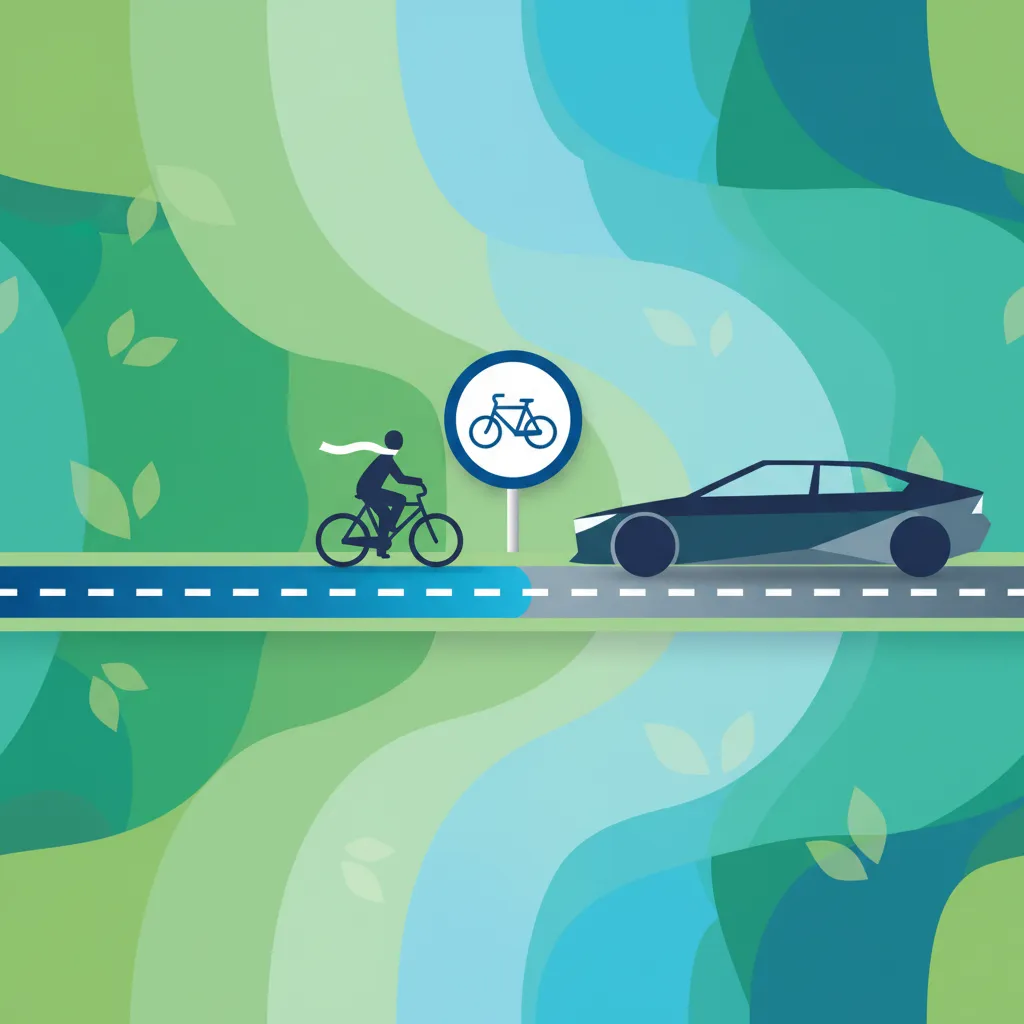
Explore the legal framework in Sweden regarding moped access to cycle paths (Cykelbana) and shared spaces. This lesson clarifies which mopeds are permitted and the legal duties of riders in these environments, crucial for theory knowledge.
cycle pathsshared spaceslegal rulesmoped accessSwedish traffic lawAM licencetheory
Legal Definitions and Permitted Road Types lesson image

Legal Definitions and Permitted Road Types

This lesson analyzes the legal definitions that determine where mopeds can operate within the Swedish road network. It covers the rules for using urban streets, rural roads, and designated cycle paths (Cykelbana), while clearly identifying prohibited zones like motorways. The content explains how to interpret signs indicating moped permissions or restrictions, enabling riders to plan legally compliant routes and navigate shared spaces correctly.

Swedish Moped Theory AMIntroduction to Category AM and Licensing
View lesson
Sharing Roads with Cyclists (Cykelhjälp) lesson image

Sharing Roads with Cyclists (Cykelhjälp)

This lesson details the best practices for sharing the road with cyclists, who are even more vulnerable than moped riders. It explains the legal requirements and safe etiquette for overtaking cyclists, emphasizing the need to provide ample space. The content also reviews the rules of interaction on designated cycle paths (Cykelbana) where both may be present.

Swedish Moped Theory AMInteraction with Other Road Users
View lesson
Cycle Lanes, Bus Lanes, and Mixed Use Zones lesson image

Cycle Lanes, Bus Lanes, and Mixed Use Zones

This lesson explains the specific regulations for lanes designated for particular users, such as buses or cyclists. It clarifies under what circumstances a moped is permitted to enter these lanes and the rules that must be followed while in them. Understanding these regulations is key to navigating complex urban environments legally and safely.
Swedish Moped Theory AMRoad Markings and Shared Spaces
View lesson
Overview of Moped-Specific Regulations lesson image

Overview of Moped-Specific Regulations

This lesson consolidates the key regulations that apply specifically to moped operation in Sweden. It covers mandatory rules such as speed limits, helmet use, and requirements for vehicle lighting and reflectors. Furthermore, the lesson explains the legal consequences of violations, including the system of fines and potential demerit points, ensuring riders understand their full range of legal responsibilities on the road.

Swedish Moped Theory AMIntroduction to Category AM and Licensing
View lesson
Scope of the AM Licence and Vehicle Classification lesson image

Scope of the AM Licence and Vehicle Classification

This lesson clarifies the precise technical parameters that define a Category AM vehicle under Swedish law, including the maximum 50cc engine displacement and 45 km/h speed limit. It explains how these specifications determine which roads mopeds can legally access, distinguishing between urban streets and prohibited motorways. Learners will also understand the importance of vehicle identification and registration documents for ensuring legal compliance.

Swedish Moped Theory AMIntroduction to Category AM and Licensing
View lesson
Documentation, Insurance, and Registration lesson image

Documentation, Insurance, and Registration

This lesson outlines the essential administrative responsibilities of a moped owner and rider. It covers the legal requirement to have valid third-party liability insurance and to ensure the vehicle is properly registered. The content also reminds riders of the documents they must carry with them at all times, such as their driving license and registration certificate.

Swedish Moped Theory AMLegal Responsibilities, Conduct, and Penalties
View lesson
Parking Regulations for Mopeds (Parkeringsförbud) lesson image

Parking Regulations for Mopeds (Parkeringsförbud)

This lesson focuses on the often-confusing topic of moped parking. It covers how to interpret parking signs, including those indicating prohibitions (Parkeringsförbud), and where to find designated parking spots for two-wheelers. The content provides practical advice on where it is legal to park and how to do so without causing an obstruction, thereby avoiding fines.

Swedish Moped Theory AMRoad Markings and Shared Spaces
View lesson
Legal Obligations Regarding Safety Equipment lesson image

Legal Obligations Regarding Safety Equipment

This lesson serves as a summary of the legal requirements for safety equipment in Sweden. It reiterates the mandatory helmet law for both the rider and any passenger. It also touches on the rider's responsibility to ensure the moped itself is legally equipped with functioning lights, brakes, and other essential safety features, linking personal gear with vehicle roadworthiness.

Swedish Moped Theory AMProtective Equipment and Personal Safety
View lesson
Ethical Riding Behaviour and Public Safety lesson image

Ethical Riding Behaviour and Public Safety

This lesson moves beyond legal requirements to discuss the importance of ethical and courteous riding. It encourages riders to be patient, considerate of others, and aware of their impact on the community, for example, by minimizing noise. This fosters a positive public image of moped riders and contributes to a safer and more pleasant environment for everyone.

Swedish Moped Theory AMLegal Responsibilities, Conduct, and Penalties
View lesson
Mopeds and Low-Power Vehicles lesson image

Mopeds and Low-Power Vehicles

This lesson explains how to identify and interact with various types of mopeds and other low-speed vehicles common on Swedish roads. You will learn the difference between Class I and Class II mopeds and their place on the road, as well as how to recognize A-tractors by their LGF (långsamtgående fordon) sign. The key focus is on managing the large speed differential and making safe judgments when deciding to overtake.

Swedish Driving Theory BInteraction with Vulnerable Road Users
View lesson

Frequently asked questions about Cycle Paths (Cykelbana) and Shared Spaces

Find clear answers to common questions learners have about Cycle Paths (Cykelbana) and Shared Spaces. Learn how the lesson is structured, which driving theory objectives it supports, and how it fits into the overall learning path of units and curriculum progression in Sweden. These explanations help you understand key concepts, lesson flow, and exam focused study goals.

Are all mopeds allowed on Swedish cycle paths (Cykelbana)?

Generally, only certain types of mopeds, specifically class I mopeds (EU-mopeder) with a maximum speed of 45 km/h, may be permitted on cycle paths if indicated by specific signage. Class II mopeds (lower speed) may have different rules. Always check the specific road signs and local regulations as this can vary.

What speed should I ride on a cycle path as a moped rider in Sweden?

When riding a moped on a cycle path, you must always adapt your speed to the conditions and other users. You are typically required to ride at a lower speed than on the main road, often not exceeding 15 km/h, and always be prepared to stop. It's crucial to yield to cyclists and pedestrians, who have priority.

Do I have priority over cyclists on a cycle path?

No, cyclists and pedestrians generally have priority on cycle paths and in shared spaces. As a moped rider, you have a duty to yield to them and ensure their safety. Your role is to integrate smoothly and safely into the existing traffic flow of the path.

What are 'shared spaces' for mopeds in Sweden?

Shared spaces are areas designated for mixed traffic where pedestrians, cyclists, and sometimes mopeds or other slow vehicles interact. These often look like paths or areas without clear separation of user types. The key principle is mutual respect, awareness, and reduced speed for all users.

How can I communicate effectively with cyclists and pedestrians on shared paths?

Effective communication involves making yourself visible, maintaining a safe distance, and using subtle cues. Avoid sudden movements. A gentle nod, a slight slowing down, or a brief, soft beep of your horn (if absolutely necessary and appropriate) can signal your presence and intentions without startling others.

What happens if I ride my moped incorrectly on a cycle path and cause an accident?

If you are found to be riding your moped incorrectly on a cycle path and cause an accident, you could be held responsible. This may involve fines, points on your license, and liability for damages. Incorrectly using cycle paths is a common reason for failing theory or practical tests in Sweden.

Continue your Swedish driving theory learning journey

Swedish road signsSwedish article topicsSearch Swedish road signsSwedish driving theory homeSwedish road sign categoriesSwedish Moped Theory AM courseSearch Swedish theory articlesSwedish driving theory coursesSwedish Driving Theory B courseSwedish driving theory articlesSwedish driving theory practiceSwedish practice set categoriesSwedish Motorcycle Theory A courseSearch Swedish driving theory practiceRoad Signs and Signals unit in Swedish Driving Theory BVehicle Control and Maneuvering unit in Swedish Driving Theory BPriority Rules and Intersections unit in Swedish Driving Theory BSpeed Limits and Distance Management unit in Swedish Driving Theory BAccident Response & Roadside Safety unit in Swedish Motorcycle Theory AIntersections and Roundabouts lesson in Priority and Right-of-Way RulesAdverse Weather & Low-Grip Conditions unit in Swedish Motorcycle Theory ASpeed Limits and Safe Following Distances unit in Swedish Moped Theory AMEmergency Vehicles and Yielding lesson in Priority and Right-of-Way RulesEmergency Maneuvers & Obstacle Avoidance unit in Swedish Motorcycle Theory AEmergency Situations and Accident Procedures unit in Swedish Driving Theory BCycle Paths (Cykelbana) and Shared Spaces lesson in Priority and Right-of-Way RulesGeneral Priority Principles (Väjningsregler) lesson in Priority and Right-of-Way RulesLegal Responsibilities, Documentation & Protective Equipment unit in Swedish Motorcycle Theory APedestrian Crossings and Tram Crossings (Spårvagnskorsning) lesson in Priority and Right-of-Way Rules