
This lesson focuses on pedestrian safety, a vital aspect of riding a moped in Sweden. You'll learn how to be aware of pedestrians, especially in busy areas, and understand your absolute duty to yield at crossings. Mastering this is crucial for passing your Category AM theory exam and riding safely.
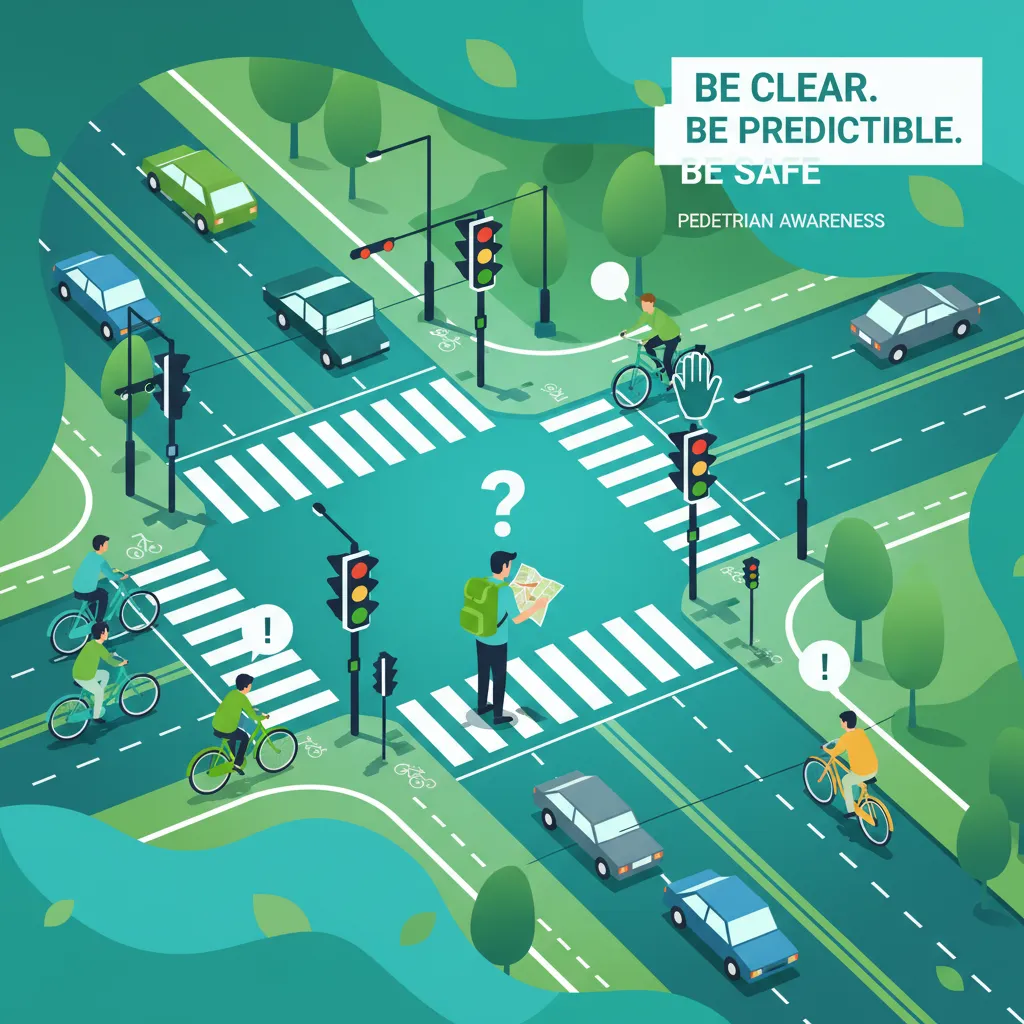
As a moped rider in Sweden, understanding and practicing robust pedestrian awareness is not just a recommendation; it is a fundamental requirement for safety and a legal obligation. Pedestrians are the most vulnerable road users, lacking any physical protection in a collision. Moped riders, often sharing narrow urban streets and high-traffic zones, must be acutely aware of their surroundings to prevent accidents, particularly with those on foot. This lesson will equip you with the knowledge and strategies necessary to navigate shared spaces safely, comply with Swedish traffic regulations, and anticipate the actions of pedestrians.
Pedestrians are persons traveling on foot, including children, individuals with reduced mobility, and users of assistive devices like wheelchairs or strollers. They are considered "vulnerable road users" because, in the event of a collision, they are at a significantly higher risk of severe injury or fatality compared to occupants of vehicles. Even at typical urban moped speeds (around 30 km/h), the kinetic energy involved in a collision can cause devastating harm. Reducing your speed and reacting early dramatically lowers the severity of potential injuries.
The Swedish driving license theory course for Category AM places a strong emphasis on protecting vulnerable road users. Your mastery of this material directly reduces the risk of collisions and ensures you fulfill your statutory obligations under the Swedish Traffic Regulations (Trafikförordningen, RVV) and Transportstyrelsen guidelines. Moped riders must embrace a "safety-first" mindset, recognizing that pedestrians' lack of protection and often longer reaction times necessitate extreme caution from all vehicle operators.
Swedish traffic law explicitly prioritizes pedestrian protection. The regulations, particularly sections of RVV, are designed to create a predictable and safe environment for pedestrians. This legal intent acknowledges the inherent power imbalance between a vehicle, even a moped, and a person on foot. As a moped rider, you must internalize these rules, not just to pass your exam, but to cultivate a responsible and safe riding style.
This prioritization means that in ambiguous situations or conflicts, the driver of a vehicle is generally expected to yield. It is your responsibility to anticipate potential hazards and react defensively, ensuring the safety of pedestrians above all else.
All road users, including moped riders, have a clear legal obligation to yield to pedestrians at designated crossings. Understanding the different types of crossings and the specific rules that apply to each is crucial.
Marked pedestrian crossings are specifically designed areas on the roadway where pedestrians are given priority. These locations are easily identifiable by distinct markings or traffic signals.
A zebra crossing, known as a zebrastreck in Swedish, is an uncontrolled crossing indicated by prominent white longitudinal stripes painted on the road surface. At these crossings, pedestrians have the legal right-of-way.
You, as a moped rider, must decelerate early and come to a complete stop if a pedestrian is already on the crossing or has clearly indicated an intent to step onto it. This means if a pedestrian is waiting at the curb and looks as if they are about to cross, you must stop. You may only proceed once the entire crossing is clear of pedestrians. Failure to stop at a zebra crossing when required is a serious traffic violation.
RVV § 3-3 (1): "Pedestrians have priority at marked crossings. Drivers must stop if a pedestrian is on the crossing or has clearly indicated intent to step onto it."
Signal-controlled crossings, often referred to as pelican or pylon crossings, are equipped with traffic lights that regulate both vehicle and pedestrian traffic. Pedestrians typically activate these lights by pressing a button, which then cycles the signals.
At such a crossing, you must obey the traffic light indications. If the pedestrian signal shows a "red man" (stop) or if the vehicle traffic light is red, you must stop. You may only proceed when the vehicle traffic light turns green, and crucially, only if the crossing is clear of pedestrians. Do not assume that a green light for vehicles automatically means the crossing is clear. Always scan for pedestrians who might still be crossing or just starting.
Not all pedestrian crossing points are formally marked. Unmarked or "informal" crossings occur anywhere a pedestrian steps onto the roadway without dedicated markings. This can happen from between parked cars, at driveway exits, at alleyways, or at intersections without zebra markings.
Even in the absence of white stripes or traffic lights, the principle of vulnerable-user priority still applies. If a pedestrian is already on the carriageway or clearly indicates an intent to cross at an unmarked location, you, as the moped rider, must still give way. This requires constant anticipatory scanning and a readiness to stop. Assuming you have priority simply because a crossing is unmarked is a dangerous and incorrect assumption.
RVV § 3-4 (1): "If a pedestrian steps onto the carriageway at an unmarked location, drivers must give way if the pedestrian’s movement makes it unsafe to pass."
Certain environments and categories of pedestrians demand an even higher level of vigilance and caution. These areas are often characterized by high pedestrian density or the unpredictable behavior of specific groups.
Children are among the most unpredictable road users. Their behavior is often impulsive; they may run into the road without looking, be distracted by play, or misjudge vehicle speed and distance. Therefore, your awareness must be significantly heightened when riding near schools, playgrounds, or residential areas where children are likely to be present.
School zones are designated areas around schools, clearly marked by signs, and often include flashing lights or reduced speed limits.
During active school times (e.g., school start, lunch breaks, and dismissal), speed limits are typically reduced to 20 km/h in these zones. It is crucial to adhere strictly to these reduced limits, as they provide you with more reaction time and significantly shorten your stopping distance. Always assume a child might dart out unexpectedly, even if they appear to be looking at you.
RVV § 3-15 (2): "Children have priority in school zones and in the vicinity of schools; speed limits are reduced to 20 km/h during active school times."
Shared spaces, known as gångfartsområde in Sweden, are urban areas designed to integrate pedestrians and vehicles more closely, with pedestrians having de-facto priority. These zones are often characterized by specific signage and sometimes colored or textured pavement.
In a gångfartsområde, vehicles must travel at very low speeds, typically no more than 5-10 km/h, which is roughly walking pace. You must be prepared to stop at any moment and yield to all pedestrians, who may walk freely in the carriageway. The underlying logic is that vehicles are guests in a pedestrian-first environment. Treating these zones as "shared equally" rather than "pedestrian-first" is a common misunderstanding that can lead to conflicts.
Modern life brings new challenges to pedestrian safety. Distracted pedestrians, often engaged with mobile devices or wearing headphones, may not be fully aware of their surroundings. Their peripheral vision might be limited, and they might exhibit "look-but-don't-see" phenomena, meaning they glance in your direction but don't actually register your presence. Always assume a distracted pedestrian has not seen you, and adjust your speed and readiness to stop accordingly.
Similarly, pedestrians with reduced mobility, including the elderly or those using visible aids such as a white cane or a guide dog, may require additional time to cross. They might also have impaired hearing or vision. Provide them with ample space and be patient. Recognize that a white cane or guide dog signals a visually impaired person who needs extra consideration and time.
Effective communication and maximizing visibility are two key strategies to prevent conflicts with pedestrians. It's about ensuring you are seen, and that your intentions are understood.
Your moped must always have its low-beam (dipped) headlights on, even during daylight hours. This significantly improves your visibility to other road users, including pedestrians. At night or in conditions of reduced visibility (e.g., rain, fog, dusk, dawn), the use of low-beam headlights is mandatory.
RVV § 4-9 (1): "Headlamps must be used from dusk to dawn and when visibility is reduced; low-beam is mandatory in built-up areas." Using high-beam headlights in built-up areas is illegal and can temporarily blind pedestrians, increasing the risk of an accident.
Beyond your moped's lighting, wearing high-visibility clothing and reflective equipment significantly enhances your own detectability, especially in low-light conditions. While not always a legal requirement for moped riders, Transportstyrelsen strongly recommends it as best practice. Reflective vests or jackets can increase the distance at which you are seen by other road users, including pedestrians, extending your reaction time and theirs.
Establishing direct eye contact with pedestrians is a powerful communication tool. It confirms mutual awareness: you see them, and they see you. This reduces ambiguity, especially at uncontrolled crossings or in busy shared spaces. If a pedestrian appears hesitant at a crossing, making eye contact can help them understand your intentions.
In some situations, a gentle, brief tap on your horn can alert a distracted pedestrian to your presence, but it should be used judiciously to avoid startling them. Hand signals can also be used to indicate your intent, such as signaling for a pedestrian to go ahead if you are yielding. However, always prioritize safe speed and positioning over complex signaling.
When approaching a crossing where a pedestrian is waiting, a brief glance towards them, perhaps accompanied by a slight reduction in speed, can convey your intention to yield.
Your approach to pedestrian awareness must be dynamic, adjusting to changing environmental factors and specific road types.
Many moped-pedestrian collisions stem from common rider errors and misjudgments. Understanding these pitfalls is key to avoiding them.
Understanding the fundamental principles behind traffic laws reinforces their importance:
Lesson content overview
Explore all units and lessons included in this driving theory course.
Explore search topics learners often look for when studying Pedestrian Awareness and Crossing Behavior. These topics reflect common questions about road rules, driving situations, safety guidance, and lesson level theory preparation for learners in Sweden.
Browse additional driving theory lessons that cover connected traffic rules, road signs, and common driving situations related to this topic. Improve your understanding of how different rules interact across everyday traffic scenarios.
Understand the crucial rules and expectations for moped riders interacting with pedestrians in Sweden. This lesson covers yielding at crossings, anticipating unpredictable actions, and ensuring the safety of vulnerable road users.
This lesson focuses on the unique challenges of driving in urban environments. You will learn techniques for anticipating the actions of vulnerable road users like pedestrians and cyclists, especially near crossings and bus stops. The content covers how to navigate narrow streets, one-way systems, and areas with heavy traffic, emphasizing the need for lower speeds, heightened awareness, and a defensive mindset.
This lesson details a driver's responsibility towards pedestrians. You will learn the strict rule of yielding to pedestrians who are on or about to enter a marked, uncontrolled crosswalk. The content also covers the specific, highly restrictive rules for driving in designated pedestrian zones (gågata) and 'walking speed' areas (gångfartsområde), where pedestrians have complete priority and vehicle traffic is severely limited.
This lesson provides detailed guidance on navigating complex traffic points such as signalized intersections, multi-lane roundabouts, and pedestrian crossings. You will learn the correct procedures for entering and exiting roundabouts, the specific rules for yielding to pedestrians and cyclists at designated crossings, and how to interpret complex traffic light signals. These skills are vital for safe urban and suburban riding, where interaction with vulnerable road users is frequent.
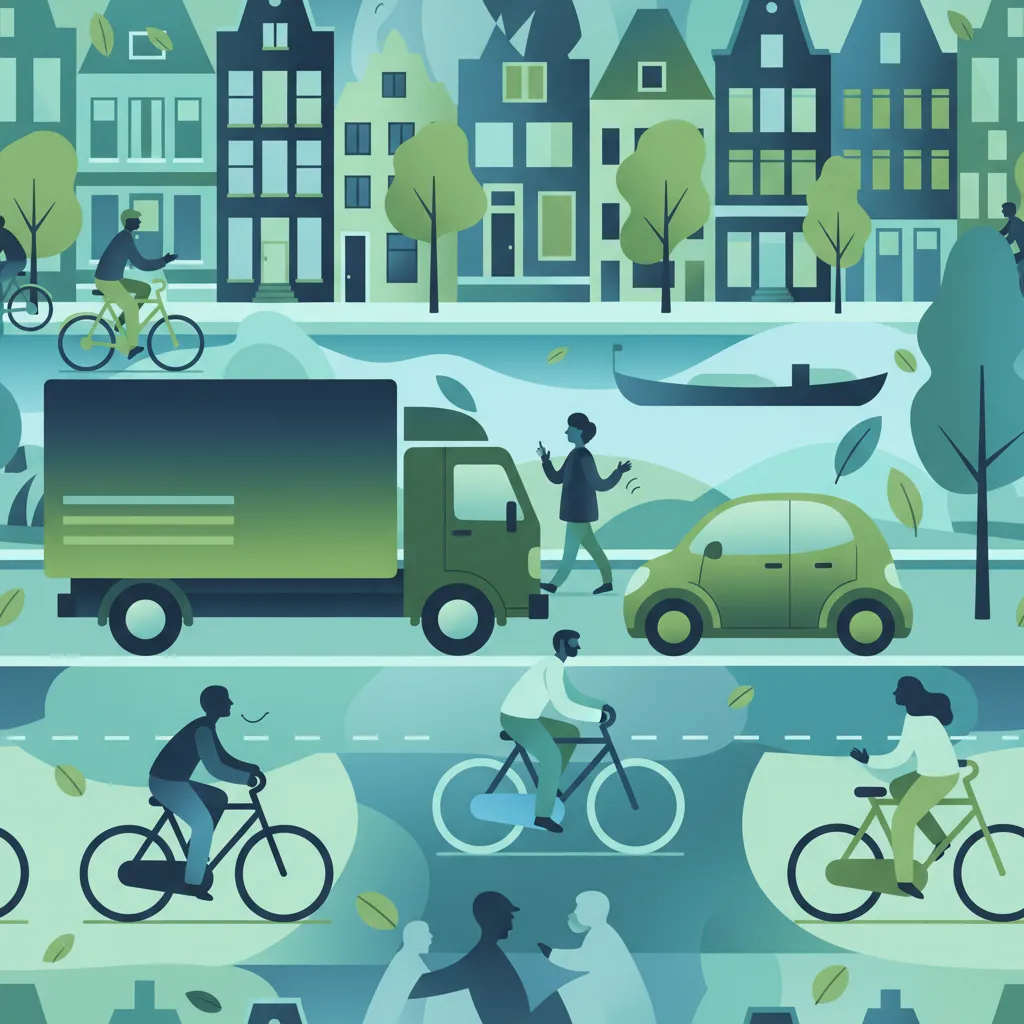
This lesson provides in-depth analysis of how to safely interact with the full spectrum of road users. You will learn about the specific characteristics of each, such as the large blind spots of trucks, the potential for sudden movements from cyclists, and the unpredictability of pedestrians. The content teaches strategies for communication, anticipation, and defensive positioning to ensure safe and respectful coexistence on the road for everyone.
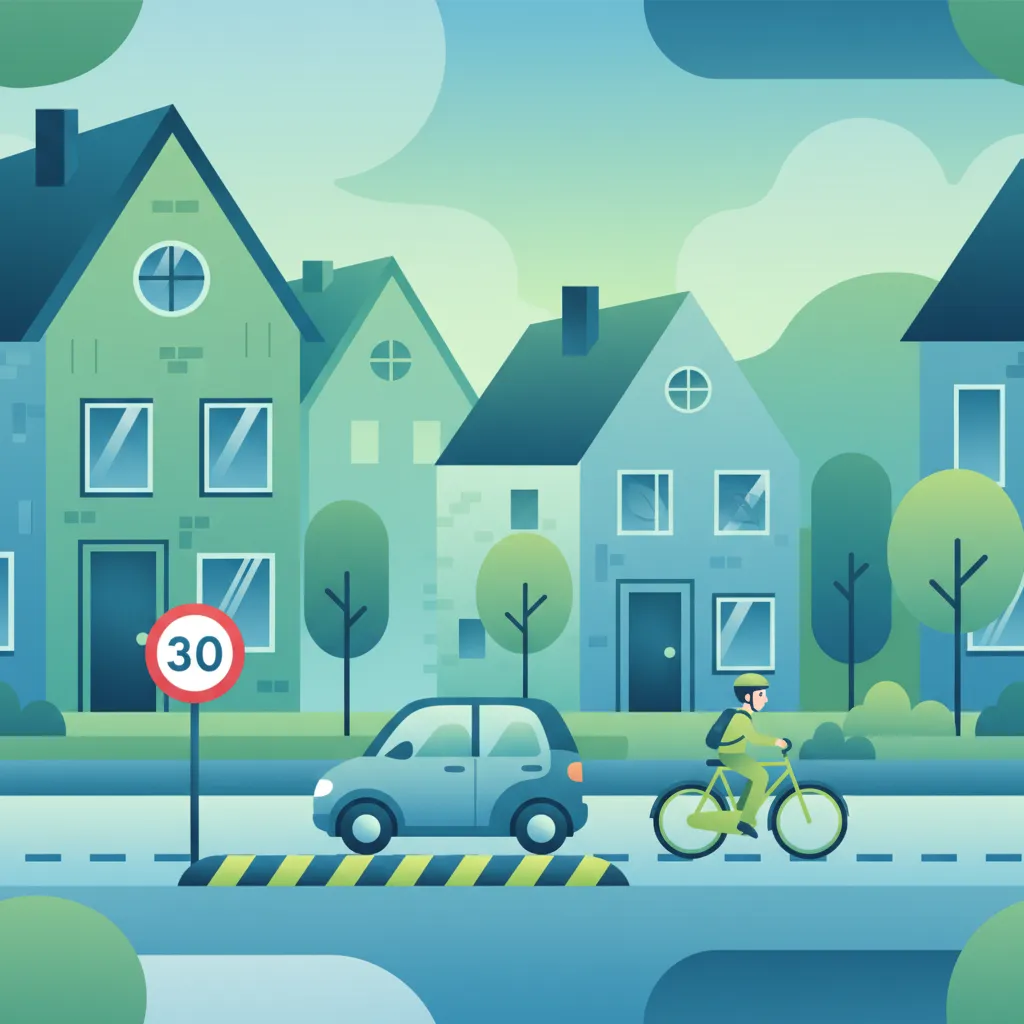
This lesson focuses on the high level of caution required when driving in residential areas. You will learn about the rules for special zones like 'gångfartsområde' (walking speed area) and the need to navigate around speed calming measures like speed bumps. The central theme is anticipating unpredictable behavior from residents, especially children, and managing the risks posed by parked cars that severely limit visibility.
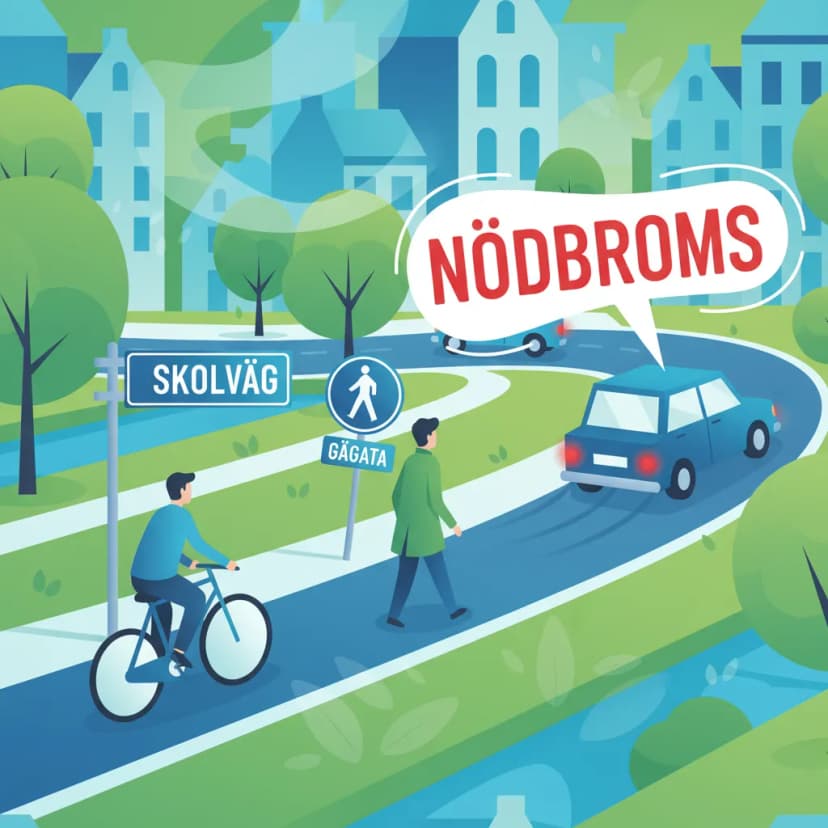
This lesson examines a variety of special situations where standard priority rules are modified. You will learn about the 'exit rule' (utfartsregeln) when entering a road from property, your duty to yield to buses indicating a departure from a stop, and the specific rules for pedestrian-only streets (gågata). The content also covers interactions with trams, emergency vehicles, and procedures at railway crossings, highlighting situations that demand maximum vigilance.
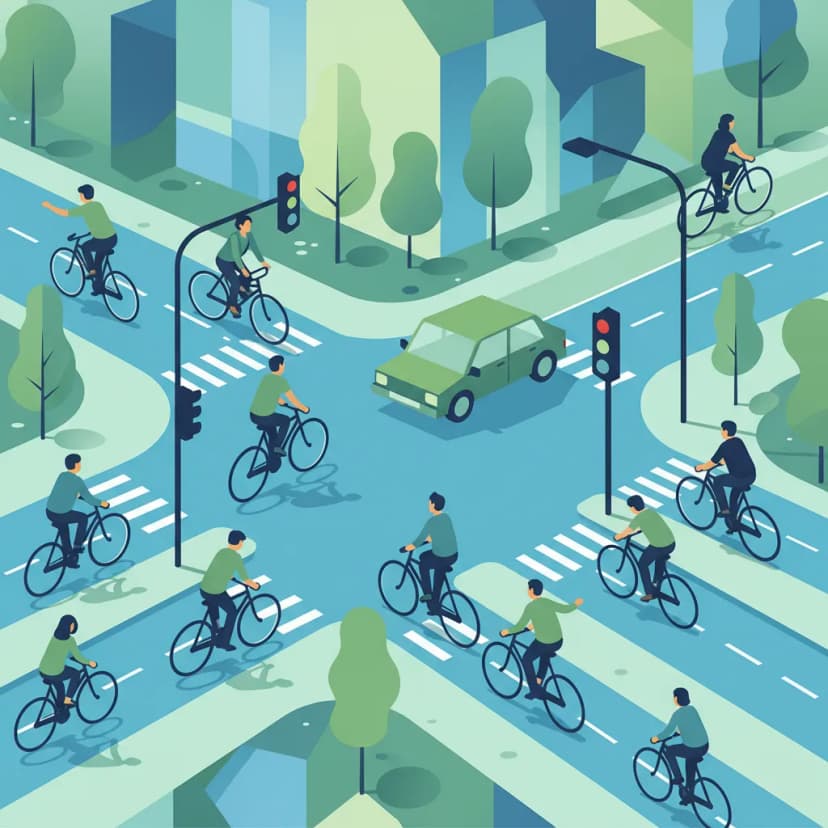
This lesson focuses on safe interaction with cyclists. You will learn to differentiate between a 'bicycle crossing' (cykelöverfart), where you have a duty to yield, and a 'bicycle passage' (cykelpassage), where specific priority rules apply. The content stresses the importance of leaving adequate space when overtaking cyclists and the critical danger of the 'right-hook' accident, emphasizing the need to check mirrors and blind spots carefully before turning right.
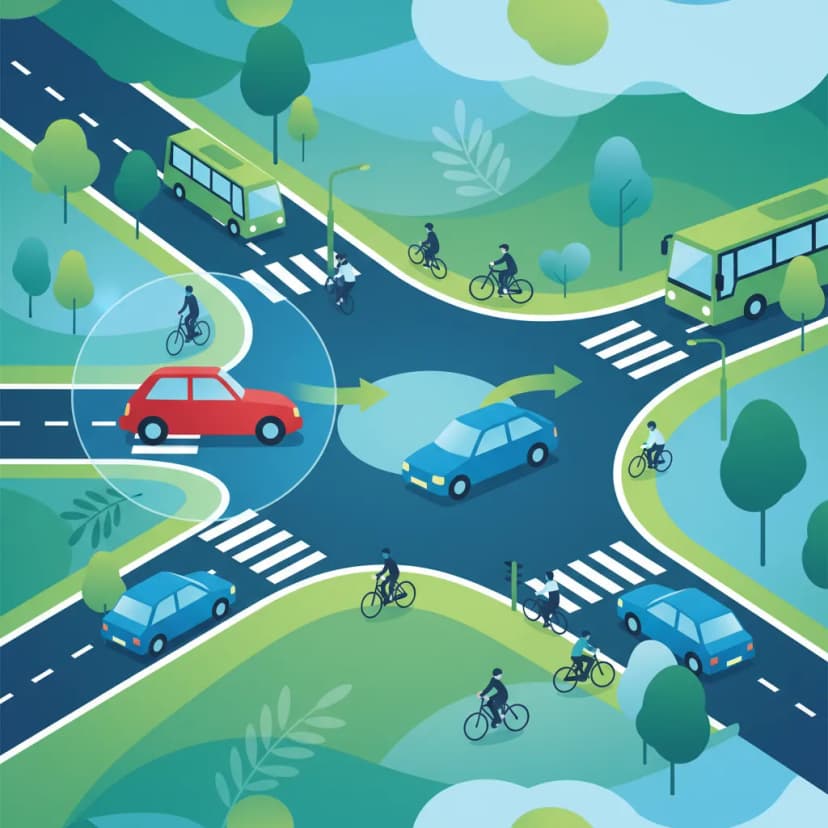
This lesson explains the foundational right-hand rule (högerregeln), which is the default priority rule at Swedish intersections where no other signs or signals regulate traffic. You will learn that you must always yield to vehicles approaching from your right in such situations. The content clarifies where this rule applies, such as in residential areas and on smaller rural roads, and covers the critical exceptions when signs or other rules take precedence.
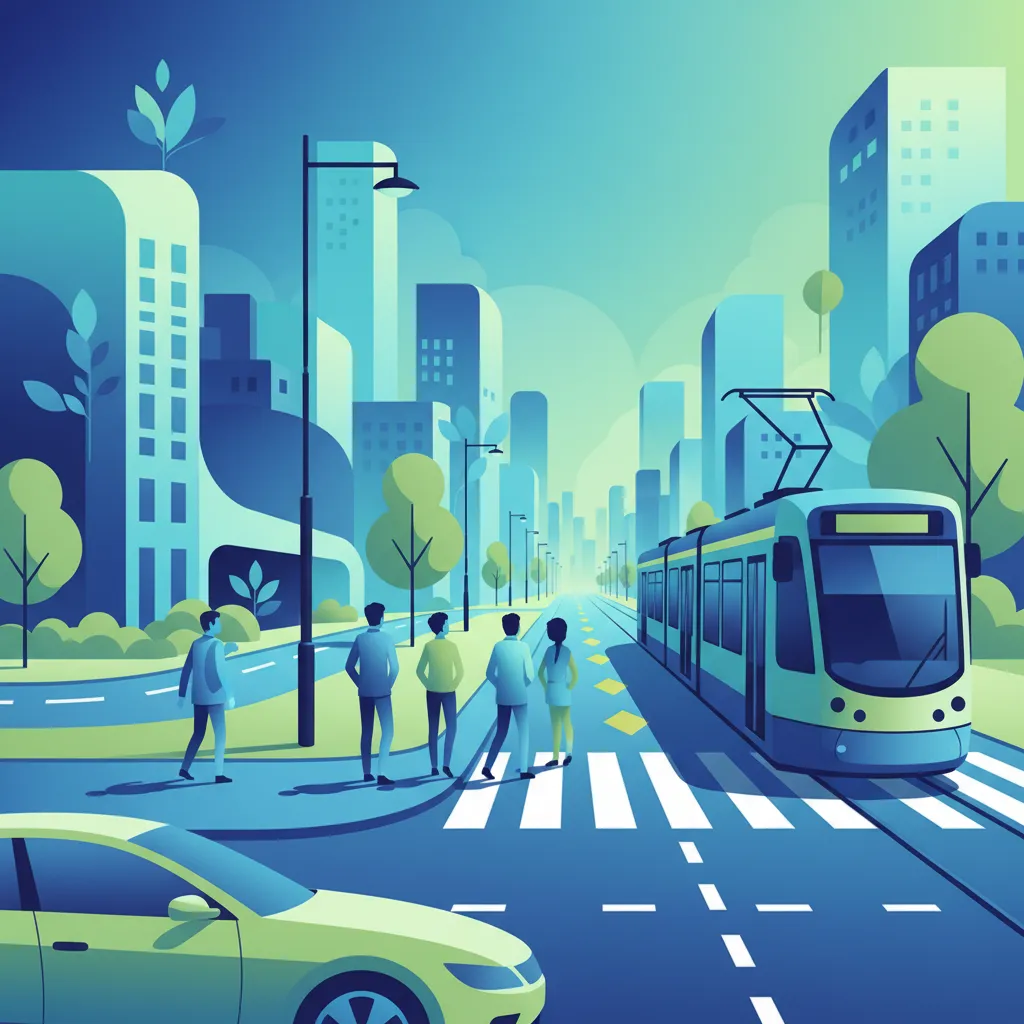
This lesson details the specific priority rules at pedestrian and tram crossings (Spårvagnskorsning). It reinforces the legal obligation for moped riders to stop for pedestrians at marked zebra crossings and explains that trams almost always have priority. Learners will understand the importance of approaching these crossings with caution, scanning for hazards, and being prepared to stop.
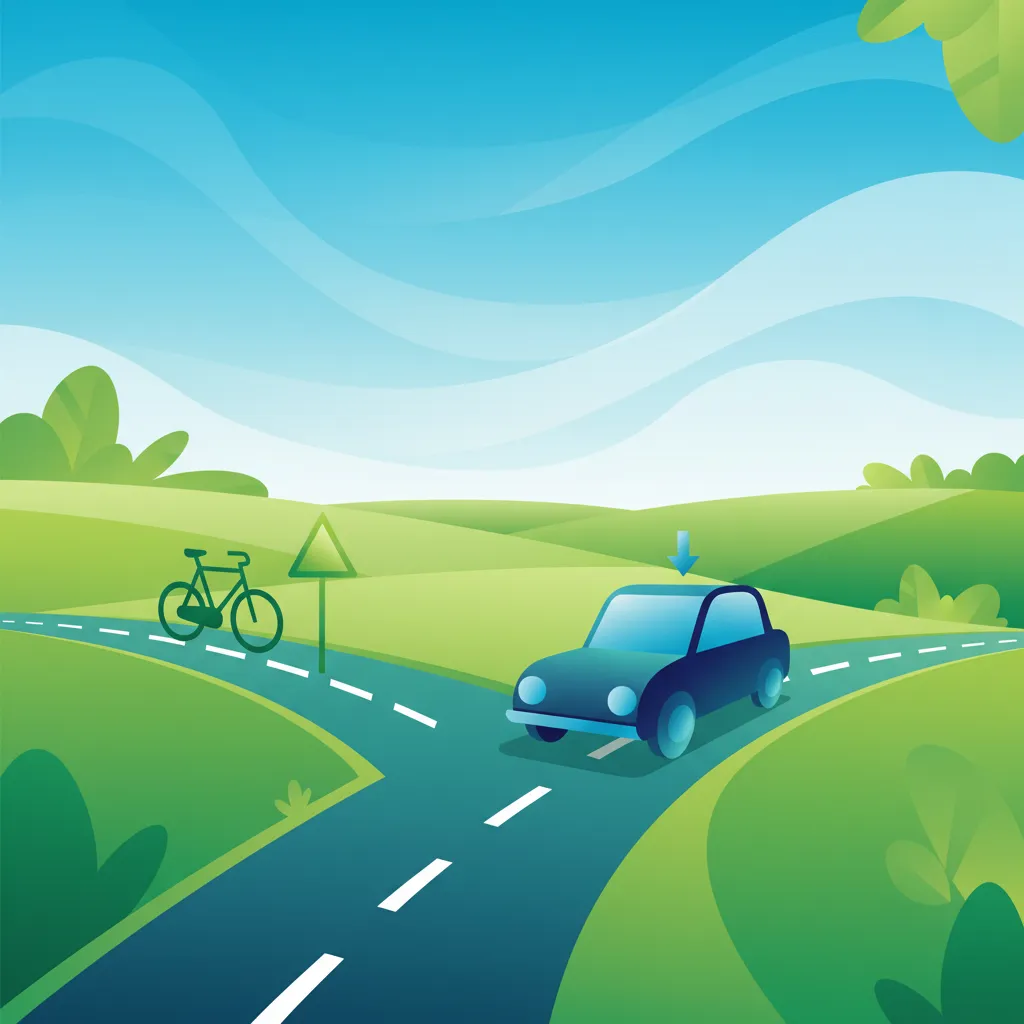
This lesson focuses on regulated intersections where priority is determined by signs indicating a main road (huvudled), a duty to yield (väjningsplikt), or a duty to stop (stopplikt). You will learn how to identify which road has priority and your legal obligation to give way to all traffic on that road before proceeding. The lesson covers proper procedures for approaching these junctions, assessing traffic, and entering the main road safely.
Learn to anticipate the movements of pedestrians, including children and distracted individuals, in various environments. This focuses on proactive awareness to prevent collisions and ensure safe passage, particularly in busy areas.
This lesson addresses the unique hazards associated with public transportation. It explains how to safely navigate around buses that are stopping to pick up or drop off passengers and the importance of watching for pedestrians. It also covers the physical danger of slippery tram tracks, especially when wet, and reiterates that trams typically have absolute priority.
This lesson provides practical instructions for safely navigating different types of intersections and roundabouts. It covers procedures for approaching, entering, and exiting roundabouts, emphasizing the rule to yield to traffic already circulating. The content also addresses how to handle signal-controlled and uncontrolled intersections, ensuring riders select the correct lane and manage their speed appropriately.
This lesson addresses the severe dangers of riding a moped in snow and icy conditions. It explains how to identify potential hazards like black ice and emphasizes that avoiding riding in such conditions is the safest strategy. For situations where it cannot be avoided, it provides advice on extremely gentle control inputs and vehicle preparation.
This lesson teaches you how to analyze and assess risk when sharing the road with a variety of users, from large trucks to cyclists and pedestrians. You will learn to recognize common patterns of behavior and potential conflict points, allowing you to anticipate the actions of others before they create a dangerous situation. Developing this predictive mindset is a cornerstone of defensive riding and is key to staying safe in busy, complex traffic environments.
This lesson details the best practices for sharing the road with cyclists, who are even more vulnerable than moped riders. It explains the legal requirements and safe etiquette for overtaking cyclists, emphasizing the need to provide ample space. The content also reviews the rules of interaction on designated cycle paths (Cykelbana) where both may be present.

This lesson details the specific hazards associated with riding on wet roads, including significantly increased stopping distances and the risk of aquaplaning. It explains how to recognize conditions where aquaplaning is likely and the importance of reducing speed. Riders will learn to use smoother throttle, braking, and steering inputs to maintain traction and control.
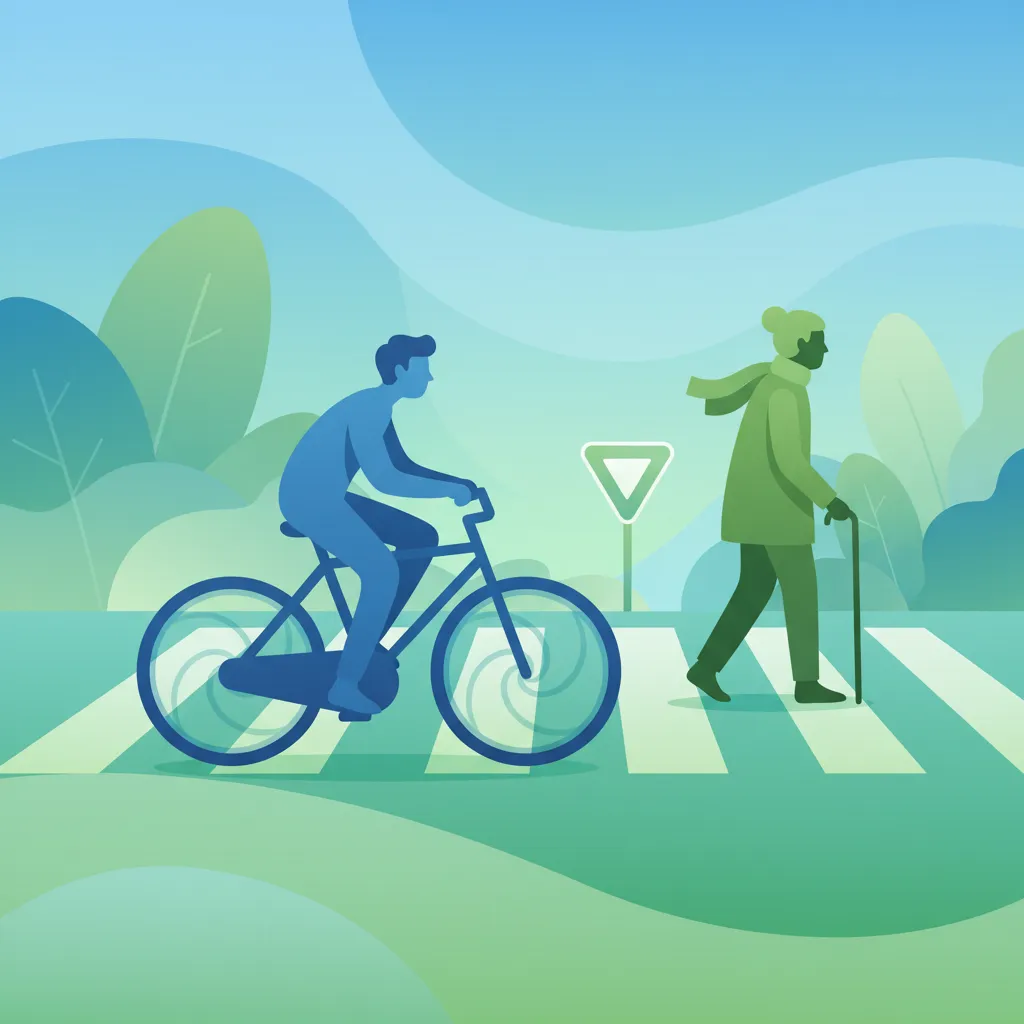
This lesson moves beyond legal requirements to discuss the importance of ethical and courteous riding. It encourages riders to be patient, considerate of others, and aware of their impact on the community, for example, by minimizing noise. This fosters a positive public image of moped riders and contributes to a safer and more pleasant environment for everyone.
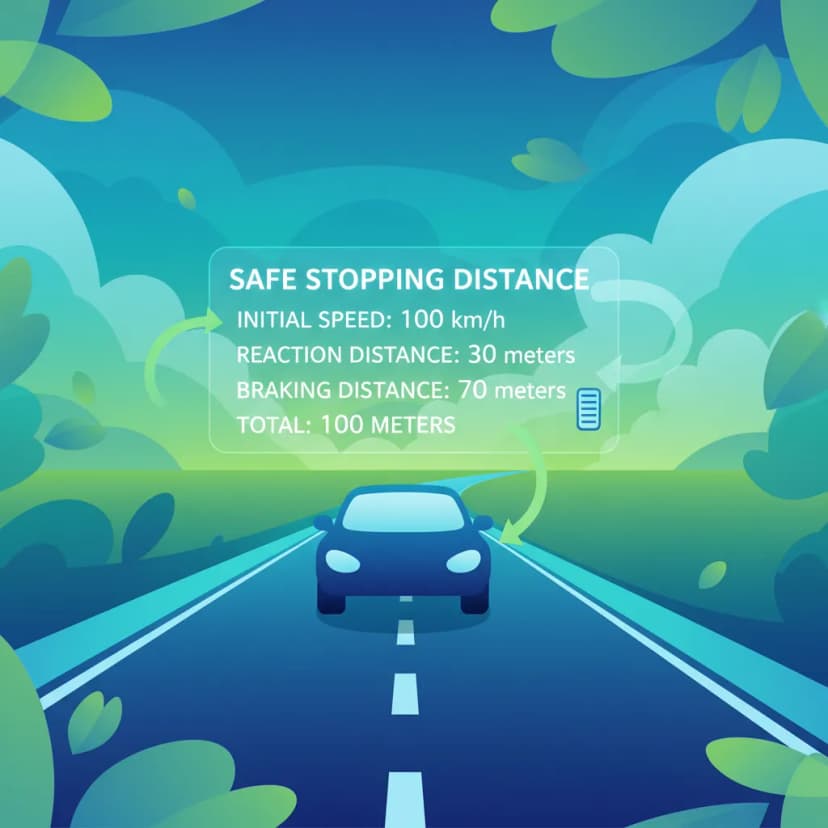
This lesson provides a practical understanding of the physics behind stopping a moped. It breaks down the total stopping distance into two key components: reaction distance (the distance traveled before applying the brakes) and braking distance (the distance covered while braking). Learners will explore how factors like speed, road conditions, and rider alertness dramatically affect these distances.
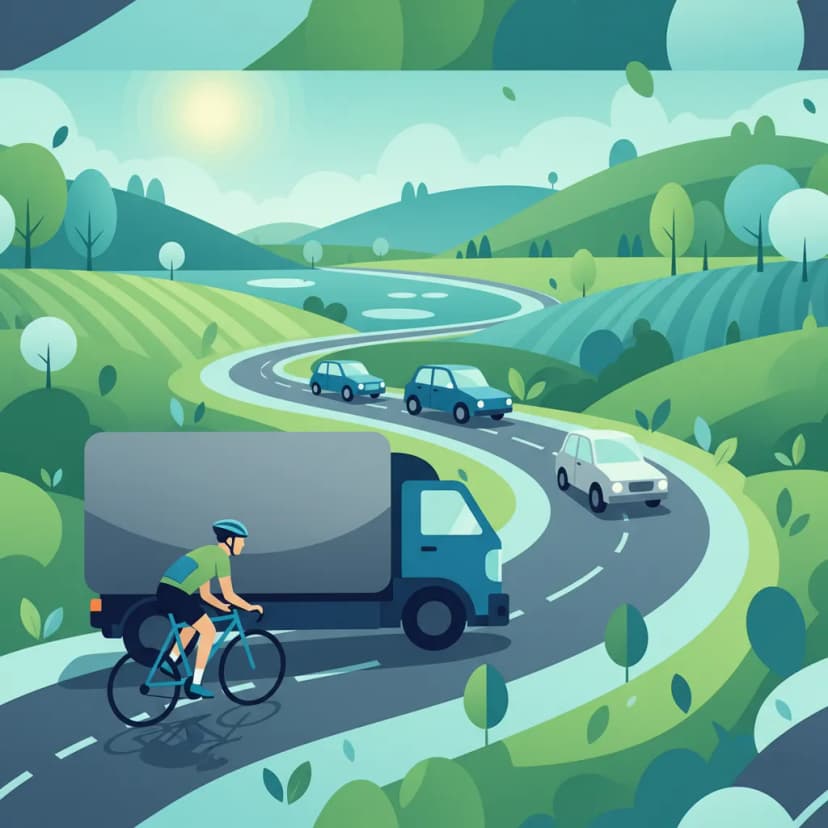
This lesson focuses on the specific challenges mopeds face when interacting with cars and heavy vehicles. It highlights the significant blind spots (or 'no-zones') around trucks and buses and teaches riders how to position themselves to remain visible. The content also covers the dangers of wind turbulence when near large vehicles and the importance of maintaining a generous space cushion.
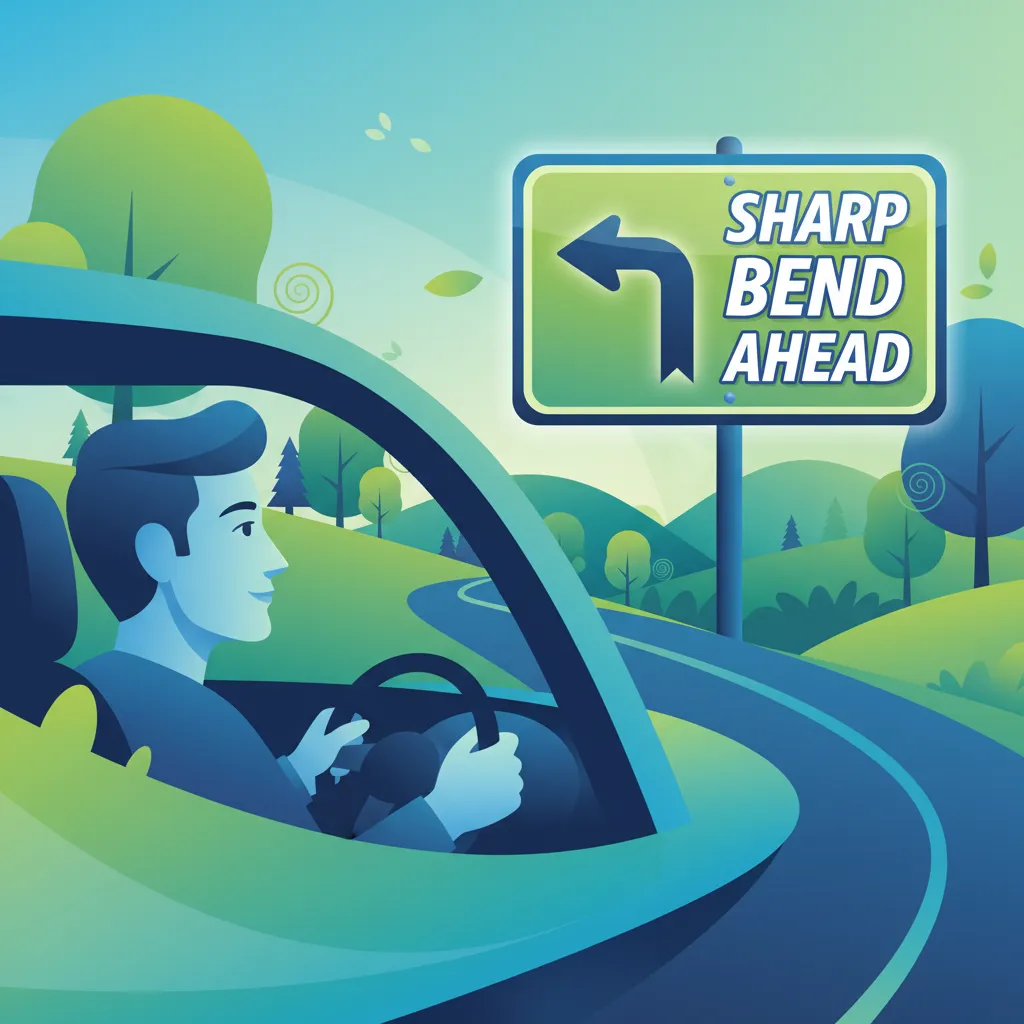
This lesson teaches riders to interpret warning signs (Varningsskyltar), which alert them to potential dangers on the road ahead. It covers a wide range of signs, including those for sharp curves, slippery surfaces, wildlife crossings, and upcoming roadworks. Understanding these triangular signs allows riders to anticipate hazards, adjust their speed and position proactively, and enhance their overall safety.
Find clear answers to common questions learners have about Pedestrian Awareness and Crossing Behavior. Learn how the lesson is structured, which driving theory objectives it supports, and how it fits into the overall learning path of units and curriculum progression in Sweden. These explanations help you understand key concepts, lesson flow, and exam focused study goals.
Yes, the principle of yielding applies broadly. While marked crossings (Väjningsplikt mot fotgängare) are clear priority zones, you must always be prepared to yield to pedestrians who are crossing or about to cross the road, especially if they are in a situation where they might be endangered by your passage.
The main risks involve unpredictability. Pedestrians, especially children or those distracted by phones, can step out into the road suddenly or unexpectedly. Cyclists on shared paths can also pose a risk. Your role is to anticipate these potential actions and maintain a safe speed and distance.
Focus on scenarios presented in the questions. Look for cues about location (near schools, bus stops), pedestrian behavior (entering road, distracted), and your moped's position. Always choose the option that prioritizes pedestrian safety and demonstrates your willingness to yield when necessary.
Generally, a gentle tap on the horn can alert pedestrians of your presence if there is an immediate danger. However, it should not be used aggressively. The primary strategy is to reduce speed and be prepared to stop, rather than relying solely on startling someone.
At a marked pedestrian crossing (Väjningsplikt mot fotgängare), you have a clear duty to yield to pedestrians. Cycle paths (Cykelbana) are for cyclists, but mopeds may sometimes share or cross them. You must always yield to cyclists if you are crossing their path, and remain aware of pedestrians who might also be crossing at those points.