
Navigate Sweden's roads with confidence by mastering its road sign system. This unit covers all essential regulatory, warning, and information signs specifically for moped riders, ensuring you understand their meaning and application. Learn to interpret these vital cues to ride safely and pass your Category AM theory exam.
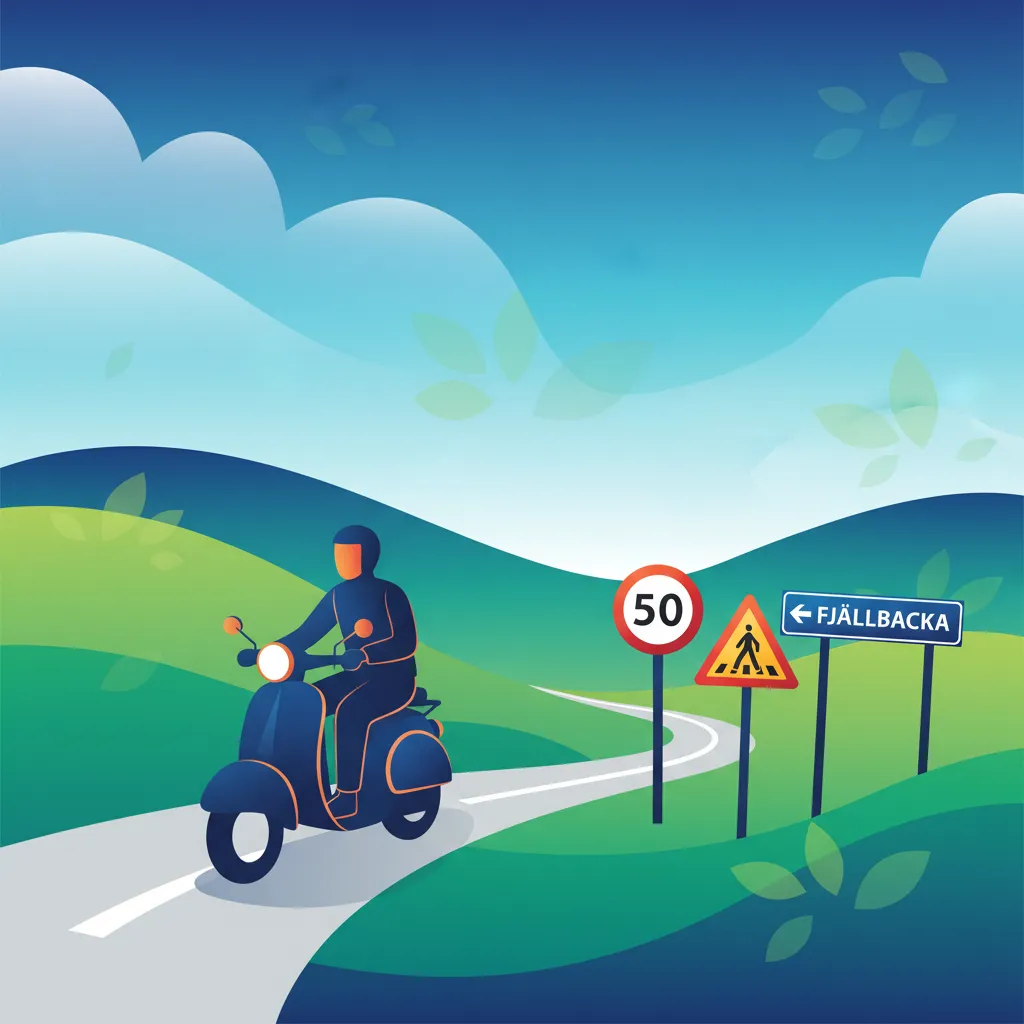
Browse all lessons that make up Swedish Road Sign System for Mopeds. Each lesson focuses on specific topics, learning objectives, and core concepts, helping you build essential knowledge and follow a clear, structured progression toward your study goals in Sweden.
This lesson focuses on regulatory signs (Regulationsskyltar), which issue mandatory instructions and prohibitions that all road users must follow. It details common signs such as speed limits, stop and give way signs, and mandatory direction arrows. Special attention is given to signs directly affecting mopeds, like 'no moped' signs and those indicating designated moped lanes, ensuring riders can navigate legally and safely.
This lesson teaches riders to interpret warning signs (Varningsskyltar), which alert them to potential dangers on the road ahead. It covers a wide range of signs, including those for sharp curves, slippery surfaces, wildlife crossings, and upcoming roadworks. Understanding these triangular signs allows riders to anticipate hazards, adjust their speed and position proactively, and enhance their overall safety.
This lesson explains the function of informational signs (Informationsskyltar), which provide guidance for navigation and access to services. It covers signs indicating distances to destinations, route numbers, and locations of fuel stations or parking areas. For moped riders, this includes identifying signs for designated moped or cycle lanes, helping them to plan and follow routes efficiently and legally.
This lesson focuses on the importance of road markings (Vägmarkering) for guiding traffic flow and ensuring safety. It explains the meaning of different line types, such as solid and broken lines, and the function of stop lines and pedestrian crosswalks. The content highlights markings specific to cycle and moped lanes, teaching riders how to correctly position themselves on the road based on these visual cues.
This lesson explores how the environment affects sign interpretation, contrasting the high density and visual complexity of urban settings with the sparser signage of rural areas. It teaches riders to manage visual clutter in cities and maintain focus over long distances on country roads. By understanding these contextual differences, riders can better anticipate rules and hazards regardless of their location.
Explore high-intent keywords and long-tail search topics learners use when researching Swedish Road Sign System for Mopeds. These terms reflect how people search for reliable study materials, structured explanations, and unit-level theory preparation support in Sweden.
Find clear answers to the most common questions learners ask about Swedish Road Sign System for Mopeds. Understand how the unit is organized, what learning goals it supports, and how it contributes to your study progression with structured explanations and practical guidance tailored for learners in Sweden.
Swedish road signs for mopeds are primarily divided into three categories: regulatory signs (Regulationsskyltar), which mandate or prohibit actions; warning signs (Varningsskyltar), which alert you to potential hazards; and information signs (Informationsskyltar), which provide guidance and details. Understanding the purpose of each category is key to safe riding.
While many basic signs are universal, some regulatory and information signs may have specific applications or restrictions relevant to mopeds, such as indicating where mopeds are permitted or prohibited. It's crucial to focus on signs that directly impact moped usage, like those related to cycle paths or specific speed limits for AM vehicles.
Yes, road markings (Markering på vägbanan) are equally important. They provide essential guidance on lane positioning, pedestrian crossings, cycle lanes, and special zones. This unit covers key markings that mopeds frequently encounter, ensuring you can interpret them correctly alongside traffic signs.
Absolutely. A significant portion of the Category AM theory exam focuses on your ability to recognize and interpret road signs and markings correctly. Mastering this unit will directly improve your score on the sign-related questions and your overall understanding of Swedish traffic rules.
If you encounter an unfamiliar sign, the safest approach is to proceed with caution and assume it indicates a potential hazard or a specific rule. Always prioritize slowing down, increasing your awareness of your surroundings, and looking for contextual clues. This unit aims to minimize such uncertainties by thoroughly explaining common and important signs.
Yes, while core sign meanings remain constant, their application can vary. Urban areas may have more complex regulatory and information signs related to traffic flow, parking, and pedestrian zones. Rural areas often feature more warning signs for hazards like sharp bends or wild animals. This unit addresses interpretation in both settings.
All included lessons
Lessons in Swedish Road Sign System for Mopeds
See who benefits most from studying Swedish Road Sign System for Mopeds. This overview explains how the unit supports different learning needs, what level of knowledge is helpful before starting, and how it fits into the overall study path in Sweden.
This unit is specifically designed for individuals pursuing their Swedish Category AM (moped) driving license. It's ideal for new riders who need a comprehensive understanding of road signage and for those who wish to reinforce their knowledge before the official theory test, ensuring they can correctly interpret signs in various traffic situations.

See how Swedish Moped Theory AM is structured, with key topics, learning objectives, and a step-by-step path for theory preparation in Sweden.
Explore all units and lessons included in this driving theory course.