
Welcome to the lesson on Cycle Lanes, Bus Lanes, and Mixed Use Zones, part of the 'Road Markings and Shared Spaces' unit for your Swedish Category AM (moped) license. Understanding these designated areas is vital for safe and legal moped riding in Sweden. This lesson will clarify which lanes you can use and the rules you must follow, preparing you for diverse urban traffic scenarios and specific exam questions.
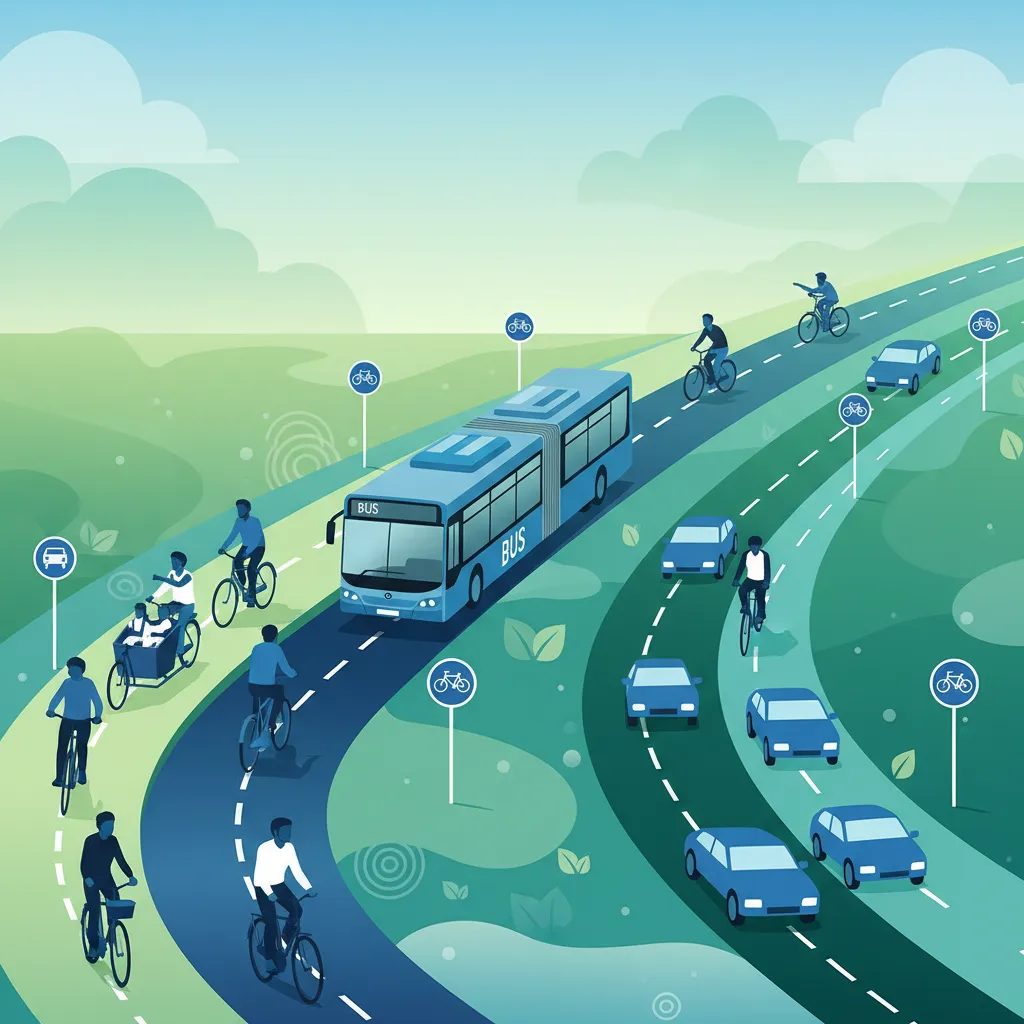
Navigating urban traffic requires a clear understanding of how different road users share or are separated from various lane types. For Category AM (moped) riders in Sweden, correctly interpreting lane markings and signs is not just a matter of convenience; it is fundamental to safety, legal compliance, and harmonious interaction with other road users. This lesson will detail the specific regulations governing cycle lanes, bus lanes, and mixed-use zones, clarifying under what circumstances a moped is permitted to enter these lanes and the rules that must be followed.
Sweden employs a system of lane allocation designed to optimize traffic flow, enhance safety for vulnerable users, and prioritize high-capacity public transport. This hierarchy includes exclusive lanes, preferential lanes, and shared lanes, each serving a distinct purpose and guided by specific legal intent.
Cycle lanes are designed to provide a protected space for cyclists, promoting sustainable transport and separating them from faster motor traffic. This separation helps reduce the risk of common accidents such as side-swipes, overtaking collisions, and incidents caused by opening vehicle doors. By offering a dedicated path, cyclists are encouraged to use bicycles as a primary mode of transport.
Bus lanes, known as kollektivtrafikfält or busfält, prioritize public transport vehicles. Their primary goal is to ensure that buses and sometimes trams can move efficiently through congested areas, reducing travel times and lowering overall emissions. This strategy supports public transport as a key component of urban mobility.
Mixed-use zones, or delade körfält, are implemented where dedicated infrastructure for each vehicle type is impractical or unavailable. These lanes are designed to balance the needs of multiple users, allowing different vehicle categories to coexist. While offering flexibility, they demand heightened awareness and adherence to specific rules to ensure the safety of all users.
The underlying safety logic across all these lane types is to reduce conflict points by managing the interaction between vehicles of different speeds and levels of protection. For moped riders, understanding where they are permitted, and under what conditions, is crucial for safely integrating into the complex urban traffic landscape.
Familiarity with Swedish road signs and markings, as well as general priority and right-of-way rules, is essential before delving into the specifics of lane usage.
Cycle lanes are a common feature in Swedish urban planning, providing specific routes for bicycle traffic. Moped riders must carefully distinguish these lanes and understand the strict rules governing their access.
A cycle lane (cykelfält or cykelbana) is a dedicated section of the roadway or a separate path intended exclusively for bicycles. These lanes are typically marked by a solid white line and a prominent bicycle symbol painted on the road surface. They may also be accompanied by specific blue-background signs indicating a cycle lane.
Cycle lanes can be physically separated from the main carriageway by a raised curb or barrier, offering maximum protection to cyclists. Alternatively, they may be delineated only by paint markings on the road surface, requiring greater vigilance from all road users.
According to Swedish traffic regulations, Category AM mopeds (Class II mopeds with a maximum speed of 45 km/h) are generally not permitted to use exclusive cycle lanes. This prohibition is in place to protect the more vulnerable cyclists and maintain the intended flow of bicycle traffic.
Mopeds may only enter or use a cycle lane if a supplementary sign explicitly permits it. These signs might read "Mopeder tillåtna" (Mopeds allowed) or "Alla fordon" (All vehicles). Without such a clear sign of permission, a moped must remain on the main carriageway, even if the cycle lane appears empty.
An additional sign placed beneath a primary road sign to modify or clarify its meaning. These plates are crucial for determining specific permissions or restrictions for certain vehicle types.
When a moped is permitted to use a cycle lane, the rider must adhere to the posted speed limit, which is often lower than on the main road, and always give way to cyclists. Mopeds should ride responsibly, maintaining a safe distance and speed, and should not impede the flow of bicycle traffic.
A common misunderstanding among moped riders is the assumption that any painted lane with a bicycle symbol is automatically open to mopeds. This is incorrect. The presence of a bicycle symbol alone is not an invitation for mopeds. The default rule is prohibition unless explicit permission is granted through clear signage.
Another misconception is that mopeds, being slower than cars, are inherently safer in cycle lanes. While mopeds are slower, they are heavier and faster than bicycles, posing a greater risk to cyclists if an incident occurs. The exclusive nature of cycle lanes is paramount for cyclist safety.
Incorrectly entering a cycle lane can lead to fines and potentially demerit points, in addition to increasing the risk of accidents with cyclists.
Bus lanes are a critical component of Sweden's public transport infrastructure, designed to ensure efficient and timely bus services. Moped riders must understand the strict conditions under which they may, or may not, use these lanes.
A bus lane (kollektivtrafikfält or busfält) is a lane reserved primarily for buses and sometimes trams. These lanes are typically identified by a stylized bus symbol painted on the road surface and/or by prominent road signs. The signs are usually blue with a white bus symbol.
The primary purpose of a bus lane is to speed up public transport by allowing buses to bypass general traffic congestion. This helps maintain bus schedules, makes public transport more attractive, and reduces the environmental impact of urban travel.
Mopeds are generally prohibited from using bus lanes. However, similar to cycle lanes, there are specific exceptions: Mopeds may only use a bus lane if a supplementary sign explicitly permits it. This sign will typically read "Mopeder tillåtna" (Mopeds allowed) or "Alla fordon" (All vehicles). Without such a sign, a moped must not enter a bus lane.
An additional critical condition for using a bus lane, even if permitted by signage, is the minimum speed requirement. Many bus lanes have a legally defined minimum speed, commonly 40 km/h, indicated by signs such as "Minsta hastighet 40 km/h" (Minimum speed 40 km/h).
A legally mandated lower bound for vehicle speed within certain exclusive lanes, typically 40 km/h for bus lanes. Vehicles unable to maintain this speed are prohibited from using the lane.
Since a Category AM moped has a maximum speed of 45 km/h, it can technically meet a 40 km/h minimum speed. However, if traffic conditions (e.g., congestion, bad weather) prevent the moped from safely maintaining that minimum speed, the rider must not use the bus lane. Failing to meet the minimum speed requirement not only impedes public transport but also creates a hazard for other vehicles, which are often heavier and faster.
Even when permitted in a bus lane, moped riders must remember that buses have priority. Always give way to buses, especially when they are merging, departing from a stop, or indicating a lane change. Mopeds should maintain a safe following distance and be prepared for sudden stops or maneuvers by the bus. Never attempt to ride alongside a bus in a confined lane or overtake it in an unsafe manner.
Mixed-use zones represent segments of the roadway where various categories of traffic, including mopeds, bicycles, and sometimes cars, share the same lane. These areas require particular attentiveness and adherence to shared space etiquette.
A mixed-use zone (delat körfält or shared lane) is a roadway section where markings and/or signs indicate that multiple vehicle categories may use the same lane. These lanes are often characterized by dotted white lines rather than solid ones and may be accompanied by a "Delad körfält" (Shared lane) sign.
In mixed-use zones, mopeds are generally fully permitted to travel. Unlike exclusive cycle or bus lanes, there isn't a default prohibition against mopeds. However, this permission comes with responsibilities to ensure the safety of all users, especially more vulnerable ones like cyclists and pedestrians.
In shared lanes, the right-hand traffic rule applies: all vehicles must keep to the right side of the lane. Mopeds should position themselves to the right of the lane's centerline, allowing space for other vehicles to pass safely on the left where appropriate.
When overtaking another road user in a mixed-use lane, particularly a cyclist or another moped, it must only be done when safe and without endangering them. A minimum lateral clearance of 0.5 meters (and ideally more if traveling at higher speeds or in adverse conditions) should be maintained. Never overtake on the right if it means cutting into another user's space.
In mixed-use lanes, always anticipate the actions of other road users. Cyclists and pedestrians may make sudden movements, so be prepared to adjust your speed and position accordingly.
Mopeds must also adhere strictly to the posted speed limit for the mixed-use lane. Even though it's a shared space, exceeding the speed limit is a violation and significantly increases the risk of accidents.
The Swedish traffic system relies heavily on both pavement markings and road signs to convey rules and restrictions. For moped riders, understanding their interplay and hierarchy is vital for correct lane usage.
Pavement markings are symbols, lines, and words painted on the road surface that provide guidance and regulatory information. For this lesson, key types include:
A fundamental principle in Swedish traffic law is the signage hierarchy: road signs always take precedence over pavement markings when there is a conflict. This is crucial because signs are typically visible from a greater distance and are designed to provide clear, unambiguous instructions.
For example, if a lane has a faint bicycle symbol painted on it but a clear road sign states "Moped förbjudet" (Moped prohibited), the sign must be obeyed. The moped rider must stay out of that lane.
Supplementary plates play a significant role in modifying or clarifying the meaning of primary signs. These smaller plates, placed below the main sign, can either broaden permissions (e.g., "Mopeder tillåtna" under a bus lane sign) or add further restrictions (e.g., "Minsta hastighet 40 km/h" under a bus lane sign). Always read the primary sign in conjunction with any supplementary plates.
Adhering to specific rules ensures not only your safety but also the safety of other road users and the efficient flow of traffic. Violations can lead to significant legal consequences.
Here is a summary of the core rules for mopeds in dedicated and shared lanes:
All references to legal articles and specific fine amounts should be verified against the latest edition of the Swedish Traffic Regulations (Trafikförordningen) and any amendments published by Transportstyrelsen.
| # | Rule Statement | Applicability | Rationale | Correct Application Example |
|---|---|---|---|---|
| 1 | Mopeds must not use an exclusive cycle lane unless a sign explicitly permits it. | Exclusive cycle lanes (solid bicycle symbol, "Cykelfält" sign). | Protect cyclists, limit conflict. | Rider uses main carriageway as "Mopeder tillåtna" sign is absent. |
| 2 | Mopeds may use a bus lane only if a supplementary sign permits it AND they can maintain the minimum speed. | Bus lanes (bus symbol, "Busfält" sign) with minimum speed. | Ensures efficient public transport; prevents delays. | Rider uses a bus lane with "Mopeder tillåtna" sign, maintaining 42 km/h. |
| 3 | In mixed-use zones, mopeds must keep to the right, maintain safe lateral clearance, and overtake only when safe. | Lanes with dotted lines and "Delad körfält" sign. | Ensures predictable traffic flow and safety for all users. | Rider maintains 0.5 m clearance to cyclist while passing on the left. |
| 4 | When signage and pavement markings conflict, the road sign prevails. | Any lane where a sign contradicts markings. | Provides unambiguous instructions; signs are more visible. | Rider avoids a lane marked with a bike symbol but with a "Moped förbjudet" sign. |
| 5 | Mopeds must not stop, park, or wait in exclusive/preferential lanes unless specifically permitted. | All cycle and bus lanes. | Prevents obstruction of intended users and hazards. | Rider stops only in a designated "Stopp för moped" area. |
| 6 | During temporary roadworks, mopeds must obey any temporary lane markings or signs. | Construction zones. | Ensures safety during changing road conditions. | Rider follows a temporary detour sign away from a closed cycle lane. |
Ignoring these rules can lead to serious consequences, including fines, demerit points, and an increased risk of accidents.
Demerit points can accumulate on a driver's record, potentially leading to licence suspension in Sweden.
| Violation | Why It’s Wrong | Correct Behaviour | Typical Consequence |
|---|---|---|---|
| Entering a cycle lane without a "Mopeder tillåtna" sign. | Violates exclusive lane rule; endangers cyclists. | Stay on main carriageway. | Fine (e.g., ≈2,000 SEK) and possible demerit points. |
| Using a bus lane when unable to maintain minimum speed (e.g., 40 km/h). | Impedes public transport; creates traffic disruption. | Merge to regular lane if speed cannot be maintained. | Fine for impeding traffic. |
| Overtaking a cyclist on the right in a mixed-use zone. | Contravenes right-hand traffic rule; collision risk. | Overtake only on the left, maintaining safe clearance. | Fine; increased accident risk. |
| Parking or stopping in an exclusive bus lane. | Obstructs public transport; illegal stopping. | Use designated parking zones. | Fine and potential vehicle removal. |
| Ignoring temporary roadwork signs prohibiting moped entry. | Disregards safety instructions; creates hazards. | Follow temporary detour or lane changes. | Fine; increased liability in case of incident. |
| Riding in a mixed-use lane at excessive speed. | Exceeds limit, endangers slower users. | Observe posted speed limit. | Fine and possible points. |
Safe moped riding involves more than just knowing the rules; it requires adapting your behavior to changing environmental and traffic conditions.
Applying the rules in real-world situations is key to safe riding. Here are a few common scenarios:
Correct Behaviour: The moped rider confidently enters the cycle lane. They maintain a speed below or at 30 km/h, being mindful of any cyclists present, and are prepared to yield to them. The presence of the "Mopeder tillåtna" sign overrides the default prohibition, granting legal access.
Incorrect Behaviour: The moped rider, assuming all cycle lanes are prohibited, stays on the main carriageway, potentially creating unnecessary congestion or missing a more direct and safer route.
Correct Behaviour: The moped rider remains in the general traffic lanes. If they need to turn right and the bus lane temporarily merges or allows right-turning traffic, they would carefully merge into the bus lane only for the purpose of turning, checking thoroughly for approaching buses.
Incorrect Behaviour: The moped rider enters the bus lane, perhaps attempting to bypass the heavy traffic. They might struggle to maintain 40 km/h in the congestion, thereby impeding the flow of public transport. This is a violation, as no supplementary sign permitted their entry.
Correct Behaviour: The moped rider enters the mixed-use lane, keeping to the right. When approaching cyclists, the rider slows down, maintains a lateral clearance of at least 0.5 meters (and more if passing cyclists riding side-by-side), and overtakes only on the left when it's safe and clear. The moped maintains a speed no greater than 30 km/h.
Incorrect Behaviour: The moped rider speeds through the lane, weaving between cyclists or attempting to overtake on the right, which creates an immediate collision risk. Stopping in the middle of the lane to wait for something also obstructs flow.
Correct Behaviour: The moped rider immediately recognizes and obeys the temporary signage. They smoothly transition into the detour lane, staying on the right-hand side, and reduce their speed to 20 km/h. They remain alert to potential hazards from construction and other traffic.
Incorrect Behaviour: The moped rider ignores the temporary signs, perhaps thinking they don't apply, and tries to navigate the original, now closed-off, cycle lane. This puts them and construction workers at severe risk and is a direct violation of safety regulations.
Mastering the rules for cycle lanes, bus lanes, and mixed-use zones is paramount for any Category AM moped rider in Sweden. The core principles to remember are:
By consistently applying these principles, moped riders can navigate Sweden's complex urban environments safely, legally, and with confidence.
Lesson content overview
Explore all units and lessons included in this driving theory course.
Explore search topics learners often look for when studying Cycle Lanes, Bus Lanes, and Mixed Use Zones. These topics reflect common questions about road rules, driving situations, safety guidance, and lesson level theory preparation for learners in Sweden.
Browse additional driving theory lessons that cover connected traffic rules, road signs, and common driving situations related to this topic. Improve your understanding of how different rules interact across everyday traffic scenarios.
Understand the specific traffic laws and road markings in Sweden that govern the use of dedicated cycle lanes, bus lanes, and mixed-use zones. This lesson clarifies when Category AM moped riders can and cannot enter these lanes and the rules to follow.

This lesson clarifies the regulations for operating a moped on cycle paths (Cykelbana) and other shared spaces in Sweden. It explains which types of mopeds are permitted on these paths and the specific rules that apply, such as lower speed limits and the duty to yield to cyclists. The content focuses on safe interaction and communication to ensure peaceful coexistence with other users in these environments.
This lesson provides clear guidance on selecting the appropriate lane on multi-lane roads to match your intended direction of travel. It covers the rules and best practices for moving into turning lanes, positioning for overtakes, and maintaining a steady course. The focus is on making early, predictable decisions to ensure smooth integration with surrounding traffic.
This lesson focuses on the importance of road markings (Vägmarkering) for guiding traffic flow and ensuring safety. It explains the meaning of different line types, such as solid and broken lines, and the function of stop lines and pedestrian crosswalks. The content highlights markings specific to cycle and moped lanes, teaching riders how to correctly position themselves on the road based on these visual cues.

This lesson clarifies the legal distinction between stopping temporarily and parking. It identifies areas where stopping is prohibited, such as near intersections or on pedestrian crossings, to maintain traffic flow and safety. The content also discusses designated waiting areas at traffic lights, often marked for cyclists and mopeds, which can offer a safer position.
This lesson details the best practices for sharing the road with cyclists, who are even more vulnerable than moped riders. It explains the legal requirements and safe etiquette for overtaking cyclists, emphasizing the need to provide ample space. The content also reviews the rules of interaction on designated cycle paths (Cykelbana) where both may be present.
This lesson provides practical instructions for safely navigating different types of intersections and roundabouts. It covers procedures for approaching, entering, and exiting roundabouts, emphasizing the rule to yield to traffic already circulating. The content also addresses how to handle signal-controlled and uncontrolled intersections, ensuring riders select the correct lane and manage their speed appropriately.
This lesson explains how to identify and interact with various types of mopeds and other low-speed vehicles common on Swedish roads. You will learn the difference between Class I and Class II mopeds and their place on the road, as well as how to recognize A-tractors by their LGF (långsamtgående fordon) sign. The key focus is on managing the large speed differential and making safe judgments when deciding to overtake.
This lesson consolidates the key regulations that apply specifically to moped operation in Sweden. It covers mandatory rules such as speed limits, helmet use, and requirements for vehicle lighting and reflectors. Furthermore, the lesson explains the legal consequences of violations, including the system of fines and potential demerit points, ensuring riders understand their full range of legal responsibilities on the road.
This lesson provides detailed guidance on navigating complex traffic points such as signalized intersections, multi-lane roundabouts, and pedestrian crossings. You will learn the correct procedures for entering and exiting roundabouts, the specific rules for yielding to pedestrians and cyclists at designated crossings, and how to interpret complex traffic light signals. These skills are vital for safe urban and suburban riding, where interaction with vulnerable road users is frequent.
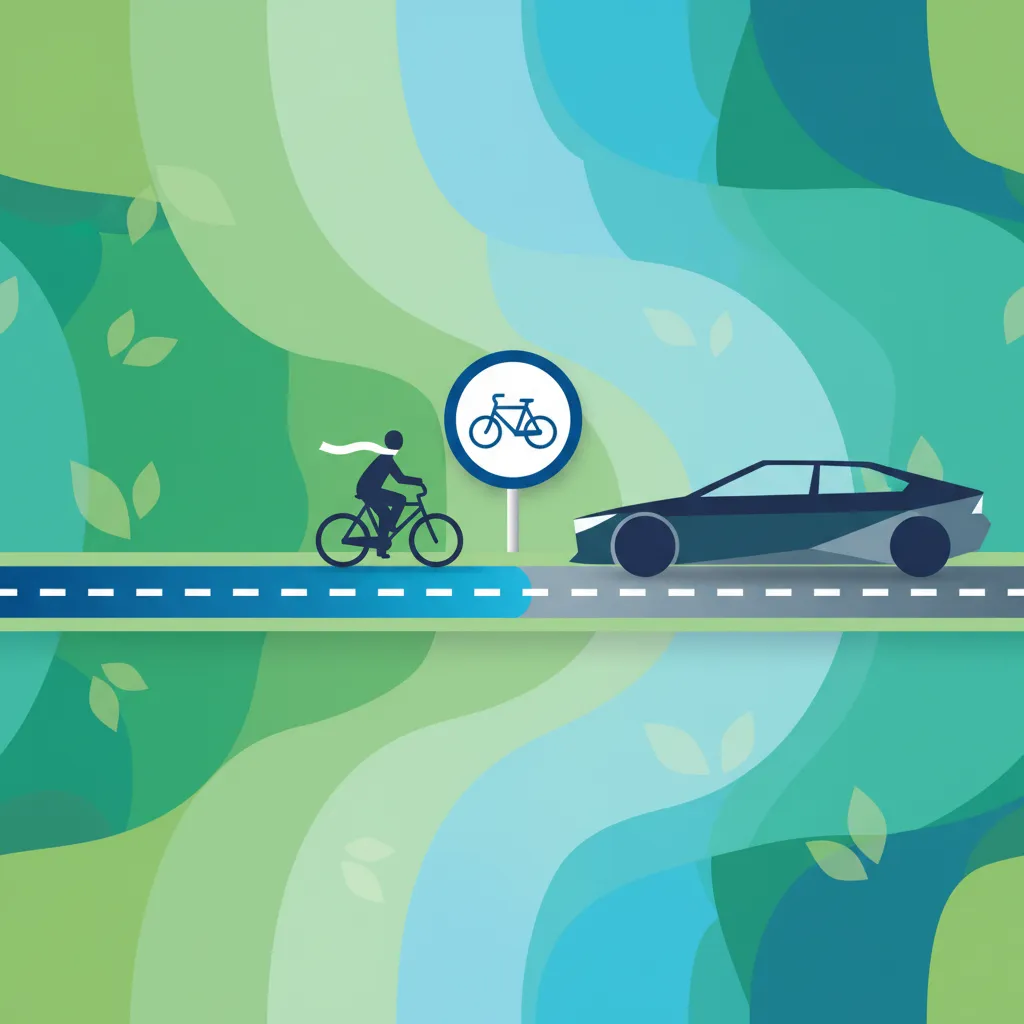
This lesson analyzes the legal definitions that determine where mopeds can operate within the Swedish road network. It covers the rules for using urban streets, rural roads, and designated cycle paths (Cykelbana), while clearly identifying prohibited zones like motorways. The content explains how to interpret signs indicating moped permissions or restrictions, enabling riders to plan legally compliant routes and navigate shared spaces correctly.
Learn how to safely and legally navigate challenging urban traffic scenarios, including shared spaces, cycle paths, and bus lanes. This lesson focuses on the practical application of Swedish traffic rules for mopeds in dense city environments, building on lane usage knowledge.
This lesson clarifies the regulations for operating a moped on cycle paths (Cykelbana) and other shared spaces in Sweden. It explains which types of mopeds are permitted on these paths and the specific rules that apply, such as lower speed limits and the duty to yield to cyclists. The content focuses on safe interaction and communication to ensure peaceful coexistence with other users in these environments.
This lesson provides practical instructions for safely navigating different types of intersections and roundabouts. It covers procedures for approaching, entering, and exiting roundabouts, emphasizing the rule to yield to traffic already circulating. The content also addresses how to handle signal-controlled and uncontrolled intersections, ensuring riders select the correct lane and manage their speed appropriately.
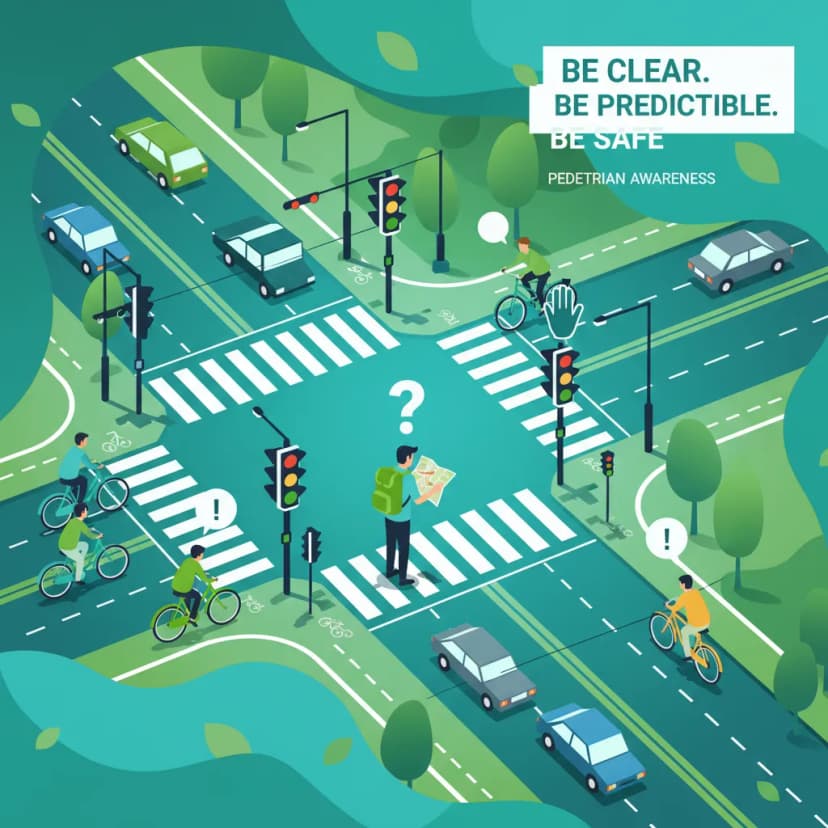
This lesson is dedicated to pedestrian safety, teaching riders to be constantly aware of people on foot, especially in busy urban environments. It reinforces the absolute duty to yield at marked crossings and encourages a cautious approach in areas like schools and shopping districts. The content stresses anticipating unpredictable actions, particularly from children or distracted pedestrians.
This lesson focuses on the unique challenges of driving in urban environments. You will learn techniques for anticipating the actions of vulnerable road users like pedestrians and cyclists, especially near crossings and bus stops. The content covers how to navigate narrow streets, one-way systems, and areas with heavy traffic, emphasizing the need for lower speeds, heightened awareness, and a defensive mindset.
This lesson explains how to identify and interact with various types of mopeds and other low-speed vehicles common on Swedish roads. You will learn the difference between Class I and Class II mopeds and their place on the road, as well as how to recognize A-tractors by their LGF (långsamtgående fordon) sign. The key focus is on managing the large speed differential and making safe judgments when deciding to overtake.
This lesson provides clear guidance on selecting the appropriate lane on multi-lane roads to match your intended direction of travel. It covers the rules and best practices for moving into turning lanes, positioning for overtakes, and maintaining a steady course. The focus is on making early, predictable decisions to ensure smooth integration with surrounding traffic.
This lesson focuses on the specific techniques required for riding in busy city and town environments. You will learn how to maintain correct lane positioning amidst dense traffic, navigate complex intersections with multiple signals, and manage the motorcycle at low speeds in stop-and-go conditions. Emphasis is placed on heightened awareness of pedestrians, cyclists, and vehicles making sudden maneuvers, which are common hazards in urban settings.
This lesson provides detailed guidance on navigating complex traffic points such as signalized intersections, multi-lane roundabouts, and pedestrian crossings. You will learn the correct procedures for entering and exiting roundabouts, the specific rules for yielding to pedestrians and cyclists at designated crossings, and how to interpret complex traffic light signals. These skills are vital for safe urban and suburban riding, where interaction with vulnerable road users is frequent.
This lesson explores how the environment affects sign interpretation, contrasting the high density and visual complexity of urban settings with the sparser signage of rural areas. It teaches riders to manage visual clutter in cities and maintain focus over long distances on country roads. By understanding these contextual differences, riders can better anticipate rules and hazards regardless of their location.
This lesson focuses on the importance of road markings (Vägmarkering) for guiding traffic flow and ensuring safety. It explains the meaning of different line types, such as solid and broken lines, and the function of stop lines and pedestrian crosswalks. The content highlights markings specific to cycle and moped lanes, teaching riders how to correctly position themselves on the road based on these visual cues.
Find clear answers to common questions learners have about Cycle Lanes, Bus Lanes, and Mixed Use Zones. Learn how the lesson is structured, which driving theory objectives it supports, and how it fits into the overall learning path of units and curriculum progression in Sweden. These explanations help you understand key concepts, lesson flow, and exam focused study goals.
Generally, mopeds are not permitted to use dedicated cycle lanes (cykelbana) unless specific signs indicate otherwise, such as a combined sign for mopeds and cyclists. Always look for explicit permission through road signs. Using a cycle lane without authorisation is a violation.
Mopeds are typically prohibited from using bus lanes (bussfil) unless a sign specifically permits them. Bus lanes are primarily for buses, and entering them without authorisation can endanger both you and bus passengers, and will result in a penalty.
Mixed-use zones are areas designed for shared use by different types of traffic, often indicated by specific signs or road markings. For mopeds, it means sharing the space responsibly with pedestrians, cyclists, and other vehicles. Always adjust your speed, be extra observant, and communicate your intentions clearly to avoid collisions.
Temporary roadwork signs are usually orange or yellow and will clearly indicate diversions, lane closures, or new temporary lane designations. When encountering these, pay close attention to any signs that specifically mention mopeds or two-wheeled vehicles, and be prepared to follow revised traffic flow instructions.
Incorrectly using a cycle or bus lane on a moped in Sweden can lead to fines and demerit points. More importantly, it poses a significant safety risk, as these lanes are designed for specific users. Misjudging the rules for these zones is a common area where learners make mistakes on the theory exam.