
This final unit prepares you for unexpected events on the road. We'll cover crucial accident response procedures, your legal obligations like reporting to the police (Polisanmälan), and essential pre-ride vehicle inspections to ensure your moped is safe to operate. Mastering these skills is vital for your Swedish AM license theory exam and your overall safety.
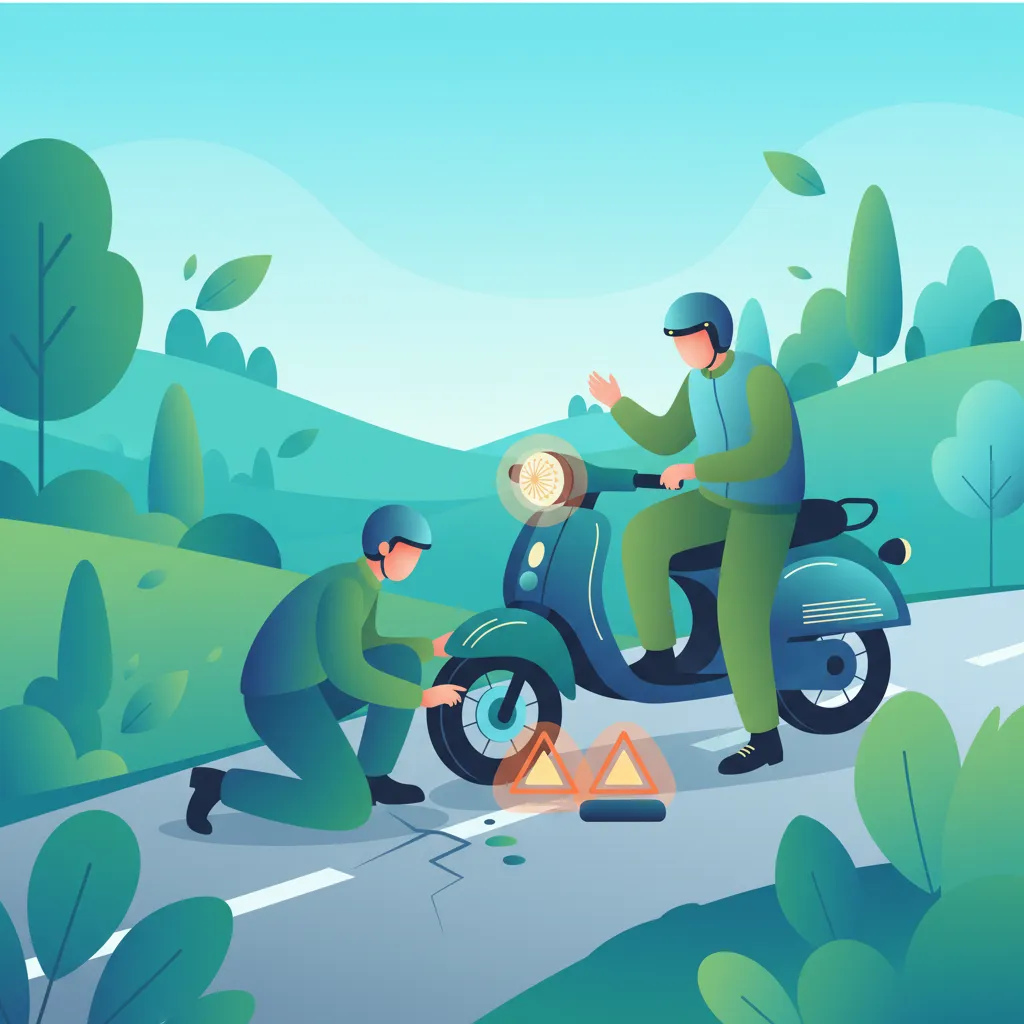
Browse all lessons that make up Accident Response, Emergency Situations, and Vehicle Checks. Each lesson focuses on specific topics, learning objectives, and core concepts, helping you build essential knowledge and follow a clear, structured progression toward your study goals in Sweden.
This lesson provides a clear, step-by-step guide for what to do in the immediate aftermath of a collision. It prioritizes safety by explaining how to secure the scene to prevent further incidents. The content covers the importance of checking for injuries, calling for emergency help if needed, and remaining calm while fulfilling initial legal obligations.
This lesson explains the legal requirements in Sweden for reporting a traffic accident to the police (Polisanmälan). It clarifies in which situations a report is mandatory, such as when there are injuries or significant property damage. The content guides learners on the information they will need to provide for the report and for subsequent insurance claims.
This lesson provides an introduction to basic first-aid principles that can be applied at the scene of an accident. It covers critical actions such as assessing a casualty's consciousness, checking for breathing, and controlling severe bleeding. The content also addresses the important question of when and how to safely remove a helmet from an injured rider.
This lesson teaches the importance of conducting a quick, routine inspection before every ride to ensure the moped is in safe working order. It outlines a simple checklist that includes checking tire pressure (Däck), brake function (Bromsar), and all lights and signals. This proactive habit can prevent mechanical failures that could lead to an accident.
This lesson provides guidance for riders planning to undertake longer trips on their moped. It covers key aspects of preparation, including route planning to avoid prohibited roads, more thorough vehicle checks, and packing essential items like a tool kit and rain gear. The content also revisits fatigue management, which is especially critical on extended journeys.
Explore high-intent keywords and long-tail search topics learners use when researching Accident Response, Emergency Situations, and Vehicle Checks. These terms reflect how people search for reliable study materials, structured explanations, and unit-level theory preparation support in Sweden.
Find clear answers to the most common questions learners ask about Accident Response, Emergency Situations, and Vehicle Checks. Understand how the unit is organized, what learning goals it supports, and how it contributes to your study progression with structured explanations and practical guidance tailored for learners in Sweden.
The most critical immediate actions are to ensure your own safety and that of others involved, check for injuries, and move to a safe location if possible. If there are injuries or significant damage, you must secure the scene, call for emergency services (112), and then fulfill your legal obligation to report the accident to the police (Polisanmälan).
In Sweden, you are legally obligated to report an accident to the police (Polisanmälan) if it involves personal injury, if the other party has left the scene, or if significant damage has occurred that prevents a vehicle from being driven. Even for minor incidents, reporting might be necessary for insurance purposes.
Essential first aid includes knowing how to assess breathing and consciousness, how to stop severe bleeding using pressure, and how to place an unconscious person in the recovery position. Understanding how to manage shock is also important. Remember to always call for professional medical help immediately.
Before each ride, you should conduct a walk-around check. Focus on your tires for correct pressure and tread depth, check that your brakes (both front and rear) are functioning correctly, and ensure all lights (headlight, taillight, indicators) are clean and working. Also, check the mirrors and horn.
Tires are your only contact with the road, so correct pressure and tread are vital for grip, especially in wet conditions or during braking. Properly functioning brakes are essential for safe stopping distances and control. Neglecting these can lead to loss of control, skidding, or accidents.
Yes, the Swedish theory exam for category AM includes questions related to vehicle safety and maintenance. Understanding how to perform basic checks and the importance of vehicle condition is part of being a responsible and safe rider, and therefore tested.
All included lessons
Lessons in Accident Response, Emergency Situations, and Vehicle Checks
See who benefits most from studying Accident Response, Emergency Situations, and Vehicle Checks. This overview explains how the unit supports different learning needs, what level of knowledge is helpful before starting, and how it fits into the overall study path in Sweden.
This unit is essential for all aspiring moped riders in Sweden preparing for the Category AM theory test. It is particularly crucial for those who may feel less confident about handling emergencies or understanding vehicle safety, ensuring they are well-prepared for real-world scenarios and exam questions.

See how Swedish Moped Theory AM is structured, with key topics, learning objectives, and a step-by-step path for theory preparation in Sweden.
Explore all units and lessons included in this driving theory course.