This lesson dives into Swedish road markings (Markering på vägbanan), a crucial topic for moped riders. Understanding these painted lines and symbols is vital for safe navigation and passing your AM theory test. We'll break down the meaning of different line types, arrows, and other markings to help you confidently interpret the road ahead.
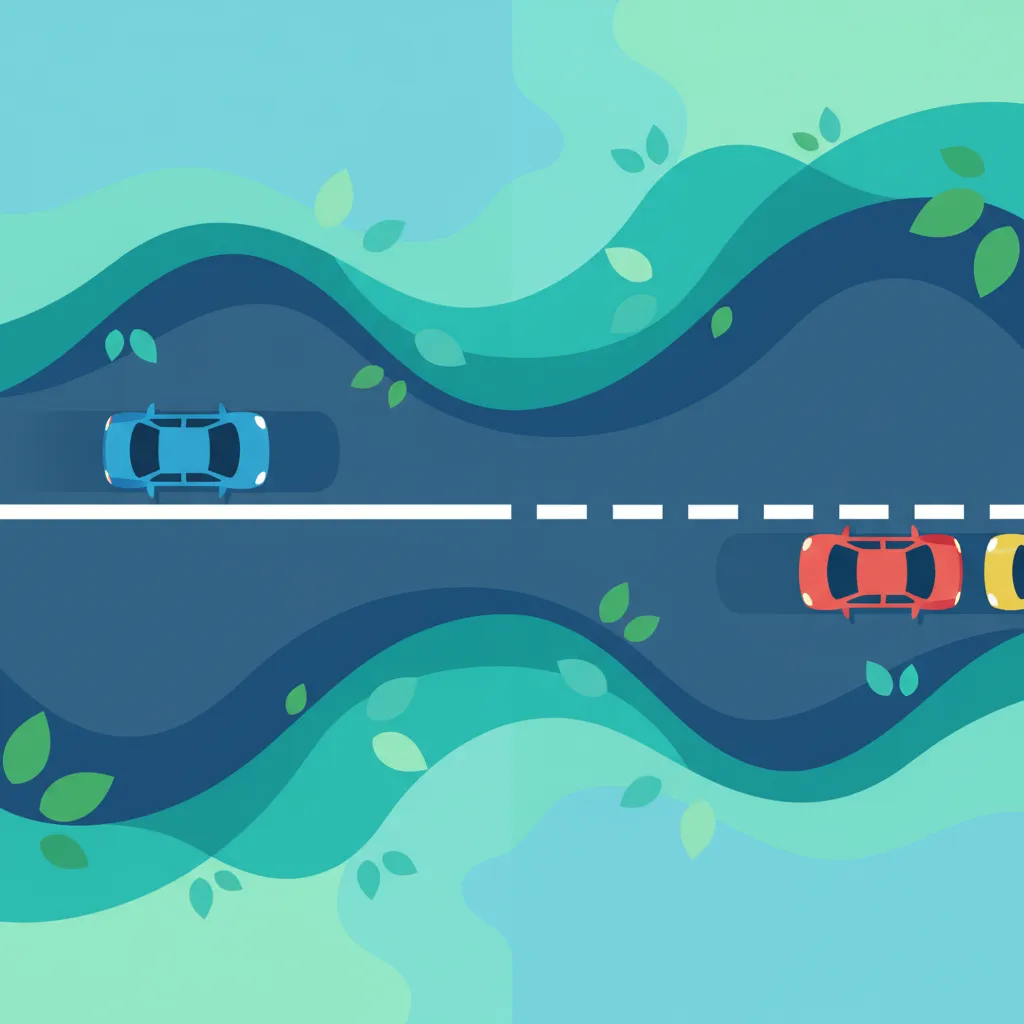
Road markings are an indispensable part of the Swedish traffic system, serving as silent, yet legally binding, instructions for all road users, including Category AM moped riders. These lines, symbols, and colours painted directly onto the road surface communicate critical information about lane usage, permitted movements, and right-of-way. Mastering their interpretation is fundamental to safe and compliant riding, preventing collisions, and ensuring smooth traffic flow.
This comprehensive guide will detail the various types of road markings encountered in Sweden, explaining their practical meaning, associated rules from the Trafikförordning (Traffic Regulations), and common pitfalls. By understanding these visual cues, moped riders can make informed decisions, navigate complex situations with confidence, and contribute to overall road safety.
Lane markings are more than mere suggestions; they are primary directives from the road designer, often carrying the same legal weight as traffic signs. Their main purpose is to enhance safety and efficiency by clearly defining spatial relationships and movement permissions on the road. For moped riders, who often share lanes and interact closely with other vehicle types, a precise understanding of these markings is crucial.
Correct interpretation helps prevent illegal lane changes, reduces the risk of head-on collisions, clarifies priority at junctions, and guides appropriate positioning. Conversely, misinterpreting or ignoring these markings can lead to dangerous situations, severe accidents, and legal penalties. Effective navigation of Sweden's roads hinges on your ability to translate every painted element into the correct riding decision.
The fundamental distinction in road markings lies between solid (continuous) and broken (discontinuous) lines. This difference dictates whether crossing a line is permissible, primarily governing lane changes and overtaking manoeuvres.
A solid line (kontinuerlig linje) is an unbroken white or yellow line painted on the road surface. These lines act as barriers, prohibiting vehicles from crossing them under normal circumstances. They are designed to separate traffic flows where crossing would be dangerous or disruptive.
Crossing a solid line is prohibited under Trafikförordning 4 kap. 16 §, with exceptions only for safety-critical manoeuvres (e.g., avoiding a sudden, unavoidable obstacle). Intentional crossing can result in fines and penalty points.
A broken line (streckad linje) consists of a series of short white dashes, indicating that lane crossing or overtaking is generally permitted, provided it can be done safely and without violating other traffic rules or signs.
A broken line grants permission to cross, but never guarantees safety. Always exercise extreme caution, ensure clear visibility, signal your intentions, and check for other road users before initiating any lane change or overtaking manoeuvre.
Lane arrows are symbols painted on the road surface that specify the permitted direction(s) of travel for vehicles within that particular lane. These markings are crucial for guiding traffic flow, preventing conflicting movements, and ensuring lane discipline, especially at intersections and complex road junctions.
Painted symbols on the road surface indicating the mandatory direction(s) of travel from a specific lane.
Ignoring lane arrows is a serious violation (Trafikförordning 2 kap. 5 §). You must choose the correct lane well in advance that corresponds to your intended direction of travel. Changing your mind last minute after passing the arrow is illegal and highly dangerous.
These markings are critical for managing priority and ensuring safety at intersections, pedestrian crossings, and railway level crossings. They clearly indicate where you must stop or yield to other traffic or pedestrians.
A stop line (stopplinje) is a thick, solid white line painted across the width of a lane, usually found at:
The practical meaning of a stop line is precise: when required to stop (e.g., by a red light, a stop sign, or to yield to pedestrians), you must bring your moped to a complete halt with its front wheel(s) touching, but not crossing, the stop line.
Rolling past the stop line before the signal changes or before giving way is a common violation (Trafikförordning 3 kap. 7 §). This can obstruct pedestrians, block the view of cross-traffic, or put you in a dangerous position.
These specialized markings communicate right-of-way rules directly on the road surface, reinforcing or acting in conjunction with give-way signs (Väjningspliktskylt).
A downward-pointing red or white triangle painted on the road, signalling the obligation to yield to traffic on the intersecting road.
Even if there are no vehicles on the main road, always slow down and be ready to stop at a give-way triangle. It reinforces the priority rules, especially when visibility might be limited or other vehicles approach quickly.
Certain lanes are designated for specific types of traffic, and moped riders must be acutely aware of the rules governing their access to these lanes.
Bike lanes (cykelbanor) are often distinguished by a green colour or specific symbols (a bicycle pictogram) painted on the road. They are primarily reserved for bicycles.
Do not assume all green-painted lanes or lanes with bicycle symbols permit moped access. Always look for explicit signage. Unauthorised use of a bike lane can result in a fine and endanger cyclists (Trafikförordning 4 kap. 12 §).
Bus lanes (busskörfält) are lanes specifically reserved for public transport vehicles (buses, trams, and sometimes taxis). They are often marked by distinct double solid white lines or a yellow painted surface, along with the word "BUSS" or a bus pictogram.
Using a bus lane outside permitted hours or without explicit signage is a violation (Trafikförordning 4 kap. 15 §) and can lead to fines and potential collisions with fast-moving public transport.
Road markings are also used to regulate parking and stopping behaviour, helping to maintain visibility, ensure access for emergency services, and facilitate smooth traffic flow.
Ignoring these markings can obstruct other road users, create dangerous situations, and result in fines (Trafikförordning 3 kap. 5 §). Always look for designated parking bays or areas where stopping is explicitly allowed.
Road construction and maintenance work often require temporary changes to traffic flow. These alterations are communicated through temporary work-zone markings, which override permanent markings while they are in place.
Temporary markings have the same legal weight as permanent ones (Trafikförordning 6 kap. 5 §). You must obey them, even if they contradict the permanent markings underneath. Failing to do so endangers workers and can lead to serious accidents.
In certain urban or residential areas, specific markings indicate shared spaces (blandtrafikområden) or mixed-use zones where different types of road users (pedestrians, cyclists, mopeds, cars) are expected to co-exist.
In shared spaces, the general principle is to prioritize vulnerable road users (pedestrians and cyclists). Mopeds should maintain a significantly reduced speed (often ≤ 30 km/h) and be highly vigilant for unexpected movements.
Swedish road markings are underpinned by specific articles in the Trafikförordning (Traffic Regulations). Understanding these legal mandates is crucial for compliance and avoiding penalties.
Do not cross a solid centre line (Trafikförordning 4 kap. 16 §). This rule applies universally and crossing is only permissible in emergency situations to avoid an immediate and unavoidable danger.
Overtake only on broken centre lines when it is safe, visibility is clear (at least 150 metres ahead), and other conditions (like speed limits) allow (Trafikförordning 4 kap. 16 §).
Stop at the stop line when required by a traffic signal, stop sign, or pedestrian crossing. Ensure your front wheel(s) are at, but not over, the line (Trafikförordning 3 kap. 7 §).
Follow the direction indicated by lane arrows (Trafikförordning 2 kap. 5 §). Once in a lane with a directional arrow, you must proceed in that direction.
Yield to traffic as indicated by give-way triangles or "STOPP" markings on the road surface, as well as their corresponding signs (Trafikförordning 3 kap. 8 §).
Use bike lanes only when explicitly permitted by signage (Trafikförordning 4 kap. 12 §). Never assume access without a clear sign allowing mopeds.
Do not enter bus lanes unless a sign explicitly permits moped usage, often with time restrictions (Trafikförordning 4 kap. 15 §).
Do not park or stop on parking/stopping restriction markings (e.g., zigzag lines, solid yellow lines on the curb) (Trafikförordning 3 kap. 5 §).
Obey temporary work-zone markings as if they were permanent regulations. They override any conflicting permanent markings (Trafikförordning 6 kap. 5 §).
In shared-space zones, drive at a reduced speed (often max 30 km/h for mopeds) and prioritize vulnerable users.
Misinterpreting road markings is a frequent cause of traffic violations and accidents. Here are some common misunderstandings and how to avoid them:
Always plan your route and lane choices well in advance. Look far ahead to anticipate upcoming markings and signs, rather than reacting at the last moment.
Road markings are not always interpreted in isolation. External factors can significantly influence their meaning and how you should react to them.
Some markings, especially for bus lanes or parking restrictions, may only apply during specific hours of the day. Always look for accompanying signs that specify these time limitations. Forgetting a time restriction can lead to an illegal manoeuvre or parking violation.
Understanding lane markings is not a standalone skill. It must be integrated with other aspects of Swedish driving theory for a holistic approach to road safety. This lesson builds upon knowledge from:
This comprehensive understanding prepares you for more complex scenarios, such as interpreting temporary markings in Lesson 10.5: Temporary Roadwork and Detour Signage.
To solidify your understanding, let's consider a few real-world scenarios:
Correct Action for Moped Rider: The rider signals left, checks mirrors, assesses the clear sight distance (over 150 metres) and speed difference, moves into the oncoming lane to overtake the tractor, and safely returns to their original lane well before the broken line becomes solid.
Incorrect Action for Moped Rider: The rider attempts to overtake the tractor as the road approaches the blind curve where the solid line begins, creating a severe risk of a head-on collision with unseen oncoming traffic.
Correct Action for Moped Rider: You choose the middle lane well in advance, align your moped with the straight-ahead arrow, and wait for the green light, proceeding straight through the intersection.
Incorrect Action for Moped Rider: You enter the rightmost lane by mistake, then realise you need to go straight. You try to cut across to the middle lane at the last second or go straight from the turn-only lane, creating a risk of collision with vehicles turning right or going straight from the correct lane.
Correct Action for Moped Rider: You may use the lane. You enter the shared lane, reduce your speed (e.g., to 20 km/h), maintain a safe distance from the cyclists, and are prepared to yield to them, ensuring safe co-existence.
Incorrect Action for Moped Rider: You ignore the cyclists, ride at 45 km/h, and try to weave through them, creating a dangerous situation and potentially causing an accident.
Road markings serve as a vital non-verbal communication system on our roads. They translate complex traffic regulations into simple, actionable visual cues. By diligently learning and applying the rules associated with each marking, moped riders contribute significantly to accident prevention.
Understanding the underlying logic – the "why" behind the rules – reinforces good habits. Solid lines prevent dangerous lateral movements, arrows guide predictable flow, and stop lines safeguard vulnerable road users. Your ability to correctly interpret these markings directly translates into safer riding, reduced collision risk, and a more harmonious traffic environment for everyone in Sweden.
Lesson content overview
Explore all units and lessons included in this driving theory course.
Explore search topics learners often look for when studying Interpretation of Lane Markings (Markering på vägbanan). These topics reflect common questions about road rules, driving situations, safety guidance, and lesson level theory preparation for learners in Sweden.
Browse additional driving theory lessons that cover connected traffic rules, road signs, and common driving situations related to this topic. Improve your understanding of how different rules interact across everyday traffic scenarios.
Expand your understanding of Swedish road markings (Markering på vägbanan) for AM mopeds. This lesson clarifies the specific rules and implications of solid lines, broken lines, directional arrows, and stop lines, crucial for safe navigation and adhering to traffic laws.
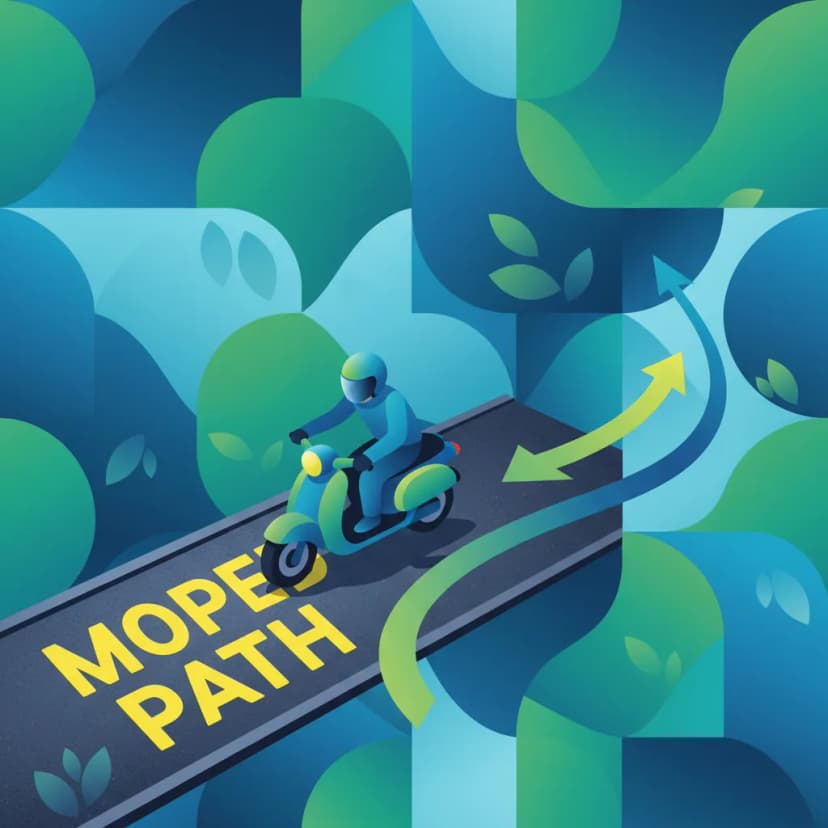
This lesson focuses on the importance of road markings (Vägmarkering) for guiding traffic flow and ensuring safety. It explains the meaning of different line types, such as solid and broken lines, and the function of stop lines and pedestrian crosswalks. The content highlights markings specific to cycle and moped lanes, teaching riders how to correctly position themselves on the road based on these visual cues.
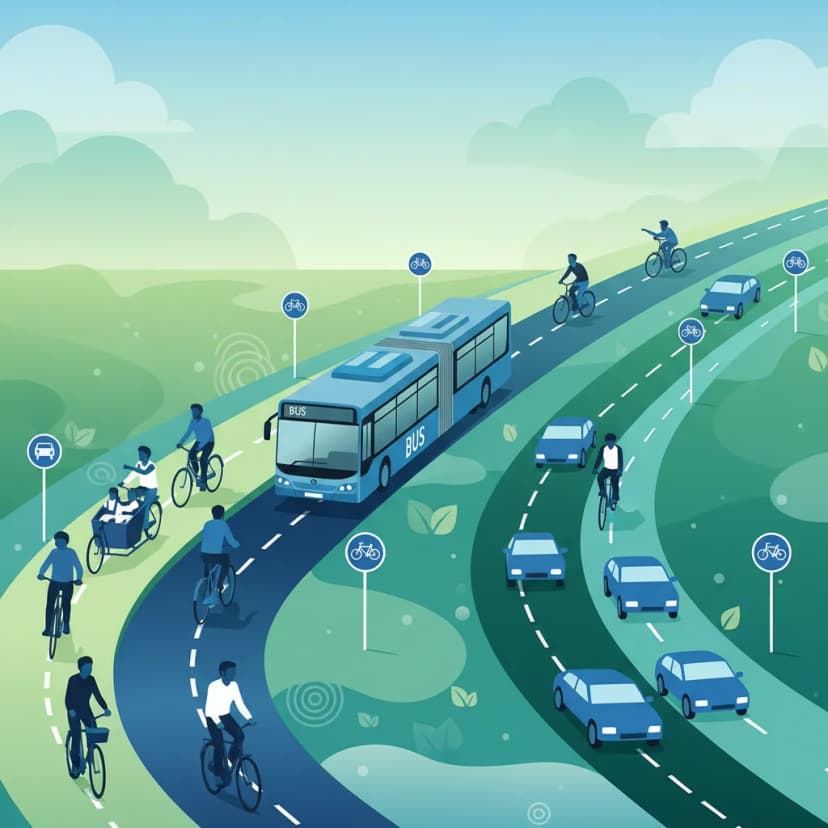
This lesson explains the specific regulations for lanes designated for particular users, such as buses or cyclists. It clarifies under what circumstances a moped is permitted to enter these lanes and the rules that must be followed while in them. Understanding these regulations is key to navigating complex urban environments legally and safely.

This lesson focuses on the variety of road markings used on Swedish roads and their meaning for motorcyclists. You will learn the difference between solid and broken lines regarding overtaking, how to position yourself correctly at intersections based on markings, and how to interpret symbols painted on the road surface. Adhering to these markings is essential for maintaining correct lane discipline and ensuring predictability for other road users.
This lesson provides clear guidance on selecting the appropriate lane on multi-lane roads to match your intended direction of travel. It covers the rules and best practices for moving into turning lanes, positioning for overtakes, and maintaining a steady course. The focus is on making early, predictable decisions to ensure smooth integration with surrounding traffic.
This lesson explains the function and legal significance of various road markings (vägmarkeringar) in Sweden. You will learn the difference between broken lines that permit overtaking and solid lines that forbid it, as well as the meaning of stop lines, pedestrian crossings, and lane direction arrows. These markings work in conjunction with signs to organize traffic flow, separate lanes, and provide critical information directly on the road surface.

This lesson clarifies the legal distinction between stopping temporarily and parking. It identifies areas where stopping is prohibited, such as near intersections or on pedestrian crossings, to maintain traffic flow and safety. The content also discusses designated waiting areas at traffic lights, often marked for cyclists and mopeds, which can offer a safer position.
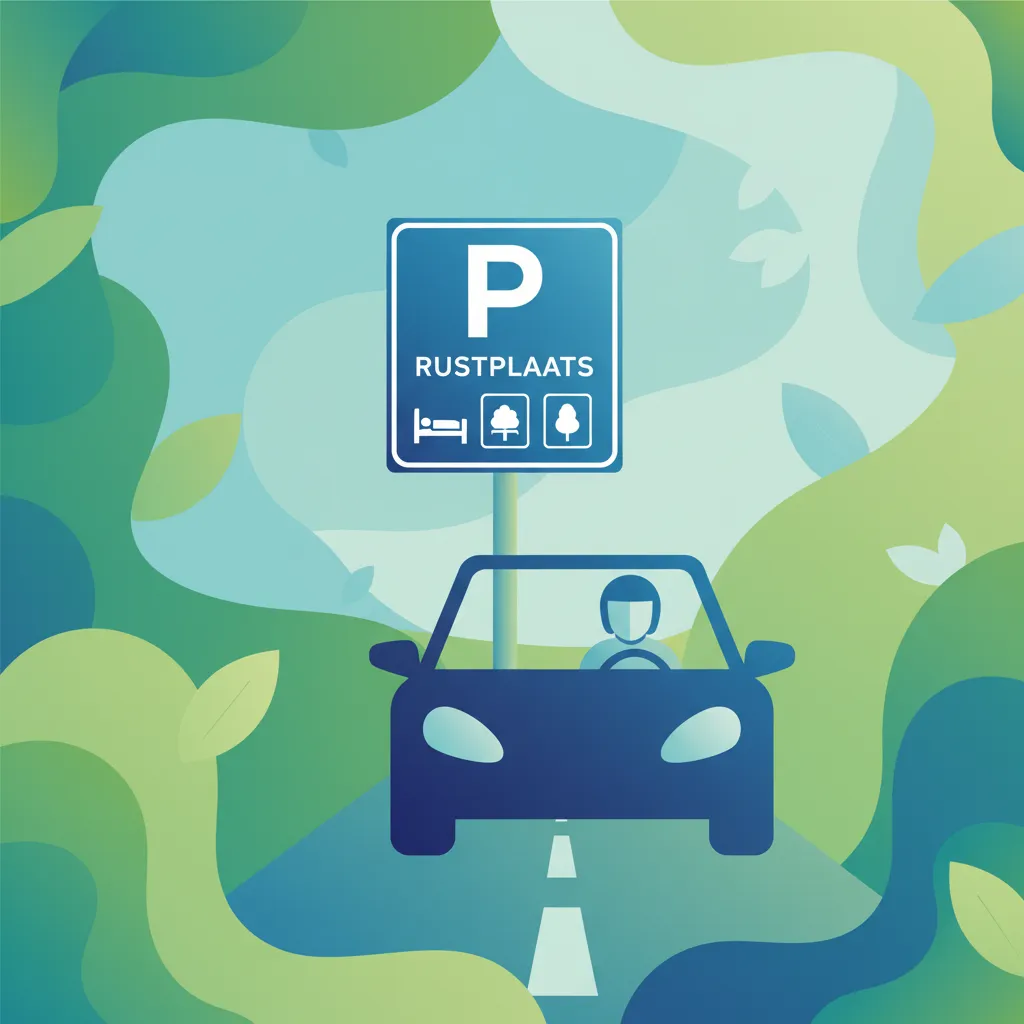
This lesson explains the function of informational signs (Informationsskyltar), which provide guidance for navigation and access to services. It covers signs indicating distances to destinations, route numbers, and locations of fuel stations or parking areas. For moped riders, this includes identifying signs for designated moped or cycle lanes, helping them to plan and follow routes efficiently and legally.
This lesson provides practical instructions for safely navigating different types of intersections and roundabouts. It covers procedures for approaching, entering, and exiting roundabouts, emphasizing the rule to yield to traffic already circulating. The content also addresses how to handle signal-controlled and uncontrolled intersections, ensuring riders select the correct lane and manage their speed appropriately.
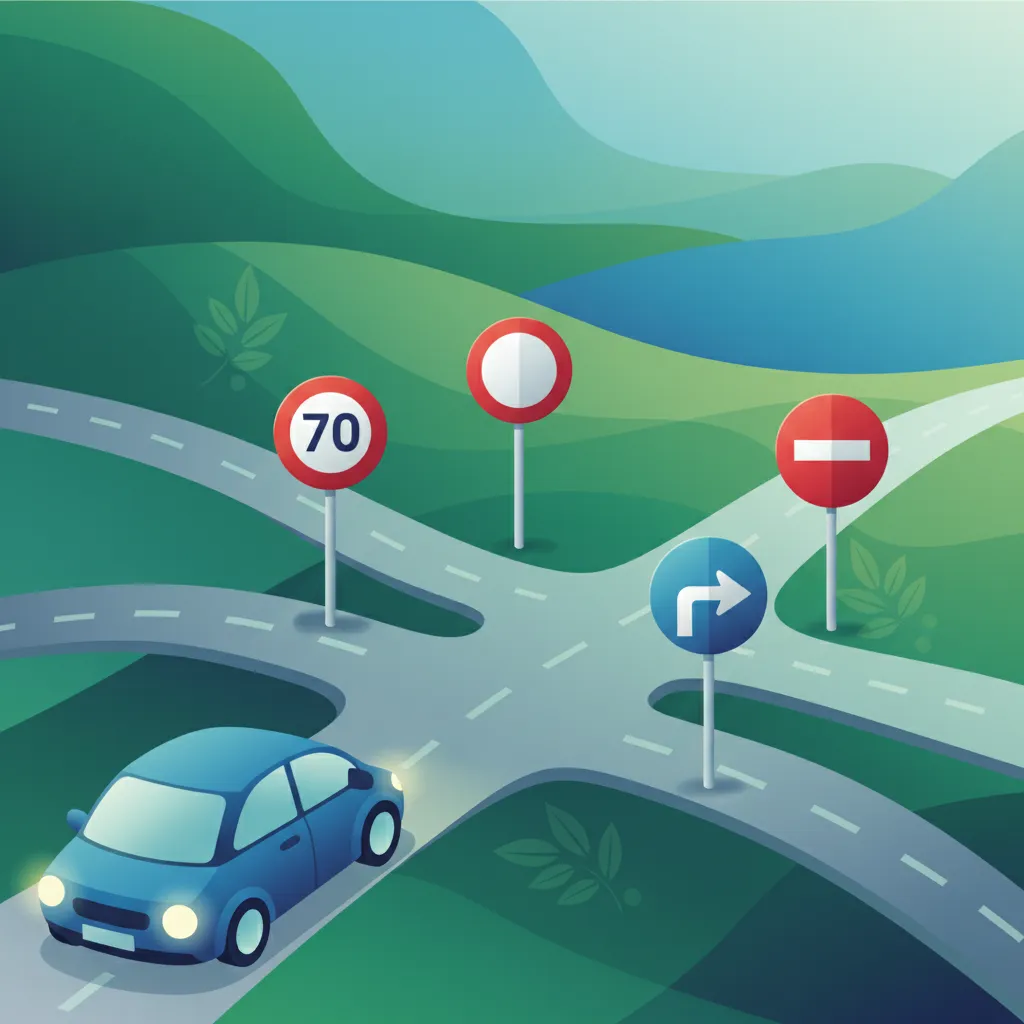
This lesson focuses on regulatory signs (Regulationsskyltar), which issue mandatory instructions and prohibitions that all road users must follow. It details common signs such as speed limits, stop and give way signs, and mandatory direction arrows. Special attention is given to signs directly affecting mopeds, like 'no moped' signs and those indicating designated moped lanes, ensuring riders can navigate legally and safely.

This lesson clarifies the regulations for operating a moped on cycle paths (Cykelbana) and other shared spaces in Sweden. It explains which types of mopeds are permitted on these paths and the specific rules that apply, such as lower speed limits and the duty to yield to cyclists. The content focuses on safe interaction and communication to ensure peaceful coexistence with other users in these environments.
Understand how Swedish road markings (Markering på vägbanan) guide interactions with pedestrians, cyclists, and other vehicles. This lesson connects lane markings and symbols to shared spaces, cycle paths, and overall road user safety for mopeds.
This lesson focuses on the variety of road markings used on Swedish roads and their meaning for motorcyclists. You will learn the difference between solid and broken lines regarding overtaking, how to position yourself correctly at intersections based on markings, and how to interpret symbols painted on the road surface. Adhering to these markings is essential for maintaining correct lane discipline and ensuring predictability for other road users.
This lesson focuses on the importance of road markings (Vägmarkering) for guiding traffic flow and ensuring safety. It explains the meaning of different line types, such as solid and broken lines, and the function of stop lines and pedestrian crosswalks. The content highlights markings specific to cycle and moped lanes, teaching riders how to correctly position themselves on the road based on these visual cues.
This lesson explains the function and legal significance of various road markings (vägmarkeringar) in Sweden. You will learn the difference between broken lines that permit overtaking and solid lines that forbid it, as well as the meaning of stop lines, pedestrian crossings, and lane direction arrows. These markings work in conjunction with signs to organize traffic flow, separate lanes, and provide critical information directly on the road surface.
This lesson focuses on safe interaction with cyclists. You will learn to differentiate between a 'bicycle crossing' (cykelöverfart), where you have a duty to yield, and a 'bicycle passage' (cykelpassage), where specific priority rules apply. The content stresses the importance of leaving adequate space when overtaking cyclists and the critical danger of the 'right-hook' accident, emphasizing the need to check mirrors and blind spots carefully before turning right.
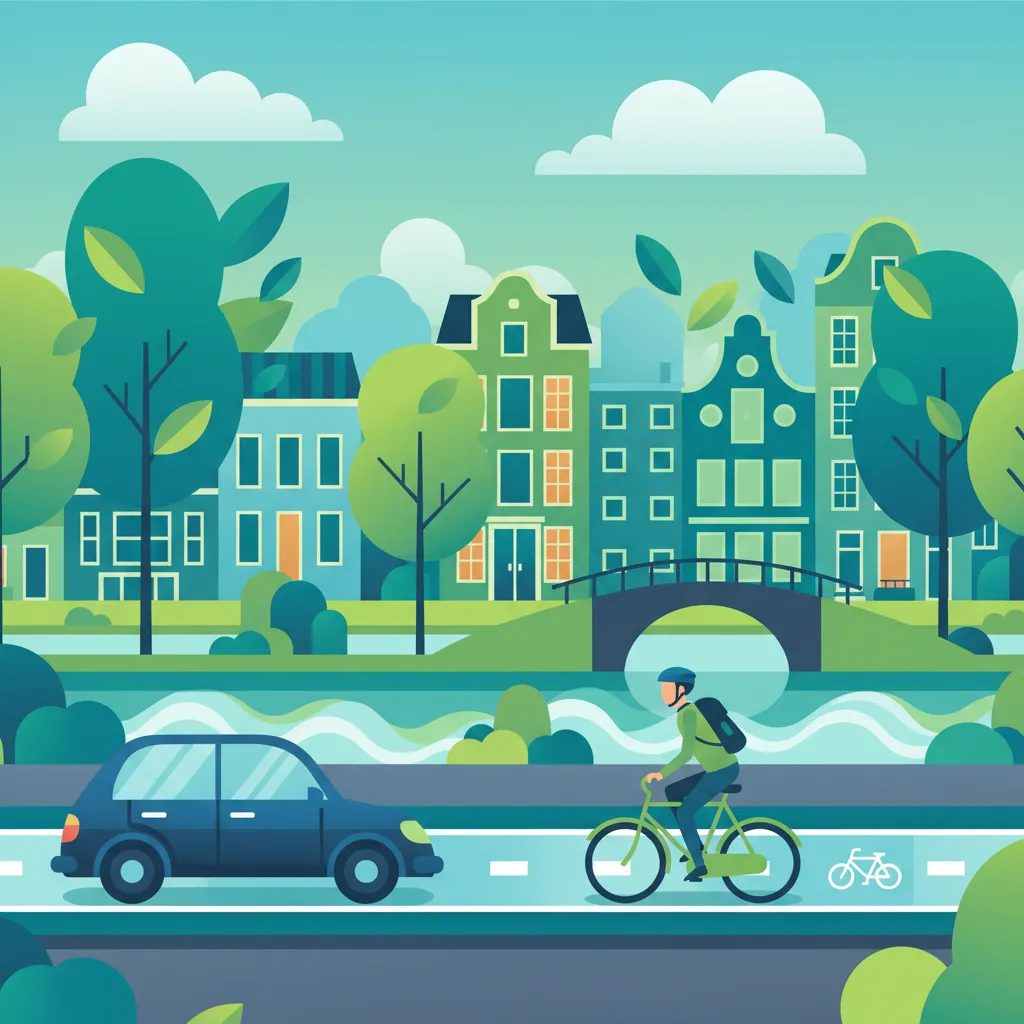
This lesson details the best practices for sharing the road with cyclists, who are even more vulnerable than moped riders. It explains the legal requirements and safe etiquette for overtaking cyclists, emphasizing the need to provide ample space. The content also reviews the rules of interaction on designated cycle paths (Cykelbana) where both may be present.
This lesson clarifies the regulations for operating a moped on cycle paths (Cykelbana) and other shared spaces in Sweden. It explains which types of mopeds are permitted on these paths and the specific rules that apply, such as lower speed limits and the duty to yield to cyclists. The content focuses on safe interaction and communication to ensure peaceful coexistence with other users in these environments.

This lesson provides in-depth analysis of how to safely interact with the full spectrum of road users. You will learn about the specific characteristics of each, such as the large blind spots of trucks, the potential for sudden movements from cyclists, and the unpredictability of pedestrians. The content teaches strategies for communication, anticipation, and defensive positioning to ensure safe and respectful coexistence on the road for everyone.
This lesson explains the specific regulations for lanes designated for particular users, such as buses or cyclists. It clarifies under what circumstances a moped is permitted to enter these lanes and the rules that must be followed while in them. Understanding these regulations is key to navigating complex urban environments legally and safely.
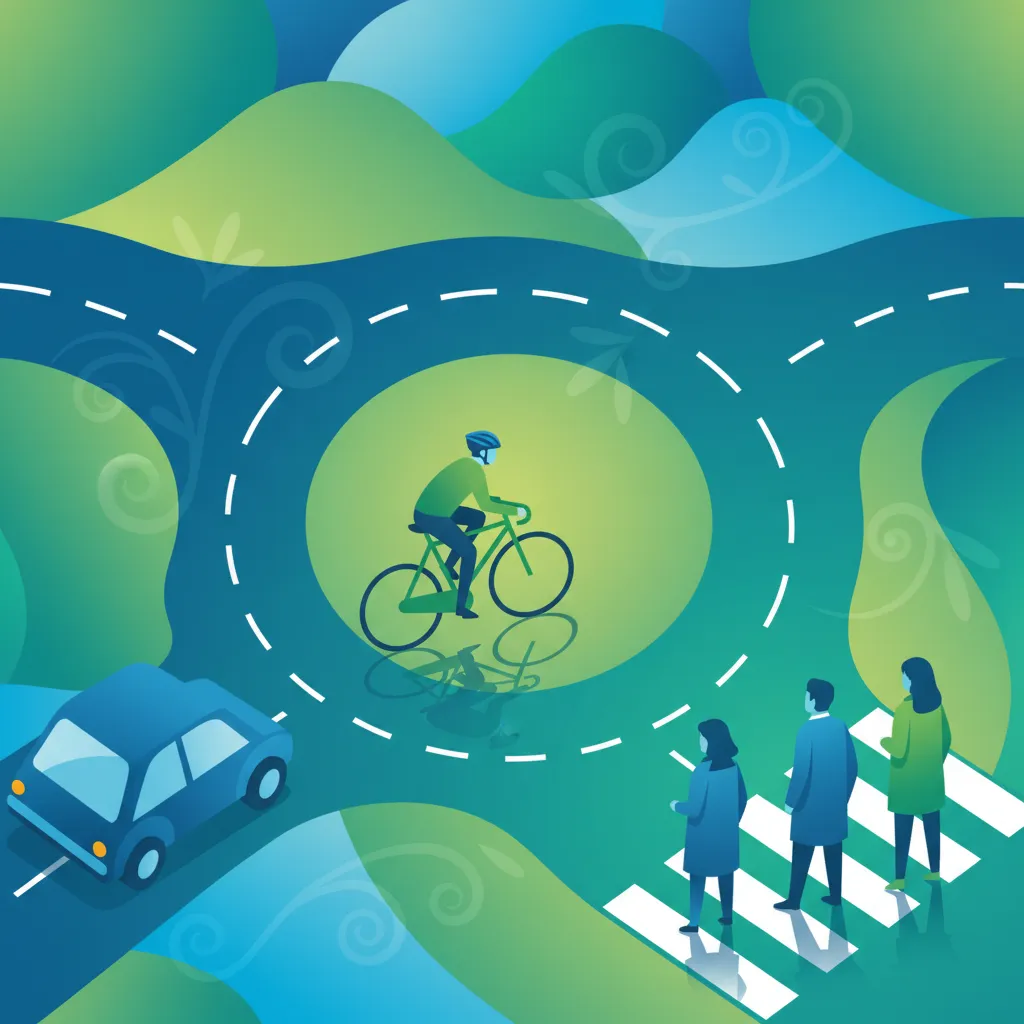
This lesson provides detailed guidance on navigating complex traffic points such as signalized intersections, multi-lane roundabouts, and pedestrian crossings. You will learn the correct procedures for entering and exiting roundabouts, the specific rules for yielding to pedestrians and cyclists at designated crossings, and how to interpret complex traffic light signals. These skills are vital for safe urban and suburban riding, where interaction with vulnerable road users is frequent.

This lesson details a driver's responsibility towards pedestrians. You will learn the strict rule of yielding to pedestrians who are on or about to enter a marked, uncontrolled crosswalk. The content also covers the specific, highly restrictive rules for driving in designated pedestrian zones (gågata) and 'walking speed' areas (gångfartsområde), where pedestrians have complete priority and vehicle traffic is severely limited.
Find clear answers to common questions learners have about Interpretation of Lane Markings (Markering på vägbanan). Learn how the lesson is structured, which driving theory objectives it supports, and how it fits into the overall learning path of units and curriculum progression in Sweden. These explanations help you understand key concepts, lesson flow, and exam focused study goals.
A broken white line indicates that you may cross it to change lanes or overtake if it is safe to do so. A solid white line generally means you should not cross it, signifying the boundary of your lane or warning against overtaking.
Mopeds may use cycle lanes if there is a specific marking or sign indicating that mopeds are permitted. Generally, you should use the main traffic lanes unless otherwise directed by road markings or signs. Always check Unit 10 for more details on specific zone markings.
Road arrows indicate the mandatory direction(s) you must follow from your current lane. Straight arrows mean you must go straight, curved arrows mean you must turn in that direction, and arrows indicating both straight and turning mean you can choose either, provided you are in the correct lane.
You must stop at a stop line when required by a traffic sign (like a stop sign) or a traffic signal. The stop line clearly indicates the exact point at which you must halt your vehicle before proceeding when it is safe and permitted.
While the fundamental meaning of road markings is the same for all vehicles, mopeds must always consider their lower speed and potentially different positioning requirements, especially in relation to cycle paths or bus lanes. The general principles of line interpretation, however, remain consistent across vehicle types.