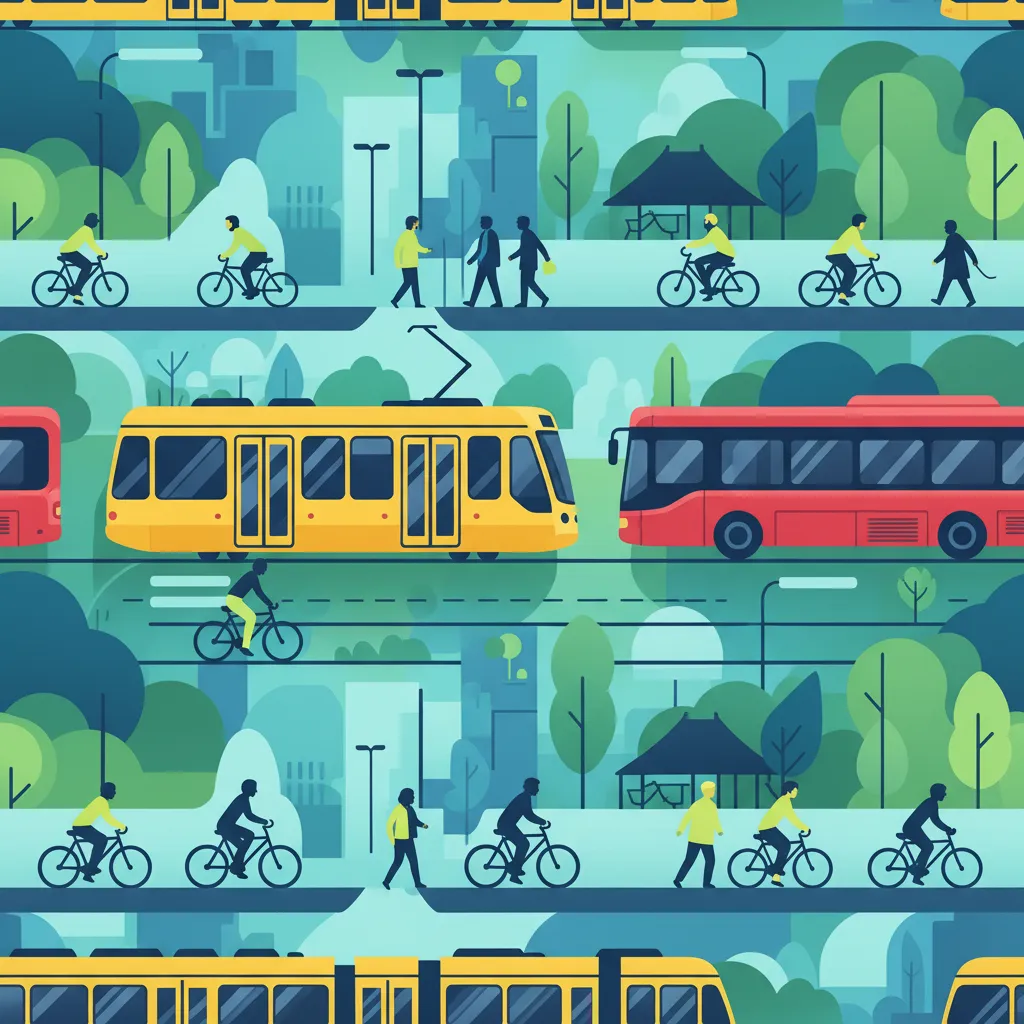
This lesson focuses on safely navigating Swedish roads alongside buses, trams, and other public transport. Understanding their specific rules and potential hazards is crucial for moped riders, especially concerning priority and pedestrian interaction. It builds upon general traffic rules to address these unique situations, preparing you for the challenges you'll face on the road and in your theory exam.
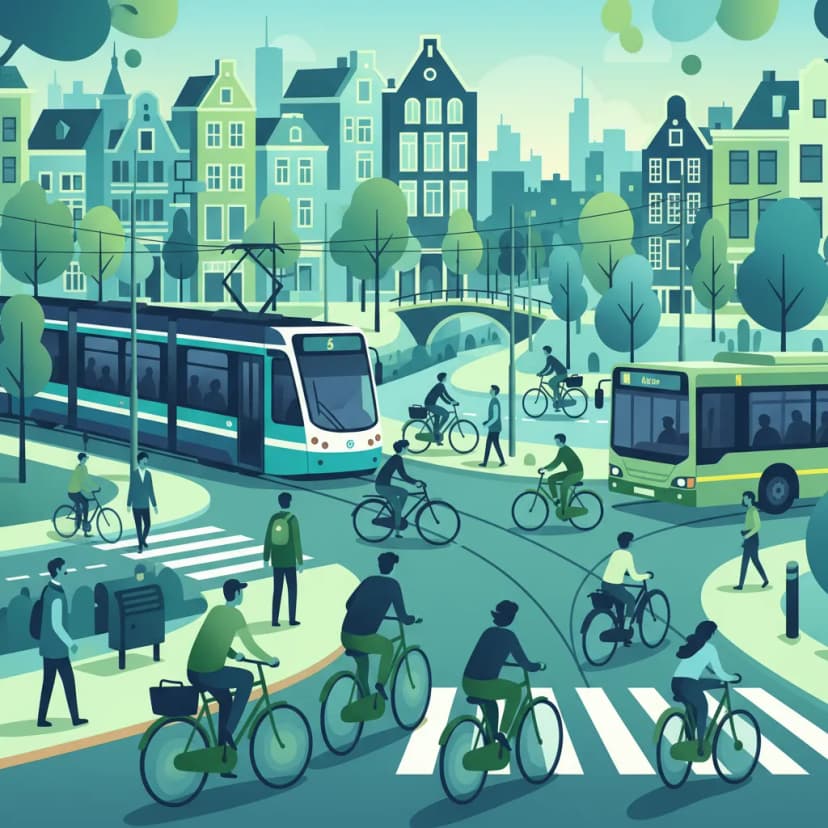
Interacting with buses, trams, and other public transport vehicles is a critical aspect of safe moped riding in Sweden, particularly for those pursuing a Category AM (moped) driving license. These large vehicles operate differently from cars and bicycles, possessing unique physical characteristics, stopping behaviors, and specific right-of-way rules that demand heightened awareness from all other road users. Understanding these distinctions is not merely about convenience; it is fundamental to preventing collisions, ensuring the safety of vulnerable pedestrians, and complying with Swedish traffic law, notably the Trafikförordningen (RVV 1990).
This lesson will equip you with the knowledge to safely navigate around public transport, focusing on the absolute priority of trams, the specific yielding rules for stopping buses, the inherent dangers of slippery tram tracks, and the importance of anticipating pedestrian movements at stops. Mastery of these principles will not only improve your safety but also contribute to a smoother, more efficient traffic flow for everyone.
Trams operate on fixed tracks and are massive vehicles with limited maneuverability. Due to their inability to steer or stop quickly, Swedish traffic law grants them absolute priority over almost all other road users. This is a crucial principle for moped riders to understand and respect in all situations.
Absolute priority means that a tram has the unconditional right-of-way, irrespective of typical traffic signals or other priority rules. Unless a specific tram-only traffic light explicitly indicates otherwise (e.g., a red light specifically for trams), you must always yield to an approaching or moving tram. This applies even if you have a green traffic light or are on a main road where you would normally have priority over vehicles entering from a side street.
Legal status granting a vehicle, such as a tram, uninterrupted right-of-way over all other road users, often regardless of standard traffic signals.
The rationale behind this rule, enshrined in RVV § 3-3, is purely for safety. Trams cannot swerve to avoid obstacles, and their stopping distances are significantly longer than those of mopeds or cars. A collision with a tram is almost always catastrophic for the smaller vehicle and its rider.
Common misunderstanding: Many drivers assume trams obey the same traffic lights as cars. This is incorrect. Trams often have their own signaling system and absolute priority can override standard traffic light indications for other vehicles. Always prioritize the tram.
When a tram is stopped at a designated stop or crossing, you must treat it as a static obstacle. Stop behind it and never attempt to cross its path until the tram departs or a clear tram-specific signal indicates safe passage. Weaving around a stopped tram is extremely dangerous due to the risk of collision with passengers, other traffic, or the tram itself as it begins to move.
Buses are another large public transport vehicle that demands specific attention from moped riders. Their frequent stops, passenger loading and unloading, and substantial blind spots create unique hazards.
In Sweden, when a bus signals its intention to stop at a bus stop (or indeed, at any point to pick up or drop off passengers), all other traffic must yield. This is indicated by the bus activating its amber stop beacon, which is a flashing amber light (and sometimes a deployable "STOP" sign arm).
A flashing amber light on a bus (often with a "STOP" sign arm) indicating the bus is stopping to allow passengers to board or alight. All other traffic must yield.
According to RVV § 3-7, when you see a bus activate its amber beacon, you must:
This rule exists to protect passengers who may be stepping on or off the bus, as well as to account for the bus's longer stopping distances. Overtaking a bus at this critical moment could lead to a collision with a pedestrian, a sudden braking bus, or even cause a passenger to fall as they are boarding or alighting.
When riding behind a bus, it's crucial to maintain a generous safe following distance. Buses have large blind spots, and their movements can be unpredictable, especially around stops.
The minimum distance a rider should keep behind another vehicle to allow adequate reaction time and braking distance; often expressed in seconds or meters.
Anticipate door openings: Never ride directly alongside a bus whose doors are open. Passengers may step out without looking, or the doors themselves could swing into your path.
Bus and tram stops are high-risk areas for pedestrians, especially for vulnerable road users like moped riders. Pedestrians, eager to catch their transport or having just alighted, may exhibit unpredictable behavior.
Always keep a clear view of the curb and the area around a bus or tram stop. Be ready to brake promptly if a pedestrian steps into your path. Pedestrians are vulnerable and always have priority when entering or crossing the roadway from a bus or tram stop.
Tram tracks are an inherent feature of many Swedish urban environments, but they pose a significant and often underestimated danger to moped riders. The metal rails are smooth steel surfaces that offer very little friction, especially compared to asphalt.
Steel rails embedded in the roadway, used exclusively by electric trams. These surfaces are extremely low-friction and dangerous for mopeds, especially when wet or oily.
Dedicated bus lanes are a common feature in many Swedish cities, designed to improve the efficiency and speed of public transport. However, their usage by other vehicles, including mopeds, is strictly regulated.
A road lane designated primarily for buses (and sometimes taxis); usage by other vehicles like mopeds may be restricted or time-limited.
It is your responsibility as a moped rider to correctly interpret bus lane signage. These signs will clearly indicate which vehicles are permitted and, if applicable, during which hours.
The sign for a bus lane (often a blue circle with a bus symbol) indicates a lane primarily for buses. If mopeds are allowed, there will be a supplementary sign stating, for example, "Moped permitted 06-09, 15-18." Entering an exclusive bus lane or entering a mixed-use lane outside of permitted hours is a violation of RVV § 3-9 and can result in fines and disrupt public transport flow.
Never assume a bus lane is open to mopeds. Always check for explicit signage permitting moped access. If in doubt, stay in a regular traffic lane.
Adhering to specific Swedish traffic regulations is paramount for safe interaction with public transport.
| # | Rule Statement | Applicability | Legal Status | Rationale |
|---|---|---|---|---|
| 1 | Trams have absolute priority over all other traffic unless a dedicated tram signal shows red. | All roadways where trams operate, intersections, crossings. | Mandatory (RVV § 3-3) | Prevents collisions with massive, non-maneuverable vehicles. |
| 2 | Yield to a bus that has activated its amber stop beacon by reducing speed and preparing to stop behind its stop line. | When a bus signals a stop at any location. | Mandatory (RVV § 3-7) | Protects boarding/alighting passengers and accounts for longer bus stopping distances. |
| 3 | Do not ride on tram tracks. | Any tram line, regardless of weather. | Mandatory (RVV § 3-1, municipal orders) | Reduces risk of loss of traction and damage to the vehicle. |
| 4 | Observe bus-lane signage and only enter a bus lane when explicitly permitted for mopeds. | Designated bus lanes in urban areas. | Mandatory (RVV § 3-9) | Maintains public-transport flow and prevents illegal lane occupation. |
| 5 | Maintain a minimum distance of 5 metres (or one full second) behind a stopped bus with open doors. | When following a bus that has stopped for passengers. | Recommended (Safety advisory) | Provides reaction time for sudden door opening or passenger movement. |
| 6 | Give way to pedestrians crossing at bus or tram stops, treating any pedestrian entering the roadway from a stop as having right-of-way. | Any location where pedestrians cross in front of a stopping public-transport vehicle. | Mandatory (RVV § 3-2) | Pedestrians are vulnerable and may appear suddenly. |
| 7 | Do not overtake a bus that is signalling a stop, even if the lane appears clear. | While a bus’s amber beacon is flashing. | Mandatory (RVV § 3-7) | Prevents collisions with passengers leaving the bus or sudden braking. |
Safe interaction with public transport is highly dependent on varying conditions.
The rules for interacting with public transport are not arbitrary; they are based on fundamental principles of physics, human psychology, and accident prevention.
According to Swedish police traffic accident statistics (2022 data), approximately 12% of moped–public transport collisions involved loss of control on tram tracks, while 27% involved rear-end impacts with stopping buses. These figures highlight the critical importance of mastering the specific rules discussed in this lesson.
Successfully navigating around buses and trams as a moped rider in Sweden requires not just adherence to rules, but a deep understanding of the unique hazards and a proactive, anticipatory riding style. Always remember the absolute priority of trams, the specific yielding requirements for stopping buses, the dangers of tram tracks, and the unpredictability of pedestrians at public transport stops.
This lesson builds upon foundational knowledge from other parts of the Swedish Driving License Theory Course for Category AM, particularly:
For practical reinforcement of these concepts and to test your understanding, consider practicing with scenarios focused on public transport:
Lesson content overview
Explore all units and lessons included in this driving theory course.
Explore search topics learners often look for when studying Buses, Trams, and Public Transport Interaction. These topics reflect common questions about road rules, driving situations, safety guidance, and lesson level theory preparation for learners in Sweden.
Browse additional driving theory lessons that cover connected traffic rules, road signs, and common driving situations related to this topic. Improve your understanding of how different rules interact across everyday traffic scenarios.
Learn essential driving theory for interacting safely with buses and trams in Sweden. This lesson covers priority rules, understanding hazards like tram tracks, and ensuring pedestrian safety around public transport stops.
This lesson explains the specific traffic rules related to public transport vehicles. You will learn about your duty to yield to buses signaling to leave a stop (on roads with a speed limit of 50 km/h or less) and the fact that trams generally have priority. The lesson covers how to safely pass stopped buses and trams, being mindful of disembarking passengers who may cross the road unexpectedly.
This lesson focuses on the unique challenges of driving in urban environments. You will learn techniques for anticipating the actions of vulnerable road users like pedestrians and cyclists, especially near crossings and bus stops. The content covers how to navigate narrow streets, one-way systems, and areas with heavy traffic, emphasizing the need for lower speeds, heightened awareness, and a defensive mindset.
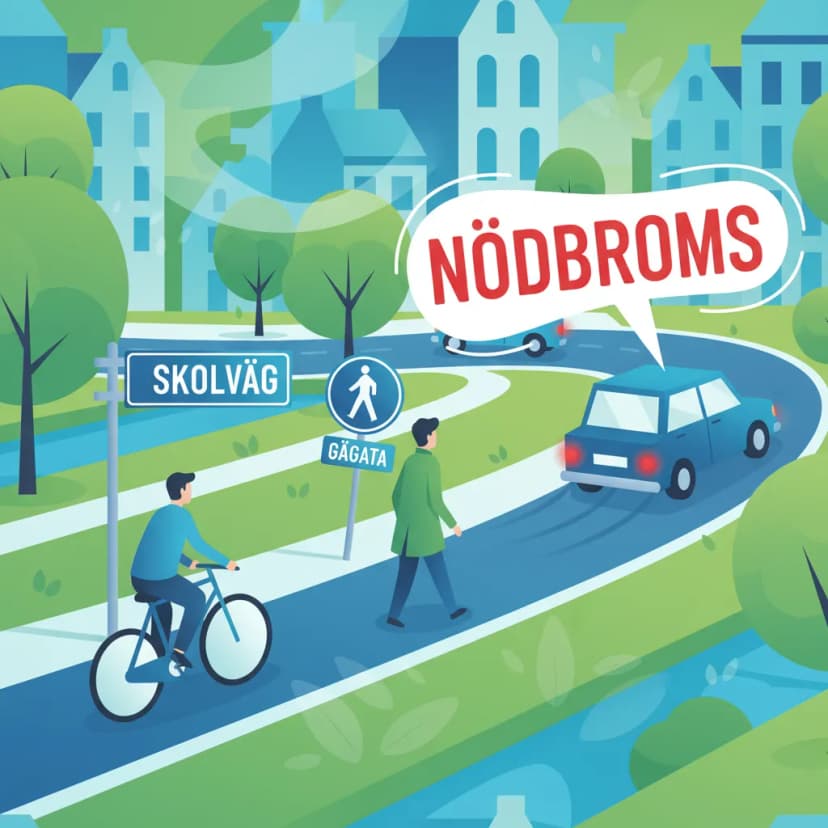
This lesson examines a variety of special situations where standard priority rules are modified. You will learn about the 'exit rule' (utfartsregeln) when entering a road from property, your duty to yield to buses indicating a departure from a stop, and the specific rules for pedestrian-only streets (gågata). The content also covers interactions with trams, emergency vehicles, and procedures at railway crossings, highlighting situations that demand maximum vigilance.
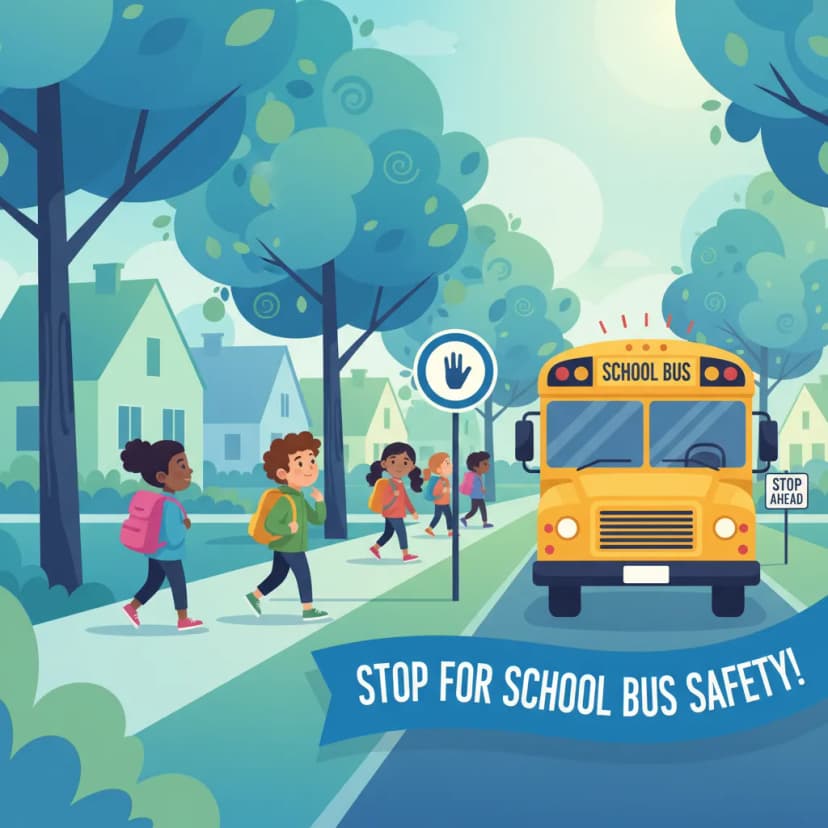
This lesson highlights the extreme caution needed in areas where children are present. You will learn to recognize school zone signs and the specific sign for a school bus, and understand your duty to slow down and be prepared to stop when a school bus has stopped for passengers. The lesson emphasizes that children can be impulsive and have poor risk judgment, requiring drivers to be exceptionally vigilant and maintain very low speeds.
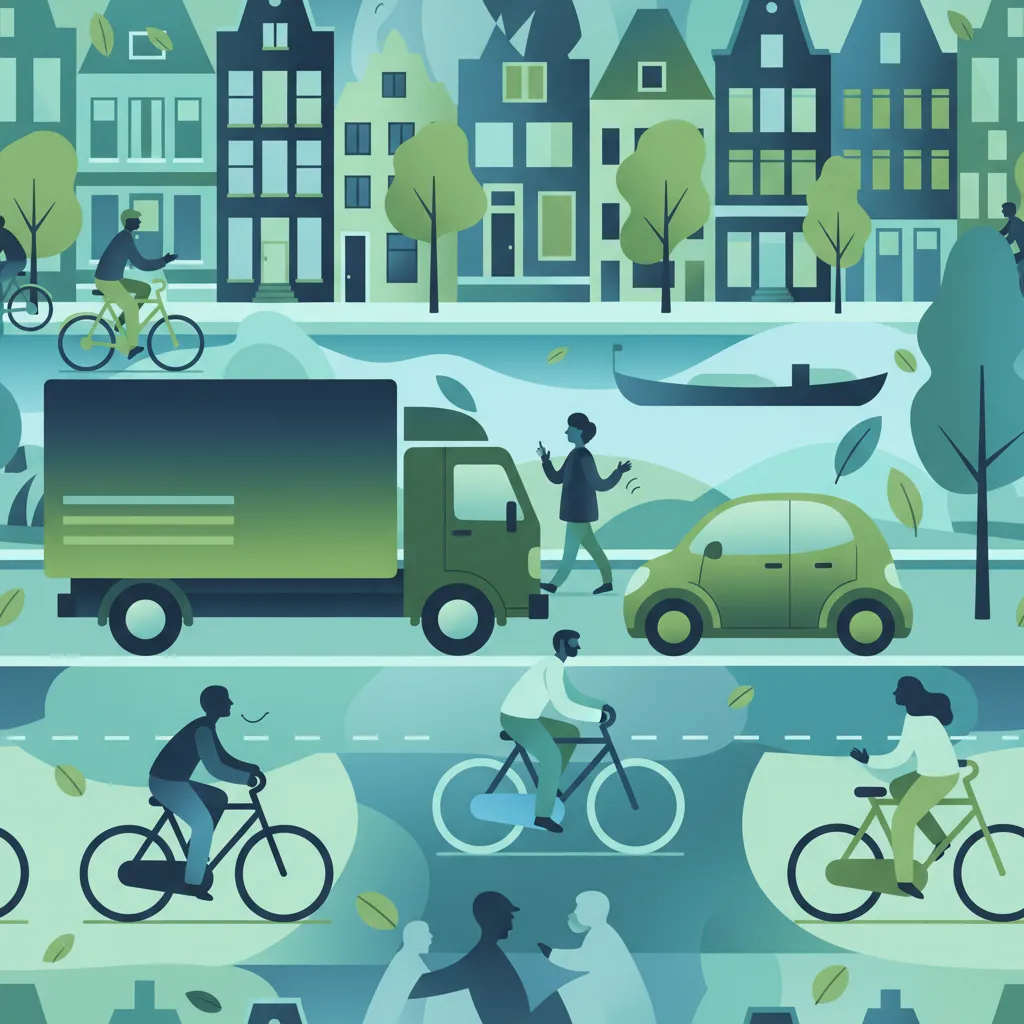
This lesson provides in-depth analysis of how to safely interact with the full spectrum of road users. You will learn about the specific characteristics of each, such as the large blind spots of trucks, the potential for sudden movements from cyclists, and the unpredictability of pedestrians. The content teaches strategies for communication, anticipation, and defensive positioning to ensure safe and respectful coexistence on the road for everyone.
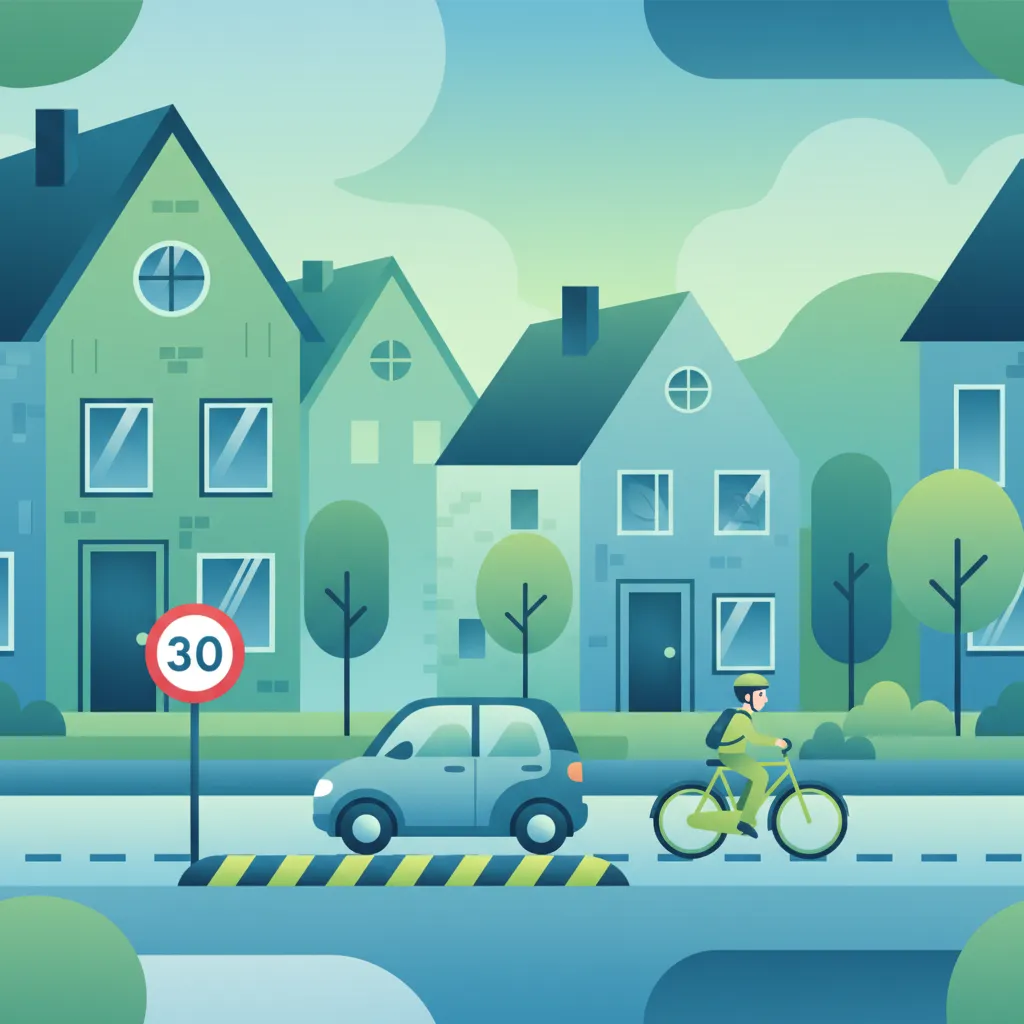
This lesson focuses on the high level of caution required when driving in residential areas. You will learn about the rules for special zones like 'gångfartsområde' (walking speed area) and the need to navigate around speed calming measures like speed bumps. The central theme is anticipating unpredictable behavior from residents, especially children, and managing the risks posed by parked cars that severely limit visibility.
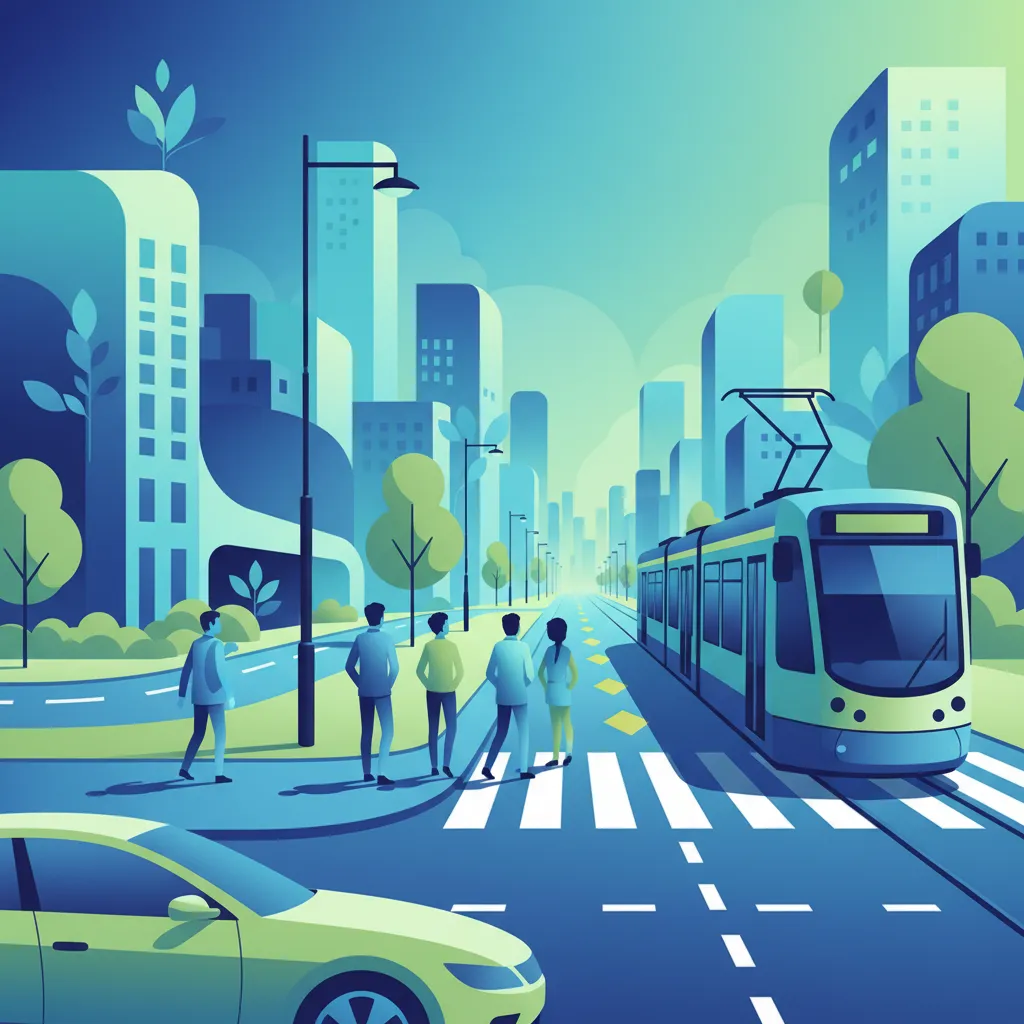
This lesson details the specific priority rules at pedestrian and tram crossings (Spårvagnskorsning). It reinforces the legal obligation for moped riders to stop for pedestrians at marked zebra crossings and explains that trams almost always have priority. Learners will understand the importance of approaching these crossings with caution, scanning for hazards, and being prepared to stop.
This lesson details a driver's responsibility towards pedestrians. You will learn the strict rule of yielding to pedestrians who are on or about to enter a marked, uncontrolled crosswalk. The content also covers the specific, highly restrictive rules for driving in designated pedestrian zones (gågata) and 'walking speed' areas (gångfartsområde), where pedestrians have complete priority and vehicle traffic is severely limited.
This lesson provides detailed guidance on navigating complex traffic points such as signalized intersections, multi-lane roundabouts, and pedestrian crossings. You will learn the correct procedures for entering and exiting roundabouts, the specific rules for yielding to pedestrians and cyclists at designated crossings, and how to interpret complex traffic light signals. These skills are vital for safe urban and suburban riding, where interaction with vulnerable road users is frequent.
This lesson covers the critical maneuvers of merging and changing lanes. You will learn the correct technique for using an acceleration lane to match the speed of motorway traffic before merging smoothly and safely. The lesson emphasizes the importance of checking mirrors and the blind spot, signaling in good time, and applying the 'zipper principle' (dragkedjeprincipen) where lanes merge to ensure efficient and courteous traffic flow.
This lesson provides a detailed explanation of priority rules involving buses and trams in Swedish traffic. Understand how to yield appropriately and navigate safely around these common public transport vehicles.
This lesson explains the specific traffic rules related to public transport vehicles. You will learn about your duty to yield to buses signaling to leave a stop (on roads with a speed limit of 50 km/h or less) and the fact that trams generally have priority. The lesson covers how to safely pass stopped buses and trams, being mindful of disembarking passengers who may cross the road unexpectedly.
This lesson examines a variety of special situations where standard priority rules are modified. You will learn about the 'exit rule' (utfartsregeln) when entering a road from property, your duty to yield to buses indicating a departure from a stop, and the specific rules for pedestrian-only streets (gågata). The content also covers interactions with trams, emergency vehicles, and procedures at railway crossings, highlighting situations that demand maximum vigilance.
This lesson introduces the core principles of right-of-way in Sweden, including the general duty to give way (Väjningsplikt) and the stricter stop duty (Stopplikt). It explains the concept of a priority road and how to apply the right-hand rule at uncontrolled intersections. By understanding this legal framework, riders can determine who has priority in any given situation and act predictably and safely.
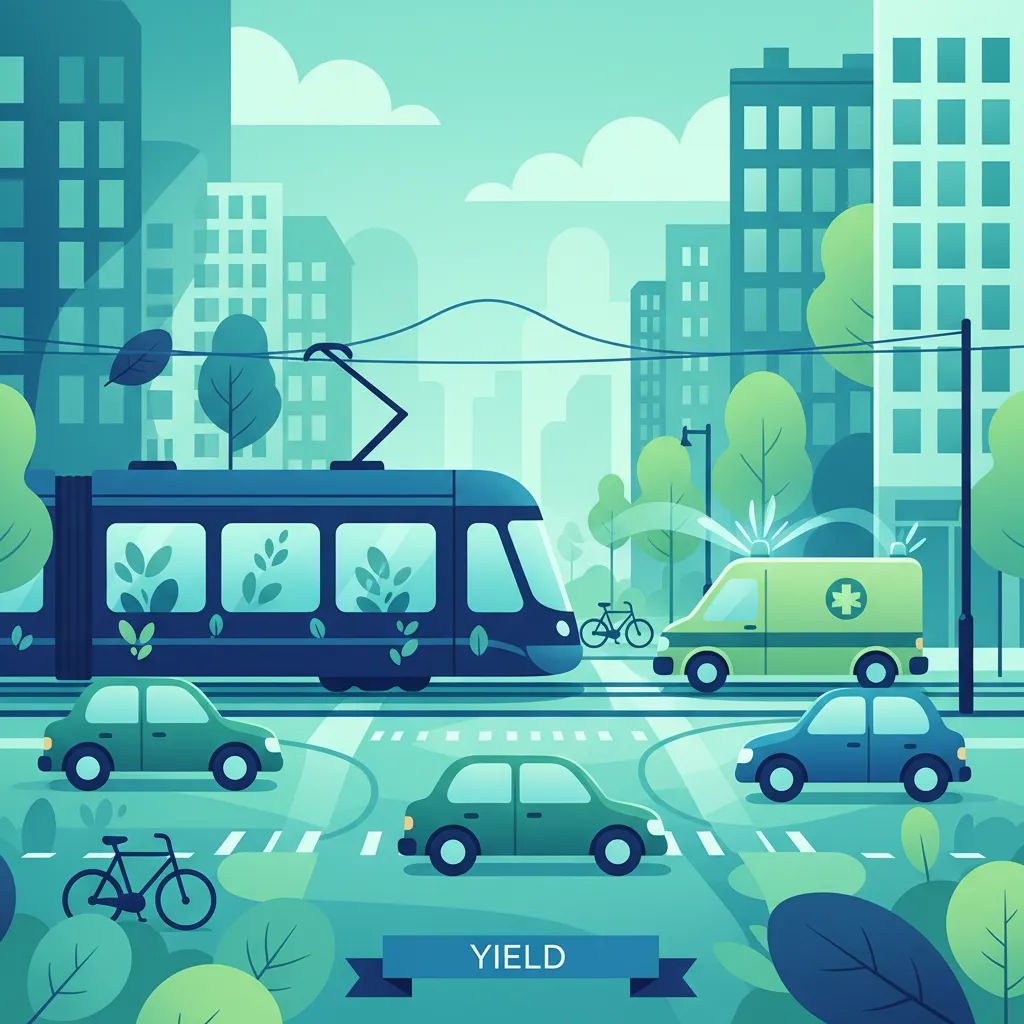
This lesson explains a motorcyclist's legal duty when encountering emergency vehicles with active sirens and lights. You will learn the correct procedure for yielding the right-of-way by safely pulling over and stopping. Additionally, the lesson covers the rules and best practices for sharing the road with public transport like buses and trams, including navigating around bus stops and respecting dedicated lanes, to ensure safety for all road users.
This lesson focuses on regulated intersections where priority is determined by signs indicating a main road (huvudled), a duty to yield (väjningsplikt), or a duty to stop (stopplikt). You will learn how to identify which road has priority and your legal obligation to give way to all traffic on that road before proceeding. The lesson covers proper procedures for approaching these junctions, assessing traffic, and entering the main road safely.
This lesson explains the two core principles of priority in Swedish traffic law: the right-hand rule (Högerregeln) and the duty to yield (Väjningsplikt). You will learn how to apply the right-hand rule at uncontrolled intersections and when to yield to other traffic as indicated by signs or road markings. Understanding this fundamental hierarchy is crucial for making correct and safe decisions in a wide variety of common traffic situations you will face as a motorcyclist.
This lesson details the specific priority rules at pedestrian and tram crossings (Spårvagnskorsning). It reinforces the legal obligation for moped riders to stop for pedestrians at marked zebra crossings and explains that trams almost always have priority. Learners will understand the importance of approaching these crossings with caution, scanning for hazards, and being prepared to stop.
This lesson explains the foundational right-hand rule (högerregeln), which is the default priority rule at Swedish intersections where no other signs or signals regulate traffic. You will learn that you must always yield to vehicles approaching from your right in such situations. The content clarifies where this rule applies, such as in residential areas and on smaller rural roads, and covers the critical exceptions when signs or other rules take precedence.
This lesson details a driver's responsibility towards pedestrians. You will learn the strict rule of yielding to pedestrians who are on or about to enter a marked, uncontrolled crosswalk. The content also covers the specific, highly restrictive rules for driving in designated pedestrian zones (gågata) and 'walking speed' areas (gångfartsområde), where pedestrians have complete priority and vehicle traffic is severely limited.
This lesson focuses on the unique challenges of driving in urban environments. You will learn techniques for anticipating the actions of vulnerable road users like pedestrians and cyclists, especially near crossings and bus stops. The content covers how to navigate narrow streets, one-way systems, and areas with heavy traffic, emphasizing the need for lower speeds, heightened awareness, and a defensive mindset.
Find clear answers to common questions learners have about Buses, Trams, and Public Transport Interaction. Learn how the lesson is structured, which driving theory objectives it supports, and how it fits into the overall learning path of units and curriculum progression in Sweden. These explanations help you understand key concepts, lesson flow, and exam focused study goals.
When a bus is stopping or has stopped to pick up or drop off passengers, you must yield to it. This means slowing down or stopping if necessary to allow passengers to safely board or alight, and also to give way to the bus when it signals to move off from a stop. Always be observant for pedestrians around bus stops.
Tram tracks create a significant hazard because they are often made of metal, which can become very slippery, especially when wet or icy. If your moped's tires get caught in the grooves of the tracks, it can lead to a loss of control and a fall. It's best to cross tram tracks at an angle if possible, and always ride with caution.
Yes, trams generally have absolute priority on the road. This means you must always yield to trams, regardless of the situation, unless specific traffic signals or signs indicate otherwise. Trams are heavy, move on fixed tracks, and cannot easily swerve to avoid obstacles, making your yielding crucial for safety.
When a bus is stopped, you must be aware that passengers, especially children, may be crossing the road in front of or behind the bus. Always approach stopped buses with caution, be prepared to stop, and scan the area for pedestrians who might suddenly step into the road.
When approaching tram tracks, it's advisable to cross them at as close to a right angle as possible to minimize the risk of your tires getting stuck or slipping. Avoid riding parallel to the tracks for any extended period. Always maintain a slow, steady speed and be extra cautious if the tracks are wet.