
Logo
Swedish Driving Theory Courses

Lesson 5 of the Legal Responsibilities, Conduct, and Penalties unit

Swedish Moped Theory AM: Ethical Riding Behaviour and Public Safety

This lesson moves beyond legal requirements to discuss the importance of ethical and courteous riding. It encourages riders to be patient, considerate of others, and aware of their impact on the community, for example, by minimizing noise. This fosters a positive public image of moped riders and contributes to a safer and more pleasant environment for everyone, specifically preparing you for the Swedish AM licence theory exam.
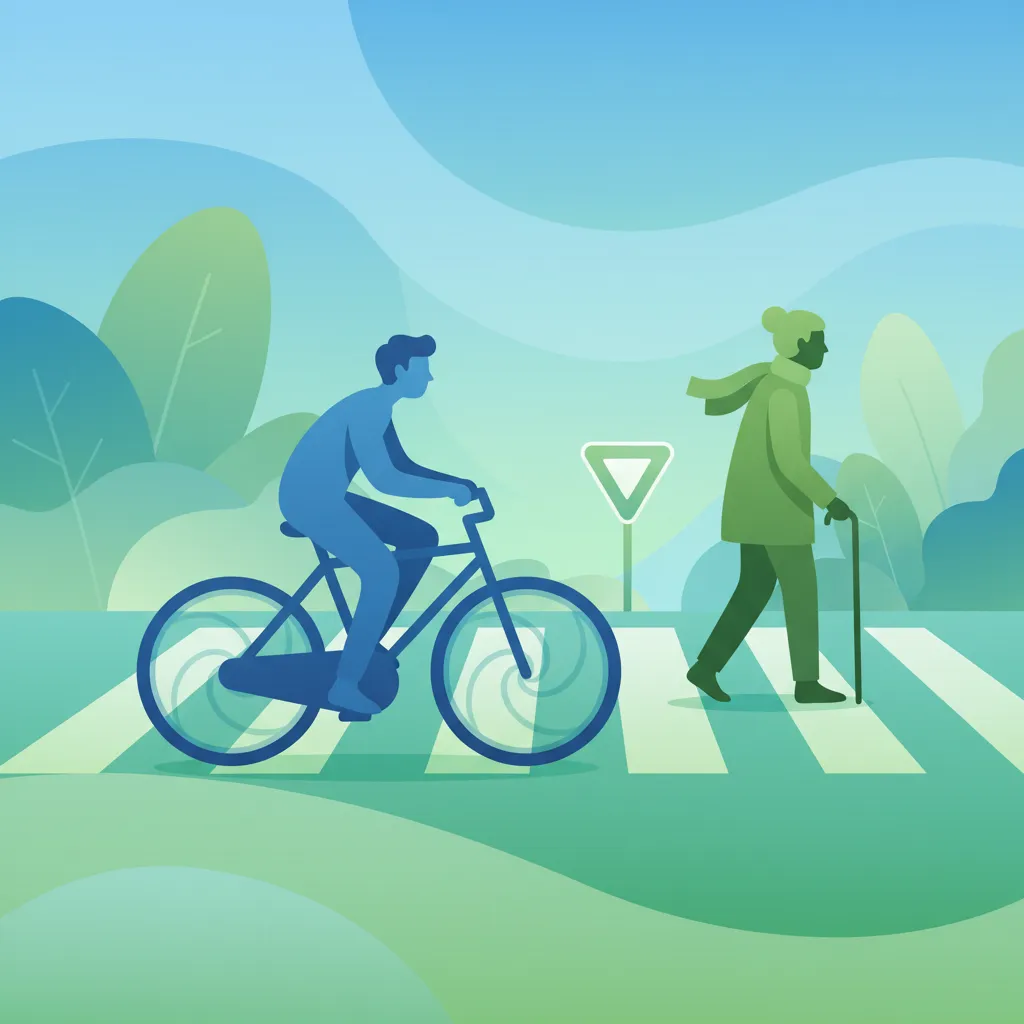
ethical ridingpublic safetymoped behaviourcourtesycommunity awareness
Swedish Moped Theory AM: Ethical Riding Behaviour and Public Safety
Swedish Moped Theory AM

Understanding Ethical Moped Riding in Sweden for Public Safety

Operating a moped in Sweden is not merely about adhering to traffic laws; it also encompasses a deeper commitment to ethical behaviour and public safety. While legal regulations provide the essential framework for road use, ethical riding extends beyond these minimums, encouraging a voluntary set of attitudes and actions that promote respect, consideration, and harmony for all road users and the community at large. This lesson, part of your Swedish Driving License Theory Course – Category AM (Moped), will explore the importance of these unwritten rules and how they contribute to a safer, more pleasant environment for everyone.

Why Ethical Moped Behaviour Matters for Public Safety

Ethical riding on a Category AM moped significantly impacts both individual safety and the collective well-being of the community. It goes beyond avoiding penalties to actively fostering a positive image of moped riders and reducing the overall risk of accidents.

Tip

The spirit of Swedish traffic legislation, particularly principles from Transportstyrelsen and Trafikverket, implicitly expects all road users to exercise a "duty of care." Ethical riding embodies this spirit, applying it even in situations where the law is silent.

Reduced Conflict and Enhanced Safety: Courteous actions, such as patiently yielding or maintaining appropriate speeds, minimise abrupt actions that can startle others. This predictability gives other road users more time to react, significantly decreasing the likelihood of collisions and road rage incidents.

Improved Public Image: When moped riders consistently demonstrate responsible and courteous behaviour, it cultivates a positive public perception. This societal tolerance can lead to better infrastructure support, such as dedicated moped lanes, and a general reduction in negative stereotypes.

Environmental and Community Well-being: Thoughtful riding practices, including noise minimisation and efficient fuel consumption, directly reduce the environmental footprint and nuisance caused by mopeds. This supports Sweden’s broader climate goals and enhances the quality of life for residents, particularly in urban and residential areas.

Core Principles of Responsible Moped Riding

Ethical riding is built upon several foundational principles that guide a rider's interactions and decisions on the road. These principles are interconnected and collectively form a comprehensive approach to responsible moped operation.

Prioritising Vulnerable Road Users (VRUs)

Vulnerable Road Users (VRUs) include pedestrians, cyclists, children, the elderly, and anyone at a greater risk in traffic due to lack of protection or slower movement. Ethical riding prioritises their safety and comfort by giving them ample space, clear signals, and right-of-way. This aligns with Swedish policy that often gives priority to the most vulnerable.

Practical Meaning: When encountering pedestrians at a crosswalk or cyclists sharing a lane, a responsible moped rider will adjust their speed and positioning to ensure maximum safety.

Associated Regulations: The Swedish Traffic Ordinance (Trafikförordningen) § 6-1 explicitly grants priority to pedestrians at marked crossings and unmarked crossings at intersections. Similarly, § 17 mandates a safe overtaking distance.

Cultivating Patience and Anticipation on a Moped

Patience and anticipation involve deliberately allowing extra time for maneuvers, avoiding aggressive acceleration, and continuously scanning the environment for potential hazards. This proactive approach reduces the likelihood of sudden actions that can surprise other road users and contributes to a less stressful riding experience.

Practical Meaning: Instead of accelerating rapidly to "beat" a changing traffic light, a patient rider will maintain a controlled speed, ready to stop safely. When passing a parked car, they anticipate a door opening or a pedestrian stepping out.

Associated Regulations: While not a specific rule for patience, the overarching Trafikförordningen § 3 (Duty of Care) requires all drivers to act with due regard for safety, which inherently supports patient and anticipatory riding.

Effective Moped Noise Management for Community Harmony

Engine and exhaust noise can be a significant source of disturbance, particularly in residential areas. Ethical noise management involves operating the moped so that acoustic emissions remain within acceptable social and legal limits. This includes both riding techniques and proper vehicle maintenance.

Practical Meaning: A responsible rider refrains from unnecessary revving at traffic lights and ensures their moped's muffler is in good condition and not tampered with.

Associated Regulations: The Swedish Environmental Code (Miljöbalken) § 4-9 sets limits on noise emissions, and local municipalities often have specific ordinances for quiet zones. Transportstyrelsen also defines technical noise specifications for mopeds.

Practicing Environmental Stewardship as a Moped Rider

Environmental stewardship involves actions that minimise fuel consumption, reduce emissions, and lessen the overall ecological footprint of moped operation. This supports broader climate goals and contributes to better air quality.

Practical Meaning: Riding with smooth throttle control, avoiding rapid acceleration and braking, and regularly maintaining the moped's engine and tires are all examples of environmental stewardship.

Associated Expectations: While specific laws directly mandating "eco-driving" for mopeds are not common, the broader societal expectation in Sweden is to minimise environmental impact, which aligns with ethical moped use.

Building a Positive Public Image for Moped Riders

A positive public image refers to how moped riders are perceived by the general community: as responsible, courteous, and safety-conscious road users. This perception is crucial for fostering societal acceptance and securing support for moped-friendly initiatives.

Practical Meaning: Consistently adhering to both traffic laws and ethical norms, wearing visible safety gear, and maintaining a calm demeanor all contribute to a positive image. Demonstrating helpfulness, such as aiding a fellow road user in distress, further reinforces this.

Associated Expectations: This principle is rooted in the overall social responsibility inherent in Swedish traffic culture, rather than specific legal texts.

Moped Riding with Community Awareness

Community awareness means recognising and adapting to the impact of one's riding behaviour on the local environment, particularly in sensitive areas like residential zones, near schools, or hospitals.

Practical Meaning: Adjusting speed and noise levels significantly when passing a school during pick-up hours, or respecting "quiet zone" designations, demonstrates strong community awareness. Avoiding riding on sidewalks where prohibited is also a key aspect.

Associated Regulations: Local traffic signs (e.g., "Ljuddämpad zon" – noise-reduced zone) and Trafikförordningen § 7 concerning speed adjustments in built-up areas directly relate to this principle.

While many ethical behaviours are voluntary, they are often underpinned by fundamental Swedish traffic laws. Understanding these regulations reinforces the importance of ethical choices.

Duty of Care: Trafikförordningen § 3

Definition

Duty of Care

A legal obligation for all road users to act with the care, attention, and skill required to avoid endangering others.

Trafikförordningen § 3 is a cornerstone of Swedish traffic law, stating that "all road users must act with the care, attention, and skill required to avoid endangering others." This broad principle forms the legal foundation for much of ethical riding behaviour. It means that even if a specific rule isn't broken, if your actions cause danger or distress, you might be in violation of your duty of care.

  • Rationale: This rule ensures that all participants in traffic consider the safety and well-being of others, providing a legal basis for anticipating hazards and exercising caution.
  • Example: A moped rider slows down and yields to a pedestrian approaching a crosswalk, even if the pedestrian hasn't fully stepped onto the road, demonstrating proactive care.

Pedestrian Priority and Overtaking Distances

Ethical riding closely follows and expands upon legal requirements for protecting vulnerable road users.

  • Pedestrian Priority (Trafikförordningen § 6-1): Pedestrians have priority at marked pedestrian crossings, unmarked crossings at intersections, and at railway crossings. A moped rider must slow down and stop if necessary to allow pedestrians to cross safely.
  • Overtaking Distance (Trafikförordningen § 17): When overtaking a cyclist or other vulnerable road user in the same lane, a motor vehicle (including mopeds) must maintain a minimum lateral clearance of 1 metre. This distance is critical for preventing side-swipe collisions and ensuring the vulnerable user feels safe.

Noise Regulations for Mopeds (Miljöbalken & Transportstyrelsen)

The noise emitted by mopeds is regulated to protect public health and comfort.

  • Swedish Environmental Code (Miljöbalken § 4-9): This law generally states that vehicles should not emit noise exceeding limits set by environmental protection agencies. This applies universally and encourages riders to maintain their vehicles and ride in a manner that minimises acoustic disturbance.
  • Transportstyrelsen Technical Specifications: Mopeds registered in Sweden must meet specific EU noise standards, such as EN 14777 (typically ≤ 80 dB(A) at 7.5 metres for certain moped classes). This is checked during registration and inspections. Any modification to the exhaust system that increases noise above these limits is illegal.

Local Ordinances and Speed Limits in Sensitive Zones

Municipalities often have local ordinances that impose stricter conditions in specific areas to enhance safety and reduce disturbance.

  • "Ljuddämpad zon" (Noise-Reduced Zone): These are designated quiet zones, often near schools, hospitals, or residential areas, where engine noise must be limited, and the use of horns is restricted to safety emergencies only. Riders must significantly reduce their speed and avoid revving.
  • Speed Limits in Built-up Areas (Trafikförordningen § 7): While a general speed limit applies, local signage can impose lower limits, especially in urban or residential areas. For example, a street might be signed for 30 km/h, or even 20 km/h in a school zone, despite a higher general urban limit. Ethical riders always comply with these local specificities.

Common Unethical Moped Riding Behaviors and Their Consequences

Ignoring ethical principles can lead to several common violations, which not only carry legal penalties but also undermine public safety and the reputation of moped riders.

  1. Tailgating Vulnerable Users: Following a cyclist or pedestrian too closely (less than 1 metre) on a narrow lane. This is wrong because it violates safe overtaking distance, creates a collision risk, and can cause distress.
  2. Unnecessary Engine Revving in Residential Areas: Repeatedly revving the engine loudly at stoplights or while idling in a quiet neighbourhood. This is wrong as it breaches noise regulations and disturbs residents.
  3. Ignoring Pedestrian Priority at Unmarked Crossings: Proceeding through a zebra crossing even when pedestrians are waiting or already crossing. This is wrong because the law grants pedestrians priority regardless of traffic lights, leading to a high risk of injury.
  4. Riding on Sidewalks or Prohibited Areas: Using a sidewalk or pedestrian-only path to avoid congestion. This is wrong as it creates significant conflict with pedestrians, leading to fines and potential impoundment.
  5. Exceeding Speed Limits in School Zones: Failing to reduce speed to the posted limit (e.g., 20 km/h) in school zones, especially during drop-off or pick-up times. This is wrong and extremely dangerous due to the unpredictable movements of children.
  6. Misusing the Horn Aggressively: Blasting the horn excessively to "warn" or "clear a path" for other road users, causing panic or irritation. This is wrong as the horn should primarily be used as a safety warning for imminent danger.
  7. Riding with Modified Exhaust Systems: Installing aftermarket exhausts that make the moped significantly louder than legal limits. This is wrong and results in inspection failures and fines under environmental laws.
  8. Leaving a Disabled Vulnerable Road User Without Assistance: Passing a cyclist with a flat tire or someone who has fallen without offering help, especially if you are the first on the scene. While not always a direct legal violation, it goes against the spirit of social responsibility and could have legal implications in some contexts related to duty of care.

Adapting Ethical Moped Practices to Different Riding Conditions

Ethical riding is dynamic; it requires adjusting behaviour based on prevailing conditions to maintain safety and courtesy.

  • Nighttime (Low Visibility): Increase patience and significantly enlarge following distances. Use dipped beam headlights appropriately and avoid high-pitch engine noise, which can be more disturbing at night. Reduced visibility means slower reaction times for everyone.
  • Rain or Slippery Surfaces: Further reduce speed to account for extended braking distances. Maintain an even larger buffer from VRUs, and avoid sudden acceleration or braking, which can lead to loss of traction and increased noise.
  • Urban Residential Areas (Quiet Zones): Strict noise management is crucial. Ride at low RPMs, avoid any unnecessary revving, and use the horn only for immediate safety warnings. Maintain speeds even below the posted limit if necessary to minimise disturbance.
  • School Zones During Opening/Closing Hours: This demands heightened vigilance. Adhere strictly to mandatory lower speed limits (often 20 km/h or less) and be prepared for unpredictable movements from children. Allow extra time and patience.
  • Heavy Traffic (Congestion): Maintain courteous behaviour. Avoid aggressive overtaking in tight spaces or weaving through traffic. Use gentle braking and smooth acceleration rather than sudden, jerky movements to prevent increasing conflict.
  • Moped Carrying Extra Load (e.g., Passenger or Cargo): Remember that added weight affects stopping distance and handling. Reduce speed, increase following distance, and ensure the load does not obstruct lights or significantly amplify noise.
  • Interacting with Emergency Vehicles: Yield promptly and provide a clear path. Use your horn sparingly and only when necessary to alert others to the emergency vehicle's presence, avoiding actions that might cause confusion or panic.
  • Encounter with Aggressive Driver: Maintain calm and avoid escalating the situation. If possible and safe, give way to reduce conflict and prioritise your safety.

The Impact of Moped Rider Ethics: Cause and Effect

The choices made by moped riders have direct and often predictable consequences, both positive and negative.

Positive Outcomes of Ethical Principles:

  • Reduced Conflict: Consistent courteous behaviour significantly lowers the probability of road rage incidents and reduces tension among road users.
  • Improved Safety: Maintaining safe distances, respecting VRU priorities, and anticipating hazards directly decreases collision rates, leading to fewer injuries and fatalities.
  • Community Acceptance: Lower noise pollution, efficient riding, and a respectful demeanour foster a positive public perception. This societal acceptance can lead to political support for moped-friendly infrastructure, such as dedicated lanes and parking areas.

Negative Outcomes of Violating Ethical Principles:

  • Increased Accident Risk: Aggressive riding, such as tailgating or ignoring pedestrians, dramatically raises the risk of crashes, resulting in injuries, legal penalties, and higher insurance costs.
  • Noise Pollution and Health Impacts: Excessive revving and loud exhausts contribute to ambient noise levels, which can lead to negative health effects for residents, including stress, sleep disruption, and hearing damage. This often results in community complaints and calls for stricter enforcement.
  • Reputation Damage and Stricter Regulations: Unethical or hostile behaviour by moped riders can severely damage their collective reputation. This negative perception may trigger stricter local regulations, increased surveillance, and reduced public patience or empathy towards moped users.

Essential Vocabulary for Ethical Moped Riding

Duty of Care
A legal obligation to act with the care, attention, and skill that a reasonable person would in similar circumstances, forming the basis for ethical behaviour.
Vulnerable Road User (VRU)
Individuals such as pedestrians, cyclists, children, and the elderly who are at greater risk in traffic and often given priority by law.
Quiet Zone
A designated area, often near schools or hospitals, with stricter noise limits for vehicles, marked by specific signage (e.g., 'Ljuddämpad zon').
Overtaking Distance
The minimum lateral clearance (typically ≥ 1 metre) legally required when a moped passes a cyclist or other vulnerable road user.
Noise Pollution
Unwanted or harmful sound levels emitted by vehicles, regulated by laws like Miljöbalken and measured in decibels (dB).
Positive Public Image
The perception of a driver group as responsible, safe, and courteous by the general public, influencing societal acceptance and infrastructure support.
Environmental Stewardship
Actions and conduct that minimise the ecological impact of vehicle operation, including fuel efficiency and emissions control.
Patience & Anticipation
Deliberate, unhurried riding combined with proactive scanning for hazards and predicting other road users' actions, reducing surprise and conflict.
Community Awareness
Understanding and adapting riding actions to their effect on the local environment, especially in residential or sensitive mixed-use zones.
Noise Management
Practices and vehicle upkeep that keep engine and exhaust sounds within socially and legally acceptable limits.

Practical Scenarios: Applying Ethical Moped Riding Principles

These scenarios illustrate how ethical principles translate into concrete actions on the road for a Category AM moped rider.

Scenario 1: Residential Quiet Zone, Evening

  • Setting: A narrow residential street at 7:00 PM, light rain, marked with a "Ljuddämpad zon" sign.
  • Relevant Ethical Principles: Noise Management, Community Awareness, Patience & Anticipation.
  • Correct Behaviour: The rider maintains a low speed (e.g., 20 km/h), keeps the engine at low RPMs, avoids revving, and uses the horn only if an imminent collision is absolutely unavoidable. They anticipate less visibility due to rain.
  • Incorrect Behaviour: The rider frequently revs the engine while waiting at a stop sign, producing loud bursts of noise, believing it makes them more noticeable.
  • Why Correct: This approach significantly reduces disturbance to residents, respects the quiet zone, and accounts for reduced traction in wet conditions.

Scenario 2: Pedestrian Crossing at a School

  • Setting: A school zone at midday, with many children crossing a marked pedestrian crossing. A sign indicates a 20 km/h speed limit.
  • Relevant Ethical Principles: Respect for Vulnerable Road Users, Patience & Anticipation, Community Awareness.
  • Correct Behaviour: The rider approaches at a reduced speed (e.g., 15 km/h), stops well before the crossing line while children cross, and only proceeds once the crossing is clear.
  • Incorrect Behaviour: The rider continues at 30 km/h, assumes their small moped can "slip through" quickly, and passes before all children have completely cleared the crossing.
  • Why Correct: Prioritising children prevents severe injuries and acknowledges their unpredictable movements. Adhering to the lower speed limit ensures maximum reaction time and minimal impact severity.

Scenario 3: Overtaking a Cyclist on a Shared Lane

  • Setting: An urban shared lane, dry conditions, with a cyclist riding ahead at 25 km/h.
  • Relevant Ethical Principles: Respect for Vulnerable Road Users, Patience & Anticipation.
  • Correct Behaviour: The rider moves to an adjacent lane (if available) or slows down, and then overtakes while maintaining at least 1 metre of lateral clearance at a modest increase in speed. If an adjacent lane is not available and space is tight, the rider may opt to follow patiently until a safe opportunity arises.
  • Incorrect Behaviour: The rider accelerates quickly to 45 km/h, overtakes within 0.5 metres, startling the cyclist and creating a dangerous situation.
  • Why Correct: Maintaining a safe distance mitigates the risk of a side-collision and avoids creating aerodynamic turbulence that could unbalance the cyclist. Patience ensures the manoeuvre is executed without surprising the cyclist.

Scenario 4: Nighttime Riding Near a Hospital

  • Setting: A dark, empty road adjacent to a hospital, 2:00 AM.
  • Relevant Ethical Principles: Noise Management, Community Awareness, Duty of Care.
  • Correct Behaviour: The rider uses dipped beam headlights, avoids high-rev revving or unnecessary acceleration, and limits horn use strictly to emergency situations.
  • Incorrect Behaviour: The rider frequently "pops" the exhaust or revs the engine loudly to draw attention, causing significant disturbance to hospital patients and nearby residents.
  • Why Correct: This minimises acoustic disturbance to a sensitive facility, respects the need for quiet for patients, and aligns with the general duty of care towards the community.

The Rationale Behind Ethical Moped Driving: Safety and Society

The principles of ethical moped riding are not arbitrary; they are rooted in fundamental safety insights and psychological understanding of human behaviour in traffic.

  • Visibility & Reaction Time: The average human reaction time is about 1.5 seconds. At a modest speed of 30 km/h, a moped travels approximately 12 metres during this interval. Ethical patience and maintaining extra following distance provide crucial safety margins, allowing more time for both the rider and other road users to react to unexpected events.
  • Acoustic Perception: Noise levels above 70 dB(A) can cause irritation, stress, and even sleep disruption. Mopeds producing noise above 80 dB(A) are often perceived as aggressive or disrespectful, potentially provoking hostile reactions from residents or other drivers. Ethical noise management prevents this negative spiral.
  • Psychological Reciprocity: Research in social psychology shows that courteous and respectful behaviour often encourages reciprocal courtesy from others. This "pay it forward" effect can lead to smoother traffic flow, reduced aggression, and a more pleasant experience for everyone.
  • Environmental Impact: While individual mopeds have smaller emissions than cars, their cumulative impact contributes to air quality issues and climate change. Riding efficiently (e.g., maintaining steady speeds, proper tire pressure) can reduce fuel consumption and emissions by up to 15% per 100 km, contributing to Sweden's national environmental targets.
  • Social License to Operate: Public support and positive perception are vital for the continued presence and integration of mopeds in urban environments. A strong positive public image sustains political support for moped-friendly infrastructure, such as dedicated lanes and parking areas, and prevents stricter regulations.

Key Takeaways for Ethical Moped Riding and Public Safety

Ethical riding is a crucial aspect of responsible moped operation, extending beyond the minimum legal requirements to foster safety, community harmony, and environmental stewardship.

  • Core Principles: Always prioritise Respect for Vulnerable Road Users (VRUs), practice Patience & Anticipation, engage in responsible Noise Management, demonstrate Environmental Stewardship, build a Positive Public Image, and maintain strong Community Awareness.
  • Legal Foundations: These ethical principles are supported by Swedish laws such as the Trafikförordningen (Duty of Care, Pedestrian Priority, Overtaking Distance) and the Miljöbalken (Noise Limits), as well as local ordinances.
  • Common Pitfalls: Be aware of unethical behaviours like tailgating, unnecessary revving, ignoring pedestrian priority, or riding in prohibited areas, as these carry significant risks and consequences.
  • Contextual Adaptability: Your riding behaviour must adapt to various conditions, including nighttime, adverse weather, sensitive zones (schools, hospitals), and traffic congestion.

By embracing these principles, you will not only reduce your personal risk but also contribute significantly to a safer and more pleasant environment for everyone in Sweden, upholding a positive image for all Category AM moped riders.

Learn more with these articles

Check out these practice sets


Search topics related to Ethical Riding Behaviour and Public Safety

Explore search topics learners often look for when studying Ethical Riding Behaviour and Public Safety. These topics reflect common questions about road rules, driving situations, safety guidance, and lesson level theory preparation for learners in Sweden.

ethical moped riding rules Swedencourtesy on the road moped AM licencemoped noise regulations Swedenpublic safety for moped riders examresponsible driving behaviour Sweden AMhow to be a good moped ridersocial conduct for moped drivers theory test

Related driving theory lessons for Ethical Riding Behaviour and Public Safety

Browse additional driving theory lessons that cover connected traffic rules, road signs, and common driving situations related to this topic. Improve your understanding of how different rules interact across everyday traffic scenarios.

Ethical Riding Behaviour and Public Safety in Swedish Traffic

Explore the principles of ethical and courteous moped riding beyond legal mandates. Understand how responsible behaviour, noise reduction, and community awareness contribute to public safety and a positive image for riders in Sweden.

ethical ridingpublic safetycommunity awarenessresponsible drivingmoped behaviourSwedish traffic rules
Duty of Care and Reasonable Speed lesson image

Duty of Care and Reasonable Speed

This lesson introduces the foundational legal concept of 'duty of care,' which requires all road users to act in a way that does not endanger others. It explains that this duty often requires driving at a 'reasonable speed' that may be lower than the posted limit, depending on conditions. This principle encourages a proactive and considerate approach to sharing the road.
Swedish Moped Theory AMLegal Responsibilities, Conduct, and Penalties
View lesson
Sharing Roads with Cyclists (Cykelhjälp) lesson image

Sharing Roads with Cyclists (Cykelhjälp)

This lesson details the best practices for sharing the road with cyclists, who are even more vulnerable than moped riders. It explains the legal requirements and safe etiquette for overtaking cyclists, emphasizing the need to provide ample space. The content also reviews the rules of interaction on designated cycle paths (Cykelbana) where both may be present.
Swedish Moped Theory AMInteraction with Other Road Users
View lesson
General Priority Principles (Väjningsregler) lesson image

General Priority Principles (Väjningsregler)

This lesson introduces the core principles of right-of-way in Sweden, including the general duty to give way (Väjningsplikt) and the stricter stop duty (Stopplikt). It explains the concept of a priority road and how to apply the right-hand rule at uncontrolled intersections. By understanding this legal framework, riders can determine who has priority in any given situation and act predictably and safely.
Swedish Moped Theory AMPriority and Right-of-Way Rules
View lesson
Proper Use of Horn and Turn Signals lesson image

Proper Use of Horn and Turn Signals

This lesson covers the correct use of a moped's communication tools: the turn signals and the horn. It explains that signals should be used well in advance of any turn or lane change to inform other road users of your intentions. The content also clarifies that the horn is primarily a warning device to alert others of your presence in potentially dangerous situations, not a tool to express frustration.
Swedish Moped Theory AMPositioning, Lane Usage, and Visibility
View lesson
Rider Rights, Obligations, and Interaction with Law Enforcement lesson image

Rider Rights, Obligations, and Interaction with Law Enforcement

This lesson clarifies your legal rights and responsibilities during interactions with law enforcement, such as at a traffic stop. You will learn the correct and expected procedures for providing documentation and communicating with officers. It covers your obligations to comply with lawful requests while also explaining your rights under Swedish law, ensuring any such encounter is handled correctly, calmly, and professionally by all parties.

Swedish Motorcycle Theory ALegal Responsibilities, Documentation & Protective Equipment
View lesson
Cycle Paths (Cykelbana) and Shared Spaces lesson image

Cycle Paths (Cykelbana) and Shared Spaces

This lesson clarifies the regulations for operating a moped on cycle paths (Cykelbana) and other shared spaces in Sweden. It explains which types of mopeds are permitted on these paths and the specific rules that apply, such as lower speed limits and the duty to yield to cyclists. The content focuses on safe interaction and communication to ensure peaceful coexistence with other users in these environments.
Swedish Moped Theory AMPriority and Right-of-Way Rules
View lesson
Pedestrian Awareness and Crossing Behavior lesson image

Pedestrian Awareness and Crossing Behavior

This lesson is dedicated to pedestrian safety, teaching riders to be constantly aware of people on foot, especially in busy urban environments. It reinforces the absolute duty to yield at marked crossings and encourages a cautious approach in areas like schools and shopping districts. The content stresses anticipating unpredictable actions, particularly from children or distracted pedestrians.
Swedish Moped Theory AMInteraction with Other Road Users
View lesson
Light Signals, Horn Use, and Audible Alerts lesson image

Light Signals, Horn Use, and Audible Alerts

This lesson covers the correct interpretation and response to all forms of light and audible signals a motorcyclist will encounter. You will study the sequences of traffic lights, the rules for using turn indicators and hazard lights, and the legally permitted uses of the horn. Proper use of these signals is a fundamental aspect of safe riding, as it communicates your intentions clearly to other road users and helps prevent misunderstandings and collisions.
Swedish Motorcycle Theory ASwedish Road Signs & Signals for Motorcyclists
View lesson
Intersections and Roundabouts lesson image

Intersections and Roundabouts

This lesson provides practical instructions for safely navigating different types of intersections and roundabouts. It covers procedures for approaching, entering, and exiting roundabouts, emphasizing the rule to yield to traffic already circulating. The content also addresses how to handle signal-controlled and uncontrolled intersections, ensuring riders select the correct lane and manage their speed appropriately.
Swedish Moped Theory AMPriority and Right-of-Way Rules
View lesson
Consequences of Violations and Points System lesson image

Consequences of Violations and Points System

This lesson explains the system of consequences for breaking traffic laws in Sweden. It details common violations and their associated fines and describes the demerit points system that can lead to a license suspension for repeat offenders. Understanding these consequences is a powerful incentive for riders to adhere to the rules of the road.

Swedish Moped Theory AMLegal Responsibilities, Conduct, and Penalties
View lesson

Responsible Driving and Interaction with Other Road Users

Learn to navigate Swedish roads responsibly by understanding how your moped riding affects other road users. This lesson covers courteous behaviour, patience, and fostering a safe traffic environment for everyone.
responsible drivingcourtesyinteractionpublic safetytraffic communitymoped driving
Interaction with Cars, Trucks, Cyclists, and Pedestrians lesson image

Interaction with Cars, Trucks, Cyclists, and Pedestrians

This lesson provides in-depth analysis of how to safely interact with the full spectrum of road users. You will learn about the specific characteristics of each, such as the large blind spots of trucks, the potential for sudden movements from cyclists, and the unpredictability of pedestrians. The content teaches strategies for communication, anticipation, and defensive positioning to ensure safe and respectful coexistence on the road for everyone.
Swedish Motorcycle Theory ARiding in Various Traffic Environments
View lesson
Urban Traffic and Pedestrian Zones lesson image

Urban Traffic and Pedestrian Zones

This lesson focuses on the unique challenges of driving in urban environments. You will learn techniques for anticipating the actions of vulnerable road users like pedestrians and cyclists, especially near crossings and bus stops. The content covers how to navigate narrow streets, one-way systems, and areas with heavy traffic, emphasizing the need for lower speeds, heightened awareness, and a defensive mindset.
Swedish Driving Theory BDriving in Different Environments
View lesson
Intersections, Roundabouts, and Pedestrian Crossings lesson image

Intersections, Roundabouts, and Pedestrian Crossings

This lesson provides detailed guidance on navigating complex traffic points such as signalized intersections, multi-lane roundabouts, and pedestrian crossings. You will learn the correct procedures for entering and exiting roundabouts, the specific rules for yielding to pedestrians and cyclists at designated crossings, and how to interpret complex traffic light signals. These skills are vital for safe urban and suburban riding, where interaction with vulnerable road users is frequent.

Swedish Motorcycle Theory ARight-of-Way and Priority Rules
View lesson
Signalling with Lights and Horn lesson image

Signalling with Lights and Horn

This lesson covers the essential topic of communication in traffic using the vehicle's built-in signaling devices. You will learn the rules for using your turn indicators (körriktningsvisare) in good time before turning or changing lanes. The content also explains the proper use of hazard lights (varningsblinkers) in emergency situations and the very limited, specific circumstances in which using the horn (ljudsignal) is permitted to avert immediate danger.

Swedish Driving Theory BVehicle Control and Maneuvering
View lesson
Intersections and Roundabouts lesson image

Intersections and Roundabouts

This lesson provides practical instructions for safely navigating different types of intersections and roundabouts. It covers procedures for approaching, entering, and exiting roundabouts, emphasizing the rule to yield to traffic already circulating. The content also addresses how to handle signal-controlled and uncontrolled intersections, ensuring riders select the correct lane and manage their speed appropriately.
Swedish Moped Theory AMPriority and Right-of-Way Rules
View lesson
Residential Areas and Speed Calming lesson image

Residential Areas and Speed Calming

This lesson focuses on the high level of caution required when driving in residential areas. You will learn about the rules for special zones like 'gångfartsområde' (walking speed area) and the need to navigate around speed calming measures like speed bumps. The central theme is anticipating unpredictable behavior from residents, especially children, and managing the risks posed by parked cars that severely limit visibility.

Swedish Driving Theory BDriving in Different Environments
View lesson
General Priority Principles (Väjningsregler) lesson image

General Priority Principles (Väjningsregler)

This lesson introduces the core principles of right-of-way in Sweden, including the general duty to give way (Väjningsplikt) and the stricter stop duty (Stopplikt). It explains the concept of a priority road and how to apply the right-hand rule at uncontrolled intersections. By understanding this legal framework, riders can determine who has priority in any given situation and act predictably and safely.
Swedish Moped Theory AMPriority and Right-of-Way Rules
View lesson
Merging and Lane Changes (Omkörning) lesson image

Merging and Lane Changes (Omkörning)

This lesson covers the critical maneuvers of merging and changing lanes. You will learn the correct technique for using an acceleration lane to match the speed of motorway traffic before merging smoothly and safely. The lesson emphasizes the importance of checking mirrors and the blind spot, signaling in good time, and applying the 'zipper principle' (dragkedjeprincipen) where lanes merge to ensure efficient and courteous traffic flow.

Swedish Driving Theory BPriority Rules and Intersections
View lesson
Duty of Care and Reasonable Speed lesson image

Duty of Care and Reasonable Speed

This lesson introduces the foundational legal concept of 'duty of care,' which requires all road users to act in a way that does not endanger others. It explains that this duty often requires driving at a 'reasonable speed' that may be lower than the posted limit, depending on conditions. This principle encourages a proactive and considerate approach to sharing the road.

Swedish Moped Theory AMLegal Responsibilities, Conduct, and Penalties
View lesson
Light Signals, Horn Use, and Audible Alerts lesson image

Light Signals, Horn Use, and Audible Alerts

This lesson covers the correct interpretation and response to all forms of light and audible signals a motorcyclist will encounter. You will study the sequences of traffic lights, the rules for using turn indicators and hazard lights, and the legally permitted uses of the horn. Proper use of these signals is a fundamental aspect of safe riding, as it communicates your intentions clearly to other road users and helps prevent misunderstandings and collisions.

Swedish Motorcycle Theory ASwedish Road Signs & Signals for Motorcyclists
View lesson

Frequently asked questions about Ethical Riding Behaviour and Public Safety

Find clear answers to common questions learners have about Ethical Riding Behaviour and Public Safety. Learn how the lesson is structured, which driving theory objectives it supports, and how it fits into the overall learning path of units and curriculum progression in Sweden. These explanations help you understand key concepts, lesson flow, and exam focused study goals.

What does 'ethical riding behaviour' mean for a moped rider in Sweden?

Ethical riding behaviour means going beyond just following the traffic laws. It involves being considerate of others, showing patience in traffic, and actively trying to make the road a safer and more pleasant place for everyone, including pedestrians and other drivers. This also includes being mindful of noise levels.

Why is minimizing noise important for moped riders?

Excessive noise from mopeds can be irritating and disturb the peace, particularly in residential areas. Responsible riders aim to keep their vehicles well-maintained and ride in a way that minimises noise pollution, contributing to better community relations and a more positive public image for moped users.

How does being courteous impact my AM theory exam?

The Swedish theory exam for Category AM includes questions that assess your understanding of responsible driver conduct and public safety. Demonstrating an awareness of courtesy, patience, and community impact, as covered in this lesson, will help you answer these questions correctly and pass the exam.

What are examples of being considerate towards other road users?

Being considerate includes maintaining safe distances, signalling your intentions clearly and in advance, not obstructing traffic unnecessarily, and showing patience when other road users are slow or make mistakes. It's about coexisting safely and respectfully.

Continue your Swedish driving theory learning journey

Swedish road signsSwedish article topicsSearch Swedish road signsSwedish driving theory homeSwedish road sign categoriesSwedish Moped Theory AM courseSearch Swedish theory articlesSwedish driving theory coursesSwedish Driving Theory B courseSwedish driving theory articlesSwedish driving theory practiceSwedish practice set categoriesSwedish Motorcycle Theory A courseSearch Swedish driving theory practiceRoad Signs and Signals unit in Swedish Driving Theory BVehicle Control and Maneuvering unit in Swedish Driving Theory BPriority Rules and Intersections unit in Swedish Driving Theory BSpeed Limits and Distance Management unit in Swedish Driving Theory BAccident Response & Roadside Safety unit in Swedish Motorcycle Theory AAdverse Weather & Low-Grip Conditions unit in Swedish Motorcycle Theory ASpeed Limits and Safe Following Distances unit in Swedish Moped Theory AMEmergency Maneuvers & Obstacle Avoidance unit in Swedish Motorcycle Theory AEmergency Situations and Accident Procedures unit in Swedish Driving Theory BDuty of Care and Reasonable Speed lesson in Legal Responsibilities, Conduct, and PenaltiesLegal Responsibilities, Documentation & Protective Equipment unit in Swedish Motorcycle Theory ADocumentation, Insurance, and Registration lesson in Legal Responsibilities, Conduct, and PenaltiesEthical Riding Behaviour and Public Safety lesson in Legal Responsibilities, Conduct, and PenaltiesAlcohol and Drug Regulations (Nolltolerans) lesson in Legal Responsibilities, Conduct, and PenaltiesConsequences of Violations and Points System lesson in Legal Responsibilities, Conduct, and Penalties