Welcome to the lesson on Warning Signs (Varningsskyltar), a crucial part of your Swedish Category AM moped theory preparation. These triangular signs alert you to potential dangers ahead, and understanding them is key to riding safely and passing your exam. This lesson builds on basic sign recognition and prepares you for interpreting complex road situations.
Understanding Swedish warning signs, known as Varningsskyltar, is fundamental for every moped rider seeking a Category AM driving license. These distinctive triangular signs serve as crucial proactive communication tools, alerting you to potential dangers and changing road conditions ahead. By interpreting these signs correctly, you can anticipate hazards, adjust your speed and position, and significantly enhance your safety on the road. This lesson delves into the meaning, legal implications, and practical application of Sweden's comprehensive system of warning signs.
Warning signs are an indispensable part of the Swedish road sign system, designed to give drivers ample time to react to upcoming hazards. For moped riders, who have less protection and stability than larger vehicles, this early notification is paramount. Ignoring these signs can lead to sudden, dangerous maneuvers, or worse, collisions. The information conveyed by warning signs allows you to make informed decisions before you encounter the danger, promoting a smoother and safer riding experience.
The core purpose of any warning sign is to provide anticipatory information. Instead of reacting suddenly to an unexpected obstacle or road condition, you are forewarned, enabling you to modify your riding behavior in a controlled manner. This could involve slowing down, changing your lane position, or preparing to stop. This safety-first approach reduces the need for emergency braking or evasive steering, actions that carry higher risks for mopeds due to their two-wheel stability limitations and lighter mass.
Mathematically, early speed reduction significantly shortens your stopping distance. The kinetic energy of your moped, which must be dissipated through braking, is proportional to the square of your speed ((E_k = \frac12mv^2)). Halving your speed reduces the kinetic energy by a factor of four, dramatically shortening the distance required to stop safely. This principle is vital for maintaining adequate lateral grip when negotiating curves or avoiding obstacles.
In Sweden, the Traffic Ordinance (Trafikförordning, TF) legally mandates that all drivers, including moped riders, must obey the intended message of warning signs. Specifically, TF § 3 § 3 states that drivers must adapt their speed and handling to meet the condition signaled by these signs. Failure to do so is not merely reckless; it can be deemed negligence, leading to fines or penalty points on your license. Correct interpretation and appropriate action are thus not only good practice but a legal requirement.
All Swedish warning signs share a common, easily recognizable structure to ensure immediate identification by road users, regardless of language ability. This uniform symbolic language is a cornerstone of effective traffic communication.
Swedish warning signs are always equilateral triangles. They feature a striking red border, a white background, and a black pictogram or symbol depicting the specific hazard. This distinct combination makes them instantly stand out against other types of road signs, such as regulatory signs (typically circular with red borders or blue backgrounds) or information signs (typically rectangular with blue or white backgrounds).
This design convention guarantees recognizability across Sweden. The rider relies on the shape and symbol, not text, to quickly understand the message.
While all warning signs share the same basic triangular shape, they can be broadly categorized by the type of hazard they convey:
The practical meaning of any warning sign is to instantly alert the rider that a specific type of danger lies ahead. It applies equally to all vehicles, including mopeds, dispelling the common misunderstanding that such signs might only be relevant to larger, faster motor vehicles.
Now let's explore some of the most common and crucial warning signs you will encounter as a moped rider in Sweden. For each sign, we will cover its meaning, the appropriate rider response, and common pitfalls.
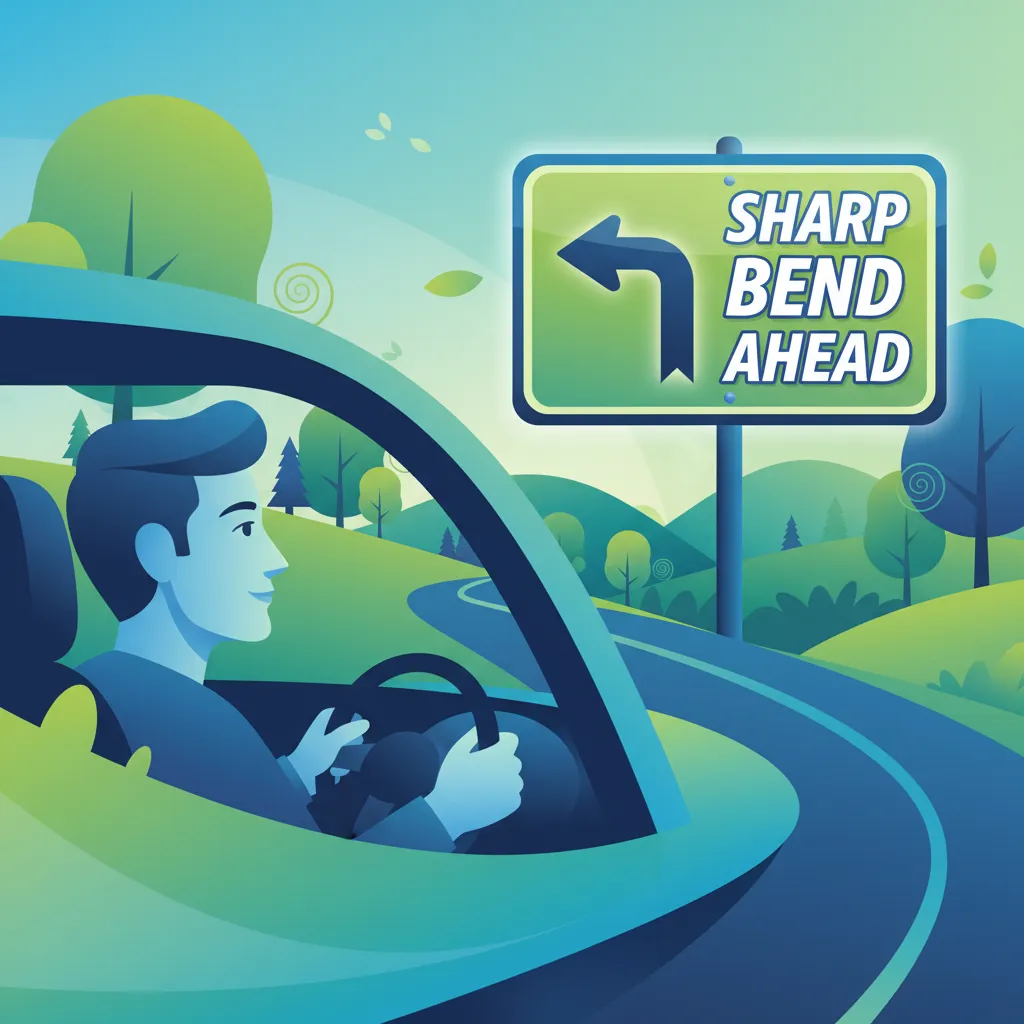
Sharp curve signs indicate that the road ahead will change direction significantly, requiring you to adjust your speed and body position.
The pictogram shows a curved arrow pointing left or right, or a double curve indicating consecutive bends. The practical meaning is that the road geometry will force significant lateral acceleration on your moped. Speed must be reduced to maintain tire grip and prevent skidding or losing control. You must adapt your speed to a level that allows safe navigation, aligning with TF § 3 § 2, which specifies that speed must always be adapted to road conditions.
A common misunderstanding is attempting to take the curve at the same speed as on a straight road or failing to anticipate the entry point of the curve. You should reduce speed before entering the curve, maintaining a safe line through it.
When approaching a sharp curve, look far ahead through the curve to identify its radius and any potential hazards. This helps you to smoothly adjust your speed and trajectory.
Slippery road signs warn of reduced traction, making it harder to brake or corner safely.
The pictogram often shows a vehicle with squiggly lines underneath, sometimes combined with a water droplet or snowflake. This indicates that surface traction is reduced, meaning your braking distance will lengthen, and your cornering grip will drop. You must reduce speed, increase your following distance, and avoid abrupt steering or braking.
A common misunderstanding is assuming the sign only applies when it is visibly wet or icy. Many "Slippery Road" signs are placed in known problem zones where oil spills, loose gravel, or shaded areas frequently cause reduced traction, even on a dry day. Always treat these signs as an active warning, regardless of present conditions.
Road works signs alert you to temporary changes in the road environment due to construction or maintenance.
The pictogram typically shows a man digging or a road-roller. These signs are often paired with other temporary signs, such as reduced speed limits, narrow lane indications, or uneven surface warnings. You should expect reduced lane width, uneven surfaces, workers, and machinery on or near the roadway.
It is crucial to obey any temporary speed limits, stay within indicated lanes, and be prepared to stop. A frequent mistake is ignoring the sign once the visual cue of construction disappears; the sign remains valid for the distance indicated or until another sign cancels the restriction.
These signs warn of areas where wild animals frequently cross the road, posing a sudden and unpredictable obstruction.
The signs typically show the silhouette of the relevant animal. This means animals may enter the roadway unpredictably, creating a high probability of sudden obstruction. You must reduce speed, scan the roadside intently, and be prepared to stop immediately. Avoid sudden acceleration that might "run over" an animal already on the road.
Animals don't only cross at night; many crossing zones are active at dawn and dusk, or at any time of day depending on their habits. Always be vigilant in these marked areas.
Narrow road signs indicate that the road width will decrease, potentially limiting space for vehicles.
The pictogram shows two converging arrows or a single line narrowing. This means that overtaking may become impossible or highly dangerous, and you may need to stay central in your lane or be ready to yield to oncoming vehicles. If the road narrows to a single lane, you must yield to oncoming traffic as per priority rules. Attempting to overtake in a narrowed section is extremely dangerous and illegal.
Gradient signs warn of significant uphill or downhill slopes that require specific handling.
The pictogram shows a vehicle on a slope with an arrow indicating the direction and usually a percentage indicating the gradient. For downhill slopes, you will need to control your speed, potentially using engine braking (if your moped has gears) to avoid overusing your brakes, which can lead to brake fade. For uphill slopes, you may need to prepare for reduced speed and possibly shift down a gear.
Relying solely on your brakes on a steep descent can cause them to overheat and become less effective, especially on mopeds that may lack robust engine braking capabilities. Select an appropriate gear before descending and maintain a safe, controlled speed.
These signs warn of upcoming areas where pedestrians or cyclists may cross the roadway.
The pictogram shows a person walking or a bicycle. The practical meaning is that you should expect pedestrians or cyclists to have priority or be preparing to cross, and you must be ready to slow down or stop to yield to them as required by TF § 4. It's a common misunderstanding to think mopeds are exempt from yielding; they must obey the same rules as other vehicles.
While less common as a standalone warning sign, a sign indicating low bridge clearance is critical for certain vehicles.
The pictogram usually shows a bridge with a height dimension (e.g., "2.0 m") indicated below the triangle. This sign is crucial for ensuring your vehicle's height, including the rider's helmet, is below the specified clearance. If your moped's total height exceeds the clearance, a detour is mandatory (TF § 8). Failure to observe this can lead to serious vehicle damage and road obstruction.
These signs warn of changes in the road material that can affect traction and handling.
The pictogram might show a pattern of stones or a rough surface for gravel, or humps/dips for uneven roads. When you see such a sign, anticipate a change in traction. Your riding technique must adapt; for example, on gravel, use a softer throttle, avoid sudden braking, and maintain a relaxed grip on the handlebars. Treating a gravel surface like asphalt can lead to a loss of control, especially on corners.
Compliance with warning signs is not merely a suggestion; it's a legal obligation under Swedish traffic law. Understanding these rules ensures your safety and prevents legal repercussions.
The Swedish Traffic Ordinance, which governs traffic rules and regulations in Sweden.
Rule: Drivers must adapt speed and driving behavior to the condition signaled by warning signs. Applicability: All road types, all vehicle categories (including AM mopeds). Rationale: This fundamental rule ensures safety by requiring drivers to match their speed and handling to specific hazards, preventing accidents. Implications: If you fail to reduce speed before a "Sharp Curve" sign and consequently lose control, you could be held liable for negligent driving.
Rule: When a pedestrian or cyclist crossing sign is present, the driver must yield to those users. Applicability: At marked crossings and wherever the sign indicates a crossing ahead. Rationale: Protects pedestrians and cyclists, who are particularly vulnerable in traffic. Implications: Failing to slow down or stop for a pedestrian at a "Pedestrian Crossing Ahead" sign, especially if they are already on the crossing, could result in fines and endangerment charges.
Rule: Temporary speed limits indicated by a sign are legally binding for the duration of the sign’s validity. Applicability: Construction zones, roadworks, or any "temporary speed limit" sign. Rationale: Reduces risk in altered road environments, protects workers, and manages traffic flow safely. Implications: Ignoring a "Roadworks – speed limit 20 km/h" sign not only endangers workers but will lead to fines for exceeding the posted speed limit.
Rule: Overtaking is prohibited where a "Road Narrows" warning sign indicates single-lane traffic or insufficient space for safe passing. Applicability: Sections where the road narrows to one lane or where safe passing is compromised. Rationale: Prevents head-on collisions and maintains safe traffic flow in constrained spaces. Implications: Attempting to overtake another vehicle in a clearly marked narrow section could lead to a collision and severe legal consequences.
Rule: Vehicles exceeding the indicated bridge clearance must take an alternative route. Applicability: Bridges or structures with "Low Clearance" warning signs. Rationale: Prevents collisions with bridge structures, which can cause significant damage, structural integrity issues, and severe accidents. Implications: If your moped, especially with a tall rider or cargo, exceeds the marked clearance, you must detour. Proceeding carries the risk of impact, damage, and fines.
Understanding common mistakes is just as important as knowing the rules. Moped riders sometimes underestimate the risks associated with warning signs.
Over-confidence can be a significant hazard for moped riders. Always assume warning signs are relevant to you and your vehicle's capabilities.
Here are typical violations and the correct behavior:
Ignoring a "Sharp Curve" sign:
Overtaking in a "Road Narrows to One Lane" zone:
Failing to slow down at a "Slippery Road" sign on a dry day:
Riding through a "Low Bridge" when your height exceeds clearance:
Not yielding at a "Pedestrian Crossing Ahead" sign when pedestrians are present:
The appropriate reaction to a warning sign is not always fixed; it often depends on prevailing conditions. Moped riders must integrate sign information with the current environment.
The actions you take in response to a warning sign have direct, predictable consequences. Understanding this cause-and-effect relationship reinforces why compliance is crucial.
Following a Warning Sign Correctly:
Ignoring a Warning Sign:
Partial Compliance (e.g., only slight speed reduction):
Contextual Misinterpretation (e.g., "Slippery when wet" only applies when wet):
These relationships are rooted in physics (e.g., friction coefficient changes, momentum, kinetic energy) and human factors (e.g., perception-reaction time, attentional resources). The average rider's perception-reaction time is approximately 2.5 seconds. A warning sign placed 150 meters ahead gives a moped rider traveling at 45 km/h about 12 seconds of travel time before reaching the hazard, providing ample opportunity to assess, decide, and act safely. This early warning is precisely why warning signs are placed sufficiently upstream of a hazard.
Mastering the interpretation and response to Swedish warning signs is a cornerstone of safe moped riding. Always remember these key takeaways:
Lesson content overview
Explore all units and lessons included in this driving theory course.
Explore search topics learners often look for when studying Warning Signs (Varningsskyltar). These topics reflect common questions about road rules, driving situations, safety guidance, and lesson level theory preparation for learners in Sweden.
Browse additional driving theory lessons that cover connected traffic rules, road signs, and common driving situations related to this topic. Improve your understanding of how different rules interact across everyday traffic scenarios.
Understand the specific meanings of triangular warning signs (Varningsskyltar) used in Sweden. This lesson covers signs for curves, slippery roads, and animal crossings, crucial for safe moped riding and Swedish AM licence theory.
This lesson explains the function of informational signs (Informationsskyltar), which provide guidance for navigation and access to services. It covers signs indicating distances to destinations, route numbers, and locations of fuel stations or parking areas. For moped riders, this includes identifying signs for designated moped or cycle lanes, helping them to plan and follow routes efficiently and legally.
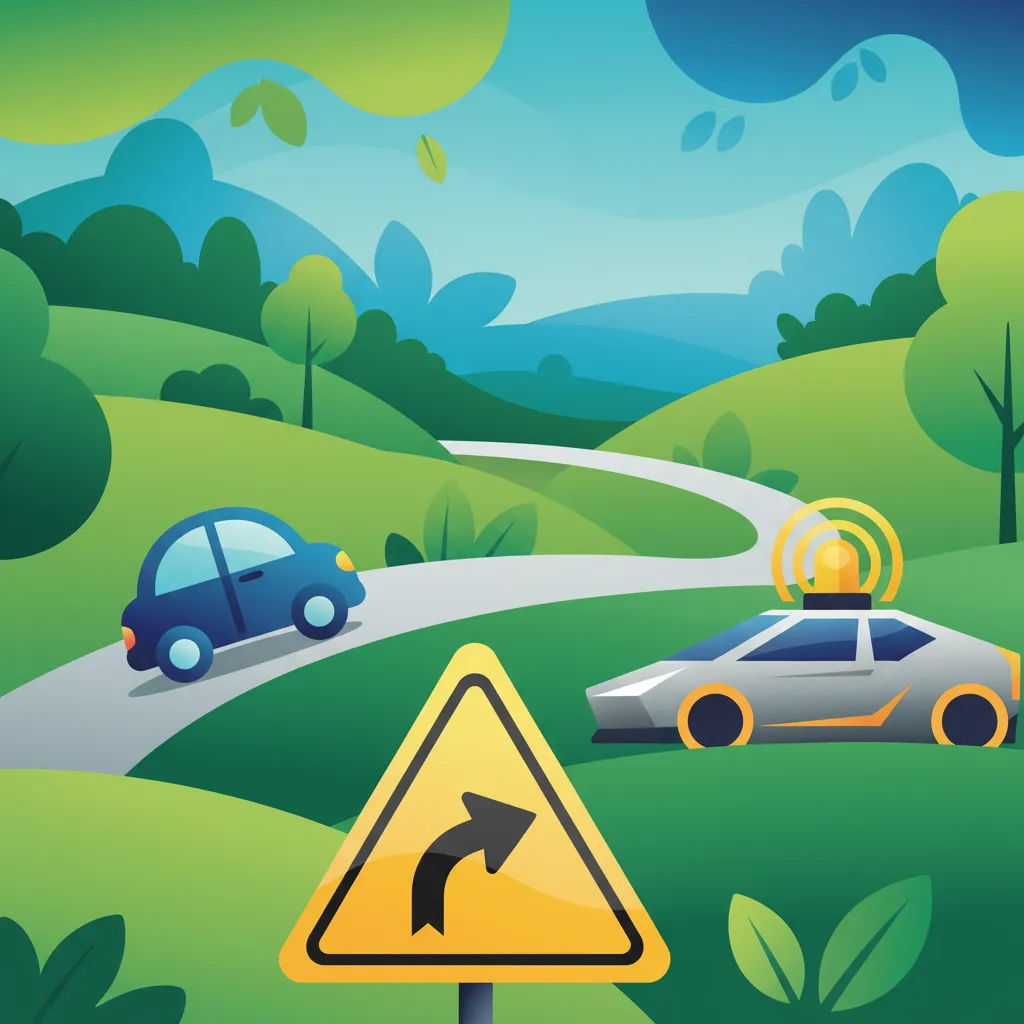
This lesson focuses on Swedish warning signs designed to alert drivers to potential dangers. You will study signs indicating sharp bends, slippery surfaces, animal crossings, and temporary hazards like road construction. Correctly interpreting these signs allows a motorcyclist to proactively adjust speed, lane position, and readiness to react, which is essential for maintaining control and safety, especially in adverse weather or on unfamiliar roads.
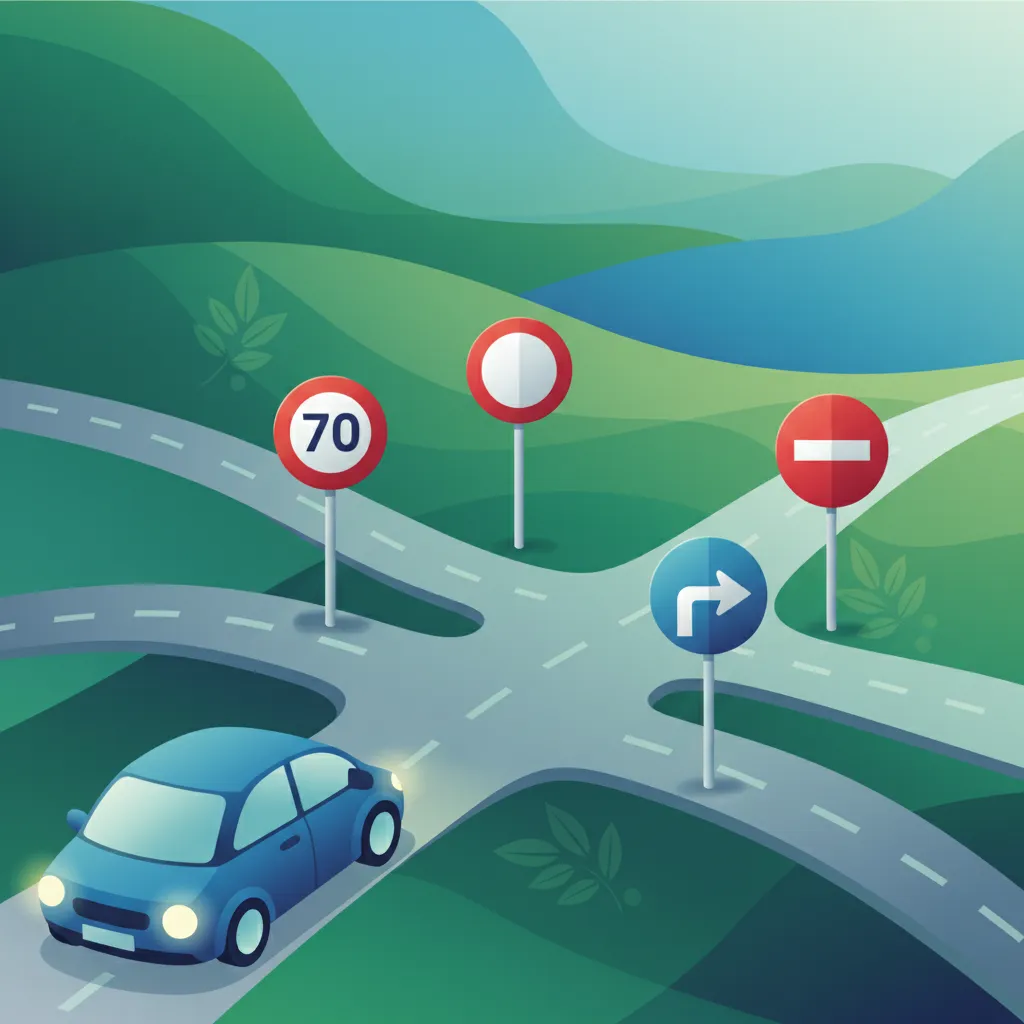
This lesson focuses on regulatory signs (Regulationsskyltar), which issue mandatory instructions and prohibitions that all road users must follow. It details common signs such as speed limits, stop and give way signs, and mandatory direction arrows. Special attention is given to signs directly affecting mopeds, like 'no moped' signs and those indicating designated moped lanes, ensuring riders can navigate legally and safely.
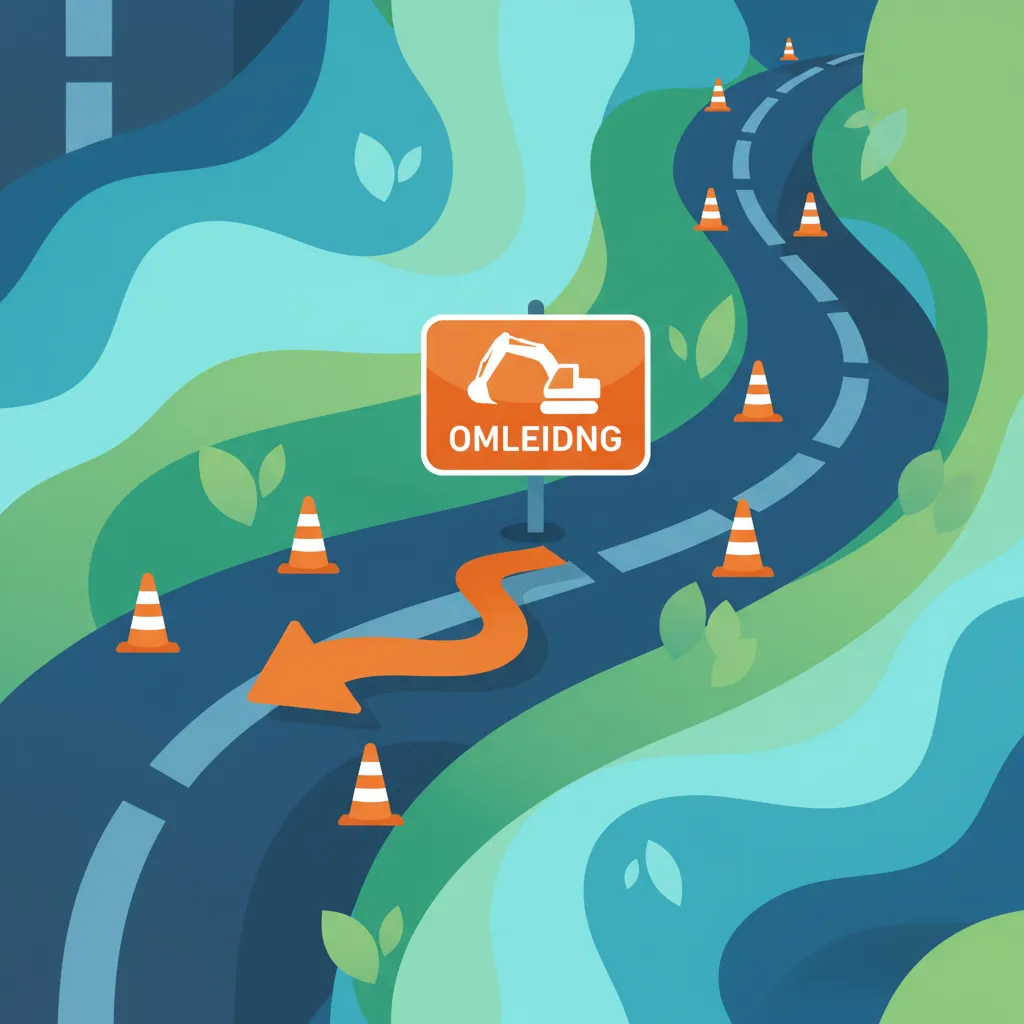
This lesson prepares riders for encountering roadworks, which can introduce temporary and often confusing changes to the road layout. It explains how to interpret the specific orange-colored signs used in these zones, including new speed limits, lane diversions, and warnings about surface hazards. The key takeaway is to reduce speed and increase vigilance when navigating through construction areas.
This lesson focuses on the importance of road markings (Vägmarkering) for guiding traffic flow and ensuring safety. It explains the meaning of different line types, such as solid and broken lines, and the function of stop lines and pedestrian crosswalks. The content highlights markings specific to cycle and moped lanes, teaching riders how to correctly position themselves on the road based on these visual cues.
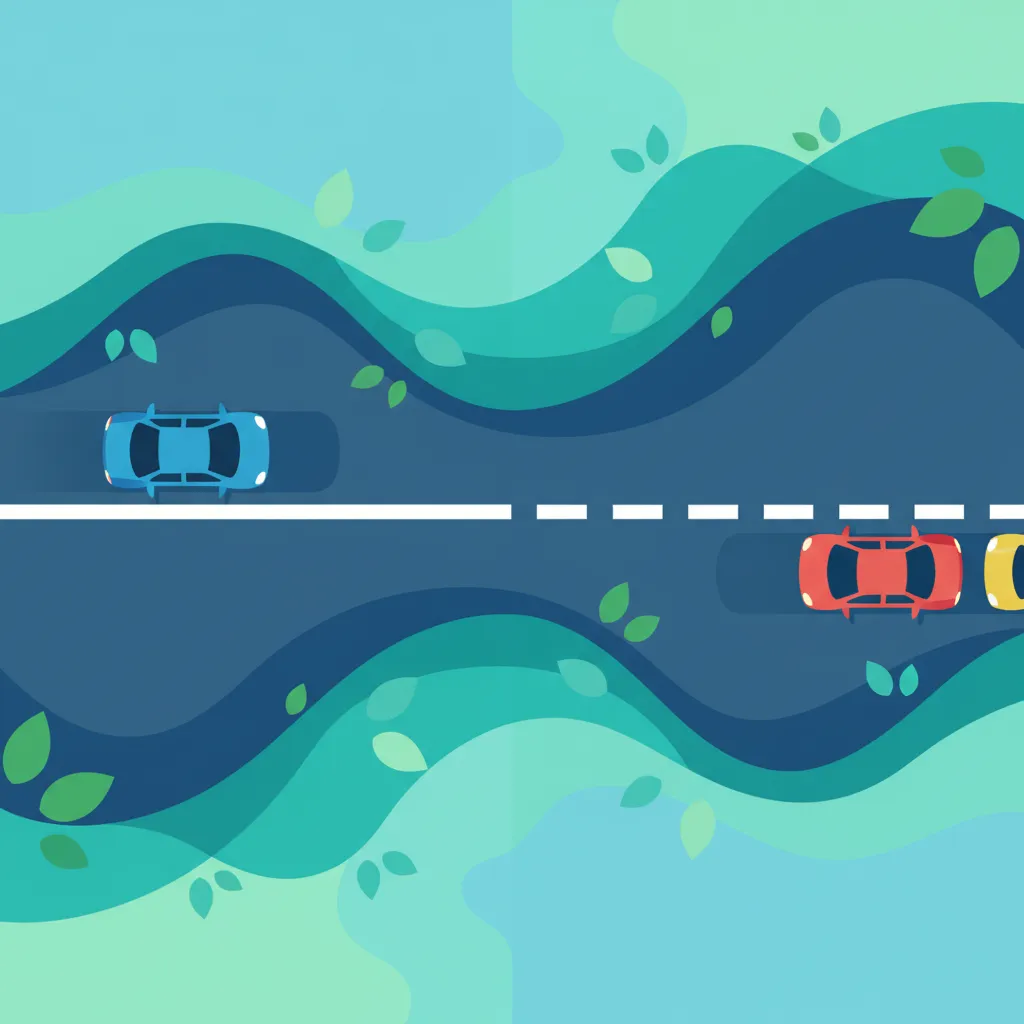
This lesson offers a detailed guide to interpreting the various lines and symbols painted on the road surface. It clarifies the rules associated with solid versus broken lines regarding lane changes and overtaking. The content also explains the function of arrows, stop lines, and other markings that provide crucial positioning and priority information to the rider.
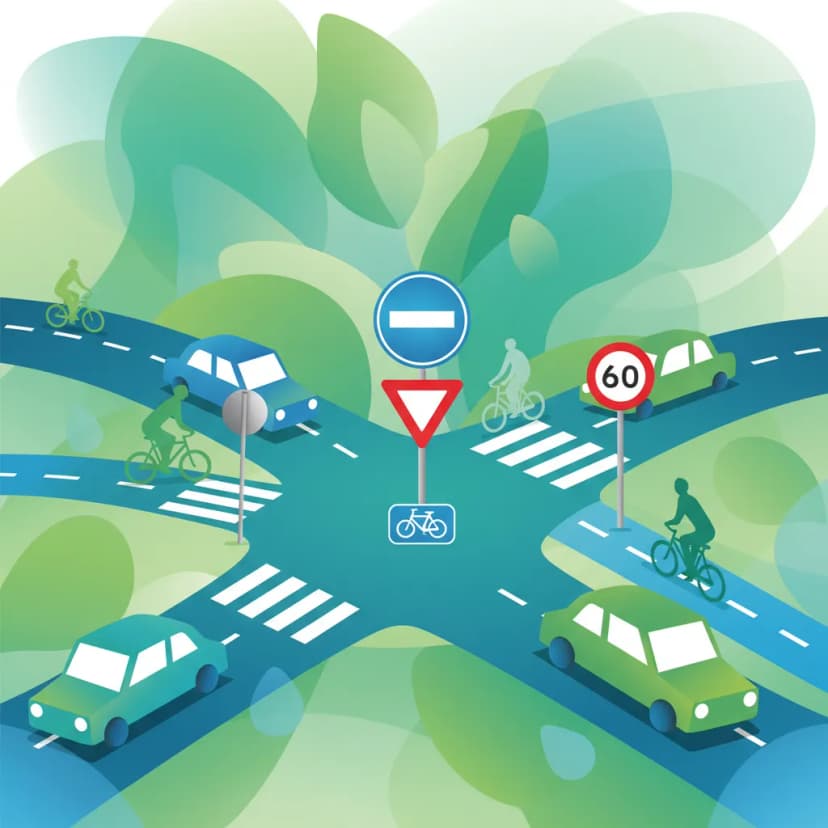
This lesson details the full range of Swedish regulatory signs, which dictate mandatory actions and prohibitions for all road users. You will learn to identify signs that establish speed limits, restrict access, prohibit overtaking, and define parking rules. Understanding these signs is critical for legal compliance and safe interaction with other traffic, as they form the basis of enforceable road law under the Trafikförordning regulations.

This lesson focuses on the variety of road markings used on Swedish roads and their meaning for motorcyclists. You will learn the difference between solid and broken lines regarding overtaking, how to position yourself correctly at intersections based on markings, and how to interpret symbols painted on the road surface. Adhering to these markings is essential for maintaining correct lane discipline and ensuring predictability for other road users.
This lesson explores how the environment affects sign interpretation, contrasting the high density and visual complexity of urban settings with the sparser signage of rural areas. It teaches riders to manage visual clutter in cities and maintain focus over long distances on country roads. By understanding these contextual differences, riders can better anticipate rules and hazards regardless of their location.
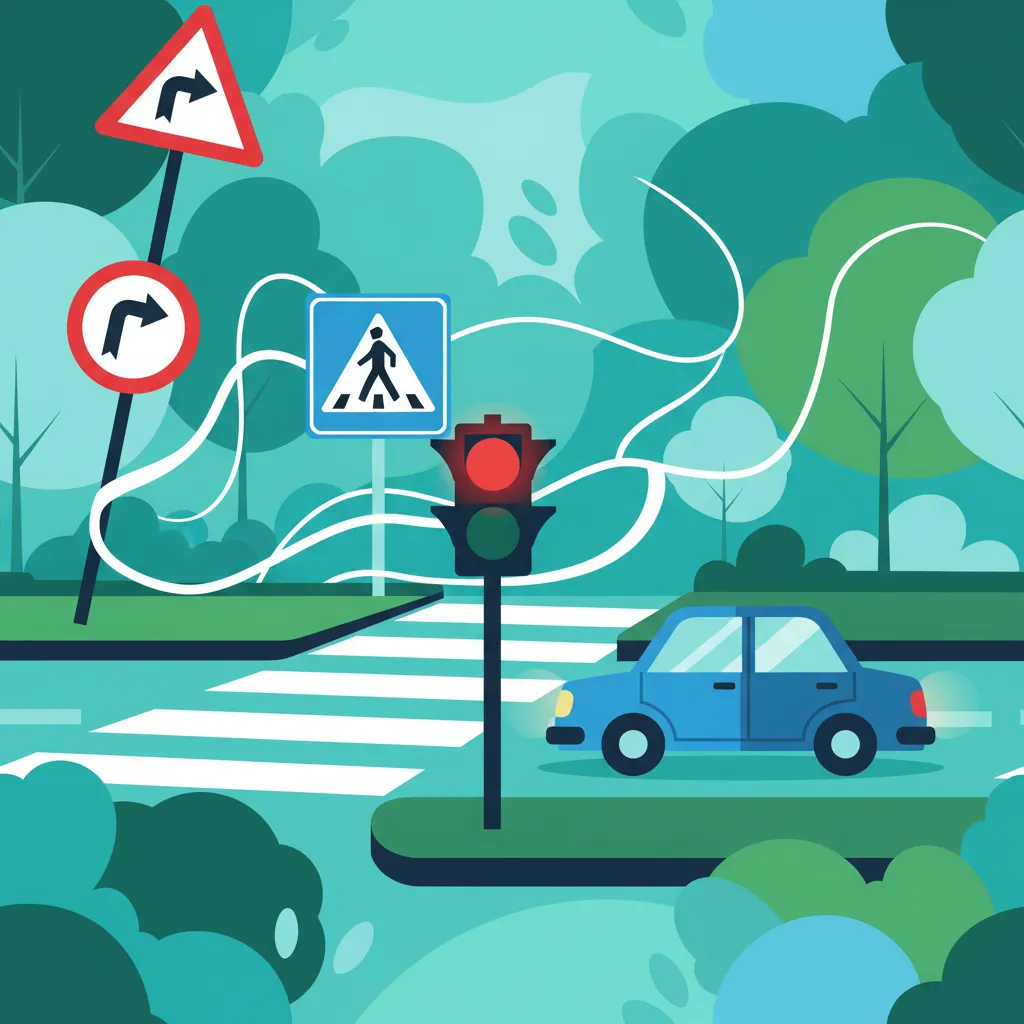
This lesson focuses on Swedish warning signs (varningsmärken), designed to alert drivers to potential dangers ahead. You will study the meaning of triangular signs indicating hazards such as sharp bends, pedestrian crossings, risk of animals on the road, or temporary road work. The objective is to develop proactive driving habits by understanding how to anticipate risks and adapt speed and positioning appropriately when a warning sign is present.
Learn to differentiate and interpret regulatory (Regulationsskyltar) and information signs (Informationsskyltar) in Swedish traffic. This lesson complements warning signs, providing a broader understanding of how signs guide road users and affect driving behaviour.
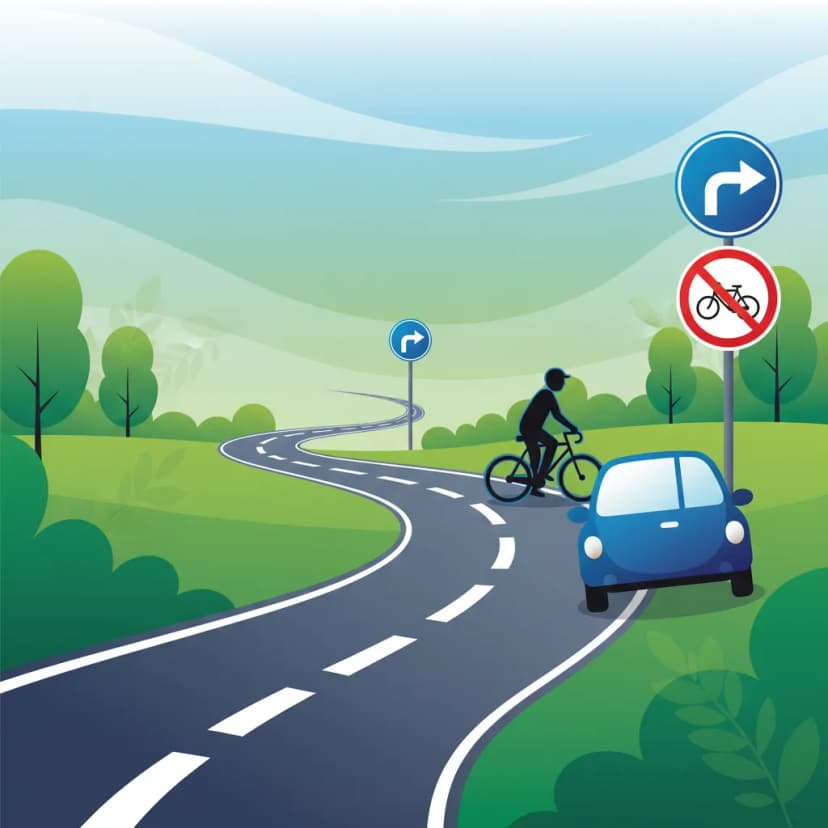
This lesson details the full range of Swedish regulatory signs, which establish legally enforceable rules for all road users. You will learn to interpret prohibitory signs (förbudsmärken) such as speed limits and no-entry signs, as well as mandatory signs (påbudsmärken) that dictate direction or lane usage. Understanding these signs is crucial as they directly regulate traffic flow, ensure safety at critical points, and carry legal consequences if ignored.
This lesson details the full range of Swedish regulatory signs, which dictate mandatory actions and prohibitions for all road users. You will learn to identify signs that establish speed limits, restrict access, prohibit overtaking, and define parking rules. Understanding these signs is critical for legal compliance and safe interaction with other traffic, as they form the basis of enforceable road law under the Trafikförordning regulations.
This lesson focuses on regulatory signs (Regulationsskyltar), which issue mandatory instructions and prohibitions that all road users must follow. It details common signs such as speed limits, stop and give way signs, and mandatory direction arrows. Special attention is given to signs directly affecting mopeds, like 'no moped' signs and those indicating designated moped lanes, ensuring riders can navigate legally and safely.
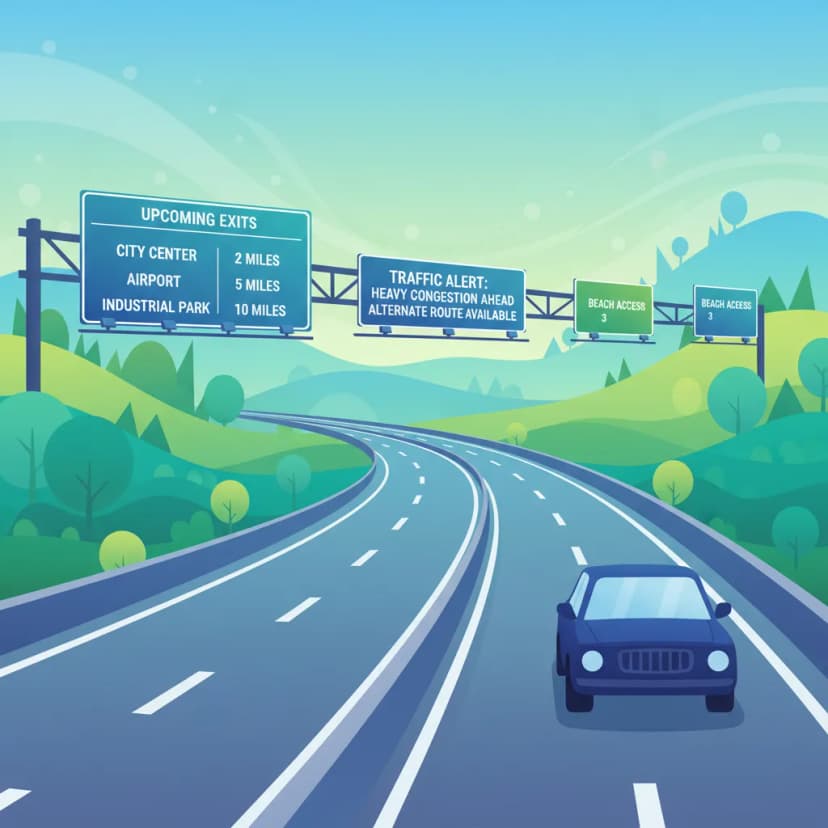
This lesson covers the extensive category of informational and directional signs that aid navigation throughout Sweden. You will learn to interpret signs for motorways, national roads, and local destinations, as well as symbols indicating services like gas stations, parking, and rest areas. Proper understanding of these signs allows for efficient route planning, reduces driver uncertainty, and contributes to smoother, safer traffic flow on all types of roads.
This lesson explains the function of informational signs (Informationsskyltar), which provide guidance for navigation and access to services. It covers signs indicating distances to destinations, route numbers, and locations of fuel stations or parking areas. For moped riders, this includes identifying signs for designated moped or cycle lanes, helping them to plan and follow routes efficiently and legally.

This lesson covers the essential topic of communication in traffic using the vehicle's built-in signaling devices. You will learn the rules for using your turn indicators (körriktningsvisare) in good time before turning or changing lanes. The content also explains the proper use of hazard lights (varningsblinkers) in emergency situations and the very limited, specific circumstances in which using the horn (ljudsignal) is permitted to avert immediate danger.
This lesson explains the function and legal significance of various road markings (vägmarkeringar) in Sweden. You will learn the difference between broken lines that permit overtaking and solid lines that forbid it, as well as the meaning of stop lines, pedestrian crossings, and lane direction arrows. These markings work in conjunction with signs to organize traffic flow, separate lanes, and provide critical information directly on the road surface.
This lesson focuses on Swedish warning signs (varningsmärken), designed to alert drivers to potential dangers ahead. You will study the meaning of triangular signs indicating hazards such as sharp bends, pedestrian crossings, risk of animals on the road, or temporary road work. The objective is to develop proactive driving habits by understanding how to anticipate risks and adapt speed and positioning appropriately when a warning sign is present.
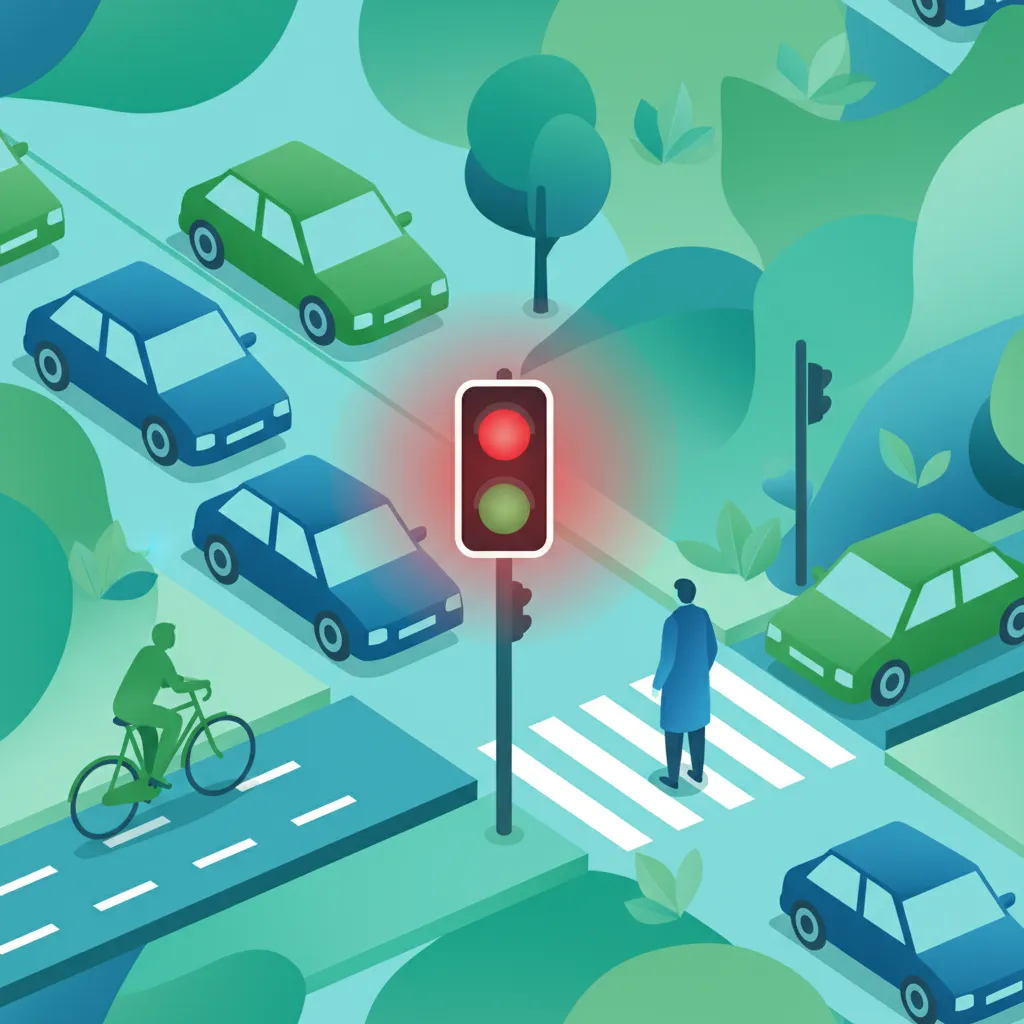
This lesson provides a detailed explanation of the Swedish traffic signal system. You will learn the precise legal meaning of solid red, yellow, and green lights, as well as green arrows which permit turning when oncoming traffic is stopped. It also covers procedures for flashing yellow signals and what to do when traffic lights are out of order, emphasizing that standard priority rules like the right-hand rule then apply.
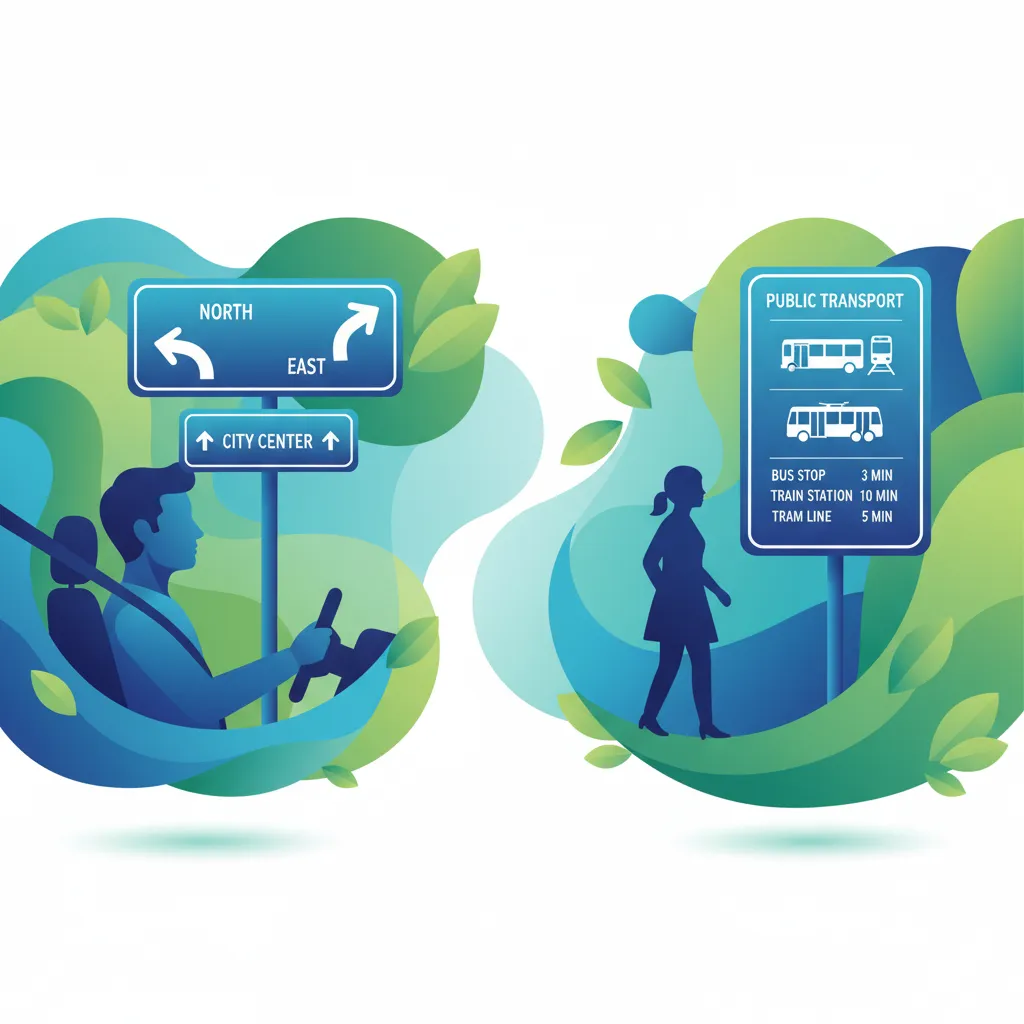
This lesson explains how to read and use Swedish informational and directional signs for effective route planning and navigation. You will learn to follow signs for specific destinations, identify road numbers, and recognize indicators for services such as fuel stations and rest areas. For motorcyclists on long journeys, this knowledge is crucial for making timely decisions about lane changes, exits, and stops without causing disruption to traffic flow.
Find clear answers to common questions learners have about Warning Signs (Varningsskyltar). Learn how the lesson is structured, which driving theory objectives it supports, and how it fits into the overall learning path of units and curriculum progression in Sweden. These explanations help you understand key concepts, lesson flow, and exam focused study goals.
Warning signs (Varningsskyltar) are designed to alert you to potential dangers or changes in road conditions ahead. For moped riders, they are crucial for anticipating hazards like sharp curves, slippery surfaces, or pedestrian activity, allowing you to adjust your speed and riding behaviour proactively to ensure safety.
While all warning signs are important, those indicating reduced visibility (like 'road narrows' or 'junction ahead'), potential hazards ('slippery road', 'animal crossing'), or sharp changes in road alignment ('sharp curve') are especially critical for mopeds due to their lower speeds and different stability characteristics compared to cars.
Upon seeing a warning sign, you should immediately assess the potential hazard it indicates. Be prepared to reduce your speed, adjust your position within the lane, and be extra vigilant. For example, 'slippery road' might mean reducing speed and avoiding sudden braking or acceleration, while 'animal crossing' requires heightened awareness for potential unexpected movements.
Warning signs (Varningsskyltar) alert you to potential dangers and advise caution, usually being triangular with a red border. Regulatory signs (Regulationsskyltar), often circular or square, tell you what you must or must not do, such as speed limits or no-entry rules. It's vital to distinguish between the two to react appropriately.
Yes, understanding Swedish road signs, including warning signs (Varningsskyltar), is a fundamental part of the Swedish theory exam for Category AM. Questions will often assess your ability to interpret signs and choose the correct action or recognise the hazard described.