Beyond indicators, understanding subtle cues is vital for safe moped riding in Sweden. This lesson in Unit 9, 'Interaction with Other Road Users,' focuses on essential non-verbal communication methods like making eye contact and using hand signals. Mastering these skills is crucial for predicting and being predicted by other road users, preparing you for complex traffic scenarios on your AM licence theory exam.

Riding a moped requires more than just mechanical skill; it demands constant, clear communication with other road users. As a Category AM moped rider in Sweden, you operate a vehicle that can be less conspicuous than cars or trucks. This makes your ability to signal intentions, confirm awareness, and project predictability through non-verbal cues absolutely vital for safety. This lesson, part of your Swedish Category AM (moped) driving license theory course, delves into the essential techniques of hand signals, eye contact, and body language to ensure your journey is as safe and smooth as possible.
Effective communication is the cornerstone of safe traffic participation. It allows other drivers, cyclists, and pedestrians to anticipate your actions, reducing surprise and providing them with adequate time to react. For moped riders, this is particularly critical due to the moped's smaller size and sometimes lower visibility in busy traffic. When your intentions are clear, you minimize risks and contribute to a more harmonious traffic flow.
While your moped is equipped with electronic turn indicators and brake lights, there are many situations where these might not be enough. They could be obscured by other vehicles, affected by poor weather, or simply malfunction. Non-verbal cues—such as standard hand signals, direct eye contact, and even your riding posture—serve as powerful complements or vital backups to electronic signals. They bridge the gap in communication, especially in complex scenarios where mutual understanding can prevent accidents. Swedish traffic legislation explicitly mandates the use of these techniques, underscoring their importance for all road users, particularly vulnerable ones like moped riders.
In Sweden, the rules governing how road users communicate are designed to promote predictability and safety for everyone. For Category AM moped riders, specific provisions within the Trafikförordningen (Traffic Ordinance) and recommendations from the Swedish Transport Agency (Transportstyrelsen) outline your responsibilities regarding signaling and interaction. Understanding these legal requirements is fundamental to safe and compliant riding.
The Trafikförordningen emphasizes that all road users must conduct themselves in a manner that does not endanger others and that their intentions should be made clear. This general principle forms the basis for specific rules on signaling. It means that as a moped rider, you have a legal duty to communicate your maneuvers effectively, ensuring that other road users can understand and react to your actions in time. This is especially important for mopeds, given their sometimes less obvious presence in traffic compared to larger vehicles.
Effective communication is guided by several core principles that enhance safety and predictability. These principles apply to all forms of non-verbal communication, from hand signals to eye contact.
The most fundamental principle is that you must be seen and recognized by other road users before executing any maneuver. Your moped's low profile means you are inherently less visible. Maximize your visual presence by using proper lighting, adopting a visible road position, and employing clear communication cues. Assuming others see you simply because you are visible is a dangerous mistake.
Relying on a single communication channel can be risky. The principle of redundancy means using multiple channels to convey your intentions. This hierarchy typically starts with electronic signals (lights), followed by hand signals, and finally, eye contact. If one channel is compromised (e.g., a burnt-out indicator light or glare making eye contact difficult), other channels can ensure your message gets through.
Initiating your signal with sufficient lead time is crucial. Pre-emptive signaling allows other road users ample opportunity to observe your signal, process it, and adjust their speed or trajectory accordingly. The appropriate lead time varies depending on the maneuver and speed, but generally, 3 to 5 seconds before a turn or lane change is recommended. Signaling too late negates the purpose of communication and can lead to dangerous situations.
Traffic conditions are rarely static. Effective communication requires you to adapt your signaling type and intensity to the specific context. Factors such as weather (rain, fog, snow), lighting conditions (day, night, dusk), speed, and the type of road user you are interacting with (pedestrian, cyclist, car driver) should influence how you communicate. For example, larger, more emphatic gestures may be needed in low visibility.
Swedish law establishes a clear hierarchy for communication tools. Electronic turn indicators are the primary method. If these are unavailable or insufficient, hand signals become mandatory. Eye contact is a tertiary, but often mandatory, confirmation, especially when interacting with vulnerable road users. This legal framework ensures that riders prioritize effective and observable cues.
Hand signals are a fundamental part of a moped rider's communication toolkit, serving as a backup to electronic indicators or as a reinforcement in specific situations. The Swedish Transport Agency prescribes specific manual arm and hand motions that all Category AM moped riders must know and use.
You are legally required to use prescribed hand signals when:
It is crucial to perform hand signals while maintaining control of your moped, always keeping at least one hand firmly on the handlebars.
Familiarize yourself with these standard signals to ensure clear communication on the road.
To signal a left turn, extend your left arm horizontally straight out from your side, with your palm facing forward. Hold this position clearly for the entire duration of the maneuver until you have completed the turn. This signal is unambiguous and visible to both oncoming and following traffic.
There are two accepted methods for signaling a right turn:
To indicate that you are stopping or significantly decelerating, extend your left arm downward at a 45-degree angle, with your palm facing backward (towards following traffic). Maintain this signal until your moped has come to a stop or reached the desired slower speed. This warns drivers behind you to slow down.
While not as commonly used as turn or stop signals, an emergency or hazard signal can be vital. This is typically conveyed by extending both arms upward with palms facing forward, similar to a surrender gesture. This signals a general warning or an emergency situation to all surrounding traffic. In addition, rapidly flashing your rear light (if your moped has this function) or making quick, repetitive hand signals can draw attention to an immediate danger.
Mishandling hand signals can be as dangerous as not signaling at all. Avoid these common errors:
Eye contact is a powerful non-verbal communication tool that goes beyond mere signaling; it establishes mutual acknowledgment and confirms that your presence and intentions have been recognized by another road user. For Category AM moped riders, mastering eye contact is an essential safety practice mandated by Swedish traffic regulations.
While courtesy is a benefit, the primary purpose of eye contact in traffic is safety. It eliminates assumptions. Just because you are visible does not mean you have been seen. A driver might be looking in your direction but still not perceive you due to distractions, blind spots, or cognitive overload. Eye contact provides direct, reciprocal confirmation of awareness. This is particularly vital at intersections, pedestrian crossings, and when merging or changing lanes, where the actions of others directly impact your safety.
Eye contact can take a few forms:
Swedish law, particularly from the Transportstyrelsen (FS 2015:2), emphasizes the need for visual acknowledgment. You shall attempt to obtain visual acknowledgment before executing a maneuver that requires the attention of another road user, whenever a reasonable opportunity exists. This applies broadly to:
A common and dangerous mistake is to confuse "being visible" with "being seen" or "being observed." Wearing bright clothing and having functional lights makes you visible, but it doesn't guarantee that other road users have registered your presence or understood your intentions. Always assume you haven't been seen until you have clear confirmation through eye contact or other observable cues. This cautious approach can prevent many potential collisions.
Beyond deliberate signals, your overall body language and riding posture subtly communicate your confidence, stability, and intended path to other road users. While not explicitly codified as hand signals, this non-verbal communication significantly contributes to your predictability and safety as a Category AM moped rider.
The way you sit and carry yourself on your moped provides visual cues to others. An erratic or unstable posture can suggest unpredictability, causing other drivers to react cautiously or even misjudge your speed and trajectory. Conversely, a confident and stable posture instills trust and clarity.
A confident riding posture typically involves:
This posture makes you appear stable and in control, which in turn makes your movements more predictable to other drivers.
When preparing for turns, your body's subtle lean or weight shift can act as an early indicator of your intentions, especially to following traffic.
Avoid exaggerated or sudden leans, as these can make your moped appear unstable and cause alarm for other road users. The goal is to provide early, consistent, and predictable visual information. This aspect of communication, though not a specific "signal," is part of riding in a manner that does not endanger others, as stipulated by Trafikförordningen § 3.
Effective communication for Category AM moped riders in Sweden adheres to a hierarchical system. This system prioritizes the most automatic and universally understood signals first, progressively adding more deliberate and personal cues as needed. Understanding this hierarchy ensures your intentions are always conveyed clearly and redundantly.
Your moped's electronic turn indicators (blinker lights) are the primary and most common method for signaling turns and lane changes. They are designed for visibility at a distance and operate automatically with minimal rider effort.
Trafikförordningen § 5 states: The vehicle’s turn indication lights shall be used when making a turn or changing lane. This is a mandatory requirement when your lights are functional.
Always activate your indicators well in advance of your maneuver to give other road users sufficient time to react.
Hand signals serve as the secondary line of communication. They are mandatory when your electronic indicators are inoperable, or when conditions (like bright sunlight or heavy rain) significantly reduce the effectiveness of your lights. Hand signals can also be used as a supplementary cue to reinforce your electronic signals, especially in complex or high-risk situations.
Trafikförordningen § 6 states: When turn indication lights are inoperable, the rider shall use the prescribed hand signals.
Using hand signals even when lights are functional adds a layer of redundancy, making your intentions even clearer, particularly to vulnerable road users who might be closer to you.
Eye contact is the tertiary, but often mandatory, layer of confirmation. It provides direct, mutual acknowledgment that your presence and intentions have been recognized by the intended recipient (another driver, pedestrian, or cyclist). It's the human element of communication that verifies the message has been received and understood.
Transportstyrelsen, Föreskrift FS 2015:2 mandates: Before executing a maneuver that requires the attention of another road user and where a reasonable opportunity exists, the rider shall attempt to obtain visual acknowledgement.
Eye contact is invaluable in situations like pedestrian crossings, busy intersections, or when merging, where assumptions can lead to serious accidents.
In many situations, you should combine signals for maximum clarity and safety. For instance, when making a left turn at a busy intersection with oncoming traffic:
This redundant communication approach significantly reduces the risk of misinterpretation and enhances your overall safety on the road.
The effectiveness of your communication techniques often depends on the specific traffic scenario you encounter. Adapting your use of hand signals, eye contact, and body language to various situations is a key skill for a safe Category AM moped rider.
Intersections are high-risk areas due to conflicting traffic flows.
Changing lanes requires clear communication to adjacent and following traffic.
Pedestrian crossings (zebra crossings) demand the highest level of caution and explicit communication.
Sharing the road, especially dedicated cycle lanes, with cyclists requires mindful communication.
Challenging environmental conditions drastically reduce visibility and make communication harder.
Swedish traffic law explicitly outlines the requirements for how Category AM moped riders must communicate their intentions. These regulations are designed to ensure safety and predictability for all road users. Ignoring these rules can lead to dangerous situations and legal consequences.
The Trafikförordningen (§ 5) is clear: if your moped is equipped with functional turn indication lights, you must use them whenever you intend to make a turn or change lanes. This is the primary method of signaling. It's not optional; it's a legal obligation. This ensures that your intentions are broadcast to other road users well in advance, allowing them to adjust their driving.
The law anticipates situations where electronic signals might fail. According to Trafikförordningen (§ 6), if your moped's turn indication lights are inoperable, you are legally required to use the prescribed hand signals. This provision ensures that even with equipment failure, you can still communicate your intentions clearly. Hand signals are not just a recommendation; they are a mandatory backup system. They are also permitted as a supplementary cue to reinforce electronic signals, even when the lights are working.
Beyond specific signaling requirements, Trafikförordningen (§ 3) lays down a foundational principle: every road user shall conduct their vehicle in a manner that does not endanger other road users. This broad rule underpins the need for clear communication. An abrupt, unsignaled maneuver, even if no specific signaling rule was broken, could be deemed unsafe under this general provision. Making your intentions clear through signals, eye contact, and body language is therefore an integral part of riding safely and compliantly.
The Swedish Transport Agency (Transportstyrelsen), in its Föreskrift FS 2015:2, reinforces the importance of confirming mutual awareness. It states that before executing a maneuver that requires the attention of another road user, and where a reasonable opportunity exists, the rider shall attempt to obtain visual acknowledgment. This regulation elevates eye contact from a mere recommendation to a statutory requirement in specific contexts, particularly at intersections and pedestrian crossings. It means you cannot simply assume you've been seen; you must actively seek confirmation.
While not a formal regulation, the Bilsäkerhetsrådet (Road Safety Council) recommends that hand signals should be held for the entire duration of the maneuver and be clearly visible to the intended audience. This best practice prevents premature withdrawal of the signal, which could lead to misinterpretation and confusion among other road users. Adhering to this recommendation enhances safety margins significantly.
Understanding communication techniques is one thing; applying them correctly in dynamic traffic is another. Category AM moped riders often make specific mistakes that can lead to dangerous misunderstandings. Being aware of these common violations and knowing how to avoid them is crucial for your safety and the safety of others.
Effective communication is not a one-size-fits-all skill. Category AM moped riders must constantly adapt their communication techniques based on the riding environment, weather conditions, and interactions with different road users. This contextual adaptation is crucial for maintaining safety and predictability.
Effective communication is not merely an optional addition to safe riding; it is an integral and legally mandated aspect of operating a Category AM moped in Sweden. By mastering the hierarchy of signals—from your moped's electronic indicators to precise hand gestures and crucial eye contact—you actively contribute to your own safety and the predictability of traffic for everyone around you.
Remember to:
The ultimate goal of clear and redundant communication is to reduce uncertainty, shorten reaction times for other road users, and significantly lower the risk of collisions. Ride predictably, communicate clearly, and enjoy your journey on the Swedish roads.
Lesson content overview
Explore all units and lessons included in this driving theory course.
Explore search topics learners often look for when studying Communication Techniques (Hand Signals, Eye Contact). These topics reflect common questions about road rules, driving situations, safety guidance, and lesson level theory preparation for learners in Sweden.
Browse additional driving theory lessons that cover connected traffic rules, road signs, and common driving situations related to this topic. Improve your understanding of how different rules interact across everyday traffic scenarios.
Learn to use eye contact, hand signals, and body language effectively in Swedish traffic. This lesson explains how to predict other road users' actions and ensure your intentions are clear, enhancing safety for AM licence holders.
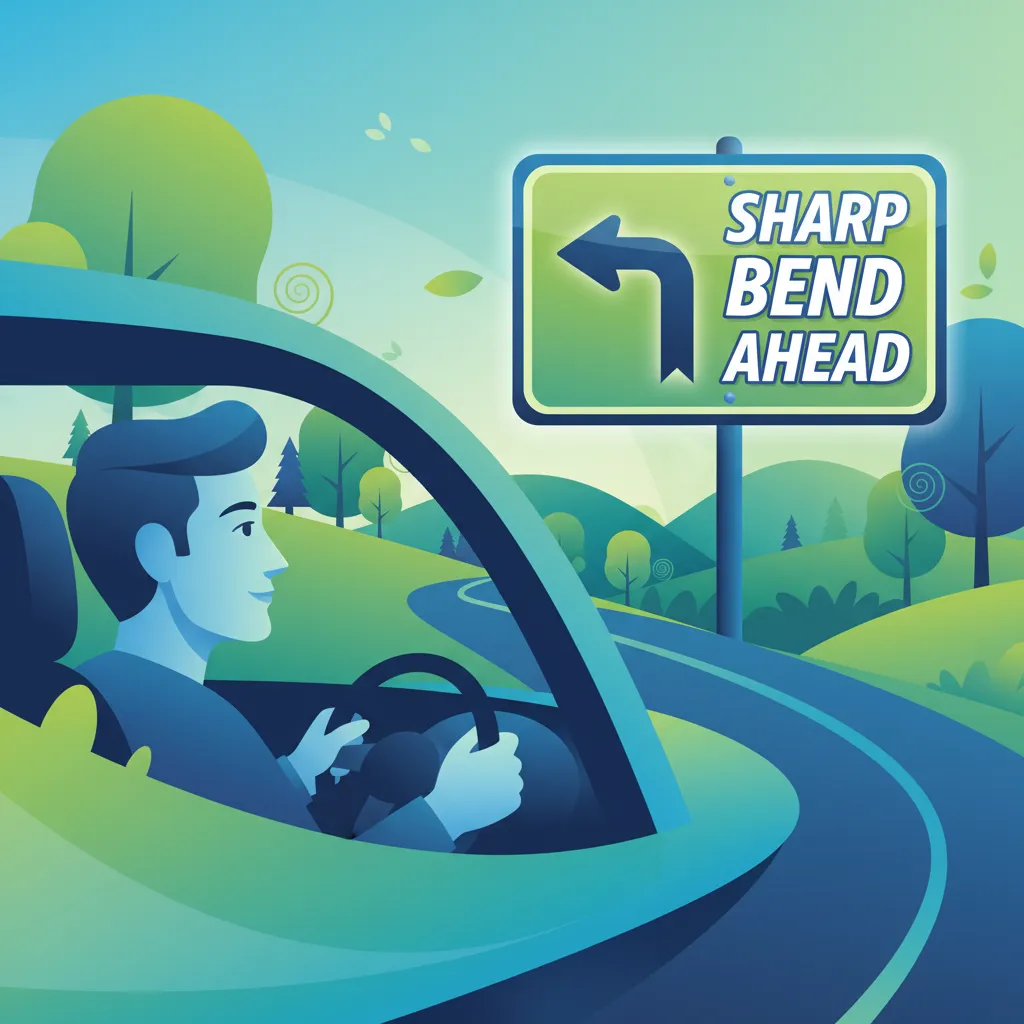
This lesson teaches riders to interpret warning signs (Varningsskyltar), which alert them to potential dangers on the road ahead. It covers a wide range of signs, including those for sharp curves, slippery surfaces, wildlife crossings, and upcoming roadworks. Understanding these triangular signs allows riders to anticipate hazards, adjust their speed and position proactively, and enhance their overall safety.
This lesson covers the correct use of a moped's communication tools: the turn signals and the horn. It explains that signals should be used well in advance of any turn or lane change to inform other road users of your intentions. The content also clarifies that the horn is primarily a warning device to alert others of your presence in potentially dangerous situations, not a tool to express frustration.
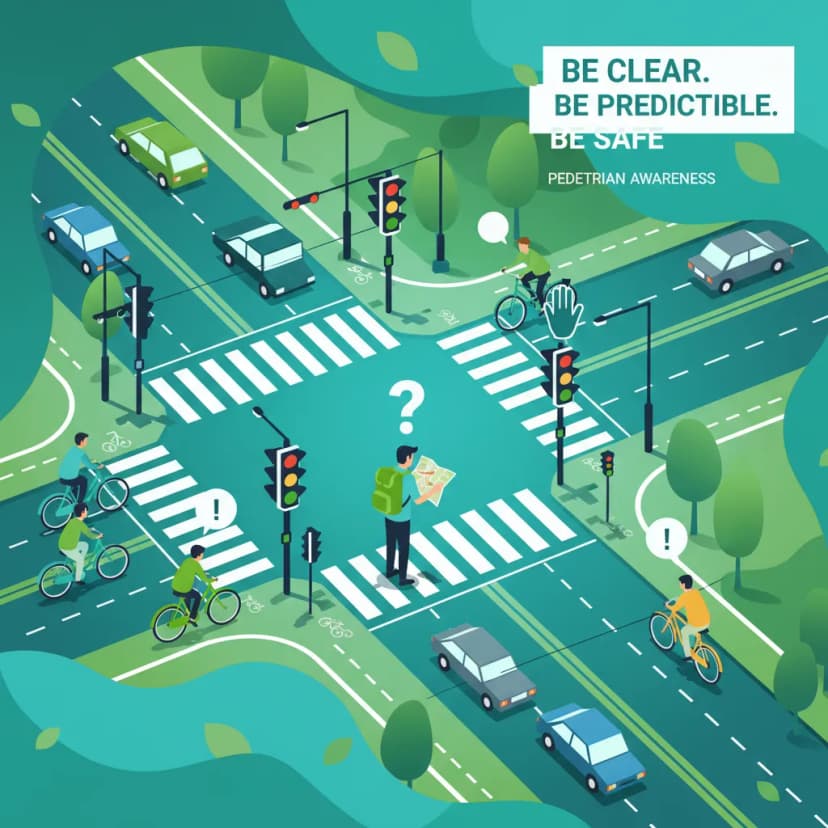
This lesson is dedicated to pedestrian safety, teaching riders to be constantly aware of people on foot, especially in busy urban environments. It reinforces the absolute duty to yield at marked crossings and encourages a cautious approach in areas like schools and shopping districts. The content stresses anticipating unpredictable actions, particularly from children or distracted pedestrians.
This lesson explains the function of informational signs (Informationsskyltar), which provide guidance for navigation and access to services. It covers signs indicating distances to destinations, route numbers, and locations of fuel stations or parking areas. For moped riders, this includes identifying signs for designated moped or cycle lanes, helping them to plan and follow routes efficiently and legally.
This lesson provides practical instructions for safely navigating different types of intersections and roundabouts. It covers procedures for approaching, entering, and exiting roundabouts, emphasizing the rule to yield to traffic already circulating. The content also addresses how to handle signal-controlled and uncontrolled intersections, ensuring riders select the correct lane and manage their speed appropriately.
This lesson covers the correct interpretation and response to all forms of light and audible signals a motorcyclist will encounter. You will study the sequences of traffic lights, the rules for using turn indicators and hazard lights, and the legally permitted uses of the horn. Proper use of these signals is a fundamental aspect of safe riding, as it communicates your intentions clearly to other road users and helps prevent misunderstandings and collisions.

This lesson covers the essential topic of communication in traffic using the vehicle's built-in signaling devices. You will learn the rules for using your turn indicators (körriktningsvisare) in good time before turning or changing lanes. The content also explains the proper use of hazard lights (varningsblinkers) in emergency situations and the very limited, specific circumstances in which using the horn (ljudsignal) is permitted to avert immediate danger.

This lesson provides essential strategies for riding safely at night and during twilight hours. It covers the correct use of headlights to maximize visibility without dazzling other drivers and emphasizes the need to reduce speed to compensate for shorter sight distances. The content also highlights the importance of wearing reflective gear to be seen by others.
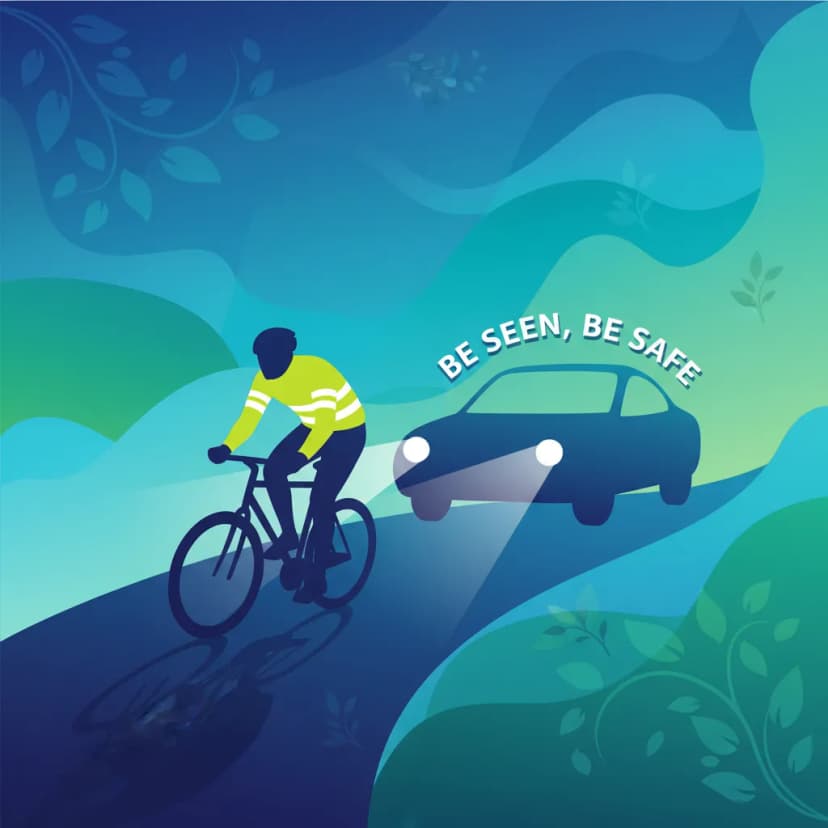
This lesson focuses on proactive strategies to increase a moped rider's visibility to other drivers. It strongly advocates for the use of high-visibility and reflective clothing, helmets, and accessories to stand out in traffic. Additionally, it revisits the concept of lane positioning as a tool to avoid being in other drivers' blind spots and to create a more prominent presence on the road.
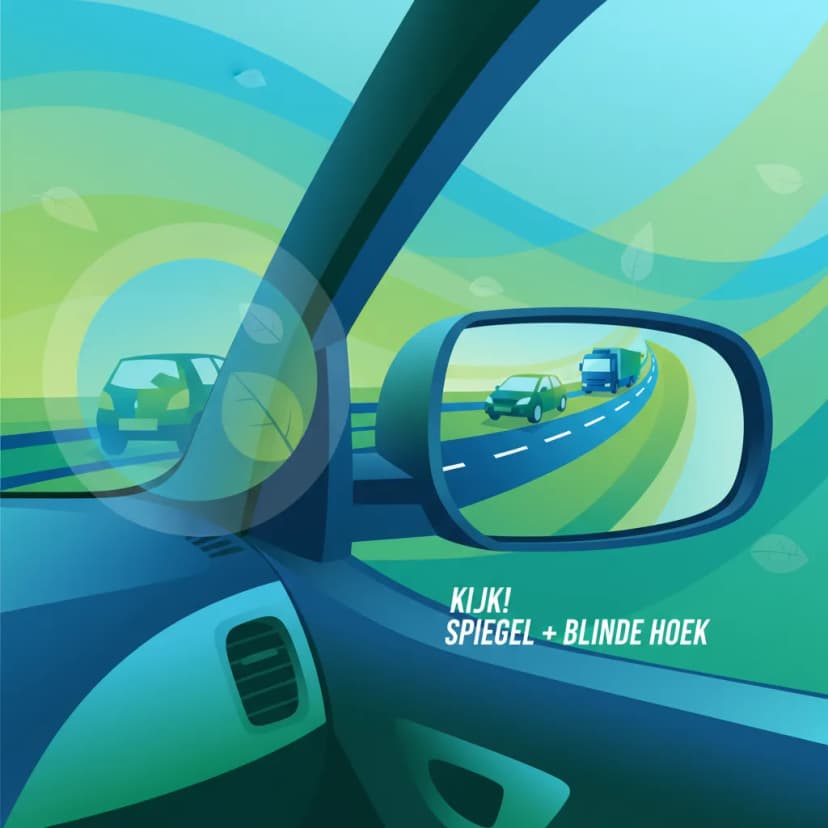
This lesson emphasizes the importance of a comprehensive visual scanning routine that includes regular mirror checks and mandatory head checks (shoulder checks) to cover blind spots. It explains that mirrors alone are not sufficient and that a physical turn of the head is required before any lateral movement. This habit is fundamental to preventing collisions during lane changes, merging, or turning.
Explore how clear visibility and communication through signals are vital for safe moped riding in Sweden. Understand how to make yourself seen and understood by other road users, covering both mechanical and non-verbal methods.
This lesson focuses on proactive strategies to increase a moped rider's visibility to other drivers. It strongly advocates for the use of high-visibility and reflective clothing, helmets, and accessories to stand out in traffic. Additionally, it revisits the concept of lane positioning as a tool to avoid being in other drivers' blind spots and to create a more prominent presence on the road.
This lesson is dedicated to pedestrian safety, teaching riders to be constantly aware of people on foot, especially in busy urban environments. It reinforces the absolute duty to yield at marked crossings and encourages a cautious approach in areas like schools and shopping districts. The content stresses anticipating unpredictable actions, particularly from children or distracted pedestrians.
This lesson teaches riders to interpret warning signs (Varningsskyltar), which alert them to potential dangers on the road ahead. It covers a wide range of signs, including those for sharp curves, slippery surfaces, wildlife crossings, and upcoming roadworks. Understanding these triangular signs allows riders to anticipate hazards, adjust their speed and position proactively, and enhance their overall safety.
This lesson provides practical instructions for safely navigating different types of intersections and roundabouts. It covers procedures for approaching, entering, and exiting roundabouts, emphasizing the rule to yield to traffic already circulating. The content also addresses how to handle signal-controlled and uncontrolled intersections, ensuring riders select the correct lane and manage their speed appropriately.
This lesson covers the correct use of a moped's communication tools: the turn signals and the horn. It explains that signals should be used well in advance of any turn or lane change to inform other road users of your intentions. The content also clarifies that the horn is primarily a warning device to alert others of your presence in potentially dangerous situations, not a tool to express frustration.
This lesson prepares riders for encountering roadworks, which can introduce temporary and often confusing changes to the road layout. It explains how to interpret the specific orange-colored signs used in these zones, including new speed limits, lane diversions, and warnings about surface hazards. The key takeaway is to reduce speed and increase vigilance when navigating through construction areas.
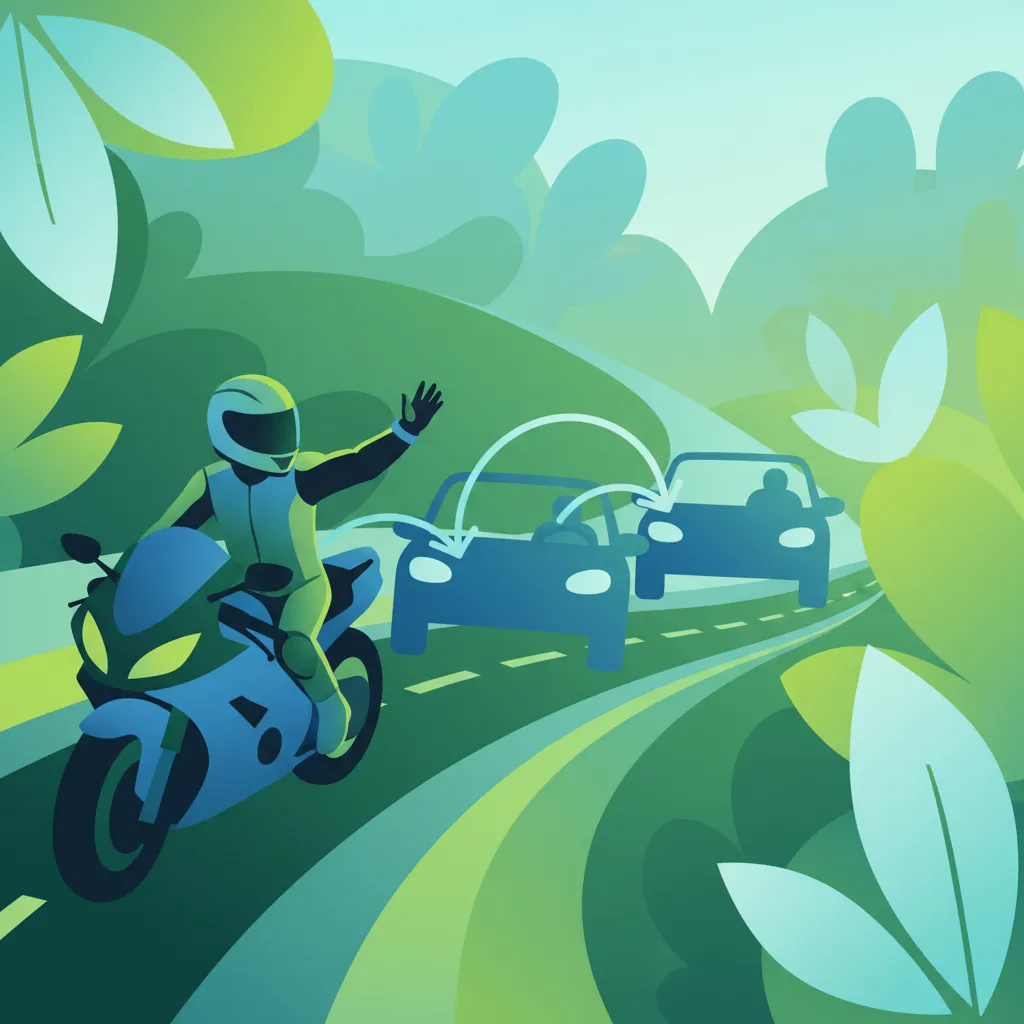
This lesson focuses on strategies to make yourself more visible to other road users, a critical factor in motorcycle safety. You will learn how to use lane positioning strategically to stay out of other drivers' blind spots and to maximize your own line of sight through corners and intersections. The content also covers the effectiveness of high-visibility and reflective clothing, as well as the correct use of lights to ensure you are seen in all conditions.
This lesson explains the function of informational signs (Informationsskyltar), which provide guidance for navigation and access to services. It covers signs indicating distances to destinations, route numbers, and locations of fuel stations or parking areas. For moped riders, this includes identifying signs for designated moped or cycle lanes, helping them to plan and follow routes efficiently and legally.
This lesson explains how to identify and interact with various types of mopeds and other low-speed vehicles common on Swedish roads. You will learn the difference between Class I and Class II mopeds and their place on the road, as well as how to recognize A-tractors by their LGF (långsamtgående fordon) sign. The key focus is on managing the large speed differential and making safe judgments when deciding to overtake.
This lesson focuses on the importance of road markings (Vägmarkering) for guiding traffic flow and ensuring safety. It explains the meaning of different line types, such as solid and broken lines, and the function of stop lines and pedestrian crosswalks. The content highlights markings specific to cycle and moped lanes, teaching riders how to correctly position themselves on the road based on these visual cues.
Find clear answers to common questions learners have about Communication Techniques (Hand Signals, Eye Contact). Learn how the lesson is structured, which driving theory objectives it supports, and how it fits into the overall learning path of units and curriculum progression in Sweden. These explanations help you understand key concepts, lesson flow, and exam focused study goals.
Use hand signals when your electronic turn signals are not working, or as a supplement to confirm your intention, especially when visibility is poor or other road users might not clearly see your lights. In Sweden, clear communication is paramount, and hand signals can reinforce your intentions, particularly when stationary or at low speeds.
Making eye contact is extremely important. It's the most direct way to ensure another road user (driver, cyclist, or pedestrian) has actually seen you and acknowledged your presence before you proceed with a maneuver like turning or merging. Never assume you've been seen; always try to establish eye contact where possible.
The standard hand signals in Sweden include extending your left arm straight out to the left for a left turn, extending your right arm straight out to the right for a right turn, and holding your left arm out with a bent elbow (90 degrees upwards) for indicating you are slowing down or stopping. These are consistent with general European standards and are important for the AM theory exam.
Yes, confident and clear body language significantly improves safety. Position yourself clearly within your lane, look in the direction you intend to go, and avoid sudden, jerky movements. Predictable body language helps other road users understand your intentions and react appropriately, reducing the risk of miscommunication and accidents.
In such situations, rely more heavily on your moped's electronic turn signals and ensure you've established eye contact. If possible, try to indicate your intention clearly through head movements and by positioning your body appropriately. Always prioritize clear communication; if hand signals are impractical due to gear, use other available methods effectively.