
Logo
Swedish Driving Theory Courses

Lesson 5 of the Positioning, Lane Usage, and Visibility unit

Swedish Moped Theory AM: Proper Use of Horn and Turn Signals

This lesson focuses on crucial communication signals for moped riders: turn signals and the horn. Understanding their correct application is vital for safe riding and passing your AM moped theory exam in Sweden. We’ll ensure you know exactly when and how to signal your intentions and use your horn effectively as a warning device, not a tool for impatience.
turn signalshorncommunicationmoped safetyAM license
Swedish Moped Theory AM: Proper Use of Horn and Turn Signals
Swedish Moped Theory AM

Proper Use of Horn and Turn Signals on Mopeds in Sweden

Effective communication is paramount for safety on the road. As a moped rider preparing for your Swedish Category AM driving license, understanding how to properly use your vehicle's communication tools – the turn signals and the horn – is not just a matter of courtesy, but a legal requirement crucial for preventing collisions. This lesson delves into the precise rules and best practices for signalling your intentions and alerting others in Sweden, ensuring predictable and safe interaction with all road users.

Understanding Moped Turn Signals: Intentions and Safety

Turn signals are visual cues that inform other road users of your intention to change direction or lane. On a moped, these are typically amber flashing lights located at the front and rear. Their correct use allows drivers behind you, in adjacent lanes, and those approaching intersections to anticipate your movements and react safely.

The Purpose of Turn Signals for Moped Riders

For moped riders, who are often less conspicuous than larger vehicles, clear and timely signalling is even more critical. Signals serve to:

  • Prevent Collisions: By giving others sufficient warning, they can adjust their speed or position, reducing the risk of a crash.
  • Ensure Predictability: When your actions align with your signals, traffic flow remains smooth and unambiguous.
  • Comply with Swedish Traffic Law (Trafikförordningen): Specific regulations govern how and when signals must be used.

Swedish Rules for Electronic Turn Signals (Ljusen för färdriktning)

Swedish traffic law, particularly the Trafikförordningen (Traffic Ordinance), sets clear standards for how turn signals must be operated. Adhering to these rules is non-negotiable for all moped riders.

Advance Signalling Distance: The 50-Metre Rule

One of the most critical rules is the requirement to activate your turn signal well in advance of your manoeuvre.

Definition

Advance Signalling Distance

The minimum distance, mandated by Swedish law, at which a driver must activate their turn signal before initiating a turn or lane change. For mopeds, this is typically at least 50 metres.
According to Trafikförordningen 3 kap. 5 §, a driver must give a signal for a change of direction at least 50 metres before the intended manoeuvre. This distance provides a crucial buffer for other road users, allowing them enough time to perceive your signal, process the information, and react appropriately. At typical moped speeds (up to 45 km/h), 50 metres represents approximately 3 to 4 seconds of travel time, which is essential for safe decision-making.

Maintaining Signal Continuity

The signal must not be turned off prematurely. Once activated, it must remain illuminated throughout the entire manoeuvre.

Definition

Signal Continuity

The practice of keeping the turn signal active and flashing until the vehicle has fully completed its change of direction or entered the new lane.
This prevents ambiguity. If you switch off your signal too early, other drivers might interpret it as a cancellation of your intention, potentially leading to dangerous misunderstandings or conflicting actions. The signal should only be deactivated once your moped has fully entered the new lane, completed the turn, or successfully exited a roundabout.

Required Turn Signal Colour and Functionality

In Sweden, turn signals must emit an amber flashing light. This standardised colour is universally recognised and ensures clear visibility.

Definition

Amber

The standard colour, specified in Swedish vehicle lighting regulations, for turn signals on all vehicles, including mopeds.
It is illegal to use any other colour, such as red or white, for signalling purposes. Furthermore, your moped's turn signals must be fully functional at all times. Regular checks are part of your responsibility as a rider to ensure roadworthiness and safety. Faulty signals must be repaired immediately.

Common Mistakes with Moped Turn Signals

Even experienced riders can sometimes make errors in signalling. Awareness of these common mistakes can help you avoid them:

  • Signalling Too Late: Activating the signal only a few metres before a turn or lane change gives other drivers insufficient time to react, increasing collision risk.
  • Premature Signal Cancellation: Turning off the signal immediately after beginning a turn, or while still in the intersection, creates confusion about your continued intentions.
  • Brief Flashes: A quick, single flash is often not enough for other road users to notice or understand your intention, especially in busy traffic or poor visibility.
  • Failing to Signal: Any change of direction or lane requires signalling, even if you think no one else is around. Assumptions can be dangerous.

Moped Hand Signals: A Necessary Fallback for Communication

While electronic turn signals are standard, there are situations where hand signals become indispensable. These manual gestures ensure that communication continuity is maintained even when your moped's electrical system fails or on older models that may lack electronic indicators.

When to Use Hand Signals (Handtecken)

Hand signals are a mandatory fallback. You must use them if:

  • Your moped's electronic turn signals are not operational due to a malfunction.
  • Your moped is an older model not equipped with electronic turn signals.
  • In exceptionally poor visibility conditions where electronic signals might be harder to perceive (though electronic signals should still be used primarily).

Standard Hand Signals for Moped Riders

Swedish traffic law specifies clear, unambiguous hand signals:

  • Left Turn: Extend your left arm straight out horizontally, with your palm facing forward.
  • Right Turn: Extend your left arm out to the side, then bend it upwards at the elbow, forming an "L" shape. Your palm should face forward. (Alternatively, in some jurisdictions, a straight-out right arm may be used, but the left-arm signal is standard in Sweden for consistency with a left-hand drive environment).
  • Stop or Deceleration: Extend your left arm downwards at approximately a 45-degree angle, with your palm facing backward.

Ensuring Visibility of Hand Signals

For hand signals to be effective, they must be clearly visible to other road users. This requires:

  • Clear and Distinct Gestures: Perform the signals with a definite movement, holding the arm out steadily for a few seconds.
  • Appropriate Speed: Hand signals are most effective at lower speeds. If you are travelling too fast, the gesture may be fleeting and hard to interpret, or it may compromise your vehicle control. Slow down to ensure your signal can be seen and understood.
  • Maintaining Control: While signalling, always maintain a firm grip on the handlebars with your other hand and ensure your balance is stable.

The Moped Horn: A Warning Device, Not for Frustration

The horn is a powerful communication tool, but its use is strictly regulated in Sweden. It is designed solely as a warning device to avert immediate danger, not to express irritation, impatience, or to attract attention in non-hazardous situations.

When to Use the Horn: Avoiding Immediate Danger (Signalhorn)

According to Trafikförordningen 3 kap. 11 §, the horn (signalhorn) may be used only when necessary to warn other road users of immediate danger.

Definition

Immediate Danger

A situation in which a collision, accident, or serious incident is imminent and requires immediate action to prevent.
This means you should use the horn briefly, typically a short blast lasting no more than half a second, if:

  • Another vehicle is drifting into your lane, threatening a collision.
  • A pedestrian or cyclist unexpectedly steps or swerves into your path.
  • You are approaching a blind corner and suspect an oncoming vehicle, though this should be a rare exception, as caution and appropriate speed are primary.

The purpose is to provide a sharp, attention-grabbing sound to alert others to your presence or to an impending hazard, giving them a chance to react and avoid an accident.

Prohibited Horn Use in Sweden

Misuse of the horn is illegal and can lead to fines. It is expressly prohibited to use the horn:

  • To Express Frustration or Impatience: Honking at a slow driver, a stalled vehicle, or at traffic lights to urge others to move is illegal and constitutes acoustic aggression.
  • To Attract Attention in Non-Dangerous Situations: For instance, honking to greet someone, to thank another driver, or to signal "sorry" is inappropriate and can startle or confuse other road users.
  • While Stationary in Traffic: Except in cases of immediate danger, honking in a traffic jam or while waiting at a red light is forbidden.
  • Within 50 Metres of a Pedestrian Crossing (unless danger exists): This rule is in place to protect vulnerable road users from unnecessary startling or confusion, especially in urban areas or near schools.
  • In Quiet Zones (Tysta zoner): Areas near hospitals, schools, or residential zones often have stricter noise regulations. Horn use here is almost entirely restricted to preventing immediate collisions.

Warning

Using your horn for reasons other than averting immediate danger is considered a violation of traffic regulations in Sweden and may result in fines.

Moped Horn Sound Levels and Regulations

The horn fitted to your moped must comply with specific technical standards. In Sweden, the sound level of a moped horn must not exceed 110 dB(A) when measured at one metre. This ensures that the horn is audible enough to be effective without contributing excessively to noise pollution or causing hearing damage. Auxiliary horns or aftermarket horns that exceed this limit are not permitted on Category AM mopeds.

Timing and Distance for Effective Moped Signalling

The effectiveness of your signals hinges on accurate timing and appropriate distances. These factors are directly related to the physics of motion and human reaction times.

Calculating Signalling Distance Based on Speed and Reaction Time

At 45 km/h, a moped travels approximately 12.5 metres per second. If the average driver's reaction time is around 1.5 seconds, they will travel nearly 19 metres before even beginning to react to a perceived signal. The 50-metre advance signalling rule provides an additional 2-3 seconds for other drivers to perceive, process, and decide on a safe course of action. This buffer is critical for preventing last-minute braking or swerving, especially for larger vehicles following behind you.

Adapting Signalling to Road Conditions and Visibility

The 50-metre rule is a minimum. In many situations, you should signal even earlier. Consider the following:

Tip

Always aim to signal earlier than the minimum 50 metres, especially when conditions are not ideal or when riding a moped that is less visible than a car.

Contextual Variations for Moped Signalling and Horn Use

Riding conditions are rarely static. Effective communication means adapting your signalling and horn use to various environments and situations.

Signalling in Adverse Weather and Low Light

  • Rain, Fog, Snow: Reduced visibility significantly shortens the distance at which signals can be clearly seen. In such conditions, you should increase your pre-signal distance to at least 70-80 metres. This compensates for the longer time other drivers need to perceive your amber flashing lights against a grey, obscured background.
  • Nighttime/Low Light: While your lights are more prominent in the dark, dark environments can also make it harder to judge distances. Ensure your turn signals are bright and flash at a consistent rate (around 1 Hz, or one flash per second) for optimal detection. Signalling early also helps other drivers pick up your intention against the backdrop of other vehicle lights and streetlights.
  • Urban Congested Traffic: In dense city traffic where vehicles are often close together, early signalling (even earlier than 50 metres) is crucial. Sudden lane changes without warning are extremely dangerous. A brief, light tap of the horn might be permissible if a vehicle is clearly about to cut into your space without warning, creating immediate danger.
  • Roundabout Entry and Exit: When approaching a roundabout, you do not signal upon entry unless you intend to take the first exit (in which case you signal right). For other exits, you signal left only as you pass the exit immediately preceding your intended exit. As you approach your actual exit, you switch to a right turn signal. The horn should only be used if another vehicle poses an immediate threat, such as attempting to cut into your lane aggressively.

Interacting with Vulnerable Road Users

Pedestrians and cyclists are particularly vulnerable.

  • Horn Use: Exercise extreme caution with the horn around pedestrians and cyclists. A sudden, loud blast can startle them, causing an unpredictable reaction (e.g., jumping into your path or falling) that might be more dangerous than the initial hazard. Only use the horn if a collision is truly imminent and there is no other way to warn them.
  • Visual Signalling: Prioritise clear visual signals (electronic and hand signals). Always anticipate their movements and be prepared to yield.

Vehicle Malfunctions and Signalling Contingencies

If your moped's electronic turn signals fail during a ride, you must immediately switch to hand signals.

  • Increased Signalling Distance: Because hand signals might be less visible than electronic lights, you should aim to perform them even earlier, perhaps 70 metres or more before your manoeuvre, to give ample warning.
  • Repair Promptly: Any malfunction of essential safety equipment like turn signals must be repaired as soon as possible. Riding with faulty signals increases your risk and is illegal.

Adherence to signalling and horn regulations is not optional; it is a legal obligation under Swedish law. Violations carry consequences that can range from fines to increased insurance premiums and, in severe cases, even affect your driving privilege.

Traffic Regulations and Penalties (Trafikförordningen)

Swedish traffic law (Trafikförordningen) details the specific requirements for signalling and horn use. Failure to comply can result in:

  • Fines: Penalties are issued for infractions such as late signalling, premature signal cancellation, and misuse of the horn (e.g., honking to express frustration).
  • Increased Collision Risk: Beyond legal penalties, the most significant consequence is the increased likelihood of being involved in a collision, leading to injury or property damage.

Ensuring Moped Roadworthiness

Regular inspection of your moped's lights and horn is part of your responsibility to ensure it is roadworthy. This includes:

  • Checking Turn Signal Bulbs: Ensure all bulbs are functioning and the amber covers are clean and intact.
  • Verifying Horn Functionality: Ensure the horn produces a clear, consistent sound at an appropriate volume.
  • Battery and Electrical System Checks: A healthy electrical system ensures reliable operation of your signals.

Key Takeaways for Moped Riders: Effective Road Communication

Mastering the use of your moped's horn and turn signals is fundamental for safe and responsible riding in Sweden. It directly impacts your ability to communicate your intentions and avoid dangerous situations.

Summary of Best Practices

  • Signal Early: Always activate your turn signal at least 50 metres before a turn or lane change. Increase this distance in poor visibility or high-speed environments.
  • Signal Continuously: Keep your signal flashing until the manoeuvre is fully completed to avoid confusion.
  • Use Hand Signals as a Fallback: If electronic signals fail, use clear, standardised hand gestures and ensure they are visible.
  • Horn for Immediate Danger ONLY: The horn is strictly a warning device to prevent an imminent collision, not to express frustration or attract attention unnecessarily.
  • Adapt to Conditions: Adjust your signalling distance and horn use based on weather, light, traffic density, and the presence of vulnerable road users.
  • Maintain Your Moped: Regularly check that your turn signals and horn are fully functional and compliant with regulations.

By consistently applying these principles, you contribute to a safer, more predictable traffic environment for everyone on Swedish roads.

Turn Signal (Electronic)
An amber flashing light on a moped indicating an intended change of direction.
Hand Signal
A manual arm gesture used to convey turning or stopping intentions when electronic signals are unavailable or faulty.
Advance Signalling Distance
The minimum legal distance (≥50m in Sweden) before a manoeuvre at which a turn signal must be activated.
Signal Continuity
The requirement to keep the turn signal active until a manoeuvre is fully completed.
Horn (Warning Device)
An acoustic device on a moped used solely to warn other road users of immediate danger.
Immediate Danger
A situation where a collision or serious incident is imminent, justifying horn use.
Amber
The legally mandated colour for turn signals in Sweden.
Reaction Time
The psychological delay between perceiving a stimulus and initiating a response, typically around 1.5 seconds for drivers.
Blind Spot
Areas around a vehicle not visible in mirrors, requiring a head check before manoeuvring.
Trafikförordningen
The Swedish Traffic Ordinance, containing detailed rules and regulations for road traffic.
Noise Pollution
Unwanted or excessive environmental sound, which can be exacerbated by horn misuse.
Quiet Zone
Areas with heightened noise restrictions, such as near hospitals or schools, where horn use is highly restricted.

Further Learning and Practice

Learn more with these articles

Check out these practice sets


Search topics related to Proper Use of Horn and Turn Signals

Explore search topics learners often look for when studying Proper Use of Horn and Turn Signals. These topics reflect common questions about road rules, driving situations, safety guidance, and lesson level theory preparation for learners in Sweden.

how to use turn signals on moped swedenwhen to use moped hornsweden driving theory signalsam license theory test communicationmoped signaling rules swedenusing horn for warning sweden mopedsweden traffic law moped signalscategory AM theory signals lesson

Related driving theory lessons for Proper Use of Horn and Turn Signals

Browse additional driving theory lessons that cover connected traffic rules, road signs, and common driving situations related to this topic. Improve your understanding of how different rules interact across everyday traffic scenarios.

Swedish Moped Theory Rules for Turn Signals and Horn Use

Learn the official Swedish driving theory rules for using turn signals and the horn on mopeds. This lesson details when and how to effectively communicate your intentions to other road users to enhance safety and prevent misunderstandings.

turn signalshorncommunicationmoped safetySwedish driving theoryroad etiquetteAM license
Signalling with Lights and Horn lesson image

Signalling with Lights and Horn

This lesson covers the essential topic of communication in traffic using the vehicle's built-in signaling devices. You will learn the rules for using your turn indicators (körriktningsvisare) in good time before turning or changing lanes. The content also explains the proper use of hazard lights (varningsblinkers) in emergency situations and the very limited, specific circumstances in which using the horn (ljudsignal) is permitted to avert immediate danger.
Swedish Driving Theory BVehicle Control and Maneuvering
View lesson
Light Signals, Horn Use, and Audible Alerts lesson image

Light Signals, Horn Use, and Audible Alerts

This lesson covers the correct interpretation and response to all forms of light and audible signals a motorcyclist will encounter. You will study the sequences of traffic lights, the rules for using turn indicators and hazard lights, and the legally permitted uses of the horn. Proper use of these signals is a fundamental aspect of safe riding, as it communicates your intentions clearly to other road users and helps prevent misunderstandings and collisions.

Swedish Motorcycle Theory ASwedish Road Signs & Signals for Motorcyclists
View lesson
Communication Techniques (Hand Signals, Eye Contact) lesson image

Communication Techniques (Hand Signals, Eye Contact)

This lesson goes beyond mechanical signals to cover the subtle art of non-verbal communication in traffic. It highlights the importance of making eye contact with drivers to ensure you have been seen before making a move. The content also reviews standard hand signals as a backup to electronic signals and discusses how clear, confident body language can make a rider's intentions more predictable.
Swedish Moped Theory AMInteraction with Other Road Users
View lesson
Overview of Moped-Specific Regulations lesson image

Overview of Moped-Specific Regulations

This lesson consolidates the key regulations that apply specifically to moped operation in Sweden. It covers mandatory rules such as speed limits, helmet use, and requirements for vehicle lighting and reflectors. Furthermore, the lesson explains the legal consequences of violations, including the system of fines and potential demerit points, ensuring riders understand their full range of legal responsibilities on the road.
Swedish Moped Theory AMIntroduction to Category AM and Licensing
View lesson
Intersections and Roundabouts lesson image

Intersections and Roundabouts

This lesson provides practical instructions for safely navigating different types of intersections and roundabouts. It covers procedures for approaching, entering, and exiting roundabouts, emphasizing the rule to yield to traffic already circulating. The content also addresses how to handle signal-controlled and uncontrolled intersections, ensuring riders select the correct lane and manage their speed appropriately.
Swedish Moped Theory AMPriority and Right-of-Way Rules
View lesson
Information Signs (Informationsskyltar) lesson image

Information Signs (Informationsskyltar)

This lesson explains the function of informational signs (Informationsskyltar), which provide guidance for navigation and access to services. It covers signs indicating distances to destinations, route numbers, and locations of fuel stations or parking areas. For moped riders, this includes identifying signs for designated moped or cycle lanes, helping them to plan and follow routes efficiently and legally.
Swedish Moped Theory AMSwedish Road Sign System for Mopeds
View lesson
Warning Signs (Varningsskyltar) lesson image

Warning Signs (Varningsskyltar)

This lesson teaches riders to interpret warning signs (Varningsskyltar), which alert them to potential dangers on the road ahead. It covers a wide range of signs, including those for sharp curves, slippery surfaces, wildlife crossings, and upcoming roadworks. Understanding these triangular signs allows riders to anticipate hazards, adjust their speed and position proactively, and enhance their overall safety.
Swedish Moped Theory AMSwedish Road Sign System for Mopeds
View lesson
Ethical Riding Behaviour and Public Safety lesson image

Ethical Riding Behaviour and Public Safety

This lesson moves beyond legal requirements to discuss the importance of ethical and courteous riding. It encourages riders to be patient, considerate of others, and aware of their impact on the community, for example, by minimizing noise. This fosters a positive public image of moped riders and contributes to a safer and more pleasant environment for everyone.
Swedish Moped Theory AMLegal Responsibilities, Conduct, and Penalties
View lesson
Night-time Visibility and Lighting Requirements (Ljusskyltar) lesson image

Night-time Visibility and Lighting Requirements (Ljusskyltar)

This lesson details the legal requirements for moped lighting in Sweden and provides best practices for riding at night or in low-light conditions. It explains the correct use of high and low beam headlights, the importance of a functioning tail light, and the role of reflectors in being seen. The goal is to ensure the rider is as visible as possible to others and can adequately illuminate the road ahead.
Swedish Moped Theory AMPositioning, Lane Usage, and Visibility
View lesson
Mopeds and Low-Power Vehicles lesson image

Mopeds and Low-Power Vehicles

This lesson explains how to identify and interact with various types of mopeds and other low-speed vehicles common on Swedish roads. You will learn the difference between Class I and Class II mopeds and their place on the road, as well as how to recognize A-tractors by their LGF (långsamtgående fordon) sign. The key focus is on managing the large speed differential and making safe judgments when deciding to overtake.

Swedish Driving Theory BInteraction with Vulnerable Road Users
View lesson

Improving Moped Visibility and Interaction with Other Road Users in Sweden

Explore essential theory for Category AM license holders on improving moped visibility and safely interacting with cars, cyclists, and pedestrians. Understand how clear communication, including signals and horn use, integrates with broader road safety principles.
visibilityinteractionroad usersmoped safetySwedish driving theorycommunicationAM license
Visibility Strategies in Traffic (High-Visibility Clothing) lesson image

Visibility Strategies in Traffic (High-Visibility Clothing)

This lesson focuses on proactive strategies to increase a moped rider's visibility to other drivers. It strongly advocates for the use of high-visibility and reflective clothing, helmets, and accessories to stand out in traffic. Additionally, it revisits the concept of lane positioning as a tool to avoid being in other drivers' blind spots and to create a more prominent presence on the road.

Swedish Moped Theory AMPositioning, Lane Usage, and Visibility
View lesson
Night-time Visibility and Lighting Requirements (Ljusskyltar) lesson image

Night-time Visibility and Lighting Requirements (Ljusskyltar)

This lesson details the legal requirements for moped lighting in Sweden and provides best practices for riding at night or in low-light conditions. It explains the correct use of high and low beam headlights, the importance of a functioning tail light, and the role of reflectors in being seen. The goal is to ensure the rider is as visible as possible to others and can adequately illuminate the road ahead.
Swedish Moped Theory AMPositioning, Lane Usage, and Visibility
View lesson
Riding in Darkness and Dusk (Headlamp Use) lesson image

Riding in Darkness and Dusk (Headlamp Use)

This lesson provides essential strategies for riding safely at night and during twilight hours. It covers the correct use of headlights to maximize visibility without dazzling other drivers and emphasizes the need to reduce speed to compensate for shorter sight distances. The content also highlights the importance of wearing reflective gear to be seen by others.
Swedish Moped Theory AMRiding in Adverse Weather and Light Conditions
View lesson
Co-existence with Cars and Heavy Vehicles lesson image

Co-existence with Cars and Heavy Vehicles

This lesson focuses on the specific challenges mopeds face when interacting with cars and heavy vehicles. It highlights the significant blind spots (or 'no-zones') around trucks and buses and teaches riders how to position themselves to remain visible. The content also covers the dangers of wind turbulence when near large vehicles and the importance of maintaining a generous space cushion.

Swedish Moped Theory AMInteraction with Other Road Users
View lesson
Mopeds and Low-Power Vehicles lesson image

Mopeds and Low-Power Vehicles

This lesson explains how to identify and interact with various types of mopeds and other low-speed vehicles common on Swedish roads. You will learn the difference between Class I and Class II mopeds and their place on the road, as well as how to recognize A-tractors by their LGF (långsamtgående fordon) sign. The key focus is on managing the large speed differential and making safe judgments when deciding to overtake.
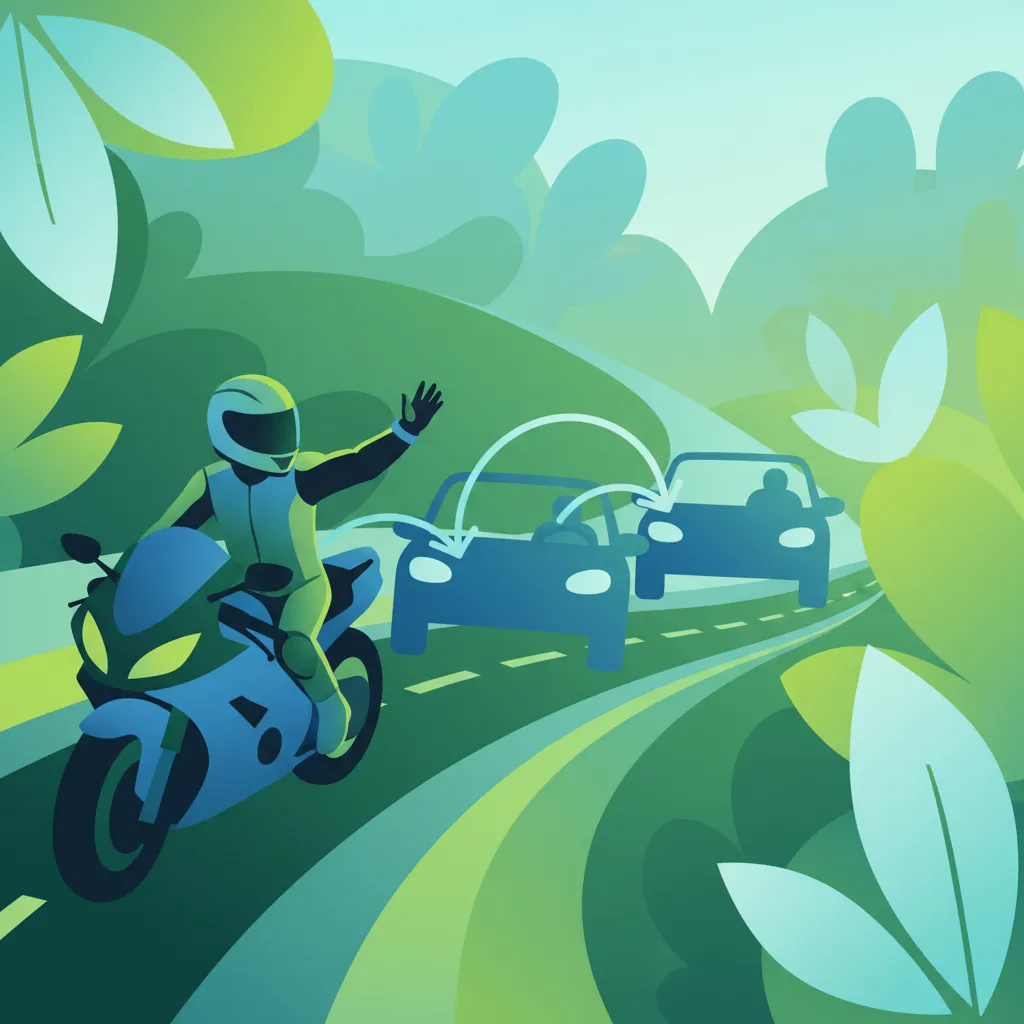
Swedish Driving Theory BInteraction with Vulnerable Road Users
View lesson
Visibility Strategies and Rider Positioning lesson image

Visibility Strategies and Rider Positioning

This lesson focuses on strategies to make yourself more visible to other road users, a critical factor in motorcycle safety. You will learn how to use lane positioning strategically to stay out of other drivers' blind spots and to maximize your own line of sight through corners and intersections. The content also covers the effectiveness of high-visibility and reflective clothing, as well as the correct use of lights to ensure you are seen in all conditions.
Swedish Motorcycle Theory AHazard Perception & Risk Management
View lesson
Reduced Visibility and Headlight Use lesson image

Reduced Visibility and Headlight Use

This lesson covers strategies for driving safely when visibility is compromised. You will learn the correct use of different lighting systems: when to use low beams, high beams (helljus), and how to avoid dazzling other drivers. The lesson also explains the specific regulations for using front and rear fog lights and provides techniques for navigating safely in dense fog or heavy precipitation by reducing speed and using the road edge as a guide.
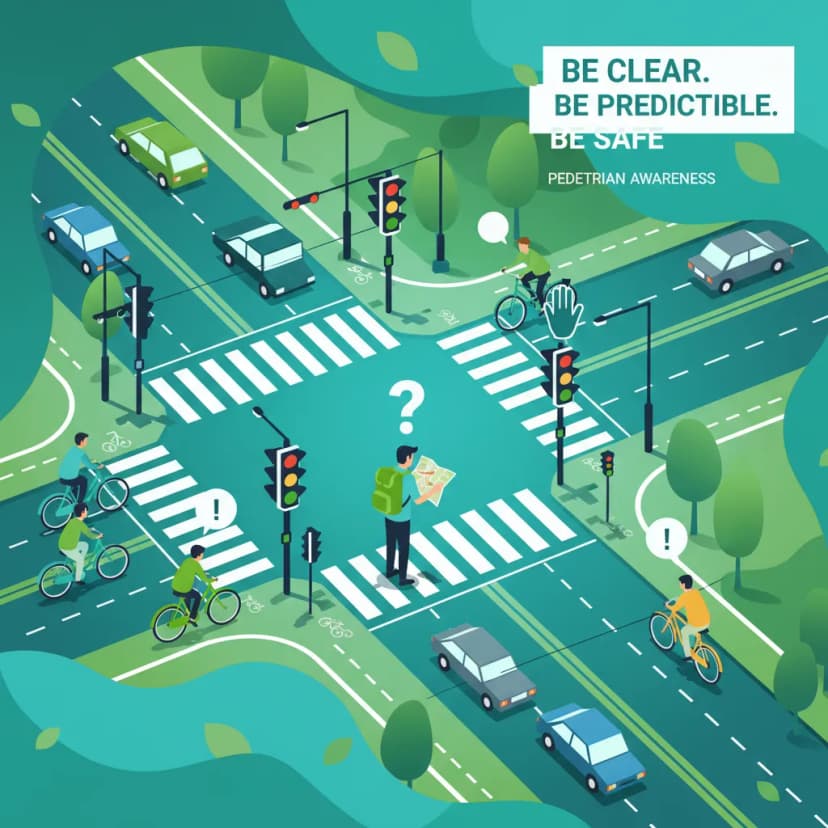
Swedish Driving Theory BWinter and Adverse Weather Driving
View lesson
Pedestrian Awareness and Crossing Behavior lesson image

Pedestrian Awareness and Crossing Behavior

This lesson is dedicated to pedestrian safety, teaching riders to be constantly aware of people on foot, especially in busy urban environments. It reinforces the absolute duty to yield at marked crossings and encourages a cautious approach in areas like schools and shopping districts. The content stresses anticipating unpredictable actions, particularly from children or distracted pedestrians.

Swedish Moped Theory AMInteraction with Other Road Users
View lesson
Intersections and Roundabouts lesson image

Intersections and Roundabouts

This lesson provides practical instructions for safely navigating different types of intersections and roundabouts. It covers procedures for approaching, entering, and exiting roundabouts, emphasizing the rule to yield to traffic already circulating. The content also addresses how to handle signal-controlled and uncontrolled intersections, ensuring riders select the correct lane and manage their speed appropriately.
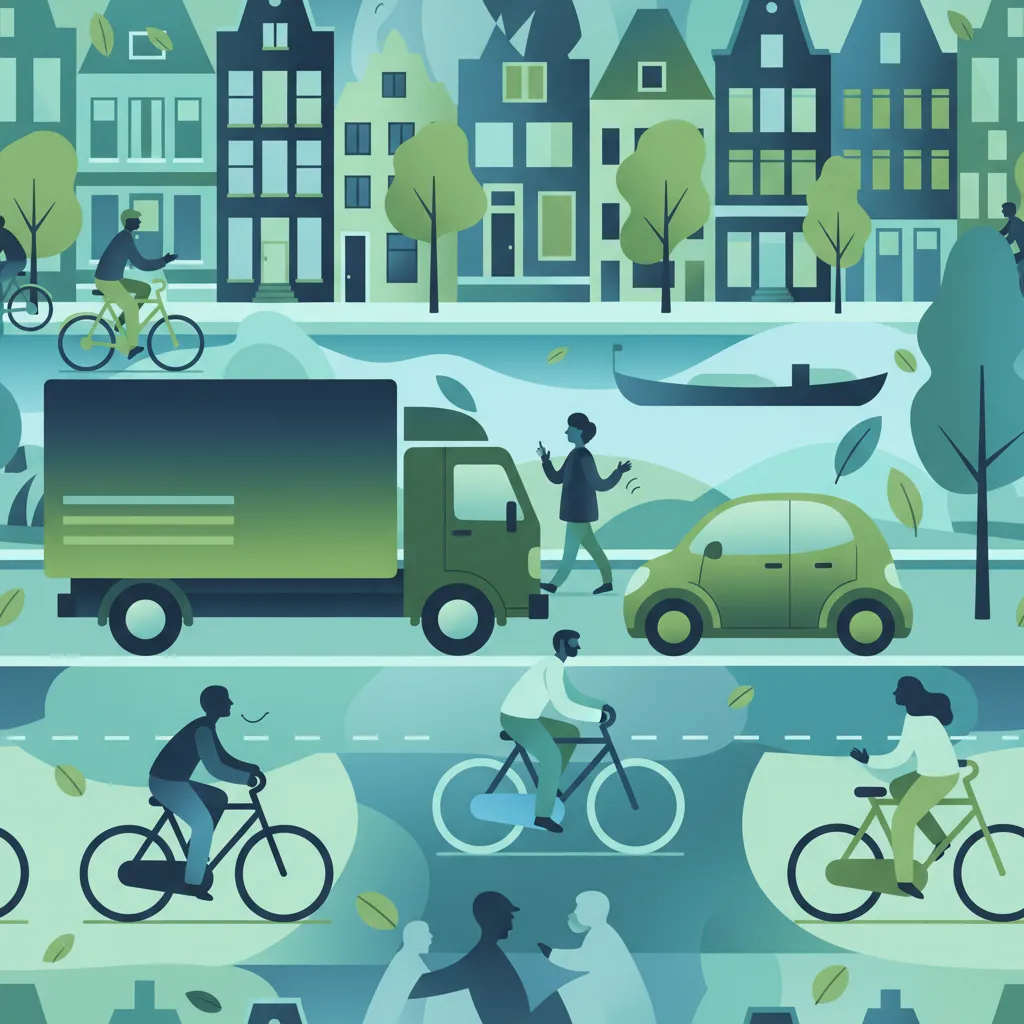
Swedish Moped Theory AMPriority and Right-of-Way Rules
View lesson
Interaction with Cars, Trucks, Cyclists, and Pedestrians lesson image

Interaction with Cars, Trucks, Cyclists, and Pedestrians

This lesson provides in-depth analysis of how to safely interact with the full spectrum of road users. You will learn about the specific characteristics of each, such as the large blind spots of trucks, the potential for sudden movements from cyclists, and the unpredictability of pedestrians. The content teaches strategies for communication, anticipation, and defensive positioning to ensure safe and respectful coexistence on the road for everyone.

Swedish Motorcycle Theory ARiding in Various Traffic Environments
View lesson

Frequently asked questions about Proper Use of Horn and Turn Signals

Find clear answers to common questions learners have about Proper Use of Horn and Turn Signals. Learn how the lesson is structured, which driving theory objectives it supports, and how it fits into the overall learning path of units and curriculum progression in Sweden. These explanations help you understand key concepts, lesson flow, and exam focused study goals.

When should I activate my turn signal?

You should activate your turn signal well in advance of your intended maneuver, whether it's turning or changing lanes. The exact timing depends on the situation, but the goal is to give other road users enough notice to understand your intentions and react safely. For turns, this typically means activating it before you reach the intersection or junction.

Can I use my horn to get someone's attention if they are slow to move?

No, the horn is primarily a warning device intended to alert other road users to your presence in a potentially dangerous situation, such as to prevent an imminent collision. It should not be used to express impatience, anger, or to try and hurry other drivers or moped riders. Misuse of the horn can be considered a traffic violation.

Do I need to signal for very short turns or lane changes?

Yes, even for short turns or seemingly minor lane changes, you should always signal. Consistency in signaling helps build predictable riding behavior, which is crucial for safety. Other road users, including drivers, cyclists, and pedestrians, rely on your signals to anticipate your actions.

Are there specific rules for using signals in roundabouts?

When entering a roundabout, you typically signal right if you intend to exit at the first exit. For subsequent exits, you usually signal right just before the exit you intend to take. Always observe the specific signage and markings within the roundabout and be aware of traffic around you.

What happens if I don't signal correctly on the theory test?

The theory test includes questions designed to check your understanding of proper signaling. Failing to signal correctly or using the horn inappropriately in a scenario presented in a question can lead to an incorrect answer. Mastering these rules is essential for passing the AM license theory exam.

Continue your Swedish driving theory learning journey

Swedish road signsSwedish article topicsSearch Swedish road signsSwedish driving theory homeSwedish road sign categoriesSwedish Moped Theory AM courseSearch Swedish theory articlesSwedish driving theory coursesSwedish Driving Theory B courseSwedish driving theory articlesSwedish driving theory practiceSwedish practice set categoriesSwedish Motorcycle Theory A courseSearch Swedish driving theory practiceRoad Signs and Signals unit in Swedish Driving Theory BVehicle Control and Maneuvering unit in Swedish Driving Theory BPriority Rules and Intersections unit in Swedish Driving Theory BSpeed Limits and Distance Management unit in Swedish Driving Theory BAccident Response & Roadside Safety unit in Swedish Motorcycle Theory AAdverse Weather & Low-Grip Conditions unit in Swedish Motorcycle Theory ASpeed Limits and Safe Following Distances unit in Swedish Moped Theory AMEmergency Maneuvers & Obstacle Avoidance unit in Swedish Motorcycle Theory AEmergency Situations and Accident Procedures unit in Swedish Driving Theory BProper Use of Horn and Turn Signals lesson in Positioning, Lane Usage, and VisibilityUsing Mirrors and Checking Blind Spots lesson in Positioning, Lane Usage, and VisibilityCorrect Lane Selection on Multi-Lane Roads lesson in Positioning, Lane Usage, and VisibilityLegal Responsibilities, Documentation & Protective Equipment unit in Swedish Motorcycle Theory AVisibility Strategies in Traffic (High-Visibility Clothing) lesson in Positioning, Lane Usage, and VisibilityNight-time Visibility and Lighting Requirements (Ljusskyltar) lesson in Positioning, Lane Usage, and Visibility