
Prepare for your Swedish Category AM moped license by mastering the challenges of riding in darkness and dusk. This lesson covers essential techniques for using your headlights effectively and adjusting your speed to safely navigate low-visibility conditions, directly preparing you for key theory exam topics and real-world riding confidence.
Riding a moped during hours of darkness or twilight presents unique challenges and demands a keen understanding of lighting regulations and safety principles. For holders of a Swedish Category AM moped driving license, mastering effective headlamp use and maintaining optimal visibility is not merely a legal requirement, but a fundamental aspect of road safety. This lesson provides essential strategies to ensure you can see hazards clearly and, crucially, be seen by other road users, thereby significantly reducing the risk of collisions.
Natural light levels fluctuate throughout the day and year, particularly in Sweden's northern latitudes. Moped riders must understand when artificial illumination becomes mandatory and how different lighting conditions affect their perception and overall safety.
Darkness refers to the period when natural ambient illumination is insufficient for safe visual perception without artificial lighting. This typically occurs after sunset and before sunrise. It can range from total darkness, such as on unlit rural roads, to partial darkness in urban areas where streetlights provide some illumination. Even with streetlights, it's crucial not to assume they eliminate the need for your moped's headlamps. Street lighting primarily illuminates the environment, not necessarily the road surface ahead of your moped to the required safety distances.
Dusk, often referred to as twilight, is the transitional period 30 minutes before sunrise and 30 minutes after sunset. During this time, ambient light is decreasing (after sunset) or increasing (before sunrise), but it's not yet full daylight or complete darkness. Swedish traffic law mandates that headlamps must be activated during civil twilight, which is defined as the period when the sun is between 0° and 6° below the horizon. Even if visibility seems acceptable to the naked eye during dusk, your moped's headlamps must be on as a legal requirement to ensure you are clearly visible to others.
Ambient light level is the measured illumination (in lux) from all natural and artificial sources, excluding your moped's own lights. This level is a critical factor in determining when artificial lighting becomes necessary.
The Swedish Transport Agency (Trafikverket) guidelines practically recommend that moped headlamps be used when ambient light falls below 10 lux. Relying solely on a brightly lit storefront or an illuminated city square does not negate this rule; the requirement applies to the entire roadway, not just isolated bright spots.
Understanding and correctly using your moped's lighting systems is paramount for both seeing and being seen. Each type of lamp serves a specific purpose, governed by strict regulations.
The dipped beam, also known as low beam, is your moped's standard headlamp setting. It provides a wide, short-range light pattern that is aimed downwards to illuminate the road directly ahead without dazzling oncoming traffic or drivers of vehicles you are following.
Typical Use Cases:
Legal Constraints: The dipped beam must be on whenever natural illumination is insufficient, which includes civil twilight and any other conditions where visibility is reduced.
The full beam, or high beam, is a more powerful, narrow, and long-range light pattern that projects further ahead than the dipped beam. It is designed for maximum forward visibility.
Typical Use Cases:
Legal Constraints: The full beam is conditionally allowed but heavily restricted. You must dim to dipped beam when:
Failure to dim your high beam promptly can cause temporary blindness (dazzle) for other road users, significantly increasing collision risk.
Fog lights are low-mounted, wide-angled, and low-intensity lights specifically designed to cut through fog, mist, or heavy rain by illuminating the road surface directly in front of the vehicle. They are not a substitute for your main headlamps.
Typical Use Cases:
Legal Constraints: Fog lights must be used in addition to your dipped beam, never as a standalone light source for forward illumination. Using only fog lights in heavy rain provides insufficient forward vision and is illegal.
Daytime Running Lights (DRL) are low-intensity lights that automatically activate on newer mopeds during daylight hours. Their primary purpose is to make the moped more visible to other road users during the day.
Legal Constraints: DRLs are not considered main illumination and are never a substitute for dipped beam headlamps during darkness, dusk, or any other low-visibility conditions.
Many modern mopeds are equipped with automatic lighting systems that use sensors to detect ambient light levels and activate headlamps accordingly. While convenient, it is the rider's responsibility to ensure these systems are functioning correctly and that headlamps are on when required by law. These systems should be calibrated to activate at civil twilight. If an automatic system fails, you must manually activate your dipped beam.
While your moped's lights illuminate the road for you, reflective gear ensures that other drivers can see you. This two-way visibility is paramount for moped riders, who are considered vulnerable road users.
Retro-reflective material, common in high-visibility clothing, works by returning light directly to its source. This means that when another vehicle's headlamps shine on you, the reflective material bounces that light back to their eyes, making you appear much brighter than non-reflective clothing. This significantly increases your conspicuity, especially from a distance.
Swedish law is clear on the requirement for reflective elements:
One of the most fundamental principles of riding in darkness is the relationship between how far you can see and how far you need to stop.
In darkness, your illuminated sight distance must always be greater than or equal to your calculated stopping distance. If you cannot see far enough ahead to stop safely within that distance, you are traveling too fast.
Example: At 45 km/h on a dry road, your total stopping distance might be approximately 15 metres. If your dipped beam only illuminates 30 metres ahead, you have a safe margin. However, if the road is wet, your braking distance increases, so your safe speed would need to be lower to maintain that margin.
This crucial principle dictates that you must adjust your speed so that your moped's stopping sight distance does not exceed the illuminated range of your headlamp. This means slowing down in darkness.
Recommendation: In darkness, it is generally recommended to reduce your speed by 20-30% of the normal speed limit for the same road type. This reduction accounts for:
Beyond mechanical lighting systems, human physiology plays a significant role in night riding safety. Our eyes and brains function differently in low light, which directly impacts our ability to detect hazards and react in time.
In low-light conditions, the human eye's reaction time lengthens. This is because the rod cells in your retina, responsible for low-light vision, take longer to activate and send signals to the brain compared to cone cells, which handle color and detail in bright light. This delay can add an extra 0.2 to 0.4 seconds to your perception-reaction time.
Implication: This seemingly small delay translates to several extra metres traveled before you even begin to brake. For example, at 45 km/h, an extra 0.4 seconds means traveling an additional 5 metres. This further underscores the need for speed adaptation.
Darkness also impairs your overall visual acuity (sharpness) and narrows your peripheral vision. Objects appear less distinct, and color discrimination decreases. This makes it harder to identify potential hazards, judge distances, and spot movement at the edges of your vision, such as animals darting out from the side of the road.
Glare, or dazzle, occurs when intense light (e.g., from an improperly used high beam) enters your eyes, causing temporary vision impairment. This can reduce an oncoming driver's visual acuity by up to 90% for half a second or more, potentially preventing them from seeing you or other critical road information. Avoiding dazzle is not just a courtesy; it's a legal and safety obligation.
Swedish traffic law (Trafikförordning 1998:112 and Vägtrafikförordning) lays down clear regulations regarding lighting for all vehicles, including Category AM mopeds. Adherence is mandatory.
Even experienced riders can sometimes make mistakes with lighting. Being aware of these common errors can help you stay safe and compliant.
| Violation | Why It’s Wrong | Correct Behavior | Typical Consequence |
|---|---|---|---|
| Using high-beam near other road users. | Causes dazzling and temporary blindness for others, creating a dangerous situation. | Dim to dipped beam immediately when any road user (vehicle, cyclist, pedestrian) is within 200 metres. | Legal fine; increased collision risk. |
| Riding without headlamps at dusk because street lights are on. | Swedish law requires headlamps during civil twilight and darkness, regardless of ambient street lighting. | Turn on dipped beam at the start of civil twilight. | Penalty for "failure to use lighting". |
| Relying solely on fog lights in heavy rain or fog. | Fog lights provide insufficient forward illumination and do not replace the main beam; they are supplementary. | Keep dipped beam on, and add fog lights only as a supplement in severe conditions. | Reduced visibility; higher crash probability. |
| Not wearing reflective gear on dark roads. | Makes the moped rider's silhouette extremely difficult to detect, especially from the side or behind, under limited light. | Always wear a reflective vest/jacket and ensure your moped has functional reflectors in low-visibility. | Increased likelihood of being hit; legal breach. |
| Assuming automatic headlamps are always reliable. | System failures can occur due to faults or dead batteries, leaving you unlit without your knowledge. | Manually check headlamp operation before every ride in low-visibility conditions. If the automatic system fails, activate manually. | May be stopped by police; significant crash risk. |
| Using non-standard, excessively bright headlamp bulbs. | Aftermarket bulbs may exceed legal luminous intensity limits, causing excessive glare and dazzle for others. | Use only approved OEM (Original Equipment Manufacturer) bulbs that meet Swedish safety standards. | Fine; equipment may be deemed unsafe. |
The appropriate use of your moped's lighting can vary significantly depending on the environmental context.
Even on well-lit urban roads, your dipped beam is mandatory during darkness and dusk. Street lighting provides general illumination but often doesn't adequately light the road directly in front of your moped to ensure your full stopping distance is visible. High beam is strictly prohibited in urban areas due to the constant presence of other road users, pedestrians, and cyclists, who would be dazzled.
These are the primary environments where full beam can be used. If there is no other traffic (oncoming, preceding, or vulnerable users) within 200 metres, activate your full beam to maximize your sight distance. However, remember that full beam has limited peripheral illumination. Even with high beam, a speed reduction of around 20% is recommended to account for potential hazards (e.g., animals, unlit obstacles) that may appear from the sides.
When entering a tunnel, activate your dipped beam immediately, regardless of the time of day. Tunnels, even if partially lit, represent a sudden change in light conditions that can temporarily impair your vision. If a tunnel is completely unlit and there is no other traffic within 200 metres, you may use your full beam, but this is a rare scenario. In most tunnels, high beam is discouraged due to reflections off tunnel walls that can cause intense glare for other drivers.
If you are carrying a heavy load or pulling a trailer with your moped (if permitted), the moped's ride height may change, potentially lowering the aim of your headlamps. This can significantly reduce your effective sight distance. Regularly check and adjust your headlamp aim to ensure it provides optimal illumination without dazzling others. Also, ensure all reflective surfaces (on your moped and gear) are clean for maximum efficiency.
This checklist summarizes the key actions and considerations for safe moped riding in low-light conditions.
By diligently applying these principles and adhering to Swedish traffic regulations, you can significantly enhance your safety and the safety of others when riding your moped in darkness and dusk.
Lesson content overview
Explore all units and lessons included in this driving theory course.
Explore search topics learners often look for when studying Riding in Darkness and Dusk (Headlamp Use). These topics reflect common questions about road rules, driving situations, safety guidance, and lesson level theory preparation for learners in Sweden.
Browse additional driving theory lessons that cover connected traffic rules, road signs, and common driving situations related to this topic. Improve your understanding of how different rules interact across everyday traffic scenarios.
Understand Swedish traffic rules for riding mopeds in low light conditions. This lesson covers effective headlamp usage, adjusting speed for reduced visibility, and the importance of reflective gear for Category AM riders.
This lesson addresses the specific challenges of riding at night or in low-light conditions. You will learn how to use your headlights most effectively, how to cope with the glare from oncoming traffic, and how darkness affects your depth perception and ability to judge distances. Strategies for spotting nocturnal animals and the increased importance of wearing reflective gear to be seen by others are also key components of this essential safety lesson.
This lesson covers strategies for driving safely when visibility is compromised. You will learn the correct use of different lighting systems: when to use low beams, high beams (helljus), and how to avoid dazzling other drivers. The lesson also explains the specific regulations for using front and rear fog lights and provides techniques for navigating safely in dense fog or heavy precipitation by reducing speed and using the road edge as a guide.
This lesson details the legal requirements for moped lighting in Sweden and provides best practices for riding at night or in low-light conditions. It explains the correct use of high and low beam headlights, the importance of a functioning tail light, and the role of reflectors in being seen. The goal is to ensure the rider is as visible as possible to others and can adequately illuminate the road ahead.
This lesson focuses on strategies to make yourself more visible to other road users, a critical factor in motorcycle safety. You will learn how to use lane positioning strategically to stay out of other drivers' blind spots and to maximize your own line of sight through corners and intersections. The content also covers the effectiveness of high-visibility and reflective clothing, as well as the correct use of lights to ensure you are seen in all conditions.
This lesson focuses on creating a complete awareness of the traffic situation around your vehicle. You will learn the correct procedure for using your interior and side mirrors in a continuous scanning pattern. Crucially, the lesson explains what the blind spot (döda vinkeln) is, where it is located, and why a physical head check over the shoulder is a non-negotiable safety step before any lateral movement like changing lanes or turning.
This lesson covers the correct interpretation and response to all forms of light and audible signals a motorcyclist will encounter. You will study the sequences of traffic lights, the rules for using turn indicators and hazard lights, and the legally permitted uses of the horn. Proper use of these signals is a fundamental aspect of safe riding, as it communicates your intentions clearly to other road users and helps prevent misunderstandings and collisions.
This lesson focuses on proactive strategies to increase a moped rider's visibility to other drivers. It strongly advocates for the use of high-visibility and reflective clothing, helmets, and accessories to stand out in traffic. Additionally, it revisits the concept of lane positioning as a tool to avoid being in other drivers' blind spots and to create a more prominent presence on the road.
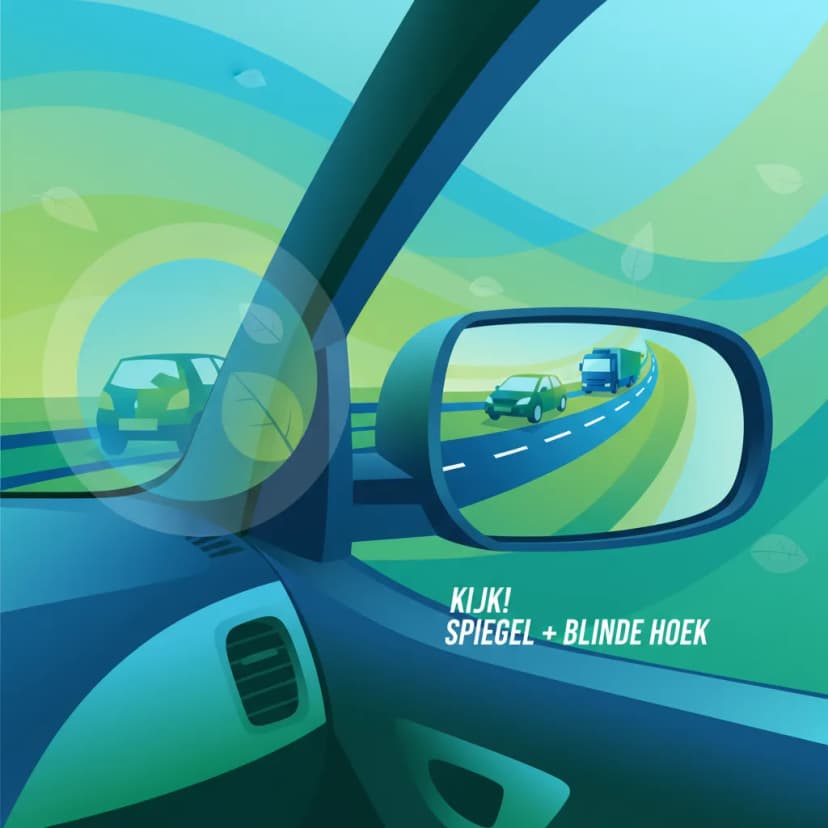
This lesson emphasizes the importance of a comprehensive visual scanning routine that includes regular mirror checks and mandatory head checks (shoulder checks) to cover blind spots. It explains that mirrors alone are not sufficient and that a physical turn of the head is required before any lateral movement. This habit is fundamental to preventing collisions during lane changes, merging, or turning.
This lesson covers the essential topic of communication in traffic using the vehicle's built-in signaling devices. You will learn the rules for using your turn indicators (körriktningsvisare) in good time before turning or changing lanes. The content also explains the proper use of hazard lights (varningsblinkers) in emergency situations and the very limited, specific circumstances in which using the horn (ljudsignal) is permitted to avert immediate danger.
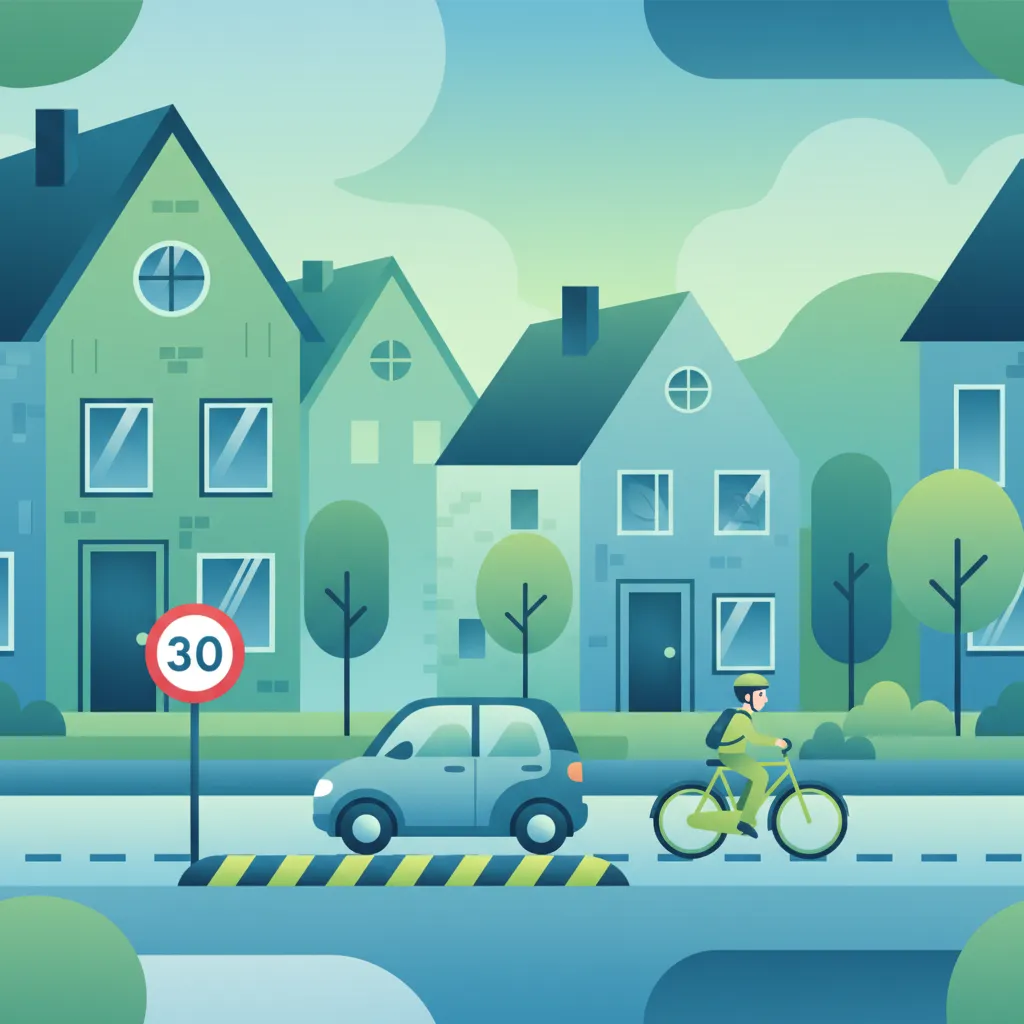
This lesson focuses on the high level of caution required when driving in residential areas. You will learn about the rules for special zones like 'gångfartsområde' (walking speed area) and the need to navigate around speed calming measures like speed bumps. The central theme is anticipating unpredictable behavior from residents, especially children, and managing the risks posed by parked cars that severely limit visibility.
Learn crucial strategies to ensure you are seen by other road users when riding your moped at night or during twilight. Covers correct lighting, reflective clothing, and hazard perception techniques specific to Swedish roads.
This lesson details the legal requirements for moped lighting in Sweden and provides best practices for riding at night or in low-light conditions. It explains the correct use of high and low beam headlights, the importance of a functioning tail light, and the role of reflectors in being seen. The goal is to ensure the rider is as visible as possible to others and can adequately illuminate the road ahead.
This lesson addresses the specific challenges of riding at night or in low-light conditions. You will learn how to use your headlights most effectively, how to cope with the glare from oncoming traffic, and how darkness affects your depth perception and ability to judge distances. Strategies for spotting nocturnal animals and the increased importance of wearing reflective gear to be seen by others are also key components of this essential safety lesson.
This lesson focuses on proactive strategies to increase a moped rider's visibility to other drivers. It strongly advocates for the use of high-visibility and reflective clothing, helmets, and accessories to stand out in traffic. Additionally, it revisits the concept of lane positioning as a tool to avoid being in other drivers' blind spots and to create a more prominent presence on the road.
This lesson covers strategies for driving safely when visibility is compromised. You will learn the correct use of different lighting systems: when to use low beams, high beams (helljus), and how to avoid dazzling other drivers. The lesson also explains the specific regulations for using front and rear fog lights and provides techniques for navigating safely in dense fog or heavy precipitation by reducing speed and using the road edge as a guide.
This lesson focuses on strategies to make yourself more visible to other road users, a critical factor in motorcycle safety. You will learn how to use lane positioning strategically to stay out of other drivers' blind spots and to maximize your own line of sight through corners and intersections. The content also covers the effectiveness of high-visibility and reflective clothing, as well as the correct use of lights to ensure you are seen in all conditions.
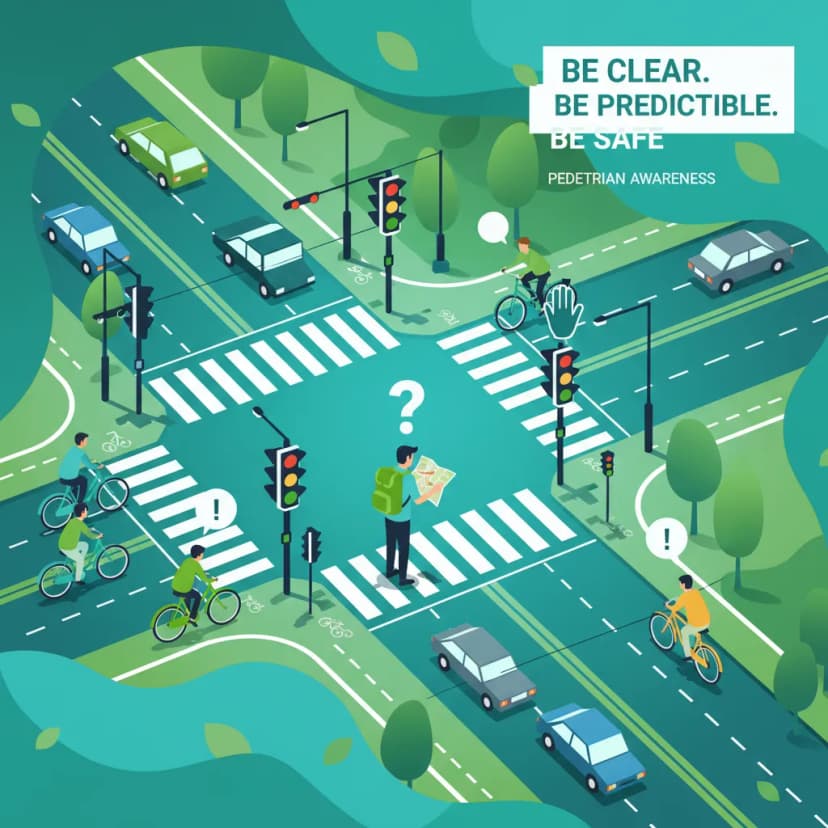
This lesson is dedicated to pedestrian safety, teaching riders to be constantly aware of people on foot, especially in busy urban environments. It reinforces the absolute duty to yield at marked crossings and encourages a cautious approach in areas like schools and shopping districts. The content stresses anticipating unpredictable actions, particularly from children or distracted pedestrians.
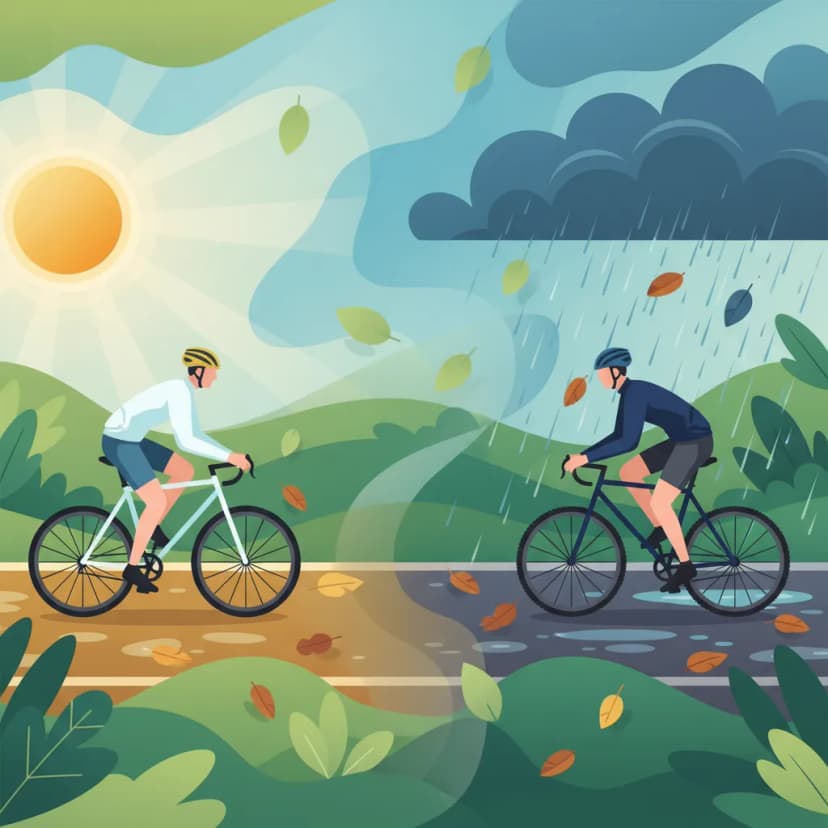
This lesson encourages a mindset of adapting riding style to the specific challenges of each season. It covers seasonal hazards such as wet leaves in the fall, loose gravel after winter, and sun glare in the summer. By being aware of these predictable changes, riders can proactively adjust their technique and maintain safety throughout the year.
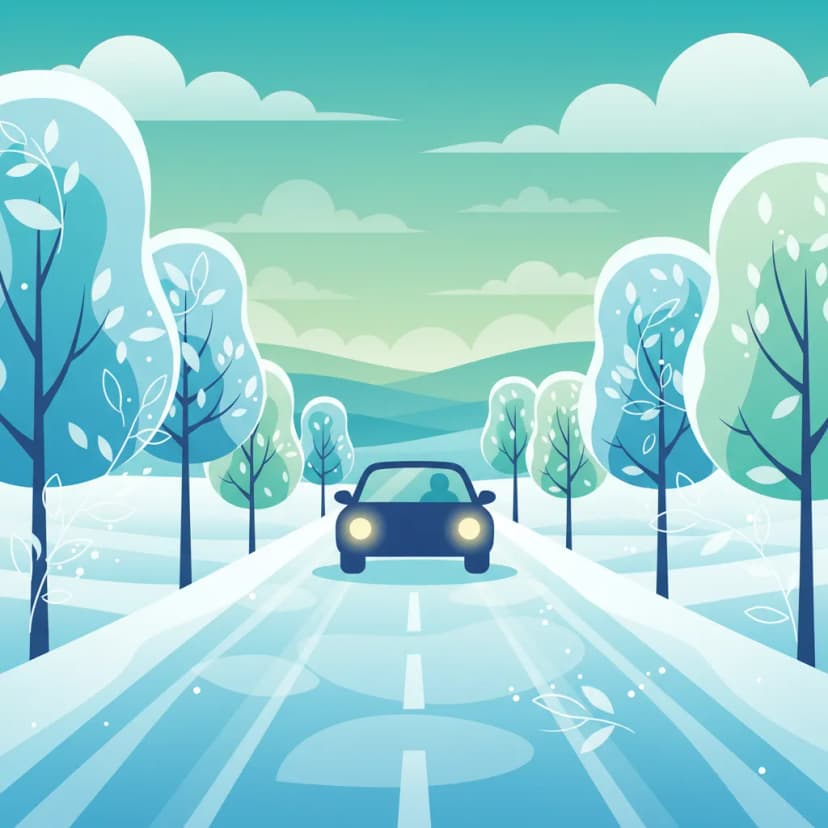
This lesson addresses the severe dangers of riding a moped in snow and icy conditions. It explains how to identify potential hazards like black ice and emphasizes that avoiding riding in such conditions is the safest strategy. For situations where it cannot be avoided, it provides advice on extremely gentle control inputs and vehicle preparation.
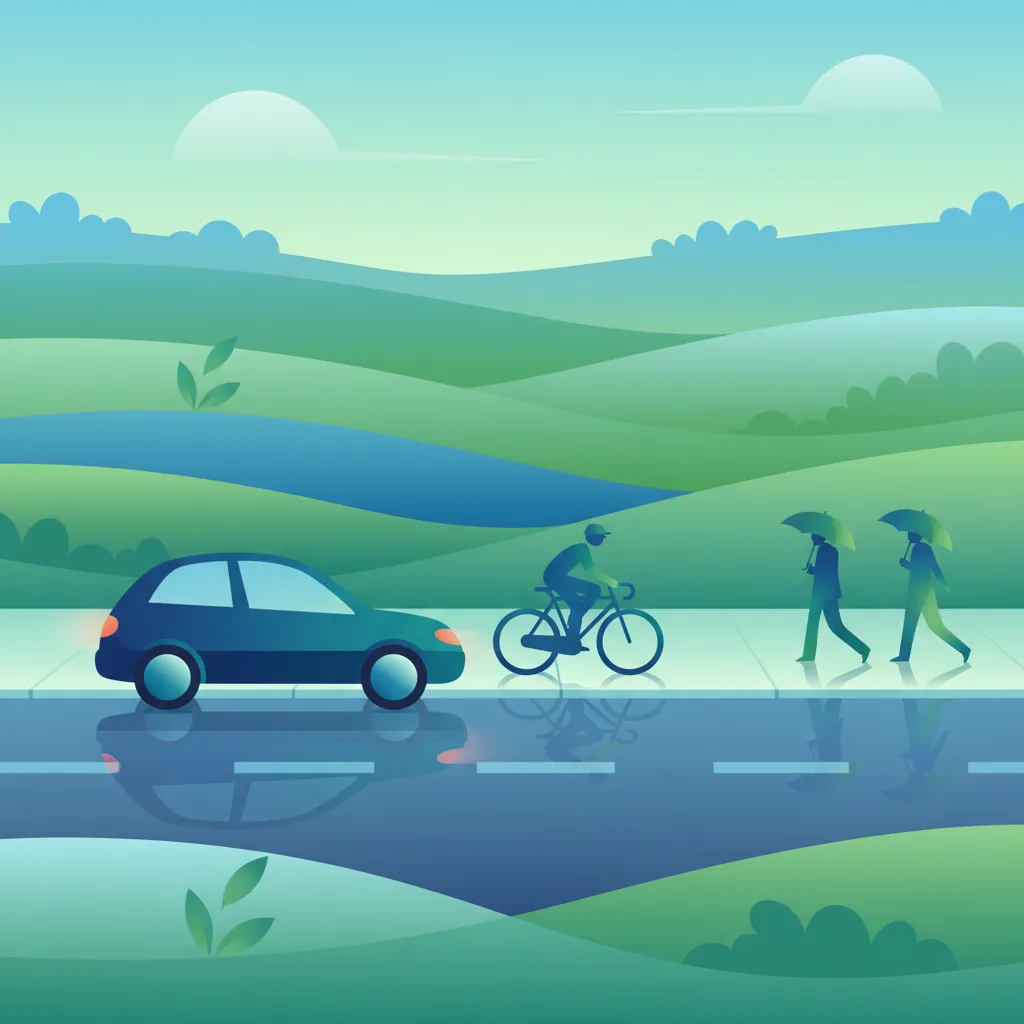
This lesson teaches the crucial skill of adapting speed to prevailing conditions, emphasizing that the posted speed limit is a maximum, not a target. It covers various scenarios such as rain, fog, heavy traffic, and poor road surfaces, explaining why reducing speed is essential for maintaining vehicle control and safety. The goal is to cultivate a proactive mindset where the rider constantly assesses risk and adjusts their speed accordingly.
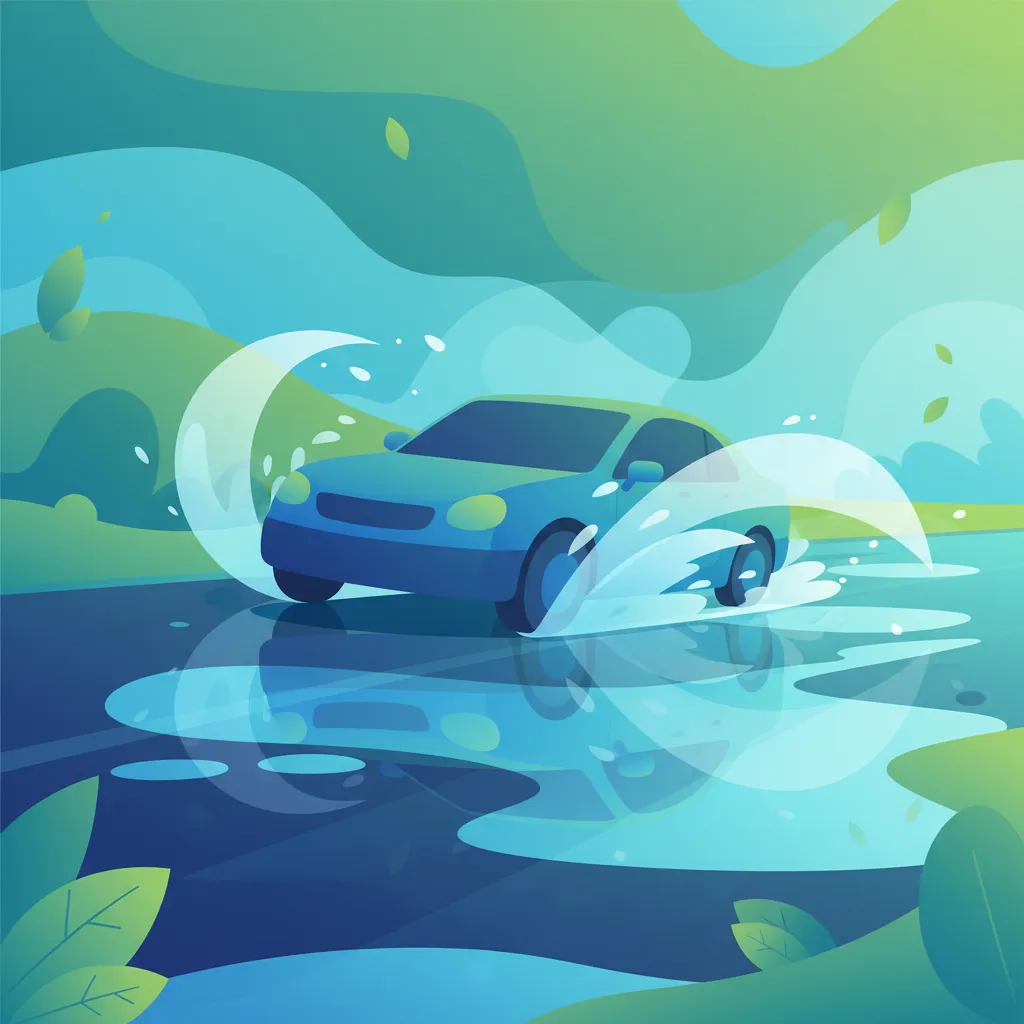
This lesson details the specific hazards associated with riding on wet roads, including significantly increased stopping distances and the risk of aquaplaning. It explains how to recognize conditions where aquaplaning is likely and the importance of reducing speed. Riders will learn to use smoother throttle, braking, and steering inputs to maintain traction and control.
Find clear answers to common questions learners have about Riding in Darkness and Dusk (Headlamp Use). Learn how the lesson is structured, which driving theory objectives it supports, and how it fits into the overall learning path of units and curriculum progression in Sweden. These explanations help you understand key concepts, lesson flow, and exam focused study goals.
In Sweden, your moped's low beam headlamp must be switched on at all times when riding, both day and night, for increased visibility. Ensure it is properly aimed to illuminate the road ahead without dazzling oncoming drivers or those you are following. High beams should only be used when there is no oncoming traffic and you need to see further, remembering to dip them well in advance.
There is no single fixed speed reduction, but you must adjust your speed so that you can stop safely within the distance you can see clearly ahead. This typically means significantly reducing your speed in darkness compared to daylight. Always consider the road surface, potential hazards like pedestrians or animals, and the range of your headlights.
Reflective clothing makes you much more visible to other road users, especially car drivers, whose headlights can reflect off it. This is critical at night or in poor light conditions when your own headlights might not be sufficient for others to spot you in time, significantly reducing the risk of a collision.
Dusk, or twilight, presents a challenge because your eyes haven't fully adjusted to the dark, and other drivers may also have reduced visibility. While you might still have some ambient light, it's crucial to use your headlights and be extra vigilant. Conditions can change rapidly from dusk to dark, so anticipating these changes is key.
Yes, the Swedish theory exam for Category AM will include questions about proper lighting and visibility. You'll be tested on when to use headlights, the importance of being visible, and how to adjust your riding based on light conditions. Understanding these rules is vital for passing the exam and riding safely.