
This lesson is crucial for your safety on Swedish roads. We'll cover essential strategies for making yourself more visible to other road users and how strategic rider positioning can significantly reduce risks. Understanding these concepts will help you navigate mixed traffic with greater confidence and prepare you for specific questions on hazard perception in your Category A theory exam.

Motorcycle riding offers an unparalleled sense of freedom, but it also comes with unique safety challenges, particularly concerning visibility. This lesson, part of the Swedish Motorcycle Theory Course: A Licence Exam Preparation, will delve into essential strategies to ensure you are seen by other road users and how to position your motorcycle strategically for optimal safety and a clear view of the road ahead. Mastering these techniques is not only crucial for reducing accident risk but also a fundamental requirement for the Category A licence exam.
Visibility is often cited as a leading factor in motorcycle collisions, with Swedish traffic safety statistics highlighting that a significant proportion of crashes occur because other drivers simply do not see the motorcyclist. Motorcycles have a smaller visual profile compared to cars or trucks, making them less noticeable to drivers whose attention may be divided or who are accustomed to looking for larger vehicles. Therefore, every motorcyclist must proactively enhance their conspicuity – their ability to be clearly seen – and use intelligent lane positioning as a proactive safety measure.
Effective visibility tactics directly reduce the probability of being involved in a crash. They give other drivers more time to detect your presence, understand your intentions, and react safely. This lesson builds upon foundational knowledge from earlier sections, including understanding traffic signs and signals (Lesson 1), right-of-way rules (Lesson 2), speed management (Lesson 3), and basic motorcycle dynamics (Lesson 4), all of which contribute to a comprehensive safety approach.
To effectively navigate the road and minimize risks, motorcyclists must adhere to several core principles that govern visibility and positioning. These principles are rooted in human visual perception, the physics of sight lines, and Swedish traffic legislation.
For other road users to react safely, they must be able to anticipate your movements. Predictable positioning means riding in a manner that aligns with standard traffic conventions. Erratic or sudden lateral shifts can confuse other drivers and lead to dangerous situations. Whenever possible, staying in a consistent, central lane position helps others predict your path.
Road conditions are constantly changing due to weather, time of day, and traffic density. Dynamic visibility management involves adjusting your visibility tactics accordingly. This means actively changing your lane choice, activating additional lighting, or wearing specific reflective gear to ensure your conspicuity remains adequate under evolving external factors.
Conspicuity enhancers are the equipment, clothing, and behaviors that significantly increase your visual detectability to other road users. Integrating these into your riding routine can be life-saving.
Your helmet is a critical piece of protective equipment, but it can also be a significant visibility enhancer. Brightly colored helmets (e.g., white, yellow, neon) are more easily spotted than dark ones. Adding reflective graphics or tape to your helmet can further improve your conspicuity, especially from the front and rear.
Your motorcycle's lighting system is fundamental for visibility, especially during dawn, dusk, night, or adverse weather conditions.
Common Misunderstanding: Some riders believe that bright colors are enough and lights are only for night. However, lights are mandatory during specific periods and always during reduced visibility, regardless of clothing color. Reflective clothing is not only for night; it significantly improves visibility in daylight rain or fog as well.
Strategic lane positioning is a proactive safety measure that helps you maintain clear sight lines and avoid other vehicles' blind spots. It involves deliberately selecting your riding path within a traffic lane.
The spatial zones around a vehicle where the driver's view is obstructed are known as blind spots. These vary in size and location depending on the vehicle type.
Riding within these zones puts you at significant risk of being unseen. Your lane positioning must actively account for these dimensions to ensure you remain visible.
The choice of lane position should always be dynamic, adapting to the specific road and traffic conditions.
Always aim to ride where you can see and be seen. Your lane position is a powerful tool for controlling your personal safety envelope.
Special attention is required for lane positioning when navigating corners and intersections to maximize your line of sight and ensure you are seen by cross-traffic.
Correct use of your motorcycle's lighting system is not just a matter of safety; it's a legal requirement under Swedish traffic law.
Daytime Running Lights (DRL) are designed to make your motorcycle more visible during daylight. While they are a valuable conspicuity enhancer, they do not replace dipped beam for night riding or in low-visibility conditions. Ensure your DRLs are correctly installed and compliant with type-approval standards.
VTF § 31 strictly prohibits auxiliary lighting that can dazzle or confuse other road users, such as flashing or colored lights not intended for specific signaling purposes. Using non-approved strobe lights, for example, is illegal and dangerous, as it can disorient other drivers.
Adverse weather conditions significantly reduce both your ability to see and others' ability to see you. Proactive adjustments are essential for maintaining safety.
Common Misunderstanding: Many believe high beam helps in fog. In reality, high beams reflect off fog droplets, creating a "wall of light" that further reduces visibility. Always use low beam in fog.
Low sun can create blinding glare, severely impairing both your and other drivers' vision.
Motorcyclists must be particularly mindful of vulnerable road users, such as pedestrians, cyclists, and other motorcyclists, who may be harder to spot and more susceptible to serious injury.
Adhering to the specific regulations outlined in Swedish traffic law is mandatory for all motorcyclists.
Lighting Requirements (Vägtrafikförordning, SFS 1998:1276):
General Duty of Care (Traffic Act, Vägtrafiklag (VTL) SFS 1998:670, § 3): This overarching law requires every road user to exercise due care and not endanger others. This principle underpins all visibility and positioning strategies, emphasizing the responsibility to make oneself visible and avoid dangerous situations.
Lane Usage and Positioning:
Transportstyrelsen (the Swedish Transport Agency) strongly recommends the use of high-visibility clothing with reflective elements for all motorcyclists, reinforcing the importance of being seen beyond minimum legal requirements.
Being aware of common errors can help you proactively prevent dangerous situations.
Effective visibility strategies are dynamic and must be adapted to various contexts and conditions.
| Context | Variation in Principle | Reasoning |
|---|---|---|
| Nighttime (no street lighting) | Mandatory use of dipped beam, rear-light, and reflective clothing; centre-lane riding is essential to be seen from all angles. | Low ambient light severely reduces contrast; a central position maximizes the light caught by reflective surfaces and makes you visible from all directions. |
| Daylight rain / heavy spray | Activate low beam even during daylight; increase use of reflective gear; maintain slightly larger lateral offset from large vehicles. | Water droplets scatter light, reducing visibility; spray can obscure your silhouette, and a larger offset helps avoid it. |
| Fog (visibility < 50 m) | Use low beam only; avoid high beam; add reflective tape; reduce speed; avoid riding directly behind large vehicles. | High beam reflects off droplets, worsening glare. Reflective surfaces improve detectability in diffuse light. |
| Bright sunlight (glare from low sun) | Use helmet visor with anti-glare coating; position to stay in the shadow of larger vehicles when safe; maintain a small offset for line-of-sight with drivers. | Glare severely reduces a driver’s detection ability. Shadows can improve silhouette detection, and an offset helps you see drivers affected by glare. |
| Urban streets with parked cars | Avoid lane-hugging behind parked cars; stay centered to remain in drivers’ field of view; use daytime running lights (DRL) and reflective clothing. | Parked cars create intermittent blind zones. A central position prevents being hidden behind them. |
| Motorway (high speed, wide lanes) | Ride in centre of lane, avoid shoulders; use high-visibility vest with reflective strips; keep headlights on (dipped beam) regardless of daylight. | Higher speeds increase required detection distance. Wide lanes permit central riding without impeding traffic flow, keeping you visible. |
| Narrow residential streets | Slight offset toward the centre to keep a safe distance from the edge; use turn signals earlier for lane changes. | Edge riding can be hazardous due to parked cars, pedestrians, and limited sight lines. Early signaling is crucial for narrow spaces. |
| Heavy load (e.g., passenger + luggage) | Increased vehicle width may reduce lateral clearance; maintain a larger offset from larger vehicles; ensure rear lights are not obstructed. | Added load can obscure reflective surfaces and lights, and affect handling, requiring greater care in positioning. |
| Interaction with cyclists | Ride in centre lane; wear bright colours to be distinguished from cyclists; use turn signals well in advance. | Cyclists may misinterpret your movements if you are not clearly visible and distinct from them. |
| Emergency vehicle approaching | Move to the left side of the lane (in right-hand traffic) if safe, keeping lights on and making oneself visible; avoid riding in the blind spot of the emergency vehicle. | Emergency vehicles, despite their lights, still have blind zones. Your clear visibility is critical for their safe passage. |
Understanding the direct cause-and-effect relationships between your visibility choices and safety outcomes is fundamental.
Applying visibility strategies in real-world scenarios is key to internalizing these concepts.
Setting: 19:00, cloudy, city street with mixed traffic, two-lane road, parked cars on the curb. Correct Behaviour: The rider turns on the dipped beam, stays in the centre of the lane to maximize distance from potential hazards and ensures visibility to all traffic. They maintain a 0.5-meter offset from parked cars to avoid doors opening suddenly and wear a fluorescent jacket with reflective strips, enhancing their profile in fading light. Incorrect Behaviour: The rider rides hugging the curb to avoid city traffic, with lights off, and wearing dark clothing. This places them in the blind spot of cars and makes them virtually invisible against the urban backdrop.
Setting: 07:00, dense fog (visibility ~30 meters), two-lane country road, occasional slow-moving tractors. Correct Behaviour: The rider uses low beam only, avoiding high beam which would worsen visibility in fog. They apply reflective tape to their bike frame and maintain a significantly increased following distance (e.g., 10 meters) behind a tractor. They ride in a central lane position to be as visible as possible from both front and rear. Incorrect Behaviour: The rider uses high beam, follows the tractor at a dangerously close 2 meters, and wears no reflective accessories, making them almost entirely invisible in the dense fog.
Setting: Busy downtown intersection, green pedestrian signal on the opposite side, light rain, afternoon. Correct Behaviour: The rider slows down significantly, preparing to yield to pedestrians as mandated by VTF § 4-1. They move slightly left within their lane to ensure they are clearly seen by left-turning cars and cross-traffic. They signal their intention to proceed, wait for pedestrians to clear the crossing, and then proceed cautiously. Incorrect Behaviour: The rider speeds through the intersection while positioned near the right edge of the lane, making them largely invisible to left-turning vehicles. They nearly collide with a pedestrian who has right-of-way.
Setting: 22:00, well-lit motorway, three lanes each direction, light rain, rider overtaking a car on the right. Correct Behaviour: The rider ensures their dipped beam is active, signals left to indicate their intention, and executes the overtake while maintaining a safe lateral clearance from the car. After safely passing, they return to a central position in their lane, ensuring continued visibility to both preceding and following traffic. Incorrect Behaviour: The rider passes without signaling, rides too close to the left edge of the lane (placing them in the blind spot of traffic in the leftmost lane), and inappropriately uses high beam, dazzling other drivers.
Setting: Urban street with a designated bike lane adjacent to the car lane, light rain, morning rush hour. Correct Behaviour: The rider stays firmly within the car lane, as motorcycles are not permitted in bike lanes. They wear a fluorescent vest and use low beam for enhanced visibility. They maintain at least a 1-meter lateral distance from cyclists, signaling lane changes well in advance to avoid startling them or causing confusion. Incorrect Behaviour: The rider illegally enters the bike lane to bypass traffic, wears dark clothing with no lights, and passes too close to cyclists, creating a dangerous situation and risking a collision with vulnerable road users.
The effectiveness of visibility strategies is backed by extensive research and accident data.
To ensure optimal safety on the road, remember these critical points:
Lesson content overview
Explore all units and lessons included in this driving theory course.
Explore search topics learners often look for when studying Visibility Strategies and Rider Positioning. These topics reflect common questions about road rules, driving situations, safety guidance, and lesson level theory preparation for learners in Sweden.
Browse additional driving theory lessons that cover connected traffic rules, road signs, and common driving situations related to this topic. Improve your understanding of how different rules interact across everyday traffic scenarios.
Explore advanced techniques for rider positioning and maximizing visibility on Swedish roads. Understand how strategic lane choices and visual cues improve safety by ensuring you are seen by other road users. Essential theory for Category A licence.
This lesson focuses on proactive strategies to increase a moped rider's visibility to other drivers. It strongly advocates for the use of high-visibility and reflective clothing, helmets, and accessories to stand out in traffic. Additionally, it revisits the concept of lane positioning as a tool to avoid being in other drivers' blind spots and to create a more prominent presence on the road.
This lesson provides critical strategies for dealing with one of the biggest dangers in traffic: blind spots. You will learn the importance of the shoulder check and how to position yourself on the road to be more visible to other drivers. The lesson also trains you to scan the road surface ahead for hidden hazards like potholes, gravel, or oil spills that can pose a significant threat to a motorcycle's stability, teaching you to see and avoid them in time.

This lesson addresses the specific challenges of riding at night or in low-light conditions. You will learn how to use your headlights most effectively, how to cope with the glare from oncoming traffic, and how darkness affects your depth perception and ability to judge distances. Strategies for spotting nocturnal animals and the increased importance of wearing reflective gear to be seen by others are also key components of this essential safety lesson.

This lesson provides practical advice on selecting the appropriate riding gear for the diverse Swedish seasons. You will learn about the importance of layering for warmth in the cold, ventilated gear for summer heat, and effective waterproofs for rain. The content emphasizes how the right equipment not only keeps you comfortable and focused but also provides crucial protection and enhances your visibility to other road users, making it a critical component of overall motorcycle safety.
This lesson covers the correct interpretation and response to all forms of light and audible signals a motorcyclist will encounter. You will study the sequences of traffic lights, the rules for using turn indicators and hazard lights, and the legally permitted uses of the horn. Proper use of these signals is a fundamental aspect of safe riding, as it communicates your intentions clearly to other road users and helps prevent misunderstandings and collisions.
This lesson introduces the core concepts of defensive riding, which involves anticipating potential dangers and actively managing the space around your motorcycle. You will learn the technique of continuously identifying and maintaining an 'escape path'—an open space to move into if a threat suddenly appears. This proactive, forward-thinking approach dramatically reduces the chances of being trapped in a dangerous situation and is a key skill of advanced, safe riders.
This lesson focuses on Swedish warning signs designed to alert drivers to potential dangers. You will study signs indicating sharp bends, slippery surfaces, animal crossings, and temporary hazards like road construction. Correctly interpreting these signs allows a motorcyclist to proactively adjust speed, lane position, and readiness to react, which is essential for maintaining control and safety, especially in adverse weather or on unfamiliar roads.

This lesson provides in-depth analysis of how to safely interact with the full spectrum of road users. You will learn about the specific characteristics of each, such as the large blind spots of trucks, the potential for sudden movements from cyclists, and the unpredictability of pedestrians. The content teaches strategies for communication, anticipation, and defensive positioning to ensure safe and respectful coexistence on the road for everyone.

This lesson focuses on the single most important piece of safety gear: the helmet. You will learn about the legal standards helmets must meet in Sweden (e.g., ECE ratings) and how to ensure a proper fit. The content also covers the full range of personal protective equipment (PPE), including jackets, pants, gloves, and boots, explaining the importance of abrasion resistance, impact armor, and high-visibility features for rider protection.

This lesson teaches you how to make an accident scene as safe as possible for yourself, any other involved parties, and approaching traffic. You will learn the correct use of hazard lights, the placement of warning triangles, and the importance of wearing a high-visibility vest. The content also covers how to identify and manage immediate post-crash hazards, such as spilled fuel or unstable vehicles, to prevent the situation from worsening.
Learn how to anticipate and avoid potential hazards related to other road users' blind spots. This lesson focuses on how motorcyclists can position themselves to be aware of and visible to car drivers, cyclists, and pedestrians in Swedish traffic environments.
This lesson provides critical strategies for dealing with one of the biggest dangers in traffic: blind spots. You will learn the importance of the shoulder check and how to position yourself on the road to be more visible to other drivers. The lesson also trains you to scan the road surface ahead for hidden hazards like potholes, gravel, or oil spills that can pose a significant threat to a motorcycle's stability, teaching you to see and avoid them in time.
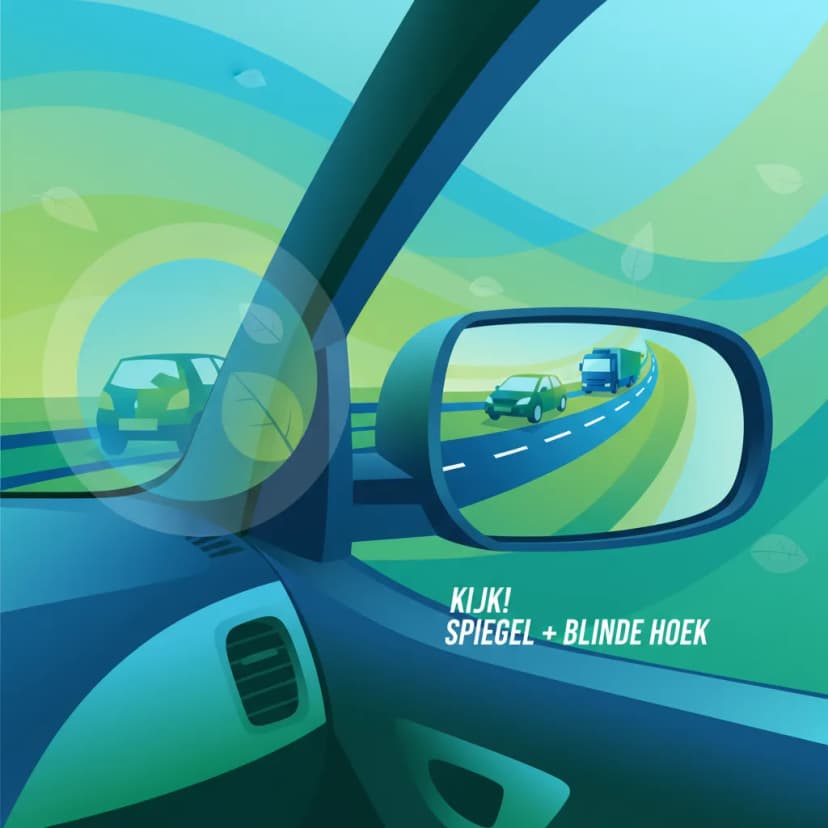
This lesson emphasizes the importance of a comprehensive visual scanning routine that includes regular mirror checks and mandatory head checks (shoulder checks) to cover blind spots. It explains that mirrors alone are not sufficient and that a physical turn of the head is required before any lateral movement. This habit is fundamental to preventing collisions during lane changes, merging, or turning.

This lesson teaches you how to analyze and assess risk when sharing the road with a variety of users, from large trucks to cyclists and pedestrians. You will learn to recognize common patterns of behavior and potential conflict points, allowing you to anticipate the actions of others before they create a dangerous situation. Developing this predictive mindset is a cornerstone of defensive riding and is key to staying safe in busy, complex traffic environments.

This lesson focuses on the specific challenges mopeds face when interacting with cars and heavy vehicles. It highlights the significant blind spots (or 'no-zones') around trucks and buses and teaches riders how to position themselves to remain visible. The content also covers the dangers of wind turbulence when near large vehicles and the importance of maintaining a generous space cushion.
This lesson provides in-depth analysis of how to safely interact with the full spectrum of road users. You will learn about the specific characteristics of each, such as the large blind spots of trucks, the potential for sudden movements from cyclists, and the unpredictability of pedestrians. The content teaches strategies for communication, anticipation, and defensive positioning to ensure safe and respectful coexistence on the road for everyone.

This lesson focuses on creating a complete awareness of the traffic situation around your vehicle. You will learn the correct procedure for using your interior and side mirrors in a continuous scanning pattern. Crucially, the lesson explains what the blind spot (döda vinkeln) is, where it is located, and why a physical head check over the shoulder is a non-negotiable safety step before any lateral movement like changing lanes or turning.
Find clear answers to common questions learners have about Visibility Strategies and Rider Positioning. Learn how the lesson is structured, which driving theory objectives it supports, and how it fits into the overall learning path of units and curriculum progression in Sweden. These explanations help you understand key concepts, lesson flow, and exam focused study goals.
In Sweden, as elsewhere, other road users may not always look for motorcycles. Strategic lane positioning allows you to occupy the part of the lane that maximizes your visibility to drivers in adjacent vehicles and those approaching from ahead or behind. It also helps you avoid their blind spots and ensures you have a clear line of sight through junctions and around bends, reducing the chance of surprises.
High-visibility clothing, often fluorescent in colours like yellow, orange, or green, is highly effective, especially during daylight and twilight. Reflective materials are crucial for visibility at night when illuminated by headlights. Look for gear certified to appropriate safety standards that incorporates both bright colours and reflective elements.
By positioning yourself correctly within your lane, you can improve your field of vision. For example, when approaching a right-hand bend, moving towards the left side of your lane can give you a better view of oncoming traffic and the exit of the bend. Conversely, when approaching a left-hand bend, moving slightly to the right can improve your view around parked cars or junctions.
Not necessarily. The 'middle' of the lane is relative to traffic conditions and visibility. Sometimes, positioning slightly to one side of the lane (e.g., the left side on a two-lane road in Sweden when there's no one beside you) can increase your visibility to drivers in other lanes and those you are approaching. The goal is to occupy the space that makes you most visible and gives you the best view, rather than a fixed point.
Yes, in Sweden, motorcycles are generally required to have their headlights on at all times when driving, regardless of the time of day or weather conditions. This rule is in place to maximize rider visibility and is a key part of Swedish traffic law, which is frequently tested in the theory exam.