
Understanding how to effectively use your mirrors and check blind spots is a fundamental skill for any moped rider. This lesson, part of Unit 6 on positioning and visibility, will ensure you know exactly when and how to perform crucial head checks to prevent accidents, especially when changing lanes or turning. Mastering these techniques is vital for both your theory exam and safe everyday riding.
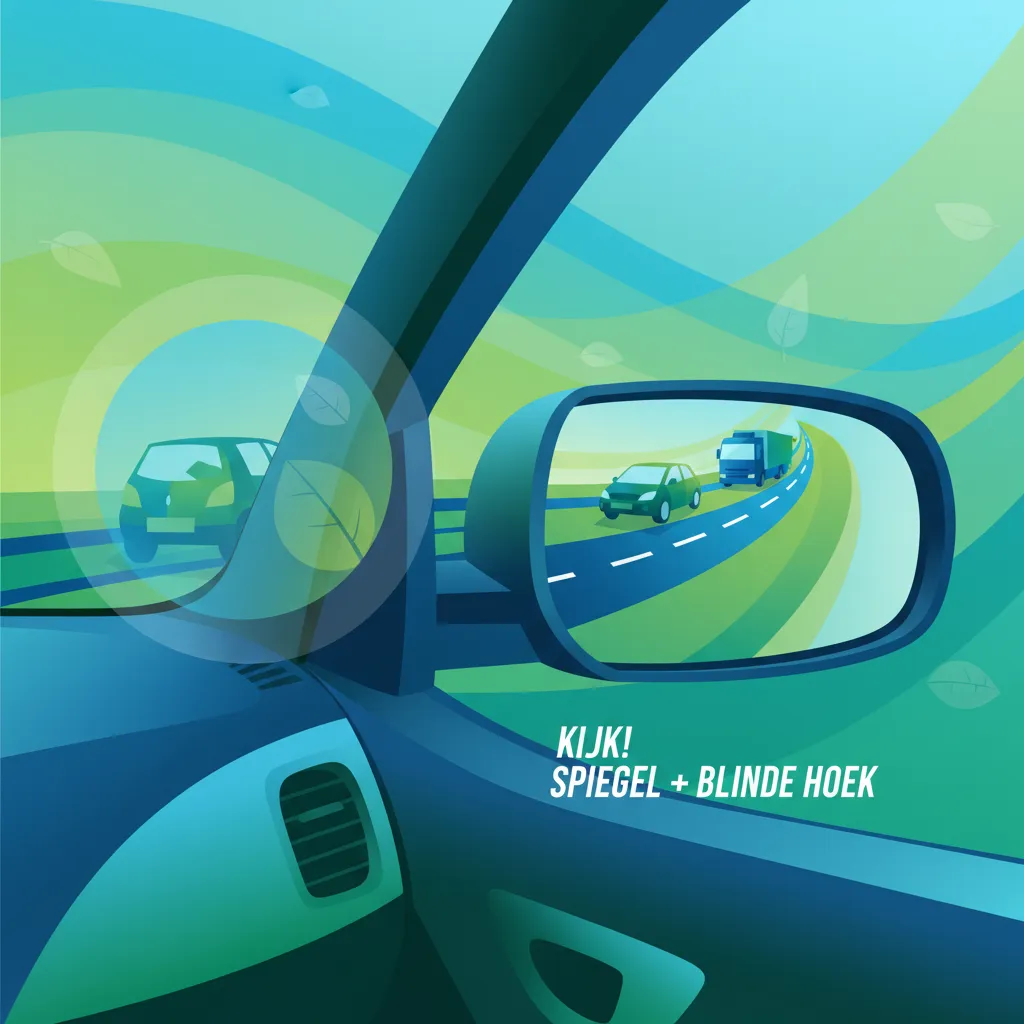
Navigating the roads safely as a Category AM moped rider in Sweden demands constant vigilance and a highly effective visual strategy. One of the most critical aspects of this strategy involves the intelligent use of your mirrors combined with essential physical head turns, known as shoulder checks, to eliminate blind spots. This lesson, part of your Swedish Driving License Theory Course – Category AM (Moped), will provide you with the knowledge and techniques to develop a comprehensive visual scanning routine that can prevent collisions and ensure your safety, especially during dynamic maneuvers like lane changes, merging, and turning.
Effective visual scanning is not merely about looking ahead; it’s a dynamic, systematic process that encompasses your entire surroundings – front, sides, and rear. For moped riders, who are more vulnerable on the road, a disciplined approach to seeing and being seen is paramount. Mirrors offer crucial rearward and side views, but they are inherently limited. The areas they cannot reveal are known as blind spots, and these zones pose a significant risk if not actively checked. Developing a consistent scanning routine will significantly improve your hazard perception and reaction time.
As a moped driver, your field of vision is your primary defense against unexpected hazards. Other road users might not always see you, so it's your responsibility to see them. Mirrors allow you to monitor traffic approaching from behind and to the sides without constantly turning your body. However, vehicle geometry and the laws of physics mean that every vehicle has areas that its mirrors cannot capture. These "dead zones" are where other vehicles, cyclists, or pedestrians can hide, making a direct visual confirmation through a shoulder check absolutely essential before any lateral movement. Mastering this comprehensive approach is not just a best practice; it is a legal obligation in Swedish traffic law designed to standardize safety-critical habits.
Mirrors are fundamental tools that extend your field of vision, providing critical information about your immediate surroundings without requiring major head movements. Knowing the types of mirrors on your moped and how to properly adjust them is the first step towards effective visual scanning.
Most mopeds, like other motor vehicles, are equipped with at least two, often three, primary mirrors:
These mirrors are designed to give you quick, peripheral glances at your surroundings, allowing you to maintain your primary focus on the road ahead.
Mirrors come in different forms, and understanding their characteristics is crucial:
Never rely solely on a convex mirror for distance perception. Always supplement mirror checks with a physical shoulder check.
Correct mirror adjustment is a prerequisite for safe riding and must be done before you start your journey. Improperly adjusted mirrors create larger blind spots and reduce your overall awareness.
Sit in your normal riding position. Ensure you are seated as you would be while riding, including any passenger or cargo that might affect your moped's angle.
Adjust the interior rear-view mirror (if applicable). Position it so that you can see the lane directly behind your moped, with the horizon appearing slightly above the middle of the mirror's view. This provides maximum visibility of following traffic.
Adjust the left side-view mirror. Lean slightly to the left and adjust the mirror until you can just see a sliver of your moped's left side or bodywork. The primary focus should be on seeing the left rear lane and the adjacent lane clearly.
Adjust the right side-view mirror. Similarly, lean slightly to the right and adjust the mirror to show a sliver of your moped's right side, with the main view covering the right rear lane and adjacent lane.
Verify the settings with a quick shoulder check. After adjustment, perform a brief shoulder check to each side to ensure there are no major blind zones that you might have missed. Fine-tune as necessary.
Remember to re-adjust your mirrors anytime your riding position changes significantly, such as when you carry a passenger or a heavy load, as this can alter the moped's angle and affect your mirror's view.
Even with perfectly adjusted mirrors, there will always be areas around your moped that remain hidden. These critical zones are known as blind spots or dead zones. Understanding what they are and why they exist is fundamental to safe riding.
A blind spot (or dead zone) is a spatial area adjacent to and partially behind your moped that is not visible through any of your installed mirrors due to the vehicle’s own body structure and the limited angular field of the mirrors. Every moped, like all vehicles, has blind spots to its left and right sides.
These zones can typically extend 1 to 3 meters behind and to the side of your moped, varying slightly with vehicle design and mirror adjustment. Objects within these zones are completely invisible in your mirrors.
The primary danger of blind spots is obvious: another road user can be traveling in this unseen area, completely unbeknownst to you. If you initiate a lateral movement—such as changing lanes, merging into traffic, or even turning—without checking your blind spot, you risk colliding with that hidden vehicle, cyclist, or pedestrian. These side-impact collisions can be particularly severe for moped riders, often leading to serious injuries. Blind spots are a leading cause of accidents involving lane changes or turns, highlighting the absolute necessity of manually checking them.
Since mirrors cannot cover all areas, the shoulder check (also known as a head check) becomes an indispensable safety measure. It is the only way to get direct visual confirmation that your blind spots are clear.
A shoulder check is a brief, deliberate turn of your head and upper torso toward the side of your intended movement. It allows your eyes to directly scan the area that your mirrors cannot reach.
The shoulder check is not an optional extra; it is a mandatory part of safe riding and a legal requirement in Sweden. You must perform a shoulder check:
Skipping the shoulder check significantly elevates your risk of collision and can lead to legal penalties.
Effective visual awareness is a dynamic, sequential process. It combines mirror checks with the crucial shoulder check in a repeatable, systematic order. This sequence, often called the "Look-Signal-Look" routine, ensures no critical visual area is overlooked.
To guarantee a structured, repeatable visual sweep that reduces omission errors, always follow this order before any lateral movement:
Deviating from this sequence can create dangerous gaps in your awareness, especially in fast-moving traffic or complex situations.
Before you even begin your scanning sequence, you must communicate your intentions to other road users. This is where the Signal-Before-Scan Principle comes into play. Activate your turn signal before you start checking your mirrors and blind spots. In Sweden, the turn signal must be activated for a minimum of 3 seconds before the start of the maneuver. This alerts surrounding road users to your intentions, allowing them time to adjust their speed or position and creating a more predictable environment.
The correct order is: Signal → Mirrors (interior, left, right) → Shoulder Check → Execute Maneuver. Signaling after scanning increases surprise for other users and is illegal.
Mirror and blind spot checks are not a one-off event performed only before a maneuver. Continuous monitoring is a critical aspect of defensive riding. You should repeat mirror checks regularly, even when simply maintaining your lane.
Infrequent checks cause delayed reactions to overtaking or merging traffic, increasing your risk.
Swedish traffic regulations explicitly outline the obligations of drivers, including moped riders, regarding visual awareness. Adhering to these laws is essential not only for safety but also for legal compliance.
According to Trafikförordningen (Traffic Ordinance) 1998:112, § 3 9, before any lateral movement (such as a lane change, merging, overtaking, or turning into a side road), the driver must:
Trafikförordningen 1998:112, § 3 8 states that mirrors must be adjusted to provide the widest possible view of the rear and side traffic before the vehicle is started. This regulation also implicitly means re-adjusting mirrors after loading passengers or cargo, as changes in weight distribution can alter the vehicle's angle and thus the mirror's field of view.
Trafikförordningen 1998:112, § 4 2 mandates that turn signals must be activated at least 3 seconds before the start of any lateral maneuver and remain on until the maneuver is completed and the vehicle has stabilized in its new lane or position. This provides advance notice to surrounding traffic, allowing them sufficient time to react safely.
If your moped is equipped with convex side mirrors, you must be aware that they distort distance perception, making objects appear smaller and farther away. While providing a wider field of view, this distortion means that a shoulder check remains absolutely compulsory. Transportstyrelsen guidelines (e.g., Transportstyrelsen 2022/01 regarding mirror marking requirements) often include specific symbols (like "½") on convex mirrors to remind drivers of this effect.
The principles of mirror usage and blind spot checking remain constant, but their application needs to be adjusted based on prevailing conditions. Smart riders adapt their scanning frequency and technique to maintain optimal awareness.
Adverse weather and light conditions significantly impact visibility, making blind spots even more dangerous.
The context of the road also influences your scanning strategy.
Many collisions are a result of preventable errors in visual scanning. Being aware of these common mistakes can help you develop safer habits.
A disciplined and comprehensive visual scanning routine is the bedrock of safe and responsible riding. Its impact extends beyond simply avoiding fines; it directly influences your ability to prevent accidents and contributes to a safer road environment for everyone.
In Sweden, failing to adhere to the legal requirements for mirror and blind spot checks can lead to serious consequences:
By diligently following the principles outlined in this lesson, you not only comply with Swedish law but also significantly enhance your own safety and the safety of those around you.
Lesson content overview
Explore all units and lessons included in this driving theory course.
Explore search topics learners often look for when studying Using Mirrors and Checking Blind Spots. These topics reflect common questions about road rules, driving situations, safety guidance, and lesson level theory preparation for learners in Sweden.
Browse additional driving theory lessons that cover connected traffic rules, road signs, and common driving situations related to this topic. Improve your understanding of how different rules interact across everyday traffic scenarios.
Understand the critical interplay between visibility, mirror usage, and blind spot elimination for safe maneuvering. This lesson provides theory on essential techniques for lane changes and merging within the context of Swedish road conditions and AM license requirements.
This lesson focuses on proactive strategies to increase a moped rider's visibility to other drivers. It strongly advocates for the use of high-visibility and reflective clothing, helmets, and accessories to stand out in traffic. Additionally, it revisits the concept of lane positioning as a tool to avoid being in other drivers' blind spots and to create a more prominent presence on the road.

This lesson focuses on developing the fine control needed for low-speed maneuvering, a common challenge in urban environments. It covers techniques for making tight turns, such as U-turns, by using a combination of clutch, throttle, and rear brake control. The goal is to build the rider's skill and confidence in handling the moped in parking lots, heavy traffic, and other confined areas.
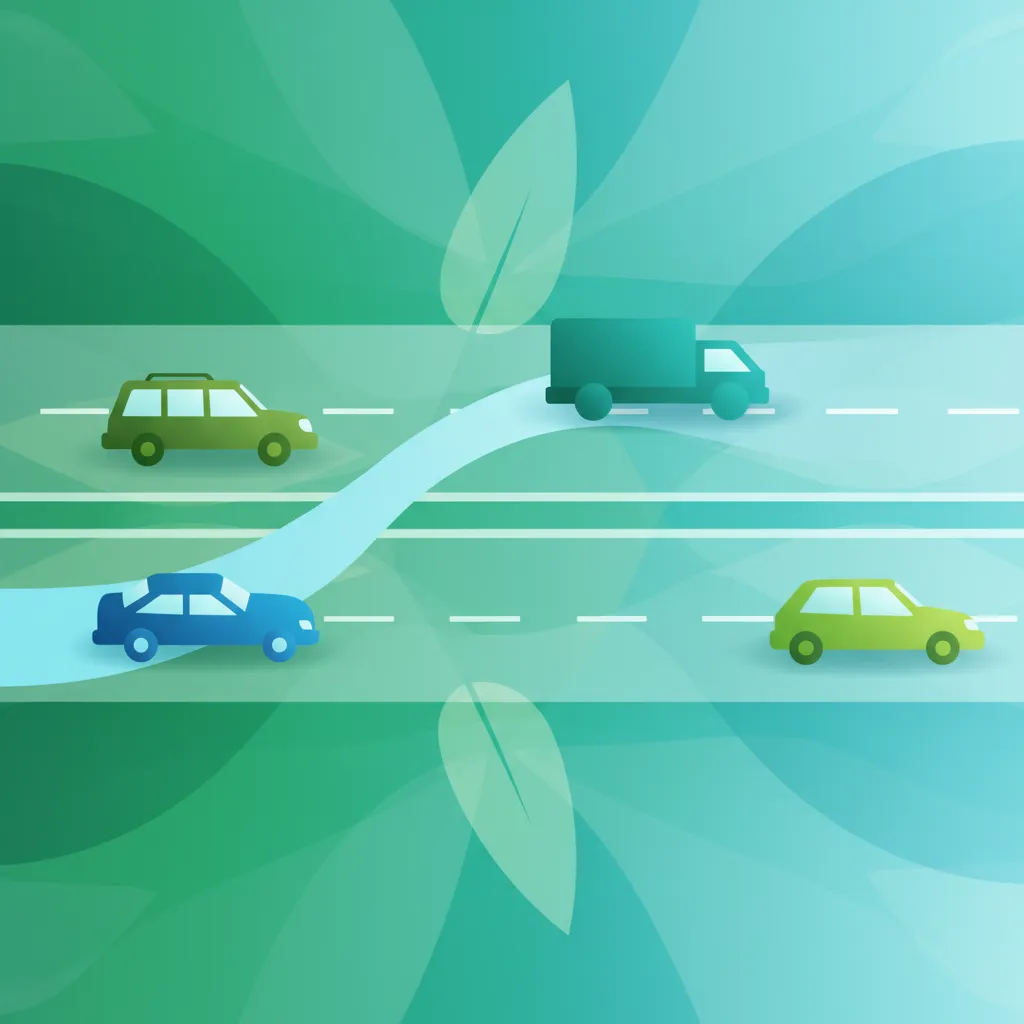
This lesson covers the critical maneuvers of merging and changing lanes. You will learn the correct technique for using an acceleration lane to match the speed of motorway traffic before merging smoothly and safely. The lesson emphasizes the importance of checking mirrors and the blind spot, signaling in good time, and applying the 'zipper principle' (dragkedjeprincipen) where lanes merge to ensure efficient and courteous traffic flow.
This lesson details the legal requirements for moped lighting in Sweden and provides best practices for riding at night or in low-light conditions. It explains the correct use of high and low beam headlights, the importance of a functioning tail light, and the role of reflectors in being seen. The goal is to ensure the rider is as visible as possible to others and can adequately illuminate the road ahead.

This lesson provides clear guidance on selecting the appropriate lane on multi-lane roads to match your intended direction of travel. It covers the rules and best practices for moving into turning lanes, positioning for overtakes, and maintaining a steady course. The focus is on making early, predictable decisions to ensure smooth integration with surrounding traffic.

This lesson focuses on strategies to make yourself more visible to other road users, a critical factor in motorcycle safety. You will learn how to use lane positioning strategically to stay out of other drivers' blind spots and to maximize your own line of sight through corners and intersections. The content also covers the effectiveness of high-visibility and reflective clothing, as well as the correct use of lights to ensure you are seen in all conditions.

This lesson provides practical instructions for safely navigating different types of intersections and roundabouts. It covers procedures for approaching, entering, and exiting roundabouts, emphasizing the rule to yield to traffic already circulating. The content also addresses how to handle signal-controlled and uncontrolled intersections, ensuring riders select the correct lane and manage their speed appropriately.

This lesson provides essential strategies for riding safely at night and during twilight hours. It covers the correct use of headlights to maximize visibility without dazzling other drivers and emphasizes the need to reduce speed to compensate for shorter sight distances. The content also highlights the importance of wearing reflective gear to be seen by others.

This lesson explains how to identify and interact with various types of mopeds and other low-speed vehicles common on Swedish roads. You will learn the difference between Class I and Class II mopeds and their place on the road, as well as how to recognize A-tractors by their LGF (långsamtgående fordon) sign. The key focus is on managing the large speed differential and making safe judgments when deciding to overtake.

This lesson details the specific hazards associated with riding on wet roads, including significantly increased stopping distances and the risk of aquaplaning. It explains how to recognize conditions where aquaplaning is likely and the importance of reducing speed. Riders will learn to use smoother throttle, braking, and steering inputs to maintain traction and control.
Expand your safety knowledge with advanced techniques for visual scanning beyond basic mirror checks. Learn to integrate head checks and mirror observations for complete situational awareness, crucial for Swedish moped operators and safe road interactions.

This lesson focuses on creating a complete awareness of the traffic situation around your vehicle. You will learn the correct procedure for using your interior and side mirrors in a continuous scanning pattern. Crucially, the lesson explains what the blind spot (döda vinkeln) is, where it is located, and why a physical head check over the shoulder is a non-negotiable safety step before any lateral movement like changing lanes or turning.

This lesson goes beyond mechanical signals to cover the subtle art of non-verbal communication in traffic. It highlights the importance of making eye contact with drivers to ensure you have been seen before making a move. The content also reviews standard hand signals as a backup to electronic signals and discusses how clear, confident body language can make a rider's intentions more predictable.

This lesson teaches the importance of conducting a quick, routine inspection before every ride to ensure the moped is in safe working order. It outlines a simple checklist that includes checking tire pressure (Däck), brake function (Bromsar), and all lights and signals. This proactive habit can prevent mechanical failures that could lead to an accident.
This lesson teaches riders to interpret warning signs (Varningsskyltar), which alert them to potential dangers on the road ahead. It covers a wide range of signs, including those for sharp curves, slippery surfaces, wildlife crossings, and upcoming roadworks. Understanding these triangular signs allows riders to anticipate hazards, adjust their speed and position proactively, and enhance their overall safety.
This lesson provides practical instructions for safely navigating different types of intersections and roundabouts. It covers procedures for approaching, entering, and exiting roundabouts, emphasizing the rule to yield to traffic already circulating. The content also addresses how to handle signal-controlled and uncontrolled intersections, ensuring riders select the correct lane and manage their speed appropriately.
This lesson focuses on proactive strategies to increase a moped rider's visibility to other drivers. It strongly advocates for the use of high-visibility and reflective clothing, helmets, and accessories to stand out in traffic. Additionally, it revisits the concept of lane positioning as a tool to avoid being in other drivers' blind spots and to create a more prominent presence on the road.

This lesson focuses on the specific challenges mopeds face when interacting with cars and heavy vehicles. It highlights the significant blind spots (or 'no-zones') around trucks and buses and teaches riders how to position themselves to remain visible. The content also covers the dangers of wind turbulence when near large vehicles and the importance of maintaining a generous space cushion.
This lesson focuses on developing the fine control needed for low-speed maneuvering, a common challenge in urban environments. It covers techniques for making tight turns, such as U-turns, by using a combination of clutch, throttle, and rear brake control. The goal is to build the rider's skill and confidence in handling the moped in parking lots, heavy traffic, and other confined areas.
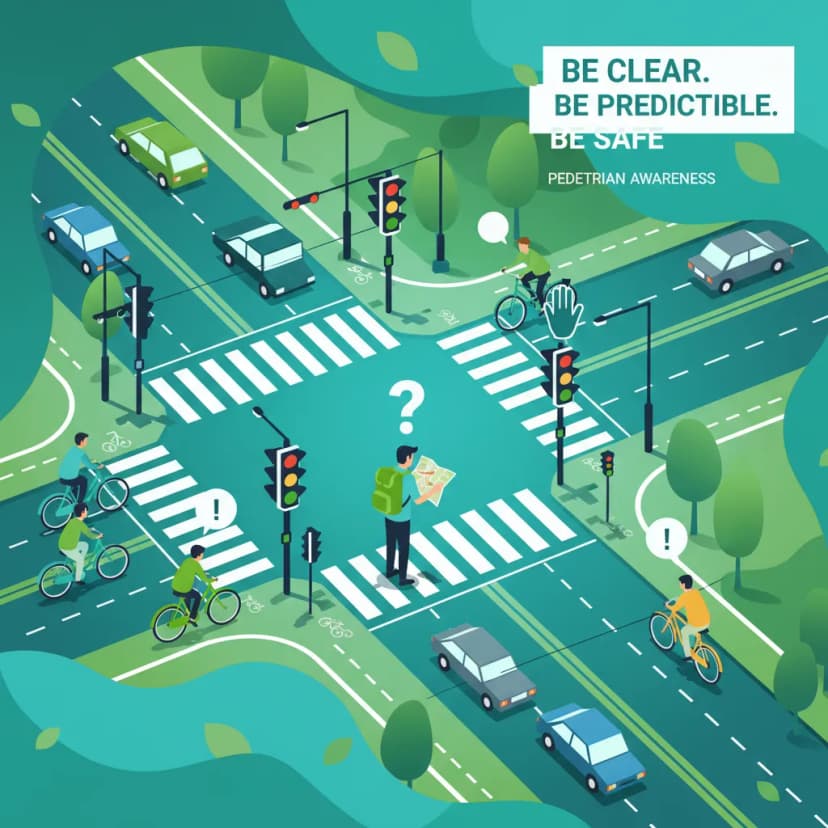
This lesson is dedicated to pedestrian safety, teaching riders to be constantly aware of people on foot, especially in busy urban environments. It reinforces the absolute duty to yield at marked crossings and encourages a cautious approach in areas like schools and shopping districts. The content stresses anticipating unpredictable actions, particularly from children or distracted pedestrians.
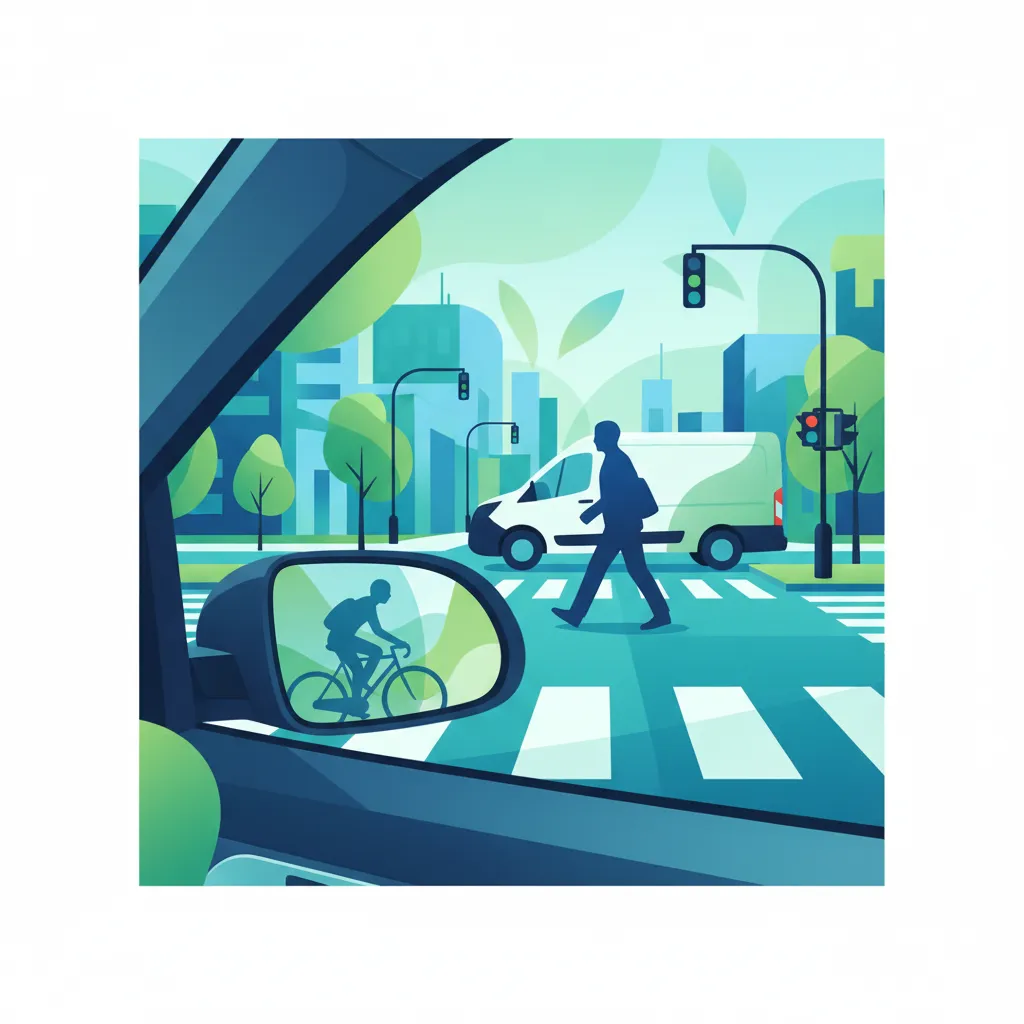
This lesson provides critical strategies for dealing with one of the biggest dangers in traffic: blind spots. You will learn the importance of the shoulder check and how to position yourself on the road to be more visible to other drivers. The lesson also trains you to scan the road surface ahead for hidden hazards like potholes, gravel, or oil spills that can pose a significant threat to a motorcycle's stability, teaching you to see and avoid them in time.
Find clear answers to common questions learners have about Using Mirrors and Checking Blind Spots. Learn how the lesson is structured, which driving theory objectives it supports, and how it fits into the overall learning path of units and curriculum progression in Sweden. These explanations help you understand key concepts, lesson flow, and exam focused study goals.
Moped mirrors, like those on cars, have inherent limitations and cannot cover the entire area around the vehicle. A physical head check, or shoulder check, is essential to see what's in your blind spot – an area invisible in the mirrors. This is a critical safety step before any manoeuvre.
You must perform a head check before any manoeuvre that involves changing your lateral position or direction. This includes changing lanes, turning at intersections, merging into traffic, overtaking, or even pulling away from the side of the road.
A head check involves turning your head over your shoulder in the direction you intend to move or turn. It should be a quick but thorough scan to ensure no other road users, especially cyclists or other mopeds, are present in your blind spot.
Yes, questions regarding mirror usage, blind spots, and safe manoeuvring are common in the Swedish AM theory exam. Demonstrating understanding of these safety procedures is crucial for passing.
In adverse weather, visibility is often reduced, making blind spots even more critical. Ensure your mirrors are clean and adjusted, and always perform a thorough head check before any manoeuvre, as other road users may be harder to spot.