
Navigating Sweden's roads safely in adverse weather is crucial. This lesson focuses on understanding and applying the rules for reduced visibility, ensuring you know when and how to use your headlights and fog lights correctly. It builds on basic road knowledge and prepares you for specific scenarios tested in the Swedish Category B theory exam.
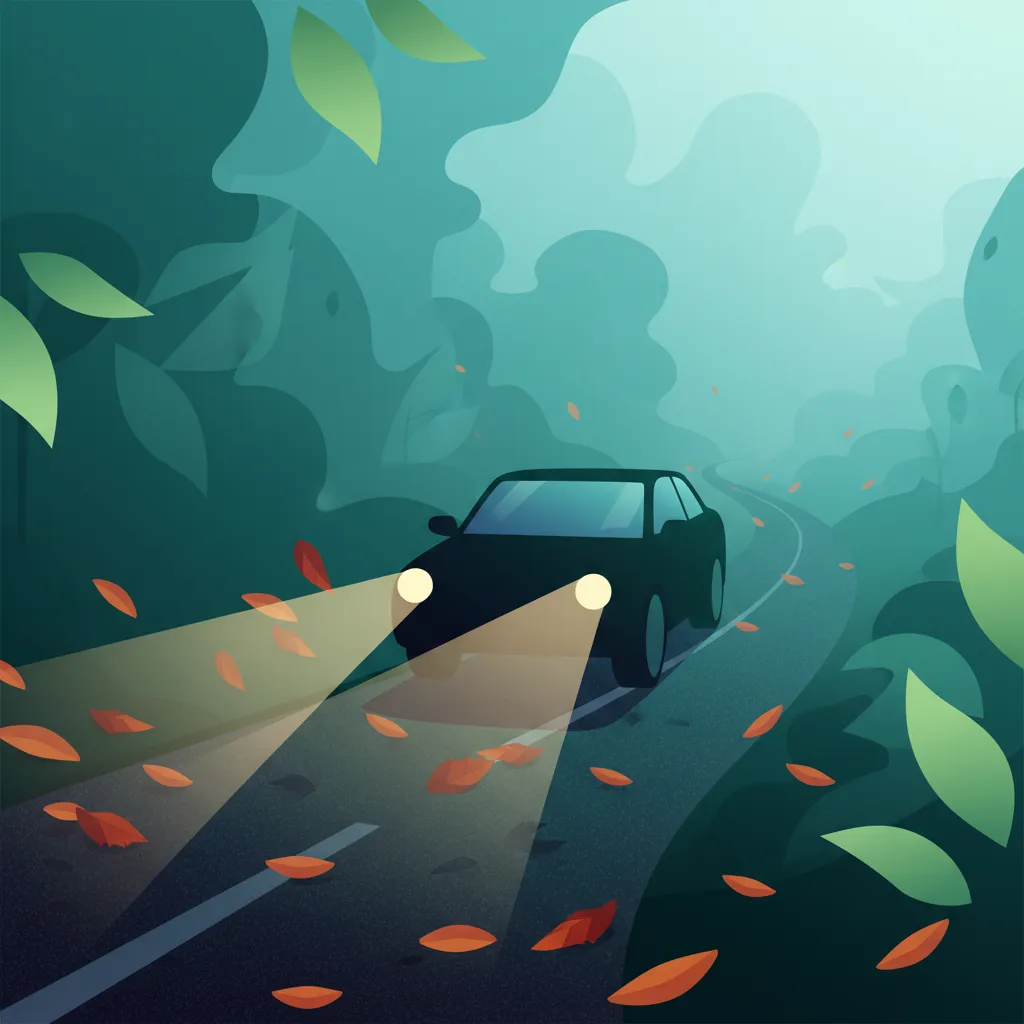
Driving in Sweden, especially during the darker months or adverse weather, frequently presents conditions of reduced visibility. Mastering the correct use of your vehicle's lighting systems and adjusting your driving technique is crucial for safety, not only for yourself but for all other road users. This lesson, part of your Swedish Driving License Theory Course for Category B Cars, delves into the essential strategies and regulations for driving safely when your sight distance is compromised by fog, heavy rain, snow, or simply the absence of daylight. Understanding these principles ensures you meet statutory obligations under the Trafikförordning and mitigate collision risks.
Reduced visibility refers to any condition where your forward sight distance is significantly limited compared to normal daylight levels. This can occur due to a variety of factors:
The practical implication of reduced visibility is that drivers must rely more heavily on their vehicle's artificial illumination and significantly adjust their speed and following distance. Your ability to detect hazards, react, and stop safely is directly tied to how far you can clearly see ahead.
Modern vehicles are equipped with various lighting systems, each designed for specific conditions. Knowing when and how to use them is paramount.
Low-beam headlights, also known as dipped beams, are the standard headlamp setting designed for most driving conditions when artificial light is required. They project a relatively short, wide-angled light pattern that is aimed downwards. This design illuminates the road directly in front of and to the sides of your vehicle without dazzling oncoming traffic or drivers of preceding vehicles.
When to Use Low-Beam Headlights:
tätort is the Swedish term for an urban area with a population density above a certain threshold), low-beam lights are generally appropriate. High-beams are usually prohibited in these areas due to sufficient street lighting and the risk of dazzling pedestrians and other drivers.Always remember that even if your vehicle has an automatic lighting system, you, as the driver, are responsible for ensuring the correct lights are activated for the prevailing conditions. Do not solely rely on the automatic function.
High-beam headlights, also known as full beams, provide a brighter and longer, more concentrated light pattern that reaches much farther ahead than low beams. They are designed to maximize your forward vision on unlit roads, helping you spot potential hazards at a greater distance.
When to Use High-Beam Headlights:
When to Dim or Avoid High-Beam Headlights:
Front fog lights are specially designed lamps mounted low on the front of the vehicle. They emit a wide, flat beam of light with a short range, engineered to cut under or through dense fog and heavy precipitation rather than reflecting back into the driver's eyes like high-beams. Their low mounting position helps to illuminate the road surface more effectively in very poor visibility.
Strict Rules for Front Fog Light Use:
According to Trafikförordning § 45 1 b, front fog lights may be used only when visibility is severely reduced to the point where you cannot clearly see road markings or objects at a distance of 100 metres or less.
It is crucial to remember that fog lights are not a substitute for low-beam headlights in general reduced visibility conditions. They are specifically for very low visibility. You must turn them off as soon as visibility improves above the legal threshold. Using them in light rain, clear conditions, or during daylight is prohibited and can cause unnecessary glare for other road users.
A rear fog light is a single (or sometimes double) powerful red lamp located at the rear of the vehicle. Its purpose is to significantly increase your vehicle's conspicuity to following traffic when visibility is extremely poor. It is much brighter than standard tail lights and can be dazzling if used unnecessarily.
Strict Rules for Rear Fog Light Use:
According to Trafikförordning § 45 1 c, rear fog lights are permitted only when visibility is reduced to such an extent that a driver behind cannot clearly see your vehicle's standard rear lights at a distance of 150 metres or less. Furthermore, they are primarily intended for situations where the vehicle is moving slowly (typically ≤ 30 km/h) or is stationary.
You must turn off the rear fog light once visibility improves, as leaving it on when not strictly needed can cause severe glare for drivers behind you. It should never be used during normal driving, in light rain, or while overtaking, as it can be misinterpreted as braking or simply be dangerously dazzling.
Daytime Running Lights (DRLs) are lights that automatically illuminate during daylight hours to increase the conspicuity of your vehicle to other road users. In Sweden, all passenger cars are mandated to have DRLs activated whenever the vehicle is moving on public roads, in accordance with EU Regulation 48/2009.
DRLs are designed to make your vehicle more visible from the front in overcast conditions, at twilight, or when emerging from shadows, but they are generally not powerful enough to illuminate the road ahead. It is vital to understand that DRLs are not a substitute for low-beam headlights when darkness occurs or visibility is significantly reduced. They do not illuminate the rear of the vehicle, meaning only the front is more visible. When darkness falls or visibility deteriorates, you must manually switch to low-beam headlights to ensure both front and rear visibility and adequate road illumination.
Many modern vehicles are equipped with automatic headlight systems that use sensors to detect ambient light levels and automatically switch between DRLs, low-beams, and sometimes even high-beams. While convenient, these systems are not foolproof.
Driver Responsibility: You, as the driver, retain full responsibility for ensuring the correct lighting is used. Automatic systems may sometimes react too slowly to sudden changes in light (e.g., entering a tunnel, sudden heavy rainfall) or misinterpret conditions (e.g., keeping high-beams on too long when an oncoming vehicle appears). Always be prepared to manually override the system to ensure compliance with regulations and to maintain safety.
One of the most critical adjustments a driver must make in reduced visibility is to their speed. Your speed must always be appropriate for the distance you can see ahead, ensuring that you can stop safely within that visible distance. This principle is often referred to as "stopping distance must be less than sight distance."
Guidance for Speed Adjustment:
Failing to reduce speed in low visibility is a leading cause of multi-vehicle collisions. Even with fog lights, the fundamental principle of being able to stop within the visible range remains.
When forward visibility is extremely limited, for example, in very dense fog where you can barely see a few metres ahead, looking directly into the "white wall" created by your headlights can be disorienting. In such situations, a valuable technique is to use road-edge guidance.
This involves:
This method provides a reliable, close-range reference when the road surface directly ahead is otherwise invisible, helping to prevent off-road excursions.
Compliance with the Swedish Trafikförordning (Traffic Ordinance) is mandatory for all drivers. Here's a summary of the most pertinent regulations concerning vehicle lighting:
tätort) or wherever street lighting provides adequate visibility.Violating these regulations can lead to fines and, more importantly, significantly increase the risk of accidents.
Many drivers inadvertently misuse their lighting systems, often out of misunderstanding or poor judgment. Being aware of these common errors can help you avoid them:
Understanding the rules in isolation is one thing; applying them dynamically to real-world driving situations is another. Here are a few examples of how conditions influence your lighting and speed decisions:
tätort (urban area) at night. Streetlights provide good illumination, but it's dark outside.The regulations and recommendations for reduced visibility and headlight use are rooted in the physics of light, human visual perception, and extensive traffic safety research:
Mastering driving in reduced visibility is about combining legal compliance with sound judgment and defensive driving techniques.
By consistently applying these principles, you contribute to a safer traffic environment for everyone on Swedish roads.
Lesson content overview
Explore all units and lessons included in this driving theory course.
Explore search topics learners often look for when studying Reduced Visibility and Headlight Use. These topics reflect common questions about road rules, driving situations, safety guidance, and lesson level theory preparation for learners in Sweden.
Browse additional driving theory lessons that cover connected traffic rules, road signs, and common driving situations related to this topic. Improve your understanding of how different rules interact across everyday traffic scenarios.
Understand Swedish traffic rules for driving in fog, rain, or darkness. Learn about correct headlight usage, high beams, and when to use front and rear fog lights for safe travel.
This lesson reinforces the core safety principle of adapting your driving to the prevailing weather conditions. You will learn why you must significantly reduce speed in heavy rain to avoid aquaplaning, how strong crosswinds can affect vehicle stability, and why reduced visibility in fog necessitates slower speeds and greater following distances. The goal is to instill a proactive approach to risk management whenever the weather is less than ideal.
This lesson addresses the specific challenges of riding at night or in low-light conditions. You will learn how to use your headlights most effectively, how to cope with the glare from oncoming traffic, and how darkness affects your depth perception and ability to judge distances. Strategies for spotting nocturnal animals and the increased importance of wearing reflective gear to be seen by others are also key components of this essential safety lesson.
This lesson teaches you how to recognize and adapt to different types of slippery winter surfaces. You will learn about the characteristics of driving in loose snow, packed snow, and on ice, with a special focus on detecting 'black ice' (ishalka), which is transparent and extremely dangerous. The content identifies high-risk areas such as bridges and shaded sections of the road and emphasizes the need for extremely gentle steering, acceleration, and braking inputs.
This lesson provides essential strategies for riding safely at night and during twilight hours. It covers the correct use of headlights to maximize visibility without dazzling other drivers and emphasizes the need to reduce speed to compensate for shorter sight distances. The content also highlights the importance of wearing reflective gear to be seen by others.
This lesson details the legal requirements for moped lighting in Sweden and provides best practices for riding at night or in low-light conditions. It explains the correct use of high and low beam headlights, the importance of a functioning tail light, and the role of reflectors in being seen. The goal is to ensure the rider is as visible as possible to others and can adequately illuminate the road ahead.
This lesson focuses on the high level of caution required when driving in residential areas. You will learn about the rules for special zones like 'gångfartsområde' (walking speed area) and the need to navigate around speed calming measures like speed bumps. The central theme is anticipating unpredictable behavior from residents, especially children, and managing the risks posed by parked cars that severely limit visibility.

This lesson provides practical advice on selecting the appropriate riding gear for the diverse Swedish seasons. You will learn about the importance of layering for warmth in the cold, ventilated gear for summer heat, and effective waterproofs for rain. The content emphasizes how the right equipment not only keeps you comfortable and focused but also provides crucial protection and enhances your visibility to other road users, making it a critical component of overall motorcycle safety.
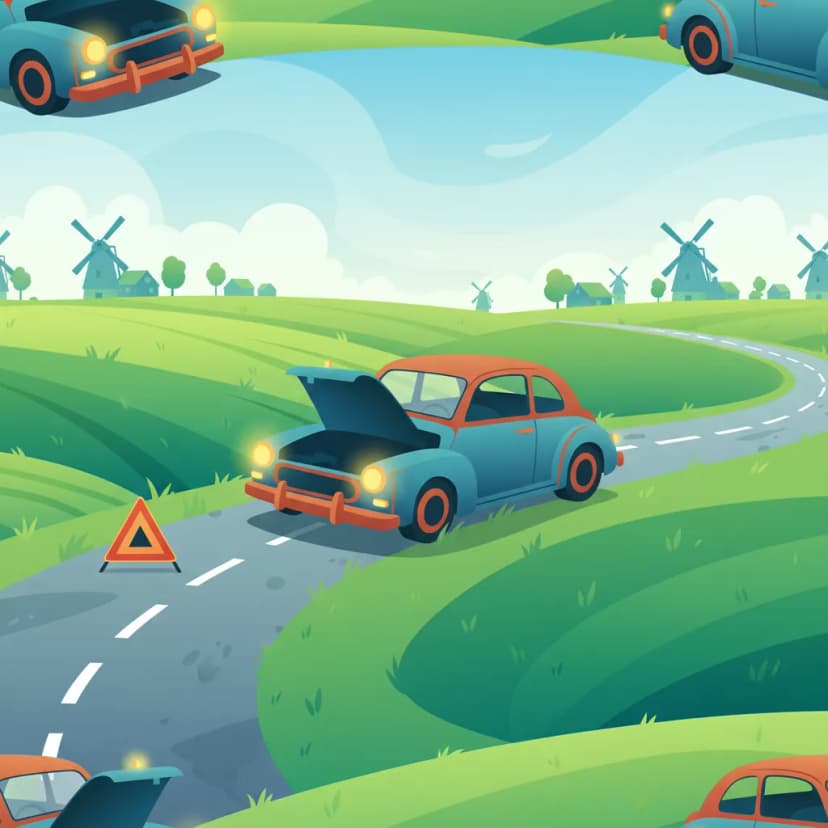
This lesson focuses on the correct use of warning devices to protect an accident or breakdown scene. You will learn to immediately activate your hazard lights (varningsblinkers). The main focus is on the proper placement of the warning triangle, explaining how the distance from the vehicle must be adapted based on the road's speed limit and visibility to give oncoming drivers adequate time to react.
This lesson focuses on strategies to make yourself more visible to other road users, a critical factor in motorcycle safety. You will learn how to use lane positioning strategically to stay out of other drivers' blind spots and to maximize your own line of sight through corners and intersections. The content also covers the effectiveness of high-visibility and reflective clothing, as well as the correct use of lights to ensure you are seen in all conditions.
This lesson focuses on creating a complete awareness of the traffic situation around your vehicle. You will learn the correct procedure for using your interior and side mirrors in a continuous scanning pattern. Crucially, the lesson explains what the blind spot (döda vinkeln) is, where it is located, and why a physical head check over the shoulder is a non-negotiable safety step before any lateral movement like changing lanes or turning.
Learn essential driving techniques for reduced visibility situations like fog or heavy rain. This includes speed adjustment, using road edges as guides, and understanding the physics of stopping distances.
This lesson reinforces the core safety principle of adapting your driving to the prevailing weather conditions. You will learn why you must significantly reduce speed in heavy rain to avoid aquaplaning, how strong crosswinds can affect vehicle stability, and why reduced visibility in fog necessitates slower speeds and greater following distances. The goal is to instill a proactive approach to risk management whenever the weather is less than ideal.
This lesson emphasizes that the posted speed limit is a maximum, not a target. You will learn the principles of situational speed adaptation, which involves adjusting your speed based on factors like visibility, road geometry (curves and hills), traffic density, and potential hazards. The lesson covers specific strategies for managing speed in urban environments with pedestrians, on rural roads with hidden entrances, and on motorways to match the flow of traffic.
This lesson focuses on the high level of caution required when driving in residential areas. You will learn about the rules for special zones like 'gångfartsområde' (walking speed area) and the need to navigate around speed calming measures like speed bumps. The central theme is anticipating unpredictable behavior from residents, especially children, and managing the risks posed by parked cars that severely limit visibility.
This lesson addresses the specific challenges of riding at night or in low-light conditions. You will learn how to use your headlights most effectively, how to cope with the glare from oncoming traffic, and how darkness affects your depth perception and ability to judge distances. Strategies for spotting nocturnal animals and the increased importance of wearing reflective gear to be seen by others are also key components of this essential safety lesson.
This lesson teaches the crucial skill of adapting speed to prevailing conditions, emphasizing that the posted speed limit is a maximum, not a target. It covers various scenarios such as rain, fog, heavy traffic, and poor road surfaces, explaining why reducing speed is essential for maintaining vehicle control and safety. The goal is to cultivate a proactive mindset where the rider constantly assesses risk and adjusts their speed accordingly.
This lesson provides essential strategies for riding safely at night and during twilight hours. It covers the correct use of headlights to maximize visibility without dazzling other drivers and emphasizes the need to reduce speed to compensate for shorter sight distances. The content also highlights the importance of wearing reflective gear to be seen by others.
This lesson teaches you how to recognize and adapt to different types of slippery winter surfaces. You will learn about the characteristics of driving in loose snow, packed snow, and on ice, with a special focus on detecting 'black ice' (ishalka), which is transparent and extremely dangerous. The content identifies high-risk areas such as bridges and shaded sections of the road and emphasizes the need for extremely gentle steering, acceleration, and braking inputs.
This lesson focuses on creating a complete awareness of the traffic situation around your vehicle. You will learn the correct procedure for using your interior and side mirrors in a continuous scanning pattern. Crucially, the lesson explains what the blind spot (döda vinkeln) is, where it is located, and why a physical head check over the shoulder is a non-negotiable safety step before any lateral movement like changing lanes or turning.
This lesson teaches the crucial skill of adapting your speed to the dynamic and often congested conditions of urban riding. You will learn to modulate your speed smoothly in response to traffic flow, pedestrian activity, and complex intersections to maintain safety and control. Techniques covered include using engine braking effectively, anticipating the actions of other road users, and selecting a speed that maximizes your reaction time in a high-density environment.
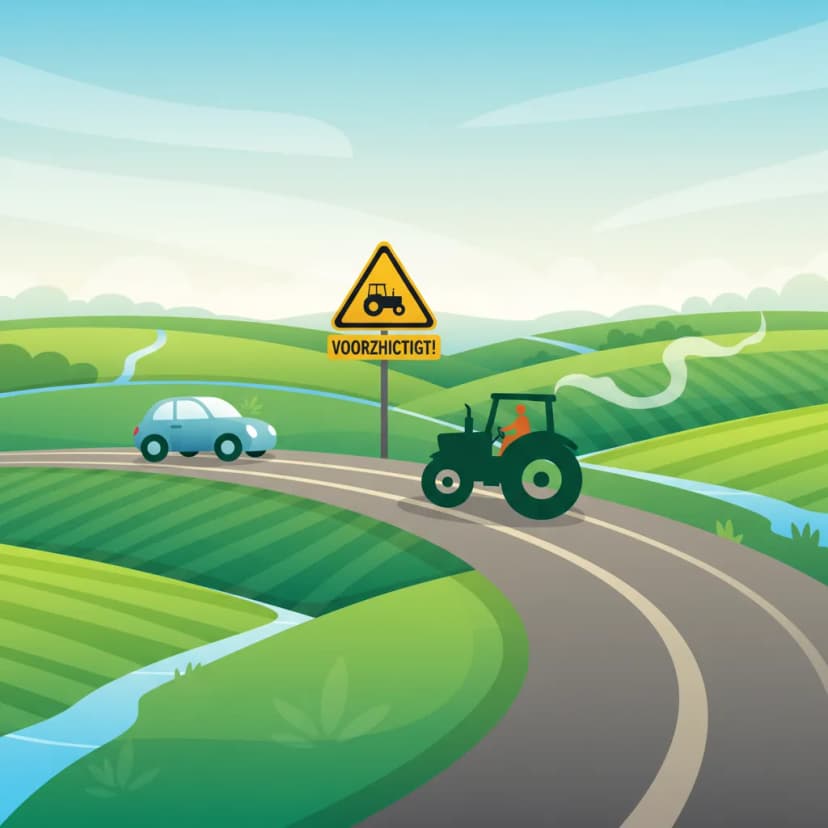
This lesson addresses the specific risks associated with driving on rural roads (landsvägar). You will learn how to manage higher speeds on narrow, winding roads with limited visibility due to curves and hills. The lesson covers procedures for safely overtaking slow-moving agricultural vehicles, managing encounters with oncoming traffic on narrow sections, and being constantly vigilant for wildlife, especially at dawn and dusk.
Find clear answers to common questions learners have about Reduced Visibility and Headlight Use. Learn how the lesson is structured, which driving theory objectives it supports, and how it fits into the overall learning path of units and curriculum progression in Sweden. These explanations help you understand key concepts, lesson flow, and exam focused study goals.
High beams (helljus) should be used on unlit roads when there is no risk of dazzling oncoming traffic or drivers ahead. You must switch to low beams (kersljus) when approaching other vehicles or when your high beams could reflect off road signs and temporarily blind you. They are essential for maximising visibility on dark rural roads but must be used responsibly.
Front fog lights (dimljus fram) can be used in poor visibility, such as fog, heavy rain, or snow. Rear fog lights (dimljus bak) must be used when visibility is less than 100 meters and switched off as soon as visibility improves or when following another vehicle closely, to avoid dazzling them.
When visibility is reduced, you must significantly decrease your speed and increase your following distance. The general rule is to adapt your speed so you can stop safely within the distance you can see. Use the road edge or markings as a guide, and be extra cautious for other road users who may be harder to spot.
High beams (helljus) are generally intended for unlit roads. In heavy rain, especially at night, low beams (kersljus) are often more effective as high beams can reflect off raindrops and water on the road, creating glare and reducing visibility further. Always prioritize being able to see clearly and not dazzling others.
Incorrect use of headlights or fog lights can lead to a traffic fine (bötter) and is considered a failure to comply with traffic regulations. More importantly, it can create dangerous situations by dazzling other drivers or by failing to provide adequate visibility for yourself, increasing the risk of an accident.