
In Swedish traffic, being seen is as crucial as seeing. This lesson, part of the Category AM (Moped) theory course, focuses on how to maximize your visibility as a moped rider. We will cover the importance of high-visibility clothing and accessories, and how strategic lane positioning can make you more conspicuous to other road users, helping you navigate safely and prepare for the theory exam.
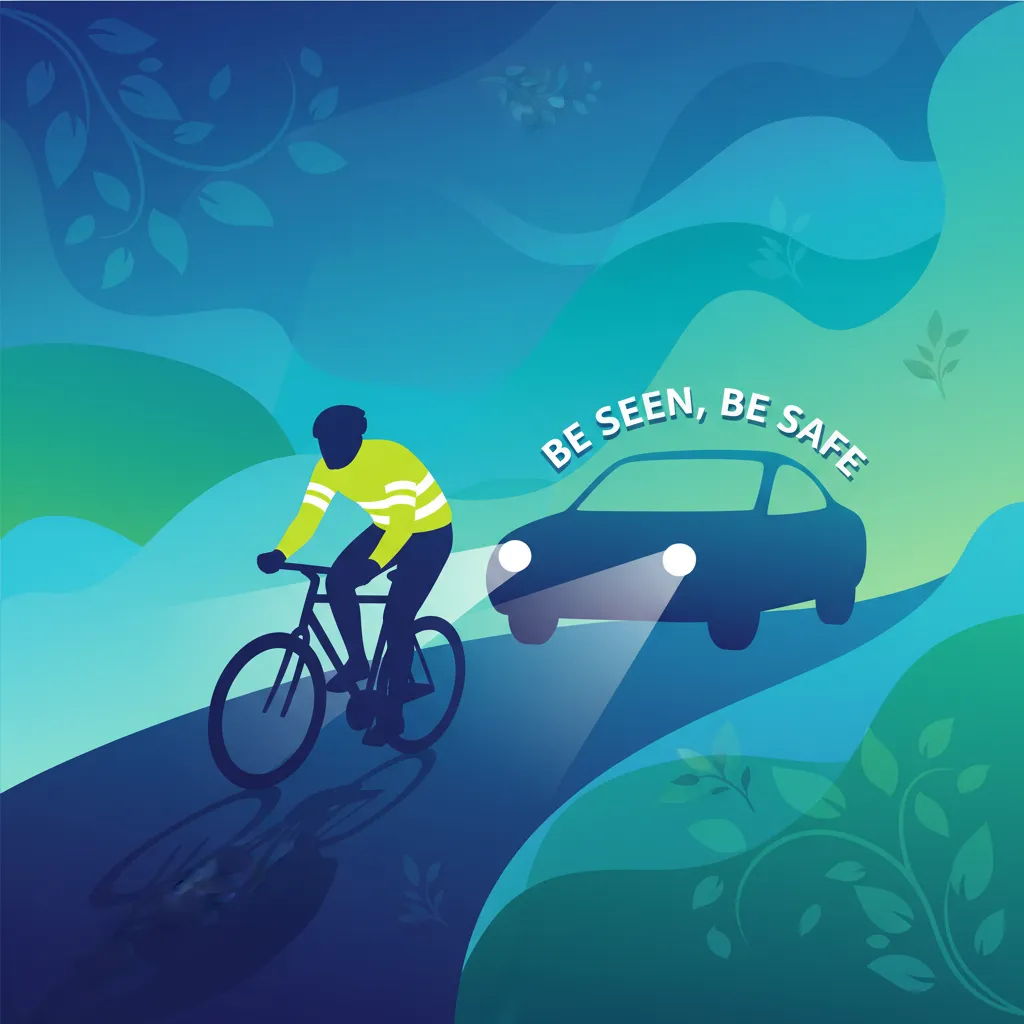
Visibility is arguably one of the most crucial factors for the safety of Category AM (moped) riders in Sweden. As a moped rider, you are a vulnerable road user, and your ability to be seen by other drivers directly impacts their reaction time and, ultimately, your safety. This lesson delves into proactive strategies that go beyond basic lighting requirements, focusing on how you can consciously enhance your presence on the road through high-visibility clothing, reflective gear, and intelligent lane positioning. By making yourself more noticeable, you significantly reduce the risk of collisions and ensure a safer riding experience as part of your Swedish Driving License Theory Course – Category AM (Moped).
Moped riders, due to their smaller size and lower profile compared to cars, can often be overlooked in traffic. This vulnerability necessitates a proactive approach to being seen. Other road users, especially drivers of larger vehicles, rely on visual cues to detect and anticipate the presence of other road users. When a moped rider is highly visible, drivers have more time to react, make necessary adjustments, and avoid potential hazards.
Enhanced visibility directly translates to increased safety. A rider who is easily spotted reduces the cognitive load on other drivers, allowing them to process the traffic situation more efficiently. This is especially vital in complex traffic scenarios, at intersections, during lane changes, or when riding in low-light conditions. Being seen earlier can prevent right-of-way violations, reduce the chance of being cut off, and overall foster a safer traffic environment for everyone.
Human visual perception is complex. Factors like contrast, colour, brightness, and movement all influence how quickly and accurately a driver detects another road user. When a moped rider blends into the background, a driver's detection time increases, reducing their available reaction time. This delay can have severe consequences, as even a fraction of a second can be the difference between avoiding an accident and being involved in one. By actively making yourself stand out, you are essentially "buying" precious milliseconds of reaction time for other road users.
High-visibility (Hi-Vis) clothing and reflective gear are your primary tools for increasing conspicuity on the road. These materials are designed to make you stand out against the often dull or distracting backdrop of the traffic environment, both during the day and at night.
It's crucial to understand the difference between fluorescent and retro-reflective materials, as each serves a distinct purpose under different lighting conditions.
Fluorescent materials, such as neon yellow, orange, or green, are particularly effective in daylight and twilight conditions. They absorb ultraviolet light from the sun and re-emit it as visible light, making them appear brighter and more vivid than ordinary colours. This creates a strong contrast against typical backgrounds like asphalt, trees, or buildings, significantly improving detection distances during the day. However, fluorescent colours are not effective in darkness without an external light source, as they do not generate light on their own.
Retro-reflective materials work differently. They are engineered with microscopic glass beads or prisms that reflect light directly back to its source, rather than scattering it. This means that when a vehicle's headlights illuminate a retro-reflective surface, the material appears to glow brightly to the driver of that vehicle. This "cat's eye" effect is incredibly powerful for increasing visibility at night, in tunnels, or in other low-light situations. Retro-reflective materials must meet specific quality standards, such as EN 1150/1151, to ensure their effectiveness.
To achieve optimal visibility, moped riders should integrate both fluorescent and retro-reflective elements into their riding attire.
The core of your visibility strategy should be a high-visibility jacket, vest, or trousers. Ideally, these garments should be a "combination garment," featuring both fluorescent colours for daytime and certified retro-reflective strips for night-time use. A brightly coloured vest worn over your regular riding jacket is an excellent and easily adaptable option. This ensures that a large portion of your body is highly visible from various angles.
The effectiveness of reflective elements depends on their quality and placement. Ensure that any reflective strips or panels on your clothing are certified according to Swedish or European standards (EN 1150/1151). These strips should be strategically placed on your torso, arms, and back to provide visibility from the front, sides, and rear. The wider the strips and the larger the total reflective surface area, the better your chances of being seen.
Beyond your main garments, reflective accessories provide crucial redundancy and ensure that parts of your body remain visible even if your main clothing is obscured.
Your helmet is a key area for reflective elements because it is often the highest point of a moped rider. Many modern helmets come with integrated reflective panels or stickers. If yours doesn't, consider adding certified reflective tape to the front, sides, and rear of your helmet. This ensures that your head is visible, even if your body is momentarily hidden by a vehicle or obstruction.
Hands and feet are often in motion, making reflective elements on gloves and footwear particularly effective in catching a driver's eye. Reflective strips on the back of your gloves and on the toe and heel areas of your boots or shoes can significantly increase your conspicuity. This moving reflection can alert drivers to your presence, especially when you are signalling or braking.
While high-visibility gear is paramount, it is only one part of the equation. Your positioning on the road is an equally powerful tool for ensuring you are seen by other road users and avoiding dangerous blind spots.
A blind spot is an area around a vehicle that cannot be seen by the driver through mirrors or direct line of sight. For moped riders, falling into a driver's blind spot is extremely dangerous, as it renders all your high-visibility efforts useless. Your goal should always be to position yourself where drivers can see you, either directly or in their mirrors.
On single-lane roads, it's a common misconception that riding as far to the right as possible, hugging the curb, is the safest approach. While you should generally keep to the right, riding too close to the very edge can actually place you in the blind spot of a vehicle preparing to turn right or in the "shoulder-line" blind spot of larger vehicles. Instead, aim to position yourself about 0.5 to 1 meter from the right edge of the lane. This placement allows you to be visible in the mirrors of vehicles in front of or behind you, while also providing a buffer zone from roadside hazards.
In multi-lane traffic, strategic positioning becomes even more critical. If you are in the rightmost lane, maintain a visible position within it, similar to single-lane roads. Avoid weaving between lanes or riding directly alongside large vehicles. At intersections, make eye contact with drivers whenever possible and position yourself to be clearly seen by drivers turning across your path. Often, moving slightly to the left within your lane can make you more visible to drivers approaching from cross streets or those attempting to turn left.
Trucks, buses, and vans have significantly larger blind spots than passenger cars. Never assume a driver of a large vehicle has seen you, especially when you are beside or slightly behind them. Maintain a generous distance and avoid riding in their immediate vicinity for extended periods. If you must pass a large vehicle, do so quickly and efficiently, ensuring you are visible in their mirrors before and after the manoeuvre.
Adhering to legal requirements and following recommended guidelines is fundamental to moped safety in Sweden. These regulations are in place to ensure a basic level of safety for all road users.
According to the Swedish Traffic Ordinance, Trafikförordning (RVV 1998) § 18, it is mandatory for "persons on a bicycle, moped, or motorcycle to wear clothing or equipment with reflective elements when operating the vehicle in reduced visibility." This means that during night-time, dusk, dawn, or in adverse weather like fog or heavy rain, your reflective gear is not just a recommendation—it's a legal requirement. Failure to comply can result in fines and increased risk.
While reflective elements are legally mandated in reduced visibility, Transportstyrelsen (the Swedish Transport Agency) strongly recommends the use of fluorescent (high-visibility) clothing during daylight hours as well. Although not a legal requirement, this guidance promotes best-practice safety. Fluorescent colours dramatically increase your contrast against the environment, leading to earlier detection by other drivers and a reduction in reaction time.
Always remember: fluorescent colours for day, retro-reflective materials for night and low light. For optimal safety, a combination of both in a single garment is best.
The effectiveness of reflective materials is crucial, which is why Swedish law references European standards. Reflective material used on personal apparel for enhanced visibility must meet performance class "B" of the EN 1150/1151 standard. For vehicle-mounted reflective elements, class "A" is often specified. When purchasing high-visibility clothing or accessories, always check for these certifications to ensure you are buying products that offer genuine protection. Non-certified reflective tapes or materials may offer significantly less retro-reflectivity and could provide a false sense of security.
Visibility strategies complement, but do not replace, your moped's mandatory lighting system. You should always ensure your moped's lights are fully functional. This includes:
Properly maintained and functioning lights, combined with your high-visibility clothing, create a redundant system for detection, ensuring you are seen even if one component fails.
The effectiveness of different visibility strategies can change dramatically depending on environmental conditions. A smart rider adjusts their approach.
Adverse weather conditions significantly reduce visibility for all road users.
These are critical times when visibility challenges transition.
Different road environments present unique visibility challenges.
Understanding common pitfalls can help you avoid them and maintain a high level of safety.
Failing to make yourself adequately visible can lead to severe consequences:
Ensuring your visibility is a continuous practice that integrates with many other aspects of safe moped riding. It builds directly upon your understanding of lane usage and protective equipment.
Lesson content overview
Explore all units and lessons included in this driving theory course.
Explore search topics learners often look for when studying Visibility Strategies in Traffic (High-Visibility Clothing). These topics reflect common questions about road rules, driving situations, safety guidance, and lesson level theory preparation for learners in Sweden.
Browse additional driving theory lessons that cover connected traffic rules, road signs, and common driving situations related to this topic. Improve your understanding of how different rules interact across everyday traffic scenarios.
Learn essential strategies to increase your visibility as a moped rider in Sweden. This lesson covers the importance of high-visibility clothing, reflective gear, and effective lane positioning to ensure you are seen by other road users.
This lesson provides essential strategies for riding safely at night and during twilight hours. It covers the correct use of headlights to maximize visibility without dazzling other drivers and emphasizes the need to reduce speed to compensate for shorter sight distances. The content also highlights the importance of wearing reflective gear to be seen by others.
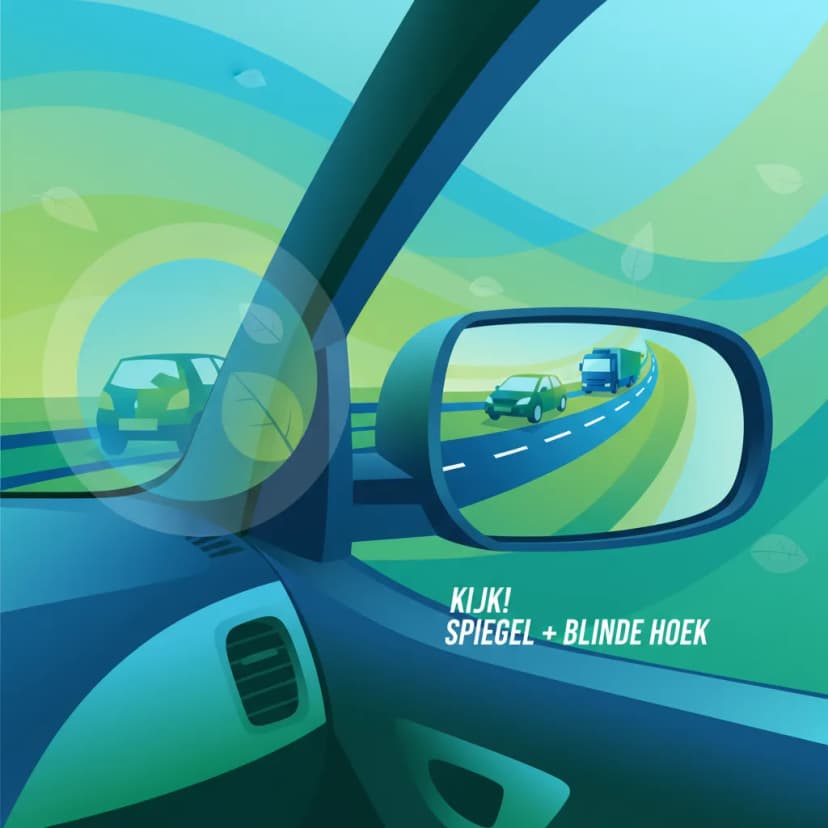
This lesson emphasizes the importance of a comprehensive visual scanning routine that includes regular mirror checks and mandatory head checks (shoulder checks) to cover blind spots. It explains that mirrors alone are not sufficient and that a physical turn of the head is required before any lateral movement. This habit is fundamental to preventing collisions during lane changes, merging, or turning.
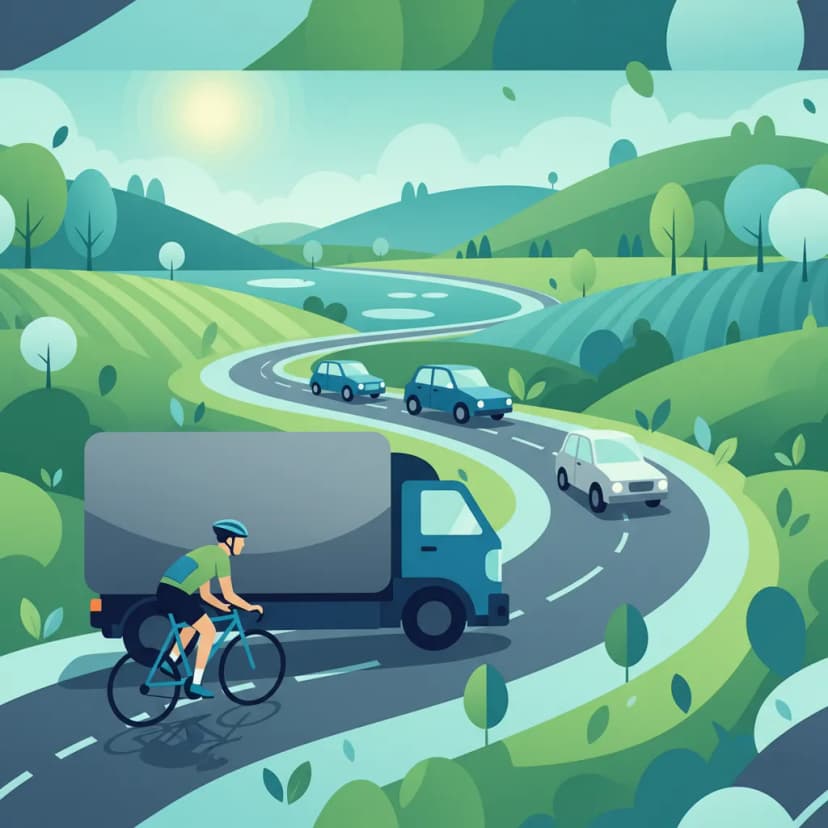
This lesson focuses on the specific challenges mopeds face when interacting with cars and heavy vehicles. It highlights the significant blind spots (or 'no-zones') around trucks and buses and teaches riders how to position themselves to remain visible. The content also covers the dangers of wind turbulence when near large vehicles and the importance of maintaining a generous space cushion.
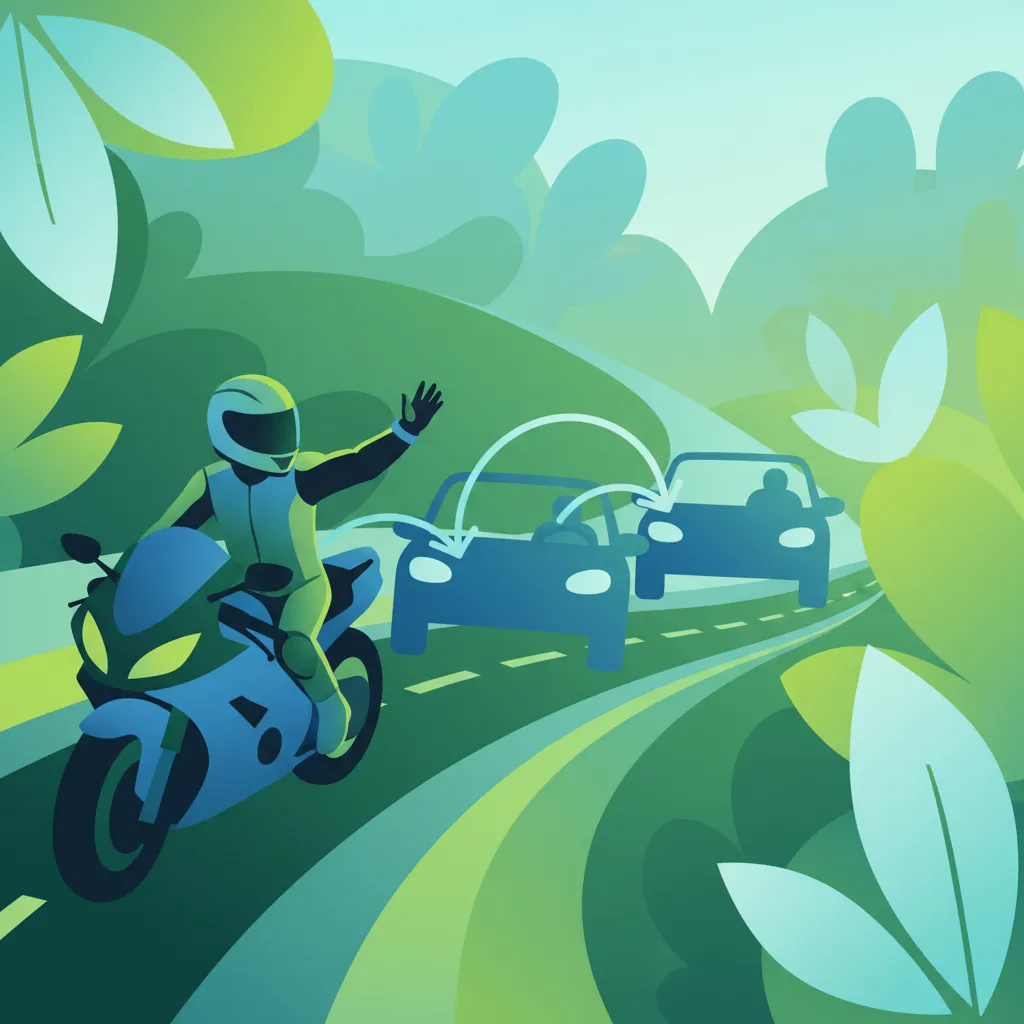
This lesson focuses on strategies to make yourself more visible to other road users, a critical factor in motorcycle safety. You will learn how to use lane positioning strategically to stay out of other drivers' blind spots and to maximize your own line of sight through corners and intersections. The content also covers the effectiveness of high-visibility and reflective clothing, as well as the correct use of lights to ensure you are seen in all conditions.

This lesson goes beyond mechanical signals to cover the subtle art of non-verbal communication in traffic. It highlights the importance of making eye contact with drivers to ensure you have been seen before making a move. The content also reviews standard hand signals as a backup to electronic signals and discusses how clear, confident body language can make a rider's intentions more predictable.
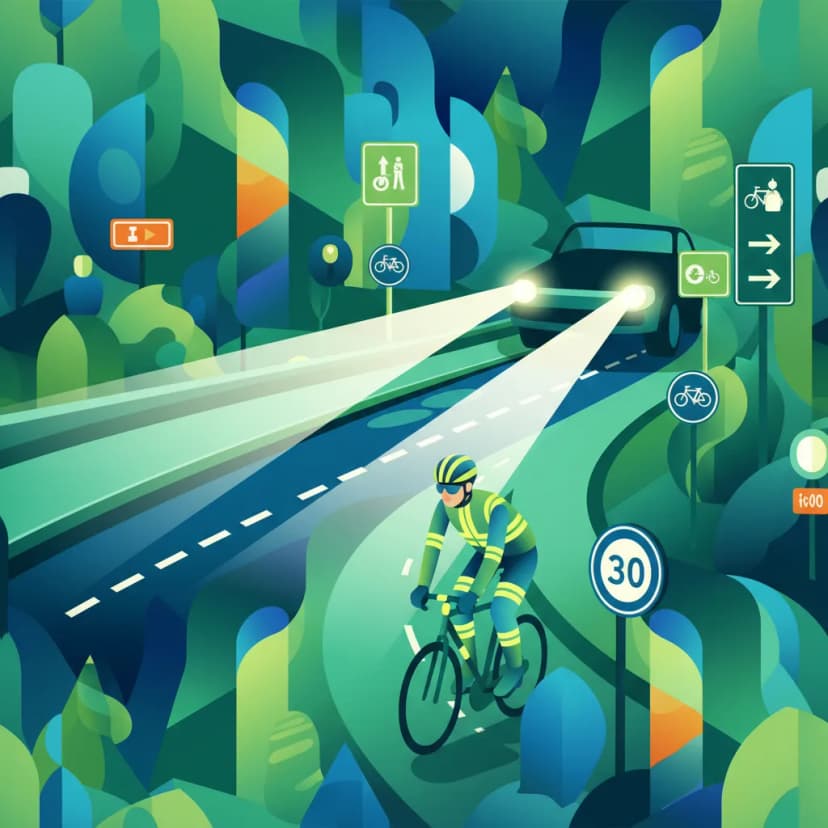
This lesson details the legal requirements for moped lighting in Sweden and provides best practices for riding at night or in low-light conditions. It explains the correct use of high and low beam headlights, the importance of a functioning tail light, and the role of reflectors in being seen. The goal is to ensure the rider is as visible as possible to others and can adequately illuminate the road ahead.
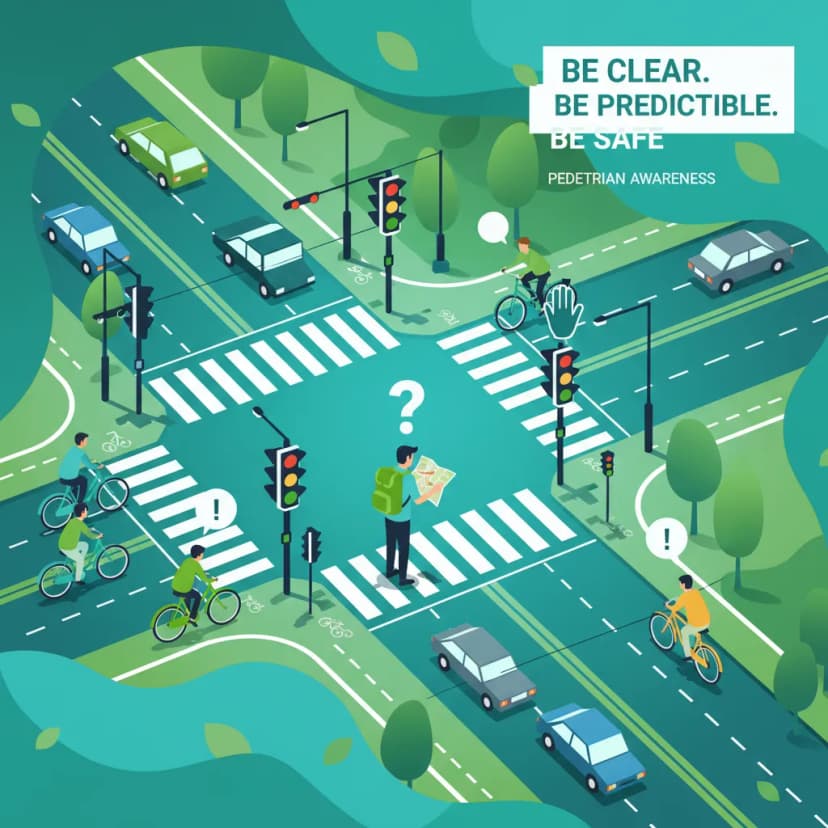
This lesson is dedicated to pedestrian safety, teaching riders to be constantly aware of people on foot, especially in busy urban environments. It reinforces the absolute duty to yield at marked crossings and encourages a cautious approach in areas like schools and shopping districts. The content stresses anticipating unpredictable actions, particularly from children or distracted pedestrians.
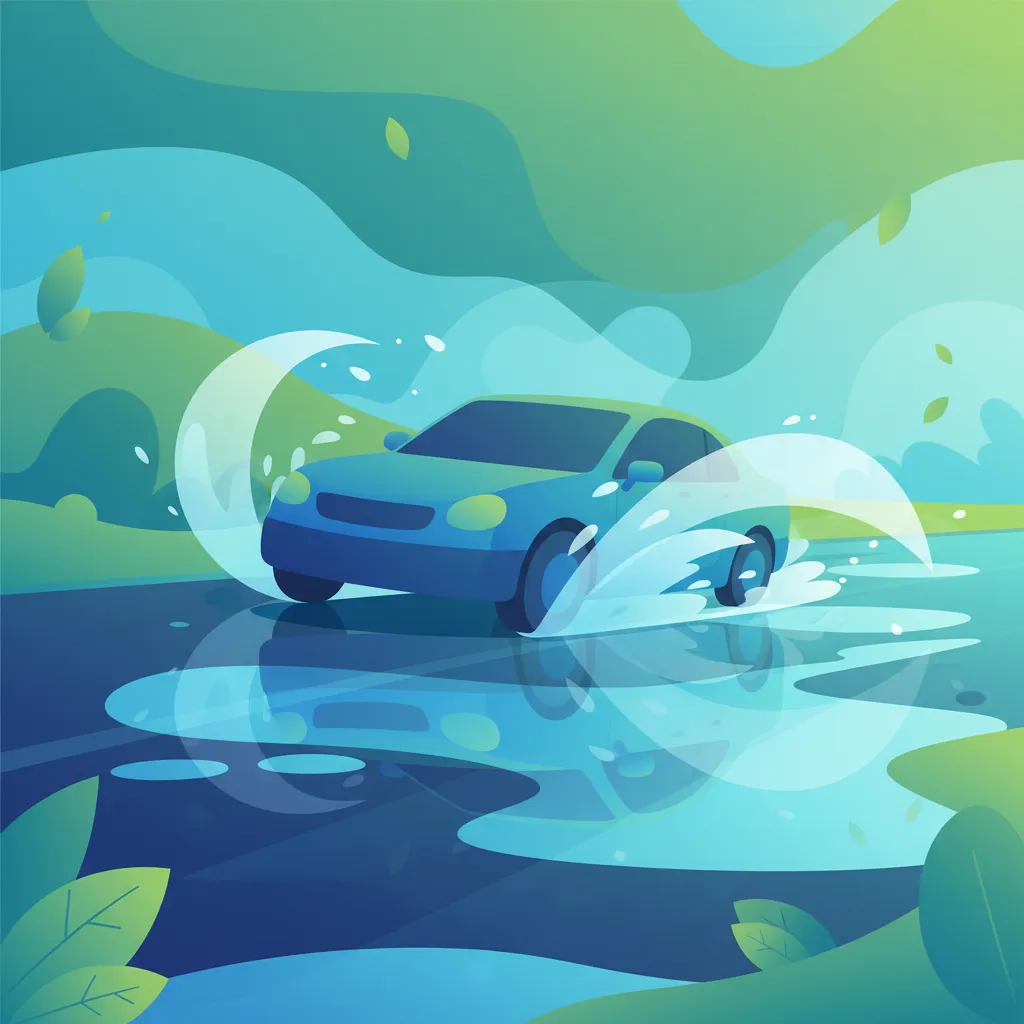
This lesson details the specific hazards associated with riding on wet roads, including significantly increased stopping distances and the risk of aquaplaning. It explains how to recognize conditions where aquaplaning is likely and the importance of reducing speed. Riders will learn to use smoother throttle, braking, and steering inputs to maintain traction and control.
This lesson delves into the dynamics of cornering on a two-wheeled vehicle, introducing the essential technique of counter-steering to initiate turns efficiently. It explains the importance of choosing a proper line, managing speed before the turn, and looking through the corner to the exit. The content also provides guidance on how to recognize and correct for a loss of traction or a skid.

This lesson focuses on developing the fine control needed for low-speed maneuvering, a common challenge in urban environments. It covers techniques for making tight turns, such as U-turns, by using a combination of clutch, throttle, and rear brake control. The goal is to build the rider's skill and confidence in handling the moped in parking lots, heavy traffic, and other confined areas.
Explore how strategic road positioning and defensive riding techniques contribute to moped rider safety. Understand how to avoid blind spots and enhance your presence on the road, complementing visibility measures.
This lesson delves into the dynamics of cornering on a two-wheeled vehicle, introducing the essential technique of counter-steering to initiate turns efficiently. It explains the importance of choosing a proper line, managing speed before the turn, and looking through the corner to the exit. The content also provides guidance on how to recognize and correct for a loss of traction or a skid.
This lesson explores the critical relationship between the rider's body and the moped's stability. It explains how to maintain balance using correct posture and weight distribution for different maneuvers. The content covers basic steering inputs and how body positioning, such as leaning into turns, directly influences the vehicle's handling and responsiveness.
This lesson focuses on developing the fine control needed for low-speed maneuvering, a common challenge in urban environments. It covers techniques for making tight turns, such as U-turns, by using a combination of clutch, throttle, and rear brake control. The goal is to build the rider's skill and confidence in handling the moped in parking lots, heavy traffic, and other confined areas.
This lesson details the specific hazards associated with riding on wet roads, including significantly increased stopping distances and the risk of aquaplaning. It explains how to recognize conditions where aquaplaning is likely and the importance of reducing speed. Riders will learn to use smoother throttle, braking, and steering inputs to maintain traction and control.
This lesson provides a detailed guide to using a moped's braking system effectively and safely. It explains the different roles of the front and rear brakes and the concept of balanced braking to maximize stopping power without losing traction. Learners will understand techniques for both normal, controlled stops and emergency braking situations, including how to manage weight transfer.
This lesson teaches the art of smooth throttle control, which is essential for predictable and safe riding. It explains how to apply gradual acceleration to seamlessly merge with traffic and maintain traction, especially on loose or wet surfaces. The goal is to develop a refined feel for the engine's response, allowing for precise speed adjustments in any situation.
This lesson addresses the severe dangers of riding a moped in snow and icy conditions. It explains how to identify potential hazards like black ice and emphasizes that avoiding riding in such conditions is the safest strategy. For situations where it cannot be avoided, it provides advice on extremely gentle control inputs and vehicle preparation.
This lesson addresses the challenge of riding in windy conditions, which can seriously affect the stability of a lightweight moped. It explains how to anticipate gusts, especially when passing large vehicles or riding in exposed areas. Techniques such as adjusting body position and applying gentle counter-steering pressure to maintain a steady line are covered.
This lesson addresses the often-overlooked danger of rider fatigue, which can impair judgment and reaction time as much as alcohol. It provides strategies for managing fatigue, including maintaining a comfortable and ergonomic riding posture, staying hydrated, and taking frequent breaks on longer journeys. The goal is to ensure the rider remains physically and mentally alert at all times.
This lesson goes beyond mechanical signals to cover the subtle art of non-verbal communication in traffic. It highlights the importance of making eye contact with drivers to ensure you have been seen before making a move. The content also reviews standard hand signals as a backup to electronic signals and discusses how clear, confident body language can make a rider's intentions more predictable.
Find clear answers to common questions learners have about Visibility Strategies in Traffic (High-Visibility Clothing). Learn how the lesson is structured, which driving theory objectives it supports, and how it fits into the overall learning path of units and curriculum progression in Sweden. These explanations help you understand key concepts, lesson flow, and exam focused study goals.
In Sweden, traffic can be dense and visibility can be challenging, especially during twilight, night, or poor weather. High-visibility clothing, often fluorescent and with reflective strips, makes you much easier for drivers of cars, trucks, and buses to spot, significantly reducing the risk of them not seeing you and causing an accident. It's a key defensive riding strategy.
For Category AM riders, we recommend fluorescent jackets or vests in yellow or orange, which are highly visible during daylight. For night and low-light conditions, gear with reflective panels or strips on the front, back, and sides is crucial. Helmets should also ideally be brightly coloured or have reflective elements. Consider reflective armbands or leg bands as well.
Choosing the correct lane position is vital. Riding too close to the edge of the lane might make you harder to see or encourage drivers to try squeezing past unsafely. Riding slightly further into the lane (without obstructing traffic) can make you more visible to oncoming traffic and drivers in adjacent lanes, and ensures you have space to maneuver if needed.
Yes, the Swedish theory exam for Category AM includes questions related to hazard perception and safe riding practices. These often involve scenarios where a rider's visibility is a key factor, testing your understanding of how to make yourself seen, especially in challenging conditions or when interacting with larger vehicles.
While fluorescent colours are best for daylight, reflective elements are essential for all times when visibility might be reduced, including dawn, dusk, and even on overcast days where light levels can drop unexpectedly. They also make you more visible to headlights from other vehicles at night. It's always best to have both.