Welcome to the lesson on Swedish Information Signs (Informationsskyltar) for Category AM moped riders. Understanding these signs is crucial for efficient navigation and finding essential services. This lesson builds on your knowledge of basic road signs and prepares you for interpreting directional and service-related information on Swedish roads, a key component of your theory exam.
Navigating the roads safely and efficiently as a moped rider in Sweden requires a comprehensive understanding of all traffic signs. Among the most crucial are information signs, known in Swedish as Informationsskyltar. Unlike regulatory signs that command specific actions or warning signs that alert to hazards, information signs provide neutral guidance. They equip you with the data necessary for informed decision-making, helping you plan your route, locate essential services, and understand lane designations.
This lesson, part of your Swedish Driving License Theory Course – Category AM (Moped), will delve deep into the function and interpretation of these vital signs. By mastering them, you can enhance your route planning, ensure legal compliance, and contribute to safer, smoother journeys. Misinterpreting or ignoring information signs can lead to confusion, unnecessary delays, or even inadvertent violations of underlying traffic regulations.
Information signs serve as the road's quiet guides, offering factual details without imposing direct legal mandates on your actions. Their primary role is to improve situational awareness, reduce the cognitive load on drivers, and promote an efficient flow of traffic. This guidance is essential for moped riders, who often share roads with faster vehicles and need precise information to ensure their safety and adherence to specific moped regulations.
The underlying logic behind these signs is multi-faceted. Firstly, accurate navigation, facilitated by clear information, helps moped riders avoid sudden maneuvers or hesitation, significantly reducing the risk of collisions. Secondly, clear guidance to services like fuel stations or parking areas prevents unnecessary detours, traffic congestion, and potential breakdowns. Finally, while largely informational, some signs, such as those designating moped lanes, complement regulatory rules on lane usage, indirectly creating legal expectations that riders must meet.
For those operating Category AM mopeds, information signs are indispensable tools for everyday riding. They offer crucial non-regulatory guidance that directly impacts route planning, access to necessary services, and adherence to specific lane usage rules. Understanding these signs helps you avoid potential pitfalls and ensures a more confident and compliant riding experience.
Ignoring or misinterpreting informational signage can have serious consequences. For instance, misjudging distances to destinations could lead to missed turns or sudden lane changes, which are dangerous on any road, especially for mopeds. Similarly, misunderstanding lane designation signs could result in illegal lane usage, fines, or even collisions with other road users. Information signs are a bridge between mandatory rules and the practical realities of navigating Sweden's diverse road network.
The Swedish road sign system, including Informationsskyltar, operates on several core principles designed to ensure clarity and effectiveness for all road users, including moped riders.
Information signs are unique because they convey factual data without commanding a specific legal action. They provide situational awareness, allowing you to make voluntary decisions. For example, a sign indicating a rest area ahead gives you the option to stop, but it doesn't force you to. While ignoring such a sign might lead to inefficiency (like missing a convenient stop), it typically doesn't incur a direct penalty unless your subsequent actions violate other regulations.
It is common for an informational sign to reference or clarify a regulatory sign. For instance, a green sign indicating a "Moped lane" complements an underlying regulatory rule that permits mopeds to use that specific lane. This ensures consistency between mandatory rules and their practical, informational context. Misreading this relationship can inadvertently lead to a violation of the primary regulatory rule.
For signs to be effective, they must be easily seen and read. This means they are designed to be placed, illuminated, and maintained to ensure legibility under various normal conditions. This principle ensures that you can obtain critical information precisely when you need it. While poor visibility might be a mitigating factor in a violation claim, you are still expected to adjust your speed and position to ensure you can read and react to signs.
The consistent placement of signs, such as distance signs appearing on the right side of the road or service signs positioned clearly before junctions, builds driver expectation. This predictability reduces surprise and reaction time, making navigation smoother and safer. Abruptly placed or poorly visible signs, conversely, increase your cognitive load and the risk of making an error.
When multiple signs appear in proximity, the most specific or local information generally takes precedence over more general guidance. This hierarchy prevents conflicts and confusion. As a moped rider, you must quickly identify which sign is most relevant to your immediate route segment to make appropriate decisions. Always remember that regulatory signs (e.g., speed limits, prohibitions) always take precedence over informational signs if there is any conflict.
Swedish information signs are categorized by their primary function, each using distinct colours and symbols to convey specific types of guidance. Understanding these categories is fundamental for safe moped operation.
These signs are typically rectangular or square and display numerical distances in kilometres to various locations. They are vital for planning your journey, estimating travel times, and anticipating upcoming turns or exits.
For moped riders, these signs are crucial for gauging remaining travel distance, planning necessary fuel stops, and anticipating upcoming intersections or turn-offs. They allow for smooth deceleration and lane changes well in advance.
While not regulatory, the information provided by distance signs must influence your driving behaviour, especially when planning overtakes or lane changes. Sudden, last-minute lane changes to "catch up" with a missed exit, for example, are prohibited under Trafikförordningen (1998:1276) § 10, which governs safe maneuvering. Always ensure you have ample time and space to react to the indicated distances.
A common mistake is assuming the distance shown includes the length of an upcoming junction or ramp; the distance typically refers to the main destination. Another error is misreading "km" as "m" (meters), which can lead to premature or delayed reactions.
These blue rectangular signs with white numerals are navigational beacons, helping you stay on track for your intended journey.
Route number signs confirm that you are traveling on the correct main road, assisting you in following your planned itinerary. They are especially useful on longer journeys or when passing through complex interchanges where multiple routes converge.
While informational, staying on the indicated route is expected unless other signs direct you otherwise. Deviating from an intended route without a justified reason, especially if it leads to unsafe or unexpected maneuvers, could be considered reckless.
A frequent misconception is believing that a route number sign also indicates a specific speed limit. This is incorrect; route numbers only identify the road and do not convey speed restrictions. Always look for separate speed limit signs.
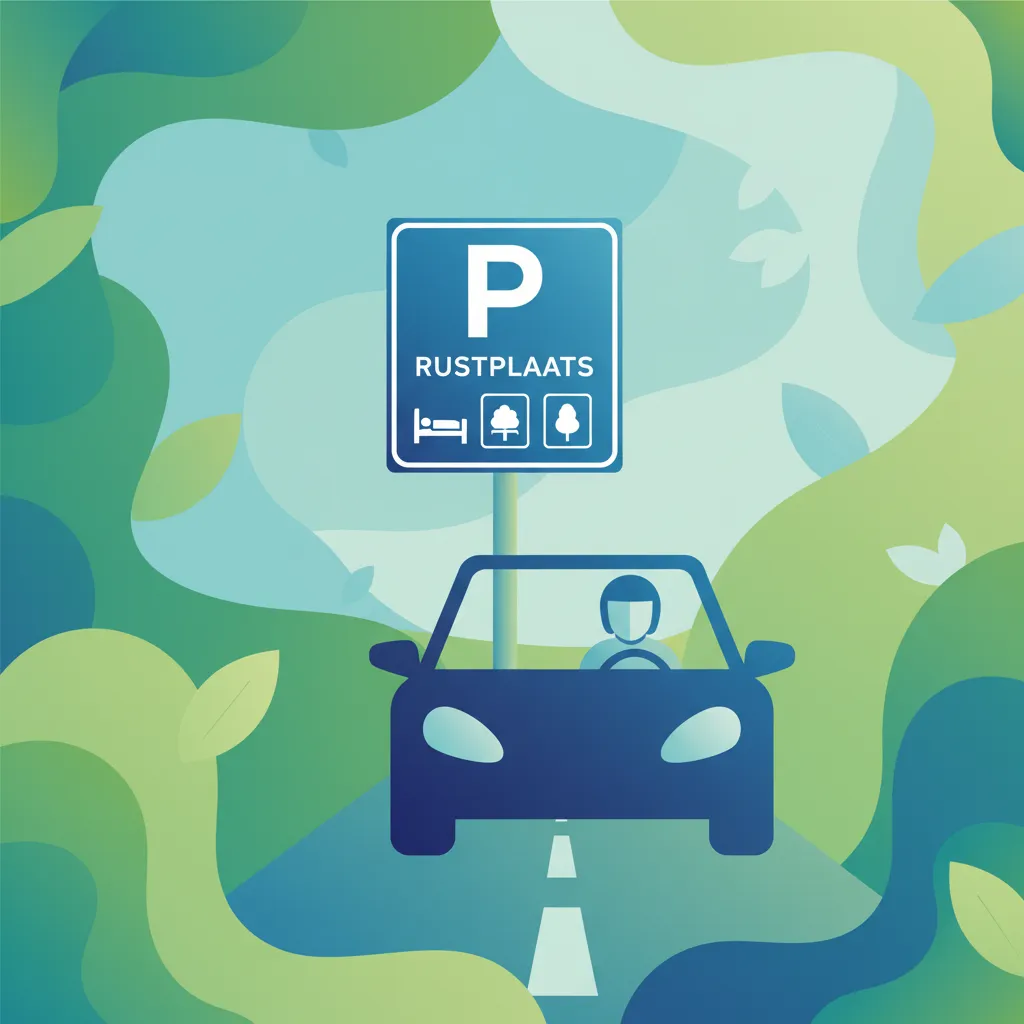
Service signs are blue square or rectangular signs featuring pictograms that guide you to essential amenities. They are crucial for maintaining your moped and your well-being on longer rides.
These signs allow you to locate critical services like fuel, rest areas, and parking without needing to unexpectedly leave the road or make sudden diversions. This is particularly important for mopeds, which may have smaller fuel tanks and may need more frequent breaks.
While these signs are informational, responsible use is implied. For example, failing to stop at a required fuel stop when your tank is low could lead to a breakdown, indirectly violating traffic safety obligations such as Trafikförordningen § 30, which states that a vehicle must be in a safe condition to be driven. Always plan ahead using these signs.
Do not assume that every service indicated is open 24 hours a day. Also, pay close attention to any directional arrows accompanying the service sign, as they indicate the precise approach direction to the facility.
These distinctive green rectangular signs with white symbols are of paramount importance for moped riders, as they clarify where you are legally permitted to ride.
These signs clearly define which lanes a moped rider may legally occupy. This is especially critical on roads where the main carriageway might be too fast, congested, or otherwise unsuitable for mopeds. Using designated lanes enhances your safety by separating you from faster traffic.
According to Trafikförordningen §§ 3-9, mopeds must use designated lanes where such signs are present, unless specific actions like overtaking or making a turn require temporary deviation. Ignoring these signs can lead to fines and compromise safety.
A common error is riding in a bicycle-only lane when a separate moped lane exists, or mistakenly believing a green "M" lane is optional. Green lanes for mopeds are generally mandatory where provided, unless signs or road markings explicitly indicate otherwise.
Always check if a green moped lane sign indicates a combined lane with bicycles. If so, be extra vigilant for cyclists, especially when turning or merging, as they may have different speeds and maneuvering patterns.
Directional arrows, typically green signs with white arrows, are critical guides for navigating complex intersections, roundabouts, and turns.
These signs guide you through junctions, roundabouts, and complex intersections, preventing illegal turns and ensuring you stay on your intended route. They reduce hesitation and the risk of last-minute maneuvers.
When a directional arrow sign is present, it indicates the mandatory travel direction for the indicated route. If a directional arrow conflicts with a regulatory sign (e.g., a green "straight-ahead" arrow appears where there's also a red "No Straight Ahead" regulatory sign), the regulatory sign always takes precedence. However, if no contradictory regulatory sign is present, the arrow is binding.
A frequent error is treating a "straight-ahead" arrow as merely a recommendation, rather than a mandatory indication, especially when it marks the continuation of a specific route. Adherence to these arrows is essential for maintaining traffic flow and safety.
The effectiveness of information signs relies heavily on their placement and visibility. Specific regulations govern how and where these signs are installed in Sweden.
These guidelines ensure that you can see and read signs in sufficient time to react safely. Knowing these standards helps you anticipate where to look for critical information.
While non-compliant signs (e.g., poorly placed or obscured) might technically be deemed invalid under Trafikverket's sign installation standards, you are still expected to exercise reasonable care and adapt your driving. If a sign is missing or illegible, you must infer the correct action from surrounding context and other cues.
Do not assume that a missing or poorly visible sign negates your responsibility. Always be prepared to adapt your driving based on other contextual information and general traffic rules.
While information signs provide guidance rather than direct commands, they are inextricably linked to the broader legal framework of Swedish traffic law. Misinterpreting their relationship with regulatory signs can lead to violations.
It's crucial to distinguish between the nature of information signs and regulatory signs. Regulatory signs, often circular with red borders or blue backgrounds, impose direct legal obligations (e.g., speed limits, no entry, mandatory directions). Information signs, typically green or blue rectangles, offer factual data.
However, acting on informational guidance correctly is essential for safe driving and often supports compliance with underlying regulatory rules. For example:
Use Designated Moped Lanes Where Signposted (R2): On roads with a green "M" lane sign (or combined moped/cycle lanes), using this lane is mandatory for mopeds. This improves safety by separating slower mopeds from faster traffic. Riding on the main carriageway despite a clearly signposted moped lane is a violation of Trafikförordningen § 3, 5-2.
Interpret Service Signs for Planning, Not as Legal Obligations (R3): Service signs (fuel, parking, rest) are informational. While there's no direct penalty for not using a service, your planning must not lead to unsafe situations. For instance, running out of fuel on a busy road due to neglecting a fuel sign could be seen as operating an "unsafe vehicle" under Trafikförordningen § 30, which can incur a fine.
Respect Distance Signs for Safe Overtaking and Lane Changes (R4): When preparing for an exit or overtaking, noting distance signs allows for safe, gradual maneuvers. Abrupt lane changes at the last moment, often caused by misjudging distance, can be considered "reckless driving" or unsafe maneuvering under Trafikförordningen § 3, 4-1, leading to penalties.
No Reliance on Temporary Informational Signs After Their Removal (R5): Temporary signs, such as construction detours, hold legal authority only while they are displayed. Once removed, you must revert to following the permanent road layout and associated signs. Continuing to follow a removed detour can cause obstruction and dangerous situations.
When multiple signs are present, understanding their hierarchy is crucial for making correct decisions.
In essence, if a green directional arrow sign tells you to turn left, but a red circular regulatory sign explicitly says "No Left Turn," you must obey the regulatory sign. If there's no conflict, you follow the information sign.
Even experienced riders can sometimes misinterpret or ignore information signs, leading to unintended consequences. Be aware of these common pitfalls:
The effectiveness and interpretation of information signs can be significantly influenced by various external and internal factors. As a responsible moped rider, you must always adapt your approach.
The correct interpretation and application of information signs directly contribute to road safety for moped riders. This isn't just about avoiding fines; it's about minimizing risks for yourself and others.
Correct Interpretation → Safe Navigation:
Misinterpretation → Increased Risk:
Absence of Sign Visibility → Compensatory Behaviours:
Over-Reliance on Digital Navigation Ignoring Physical Signs → Legal Liability:
Studies by the Swedish Transport Administration (Trafikverket) consistently show that drivers who actively scan for and correctly interpret informational signs exhibit fewer near-miss events and demonstrate improved lane-keeping accuracy. The consistent design of the Swedish sign system, adhering to international standards, supports rapid processing of information, freeing up vital mental resources for hazard perception and reaction.
Understanding these terms is key to mastering informational signs in Sweden.
Let's look at a few common scenarios to solidify your understanding of information signs.
Setting: You are riding your moped on a two-lane rural road in clear weather. The speed limit is 80 km/h, and a sign indicates 30 km to the next major town. Your fuel gauge is low. Relevant Signs:
Setting: You are riding through a city centre street with moderate traffic and light rain. Relevant Signs:
Setting: You are approaching a roundabout at night. The signs are well-illuminated. Relevant Signs:
Setting: You are on a suburban road where construction is underway. Relevant Signs:
Understanding Informationsskyltar is a fundamental skill for any moped rider in Sweden. These signs, while not always legally binding in themselves, provide indispensable guidance that underpins safe and efficient road use.
By diligently applying the knowledge gained from this lesson, you will be well-equipped to navigate the Swedish road network with confidence, compliance, and safety, enhancing your experience as a Category AM moped rider.
Lesson content overview
Explore all units and lessons included in this driving theory course.
Explore search topics learners often look for when studying Information Signs (Informationsskyltar). These topics reflect common questions about road rules, driving situations, safety guidance, and lesson level theory preparation for learners in Sweden.
Browse additional driving theory lessons that cover connected traffic rules, road signs, and common driving situations related to this topic. Improve your understanding of how different rules interact across everyday traffic scenarios.
Understand how Swedish Information Signs (Informationsskyltar) help Category AM drivers navigate effectively. Learn to interpret signs for distances, route numbers, and available services to plan journeys safely and efficiently on Swedish roads.

This lesson explains how to read and use Swedish informational and directional signs for effective route planning and navigation. You will learn to follow signs for specific destinations, identify road numbers, and recognize indicators for services such as fuel stations and rest areas. For motorcyclists on long journeys, this knowledge is crucial for making timely decisions about lane changes, exits, and stops without causing disruption to traffic flow.
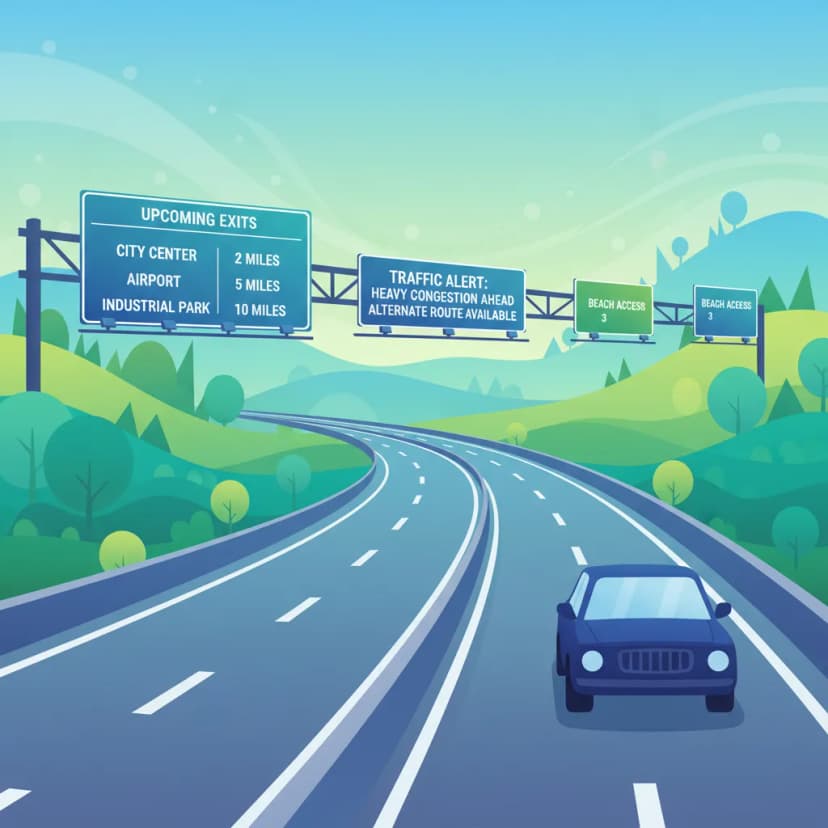
This lesson covers the extensive category of informational and directional signs that aid navigation throughout Sweden. You will learn to interpret signs for motorways, national roads, and local destinations, as well as symbols indicating services like gas stations, parking, and rest areas. Proper understanding of these signs allows for efficient route planning, reduces driver uncertainty, and contributes to smoother, safer traffic flow on all types of roads.
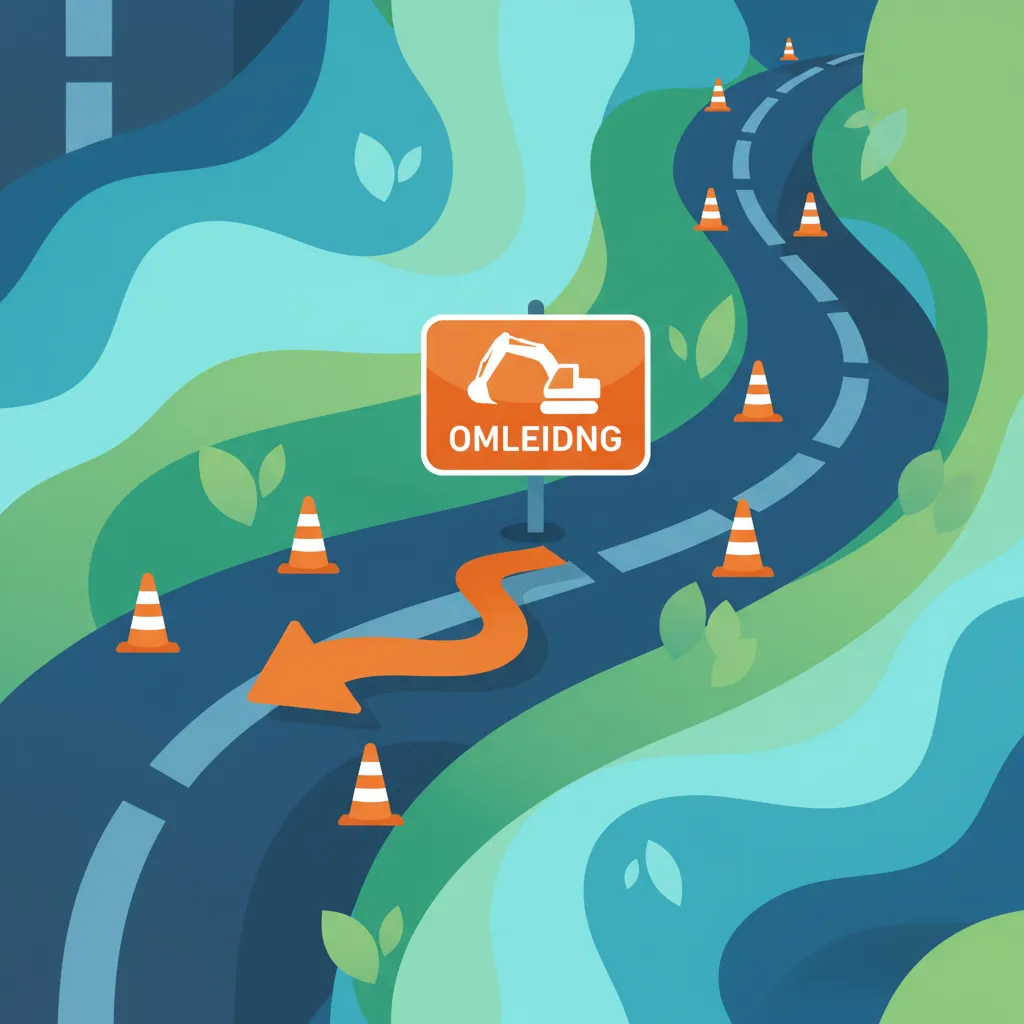
This lesson prepares riders for encountering roadworks, which can introduce temporary and often confusing changes to the road layout. It explains how to interpret the specific orange-colored signs used in these zones, including new speed limits, lane diversions, and warnings about surface hazards. The key takeaway is to reduce speed and increase vigilance when navigating through construction areas.
This lesson teaches riders to interpret warning signs (Varningsskyltar), which alert them to potential dangers on the road ahead. It covers a wide range of signs, including those for sharp curves, slippery surfaces, wildlife crossings, and upcoming roadworks. Understanding these triangular signs allows riders to anticipate hazards, adjust their speed and position proactively, and enhance their overall safety.
This lesson focuses on Swedish warning signs designed to alert drivers to potential dangers. You will study signs indicating sharp bends, slippery surfaces, animal crossings, and temporary hazards like road construction. Correctly interpreting these signs allows a motorcyclist to proactively adjust speed, lane position, and readiness to react, which is essential for maintaining control and safety, especially in adverse weather or on unfamiliar roads.
This lesson explores how the environment affects sign interpretation, contrasting the high density and visual complexity of urban settings with the sparser signage of rural areas. It teaches riders to manage visual clutter in cities and maintain focus over long distances on country roads. By understanding these contextual differences, riders can better anticipate rules and hazards regardless of their location.

This lesson covers the essential topic of communication in traffic using the vehicle's built-in signaling devices. You will learn the rules for using your turn indicators (körriktningsvisare) in good time before turning or changing lanes. The content also explains the proper use of hazard lights (varningsblinkers) in emergency situations and the very limited, specific circumstances in which using the horn (ljudsignal) is permitted to avert immediate danger.
This lesson focuses on Swedish warning signs (varningsmärken), designed to alert drivers to potential dangers ahead. You will study the meaning of triangular signs indicating hazards such as sharp bends, pedestrian crossings, risk of animals on the road, or temporary road work. The objective is to develop proactive driving habits by understanding how to anticipate risks and adapt speed and positioning appropriately when a warning sign is present.

This lesson explains the function and legal significance of various road markings (vägmarkeringar) in Sweden. You will learn the difference between broken lines that permit overtaking and solid lines that forbid it, as well as the meaning of stop lines, pedestrian crossings, and lane direction arrows. These markings work in conjunction with signs to organize traffic flow, separate lanes, and provide critical information directly on the road surface.

This lesson focuses on regulatory signs (Regulationsskyltar), which issue mandatory instructions and prohibitions that all road users must follow. It details common signs such as speed limits, stop and give way signs, and mandatory direction arrows. Special attention is given to signs directly affecting mopeds, like 'no moped' signs and those indicating designated moped lanes, ensuring riders can navigate legally and safely.
Explore the complete system of Swedish road signs for Category AM. This lesson provides an overview of regulatory signs (Regulationsskyltar), warning signs (Varningsskyltar), and information signs (Informationsskyltar) to ensure comprehensive understanding of traffic guidance.
This lesson covers the extensive category of informational and directional signs that aid navigation throughout Sweden. You will learn to interpret signs for motorways, national roads, and local destinations, as well as symbols indicating services like gas stations, parking, and rest areas. Proper understanding of these signs allows for efficient route planning, reduces driver uncertainty, and contributes to smoother, safer traffic flow on all types of roads.
This lesson explains how to read and use Swedish informational and directional signs for effective route planning and navigation. You will learn to follow signs for specific destinations, identify road numbers, and recognize indicators for services such as fuel stations and rest areas. For motorcyclists on long journeys, this knowledge is crucial for making timely decisions about lane changes, exits, and stops without causing disruption to traffic flow.
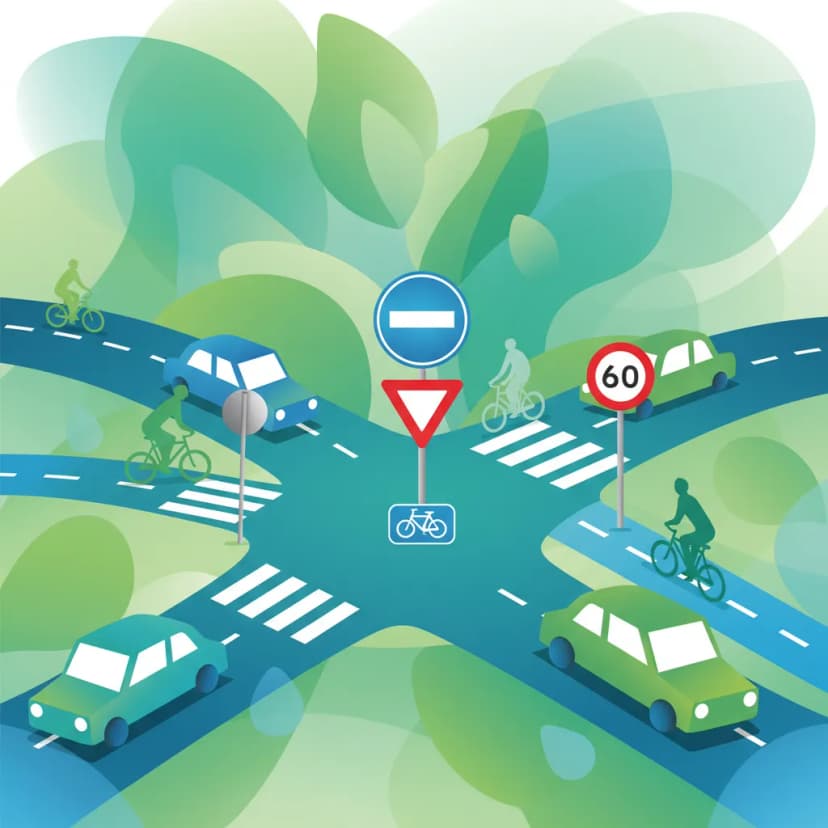
This lesson details the full range of Swedish regulatory signs, which dictate mandatory actions and prohibitions for all road users. You will learn to identify signs that establish speed limits, restrict access, prohibit overtaking, and define parking rules. Understanding these signs is critical for legal compliance and safe interaction with other traffic, as they form the basis of enforceable road law under the Trafikförordning regulations.
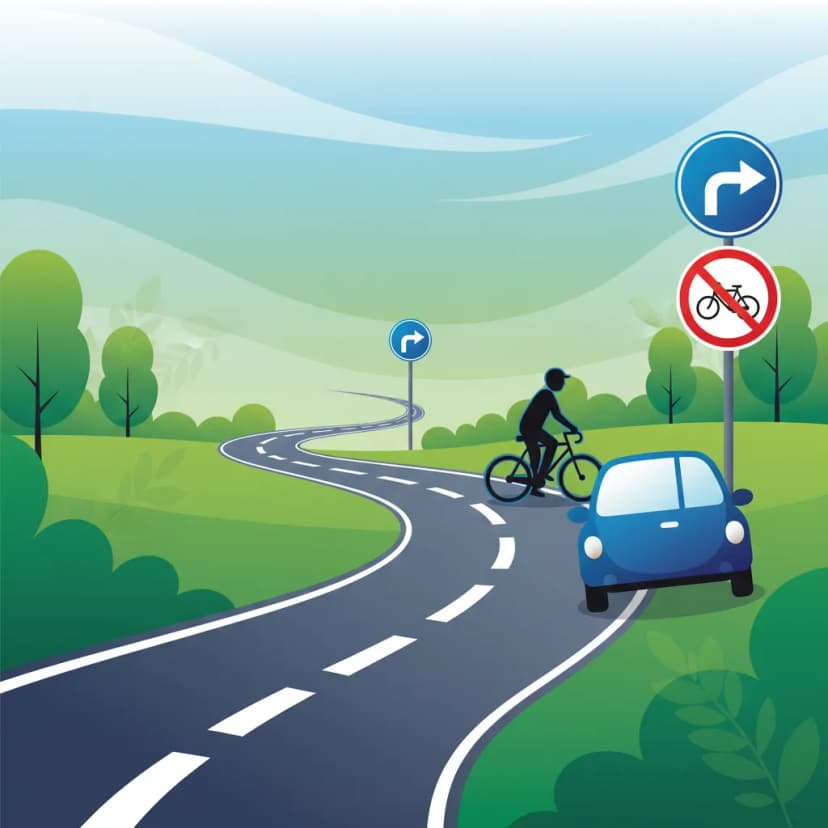
This lesson details the full range of Swedish regulatory signs, which establish legally enforceable rules for all road users. You will learn to interpret prohibitory signs (förbudsmärken) such as speed limits and no-entry signs, as well as mandatory signs (påbudsmärken) that dictate direction or lane usage. Understanding these signs is crucial as they directly regulate traffic flow, ensure safety at critical points, and carry legal consequences if ignored.
This lesson focuses on Swedish warning signs (varningsmärken), designed to alert drivers to potential dangers ahead. You will study the meaning of triangular signs indicating hazards such as sharp bends, pedestrian crossings, risk of animals on the road, or temporary road work. The objective is to develop proactive driving habits by understanding how to anticipate risks and adapt speed and positioning appropriately when a warning sign is present.
This lesson focuses on Swedish warning signs designed to alert drivers to potential dangers. You will study signs indicating sharp bends, slippery surfaces, animal crossings, and temporary hazards like road construction. Correctly interpreting these signs allows a motorcyclist to proactively adjust speed, lane position, and readiness to react, which is essential for maintaining control and safety, especially in adverse weather or on unfamiliar roads.
This lesson teaches riders to interpret warning signs (Varningsskyltar), which alert them to potential dangers on the road ahead. It covers a wide range of signs, including those for sharp curves, slippery surfaces, wildlife crossings, and upcoming roadworks. Understanding these triangular signs allows riders to anticipate hazards, adjust their speed and position proactively, and enhance their overall safety.
This lesson explains the function and legal significance of various road markings (vägmarkeringar) in Sweden. You will learn the difference between broken lines that permit overtaking and solid lines that forbid it, as well as the meaning of stop lines, pedestrian crossings, and lane direction arrows. These markings work in conjunction with signs to organize traffic flow, separate lanes, and provide critical information directly on the road surface.
This lesson covers the essential topic of communication in traffic using the vehicle's built-in signaling devices. You will learn the rules for using your turn indicators (körriktningsvisare) in good time before turning or changing lanes. The content also explains the proper use of hazard lights (varningsblinkers) in emergency situations and the very limited, specific circumstances in which using the horn (ljudsignal) is permitted to avert immediate danger.
This lesson focuses on regulatory signs (Regulationsskyltar), which issue mandatory instructions and prohibitions that all road users must follow. It details common signs such as speed limits, stop and give way signs, and mandatory direction arrows. Special attention is given to signs directly affecting mopeds, like 'no moped' signs and those indicating designated moped lanes, ensuring riders can navigate legally and safely.
Find clear answers to common questions learners have about Information Signs (Informationsskyltar). Learn how the lesson is structured, which driving theory objectives it supports, and how it fits into the overall learning path of units and curriculum progression in Sweden. These explanations help you understand key concepts, lesson flow, and exam focused study goals.
Information Signs (Informationsskyltar) primarily provide guidance for navigation, services, and points of interest. Unlike regulatory signs that command actions or warning signs that alert to hazards, informational signs offer helpful data to assist your journey and planning.
Yes, while many information signs are general, some signs specifically indicate routes or lanes designated for mopeds or shared use with bicycles. Recognizing these is crucial for correct lane positioning and route adherence as per Swedish traffic laws.
Information Signs are essential for route planning. They show route numbers, destinations, and distances, helping you stay on track. Signs for services like parking or fuel also allow you to plan stops efficiently, ensuring a smoother and safer ride.
Absolutely. The Swedish AM theory test includes questions designed to assess your understanding of various road signs, including Information Signs. Knowing their meaning is vital for answering questions correctly about navigation, route choices, and finding necessary facilities.
In Sweden, blue rectangular signs often serve as Information Signs. They can indicate destinations, route numbers, motorway exits, or the availability of services like parking, rest areas, or medical facilities. Their purpose is to guide and inform drivers.