
This lesson focuses on clear communication on the road using your vehicle's signalling devices. Understanding when and how to use your indicators, hazard lights, and horn is vital for preventing misunderstandings and ensuring safety for all road users in Sweden. It builds upon basic traffic rule knowledge and prepares you for common exam scenarios related to vehicle signals.

Learning to drive in Sweden for a Category B license involves more than just mastering vehicle control; it demands effective communication with other road users. Signalling with your vehicle's lights and horn is a fundamental aspect of this communication, ensuring safety, predictability, and compliance with the Trafikförordning (Swedish Road Traffic Ordinance). This lesson will provide a comprehensive guide to using your turn indicators, hazard lights, and horn correctly, preparing you for safe driving on Swedish roads.
Communication is paramount in traffic to prevent misunderstandings and reduce the risk of collisions. Your vehicle's signalling devices are designed to convey your intentions clearly to others, giving them sufficient time to react and adjust their driving.
Effective signalling is the primary method drivers use to communicate their intentions to other road users, including other drivers, cyclists, and pedestrians. By indicating your planned maneuvers in advance, you contribute to a smoother, safer, and more predictable traffic flow. The correct use of signals reduces cognitive load for all road users, as standardized conventions create a shared understanding of traffic situations. This not only enhances safety by giving others time to anticipate and respond but also fulfills specific legal obligations under Swedish law. Neglecting to signal, or signalling incorrectly, can lead to confusion, sudden braking, and an increased risk of accidents.
To ensure safe and effective communication, several core principles govern the use of vehicle signals:
Turn indicators, known as körriktningsvisare in Swedish, are essential electrical lighting devices located at the front and rear of your vehicle. They flash to signal your intended change of direction or lane.
Turn indicators are used whenever you intend to turn left, turn right, or change lanes on any road type. This includes:
The critical aspect is the timing: indicators must be activated before the start of the maneuver, providing other road users with sufficient time to understand your intentions and react safely.
The Swedish Trafikförordning (§ 13, points 1-3) clearly outlines the rules for using turn indicators:
Even experienced drivers can make mistakes with turn indicators. Be aware of these common errors:
Hazard lights, or varningsblinkers in Swedish, activate all four turn indicators simultaneously. Their purpose is to signal that your vehicle is a temporary obstruction or is experiencing an emergency, alerting other road users to exercise extreme caution.
Hazard lights are specifically for situations where your vehicle poses an unusual hazard to traffic. The primary scenarios include:
The Trafikförordning (§ 17) provides precise guidelines for hazard light usage:
Incorrect use of hazard lights can be confusing and dangerous. For example, activating them during a normal traffic jam, or when momentarily pulling over for a non-emergency stop, dilutes their meaning as an urgent warning. This can lead other drivers to become desensitized to their use, potentially ignoring them when a genuine emergency arises. Misusing hazard lights can also lead to fines and, more importantly, contribute to collisions due to miscommunication. Always ensure that if you are using hazard lights, it is because your vehicle genuinely poses an unusual risk to others.
The horn, or ljudsignal in Swedish, is an audible device designed to produce a loud, short sound. It serves as an additional warning when visual signals might be insufficient to avert immediate danger.
The horn is a critical safety device, but its use is tightly regulated to prevent noise pollution and ensure its effectiveness when truly needed. According to the Trafikförordning (§ 9, point 2), the horn may be used only to avoid an immediate danger to persons or property.
Examples of appropriate horn use include:
The key is "immediate danger." If the danger is not imminent or can be resolved through other means (e.g., braking, steering, or visual signals), the horn should not be used.
The horn is an emergency warning device, not a communication tool for minor frustrations or social interactions. Its purpose is solely to prevent immediate danger.
Beyond the "immediate danger" rule, specific restrictions apply to horn use in Sweden:
A geographic area defined by signage (often a yellow sign with a black outline of a town) where specific traffic rules apply, typically indicating denser population and increased pedestrian/cyclist activity.
The strict rules against unnecessary horn use are rooted in several important reasons:
The effectiveness of your signals can be significantly impacted by environmental factors, road types, and the presence of other road users. Always be prepared to adapt your signalling strategy.
Weather conditions like fog, heavy rain, or snowfall drastically reduce visibility, making your standard signals less effective. In such conditions:
The environment you are driving in also influences optimal signalling:
Vulnerable road users, such as pedestrians, cyclists, and motorcyclists, require extra caution and clear communication.
Adhering to signalling regulations is not just about safety; it's a legal obligation. Regular vehicle maintenance ensures your signals remain functional and compliant.
Swedish law, particularly the Trafikförordning, specifies technical standards for signalling devices:
Violations of signalling rules can carry significant consequences:
Understanding the rules is one thing; applying them effectively in dynamic traffic situations is another. Let's look at some practical scenarios and the underlying safety reasoning.
Here are a few scenarios illustrating correct signalling practices:
Scenario 1: Urban Right Turn at Night
Scenario 2: Highway Lane Change in Heavy Rain
Scenario 3: Vehicle Breakdown on Rural Road
Scenario 4: Cyclist in Blind Spot During Lane Change
The rules for signalling are not arbitrary; they are based on principles of human perception, reaction times, and vehicle dynamics:
Mastering signalling with lights and horn is a cornerstone of safe driving practice for your Swedish Category B driving license.
By consistently applying these principles, you will communicate clearly, drive predictably, and significantly contribute to road safety for everyone on Swedish roads.
Lesson content overview
Explore all units and lessons included in this driving theory course.
Explore search topics learners often look for when studying Signalling with Lights and Horn. These topics reflect common questions about road rules, driving situations, safety guidance, and lesson level theory preparation for learners in Sweden.
Browse additional driving theory lessons that cover connected traffic rules, road signs, and common driving situations related to this topic. Improve your understanding of how different rules interact across everyday traffic scenarios.
Explore advanced scenarios for using indicators, hazard lights, and horns beyond basic rules. Understand nuances of communication with other road users in complex Swedish traffic situations. Learn how to signal intentions precisely for safer driving.
This lesson provides a detailed explanation of the Swedish traffic signal system. You will learn the precise legal meaning of solid red, yellow, and green lights, as well as green arrows which permit turning when oncoming traffic is stopped. It also covers procedures for flashing yellow signals and what to do when traffic lights are out of order, emphasizing that standard priority rules like the right-hand rule then apply.
This lesson focuses on the unique challenges of driving in urban environments. You will learn techniques for anticipating the actions of vulnerable road users like pedestrians and cyclists, especially near crossings and bus stops. The content covers how to navigate narrow streets, one-way systems, and areas with heavy traffic, emphasizing the need for lower speeds, heightened awareness, and a defensive mindset.
This lesson provides detailed guidance on navigating complex traffic points such as signalized intersections, multi-lane roundabouts, and pedestrian crossings. You will learn the correct procedures for entering and exiting roundabouts, the specific rules for yielding to pedestrians and cyclists at designated crossings, and how to interpret complex traffic light signals. These skills are vital for safe urban and suburban riding, where interaction with vulnerable road users is frequent.
This lesson covers the correct interpretation and response to all forms of light and audible signals a motorcyclist will encounter. You will study the sequences of traffic lights, the rules for using turn indicators and hazard lights, and the legally permitted uses of the horn. Proper use of these signals is a fundamental aspect of safe riding, as it communicates your intentions clearly to other road users and helps prevent misunderstandings and collisions.
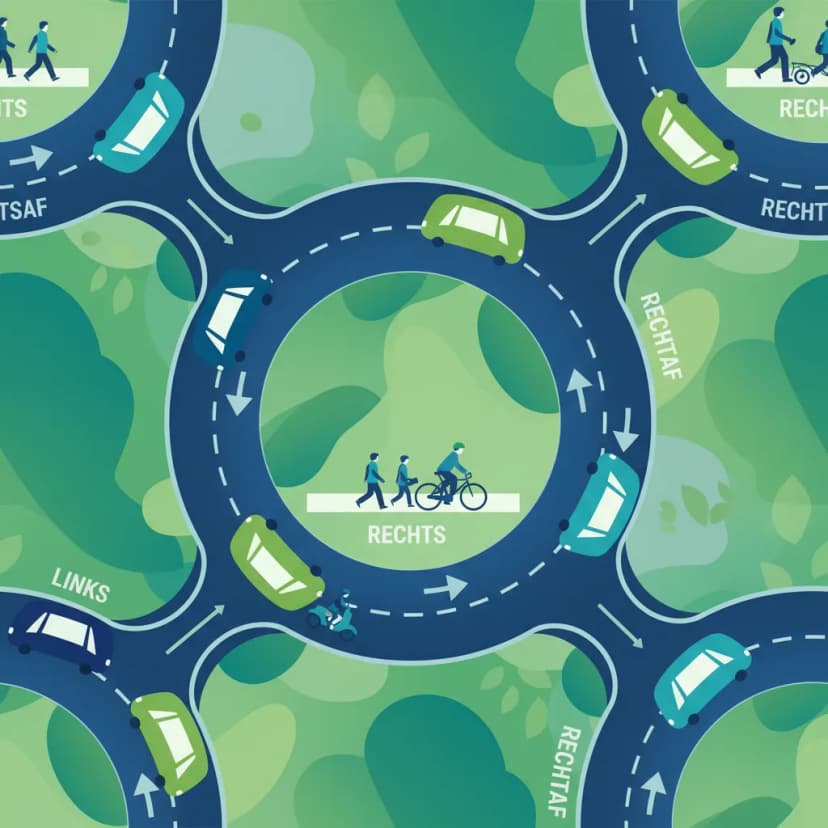
This lesson provides a detailed guide to navigating Swedish roundabouts (cirkulationsplatser). Key principles include always yielding to traffic already in the roundabout and choosing the correct lane based on your intended exit. You will learn the specific rules for signalling your intention to exit, how to safely interact with cyclists, and the techniques for maneuvering through multi-lane roundabouts to maintain traffic flow and prevent accidents.
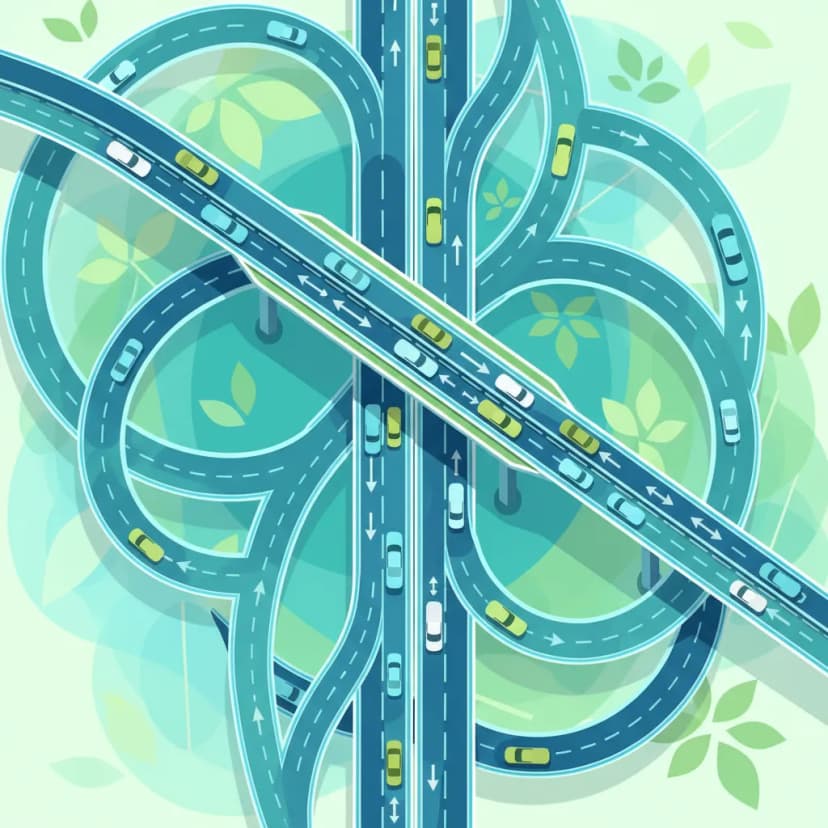
This lesson tackles the challenge of navigating some of the most complex road features, such as large multi-lane roundabouts and grade-separated interchanges. You will learn the importance of advance planning, choosing the correct lane on approach, clear signaling, and comprehensive observation to safely move through these busy areas. Mastering these junctions is a key indicator of an advanced and competent rider who can handle any road layout.
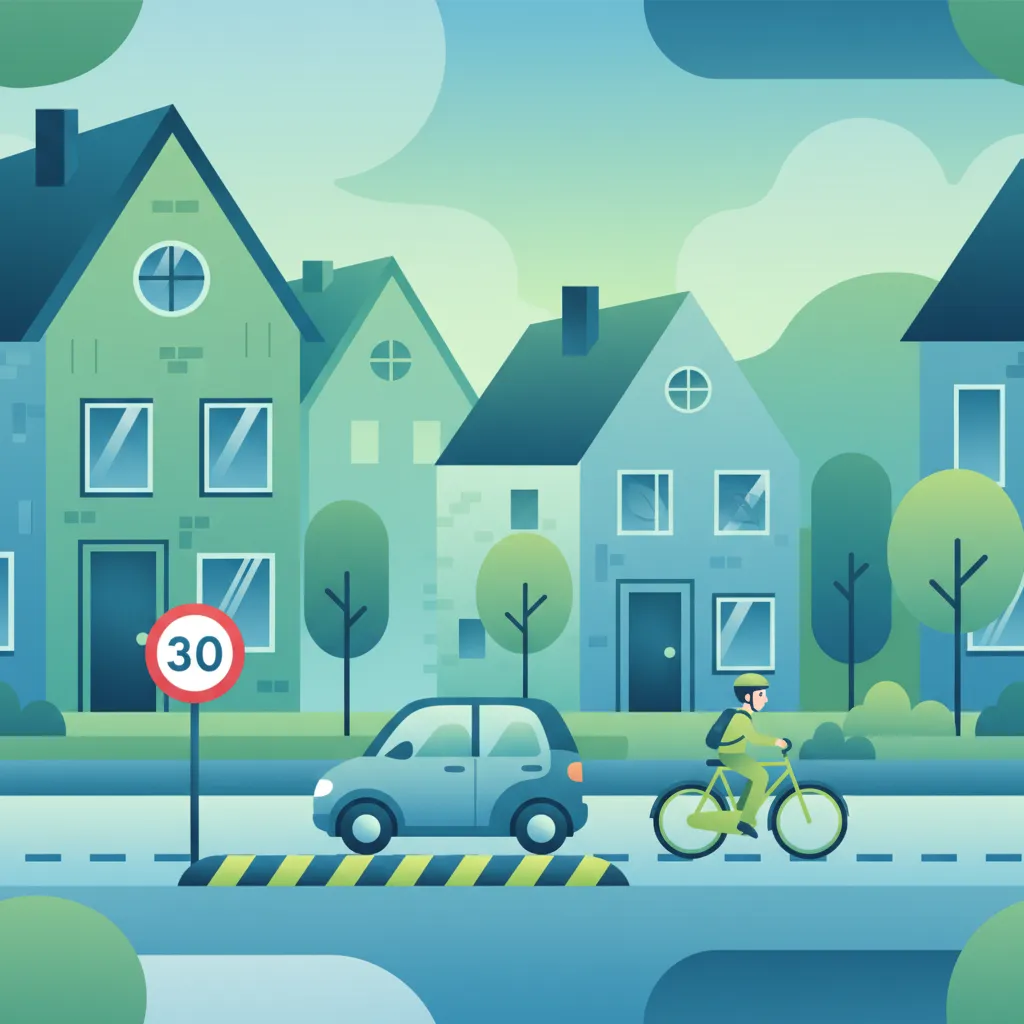
This lesson focuses on the high level of caution required when driving in residential areas. You will learn about the rules for special zones like 'gångfartsområde' (walking speed area) and the need to navigate around speed calming measures like speed bumps. The central theme is anticipating unpredictable behavior from residents, especially children, and managing the risks posed by parked cars that severely limit visibility.
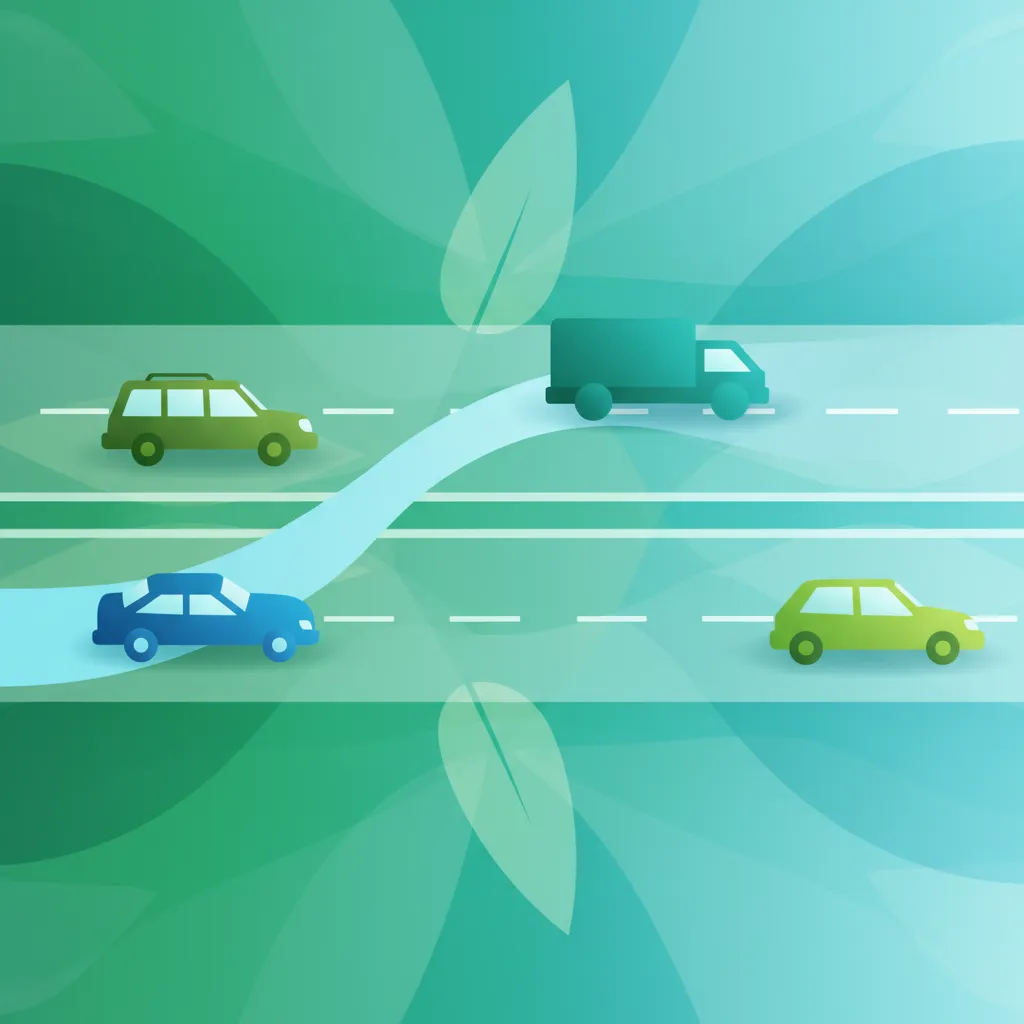
This lesson covers the critical maneuvers of merging and changing lanes. You will learn the correct technique for using an acceleration lane to match the speed of motorway traffic before merging smoothly and safely. The lesson emphasizes the importance of checking mirrors and the blind spot, signaling in good time, and applying the 'zipper principle' (dragkedjeprincipen) where lanes merge to ensure efficient and courteous traffic flow.
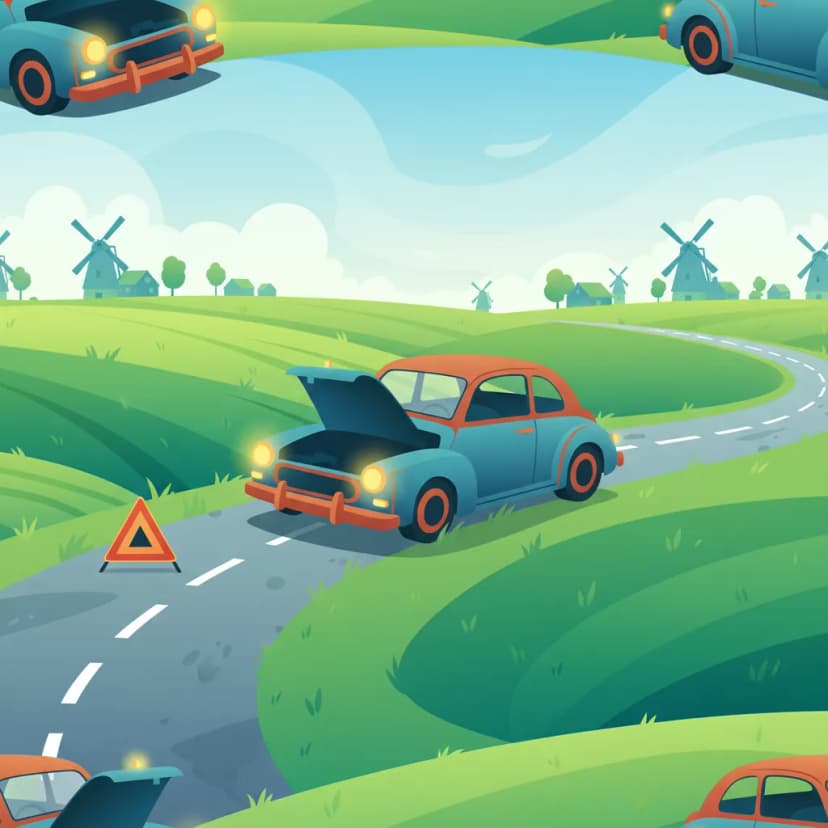
This lesson focuses on the correct use of warning devices to protect an accident or breakdown scene. You will learn to immediately activate your hazard lights (varningsblinkers). The main focus is on the proper placement of the warning triangle, explaining how the distance from the vehicle must be adapted based on the road's speed limit and visibility to give oncoming drivers adequate time to react.
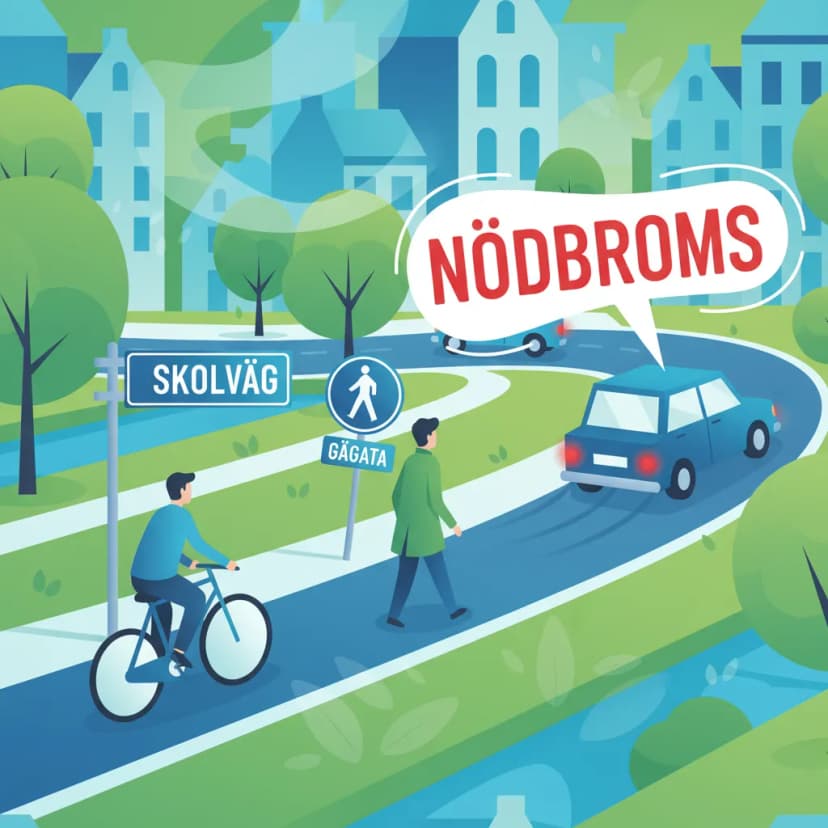
This lesson examines a variety of special situations where standard priority rules are modified. You will learn about the 'exit rule' (utfartsregeln) when entering a road from property, your duty to yield to buses indicating a departure from a stop, and the specific rules for pedestrian-only streets (gågata). The content also covers interactions with trams, emergency vehicles, and procedures at railway crossings, highlighting situations that demand maximum vigilance.
Learn the fundamental principles of vehicle communication through lights and horn signals in Sweden. This lesson covers correct usage of indicators, brake lights, and when the horn may be used to avoid danger. Essential theory for safe road interaction.
This lesson covers the correct interpretation and response to all forms of light and audible signals a motorcyclist will encounter. You will study the sequences of traffic lights, the rules for using turn indicators and hazard lights, and the legally permitted uses of the horn. Proper use of these signals is a fundamental aspect of safe riding, as it communicates your intentions clearly to other road users and helps prevent misunderstandings and collisions.
This lesson covers the correct use of a moped's communication tools: the turn signals and the horn. It explains that signals should be used well in advance of any turn or lane change to inform other road users of your intentions. The content also clarifies that the horn is primarily a warning device to alert others of your presence in potentially dangerous situations, not a tool to express frustration.
This lesson focuses on the correct use of warning devices to protect an accident or breakdown scene. You will learn to immediately activate your hazard lights (varningsblinkers). The main focus is on the proper placement of the warning triangle, explaining how the distance from the vehicle must be adapted based on the road's speed limit and visibility to give oncoming drivers adequate time to react.
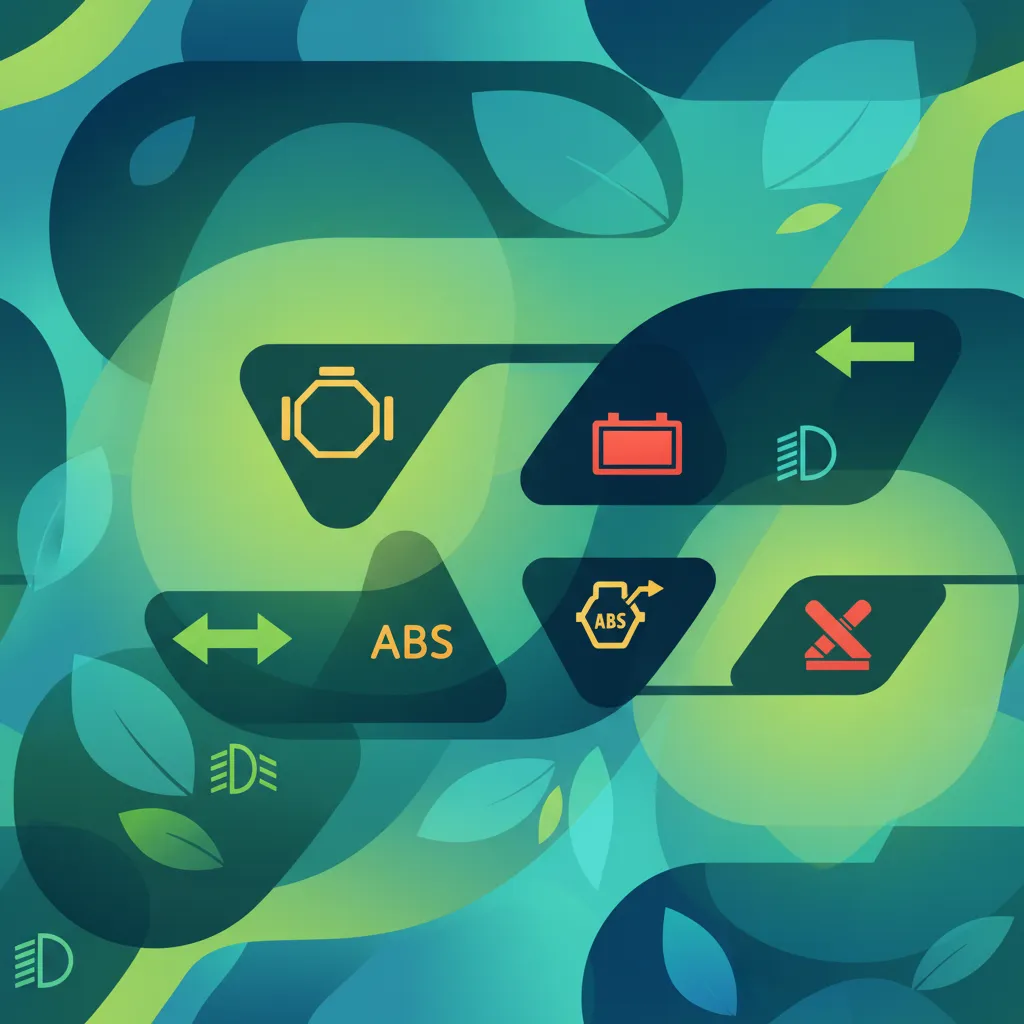
This lesson serves as a guide to the language of your car's instrument panel. You will learn the meaning of the most common warning lights, understanding the urgency indicated by their color: red for a critical issue requiring an immediate stop, yellow for a fault that needs attention soon, and green or blue for informational indicators. Knowing what these symbols mean is crucial for addressing mechanical problems before they become serious or unsafe.
This lesson provides a detailed explanation of the Swedish traffic signal system. You will learn the precise legal meaning of solid red, yellow, and green lights, as well as green arrows which permit turning when oncoming traffic is stopped. It also covers procedures for flashing yellow signals and what to do when traffic lights are out of order, emphasizing that standard priority rules like the right-hand rule then apply.

This lesson covers strategies for driving safely when visibility is compromised. You will learn the correct use of different lighting systems: when to use low beams, high beams (helljus), and how to avoid dazzling other drivers. The lesson also explains the specific regulations for using front and rear fog lights and provides techniques for navigating safely in dense fog or heavy precipitation by reducing speed and using the road edge as a guide.
This lesson provides clear instructions on the correct response to an approaching emergency vehicle with its sirens and lights active. You will learn your absolute duty to give way and the best methods for doing so, which typically involve pulling over to the right and stopping. The lesson stresses the importance of acting calmly and predictably, avoiding sudden braking or swerving that could endanger the emergency vehicle or other traffic.

This lesson goes beyond mechanical signals to cover the subtle art of non-verbal communication in traffic. It highlights the importance of making eye contact with drivers to ensure you have been seen before making a move. The content also reviews standard hand signals as a backup to electronic signals and discusses how clear, confident body language can make a rider's intentions more predictable.
This lesson focuses on Swedish warning signs designed to alert drivers to potential dangers. You will study signs indicating sharp bends, slippery surfaces, animal crossings, and temporary hazards like road construction. Correctly interpreting these signs allows a motorcyclist to proactively adjust speed, lane position, and readiness to react, which is essential for maintaining control and safety, especially in adverse weather or on unfamiliar roads.
This lesson explains the function and legal significance of various road markings (vägmarkeringar) in Sweden. You will learn the difference between broken lines that permit overtaking and solid lines that forbid it, as well as the meaning of stop lines, pedestrian crossings, and lane direction arrows. These markings work in conjunction with signs to organize traffic flow, separate lanes, and provide critical information directly on the road surface.
Find clear answers to common questions learners have about Signalling with Lights and Horn. Learn how the lesson is structured, which driving theory objectives it supports, and how it fits into the overall learning path of units and curriculum progression in Sweden. These explanations help you understand key concepts, lesson flow, and exam focused study goals.
In Sweden, you must use your turn indicators well in advance of any change in direction or lane position. This includes when turning at junctions, changing lanes on any road, overtaking, moving off from the side of the road, or rejoining traffic. The signal should be given early enough for other road users to understand your intentions.
Hazard warning lights should be used to alert other traffic to a temporary danger or unusual situation. This typically includes when you are stopping unexpectedly in a place where it might surprise other drivers, such as on a busy road or motorway, or when your vehicle is causing an obstruction or hazard.
In Sweden, the horn is primarily for warning other road users of immediate danger. It should only be used sparingly to prevent an accident, such as when you see another vehicle or pedestrian moving into your path unexpectedly. It is not permitted for general greetings, to express impatience, or to signal your presence unnecessarily.
There isn't a fixed distance, but the rule is to signal 'in good time' (i god tid). This means signalling early enough for other road users to clearly see and understand your intention before you make your manoeuvre. On faster roads, this might be hundreds of metres, while in slower urban traffic, it could be closer, but always sufficiently in advance.
When parallel parking or angle parking, you generally need to signal your intention to move towards the parking space. When moving off from a parking position, you must always signal your intention to rejoin the traffic flow. Always check for other traffic and pedestrians before signalling and moving.