
Riding your moped safely at night or in poor visibility requires understanding Swedish lighting laws and visibility techniques. This lesson, part of the 'Positioning, Lane Usage, and Visibility' unit in our Category AM theory course, covers essential knowledge on headlights, tail lights, and how to ensure you are seen by others. Mastering these rules is vital for your safety and for passing the theory exam.
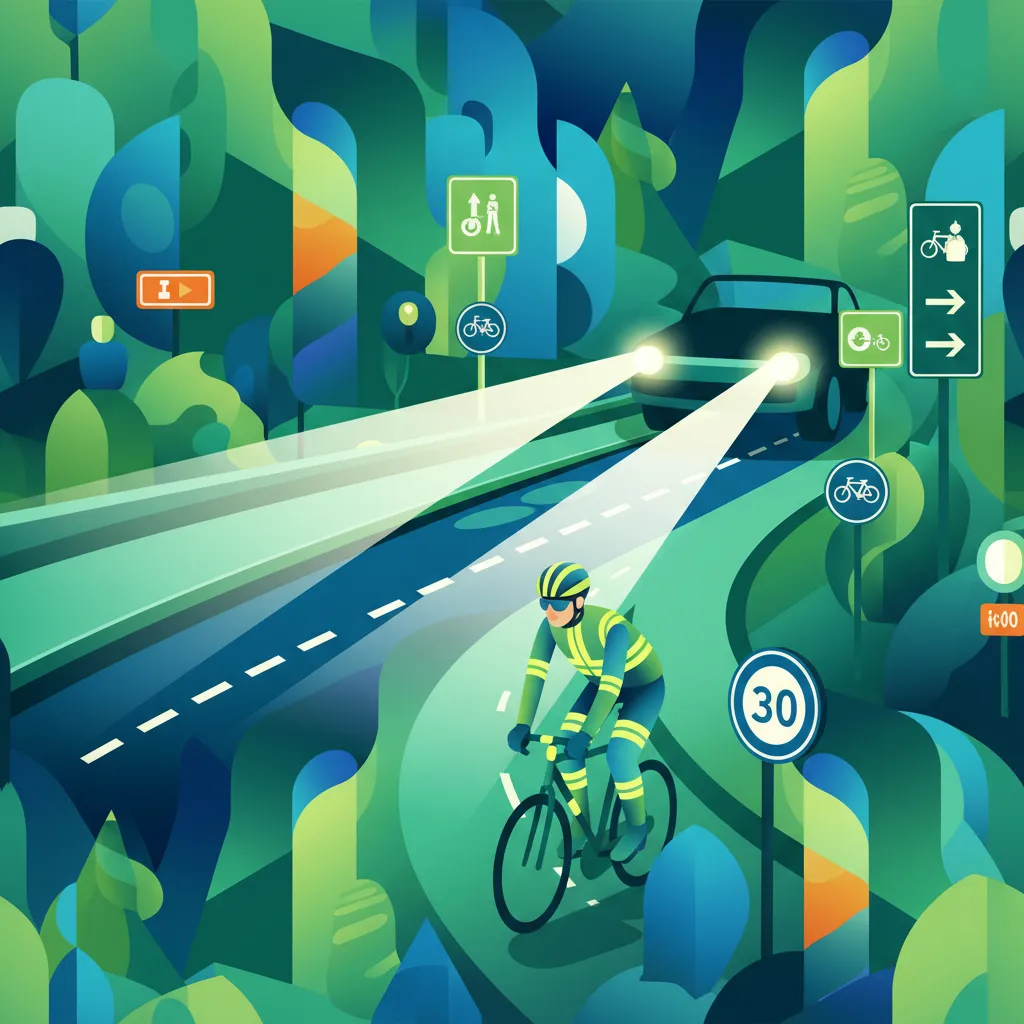
Operating a moped safely in Sweden, especially during periods of reduced light, demands a thorough understanding of visibility strategies and lighting requirements. This lesson, part of your Swedish Driving License Theory Course – Category AM (Moped), will provide you with the essential knowledge to ensure you are both seen by other road users and can adequately illuminate your path. Proper lighting is not just a legal obligation; it is a fundamental aspect of road safety that significantly reduces the risk of accidents.
Visibility is paramount for all road users, but it is particularly crucial for moped riders, who are considered vulnerable in traffic. When ambient light diminishes, whether at night, dawn, dusk, or during adverse weather, your moped's lighting system becomes your primary tool for safety. It serves two vital functions: illuminating the road ahead for you to see and making your moped conspicuous to others.
Adequate lighting ensures you can detect hazards early, such as potholes, debris, pedestrians, or animals on the road. Simultaneously, it allows other drivers, cyclists, and pedestrians to accurately perceive your moped's presence, position, and intended actions. Without effective lighting, your reaction time and that of others can be severely compromised, leading to dangerous situations and increased collision risk. The human eye's ability to perceive detail and colour drops sharply in low light, making artificial lighting indispensable for safe navigation.
Swedish law, particularly outlined in the Trafikförordning (Swedish Traffic Ordinance) and detailed by Transportstyrelsen, mandates specific lighting requirements for mopeds. These regulations are designed to minimise night-time collisions, protect vulnerable road users, and ensure consistent safety standards across the road network. Compliance with these rules is not optional; it is a legal requirement that carries significant implications for your safety and legal standing.
Your moped's headlight is your primary forward illumination device. It typically features a single lamp capable of producing both a low-beam and a high-beam light, each designed for different driving conditions. Understanding when and how to use these settings is a cornerstone of safe night-time riding.
According to Transportstyrelsen § 30, your moped's headlights (both low- and high-beam) must be switched on from 30 minutes before sunset until 30 minutes after sunrise. This mandatory period ensures your visibility during twilight hours, when natural light is often misleading. Furthermore, headlights must always be active whenever visibility is reduced to less than 200 metres, regardless of the time of day. This includes conditions like heavy rain, fog, or snow.
Always perform a quick check of your moped's lights before starting a journey, especially if you anticipate riding during low-light conditions.
The low-beam, also known as the dipped beam, is designed to illuminate the immediate road ahead without blinding oncoming traffic or road users you are following. In Sweden, the low-beam directs light downwards and slightly to the right, which is crucial for preventing glare for drivers travelling in the opposite direction.
A headlight setting that directs light downward and to the right, minimizing glare for oncoming traffic while illuminating the immediate road ahead.
This setting is your default for night-time riding, especially in built-up areas with street lighting, or whenever other vehicles are present within approximately 150 metres. Using the low-beam ensures you maintain adequate visibility while being considerate and safe towards other road users.
The high-beam, or main beam, provides a stronger, wider, and higher beam of light, maximising your forward illumination. This setting is invaluable for riding on dark, unlit roads where you need to see as far ahead as possible to identify potential hazards, such as bends, debris, or animals on the road.
A headlight setting that projects a stronger, higher, wider beam for maximum forward illumination on dark, unlit roads.
While high-beam greatly improves your vision, its powerful light can cause severe glare for others. Therefore, its use is strictly regulated.
Beam selection discipline, governed by Transportstyrelsen § 31, is critical for safe riding. You must switch from high-beam to low-beam promptly when:
Failing to dim your lights can temporarily blind other drivers, increasing the risk of head-on collisions or rear-end incidents. Always prioritise the safety of all road users by applying correct beam selection.
While seeing ahead is important, being seen from behind and from the sides is equally crucial. Your moped's rear lighting system plays a vital role in communicating your presence and intentions to following and crossing traffic.
Your moped must be equipped with a red tail light that is continuously illuminated whenever the vehicle is moving at night or in reduced visibility conditions. This constant light, as per Transportstyrelsen § 32, provides a consistent indication of your moped's presence to vehicles approaching from behind. A functioning tail light allows following drivers to gauge your distance and speed, giving them adequate time to react to any changes in your movement.
A continuous red light at the rear of the vehicle, indicating its presence and rearward direction to following traffic.
The brake light is a red light that illuminates or intensifies when you apply your moped's braking system. Its purpose is to signal your deceleration to following road users, providing them with an early warning that you are slowing down or stopping. This allows them to adjust their speed and maintain a safe following distance, significantly reducing the risk of a rear-end collision. Your brake light must activate automatically with the brake and be visible from at least 50 metres behind the vehicle.
A red light that illuminates or intensifies when the rider applies the braking system, signaling deceleration to following traffic.
Mopeds are equipped with amber-coloured flashing lights, front and rear, known as turn signals or indicators (blinkers). These lights, covered by Transportstyrelsen § 33, are used to clearly communicate your intention to change direction or lane. You must activate your turn signal at least 3 seconds before initiating a turn or lane change. The signals should flash at a frequency of 1–2 Hz (one to two flashes per second) to be effective and unambiguous. Proper use of turn signals is essential for smooth traffic flow and preventing unexpected manoeuvres.
Amber flashing lights on the front and rear of the moped, activated by the rider to indicate an intended change of direction or lane.
Hazard warning lights involve all front and rear turn signals flashing simultaneously. These lights, outlined in Transportstyrelsen § 34, are to be used exclusively when your moped is stationary on the road and poses a danger to traffic, such as in the event of a breakdown. Their purpose is to warn other road users of an emergency situation, increasing your vehicle's conspicuity. It is strictly prohibited to use hazard lights while riding to increase visibility, as this can confuse other drivers about your intentions.
Both front and rear turn signals flashing simultaneously to warn other users that the moped is stationary and poses a danger.
Beyond active lighting, reflectors provide a crucial layer of passive visibility. These retro-reflective devices return light directly back to its source, making your moped visible even if its powered lights fail or are off. Swedish law (Transportstyrelsen § 21) mandates specific types and colours of reflectors for mopeds.
Your moped must have a white front reflector. This passive device ensures that if an oncoming vehicle's headlights illuminate your moped, you will be visible even without your own headlight functioning. Front reflectors are especially important in situations where your electrical system might fail. They must be clean, unobstructed, and correctly positioned at all times.
A mandatory red rear reflector is crucial for visibility from behind. This reflector complements your tail light and provides a backup if your tail light malfunctions. It must also be clean, unobstructed, and meet specific retro-reflective performance standards to ensure it is effective when illuminated by the headlights of following vehicles.
Amber side reflectors are typically mounted near the wheel arches on both sides of your moped. Their purpose is to increase your lateral conspicuity, meaning your visibility from the side. This is particularly important at intersections, roundabouts, or when your moped is stationary, where cross-traffic might not have a direct view of your front or rear lights. Like all reflectors, they must be clean and free from damage or obstruction.
Some modern mopeds may be equipped with Day-time Running Lights (DRL). These are low-intensity white lights that remain illuminated during daylight hours. While DRLs can enhance your conspicuity during the day, they are not mandatory for mopeds in Sweden, and crucially, they do not replace the need for your full low-beam headlight at night or in conditions of reduced visibility. Relying solely on DRLs after sunset is a common misunderstanding and a serious safety violation.
Low-intensity white lights that remain illuminated during daylight hours to enhance daytime conspicuity but do not replace night-time headlights.
Consistent adherence to lighting regulations and proactive maintenance are essential for safe moped riding.
Always remember the rule: lights on from 30 minutes before sunset to 30 minutes after sunrise, and whenever visibility drops below 200 metres. This includes dawn, dusk, heavy rain, fog, or snow. Even if you feel the ambient light is sufficient, legal requirements dictate the use of appropriate lighting.
30 minutes before sunset: Switch on your low-beam headlights.
Throughout the night: Keep your low-beam (or high-beam when safe) and tail light active.
30 minutes after sunrise: Headlights can be turned off, unless visibility remains below 200 metres.
Any time visibility is reduced below 200 metres: Always use your low-beam headlights, regardless of the time of day.
Regular checks of your lighting system are critical. Before every ride, especially before night rides, perform a quick inspection:
Only approved lamp types (halogen or approved LED) may be used; colour-modified or excessively bright bulbs are prohibited as per Transportstyrelsen § 35, as they can alter light distribution and cause glare.
The way you use your lights should adapt to various conditions:
Being aware of common mistakes can help you avoid fines and, more importantly, prevent accidents.
The requirements for moped lighting are rooted in fundamental principles of human vision and traffic safety. At night, human vision relies heavily on rod cells, which are sensitive to light intensity but not colour, making bright, clear lights essential. Adequate illumination from your headlights helps restore this visual acuity, allowing you to detect obstacles and read road markings effectively.
Furthermore, visibility distance directly impacts reaction time. At typical moped speeds, a detection distance of 200 metres provides several crucial seconds for a driver to see you, process your presence, and react safely. Any reduction in this distance dramatically shrinks the available reaction time, increasing the likelihood and severity of a collision. The glare caused by improper high-beam use temporarily blinds oncoming drivers, drastically reducing their ability to perceive the road and any hazards. Reflectors, through the principle of retro-reflection, are highly efficient, returning most of the incident light directly back to its source, offering a reliable passive safety feature.
This lesson on night-time visibility and lighting requirements is a foundational element of safe moped riding in Sweden. It builds upon earlier concepts such as vehicle control and positioning and sets the stage for understanding how to ride safely in adverse weather. Mastering these rules and best practices will not only help you pass your Category AM driving theory exam but, more importantly, will equip you with the knowledge to ride confidently and safely in all light conditions.
Lesson content overview
Explore all units and lessons included in this driving theory course.
Explore search topics learners often look for when studying Night-time Visibility and Lighting Requirements (Ljusskyltar). These topics reflect common questions about road rules, driving situations, safety guidance, and lesson level theory preparation for learners in Sweden.
Browse additional driving theory lessons that cover connected traffic rules, road signs, and common driving situations related to this topic. Improve your understanding of how different rules interact across everyday traffic scenarios.
Understand the essential Swedish legal requirements for moped lights (Ljusskyltar) when riding at night or in low visibility. This lesson covers headlights, tail lights, and reflectors to ensure you are seen and can see the road ahead, crucial for AM licence theory.
This lesson provides essential strategies for riding safely at night and during twilight hours. It covers the correct use of headlights to maximize visibility without dazzling other drivers and emphasizes the need to reduce speed to compensate for shorter sight distances. The content also highlights the importance of wearing reflective gear to be seen by others.
This lesson addresses the specific challenges of riding at night or in low-light conditions. You will learn how to use your headlights most effectively, how to cope with the glare from oncoming traffic, and how darkness affects your depth perception and ability to judge distances. Strategies for spotting nocturnal animals and the increased importance of wearing reflective gear to be seen by others are also key components of this essential safety lesson.
This lesson covers strategies for driving safely when visibility is compromised. You will learn the correct use of different lighting systems: when to use low beams, high beams (helljus), and how to avoid dazzling other drivers. The lesson also explains the specific regulations for using front and rear fog lights and provides techniques for navigating safely in dense fog or heavy precipitation by reducing speed and using the road edge as a guide.
This lesson focuses on proactive strategies to increase a moped rider's visibility to other drivers. It strongly advocates for the use of high-visibility and reflective clothing, helmets, and accessories to stand out in traffic. Additionally, it revisits the concept of lane positioning as a tool to avoid being in other drivers' blind spots and to create a more prominent presence on the road.
This lesson addresses the severe dangers of riding a moped in snow and icy conditions. It explains how to identify potential hazards like black ice and emphasizes that avoiding riding in such conditions is the safest strategy. For situations where it cannot be avoided, it provides advice on extremely gentle control inputs and vehicle preparation.
This lesson focuses on strategies to make yourself more visible to other road users, a critical factor in motorcycle safety. You will learn how to use lane positioning strategically to stay out of other drivers' blind spots and to maximize your own line of sight through corners and intersections. The content also covers the effectiveness of high-visibility and reflective clothing, as well as the correct use of lights to ensure you are seen in all conditions.
This lesson consolidates the key regulations that apply specifically to moped operation in Sweden. It covers mandatory rules such as speed limits, helmet use, and requirements for vehicle lighting and reflectors. Furthermore, the lesson explains the legal consequences of violations, including the system of fines and potential demerit points, ensuring riders understand their full range of legal responsibilities on the road.
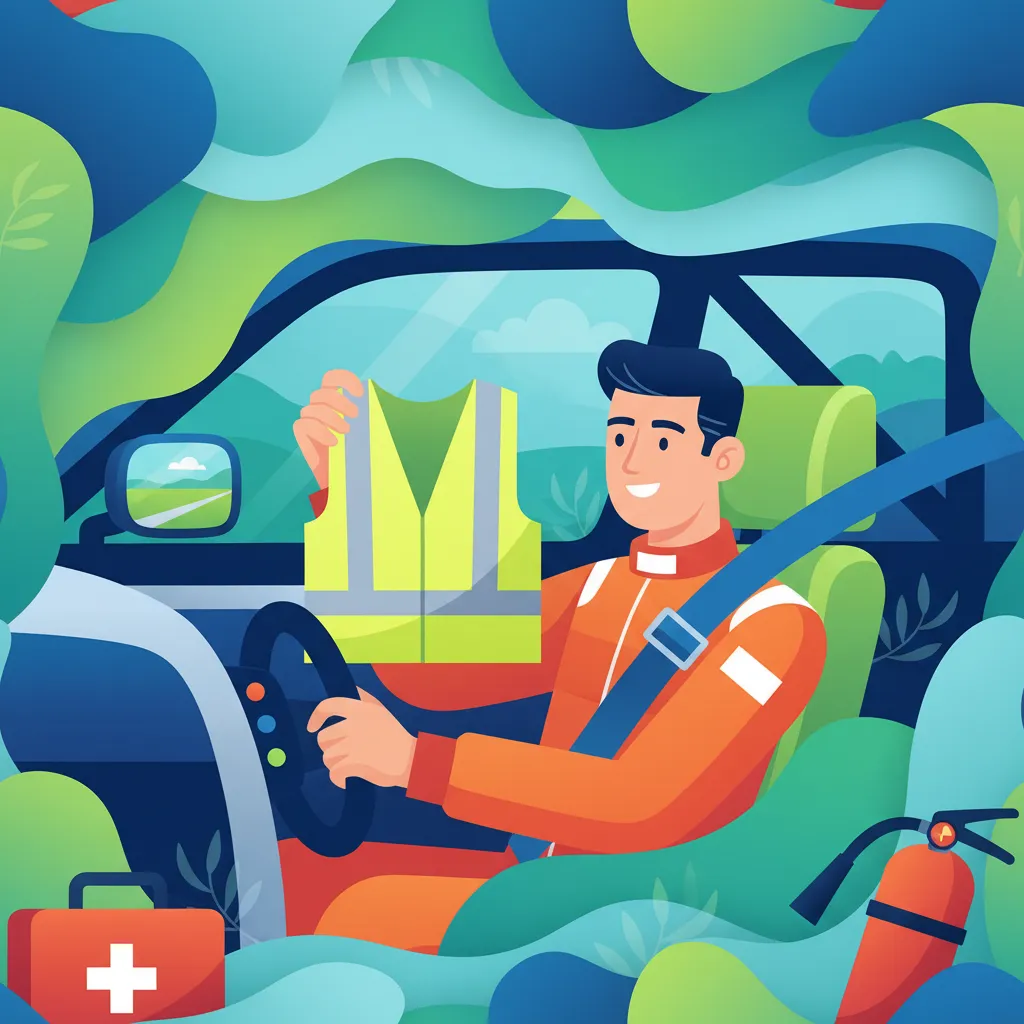
This lesson serves as a summary of the legal requirements for safety equipment in Sweden. It reiterates the mandatory helmet law for both the rider and any passenger. It also touches on the rider's responsibility to ensure the moped itself is legally equipped with functioning lights, brakes, and other essential safety features, linking personal gear with vehicle roadworthiness.
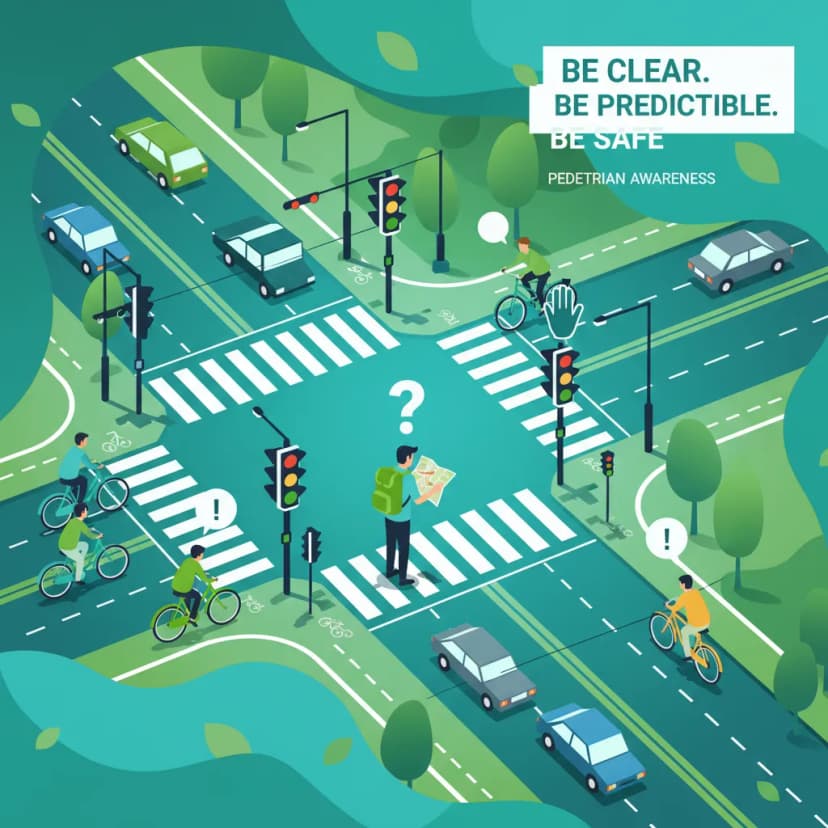
This lesson is dedicated to pedestrian safety, teaching riders to be constantly aware of people on foot, especially in busy urban environments. It reinforces the absolute duty to yield at marked crossings and encourages a cautious approach in areas like schools and shopping districts. The content stresses anticipating unpredictable actions, particularly from children or distracted pedestrians.
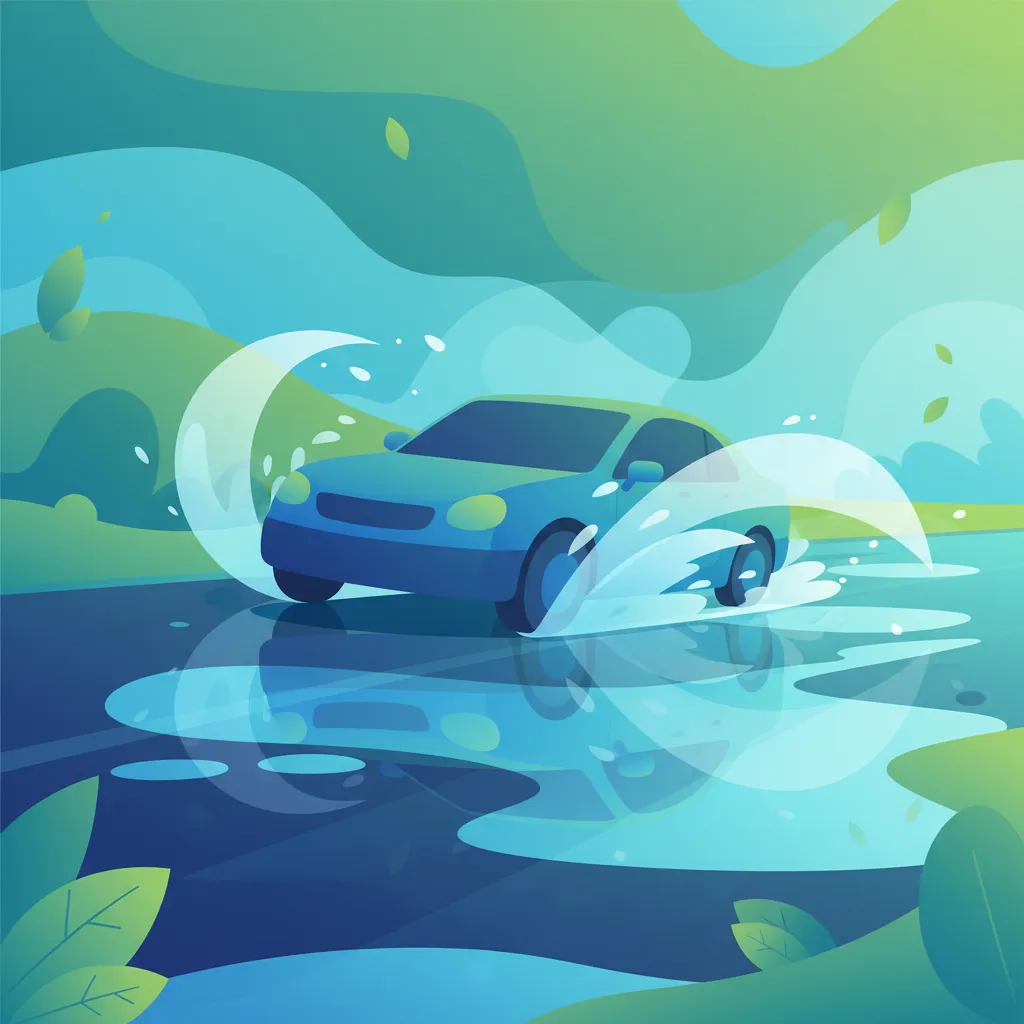
This lesson details the specific hazards associated with riding on wet roads, including significantly increased stopping distances and the risk of aquaplaning. It explains how to recognize conditions where aquaplaning is likely and the importance of reducing speed. Riders will learn to use smoother throttle, braking, and steering inputs to maintain traction and control.
Explore how to adapt your moped riding for Swedish night-time and low-light conditions. This lesson covers crucial aspects of visibility, lighting, and adjusting your riding style to maintain safety and comply with traffic regulations, building on basic lighting knowledge.
This lesson provides essential strategies for riding safely at night and during twilight hours. It covers the correct use of headlights to maximize visibility without dazzling other drivers and emphasizes the need to reduce speed to compensate for shorter sight distances. The content also highlights the importance of wearing reflective gear to be seen by others.
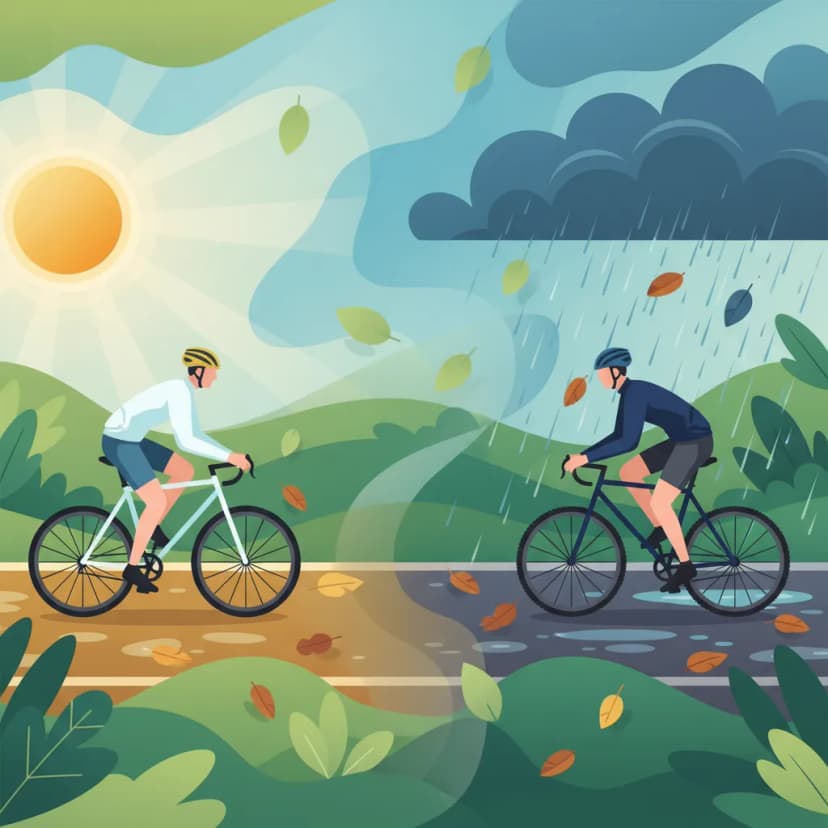
This lesson encourages a mindset of adapting riding style to the specific challenges of each season. It covers seasonal hazards such as wet leaves in the fall, loose gravel after winter, and sun glare in the summer. By being aware of these predictable changes, riders can proactively adjust their technique and maintain safety throughout the year.
This lesson addresses the severe dangers of riding a moped in snow and icy conditions. It explains how to identify potential hazards like black ice and emphasizes that avoiding riding in such conditions is the safest strategy. For situations where it cannot be avoided, it provides advice on extremely gentle control inputs and vehicle preparation.
This lesson addresses the specific challenges of riding at night or in low-light conditions. You will learn how to use your headlights most effectively, how to cope with the glare from oncoming traffic, and how darkness affects your depth perception and ability to judge distances. Strategies for spotting nocturnal animals and the increased importance of wearing reflective gear to be seen by others are also key components of this essential safety lesson.
This lesson teaches the crucial skill of adapting speed to prevailing conditions, emphasizing that the posted speed limit is a maximum, not a target. It covers various scenarios such as rain, fog, heavy traffic, and poor road surfaces, explaining why reducing speed is essential for maintaining vehicle control and safety. The goal is to cultivate a proactive mindset where the rider constantly assesses risk and adjusts their speed accordingly.
This lesson details the specific hazards associated with riding on wet roads, including significantly increased stopping distances and the risk of aquaplaning. It explains how to recognize conditions where aquaplaning is likely and the importance of reducing speed. Riders will learn to use smoother throttle, braking, and steering inputs to maintain traction and control.
This lesson focuses on proactive strategies to increase a moped rider's visibility to other drivers. It strongly advocates for the use of high-visibility and reflective clothing, helmets, and accessories to stand out in traffic. Additionally, it revisits the concept of lane positioning as a tool to avoid being in other drivers' blind spots and to create a more prominent presence on the road.
This lesson covers strategies for driving safely when visibility is compromised. You will learn the correct use of different lighting systems: when to use low beams, high beams (helljus), and how to avoid dazzling other drivers. The lesson also explains the specific regulations for using front and rear fog lights and provides techniques for navigating safely in dense fog or heavy precipitation by reducing speed and using the road edge as a guide.

This lesson provides practical advice on selecting the appropriate riding gear for the diverse Swedish seasons. You will learn about the importance of layering for warmth in the cold, ventilated gear for summer heat, and effective waterproofs for rain. The content emphasizes how the right equipment not only keeps you comfortable and focused but also provides crucial protection and enhances your visibility to other road users, making it a critical component of overall motorcycle safety.
This lesson reinforces the core safety principle of adapting your driving to the prevailing weather conditions. You will learn why you must significantly reduce speed in heavy rain to avoid aquaplaning, how strong crosswinds can affect vehicle stability, and why reduced visibility in fog necessitates slower speeds and greater following distances. The goal is to instill a proactive approach to risk management whenever the weather is less than ideal.
Find clear answers to common questions learners have about Night-time Visibility and Lighting Requirements (Ljusskyltar). Learn how the lesson is structured, which driving theory objectives it supports, and how it fits into the overall learning path of units and curriculum progression in Sweden. These explanations help you understand key concepts, lesson flow, and exam focused study goals.
In Sweden, mopeds must be equipped with a functioning headlight (dimmed and full beam), a rear light, and a red reflector at the rear. All lights must be clearly visible and in good working order. The specific brightness and positioning are regulated to ensure safety.
You should use your low beam (dimmed) headlight when approaching oncoming traffic or when following another vehicle to avoid dazzling other drivers. High beam (full) should be used on unlit roads when there is no oncoming traffic and no vehicle ahead that you are following, as it provides better illumination of the road.
Yes, mopeds must have at least one red reflector at the rear. It's also good practice to consider additional reflective elements on clothing or the moped itself to enhance side and frontal visibility, although the primary legal requirement is the rear red reflector.
In poor weather conditions like rain, fog, or snow, where visibility is significantly reduced, it is often advisable to use your dipped headlights (low beam) even during the day. This makes your moped more visible to other road users, improving safety.
No, it is not legal to ride your moped if essential lights such as the headlight or tail light are not functioning correctly. You must ensure all required lights are operational before setting off to comply with Swedish traffic laws and ensure your safety.