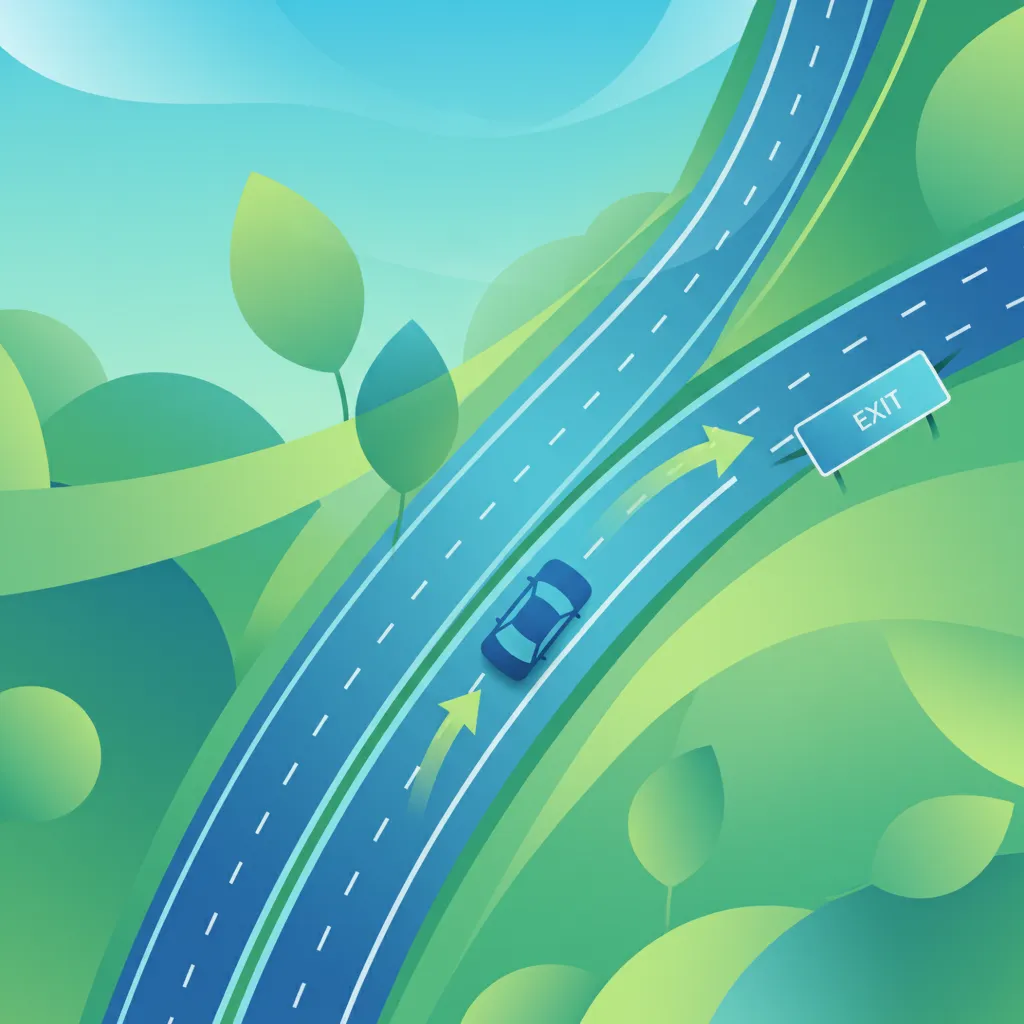
Navigating multi-lane roads safely is essential for moped riders. This lesson, part of the Swedish AM Licence Theory Course, teaches you the specific rules and best practices for choosing the correct lane. Understanding lane discipline ensures you can make turns, overtake safely, and integrate smoothly with traffic, which is a key area tested in the official Swedish theory exam.
Navigating multi-lane roads safely and efficiently is a critical skill for all road users, especially for those riding a moped. As a Category AM moped rider in Sweden, understanding and applying the rules for correct lane selection is not only essential for your safety but also for ensuring smooth traffic flow and passing your theory exam. This lesson provides clear guidance on choosing the appropriate lane to match your intended direction of travel, covering rules and best practices for turning, overtaking, and maintaining a steady course. The emphasis is on making early, predictable decisions to integrate seamlessly with surrounding traffic.
Lane selection is a logical process of mapping your intended travel direction – whether straight, turning left or right, or overtaking – onto the physical structure of a multi-lane road. For moped riders, this process requires careful planning due to the moped's specific characteristics, such as shorter acceleration capabilities and a maximum speed of 45 km/h.
Choosing the correct lane early creates a predictable path that other road users can anticipate, minimizing the need for sudden lateral movements. This predictability is paramount for safety, especially given that mopeds are more vulnerable in traffic. Swedish traffic law (Trafikförordningen) mandates that road users "drive in the lane that best fits their intended movement" and "use turning lanes when turning." Adhering to these rules prevents blockages, reduces the risk of dangerous lane changes, and contributes to overall road safety.
Early Lane Commitment: Always select your intended lane well in advance of a junction or maneuver. This allows other road users to anticipate your actions, significantly reducing collision risk.
Effective lane selection for moped riders in Sweden is built upon several core principles:
Road markings are your primary visual indicators on multi-lane roads. These painted symbols and lines define lane boundaries, direction, and specific usage. Understanding them is fundamental to correct lane selection.
Beware of Misunderstandings: Never assume a dashed line always permits crossing without first checking mirrors, blind spots, and confirming it's safe. Always obey lane-specific arrows, as ignoring them can lead to dangerous situations and traffic violations.
Multi-lane roads often feature different types of lanes, each with a specific purpose. Moped riders must be aware of these distinctions to ensure safe and legal lane selection.
Dedicated turning lanes are specifically designed for vehicles intending to turn left or right at an upcoming intersection. They often begin well before the junction, providing ample space for vehicles to merge safely.
On Swedish roads, the rightmost lane on a multi-lane carriageway is generally considered the overtaking or "fast" lane.
Changing lanes safely requires a systematic approach to ensure you do not endanger yourself or other road users.
Check Mirrors: Regularly check your rear-view and side mirrors to assess traffic conditions in the target lane and behind you.
Check Blind Spots: Perform a head turn (shoulder check) to visually confirm no vehicles are in your blind spots – areas not visible in your mirrors.
Signal Intention: Activate your turn signal (indicator) at least 150 meters before you intend to begin the lane change. This provides other drivers with sufficient warning of your intentions.
Adjust Speed and Gap: If necessary, slightly adjust your speed to create a safe gap in the target lane. Do not force your way in.
Steer Smoothly: Once a safe gap is confirmed, steer gently and smoothly into the target lane, maintaining control and a stable trajectory. Avoid abrupt or jerky movements.
Cancel Signal: After completing the lane change and stabilizing your position in the new lane, remember to cancel your turn signal.
The type of vehicle you are riding – in this case, a Category AM moped – influences which lanes are most appropriate for your speed and size. Specific rules also apply when navigating intersections and roundabouts.
Swedish Road Traffic Regulations specify that "slow vehicles shall keep to the left side of the road" (Trafikförordningen 3 kap. 7 §). For Category AM mopeds, this translates into specific guidance:
Correct lane selection at junctions and roundabouts is crucial for safe navigation and maintaining traffic flow.
Environmental factors like weather and light conditions significantly impact visibility and road grip, requiring adjustments to your lane selection behavior. Awareness of lane-specific hazards is also key to safety.
When visibility is limited due to night, rain, fog, or dusk, extra caution is required.
Different lanes can present unique hazards that moped riders must be aware of:
Hazard Mitigation: Proactive scanning, early lane choice, and prepared signaling are crucial for mitigating lane-specific hazards. Always anticipate potential dangers.
Understanding the specific laws that govern lane usage in Sweden is paramount for safe and legal moped riding.
| Regulation | Rule Statement | Applicability | Legal Status | Rationale | Correct Example | Incorrect Example |
|---|---|---|---|---|---|---|
| Trafikförordningen 3 kap. 7 § | “Slow vehicles shall keep to the left side of the road.” | All roads, especially where multiple lanes exist. | Mandatory | Prevents obstruction of faster traffic; matches vehicle speed capabilities. | A moped traveling 45 km/h stays in the leftmost lane on a three-lane urban road. | A moped cruises in the rightmost overtaking lane at 30 km/h, causing faster cars to brake. |
| Trafikförordningen 3 kap. 8 § | “Drivers shall obey road markings; crossing solid lines is prohibited unless otherwise signed.” | All lane-change situations. | Mandatory | Guarantees predictable lane usage and safety. | Rider checks dashed line before crossing to a turning lane. | Rider crosses a solid double white line to enter a turn lane. |
| Trafikförordningen 3 kap. 10 § | “When turning, the vehicle must use the lane or road marking designated for that turn.” | Intersections, roundabouts, traffic islands. | Mandatory | Avoids blocking traffic moving straight or opposite direction. | Rider merges into a green-arrow left-turn lane 200 m ahead of the junction. | Rider stays in the straight-through lane and attempts left turn across lanes. |
| Trafikförordningen 3 kap. 11 § | “Signalling must be made at least 150 m before turning or lane change.” | All turning/ lane-change manoeuvres. | Mandatory | Gives other road users sufficient warning. | Rider activates left indicator 180 m before a left turn. | Rider signals only 20 m before the turn. |
| Trafikförordningen 3 kap. 13 § | “Overtaking shall be performed on the right side, with adequate visibility and distance.” | Overtaking manoeuvres. | Mandatory | Prevents surprise overtakes and reduces collision risk. | Moped speeds up, signals, and overtakes a slower cyclist from the right side, returning to left lane after passing. | Moped overtakes a car on the left side, crossing into opposing traffic lane. |
| Vägtrafiklag (Road Traffic Ordinance) 5 kap. 1 § | “The driver must always keep the vehicle under control and drive in a manner that does not endanger others.” | General driving conduct, includes lane selection. | Mandatory | Overarching safety principle. | Rider chooses lane based on speed and upcoming turn, maintaining control. | Rider remains in a lane unsuitable for the speed, causing abrupt braking. |
Failing to select the correct lane or executing a lane change improperly can lead to dangerous situations and legal penalties.
Late Entry into a Turning Lane:
Using the Overtaking Lane at Low Speed:
Crossing a Solid Double White Line:
Failing to Signal Before a Lane Change:
Turning from the Wrong Lane on a Roundabout:
Responsible moped riding involves adjusting your lane selection strategy based on prevailing conditions, from weather to specific road types.
| Condition | Variation in Principle / Rule | Reasoning |
|---|---|---|
| Weather (rain, snow, ice) | Increase following distance; reduce speed before lane changes; prefer lanes with better drainage and clearer markings. | Reduced friction and visibility increase stopping distance and risk of lane drift. |
| Light (night, dawn, dusk) | Use lanes with better illumination; avoid edge lanes where markings may be hard to see; ensure headlights are on low-beam in urban areas. | Visibility of lane boundaries and other road users is lower; early lane commitment mitigates surprise. |
| Road Type – Urban Residential Street | Turning lanes may be absent; use the lane closest to the curb; be ready to give way to pedestrians and cyclists. | Limited space; higher interaction with vulnerable users. |
| Intersection Type – Signalised | Follow lane markings for green arrows; if a turning lane is present, stay in it even during red phase. | Prevents blockage of through lanes during red. |
| Interaction with Vulnerable Users | Give extra lateral space when lane-changing near cyclists or pedestrians; consider staying in the left lane to allow cyclists to pass on the right. | Swedish law (§ 3) requires extra care around vulnerable users. |
| Roadworks / Temporary Lane Closure | Follow temporary signage; may need to merge earlier or use opposite lane temporarily; keep signalling. | Temporary conditions override normal lane rules; safety demands compliance with signs. |
| Nighttime with Low Visibility (fog) | Reduce speed significantly; use fog lights if equipped; keep to centre of lane; avoid rapid lane changes. | Fog reduces perception distance; smoother trajectory reduces risk. |
Mopeds on Motorways: Mopeds are generally prohibited on Swedish motorways (motorvägar) and expressways (motortrafikleder) due to their low speed. Always check signage, but assume you cannot use these roads unless explicitly permitted.
The rules and best practices for lane selection are rooted in fundamental principles of physics, human perception, and traffic flow theory, all aimed at enhancing safety.
Correct lane selection is a cornerstone of safe and efficient moped riding in Sweden. It requires continuous awareness, planning, and adherence to specific traffic laws.
By internalizing these principles and practices, Category AM moped riders can confidently and safely navigate Sweden's multi-lane roads, contributing to their own safety and the overall efficiency of the traffic system.
Lesson content overview
Explore all units and lessons included in this driving theory course.
Explore search topics learners often look for when studying Correct Lane Selection on Multi-Lane Roads. These topics reflect common questions about road rules, driving situations, safety guidance, and lesson level theory preparation for learners in Sweden.
Browse additional driving theory lessons that cover connected traffic rules, road signs, and common driving situations related to this topic. Improve your understanding of how different rules interact across everyday traffic scenarios.
Explore detailed strategies for lane selection on multi-lane roads beyond basic rules. Understand how to position your moped for complex maneuvers, changing traffic flows, and ensuring optimal visibility and safety in Swedish road conditions. This content delves deeper into proactive lane discipline.
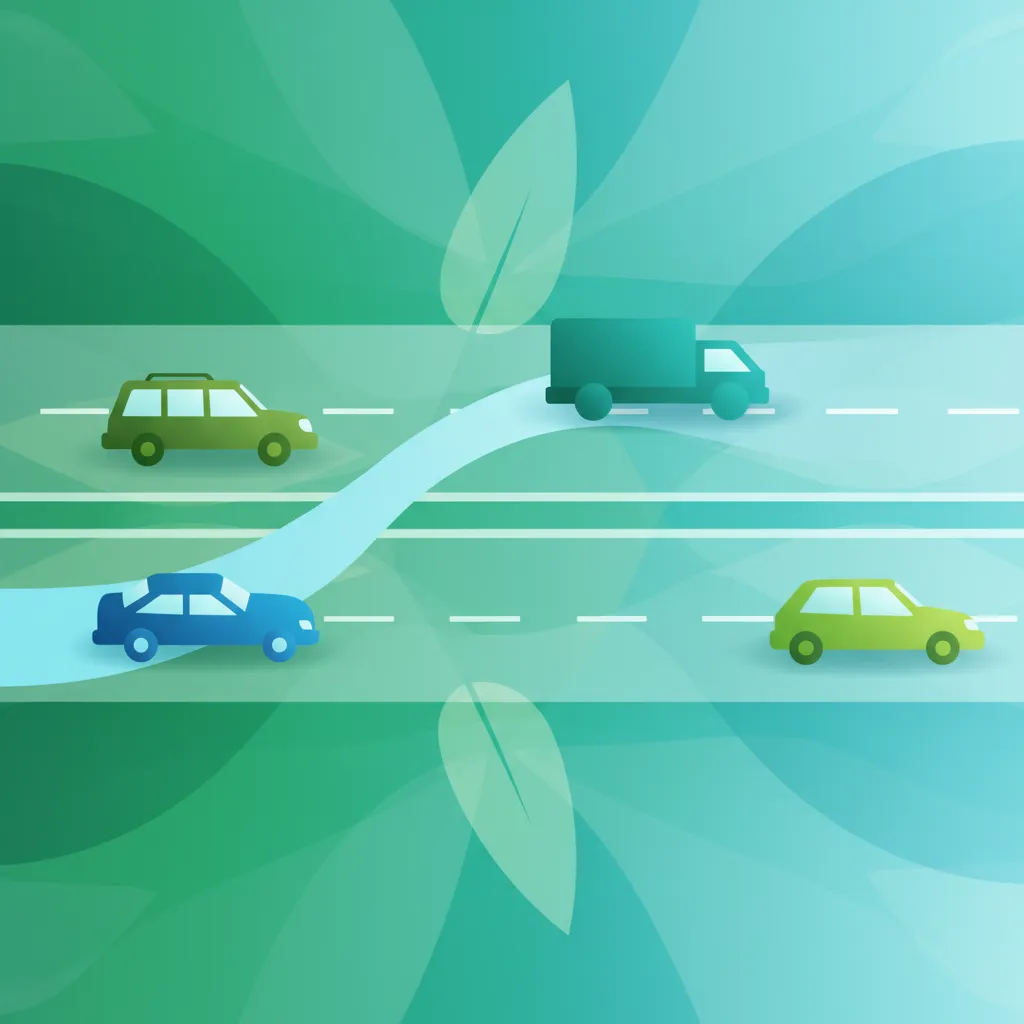
This lesson covers the critical maneuvers of merging and changing lanes. You will learn the correct technique for using an acceleration lane to match the speed of motorway traffic before merging smoothly and safely. The lesson emphasizes the importance of checking mirrors and the blind spot, signaling in good time, and applying the 'zipper principle' (dragkedjeprincipen) where lanes merge to ensure efficient and courteous traffic flow.
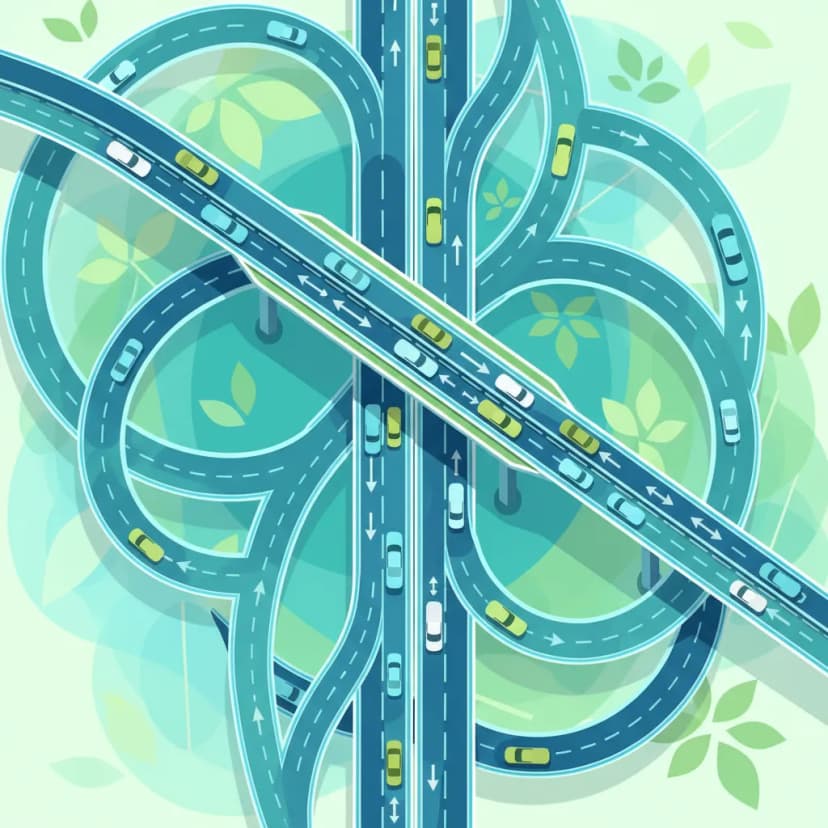
This lesson tackles the challenge of navigating some of the most complex road features, such as large multi-lane roundabouts and grade-separated interchanges. You will learn the importance of advance planning, choosing the correct lane on approach, clear signaling, and comprehensive observation to safely move through these busy areas. Mastering these junctions is a key indicator of an advanced and competent rider who can handle any road layout.

This lesson focuses on creating a complete awareness of the traffic situation around your vehicle. You will learn the correct procedure for using your interior and side mirrors in a continuous scanning pattern. Crucially, the lesson explains what the blind spot (döda vinkeln) is, where it is located, and why a physical head check over the shoulder is a non-negotiable safety step before any lateral movement like changing lanes or turning.
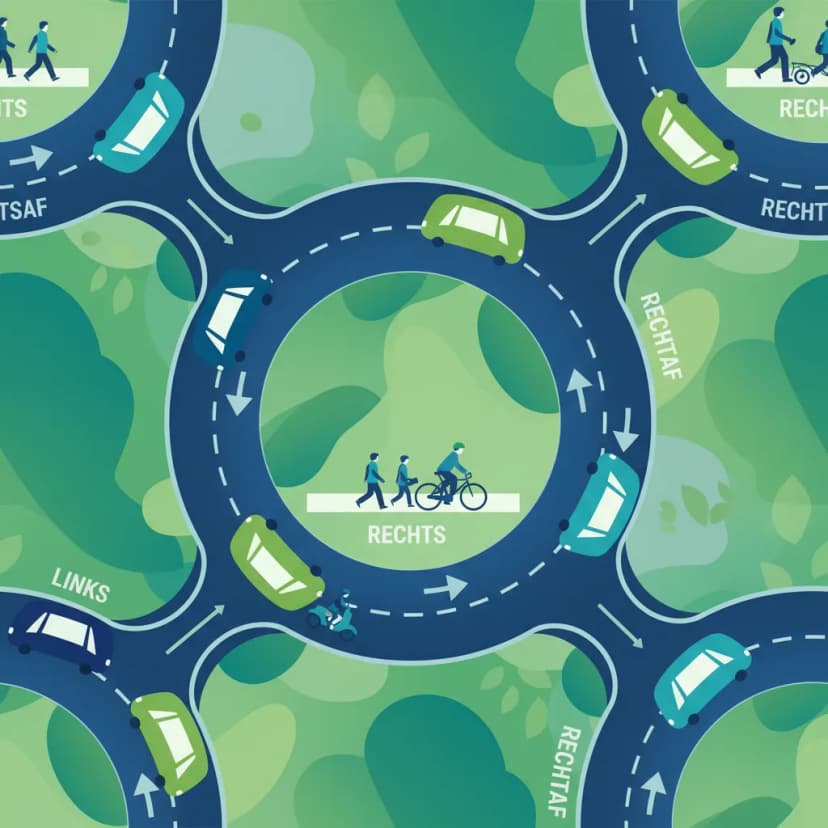
This lesson provides a detailed guide to navigating Swedish roundabouts (cirkulationsplatser). Key principles include always yielding to traffic already in the roundabout and choosing the correct lane based on your intended exit. You will learn the specific rules for signalling your intention to exit, how to safely interact with cyclists, and the techniques for maneuvering through multi-lane roundabouts to maintain traffic flow and prevent accidents.
This lesson provides a complete guide to motorway driving in Sweden. You will learn the correct procedures for merging from an on-ramp, maintaining proper lane discipline by keeping right unless overtaking, and exiting safely via off-ramps. The content emphasizes the importance of maintaining large safety margins at high speeds, checking blind spots thoroughly before any lane change, and knowing the correct safety procedures in case of a breakdown.
This lesson focuses on the unique challenges of driving in urban environments. You will learn techniques for anticipating the actions of vulnerable road users like pedestrians and cyclists, especially near crossings and bus stops. The content covers how to navigate narrow streets, one-way systems, and areas with heavy traffic, emphasizing the need for lower speeds, heightened awareness, and a defensive mindset.
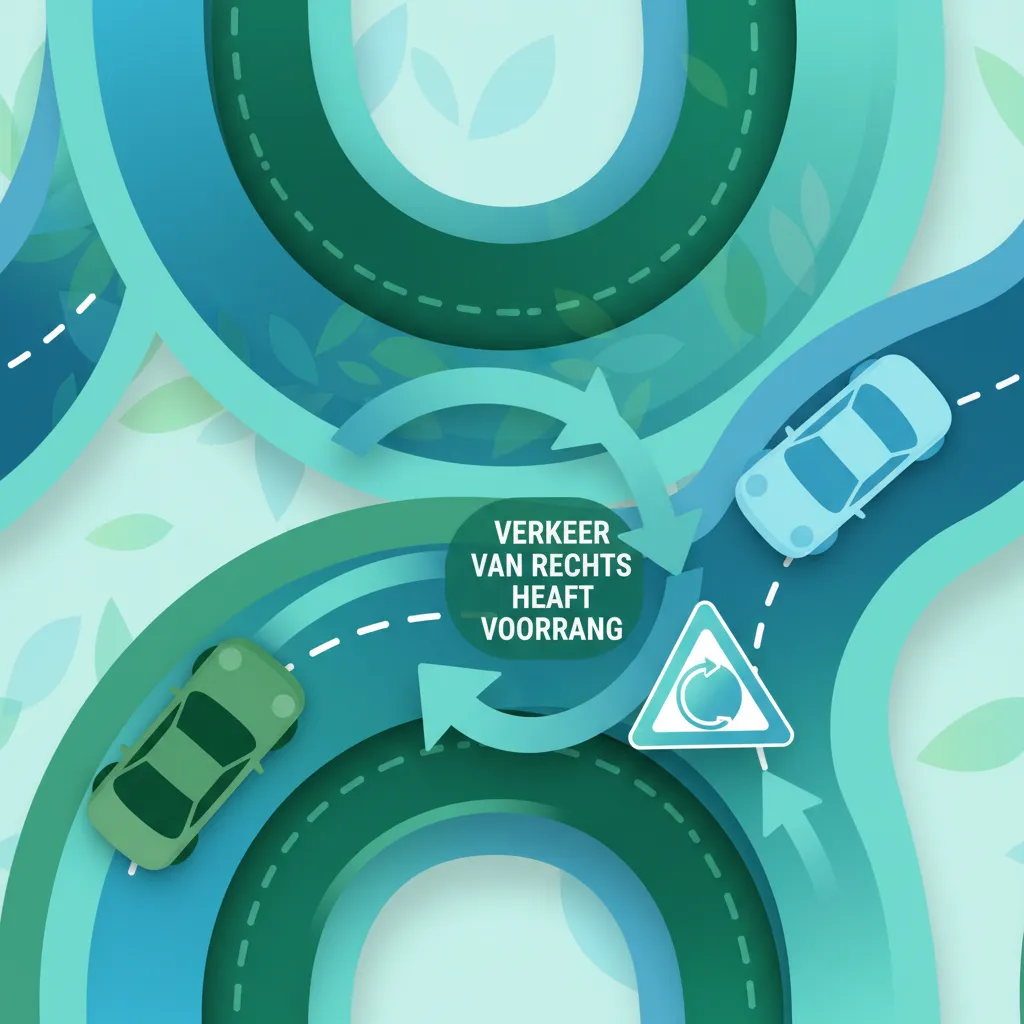
This lesson covers the critical maneuvers of overtaking and merging, which require precise judgment and communication. You will learn how to assess traffic speed and gaps, the importance of checking blind spots, and the correct use of signals to indicate your intentions. The content includes procedures for merging onto motorways from an on-ramp and how to perform safe overtaking maneuvers on various types of roads, minimizing risk to yourself and others.
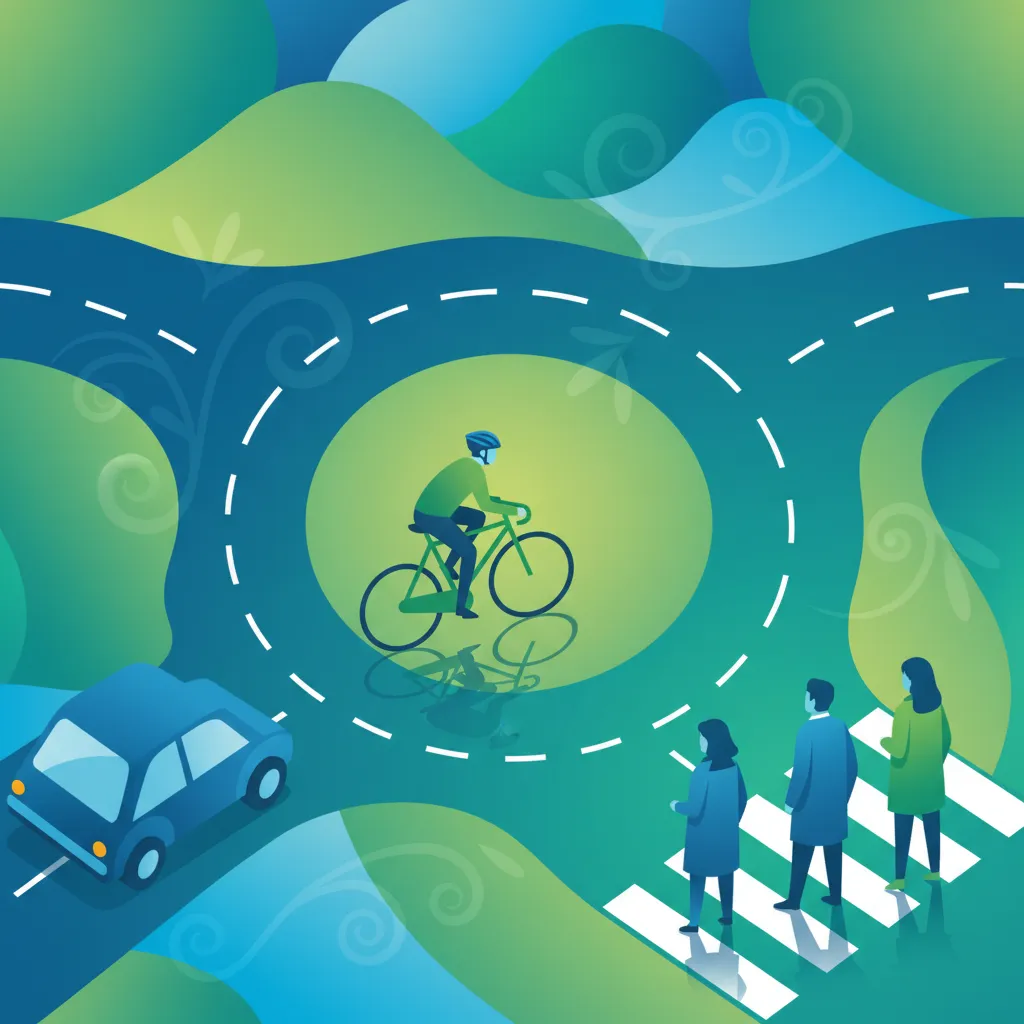
This lesson provides detailed guidance on navigating complex traffic points such as signalized intersections, multi-lane roundabouts, and pedestrian crossings. You will learn the correct procedures for entering and exiting roundabouts, the specific rules for yielding to pedestrians and cyclists at designated crossings, and how to interpret complex traffic light signals. These skills are vital for safe urban and suburban riding, where interaction with vulnerable road users is frequent.
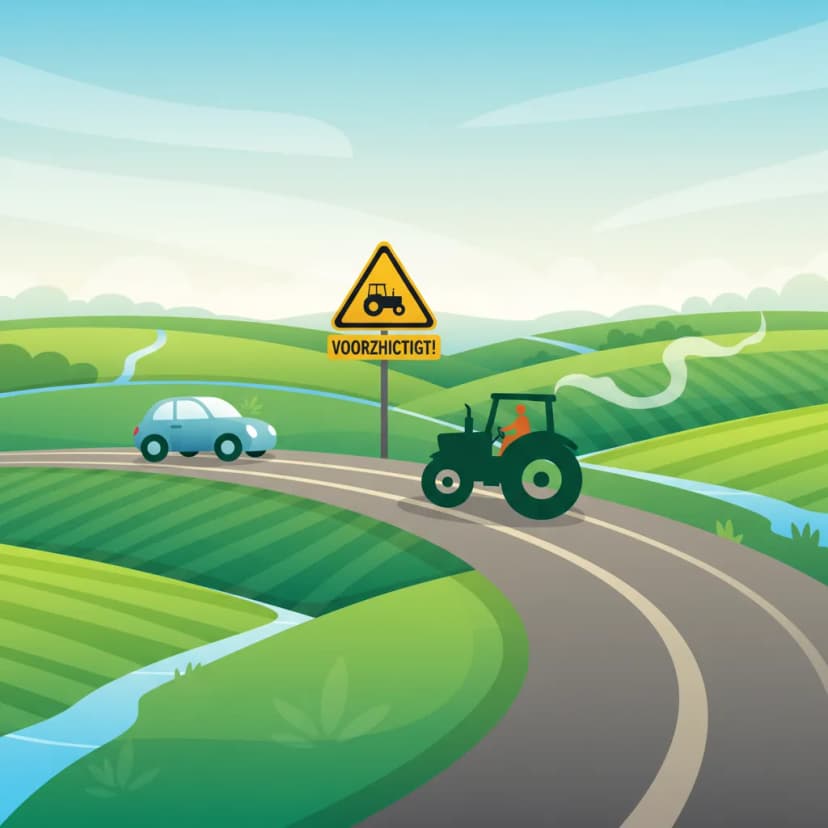
This lesson addresses the specific risks associated with driving on rural roads (landsvägar). You will learn how to manage higher speeds on narrow, winding roads with limited visibility due to curves and hills. The lesson covers procedures for safely overtaking slow-moving agricultural vehicles, managing encounters with oncoming traffic on narrow sections, and being constantly vigilant for wildlife, especially at dawn and dusk.
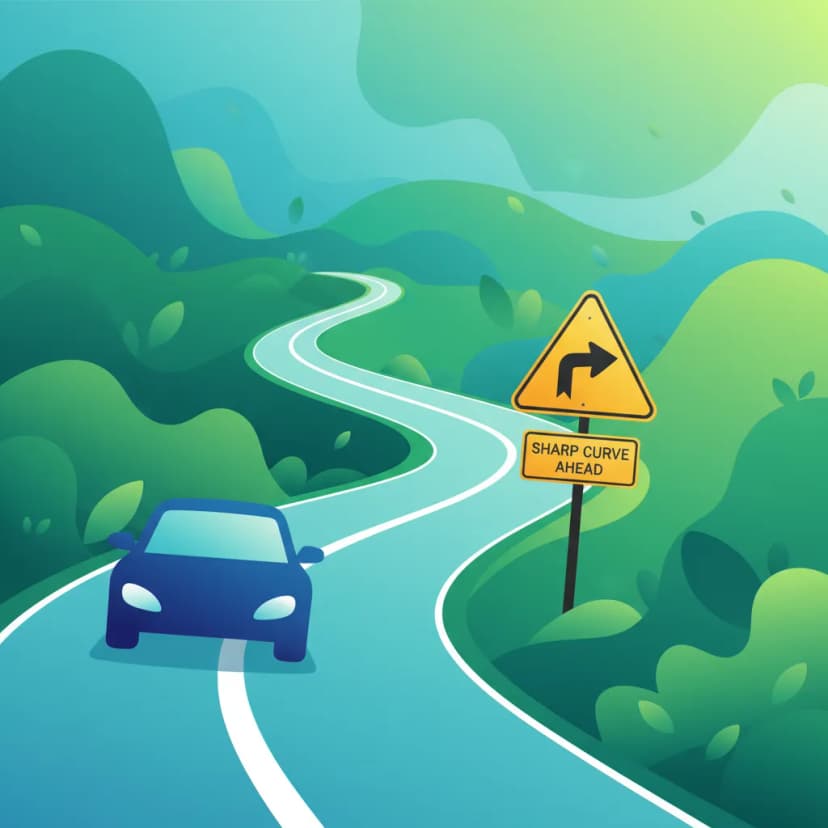
This lesson teaches the correct methodology for negotiating curves and turns of varying sharpness. You will learn the principle of 'slow in, fast out,' involving braking before the curve and gently accelerating through it to maintain stability and grip. The lesson also covers how to choose the correct line (placering) through a bend and how to use your vision effectively to look far ahead for a safe and controlled passage.
Learn how your choice of lane on multi-lane roads directly impacts your visibility to other drivers and your ability to anticipate their actions. This lesson focuses on strategic positioning to maximize safety and reduce risks when navigating Swedish roads with varied traffic. Essential for Category AM theory.
This lesson covers the critical maneuvers of merging and changing lanes. You will learn the correct technique for using an acceleration lane to match the speed of motorway traffic before merging smoothly and safely. The lesson emphasizes the importance of checking mirrors and the blind spot, signaling in good time, and applying the 'zipper principle' (dragkedjeprincipen) where lanes merge to ensure efficient and courteous traffic flow.
This lesson focuses on creating a complete awareness of the traffic situation around your vehicle. You will learn the correct procedure for using your interior and side mirrors in a continuous scanning pattern. Crucially, the lesson explains what the blind spot (döda vinkeln) is, where it is located, and why a physical head check over the shoulder is a non-negotiable safety step before any lateral movement like changing lanes or turning.

This lesson focuses on strategies to make yourself more visible to other road users, a critical factor in motorcycle safety. You will learn how to use lane positioning strategically to stay out of other drivers' blind spots and to maximize your own line of sight through corners and intersections. The content also covers the effectiveness of high-visibility and reflective clothing, as well as the correct use of lights to ensure you are seen in all conditions.

This lesson covers strategies for driving safely when visibility is compromised. You will learn the correct use of different lighting systems: when to use low beams, high beams (helljus), and how to avoid dazzling other drivers. The lesson also explains the specific regulations for using front and rear fog lights and provides techniques for navigating safely in dense fog or heavy precipitation by reducing speed and using the road edge as a guide.
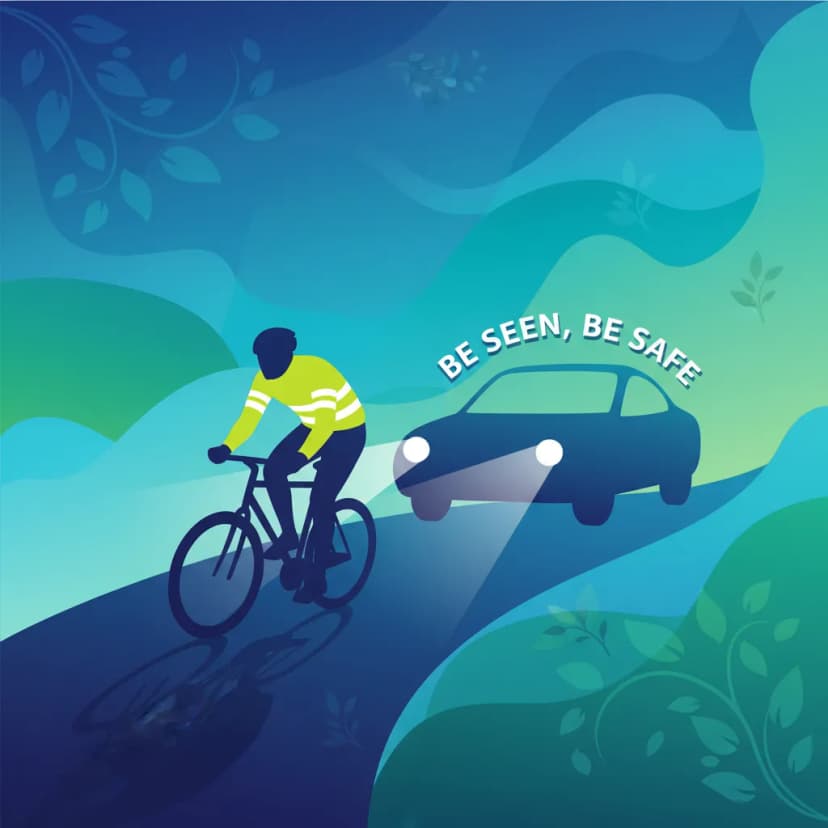
This lesson focuses on proactive strategies to increase a moped rider's visibility to other drivers. It strongly advocates for the use of high-visibility and reflective clothing, helmets, and accessories to stand out in traffic. Additionally, it revisits the concept of lane positioning as a tool to avoid being in other drivers' blind spots and to create a more prominent presence on the road.
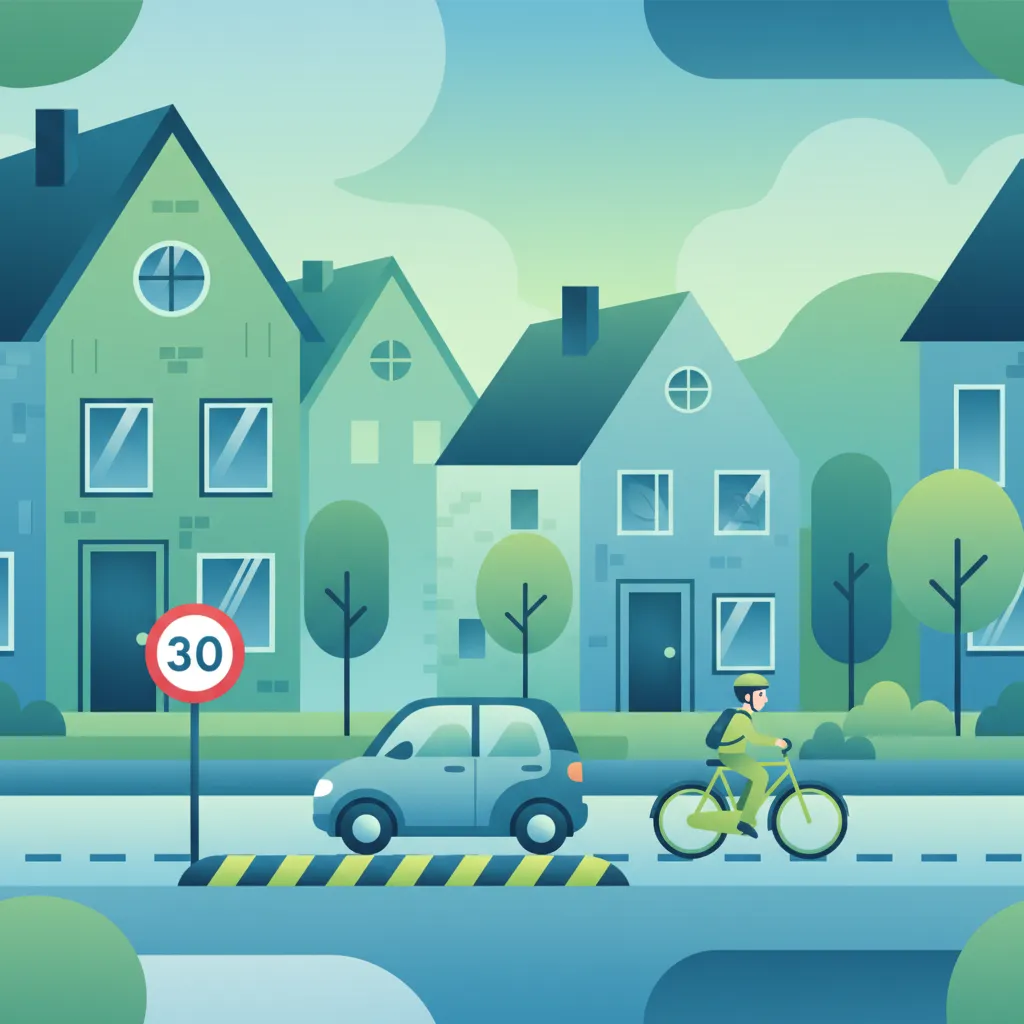
This lesson focuses on the high level of caution required when driving in residential areas. You will learn about the rules for special zones like 'gångfartsområde' (walking speed area) and the need to navigate around speed calming measures like speed bumps. The central theme is anticipating unpredictable behavior from residents, especially children, and managing the risks posed by parked cars that severely limit visibility.
This lesson covers the critical maneuvers of overtaking and merging, which require precise judgment and communication. You will learn how to assess traffic speed and gaps, the importance of checking blind spots, and the correct use of signals to indicate your intentions. The content includes procedures for merging onto motorways from an on-ramp and how to perform safe overtaking maneuvers on various types of roads, minimizing risk to yourself and others.
This lesson focuses on the unique challenges of driving in urban environments. You will learn techniques for anticipating the actions of vulnerable road users like pedestrians and cyclists, especially near crossings and bus stops. The content covers how to navigate narrow streets, one-way systems, and areas with heavy traffic, emphasizing the need for lower speeds, heightened awareness, and a defensive mindset.
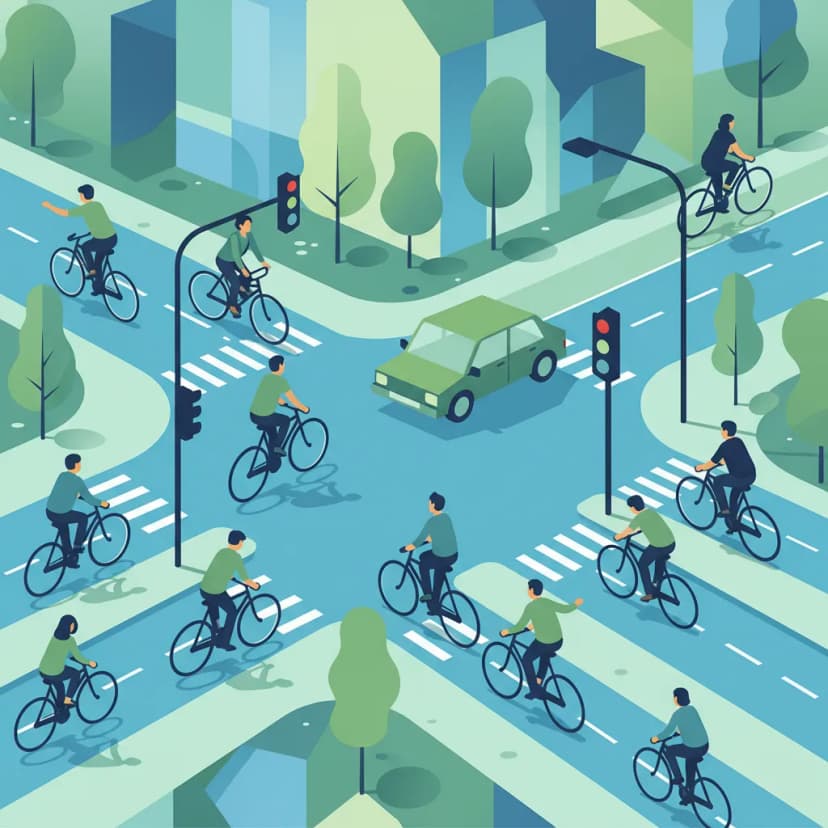
This lesson focuses on safe interaction with cyclists. You will learn to differentiate between a 'bicycle crossing' (cykelöverfart), where you have a duty to yield, and a 'bicycle passage' (cykelpassage), where specific priority rules apply. The content stresses the importance of leaving adequate space when overtaking cyclists and the critical danger of the 'right-hook' accident, emphasizing the need to check mirrors and blind spots carefully before turning right.

This lesson focuses on the variety of road markings used on Swedish roads and their meaning for motorcyclists. You will learn the difference between solid and broken lines regarding overtaking, how to position yourself correctly at intersections based on markings, and how to interpret symbols painted on the road surface. Adhering to these markings is essential for maintaining correct lane discipline and ensuring predictability for other road users.
Find clear answers to common questions learners have about Correct Lane Selection on Multi-Lane Roads. Learn how the lesson is structured, which driving theory objectives it supports, and how it fits into the overall learning path of units and curriculum progression in Sweden. These explanations help you understand key concepts, lesson flow, and exam focused study goals.
In Sweden, you must position your moped in the correct lane well in advance of the junction where you intend to turn. If you need to turn left, move to the leftmost available lane suitable for your direction. For a right turn, use the rightmost lane. Always check your mirrors and blind spots before changing lanes and signal your intentions clearly.
Generally, in Sweden, you should overtake on the left. Overtaking on the right is only permitted on roads where traffic is divided into at least two lanes in the same direction and the vehicle you are overtaking is signalling its intention to turn left, or is keeping to the left side of the road. Always ensure it is safe and legal to do so, and use the left lane.
When multiple lanes are designated for going straight, the general principle is to use the lane that best suits your speed and position relative to other traffic. Slower mopeds should keep to the right if there's a significant speed difference. However, always be prepared to move if necessary for safety and ensure you don't unnecessarily obstruct faster traffic.
Incorrect lane selection is a common cause of incorrect answers in the Swedish theory exam, especially concerning scenarios on multi-lane roads. Exam questions often test your ability to identify the correct lane for a specific maneuver or your response to hazards arising from poor lane discipline. Getting this wrong can lead to failing questions related to road positioning and maneuvers.
While the fundamental principles of lane selection and changing are similar, mopeds are generally slower vehicles. This means you must be extra aware of faster traffic and position yourself to be seen and to allow others to pass safely. You should always use lanes that are appropriate for your speed and anticipate the actions of larger vehicles.