Welcome to the lesson on Motorway Driving and Overtaking, part of the 'Driving in Different Environments' unit for the Swedish Category B license. Motorways present unique challenges due to high speeds and traffic density. This lesson will equip you with the essential knowledge and techniques for navigating them safely and legally, preparing you for both the theory exam and real-world driving.

Driving on Swedish motorways (motorvägar) demands a unique set of skills, knowledge, and an unwavering commitment to safety. As part of your Swedish Driving License Theory Course for Category B Cars, this lesson provides a comprehensive guide to navigating these high-speed roads. Mastering motorway procedures, from seamlessly merging onto the main carriageway to maintaining proper lane discipline and executing safe overtaking maneuvers, is crucial not only for passing your theory test but for ensuring your safety and the safety of others on the road.
Motorways are designed for efficiency and higher speeds, which means that errors can have amplified consequences. Therefore, understanding the underlying principles of predictable traffic flow, maintaining significant safety margins, and knowing how to respond in emergencies is paramount. This lesson will cover the essential regulations, practical techniques, and common pitfalls associated with motorway driving in Sweden.
Motorway driving is built upon a framework of interconnected concepts designed to maximize traffic flow while minimizing the risk of collisions. These principles consider the physical constraints of high speeds, human reaction times, and legal requirements.
Consistent driver behavior is the cornerstone of motorway safety. When all drivers adhere to uniform rules, such as the "keep-right" principle and left-lane overtaking, it creates an environment where movements are anticipated. This predictability significantly reduces conflicts and the need for abrupt braking or steering, which can be dangerous at high speeds.
At speeds ranging from 110 km/h to 120 km/h on selected stretches, vehicles possess substantial kinetic energy. This energy directly translates to longer stopping distances and more severe outcomes in the event of a collision. Consequently, maintaining large longitudinal (following distance) and lateral (side-to-side) safety margins is not just recommended but legally mandated to provide sufficient time for perception, reaction, and braking.
A clear hierarchy governs who has priority, particularly at entry points. Vehicles already traveling on the main motorway carriageway always have the right-of-way. Merging vehicles from an acceleration lane must yield, meaning they are responsible for matching speed and finding a safe gap without disrupting the existing traffic flow.
The hard shoulder (vägkant) and specific emergency-lane rules are critical safety features. They are designed to provide a safe refuge for disabled vehicles, separating them from high-speed traffic. This isolation prevents secondary accidents and ensures that emergency services can access incidents efficiently. Misusing these areas, such as driving on them to bypass traffic, is illegal and dangerous.
Driving on motorways requires a distinct approach compared to urban or rural roads. These techniques ensure smooth, safe, and legal navigation.
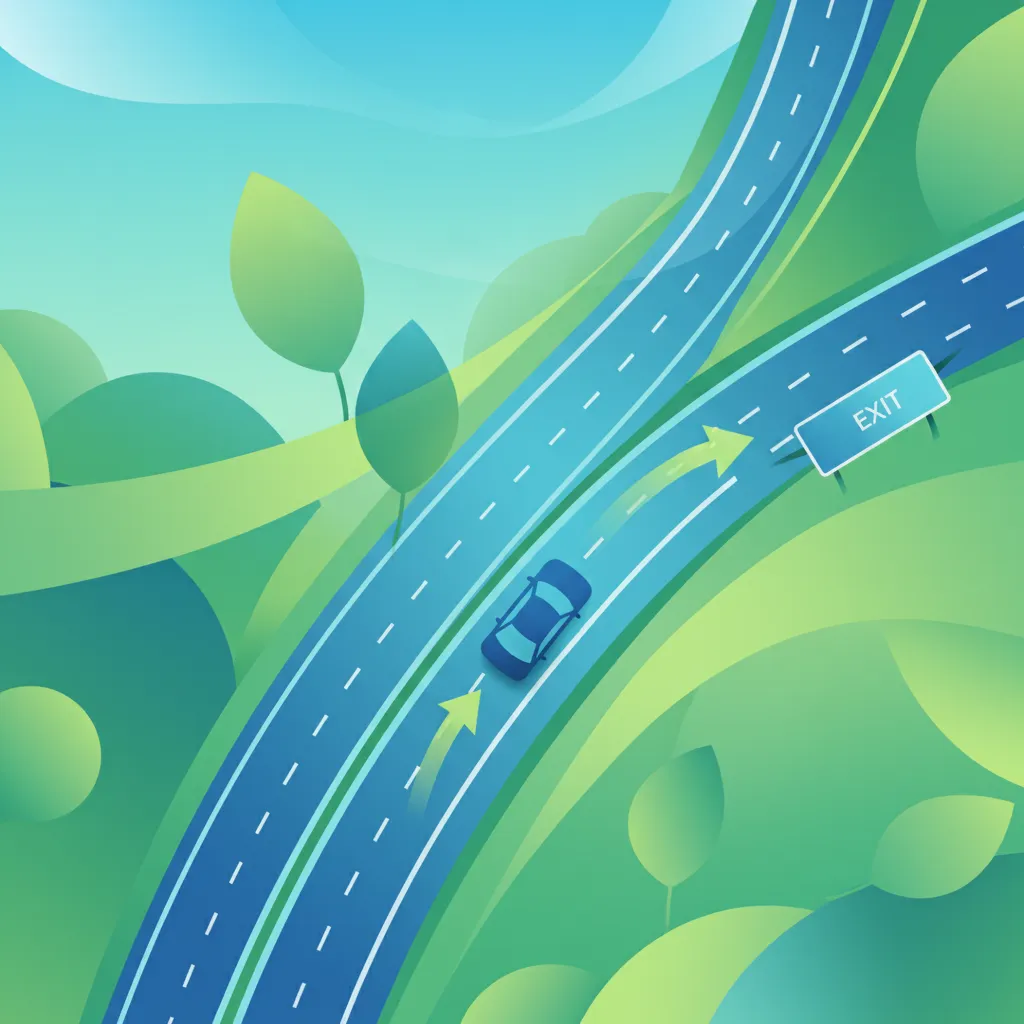
Entering a motorway from an on-ramp, also known as an acceleration lane (infiltreringsbana), is a critical maneuver that requires precision and awareness. The goal is to match the speed of the main motorway traffic and merge seamlessly without causing disruption.
Accelerate Appropriately: Use the entire length of the acceleration lane to build up speed. Aim to match the prevailing speed of traffic on the rightmost motorway lane. Avoid entering too slowly, as this forces main-lane traffic to brake.
Check Mirrors and Blind Spots: Continuously monitor your rear-view mirror and side mirror to identify gaps in traffic. Crucially, perform a head-check (glance over your shoulder) to check your blind spot (döda vinkel) for any vehicles you cannot see in your mirrors.
Signal Early: Activate your turn signal for at least three seconds before you intend to change lanes. This communicates your intent to other drivers, allowing them to anticipate your movement and adjust their speed or position if necessary.
Find a Safe Gap and Merge: Identify a gap in the rightmost lane that is large enough for you to enter without forcing other drivers to brake or swerve. Remember, vehicles already on the motorway have priority; you must yield. Adjust your speed to fit the gap, then steer smoothly into the lane.
Never stop at the end of an acceleration lane unless absolutely necessary due to extreme traffic conditions. Stopping can create a dangerous "speed trap" for following vehicles on the ramp and make merging significantly harder.
A fundamental principle on Swedish motorways, like in many European countries, is the "keep-right" rule (högerregeln i trafikförordningen). This rule dictates how you position your vehicle on multi-lane carriageways.
You must drive in the rightmost available lane unless you are actively overtaking another vehicle or preparing to exit the motorway from a left-hand off-ramp (which is less common on Swedish motorways, most exits are on the right). Once you have completed an overtaking maneuver, you should return to the right-hand lane as soon as it is safe to do so. This practice ensures predictable traffic flow and reserves the left lanes for higher-speed traffic or for passing.
Overtaking (omkörning) on Swedish motorways must always be performed on the left. Overtaking on the right is strictly prohibited and is a serious traffic offense.
Assess the Situation: Ensure the left-hand lane is clear for a sufficient distance to complete the maneuver safely. Check your mirrors for faster vehicles approaching from behind in the left lane.
Signal Your Intent: Activate your left turn signal for at least three seconds before moving into the left lane.
Move and Accelerate: Smoothly steer into the left lane and accelerate to pass the slower vehicle. Maintain a safe lateral distance from the vehicle you are passing.
Pass Safely: Continue in the left lane until you have safely cleared the overtaken vehicle. You should be able to see the entire front of the overtaken vehicle in your rear-view mirror before considering moving back. A good rule of thumb is to ensure at least a two-second gap between your front bumper and the rear bumper of the overtaken vehicle before returning to the right lane.
Signal and Return: Activate your right turn signal, check your mirrors and blind spot again, and then smoothly steer back into the right-hand lane. Deactivate your signal.
Even if the right lane is moving slowly, you are generally not permitted to overtake on the right. In very dense, slow-moving or stationary traffic, if vehicles in adjacent lanes are moving at similar, very low speeds, the prohibition might be interpreted differently, but the primary rule is always left-side overtaking.
A safe following distance is arguably the most critical safety measure on motorways. It provides the necessary time and space to react to sudden changes in traffic ahead, such as braking or obstacles.
The general recommendation for a safe following distance is to maintain at least a two-second gap behind the vehicle in front during normal driving conditions and speeds up to 80 km/h. On motorways, where speeds often exceed 100 km/h, this minimum increases to a three-second gap. In adverse conditions (rain, snow, fog, darkness, heavy vehicle load), this should be extended further to four seconds or more.
Pick a fixed point on the road ahead (e.g., a road sign, bridge, or tree). When the vehicle in front passes that point, start counting "one thousand one, one thousand two, one thousand three". If you reach the same point before you finish counting, you are too close.
At 110 km/h, a three-second gap translates to approximately 92 meters. This distance accounts for your perception-reaction time (the time it takes to see a hazard and react, typically around one second) and the vehicle's braking distance.
Adhering to speed limits is non-negotiable for motorway safety. Speed limits on Swedish motorways are typically 110 km/h, with some selected stretches allowing 120 km/h, always clearly indicated by signs.
Many modern motorways are equipped with electronic signs that display variable speed limits (variabel hastighetsbegränsning). These limits are adjusted in real-time based on traffic density, weather conditions (e.g., rain, snow, fog), or roadwork. It is mandatory to obey these variable limits, which override any static speed limit signs. Ignoring them not only incurs fines but significantly increases accident risk.
The hard shoulder (vägkant) is a vital safety feature on motorways, reserved exclusively for emergencies. Understanding its proper use and the breakdown procedure is crucial.
The hard shoulder is strictly for emergency stops, such as mechanical breakdowns, medical emergencies, or when instructed by police or emergency services. It is illegal to use the hard shoulder for:
Using the hard shoulder for non-emergencies obstructs legitimate emergency access and puts you and others at severe risk.
In the unfortunate event of a vehicle breakdown on a motorway, swift and correct actions can prevent secondary collisions.
Safely Pull Over: If your vehicle develops a fault, gradually reduce speed and try to steer your vehicle to the hard shoulder. Park as far to the right as possible, away from the moving traffic lanes.
Activate Hazard Lights: Immediately switch on your hazard warning lights (varningsblinkers) to alert other drivers that your vehicle is stationary and potentially a hazard.
Place Warning Triangle: Exit your vehicle carefully, preferably from the passenger side if on the hard shoulder, and walk a safe distance behind your vehicle. Place your warning triangle (varningstriangel) at least 100 meters behind your vehicle.
On motorways, especially where speeds exceed 100 km/h, a distance of 150 meters is recommended to give approaching traffic sufficient warning.
Seek Safety: Once the triangle is placed, return to a safe location. If possible, wait behind a safety barrier. If no barrier is available, stay in your vehicle with your seatbelt on, especially if it's too dangerous to stand outside. Always call for roadside assistance.
Effective communication with other road users is vital, especially at high speeds. This is achieved through proper use of signals and lights.
Any change of lane, whether merging, overtaking, or exiting, must be indicated with your turn signals. As mentioned, the signal must be activated for at least three seconds before you initiate the maneuver. This provides ample time for other drivers to register your intent and react accordingly.
Headlights are mandatory at all times when visibility is reduced (e.g., at night, in rain, fog, or snow). During daylight hours, dipped beam headlights are generally required. Ensure your headlights are always correctly adjusted to avoid dazzling oncoming drivers.
Front fog lights should only be used when visibility is significantly reduced, typically to less than 50 meters, due to fog, heavy rain, or snow. Rear fog lights are even brighter and should only be used when visibility is severely impaired (less than 50 meters) to make your vehicle more visible from behind. It is crucial to switch off fog lights once visibility improves to avoid causing glare and confusion to other drivers. Using them in clear weather is illegal and can lead to fines.
Several specific regulations from the Swedish Road Traffic Act (Vägtrafiklag) and Traffic Ordinance (Trafikförordning) govern motorway driving.
These legal references are crucial for the Swedish Category B theory test. Familiarize yourself with the principles they represent.
The primary Swedish law governing all road traffic, establishing fundamental rules and responsibilities for road users.
A more detailed regulation that complements the Vägtrafiklag, specifying operational rules for vehicles and road users, including specific distances and procedures.
Being aware of common errors can help you avoid them and enhance your safety on Swedish motorways.
Motorway driving principles remain constant, but their application must be adapted to changing environmental and traffic conditions.
Lesson content overview
Explore all units and lessons included in this driving theory course.
Explore search topics learners often look for when studying Motorway Driving and Overtaking. These topics reflect common questions about road rules, driving situations, safety guidance, and lesson level theory preparation for learners in Sweden.
Browse additional driving theory lessons that cover connected traffic rules, road signs, and common driving situations related to this topic. Improve your understanding of how different rules interact across everyday traffic scenarios.
Learn the critical Swedish rules for entering and exiting motorways. This lesson covers safe merging techniques, correct lane discipline for on-ramps and off-ramps, and essential speed adjustments for seamless integration into traffic flow.
This lesson covers the critical maneuvers of merging and changing lanes. You will learn the correct technique for using an acceleration lane to match the speed of motorway traffic before merging smoothly and safely. The lesson emphasizes the importance of checking mirrors and the blind spot, signaling in good time, and applying the 'zipper principle' (dragkedjeprincipen) where lanes merge to ensure efficient and courteous traffic flow.
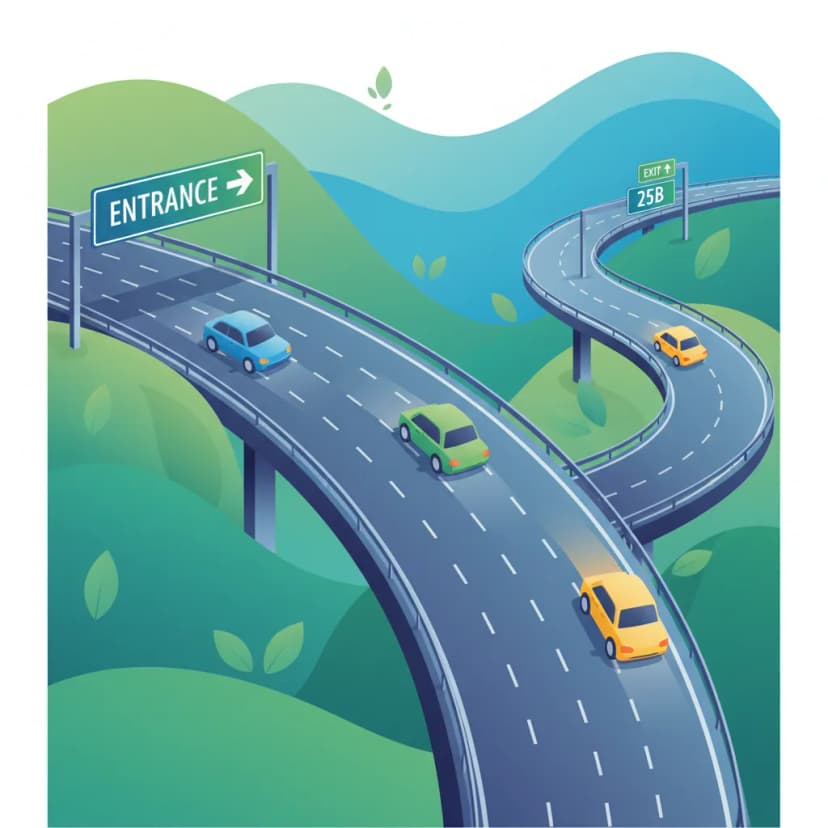
This lesson provides a step-by-step guide to motorway riding. You will learn the correct technique for accelerating on an on-ramp and merging smoothly into high-speed traffic. The content also covers maintaining proper lane discipline, executing safe overtakes, keeping a safe following distance at speed, and planning for your exit well in advance to ensure a smooth and stress-free experience on Sweden's fastest roads.
This lesson covers the critical maneuvers of overtaking and merging, which require precise judgment and communication. You will learn how to assess traffic speed and gaps, the importance of checking blind spots, and the correct use of signals to indicate your intentions. The content includes procedures for merging onto motorways from an on-ramp and how to perform safe overtaking maneuvers on various types of roads, minimizing risk to yourself and others.
This lesson provides clear guidance on selecting the appropriate lane on multi-lane roads to match your intended direction of travel. It covers the rules and best practices for moving into turning lanes, positioning for overtakes, and maintaining a steady course. The focus is on making early, predictable decisions to ensure smooth integration with surrounding traffic.
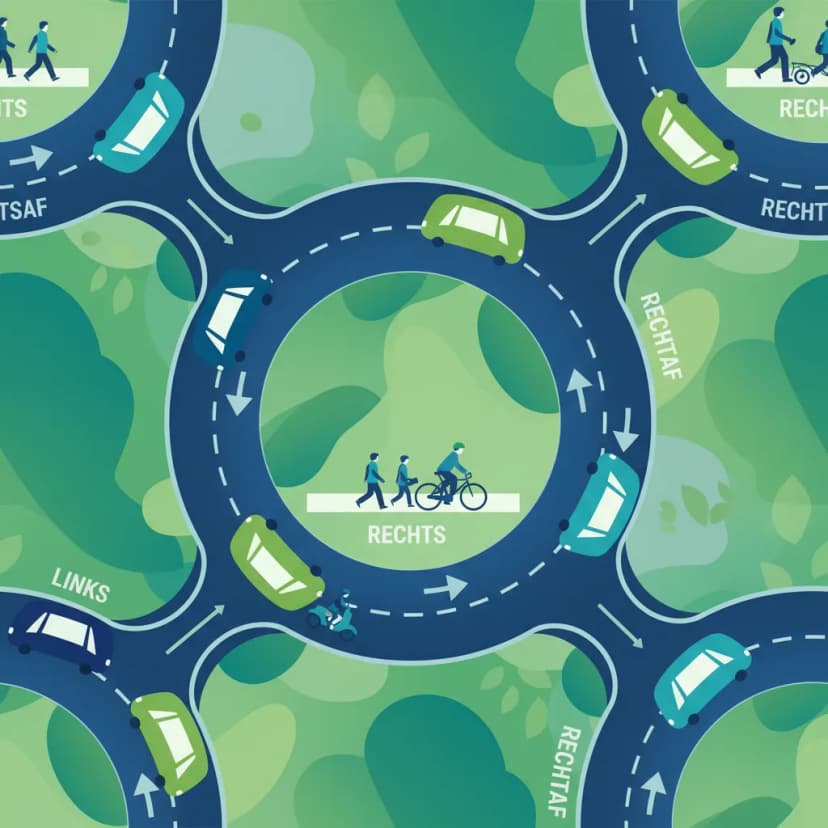
This lesson provides a detailed guide to navigating Swedish roundabouts (cirkulationsplatser). Key principles include always yielding to traffic already in the roundabout and choosing the correct lane based on your intended exit. You will learn the specific rules for signalling your intention to exit, how to safely interact with cyclists, and the techniques for maneuvering through multi-lane roundabouts to maintain traffic flow and prevent accidents.
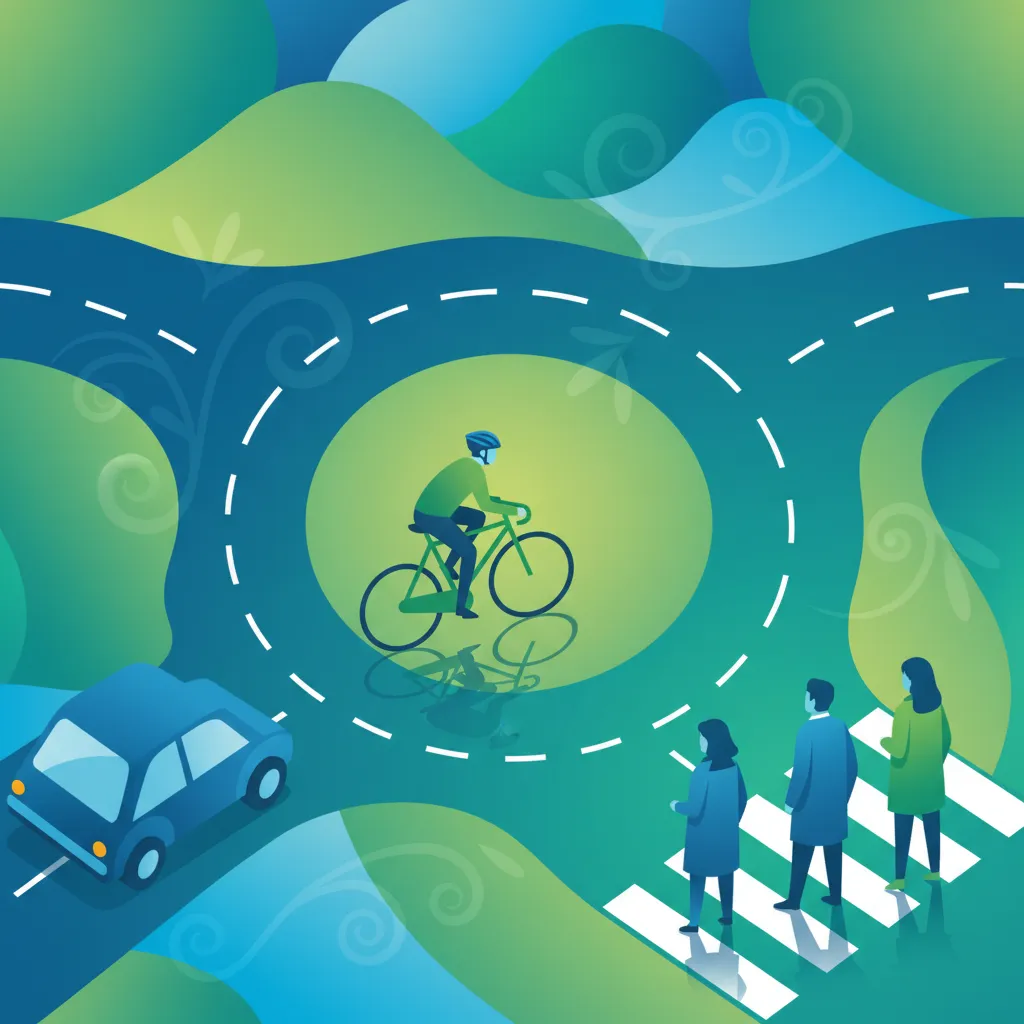
This lesson provides detailed guidance on navigating complex traffic points such as signalized intersections, multi-lane roundabouts, and pedestrian crossings. You will learn the correct procedures for entering and exiting roundabouts, the specific rules for yielding to pedestrians and cyclists at designated crossings, and how to interpret complex traffic light signals. These skills are vital for safe urban and suburban riding, where interaction with vulnerable road users is frequent.

This lesson focuses on regulated intersections where priority is determined by signs indicating a main road (huvudled), a duty to yield (väjningsplikt), or a duty to stop (stopplikt). You will learn how to identify which road has priority and your legal obligation to give way to all traffic on that road before proceeding. The lesson covers proper procedures for approaching these junctions, assessing traffic, and entering the main road safely.

This lesson tackles the challenge of navigating some of the most complex road features, such as large multi-lane roundabouts and grade-separated interchanges. You will learn the importance of advance planning, choosing the correct lane on approach, clear signaling, and comprehensive observation to safely move through these busy areas. Mastering these junctions is a key indicator of an advanced and competent rider who can handle any road layout.

This lesson focuses on the variety of road markings used on Swedish roads and their meaning for motorcyclists. You will learn the difference between solid and broken lines regarding overtaking, how to position yourself correctly at intersections based on markings, and how to interpret symbols painted on the road surface. Adhering to these markings is essential for maintaining correct lane discipline and ensuring predictability for other road users.

This lesson provides practical instructions for safely navigating different types of intersections and roundabouts. It covers procedures for approaching, entering, and exiting roundabouts, emphasizing the rule to yield to traffic already circulating. The content also addresses how to handle signal-controlled and uncontrolled intersections, ensuring riders select the correct lane and manage their speed appropriately.
Master safe overtaking procedures and maintain appropriate distances on Swedish motorways. Understand the theory behind high-speed lane changes and essential safety protocols for handling unexpected breakdowns in this environment.
This lesson provides a step-by-step guide to motorway riding. You will learn the correct technique for accelerating on an on-ramp and merging smoothly into high-speed traffic. The content also covers maintaining proper lane discipline, executing safe overtakes, keeping a safe following distance at speed, and planning for your exit well in advance to ensure a smooth and stress-free experience on Sweden's fastest roads.
This lesson covers the critical maneuvers of overtaking and merging, which require precise judgment and communication. You will learn how to assess traffic speed and gaps, the importance of checking blind spots, and the correct use of signals to indicate your intentions. The content includes procedures for merging onto motorways from an on-ramp and how to perform safe overtaking maneuvers on various types of roads, minimizing risk to yourself and others.
This lesson covers the critical maneuvers of merging and changing lanes. You will learn the correct technique for using an acceleration lane to match the speed of motorway traffic before merging smoothly and safely. The lesson emphasizes the importance of checking mirrors and the blind spot, signaling in good time, and applying the 'zipper principle' (dragkedjeprincipen) where lanes merge to ensure efficient and courteous traffic flow.
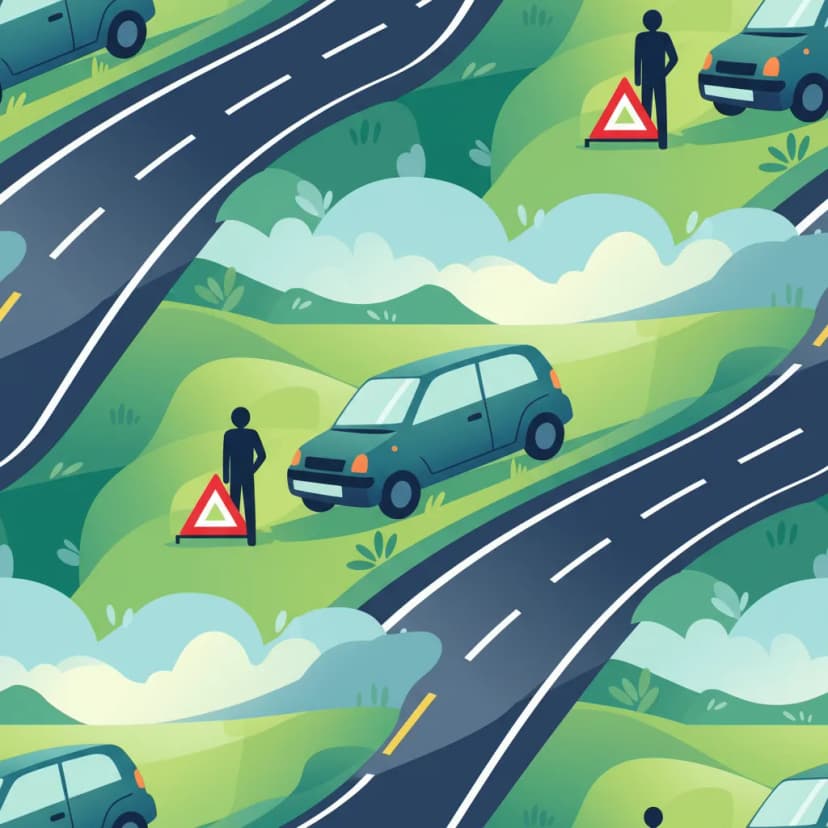
This lesson provides a safety protocol for dealing with a vehicle breakdown. You will learn the importance of trying to move the vehicle as far off the road as possible, preferably onto the shoulder or into an emergency lay-by. The lesson stresses that on high-traffic roads, the occupants' personal safety is the top priority; this involves wearing a reflective vest and waiting for assistance in a safe location away from the vehicle and the flow of traffic.
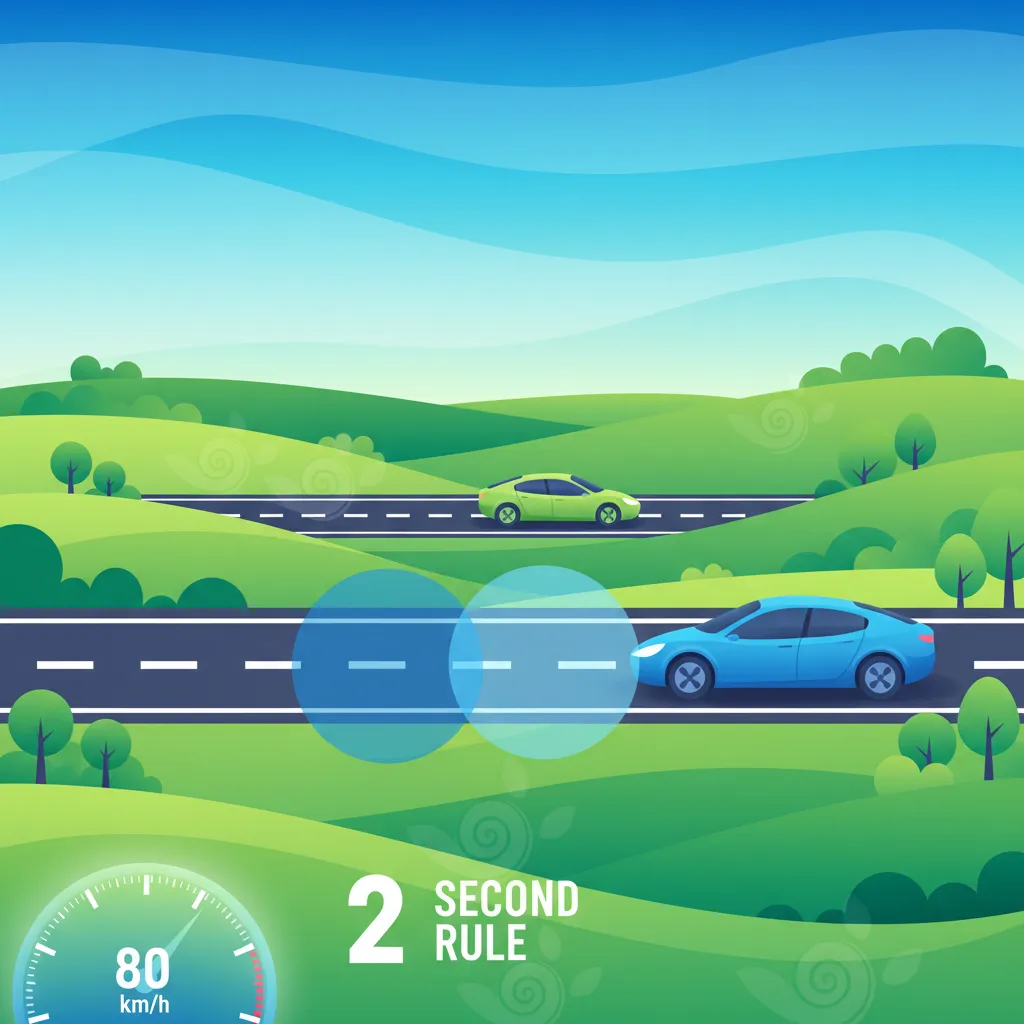
This lesson teaches practical methods for maintaining a safe buffer to the vehicle ahead, with a primary focus on the universally recommended 'three-second rule'. You will learn how to apply this rule by picking a fixed point and counting the seconds until you pass it. The content also explains why this distance must be increased significantly in adverse conditions such as rain, snow, or when following large vehicles that obstruct your view.

This lesson focuses on the unique demands of managing speed in high-speed environments like motorways. You will learn techniques for maintaining a steady, appropriate speed that matches the flow of traffic, how to perform smooth overtakes, and the importance of increasing your following distance. It also covers physical factors such as managing wind blast and maintaining stability when riding near large trucks, ensuring a safe and controlled high-speed riding experience.
This lesson provides detailed guidance on navigating complex traffic points such as signalized intersections, multi-lane roundabouts, and pedestrian crossings. You will learn the correct procedures for entering and exiting roundabouts, the specific rules for yielding to pedestrians and cyclists at designated crossings, and how to interpret complex traffic light signals. These skills are vital for safe urban and suburban riding, where interaction with vulnerable road users is frequent.

This lesson focuses on the correct use of warning devices to protect an accident or breakdown scene. You will learn to immediately activate your hazard lights (varningsblinkers). The main focus is on the proper placement of the warning triangle, explaining how the distance from the vehicle must be adapted based on the road's speed limit and visibility to give oncoming drivers adequate time to react.
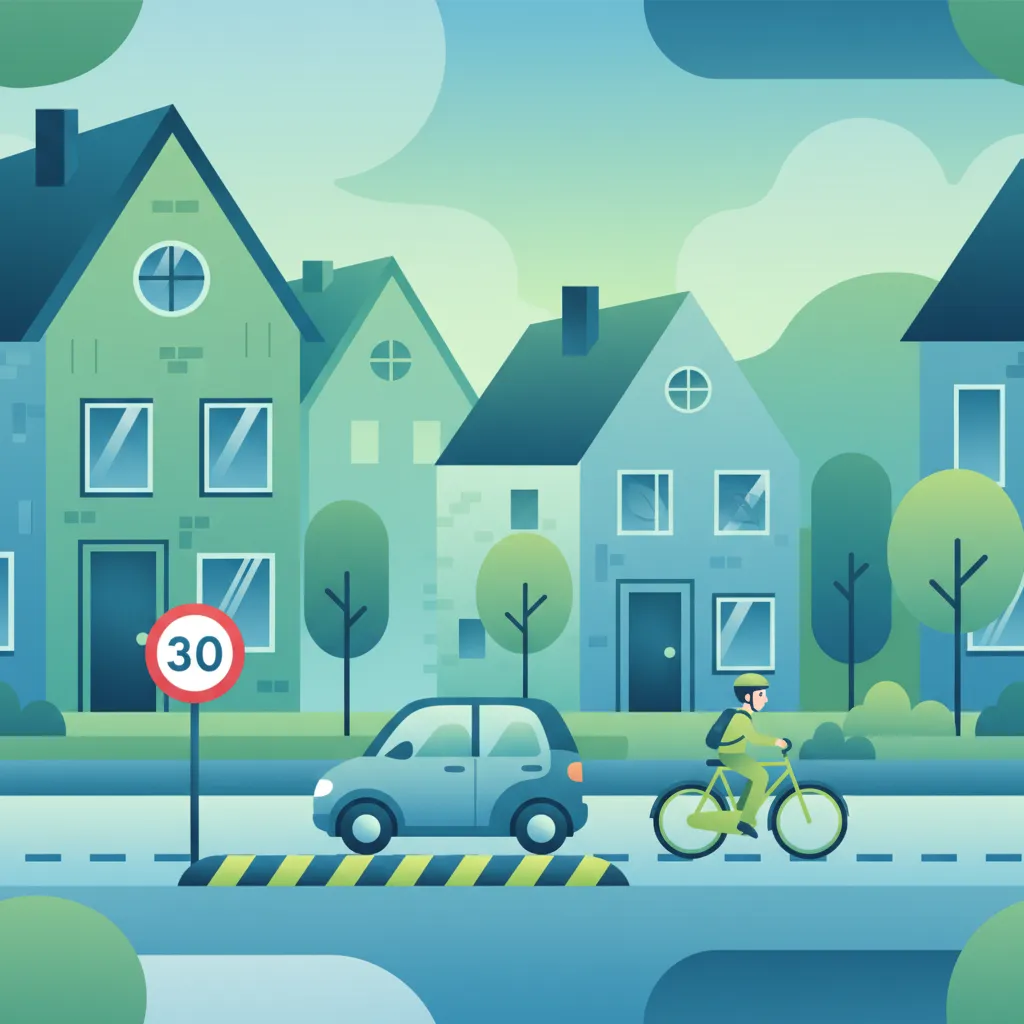
This lesson focuses on the high level of caution required when driving in residential areas. You will learn about the rules for special zones like 'gångfartsområde' (walking speed area) and the need to navigate around speed calming measures like speed bumps. The central theme is anticipating unpredictable behavior from residents, especially children, and managing the risks posed by parked cars that severely limit visibility.
This lesson provides a detailed guide to navigating Swedish roundabouts (cirkulationsplatser). Key principles include always yielding to traffic already in the roundabout and choosing the correct lane based on your intended exit. You will learn the specific rules for signalling your intention to exit, how to safely interact with cyclists, and the techniques for maneuvering through multi-lane roundabouts to maintain traffic flow and prevent accidents.
Find clear answers to common questions learners have about Motorway Driving and Overtaking. Learn how the lesson is structured, which driving theory objectives it supports, and how it fits into the overall learning path of units and curriculum progression in Sweden. These explanations help you understand key concepts, lesson flow, and exam focused study goals.
On Swedish motorways with multiple lanes in the same direction, you must generally keep to the right-most lane. Overtaking should be done using the lane to your left. Once overtaking is complete, you must return to the right-hand lane unless specific road markings or traffic conditions dictate otherwise.
To merge safely, accelerate on the on-ramp to match the speed of traffic on the motorway. Check your mirrors and blind spot carefully for a gap. Signal your intention to merge and steer smoothly into the gap. Be prepared to adjust your speed if necessary.
At motorway speeds, maintaining a safe distance is critical. While the general rule is the three-second rule, at higher speeds and in varying conditions, you should increase this distance. Always ensure you have enough space to react and brake safely if the vehicle in front stops suddenly.
If your vehicle breaks down on a motorway, turn on your hazard warning lights immediately. If possible, steer your vehicle to the right shoulder (vägren). Turn off the engine and exit the vehicle from the side furthest from traffic, if safe to do so. Place the warning triangle at an appropriate distance behind your vehicle and wait for assistance on a safe spot, preferably off the road.
Yes, while the general speed limit might be 110 or 120 km/h, the lane you use can affect your effective speed. You should always use the right lane for normal driving and only move to the left lane for overtaking. Some motorways may also have variable speed limits indicated by electronic signs.