Welcome to the Swedish Driving License Theory Course for Category B Cars! This lesson focuses on Road Markings and Pavement Symbols (Vägmarkeringar), a crucial part of understanding traffic organisation on Swedish roads. Building on your knowledge of road signs, you'll now learn how markings directly on the road surface provide essential guidance and legal directives, preparing you thoroughly for exam questions and safe driving.
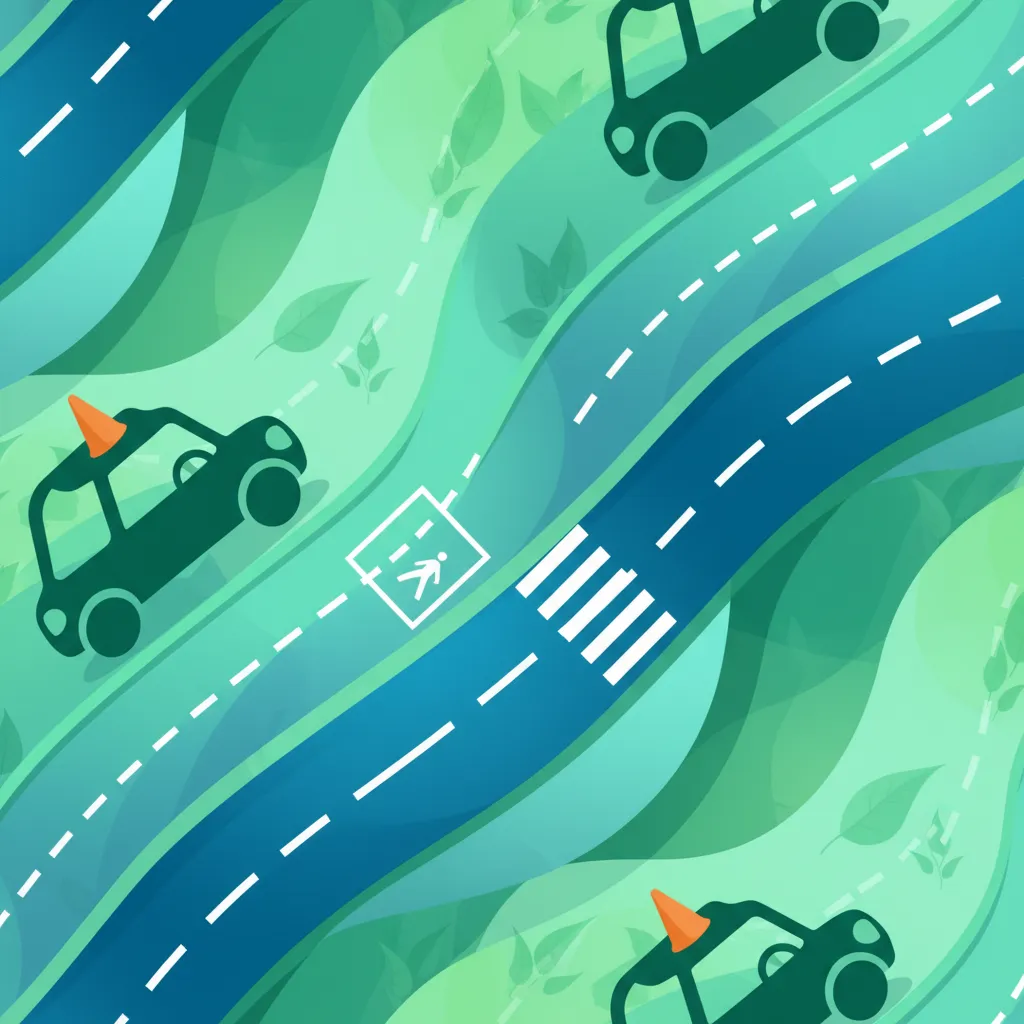
Driving on Swedish roads requires a thorough understanding of all traffic regulations, and road markings (vägmarkeringar) are a fundamental component of this system. These painted lines, symbols, and words directly on the road surface provide essential information and directives to drivers. They work in conjunction with traffic signs and signals to ensure smooth traffic flow, enhance safety, and prevent collisions across the entire road network.
Road markings serve as immediate, visual cues that translate abstract legal rules into concrete actions for drivers. They delineate lanes, indicate where stopping or parking is prohibited, guide vehicle movements at intersections, and protect vulnerable road users like pedestrians and cyclists. For anyone seeking a Swedish Category B driving license, mastering the interpretation and adherence to these markings is not just a recommendation, but a legal obligation under the Trafikförordning (Swedish Traffic Regulations). Misunderstanding or ignoring them can lead to dangerous situations, traffic offenses, and significant fines.
To effectively interpret road markings, it's crucial to understand the fundamental principles governing their design and application. These principles ensure consistency and clarity, allowing drivers to make rapid, informed decisions on the road.
In Sweden, white road markings are used for permanent traffic organization and typically guide the regular flow of traffic. This includes everything from lane dividers and edge lines to stop lines and pedestrian crossings. White markings define standard operating procedures and are present on most roads, serving as the default color for most directives.
Yellow road markings signify temporary changes to traffic patterns or designate special-use lanes. These are often encountered in construction zones, during road maintenance, or for dedicated public transport lanes (like bus or tram lanes). When yellow markings are present, they always take precedence over any conflicting permanent white markings, indicating a temporary shift in rules or usage.
Always pay extra attention in areas with yellow markings. They signal a departure from the usual rules and often indicate increased hazards or a need for altered driving behavior.
The continuity of a line is a key indicator of its legal significance. This principle is vital for safe lane changes and overtaking maneuvers.
Road markings are categorized by their orientation relative to the direction of travel:
Sweden adheres to European standards (SS-EN 12899-2) for its pavement symbols. This standardization ensures that symbols like arrows, parking indications, or speed limits are uniformly understood across the country. Drivers must learn the precise meaning of each symbol to respond correctly.
Longitudinal markings are essential for defining the usable roadway and organizing traffic flow over distances.
Edge lines are continuous white lines found along the outer perimeter of the carriageway. They clearly separate the main travel lanes from the hard shoulder, curb, or breakdown lane.
Never assume a broken edge line permits parking. While it suggests the shoulder might be used, parking rules are dictated by specific signs or symbols, not solely by the edge line.
Centre lines are perhaps the most critical longitudinal markings, as they organize lanes and dictate overtaking rules.
Overtaking must always be performed safely, ensuring adequate sight distance and clear road ahead, even where a broken line permits it.
Lane direction arrows are white symbols painted within traffic lanes, indicating the mandatory direction of travel from that lane.
These arrows are legally binding. Drivers must enter the appropriate lane well in advance for their intended movement and follow the indicated direction, regardless of traffic light color. Ignoring these arrows can cause significant confusion and collisions, especially at busy intersections.
Transverse markings dictate driver actions at specific points, often related to priority rules and intersections.
A stop line is a thick, solid white line painted across the carriageway, typically found before traffic signals, stop signs, or pedestrian crossings. It indicates the precise point where vehicles must come to a complete halt when required. The entire vehicle, including the front bumper, must be positioned behind the stop line to ensure optimal visibility for all road users and prevent obstructing cross-traffic or pedestrian paths.
Stopping on or past the stop line is a traffic offense. It can obstruct pedestrians, block the view of other drivers, and potentially interfere with traffic light sensors.
A give-way line (also known as a yield line) is a broken white line, often accompanied by a triangular "V" symbol painted on the road surface. This marking instructs drivers to reduce speed and be prepared to stop, yielding priority to traffic on the main road before proceeding. Unlike a stop line, a full stop is not always required; drivers may proceed without stopping if the way is clear and safe.
Pedestrian crossings, commonly known as "zebra crossings" (övergångsställen), are marked by a series of alternating white longitudinal stripes painted across the road. These areas designate a safe and prioritized zone for pedestrians to cross the street.
It is crucial to be extra vigilant at these crossings, especially in urban areas or near schools, as pedestrians always have priority.
Dedicated lanes for specific types of traffic are often marked with distinct colors or symbols to enhance safety and efficiency.
Cyclist and Bus Lanes are typically identified by solid yellow longitudinal lines or sometimes broken yellow lines, often accompanied by specific symbols (e.g., a bus icon or bicycle icon).
Yellow markings always take precedence over white markings. If a yellow line temporarily covers a white line, obey the yellow line.
Beyond lines, various symbols painted on the road surface provide specific instructions or information.
These pictograms inform drivers about parking and stopping regulations directly on the pavement.
Similar to lane direction arrows, other arrows can provide guidance within a lane or signal specific information. These reinforce instructions given by signs or help manage complex traffic situations.
Numeric speed limits (e.g., "30," "50") are sometimes painted directly onto the road surface, often within a white circle. These are typically used in areas where a speed reduction is critical, such as residential zones, school areas, or temporary construction zones, and serve to reinforce posted speed limit signs or to define a speed limit where signs might be less visible. These painted limits are legally binding and must be obeyed.
All road markings in Sweden are legally enforceable under the Trafikförordning. Disobeying them constitutes a traffic offense and can result in fines, penalty points, or even license suspension, depending on the severity and context of the violation.
| Rule | Applicability | Legal Status | Rationale |
|---|---|---|---|
| No crossing a solid centre line | All road types, both directions | Mandatory | Prevents head-on collisions and maintains lane integrity. |
| Overtaking only where a broken line exists on driver’s side | Roads with centre markings | Mandatory | Ensures adequate sight distance and safe overtaking. |
| Stop before a solid white stop line when required | Intersections with signals, signs, pedestrian crossings | Mandatory | Guarantees clear sight for all users and smooth traffic flow. |
| Yield at a give-way line when main road traffic approaches | Minor road junctions, roundabouts | Mandatory | Protects right-of-way traffic, reducing intersection conflicts. |
| Do not use a solid yellow lane (bus/tram/bike lane) unless authorized | Roads with solid yellow lane markings | Mandatory | Preserves public transport flow and protects vulnerable road users. |
| Observe painted parking restriction symbols | Streets, parking zones | Mandatory | Controls curbside usage, prevents obstructions, protects accessibility. |
| Follow directional arrows painted on the roadway | Junction approaches, lane-specific areas | Mandatory | Prevents lane misuse and reduces conflicts at junctions. |
| Respect speed limit numbers painted on the road surface | Temporary zones, school areas, urban sections | Mandatory | Reinforces posted limits, improves safety in critical areas. |
Many traffic incidents and violations stem from a misunderstanding or disregard of road markings.
The effectiveness and interpretation of road markings can vary significantly with changing conditions. Drivers must constantly adjust their behavior.
Let's explore some common situations to solidify your understanding.
Scenario 1 – Overtaking on a Rural Road
Scenario 2 – Approaching a Pedestrian Crossing at a Traffic Light
Scenario 3 – Bus Lane During Rush Hour
Scenario 4 – Parking in a Reserved Spot
Scenario 5 – Speed Limit Painting in a Residential Area
The design and strict enforcement of road markings are fundamentally rooted in safety and traffic efficiency.
Road markings (vägmarkeringar) are a silent yet powerful language on the road, communicating critical instructions and warnings directly to the driver. As a crucial element of the Swedish Driving License Theory Course for Category B Cars, a deep understanding of these markings, their legal implications, and how they interact with road signs and varying conditions is indispensable. By diligently observing and correctly interpreting every line, symbol, and color on the road, you contribute significantly to your own safety and the safety of all other road users, becoming a more confident, responsible, and compliant driver on Swedish roads.
Lesson content overview
Explore all units and lessons included in this driving theory course.
Explore search topics learners often look for when studying Road Markings and Pavement Symbols (Vägmarkeringar). These topics reflect common questions about road rules, driving situations, safety guidance, and lesson level theory preparation for learners in Sweden.
Browse additional driving theory lessons that cover connected traffic rules, road signs, and common driving situations related to this topic. Improve your understanding of how different rules interact across everyday traffic scenarios.
Understand the detailed meaning of all Swedish road markings, including solid and broken lines, direction arrows, stop lines, and pedestrian crossings. Learn how these pavement symbols regulate traffic flow and ensure safety on the road according to Trafikförordning.
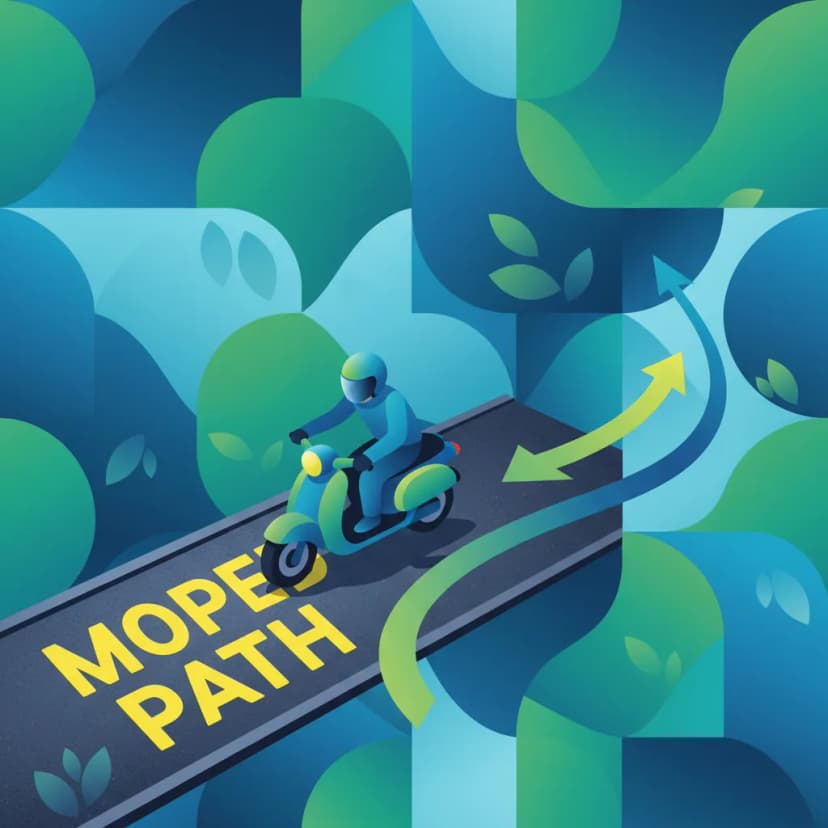
This lesson focuses on the importance of road markings (Vägmarkering) for guiding traffic flow and ensuring safety. It explains the meaning of different line types, such as solid and broken lines, and the function of stop lines and pedestrian crosswalks. The content highlights markings specific to cycle and moped lanes, teaching riders how to correctly position themselves on the road based on these visual cues.
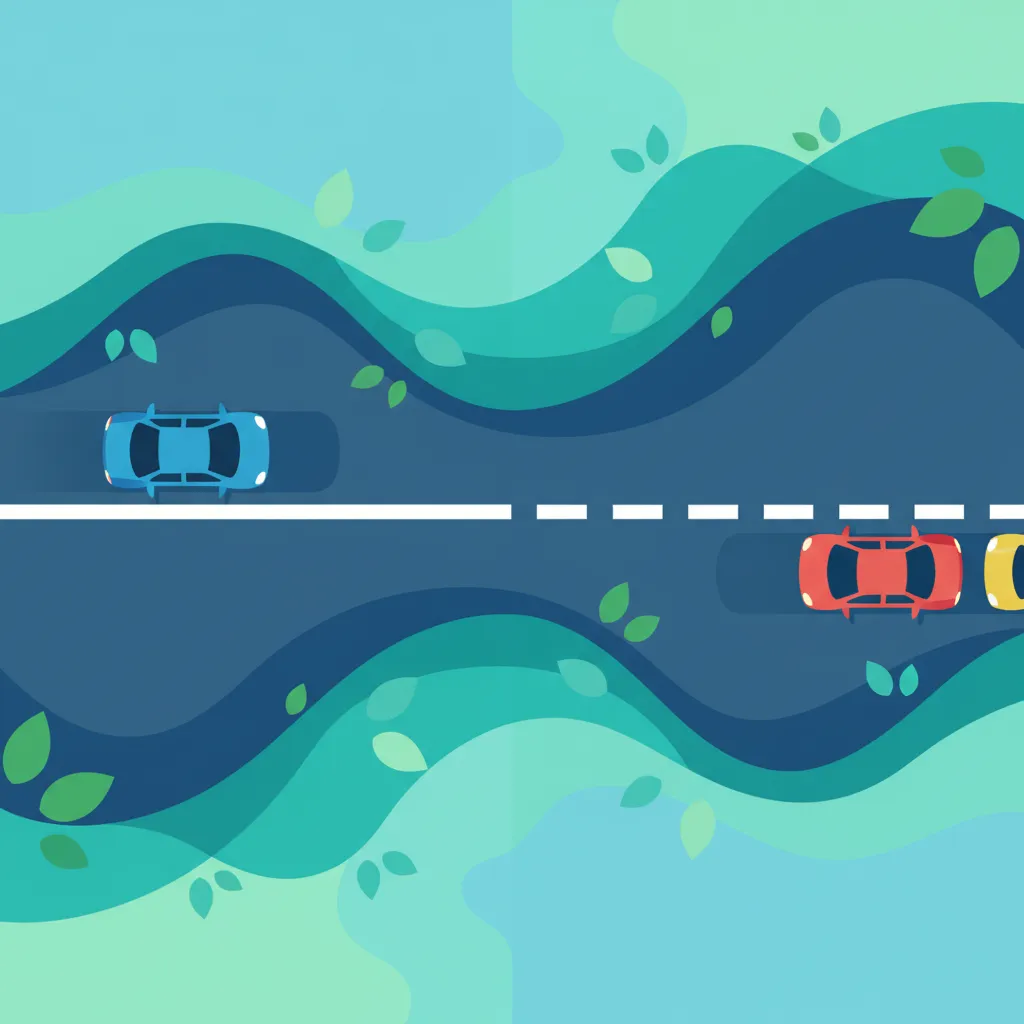
This lesson offers a detailed guide to interpreting the various lines and symbols painted on the road surface. It clarifies the rules associated with solid versus broken lines regarding lane changes and overtaking. The content also explains the function of arrows, stop lines, and other markings that provide crucial positioning and priority information to the rider.

This lesson focuses on the variety of road markings used on Swedish roads and their meaning for motorcyclists. You will learn the difference between solid and broken lines regarding overtaking, how to position yourself correctly at intersections based on markings, and how to interpret symbols painted on the road surface. Adhering to these markings is essential for maintaining correct lane discipline and ensuring predictability for other road users.

This lesson details a driver's responsibility towards pedestrians. You will learn the strict rule of yielding to pedestrians who are on or about to enter a marked, uncontrolled crosswalk. The content also covers the specific, highly restrictive rules for driving in designated pedestrian zones (gågata) and 'walking speed' areas (gångfartsområde), where pedestrians have complete priority and vehicle traffic is severely limited.
This lesson provides detailed guidance on navigating complex traffic points such as signalized intersections, multi-lane roundabouts, and pedestrian crossings. You will learn the correct procedures for entering and exiting roundabouts, the specific rules for yielding to pedestrians and cyclists at designated crossings, and how to interpret complex traffic light signals. These skills are vital for safe urban and suburban riding, where interaction with vulnerable road users is frequent.
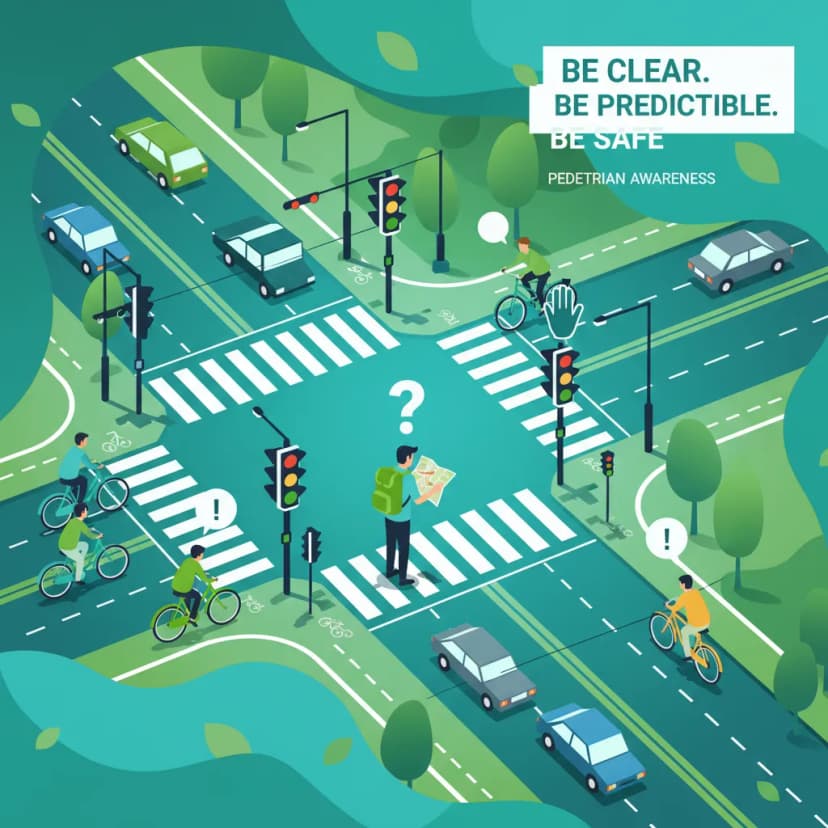
This lesson is dedicated to pedestrian safety, teaching riders to be constantly aware of people on foot, especially in busy urban environments. It reinforces the absolute duty to yield at marked crossings and encourages a cautious approach in areas like schools and shopping districts. The content stresses anticipating unpredictable actions, particularly from children or distracted pedestrians.
This lesson provides a detailed explanation of the Swedish traffic signal system. You will learn the precise legal meaning of solid red, yellow, and green lights, as well as green arrows which permit turning when oncoming traffic is stopped. It also covers procedures for flashing yellow signals and what to do when traffic lights are out of order, emphasizing that standard priority rules like the right-hand rule then apply.
This lesson explains the function of informational signs (Informationsskyltar), which provide guidance for navigation and access to services. It covers signs indicating distances to destinations, route numbers, and locations of fuel stations or parking areas. For moped riders, this includes identifying signs for designated moped or cycle lanes, helping them to plan and follow routes efficiently and legally.
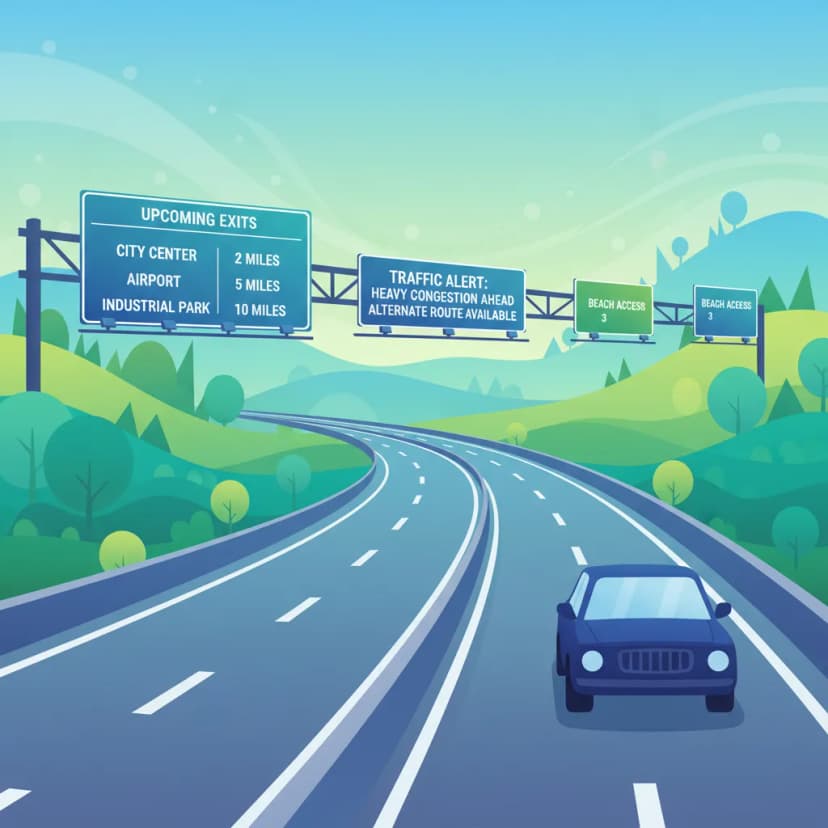
This lesson covers the extensive category of informational and directional signs that aid navigation throughout Sweden. You will learn to interpret signs for motorways, national roads, and local destinations, as well as symbols indicating services like gas stations, parking, and rest areas. Proper understanding of these signs allows for efficient route planning, reduces driver uncertainty, and contributes to smoother, safer traffic flow on all types of roads.
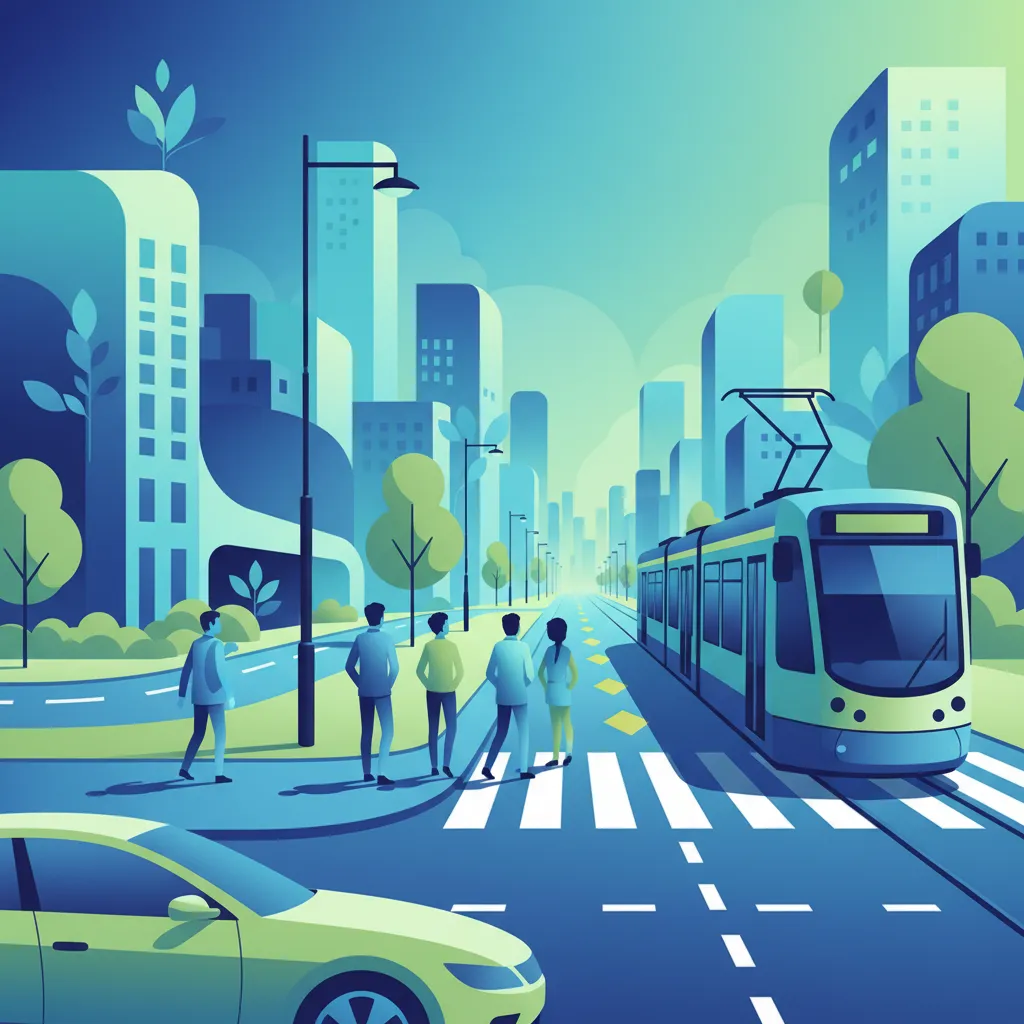
This lesson details the specific priority rules at pedestrian and tram crossings (Spårvagnskorsning). It reinforces the legal obligation for moped riders to stop for pedestrians at marked zebra crossings and explains that trams almost always have priority. Learners will understand the importance of approaching these crossings with caution, scanning for hazards, and being prepared to stop.
Explore how road markings and pavement symbols work together with traffic lights, regulatory signs, and priority rules in Sweden. Understand the complete system for traffic organization and safe navigation in various road situations.
This lesson provides a detailed explanation of the Swedish traffic signal system. You will learn the precise legal meaning of solid red, yellow, and green lights, as well as green arrows which permit turning when oncoming traffic is stopped. It also covers procedures for flashing yellow signals and what to do when traffic lights are out of order, emphasizing that standard priority rules like the right-hand rule then apply.
This lesson focuses on the variety of road markings used on Swedish roads and their meaning for motorcyclists. You will learn the difference between solid and broken lines regarding overtaking, how to position yourself correctly at intersections based on markings, and how to interpret symbols painted on the road surface. Adhering to these markings is essential for maintaining correct lane discipline and ensuring predictability for other road users.
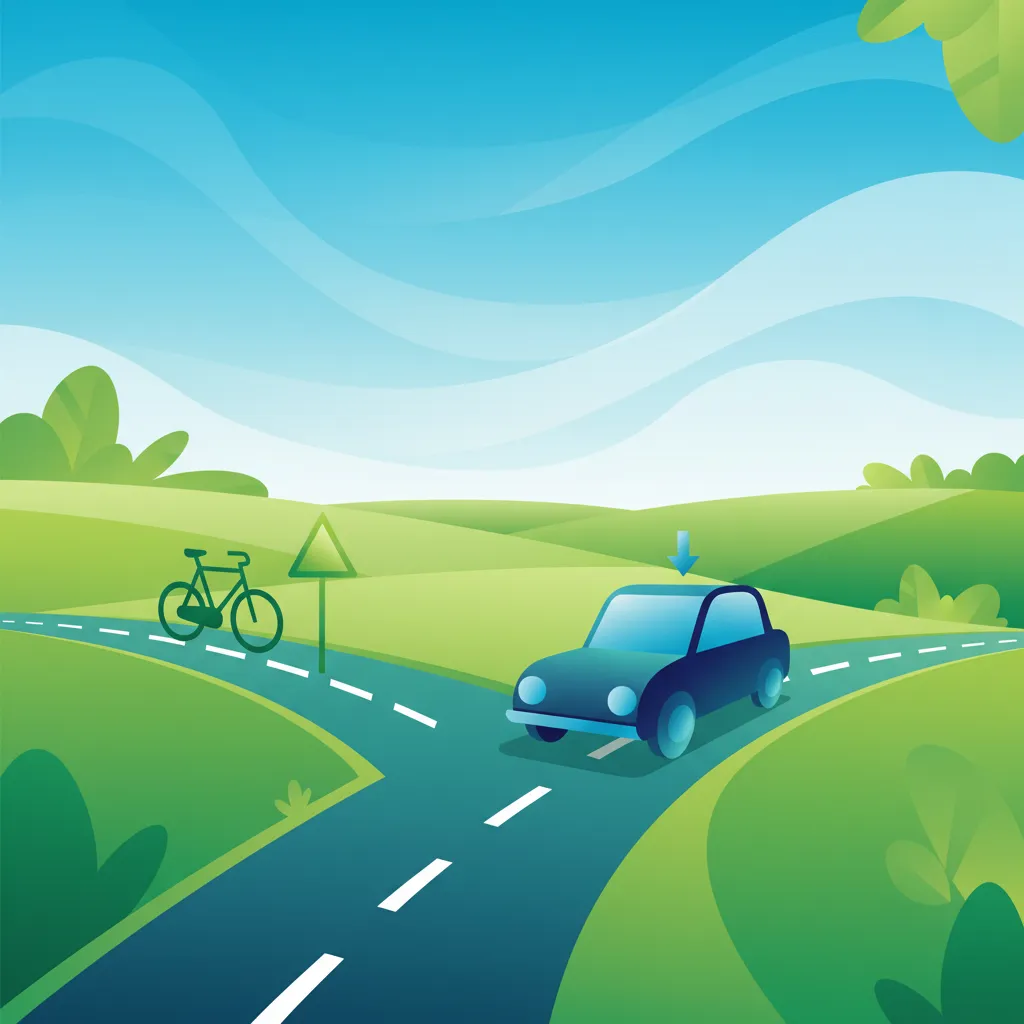
This lesson focuses on regulated intersections where priority is determined by signs indicating a main road (huvudled), a duty to yield (väjningsplikt), or a duty to stop (stopplikt). You will learn how to identify which road has priority and your legal obligation to give way to all traffic on that road before proceeding. The lesson covers proper procedures for approaching these junctions, assessing traffic, and entering the main road safely.
This lesson focuses on the importance of road markings (Vägmarkering) for guiding traffic flow and ensuring safety. It explains the meaning of different line types, such as solid and broken lines, and the function of stop lines and pedestrian crosswalks. The content highlights markings specific to cycle and moped lanes, teaching riders how to correctly position themselves on the road based on these visual cues.

This lesson covers the essential topic of communication in traffic using the vehicle's built-in signaling devices. You will learn the rules for using your turn indicators (körriktningsvisare) in good time before turning or changing lanes. The content also explains the proper use of hazard lights (varningsblinkers) in emergency situations and the very limited, specific circumstances in which using the horn (ljudsignal) is permitted to avert immediate danger.
This lesson provides detailed guidance on navigating complex traffic points such as signalized intersections, multi-lane roundabouts, and pedestrian crossings. You will learn the correct procedures for entering and exiting roundabouts, the specific rules for yielding to pedestrians and cyclists at designated crossings, and how to interpret complex traffic light signals. These skills are vital for safe urban and suburban riding, where interaction with vulnerable road users is frequent.
This lesson offers a detailed guide to interpreting the various lines and symbols painted on the road surface. It clarifies the rules associated with solid versus broken lines regarding lane changes and overtaking. The content also explains the function of arrows, stop lines, and other markings that provide crucial positioning and priority information to the rider.
This lesson introduces the core principles of right-of-way in Sweden, including the general duty to give way (Väjningsplikt) and the stricter stop duty (Stopplikt). It explains the concept of a priority road and how to apply the right-hand rule at uncontrolled intersections. By understanding this legal framework, riders can determine who has priority in any given situation and act predictably and safely.
This lesson examines a variety of special situations where standard priority rules are modified. You will learn about the 'exit rule' (utfartsregeln) when entering a road from property, your duty to yield to buses indicating a departure from a stop, and the specific rules for pedestrian-only streets (gågata). The content also covers interactions with trams, emergency vehicles, and procedures at railway crossings, highlighting situations that demand maximum vigilance.
This lesson explains the foundational right-hand rule (högerregeln), which is the default priority rule at Swedish intersections where no other signs or signals regulate traffic. You will learn that you must always yield to vehicles approaching from your right in such situations. The content clarifies where this rule applies, such as in residential areas and on smaller rural roads, and covers the critical exceptions when signs or other rules take precedence.
Find clear answers to common questions learners have about Road Markings and Pavement Symbols (Vägmarkeringar). Learn how the lesson is structured, which driving theory objectives it supports, and how it fits into the overall learning path of units and curriculum progression in Sweden. These explanations help you understand key concepts, lesson flow, and exam focused study goals.
In Sweden, a solid white line typically indicates that overtaking or crossing the line is prohibited. A broken white line, on the other hand, signifies that overtaking or changing lanes is permitted, provided it is safe to do so. Always check surrounding signs as well, as they can modify these rules.
You must always stop at a stop line if it is present at an intersection or junction where you have a stop sign (stopplikt) or a red traffic light. The stop line indicates the exact point where you are legally required to come to a complete halt before proceeding when safe.
Yellow road markings are often temporary and used for road works or to indicate diversions. They can also be used to highlight specific hazards or areas that are temporarily out of bounds. Always pay close attention to temporary yellow markings as they supersede standard white or yellow markings.
Road markings, traffic signals, and road signs all work together to regulate traffic. Markings provide guidance directly on the road surface, while signs and signals offer regulatory or warning information. In cases of conflict, traffic signals take precedence, followed by regulatory signs, and then road markings.
While the fundamental meanings of lines and symbols are consistent across different road types, their application might differ. On motorways, for example, you'll see markings for multiple lanes, high-speed overtaking zones, and entry/exit ramps. Urban areas might feature more pedestrian crossings and cycle lane markings. The principle of obeying what is marked remains constant.