
Welcome to the 'Vehicle Control and Maneuvering' unit! This lesson, 'Steering, Acceleration, and Braking Fundamentals', covers the most essential physical inputs for driving a car. Understanding these basics is crucial for mastering all subsequent maneuvers and ensuring safe vehicle operation on Swedish roads, forming a key part of your Category B theory preparation.

Controlling a motor vehicle effectively hinges on a fundamental understanding and mastery of three primary inputs: steering, acceleration (throttle), and braking. These actions, when applied correctly and coordinately, allow a driver to dictate a vehicle's speed, direction, and stability. This lesson serves as the cornerstone for all subsequent driving maneuvers in the Swedish Driving License Theory Course for Category B Cars, emphasizing techniques that ensure safety, efficiency, and legal compliance on Swedish roads.
The ability to smoothly and progressively manage these controls is paramount for preventing sudden load shifts, maintaining tire grip, and reacting safely to dynamic road conditions. Errors in applying these inputs are frequently cited as leading causes of collisions and loss of vehicle control. By grasping the principles outlined here, you will build the essential motor skills and theoretical knowledge required to become a confident, safe, and responsible driver.
Effective vehicle control is rooted in several interconnected principles derived from physics and safety regulations. These principles guide how drivers should interact with the vehicle's primary controls to maintain stability and prevent accidents.
Applying steering, throttle, or brake gradually and smoothly rather than abruptly. This technique is crucial for minimizing sudden load transfer and preserving tire grip.
Progressive Input: This principle dictates that all driver inputs – steering, acceleration, and braking – should be applied gradually. Abrupt inputs cause sudden shifts in the vehicle's weight, which can overwhelm the tires' grip on the road surface, leading to skidding or loss of control. Developing a "feel" for the pedals and steering wheel ensures smoother, more predictable vehicle responses.
Understanding how the vehicle's weight shifts during acceleration (rearward), braking (forward), and steering (laterally), and how this affects tire grip.
Weight Transfer Management: Every change in speed or direction causes the vehicle's weight to shift. Acceleration transfers weight to the rear, increasing grip on the rear wheels. Braking shifts weight to the front, enhancing front-wheel grip for braking and steering. Cornering moves weight to the outer wheels. Effective drivers understand these dynamics to ensure tire grip is optimally allocated, preventing loss of traction.
The simultaneous and balanced use of steering, throttle, and brake to maintain the vehicle's equilibrium and intended path.
Control Harmony: This refers to the coordinated application of all three controls. For instance, braking too hard while turning sharply creates conflicting forces that can destabilize the vehicle. Smooth, coordinated inputs are essential for stable cornering, emergency maneuvers, and evasive steering, ensuring the vehicle remains balanced and predictable.
Recognizing the vehicle’s centre of gravity height and longitudinal position, and its impact on vehicle dynamics.
Centre of Gravity (CG) Awareness: The vehicle's centre of gravity significantly influences its stability. A higher CG increases the risk of rollover, especially during sharp turns. Understanding how loading (passengers, cargo, trailers) affects the CG helps drivers adjust their speed and inputs to maintain safety, particularly on bends or uneven terrain.
Knowledge of the maximum friction force available between the tires and the road surface under current conditions.
Traction Limitation Awareness: Tires provide the only connection between the vehicle and the road. Their ability to grip (traction) is finite and varies significantly with road conditions (dry, wet, icy) and tire quality. Drivers must constantly be aware of these limits to avoid demanding more force (through acceleration, braking, or steering) than the tires can provide, which would result in a skid.
The steering wheel is your primary tool for directional control, guiding the vehicle precisely along your intended path. Proper hand positioning and smooth input techniques are crucial for maintaining stability and responding effectively to changing road conditions.
The way you hold the steering wheel directly impacts your control, reaction time, and safety, especially in modern vehicles equipped with airbags.
Standard Grip (9 o'clock and 3 o'clock): This is the universally recommended hand position for most driving situations. It involves placing your left hand at the 9 o'clock position and your right hand at the 3 o'clock position, mirroring the hands of a clock. This grip provides several advantages:
Modified Grips (10-2 or 8-4): While 9-3 is standard, slight variations may be adopted for specific situations or driver comfort, though with cautions. The 10-2 position was traditionally taught but is now generally discouraged due to airbag safety concerns, as it places hands directly over the airbag's path. The 8-4 position, with hands lower, can be suitable for long, straight stretches of road or for drivers with specific physical needs, as it promotes relaxation. However, it offers less immediate control for quick maneuvers.
Always keep both hands on the steering wheel whenever the vehicle is in motion, unless you are performing a temporary action like shifting gears or operating secondary controls. This ensures you are prepared for sudden evasive action.
Effective steering isn't just about where you place your hands; it's about how you use them to turn the wheel progressively and smoothly.
A technique where the driver applies small, incremental, and smooth wheel rotations that gradually increase to match the required path radius, avoiding jerky or sudden movements.
Progressive Steering: The hallmark of a skilled driver is the ability to apply smooth, gradual steering inputs. When approaching a curve, you should initiate a gentle turn of the wheel, progressively increasing the angle as the curve tightens, and then unwinding the wheel smoothly as you exit the curve. This technique prevents sudden lateral weight transfer, maintaining tire grip and vehicle stability.
Corrective (Counter-steering) Input: In rare cases of oversteer (where the rear of the car slides out), a quick, opposite steering input (counter-steering) is required to bring the vehicle back in line. This is an advanced technique, but the foundation lies in having a stable hand position for rapid response.
Avoid "ratcheting" the steering wheel – a series of sharp, repeated small turns – especially at higher speeds or on slippery surfaces. This can lead to excessive lateral load transfer, causing the tires to lose grip and the vehicle to become unstable.
The accelerator pedal, or throttle, controls the engine's power output and, consequently, the vehicle's speed. Mastery of its use involves applying power smoothly and progressively to ensure efficient acceleration and maintain traction.
Proper foot positioning is essential for seamless transitions between the accelerator and brake pedals, crucial for both routine driving and emergency situations.
Automatic Transmission: In cars with an automatic transmission, your right foot operates both the accelerator and the brake. Your heel should remain on the floor, allowing your foot to pivot smoothly between the two pedals. When not accelerating, your foot should ideally rest near or lightly over the brake pedal, ready for immediate action. This ensures rapid response in an emergency.
Manual Transmission (and the Heel-Toe Technique): For manual transmissions, the left foot operates the clutch, while the right foot handles the accelerator and brake. The "heel-toe" technique (using the ball of the foot for the brake and the heel or side for the accelerator simultaneously) is an advanced skill primarily used in performance driving to smoothly downshift while braking, but it's not typically required for standard driving lessons. For most situations, focus on the right foot pivoting between the accelerator and brake, similar to automatic vehicles, with the left foot resting on the dead pedal when not using the clutch.
Never "ride the clutch" in a manual car (keeping your foot lightly on the clutch pedal while driving). This causes premature wear and reduces your ability to quickly operate the clutch when needed. Similarly, avoid resting your foot on the brake pedal unless you intend to brake.
Applying the accelerator pedal smoothly and gradually is fundamental to safe and fuel-efficient driving.
Steady-State Acceleration: When pulling away from a stop or increasing speed, press the accelerator pedal gently and gradually. As the vehicle gains momentum, you can progressively increase the pressure until you reach your desired speed. This prevents sudden jerks, wheel spin, and excessive fuel consumption. Smooth acceleration also contributes to passenger comfort and reduces emissions.
Kick-down (Automatic Transmissions): In automatic vehicles, a "kick-down" refers to rapidly depressing the accelerator pedal to its fullest extent. This signals the transmission to downshift to a lower gear, providing maximum engine power for quick acceleration, often used for overtaking. Even when performing a kick-down, ensure you do so on a surface with sufficient grip to prevent wheel spin and loss of control. On slippery surfaces, a kick-down can be dangerous, leading to immediate traction loss.
When merging onto a motorway or overtaking, apply moderate throttle to build speed. Once you commit to the maneuver, you can increase pressure progressively, ensuring you match the speed of traffic without excessive acceleration that could cause wheel spin.
Common Misconceptions: Many new drivers believe pressing the gas hard always results in quicker starts. However, on low-traction surfaces like gravel, wet asphalt, or ice, this usually leads to wheel spin, loss of control, and slower acceleration as the traction control system intervenes (if present).
Braking is perhaps the most critical input for safety, allowing you to reduce speed or stop the vehicle. Proper braking technique minimizes stopping distances, maintains stability, and prevents skidding.
Various braking techniques are employed depending on the driving situation, from gentle deceleration to emergency stops.
Progressive (Steady) Braking: This is the most common and safest braking technique. It involves gradually increasing the pressure on the brake pedal to achieve a desired deceleration. Start with light pressure, then steadily increase it as needed, and finally ease off the pedal just before coming to a complete stop to ensure a smooth, jolt-free halt. This technique helps manage weight transfer and keeps the vehicle stable.
Threshold Braking (Non-ABS Vehicles): In vehicles without an Anti-lock Braking System (ABS), threshold braking involves applying maximum brake pressure just short of locking the wheels. This is a delicate skill that maximizes stopping power without losing steering ability. However, with modern ABS-equipped vehicles, this technique is unnecessary and often counterproductive.
Emergency Braking: In an emergency, your instinct might be to slam the brake pedal. For ABS-equipped vehicles, the correct procedure is to apply firm, full pressure on the brake pedal and hold it down. The ABS will modulate the brake pressure rapidly to prevent the wheels from locking, allowing you to maintain steering control. Do not "pump" the brakes in an ABS car; let the system do its job.
"Brake-steering" – applying significant brake pressure while simultaneously turning sharply – can be extremely dangerous. It shifts weight heavily to the front, drastically reducing grip on the rear wheels and potentially causing the vehicle to oversteer or spin out. Always aim to complete most of your braking before initiating a significant turn.
A reduction in braking efficiency caused by the overheating of brake components (pads, discs, or fluid) due to continuous heavy use.
Brake fade can occur during prolonged or heavy braking, such as on a long downhill slope. As brakes overheat, their ability to generate friction decreases, making the pedal feel softer and requiring more pressure to achieve the same stopping power. To prevent brake fade, use engine braking (downshifting in a manual car or using lower gears in an automatic, if available) on long descents to help control speed and reduce reliance on the friction brakes.
The way a vehicle responds to steering, acceleration, and braking is heavily influenced by how its weight is distributed, a phenomenon known as weight transfer.
Longitudinal Weight Transfer:
Lateral Weight Transfer:
Understanding these shifts is crucial for maintaining control. Smooth inputs manage these transfers effectively, keeping tire grip optimized. Conversely, sudden inputs can overload tires on one axle while unweighting others, leading to a loss of traction (understeer or oversteer).
The way a vehicle is loaded (passengers, cargo, trailers) also significantly affects its centre of gravity (CG) and weight distribution.
Always distribute cargo evenly and as low as possible within the vehicle. When towing a trailer, ensure the trailer's nose weight is within the manufacturer's recommendations to prevent instability (trailer swing-out).
Modern vehicles are equipped with sophisticated driver assistance systems that augment your control inputs, but they are not a substitute for proper driving technique. Understanding how they work and how to interact with them is vital.
An electronic safety system that prevents the wheels from locking up during heavy braking, allowing the driver to maintain steering control.
Anti-Lock Braking System (ABS): When you brake hard, ABS rapidly pulsates the brake pressure to each wheel, preventing them from locking. This allows you to steer around obstacles even under maximum braking.
A computerised technology that improves a vehicle's stability by detecting and reducing skids. When ESC detects a loss of steering control (understeer or oversteer), it automatically applies the brakes to individual wheels and/or reduces engine power.
Electronic Stability Control (ESC): ESC monitors steering angle, wheel speed, and vehicle yaw (rotation around its vertical axis). If it detects the vehicle is not going where you intend (e.g., oversteer or understeer), it selectively applies brakes to individual wheels and/or reduces engine power to help maintain stability.
An electronic system that prevents loss of traction of driven road wheels, reducing or preventing wheel spin.
Traction Control System (TCS): TCS works with ABS and ESC to prevent wheel spin, especially during acceleration on slippery surfaces. It does this by reducing engine torque (e.g., cutting fuel, retarding ignition) or applying the brakes to the spinning wheel.
Remember, these systems are aids; they extend your control limits but do not defy the laws of physics. You, the driver, remain ultimately responsible for the safe control of the vehicle.
Swedish traffic legislation, primarily the Trafikförordning (Road Traffic Ordinance), places clear responsibilities on drivers regarding vehicle control.
Trafikförordning 5 § – Constant Control:
Trafikförordning 21 § – Safe Operation of Controls:
Trafikförordning 29 § – Safe Distance and Braking Readiness:
Trafikförordning 44 § – Use of Brake Lights:
Trafikförordning 65 § – Vehicle Load:
Familiarize yourself with the full text of the Trafikförordning (SFS 2010:124), as it is the primary legal document governing road traffic in Sweden.
Your approach to steering, acceleration, and braking must adapt to various environmental conditions, vehicle states, and traffic situations.
| Condition | Variation in Steering | Variation in Acceleration | Variation in Braking |
|---|---|---|---|
| Wet / Icy Roads | Reduce steering angle; use smoother, slower inputs to avoid sudden lateral load transfer. Anticipate understeer. | Apply throttle very gently; avoid kick-down. Match torque to extremely reduced grip. | Begin braking much earlier; use progressive pressure; rely on ABS; stopping distances can double or triple. |
| Night / Low Visibility | Keep both hands on the wheel to maximize response to unexpected obstacles; use peripheral vision to track road edges. | Keep acceleration moderate to preserve reaction time for sudden hazards that emerge from darkness. | Use additional visual cues (e.g., taillights of vehicle ahead); apply brakes earlier; maintain significantly longer following distance. |
| Urban Driving (speed ≤ 50 km/h, many pedestrians) | Frequent small steering corrections for lane positioning; maintain 9-3 grip for quick evasive action if needed. | Use gentle throttle to match stop-and-go traffic; avoid unnecessary acceleration bursts. | Anticipate stops and pedestrian movements; use "coasting" and progressive braking for smooth, comfortable stops. |
| Motorway Driving (high speed ≥ 90 km/h) | Large steering angles are rare; keep both hands on the wheel; avoid abrupt steering inputs; make small, precise adjustments. | Use steady throttle for cruising; employ "kick-down" only for overtaking after thorough safety assessment and sufficient clear space. | Use early, progressive braking for exit ramps; engage ABS firmly in emergency stops; maintain ample following distance. |
| Heavy Load / Trailer | Requires greater steering effort; anticipate wider turning radius; reduce speed significantly before steering inputs. | Reduce acceleration to prevent rear-wheel spin; consider engine braking on descents to aid stability. | Expect significantly longer braking distances due to added mass; apply brakes much earlier; be aware of potential trailer sway. |
| Adverse Weather (strong wind, cross-wind) | Counter-steer gently and consistently to compensate for lateral forces; maintain a stable hand position to resist wheel movement. | Maintain steady throttle; avoid sudden acceleration that can amplify wind effects or cause instability. | Anticipate increased stopping distance; use progressive brake pressure; be aware of strong gusts potentially pushing the vehicle. |
| Emergency Avoidance (sudden obstacle) | Apply maximum steering correction within vehicle stability limits (avoid excessive angle that causes skidding); use quick, decisive input. | May need to lift off throttle completely; in rare cases, a controlled "brake-steer" (light braking while steering) might be needed for advanced maneuvers. | Apply firm, progressive brake; if vehicle has ESC/ABS, allow system to intervene; press pedal hard and steady; do NOT pump brakes. |
Every driver input has a direct consequence on the vehicle's behavior. Understanding these cause-and-effect relationships is key to anticipating vehicle reactions and preventing loss of control.
Driving is a complex task requiring continuous decision-making and precise execution. Understanding the underlying reasons for recommended techniques enhances safety.
Lesson content overview
Explore all units and lessons included in this driving theory course.
Explore search topics learners often look for when studying Steering, Acceleration, and Braking Fundamentals. These topics reflect common questions about road rules, driving situations, safety guidance, and lesson level theory preparation for learners in Sweden.
Browse additional driving theory lessons that cover connected traffic rules, road signs, and common driving situations related to this topic. Improve your understanding of how different rules interact across everyday traffic scenarios.
Explore the core principles of controlling a vehicle. This lesson covers essential techniques for steering, smooth acceleration, and progressive braking, impacting vehicle balance and stability. Ideal for understanding basic car handling for theory.
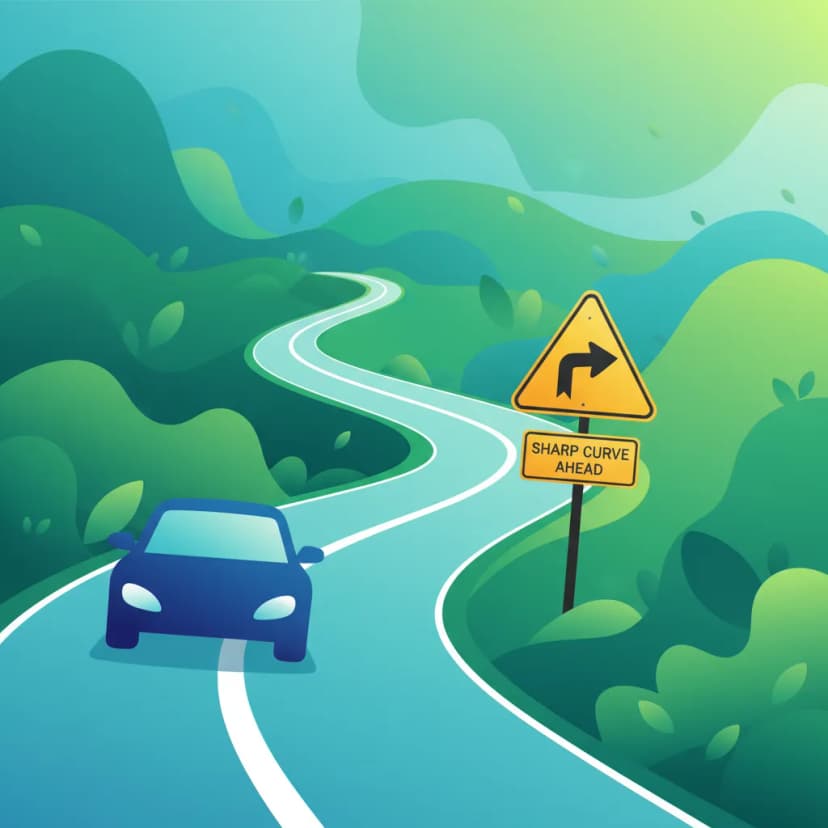
This lesson teaches the correct methodology for negotiating curves and turns of varying sharpness. You will learn the principle of 'slow in, fast out,' involving braking before the curve and gently accelerating through it to maintain stability and grip. The lesson also covers how to choose the correct line (placering) through a bend and how to use your vision effectively to look far ahead for a safe and controlled passage.
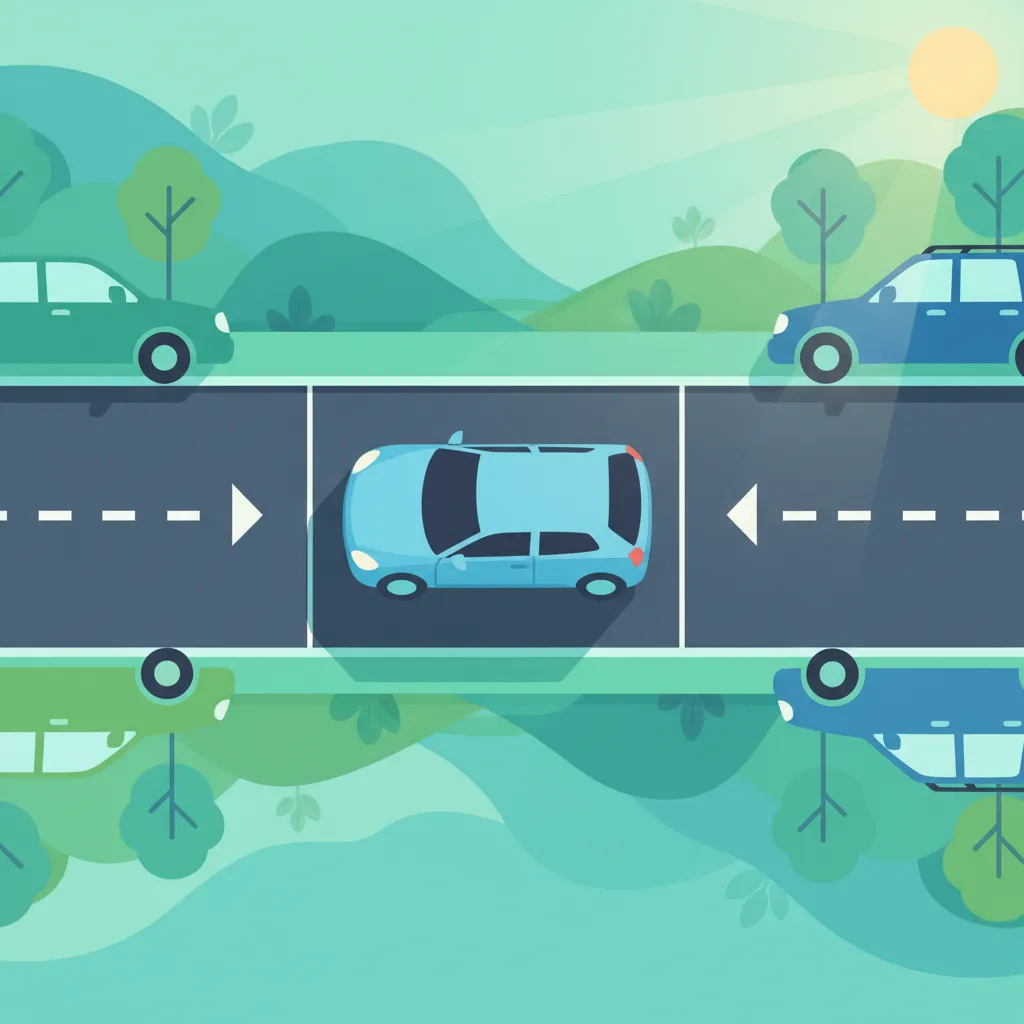
This lesson provides step-by-step instructions for performing common low-speed maneuvers, including reversing in a straight line, backing around a corner, and various types of parking. You will learn how to use reference points on your vehicle and the surroundings to position the car accurately. The paramount importance of slow speed, continuous 360-degree observation, and being prepared to stop for pedestrians or other vehicles is emphasized throughout.

This lesson explains the function of key electronic driver aids. You will learn how the Anti-lock Braking System (ABS) prevents wheels from locking during hard braking, allowing you to maintain steering control. The lesson also covers the Electronic Stability Program (ESP), which helps prevent skids by automatically braking individual wheels, and Traction Control (TCS), which prevents wheel spin during acceleration on slippery surfaces.

This lesson provides critical knowledge on how to prevent and manage a skid. You will learn to differentiate between understeer (front-wheel skid) and oversteer (rear-wheel skid) and the correct steering and pedal inputs required to recover control in each case. The importance of looking and steering in the desired direction of travel is a key focus, along with understanding how modern safety systems like ABS and ESP assist the driver.

This lesson focuses on the two most significant actions affecting fuel consumption: acceleration and braking. You will learn that aggressive driving with rapid acceleration and hard braking wastes significant amounts of fuel. The content teaches the technique of gentle, steady acceleration and a forward-planning approach to driving, where you look far ahead to anticipate traffic light changes and slowdowns, allowing you to decelerate by simply releasing the accelerator (motor braking).
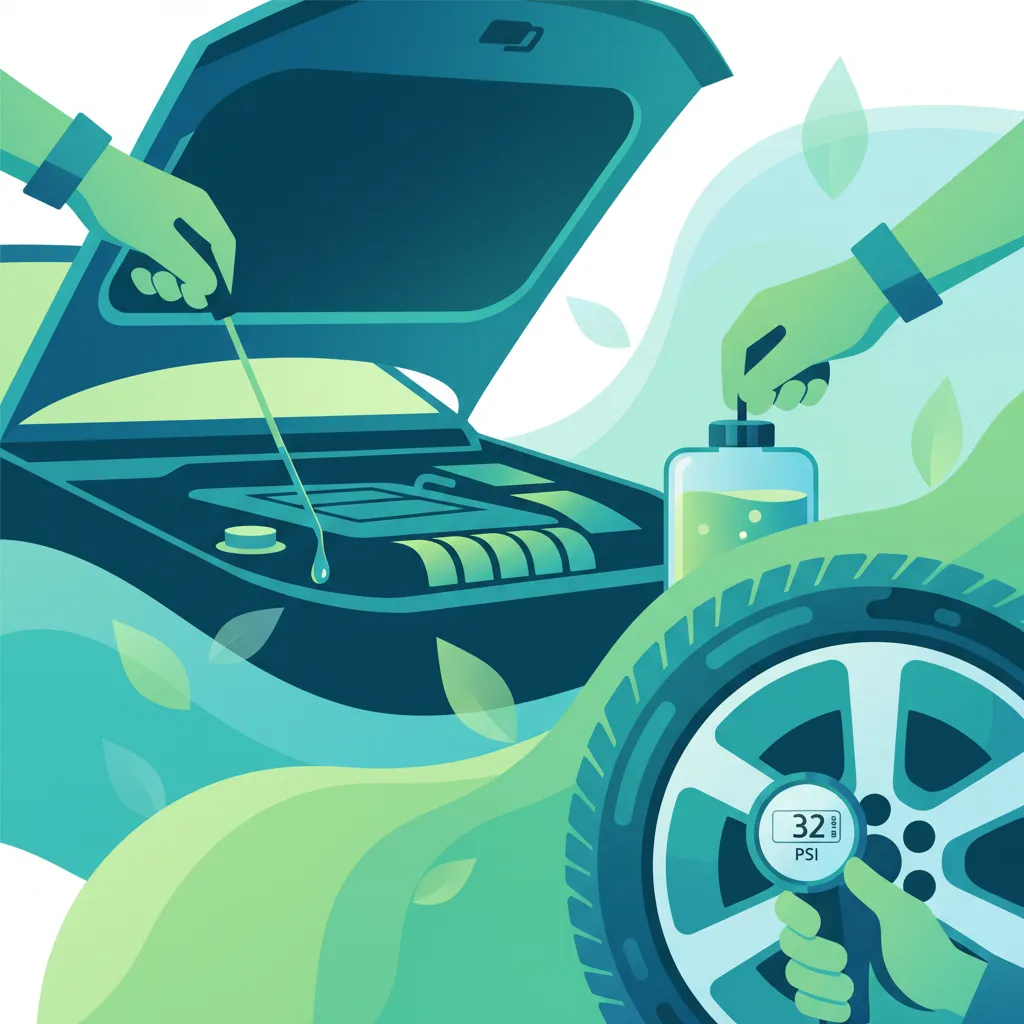
This lesson covers the simple yet vital pre-drive checks that are the driver's responsibility. You will learn the step-by-step process for a 'safety control' (säkerhetskontroll), which includes checking tire pressure and tread depth, verifying that all lights are working, and checking the levels of critical fluids like engine oil, coolant, brake fluid, and windshield washer fluid. Performing these checks regularly helps ensure your vehicle is in a safe condition to drive.

This lesson teaches the physical skill of applying maximum braking force while maintaining control of the motorcycle. You will learn the technique of progressive braking to avoid locking the wheels and how to react if a skid does occur. Understanding how to manage both front and rear wheel skids and how an ABS system assists in these situations gives you the best possible chance of stopping safely and quickly in an emergency.

This lesson focuses on the unique challenges of driving in urban environments. You will learn techniques for anticipating the actions of vulnerable road users like pedestrians and cyclists, especially near crossings and bus stops. The content covers how to navigate narrow streets, one-way systems, and areas with heavy traffic, emphasizing the need for lower speeds, heightened awareness, and a defensive mindset.

This lesson focuses on developing the fine control needed for low-speed maneuvering, a common challenge in urban environments. It covers techniques for making tight turns, such as U-turns, by using a combination of clutch, throttle, and rear brake control. The goal is to build the rider's skill and confidence in handling the moped in parking lots, heavy traffic, and other confined areas.

This lesson provides a complete guide to motorway driving in Sweden. You will learn the correct procedures for merging from an on-ramp, maintaining proper lane discipline by keeping right unless overtaking, and exiting safely via off-ramps. The content emphasizes the importance of maintaining large safety margins at high speeds, checking blind spots thoroughly before any lane change, and knowing the correct safety procedures in case of a breakdown.
Build upon basic control by understanding how steering, acceleration, and braking influence vehicle dynamics. Learn about turning, cornering, and achieving stability in various driving situations according to Swedish theory.
This lesson teaches the correct methodology for negotiating curves and turns of varying sharpness. You will learn the principle of 'slow in, fast out,' involving braking before the curve and gently accelerating through it to maintain stability and grip. The lesson also covers how to choose the correct line (placering) through a bend and how to use your vision effectively to look far ahead for a safe and controlled passage.
This lesson provides step-by-step instructions for performing common low-speed maneuvers, including reversing in a straight line, backing around a corner, and various types of parking. You will learn how to use reference points on your vehicle and the surroundings to position the car accurately. The paramount importance of slow speed, continuous 360-degree observation, and being prepared to stop for pedestrians or other vehicles is emphasized throughout.
This lesson provides critical knowledge on how to prevent and manage a skid. You will learn to differentiate between understeer (front-wheel skid) and oversteer (rear-wheel skid) and the correct steering and pedal inputs required to recover control in each case. The importance of looking and steering in the desired direction of travel is a key focus, along with understanding how modern safety systems like ABS and ESP assist the driver.
This lesson focuses on developing the fine control needed for low-speed maneuvering, a common challenge in urban environments. It covers techniques for making tight turns, such as U-turns, by using a combination of clutch, throttle, and rear brake control. The goal is to build the rider's skill and confidence in handling the moped in parking lots, heavy traffic, and other confined areas.
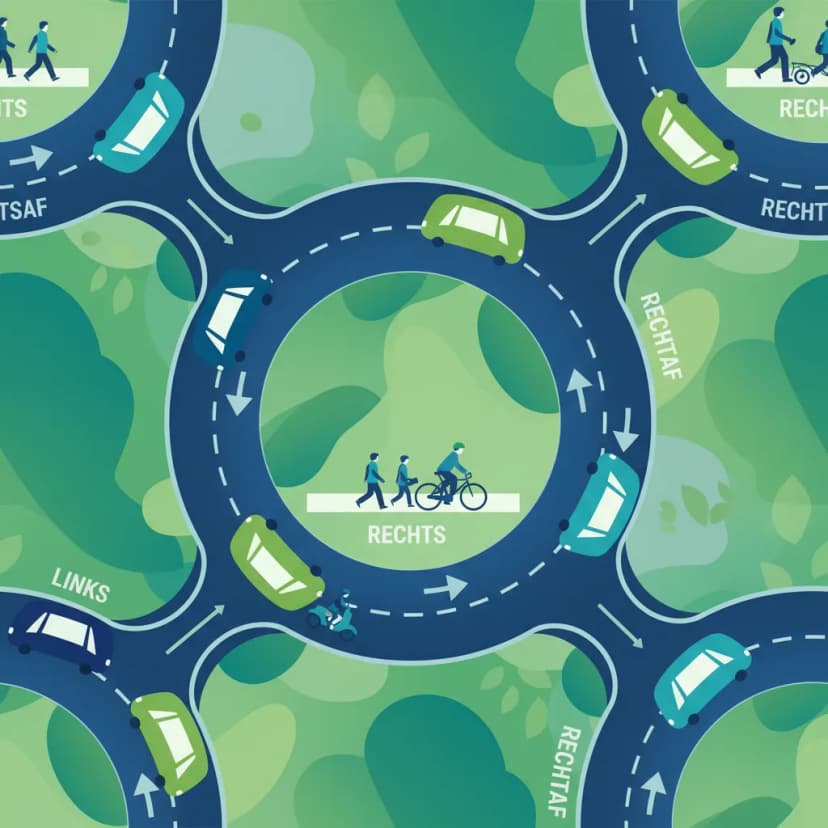
This lesson provides a detailed guide to navigating Swedish roundabouts (cirkulationsplatser). Key principles include always yielding to traffic already in the roundabout and choosing the correct lane based on your intended exit. You will learn the specific rules for signalling your intention to exit, how to safely interact with cyclists, and the techniques for maneuvering through multi-lane roundabouts to maintain traffic flow and prevent accidents.

This lesson focuses on creating a complete awareness of the traffic situation around your vehicle. You will learn the correct procedure for using your interior and side mirrors in a continuous scanning pattern. Crucially, the lesson explains what the blind spot (döda vinkeln) is, where it is located, and why a physical head check over the shoulder is a non-negotiable safety step before any lateral movement like changing lanes or turning.
This lesson addresses the specific risks associated with driving on rural roads (landsvägar). You will learn how to manage higher speeds on narrow, winding roads with limited visibility due to curves and hills. The lesson covers procedures for safely overtaking slow-moving agricultural vehicles, managing encounters with oncoming traffic on narrow sections, and being constantly vigilant for wildlife, especially at dawn and dusk.
This lesson covers the critical maneuvers of merging and changing lanes. You will learn the correct technique for using an acceleration lane to match the speed of motorway traffic before merging smoothly and safely. The lesson emphasizes the importance of checking mirrors and the blind spot, signaling in good time, and applying the 'zipper principle' (dragkedjeprincipen) where lanes merge to ensure efficient and courteous traffic flow.
This lesson provides a complete guide to motorway driving in Sweden. You will learn the correct procedures for merging from an on-ramp, maintaining proper lane discipline by keeping right unless overtaking, and exiting safely via off-ramps. The content emphasizes the importance of maintaining large safety margins at high speeds, checking blind spots thoroughly before any lane change, and knowing the correct safety procedures in case of a breakdown.
This lesson provides detailed guidance on navigating complex traffic points such as signalized intersections, multi-lane roundabouts, and pedestrian crossings. You will learn the correct procedures for entering and exiting roundabouts, the specific rules for yielding to pedestrians and cyclists at designated crossings, and how to interpret complex traffic light signals. These skills are vital for safe urban and suburban riding, where interaction with vulnerable road users is frequent.
Find clear answers to common questions learners have about Steering, Acceleration, and Braking Fundamentals. Learn how the lesson is structured, which driving theory objectives it supports, and how it fits into the overall learning path of units and curriculum progression in Sweden. These explanations help you understand key concepts, lesson flow, and exam focused study goals.
The standard and safest hand position on the steering wheel is often referred to as '9 and 3' or '10 and 2', mimicking a clock face. This position provides the best control for steering inputs and allows for smooth transitions between turning and counter-steering. It also helps prevent injury in case of airbag deployment and ensures you can react quickly to changing road conditions.
Smooth acceleration is crucial for maintaining vehicle stability, ensuring passenger comfort, and promoting fuel efficiency, all of which are important aspects of driving in Sweden. Abrupt acceleration can cause the car to become unstable, especially on slippery surfaces, and it wastes fuel. Practicing smooth pedal control is a key skill for the theory exam and safe driving.
To practice smooth braking, anticipate the need to slow down well in advance. Lift your foot off the accelerator gradually and apply the brake pedal with gentle, increasing pressure. Avoid sudden, hard braking unless it's an emergency. Focus on modulating the pressure to slow down steadily. This technique is often assessed in driving scenarios presented in theory questions.
When you steer, weight shifts to the outside of the turn. When you brake, weight shifts forward, and when you accelerate, weight shifts backward. Understanding these weight transfers helps you anticipate how the car will react and maintain control, especially during cornering or when braking and turning simultaneously, which is a common scenario in driving theory questions.
Yes, while the theory exam is knowledge-based, questions often simulate driving scenarios that require you to understand how steering, acceleration, and braking inputs affect vehicle control, safety, and interaction with traffic. You'll need to know how to respond to situations requiring specific control inputs.