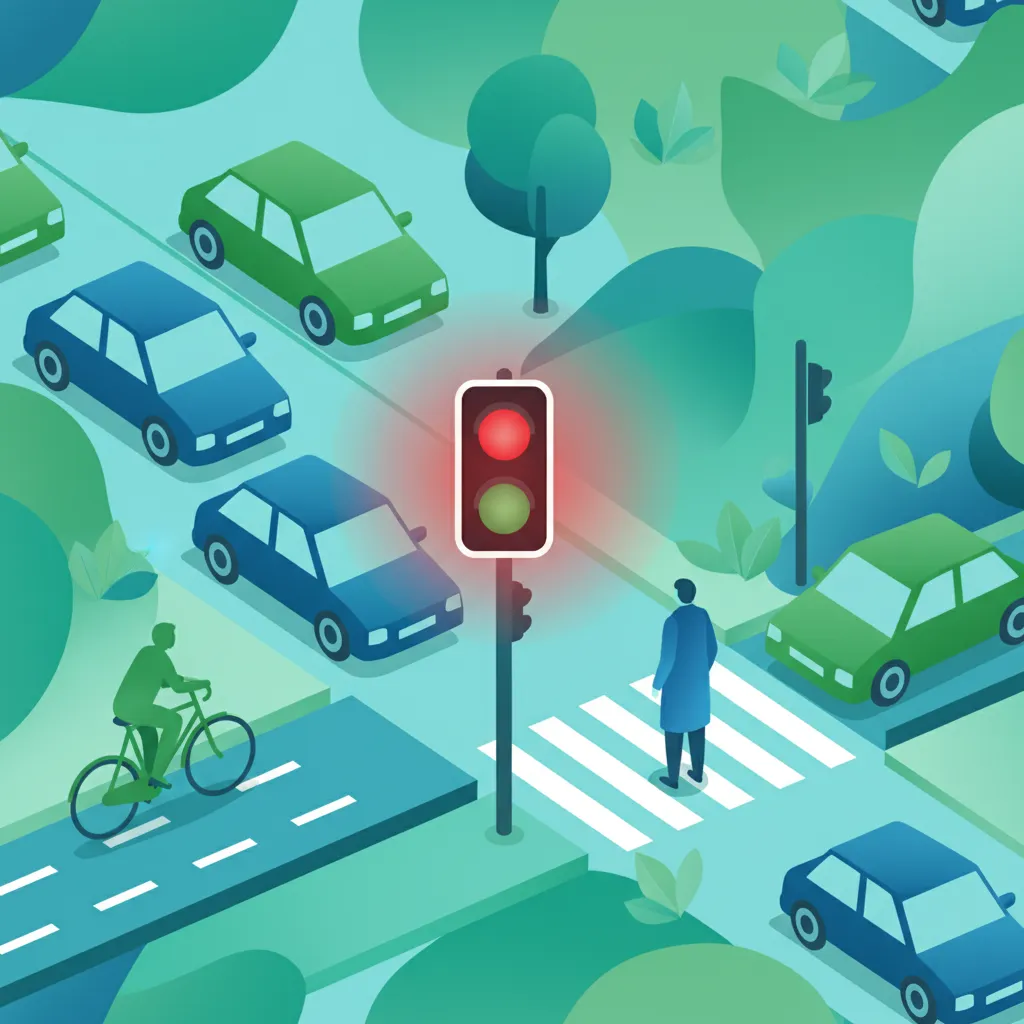
This lesson focuses on the crucial topic of traffic signals and lights (Trafiksignaler), a key component of Unit 1: Road Signs and Signals. Understanding these signals is fundamental for navigating Swedish roads safely and passing your Category B theory test. We'll break down the meaning of each light, including special signals and what to do when lights are not functioning correctly.
Welcome to this comprehensive lesson on Swedish traffic signals and lights, an essential component of the Swedish Driving License Theory Course for Category B Cars. Mastering the precise meaning and application of traffic signals, known as trafiksignaler in Swedish, is crucial for safe driving and is a mandatory requirement for your theory test. This lesson will equip you with a detailed understanding of how these visual commands regulate traffic flow, prevent collisions, and protect vulnerable road users across Sweden.
Traffic signals are the primary method for assigning right-of-way at intersections, especially in urban areas and on busy roads. They provide clear, unambiguous instructions to drivers, cyclists, and pedestrians, ensuring predictable movements and minimizing conflict points. A thorough understanding of these signals goes beyond simply knowing "red means stop, green means go"; it involves grasping the nuances of signal phases, dedicated arrows, and procedures for when signals are not functioning.
Traffic signals are meticulously engineered visual commands designed to translate complex right-of-way decisions into easily observable cues for all road users. Their underlying logic is rooted in enhancing safety by providing a uniform and predictable order of actions, thereby reducing decision-making time and the potential for conflicts. The distinct colors and flashing patterns are chosen for optimal visibility across varying distances, luminance levels, and ambient illumination, adhering to principles of visual physics. Legally, signals enforce the principle of precedence – clearly dictating who may proceed first – while also providing explicit exceptions, such as dedicated green arrows.
This knowledge forms a vital link to other curriculum areas, particularly "Priority Rules and Intersections" (Section 2), which explains how to navigate junctions when signals fail, and "Vehicle Control and Maneuvering" (Section 4), where interpreting signals directly translates into your acceleration and braking actions. Furthermore, understanding pedestrian signal phases is critical for "Interaction with Vulnerable Road Users" (Section 10), ensuring the safety of those on foot or bicycle.
The Swedish traffic signal system operates on several core principles to ensure clarity and safety:
Traffic signals follow a specific order of importance: Red is the most restrictive, followed by Yellow (Amber), and then Green. Each color conveys a distinct legal meaning – stop, prepare, or proceed – providing an intuitive, universally understood sequence of actions.
Each color on a traffic signal has a precise legal meaning, as outlined in the Trafikförordning (Swedish Traffic Ordinance). Understanding these meanings is fundamental to safe driving.
A solid red light is the most restrictive signal. It means that drivers must bring their vehicle to a complete stop before the stop line. If there is no stop line, you must stop before the pedestrian crossing. If there is neither a stop line nor a pedestrian crossing, you must stop before the intersection itself, ensuring you do not enter it.
A solid yellow (amber) light serves as a transition signal, typically appearing after a green light and before a red light. It can also appear alone as a warning in some specific situations.
Never accelerate to beat a solid yellow light. Always prioritize stopping safely unless you are already too close to the intersection to do so.
A solid green light grants permission to proceed in the specified direction(s).
Beyond the basic red, yellow, and green, Swedish traffic signal systems include specialized lights for specific movements and situations.
A green arrow, typically pointing right or left, provides a dedicated signal for turning. It can be displayed either alone (an exclusive arrow) or together with a solid green light for the same direction.
A flashing yellow (amber) light is a single amber light that flashes at a constant rate, approximately once per second. It is used to indicate caution or to assign priority at intersections without a full signal cycle.
Approach the intersection or crossing with reduced speed and increased vigilance.
Prepare to stop completely before the stop line or intersection entry.
Stop if necessary to yield to all traffic that has the right-of-way (e.g., cross-traffic, pedestrians).
Only proceed when the way is entirely clear and safe, giving priority to others.
Pedestrian signals are visual (walk/don't-walk symbols) or numeric countdown devices specifically for pedestrians, often synchronized with vehicle signals. Some also include audible beeps for visually impaired pedestrians.
Pre-emptive signals are specialized flashing amber (or sometimes red) lights that temporarily override normal traffic signal operation. They are activated by approaching emergency vehicles (e.g., fire trucks, ambulances, police) to give them priority through an intersection.
Traffic signal systems are generally reliable, but occasional malfunctions or power failures can occur. Knowing how to react in such situations is critical for maintaining safety.
A traffic light failure occurs when any part of the traffic signal system is non-functional, such as a burnt-out bulb, a complete power outage, or erratic flashing.
Understanding traffic signals goes hand-in-hand with anticipating potential hazards and adapting to various driving conditions.
Several common violations and misunderstandings related to traffic signals can lead to accidents and legal penalties:
Traffic signal interpretation requires adaptation based on environmental conditions and road context:
The rules governing traffic signals are enshrined in Swedish law to ensure safety and order on the roads.
The primary legal framework for traffic signals in Sweden is found in the Trafikförordning 1998:1276 (Swedish Traffic Ordinance). Specifically, Chapter 5, Sections 3 and 4, detail the legal meanings and requirements for traffic lights. Adherence to these regulations is not optional; it is a fundamental duty of every driver. Violations can lead to fines, loss of driving privileges, and, most critically, severe accidents.
The design and implementation of traffic signals are heavily influenced by safety research and human factors:
Always keep an appropriate safety distance from the vehicle in front, especially when approaching traffic lights. This provides you with sufficient time to react safely to sudden changes in the signal, even if the driver ahead brakes unexpectedly.
This lesson has provided a comprehensive overview of traffic signals in Sweden. To deepen your understanding and prepare for your driving test, consider exploring related topics and practicing with scenario-based questions.
Lesson content overview
Explore all units and lessons included in this driving theory course.
Explore search topics learners often look for when studying Traffic Signals and Lights (Trafiksignaler). These topics reflect common questions about road rules, driving situations, safety guidance, and lesson level theory preparation for learners in Sweden.
Browse additional driving theory lessons that cover connected traffic rules, road signs, and common driving situations related to this topic. Improve your understanding of how different rules interact across everyday traffic scenarios.
Explore the specific priority rules and right-of-way considerations at intersections controlled by traffic signals in Sweden. This lesson clarifies how to safely proceed when signals dictate traffic flow, building on basic signal knowledge.
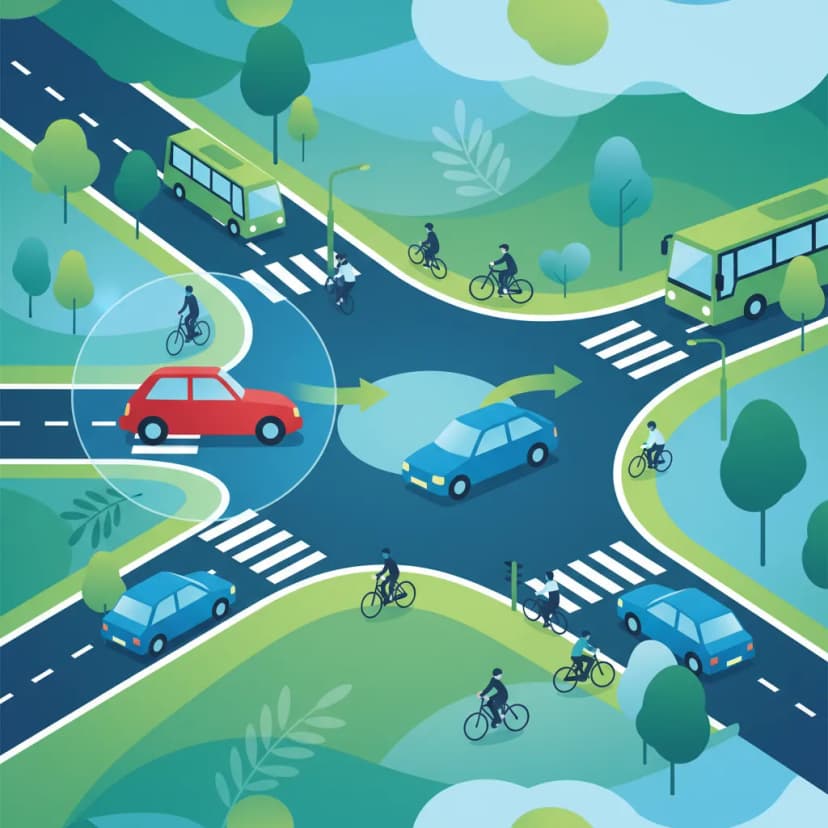
This lesson explains the foundational right-hand rule (högerregeln), which is the default priority rule at Swedish intersections where no other signs or signals regulate traffic. You will learn that you must always yield to vehicles approaching from your right in such situations. The content clarifies where this rule applies, such as in residential areas and on smaller rural roads, and covers the critical exceptions when signs or other rules take precedence.
This lesson introduces the core principles of right-of-way in Sweden, including the general duty to give way (Väjningsplikt) and the stricter stop duty (Stopplikt). It explains the concept of a priority road and how to apply the right-hand rule at uncontrolled intersections. By understanding this legal framework, riders can determine who has priority in any given situation and act predictably and safely.
This lesson explains the two core principles of priority in Swedish traffic law: the right-hand rule (Högerregeln) and the duty to yield (Väjningsplikt). You will learn how to apply the right-hand rule at uncontrolled intersections and when to yield to other traffic as indicated by signs or road markings. Understanding this fundamental hierarchy is crucial for making correct and safe decisions in a wide variety of common traffic situations you will face as a motorcyclist.

This lesson focuses on regulated intersections where priority is determined by signs indicating a main road (huvudled), a duty to yield (väjningsplikt), or a duty to stop (stopplikt). You will learn how to identify which road has priority and your legal obligation to give way to all traffic on that road before proceeding. The lesson covers proper procedures for approaching these junctions, assessing traffic, and entering the main road safely.
This lesson provides detailed guidance on navigating complex traffic points such as signalized intersections, multi-lane roundabouts, and pedestrian crossings. You will learn the correct procedures for entering and exiting roundabouts, the specific rules for yielding to pedestrians and cyclists at designated crossings, and how to interpret complex traffic light signals. These skills are vital for safe urban and suburban riding, where interaction with vulnerable road users is frequent.
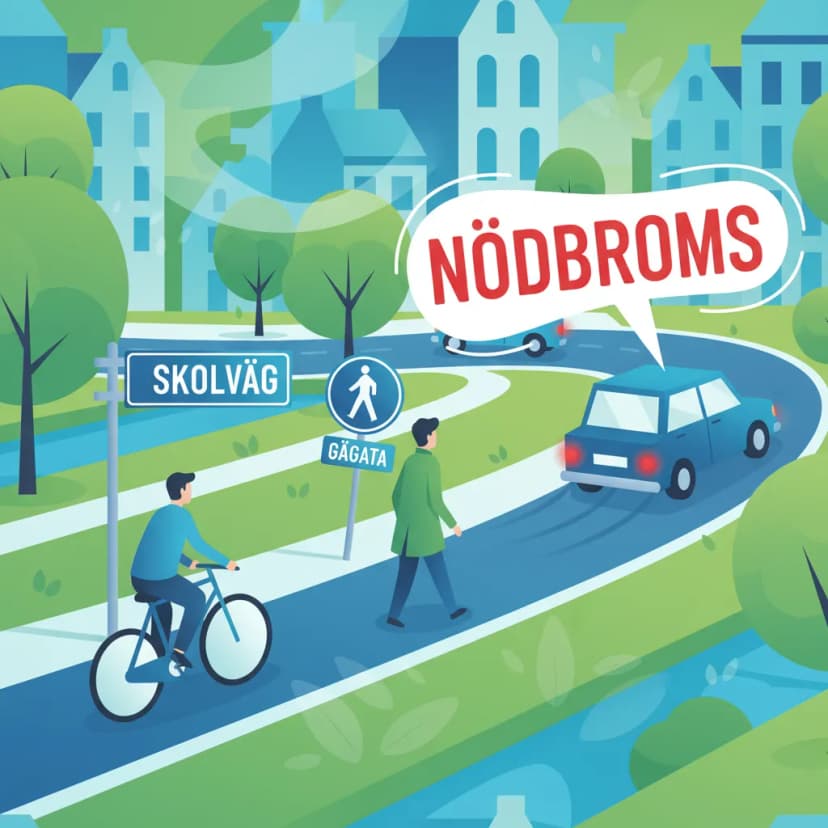
This lesson examines a variety of special situations where standard priority rules are modified. You will learn about the 'exit rule' (utfartsregeln) when entering a road from property, your duty to yield to buses indicating a departure from a stop, and the specific rules for pedestrian-only streets (gågata). The content also covers interactions with trams, emergency vehicles, and procedures at railway crossings, highlighting situations that demand maximum vigilance.
This lesson details the specific priority rules at pedestrian and tram crossings (Spårvagnskorsning). It reinforces the legal obligation for moped riders to stop for pedestrians at marked zebra crossings and explains that trams almost always have priority. Learners will understand the importance of approaching these crossings with caution, scanning for hazards, and being prepared to stop.
This lesson details a driver's responsibility towards pedestrians. You will learn the strict rule of yielding to pedestrians who are on or about to enter a marked, uncontrolled crosswalk. The content also covers the specific, highly restrictive rules for driving in designated pedestrian zones (gågata) and 'walking speed' areas (gångfartsområde), where pedestrians have complete priority and vehicle traffic is severely limited.
This lesson provides practical instructions for safely navigating different types of intersections and roundabouts. It covers procedures for approaching, entering, and exiting roundabouts, emphasizing the rule to yield to traffic already circulating. The content also addresses how to handle signal-controlled and uncontrolled intersections, ensuring riders select the correct lane and manage their speed appropriately.
This lesson explains the specific traffic rules related to public transport vehicles. You will learn about your duty to yield to buses signaling to leave a stop (on roads with a speed limit of 50 km/h or less) and the fact that trams generally have priority. The lesson covers how to safely pass stopped buses and trams, being mindful of disembarking passengers who may cross the road unexpectedly.
Understand the legal meaning of all traffic light signals in Sweden, including solid red, yellow, green, and arrow indicators. Learn how to navigate signalized intersections safely and what to do when lights are out of order.

This lesson covers the essential topic of communication in traffic using the vehicle's built-in signaling devices. You will learn the rules for using your turn indicators (körriktningsvisare) in good time before turning or changing lanes. The content also explains the proper use of hazard lights (varningsblinkers) in emergency situations and the very limited, specific circumstances in which using the horn (ljudsignal) is permitted to avert immediate danger.
This lesson covers the correct interpretation and response to all forms of light and audible signals a motorcyclist will encounter. You will study the sequences of traffic lights, the rules for using turn indicators and hazard lights, and the legally permitted uses of the horn. Proper use of these signals is a fundamental aspect of safe riding, as it communicates your intentions clearly to other road users and helps prevent misunderstandings and collisions.

This lesson explains the function and legal significance of various road markings (vägmarkeringar) in Sweden. You will learn the difference between broken lines that permit overtaking and solid lines that forbid it, as well as the meaning of stop lines, pedestrian crossings, and lane direction arrows. These markings work in conjunction with signs to organize traffic flow, separate lanes, and provide critical information directly on the road surface.
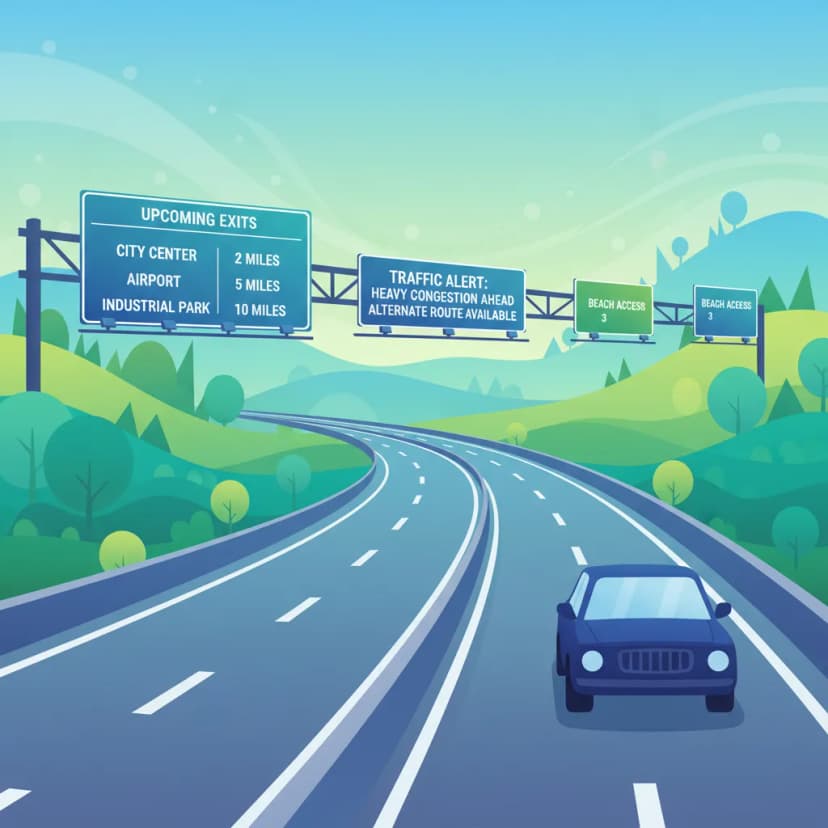
This lesson covers the extensive category of informational and directional signs that aid navigation throughout Sweden. You will learn to interpret signs for motorways, national roads, and local destinations, as well as symbols indicating services like gas stations, parking, and rest areas. Proper understanding of these signs allows for efficient route planning, reduces driver uncertainty, and contributes to smoother, safer traffic flow on all types of roads.
This lesson provides detailed guidance on navigating complex traffic points such as signalized intersections, multi-lane roundabouts, and pedestrian crossings. You will learn the correct procedures for entering and exiting roundabouts, the specific rules for yielding to pedestrians and cyclists at designated crossings, and how to interpret complex traffic light signals. These skills are vital for safe urban and suburban riding, where interaction with vulnerable road users is frequent.
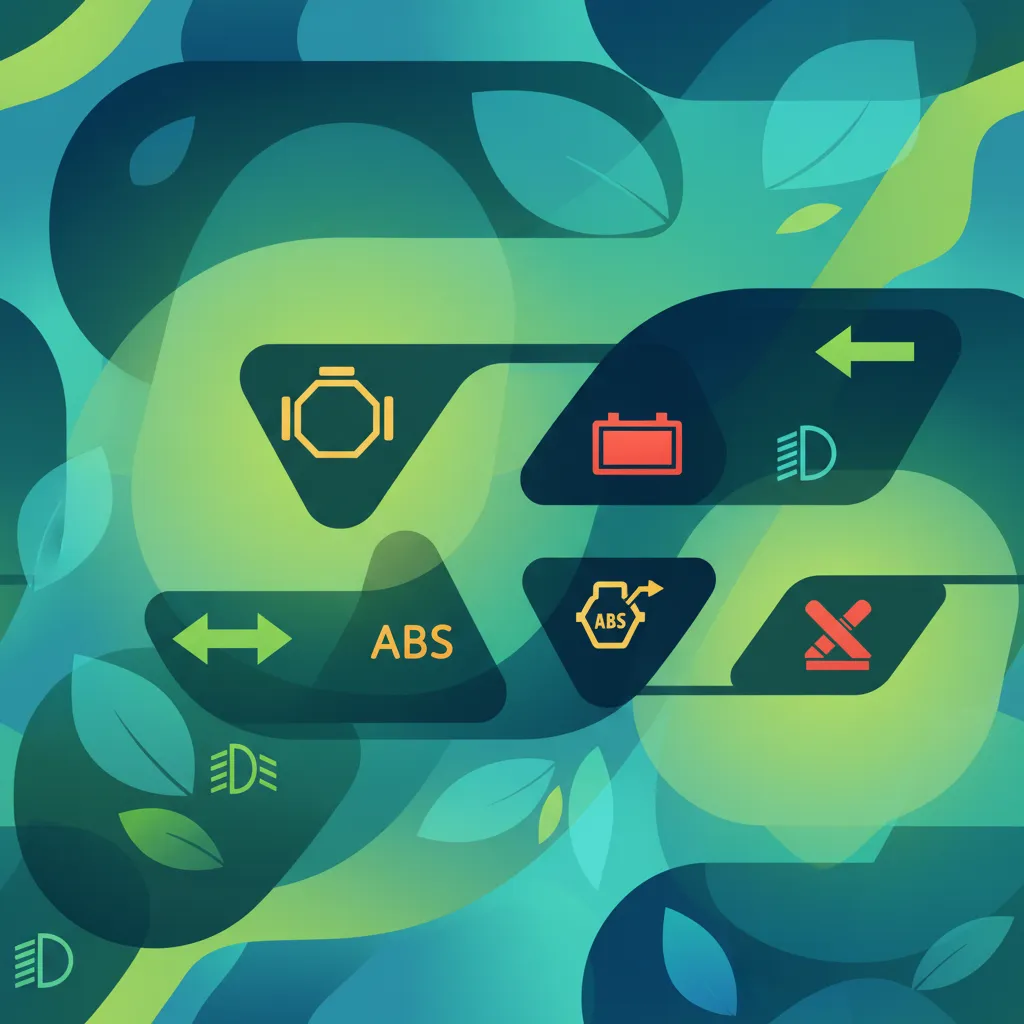
This lesson serves as a guide to the language of your car's instrument panel. You will learn the meaning of the most common warning lights, understanding the urgency indicated by their color: red for a critical issue requiring an immediate stop, yellow for a fault that needs attention soon, and green or blue for informational indicators. Knowing what these symbols mean is crucial for addressing mechanical problems before they become serious or unsafe.
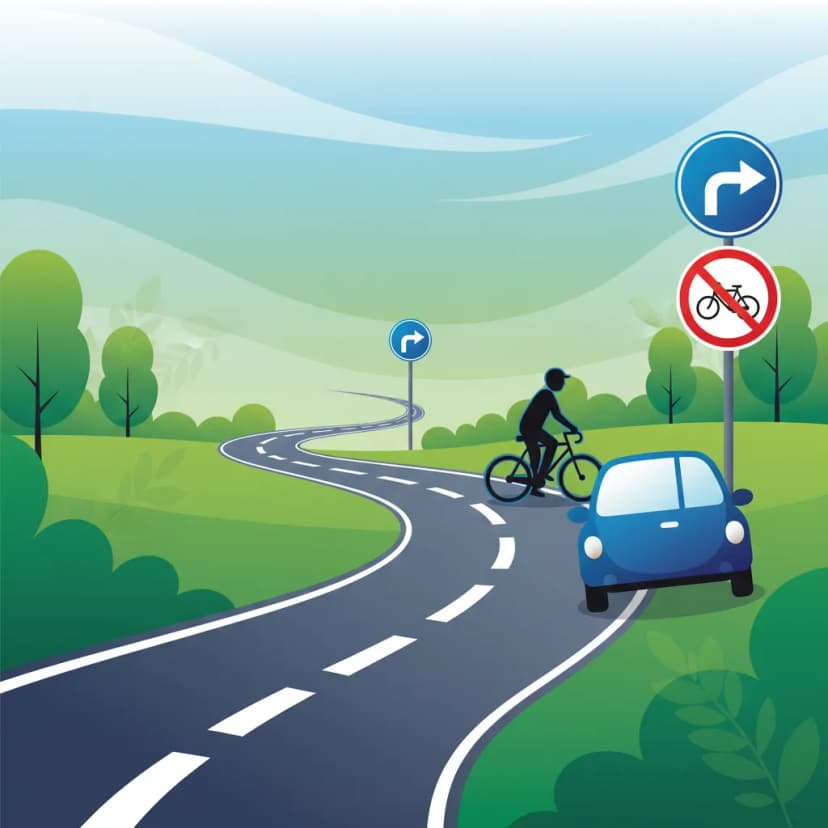
This lesson details the full range of Swedish regulatory signs, which establish legally enforceable rules for all road users. You will learn to interpret prohibitory signs (förbudsmärken) such as speed limits and no-entry signs, as well as mandatory signs (påbudsmärken) that dictate direction or lane usage. Understanding these signs is crucial as they directly regulate traffic flow, ensure safety at critical points, and carry legal consequences if ignored.
This lesson focuses on the unique challenges of driving in urban environments. You will learn techniques for anticipating the actions of vulnerable road users like pedestrians and cyclists, especially near crossings and bus stops. The content covers how to navigate narrow streets, one-way systems, and areas with heavy traffic, emphasizing the need for lower speeds, heightened awareness, and a defensive mindset.

This lesson covers strategies for driving safely when visibility is compromised. You will learn the correct use of different lighting systems: when to use low beams, high beams (helljus), and how to avoid dazzling other drivers. The lesson also explains the specific regulations for using front and rear fog lights and provides techniques for navigating safely in dense fog or heavy precipitation by reducing speed and using the road edge as a guide.
This lesson covers the critical maneuvers of merging and changing lanes. You will learn the correct technique for using an acceleration lane to match the speed of motorway traffic before merging smoothly and safely. The lesson emphasizes the importance of checking mirrors and the blind spot, signaling in good time, and applying the 'zipper principle' (dragkedjeprincipen) where lanes merge to ensure efficient and courteous traffic flow.
Find clear answers to common questions learners have about Traffic Signals and Lights (Trafiksignaler). Learn how the lesson is structured, which driving theory objectives it supports, and how it fits into the overall learning path of units and curriculum progression in Sweden. These explanations help you understand key concepts, lesson flow, and exam focused study goals.
A flashing yellow traffic light in Sweden indicates caution. You should proceed with care, reduce your speed, and be prepared to yield to other traffic or pedestrians. It means the signal is not fully regulating traffic, so you must apply general priority rules.
If traffic lights are out of order, you must treat the intersection as if there were no traffic signal. This typically means applying the general right-hand rule (högerregeln) or any applicable signs like stop or yield signs. Always proceed with extra caution and be prepared to yield.
A green arrow on a traffic light means you have priority to proceed in the direction of the arrow, provided it is safe to do so. You must still be aware of other traffic, especially pedestrians or cyclists who may have a separate signal, and ensure your manoeuvre is safe.
A solid green light means you can proceed straight or turn, provided it's safe and you don't obstruct other traffic. A green arrow specifically grants priority for a particular direction of travel, often allowing turns even when straight-ahead traffic has a red light.
Flashing red lights at a traffic signal typically indicate a malfunction or that the signal is not in operation. In such cases, treat the intersection as if there were no signals present and follow standard priority rules, such as the right-hand rule or yielding to any applicable signs.