
Navigating parking rules can be complex, and this lesson focuses on understanding the regulations for special zones. We'll cover designated parking for individuals with disabilities, the rules for loading and unloading goods, and other restricted areas critical for safe and legal parking on Swedish roads.
Navigating the diverse landscape of Swedish parking regulations requires a thorough understanding of areas designated for specific purposes or permit holders. Beyond general parking rules, certain zones are legally reserved to ensure accessibility, support local residents, facilitate commercial operations, or guarantee rapid emergency response. This lesson delves into these crucial "disabled and restricted areas," explaining their purpose, associated signs, and the legal obligations of every driver in the Swedish Driving License Theory Course for Category B Cars.
Respecting these specialized zones is not merely about avoiding fines; it is fundamental to road safety, social equity, and the efficient functioning of urban environments. Misuse of these areas can severely impact vulnerable road users, hinder essential services, and disrupt traffic flow.
Restricted parking and stopping zones are a vital legal instrument designed to allocate scarce curbside space strategically. They address specific societal needs by reserving prime locations for those who require them most, preventing arbitrary use, and promoting overall traffic efficiency. The underlying logic behind these designations is multifaceted:
These principles are enshrined in Swedish traffic law, primarily the Trafikförordningen (Traffic Regulations) and Vägtrafiklag (Road Traffic Act), which mandate the proper marking and enforcement of these areas.
Several key principles dictate how restricted parking and stopping zones function in Sweden, each with specific implications for drivers. Understanding these helps in correctly interpreting signs and making informed decisions on the road.
Many restricted parking areas operate on a permit-based system. This means that certain curbside spaces may only be used by drivers who possess and display a specific, legally issued permit. Examples include disabled parking permits (often referred to as a "blue badge") and local residential parking permits (boendeparkering).
This system guarantees that limited, often strategically located, spaces are reserved exclusively for authorized individuals or vehicles, preventing unauthorized use and ensuring that those with genuine needs can access them. For drivers, this means always verifying the validity of their permit and displaying it correctly. Enforcement officers are entitled to request proof of permit on the spot.
Some restricted zones, particularly loading/unloading zones and certain residential visitor parking, impose a maximum duration for stopping or parking. These time limits, typically ranging from 5 to 15 minutes, are crucial for keeping the curb clear and ensuring a regular turnover of spaces. This prevents vehicles from occupying these essential zones for extended periods, which would otherwise hinder traffic flow and prevent others from conducting their legitimate activities. Drivers using such zones must actively monitor the elapsed time and relocate their vehicle promptly once the activity is complete or the time limit expires.
Certain areas, such as emergency vehicle clearance zones (often called fire lanes), are designated as zero-tolerance zones. This implies an absolute prohibition against any stopping, parking, or standing at any time, under any circumstances (except for genuine emergencies like a breakdown). The purpose of these zones is unequivocally to guarantee immediate and unobstructed access for emergency services, directly impacting response times and potentially saving lives. Violations in these areas are treated as severe offenses, carrying significant penalties.
All restricted areas in Sweden are required to be clearly marked by standardized traffic signs and, in some cases, road surface markings. These markings must be visible under prevailing conditions, whether it's day or night, fair weather or adverse. The consistent design and placement of these signs, as defined by the Trafikförordningen, ensure that drivers can reliably identify restrictions, minimizing the risk of unintentional violations. Drivers are expected to be attentive to these signs, understanding that poor visibility due to weather or light conditions does not automatically excuse a violation if the sign was reasonably discernible.
Penalties for violating restricted parking rules are calibrated according to the risk level and societal impact associated with the specific restriction. Violations in zero-tolerance zones like fire lanes, which could endanger lives, incur significantly higher fines and swifter enforcement (e.g., immediate towing) compared to, for instance, a minor overstay in a loading zone. This proportional enforcement system encourages compliance by reflecting the seriousness of each type of violation, both legally and ethically.
Sweden's traffic regulations define several distinct types of restricted parking and stopping zones, each identified by unique signage and governed by specific rules.
Definition: Disabled parking spaces are specially designated bays marked with a blue traffic sign featuring a white wheelchair symbol. In Sweden, this sign is officially SÄK-sign 711 (though often referred to by its generic D5 category). These spaces are exclusively reserved for vehicles displaying a valid disabled-parking permit, commonly known as a "blue badge."
Subcategories and Types:
Practical Meaning: Only drivers who hold and visibly display a valid disabled-parking permit are allowed to park in these spaces. They may typically park for an unlimited time unless otherwise specified by a supplementary sign. All other drivers, regardless of their reason, must not stop or park in these spaces at any time, even for a brief moment to drop off a passenger or groceries.
Associated Rules and Conditions:
This is regulated under Trafikförordningen (Traffic Regulations), likely in 3 kap. 7 §, which outlines the requirements for using and displaying the permit.
Common Misunderstandings:
Definition: Boendeparkering (Residential Parking) zones are areas where parking is specifically limited to residents who hold a local residential parking permit issued by the municipality. These zones are typically identified by a white "P" on a blue background, often accompanied by a house symbol or text indicating "Boende" and "Tillstånd" (permit). In Sweden, the sign commonly used is related to Sign 602 (Parking) with a supplementary plate.
Subcategories and Types:
Practical Meaning: If you are a resident of the area and hold a valid, current residential parking permit for that specific zone, you may park your vehicle according to the conditions stated on your permit and the accompanying signage. If you are not a permit holder, you must observe any "visitor" allowances (often time-limited and requiring a parking disc) or seek alternative parking outside the designated zone.
Associated Rules and Conditions:
Common Misunderstandings:
Definition: Loading/unloading zones are specific curbside areas where vehicles are permitted to stop temporarily solely for the purpose of actively loading or unloading goods, passengers, or mail. These zones are typically marked by a green traffic sign displaying a white "L" symbol. In Sweden, this is generally referred to as Sign 703 (Stopping and parking forbidden with supplementary instructions for loading).
Subcategories and Types:
Practical Meaning: A driver may stop in a loading zone only while actively engaged in loading or unloading activities. The vehicle must be vacated as soon as the activity is completed, and the maximum time limit specified on any supplementary plate must be strictly observed. "Actively loading/unloading" means there must be continuous activity related to moving items or persons into or out of the vehicle. Waiting for someone or for customers does not count as active loading.
Associated Rules and Conditions:
Common Misunderstandings:
Definition: Emergency Vehicle Clearance Zones, commonly known as "fire lanes" or "ambulance lanes," are road sections or specific areas that must be kept entirely clear to ensure immediate and unimpeded access for fire trucks, ambulances, and other emergency services. These zones are typically marked with a blue traffic sign featuring a red "B" symbol, which is related to Sign 702 (Prohibition against stopping and parking).
Subcategories and Types:
Practical Meaning: The rule for emergency vehicle clearance zones is absolute: No stopping, parking, or standing is allowed at any time, for any duration, under any circumstances. This includes briefly stopping to drop off a passenger, pick up items, or even waiting for someone. The only exception would be a genuine vehicle breakdown that makes it impossible to move, in which case the vehicle must be removed as quickly as possible.
Associated Rules and Conditions:
Common Misunderstandings:
Identifying and correctly interpreting traffic signs and road markings is paramount for navigating restricted areas legally and safely. In Sweden, these visual cues are standardized and defined by the Trafikförordningen, 7 kap. 1-3 §§, and the Swedish Transport Administration’s sign manual.
Supplementary plates are small rectangular signs placed directly beneath a main traffic sign. They provide crucial additional information that modifies, clarifies, or restricts the meaning of the main sign. These are particularly important for restricted areas, as they often specify:
Drivers are expected to be attentive and capable of identifying and interpreting traffic signs under various conditions. While signs must be maintained in good condition, the legal obligation generally rests with the driver.
Under Trafikförordningen 6 kap. 10 §, if a traffic sign is genuinely not visible due to poor maintenance (e.g., completely faded, obscured by overgrown foliage), a driver might be excused if they exercised due care and could not reasonably have seen the sign. However, this is a conditional exception and does not apply to situations like temporary obstruction by another vehicle or bad weather.
Therefore, it is crucial to reduce speed and increase vigilance in areas with numerous signs, especially during adverse weather conditions, darkness, or when approaching unfamiliar urban areas.
Compliance with Swedish traffic law is non-negotiable. The primary legal framework governing these restricted areas includes:
Understanding common pitfalls can help drivers avoid inadvertent violations and their consequences.
Parking rules, especially for restricted areas, can be influenced by various external factors. Drivers must be aware of these variations to ensure continuous compliance.
Violating rules related to disabled and restricted parking areas carries significant consequences, affecting not only the offending driver but also broader community safety and accessibility.
To master the rules concerning disabled and restricted parking areas in Sweden, remember these key points:
Lesson content overview
Explore all units and lessons included in this driving theory course.
Explore search topics learners often look for when studying Disabled and Restricted Areas. These topics reflect common questions about road rules, driving situations, safety guidance, and lesson level theory preparation for learners in Sweden.
Browse additional driving theory lessons that cover connected traffic rules, road signs, and common driving situations related to this topic. Improve your understanding of how different rules interact across everyday traffic scenarios.
Learn the specific rules for parking in disabled bays, loading zones, and other restricted areas in Sweden. This lesson clarifies permit requirements and the importance of respecting designated parking spaces to ensure road safety and access for all users.
This lesson covers the general, nationwide rules that govern where you may and may not park or stop, even without specific signs. You will learn about the prohibitions on stopping near intersections, on pedestrian crossings, and at bus stops. The content clarifies the legal definitions and provides clear guidelines on maintaining safe distances and ensuring that your parked vehicle does not obstruct traffic or create a hazard.
This lesson focuses on the high level of caution required when driving in residential areas. You will learn about the rules for special zones like 'gångfartsområde' (walking speed area) and the need to navigate around speed calming measures like speed bumps. The central theme is anticipating unpredictable behavior from residents, especially children, and managing the risks posed by parked cars that severely limit visibility.

This lesson focuses on the specific activity of stopping for the purpose of passenger embarkation/disembarkation or loading/unloading goods. You will learn that this is often permissible in areas marked with a 'no parking' sign, as long as the stop is brief and continuous. The lesson distinguishes this from a 'no stopping' zone, where any voluntary stop is prohibited, ensuring you understand the nuanced difference.

This lesson explains the various systems used to regulate parking duration and payment. You will learn how to correctly set and display a parking disc (P-skiva) in time-limited zones and how to operate parking meters and mobile payment apps. The lesson also demystifies 'date parking' (datumparkering), a rule used in some areas for street cleaning, and clarifies the difference between a public parking fine (parkeringsanmärkning) and a private control fee (kontrollavgift).
This lesson revisits the practical skills of positioning a vehicle within a designated space. It describes the characteristics of the three main parking styles: parallel (fickparkering), angled, and perpendicular. The content focuses on the conceptual steps for each maneuver, such as approach, turning points, and final positioning, reinforcing the importance of slow, controlled movements and constant observation of the surroundings.
This lesson provides step-by-step instructions for performing common low-speed maneuvers, including reversing in a straight line, backing around a corner, and various types of parking. You will learn how to use reference points on your vehicle and the surroundings to position the car accurately. The paramount importance of slow speed, continuous 360-degree observation, and being prepared to stop for pedestrians or other vehicles is emphasized throughout.

This lesson clarifies the legal distinction between stopping temporarily and parking. It identifies areas where stopping is prohibited, such as near intersections or on pedestrian crossings, to maintain traffic flow and safety. The content also discusses designated waiting areas at traffic lights, often marked for cyclists and mopeds, which can offer a safer position.
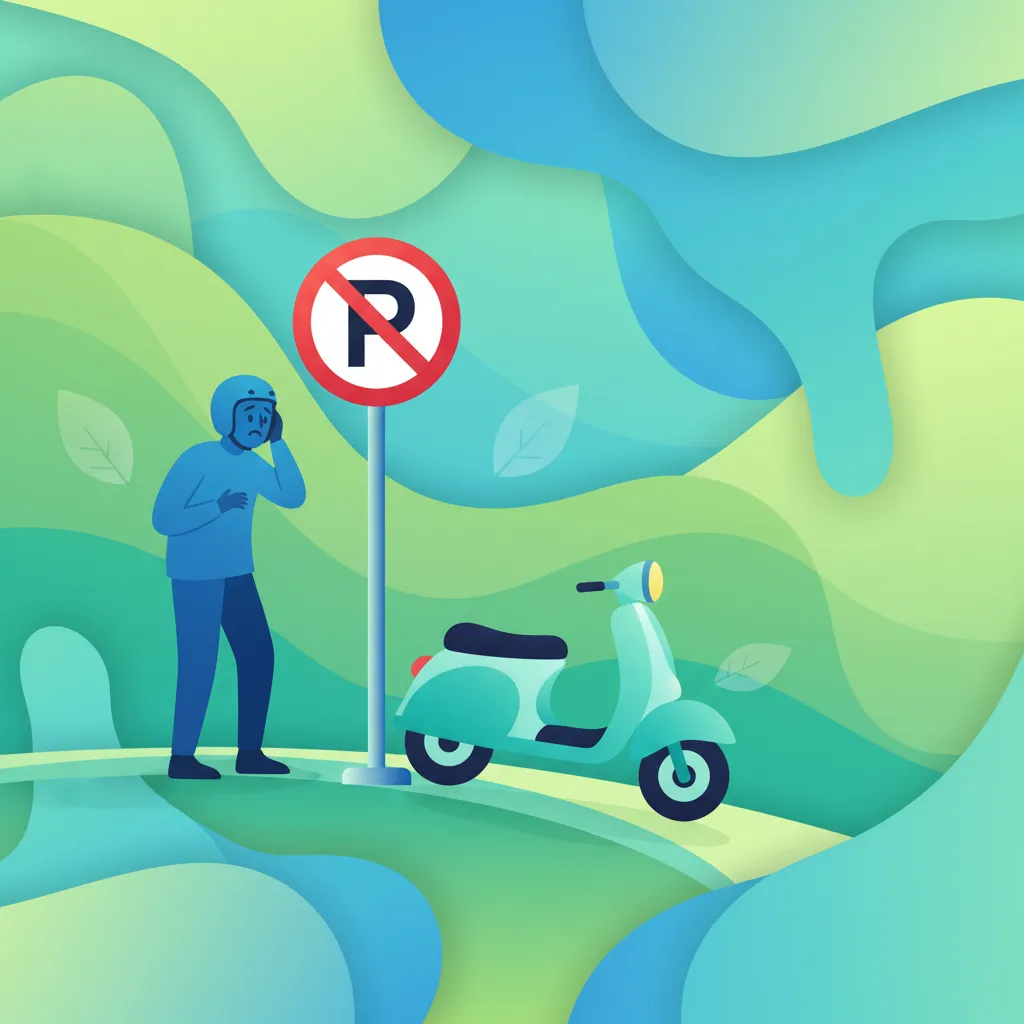
This lesson focuses on the often-confusing topic of moped parking. It covers how to interpret parking signs, including those indicating prohibitions (Parkeringsförbud), and where to find designated parking spots for two-wheelers. The content provides practical advice on where it is legal to park and how to do so without causing an obstruction, thereby avoiding fines.

This lesson focuses on the unique challenges of driving in urban environments. You will learn techniques for anticipating the actions of vulnerable road users like pedestrians and cyclists, especially near crossings and bus stops. The content covers how to navigate narrow streets, one-way systems, and areas with heavy traffic, emphasizing the need for lower speeds, heightened awareness, and a defensive mindset.

This lesson details a driver's responsibility towards pedestrians. You will learn the strict rule of yielding to pedestrians who are on or about to enter a marked, uncontrolled crosswalk. The content also covers the specific, highly restrictive rules for driving in designated pedestrian zones (gågata) and 'walking speed' areas (gångfartsområde), where pedestrians have complete priority and vehicle traffic is severely limited.
Explore the crucial differences between stopping and parking according to Swedish traffic regulations. Understand where stopping is permitted and learn about various restricted parking zones, ensuring you comply with the law and avoid issues with fines or access.
This lesson covers the general, nationwide rules that govern where you may and may not park or stop, even without specific signs. You will learn about the prohibitions on stopping near intersections, on pedestrian crossings, and at bus stops. The content clarifies the legal definitions and provides clear guidelines on maintaining safe distances and ensuring that your parked vehicle does not obstruct traffic or create a hazard.
This lesson focuses on the specific activity of stopping for the purpose of passenger embarkation/disembarkation or loading/unloading goods. You will learn that this is often permissible in areas marked with a 'no parking' sign, as long as the stop is brief and continuous. The lesson distinguishes this from a 'no stopping' zone, where any voluntary stop is prohibited, ensuring you understand the nuanced difference.
This lesson clarifies the legal distinction between stopping temporarily and parking. It identifies areas where stopping is prohibited, such as near intersections or on pedestrian crossings, to maintain traffic flow and safety. The content also discusses designated waiting areas at traffic lights, often marked for cyclists and mopeds, which can offer a safer position.
This lesson focuses on the high level of caution required when driving in residential areas. You will learn about the rules for special zones like 'gångfartsområde' (walking speed area) and the need to navigate around speed calming measures like speed bumps. The central theme is anticipating unpredictable behavior from residents, especially children, and managing the risks posed by parked cars that severely limit visibility.
This lesson explains the various systems used to regulate parking duration and payment. You will learn how to correctly set and display a parking disc (P-skiva) in time-limited zones and how to operate parking meters and mobile payment apps. The lesson also demystifies 'date parking' (datumparkering), a rule used in some areas for street cleaning, and clarifies the difference between a public parking fine (parkeringsanmärkning) and a private control fee (kontrollavgift).
This lesson provides step-by-step instructions for performing common low-speed maneuvers, including reversing in a straight line, backing around a corner, and various types of parking. You will learn how to use reference points on your vehicle and the surroundings to position the car accurately. The paramount importance of slow speed, continuous 360-degree observation, and being prepared to stop for pedestrians or other vehicles is emphasized throughout.
This lesson focuses on the unique challenges of driving in urban environments. You will learn techniques for anticipating the actions of vulnerable road users like pedestrians and cyclists, especially near crossings and bus stops. The content covers how to navigate narrow streets, one-way systems, and areas with heavy traffic, emphasizing the need for lower speeds, heightened awareness, and a defensive mindset.
This lesson details a driver's responsibility towards pedestrians. You will learn the strict rule of yielding to pedestrians who are on or about to enter a marked, uncontrolled crosswalk. The content also covers the specific, highly restrictive rules for driving in designated pedestrian zones (gågata) and 'walking speed' areas (gångfartsområde), where pedestrians have complete priority and vehicle traffic is severely limited.
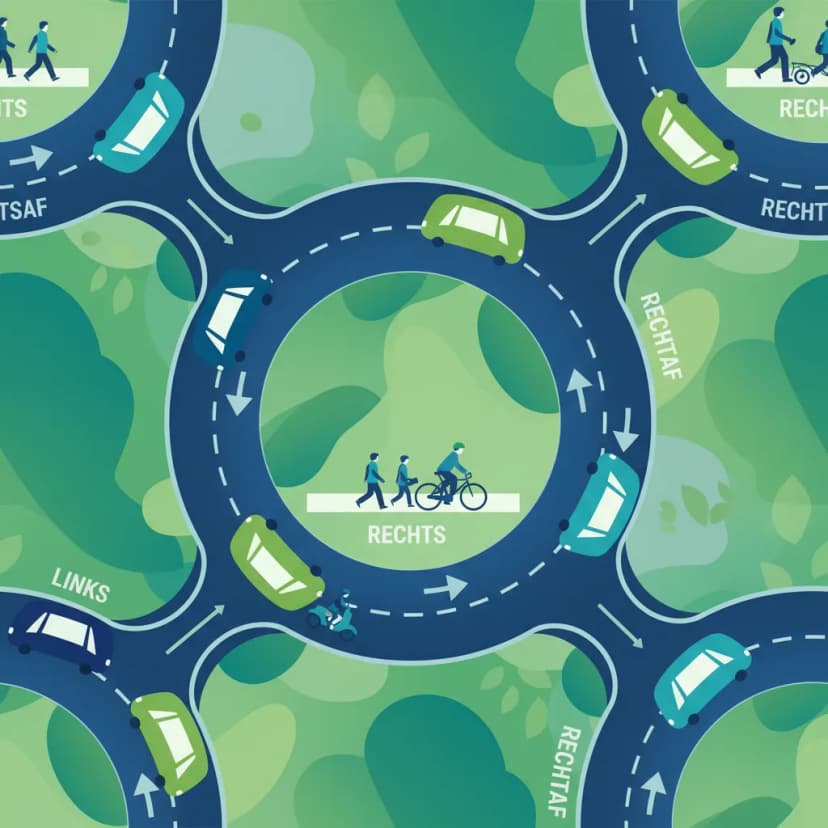
This lesson provides a detailed guide to navigating Swedish roundabouts (cirkulationsplatser). Key principles include always yielding to traffic already in the roundabout and choosing the correct lane based on your intended exit. You will learn the specific rules for signalling your intention to exit, how to safely interact with cyclists, and the techniques for maneuvering through multi-lane roundabouts to maintain traffic flow and prevent accidents.
This lesson revisits the practical skills of positioning a vehicle within a designated space. It describes the characteristics of the three main parking styles: parallel (fickparkering), angled, and perpendicular. The content focuses on the conceptual steps for each maneuver, such as approach, turning points, and final positioning, reinforcing the importance of slow, controlled movements and constant observation of the surroundings.
Find clear answers to common questions learners have about Disabled and Restricted Areas. Learn how the lesson is structured, which driving theory objectives it supports, and how it fits into the overall learning path of units and curriculum progression in Sweden. These explanations help you understand key concepts, lesson flow, and exam focused study goals.
In Sweden, 'stanna' means to stop briefly, usually for passengers to get in or out. 'Parkera' means to leave the vehicle unattended or for an extended period. Restricted area rules often apply differently to each. For example, you might be able to stop briefly in a loading zone, but not park there.
To park in a designated disabled parking space in Sweden, you must display a valid European 'Parking Card for the Disabled' (sometimes called a 'handikapparkeringstillstånd'). This permit must be clearly visible on your dashboard or sun visor, showing the wheelchair symbol.
Generally, no. Loading zones are specifically intended for loading and unloading goods. While the exact rules can vary slightly, stopping even briefly without a legitimate purpose related to loading or unloading is usually not permitted and can result in a fine.
'Boendeparkering' allows residents in certain areas to park their vehicles for a reduced fee or for free, often for extended periods. You typically need to apply for a permit from the local municipality. These spaces are reserved for permit holders and cannot be used by others, even for short stops, without permission.
Certain areas are implicitly or explicitly kept clear for safety or operational reasons. This can include keeping access clear for emergency vehicles (fire engines, ambulances), maintaining visibility at junctions, or ensuring clear passage on busy pedestrian streets. Always observe general rules and any temporary restrictions.