
Navigating Swedish intersections and understanding priority rules are critical for safe driving and passing your theory test. This unit breaks down the fundamental right-hand rule (Högerregeln), yielding (väjningsplikt), and stopping (stopplikt) to ensure you can confidently handle any intersection, roundabout, or merging situation on Swedish roads.
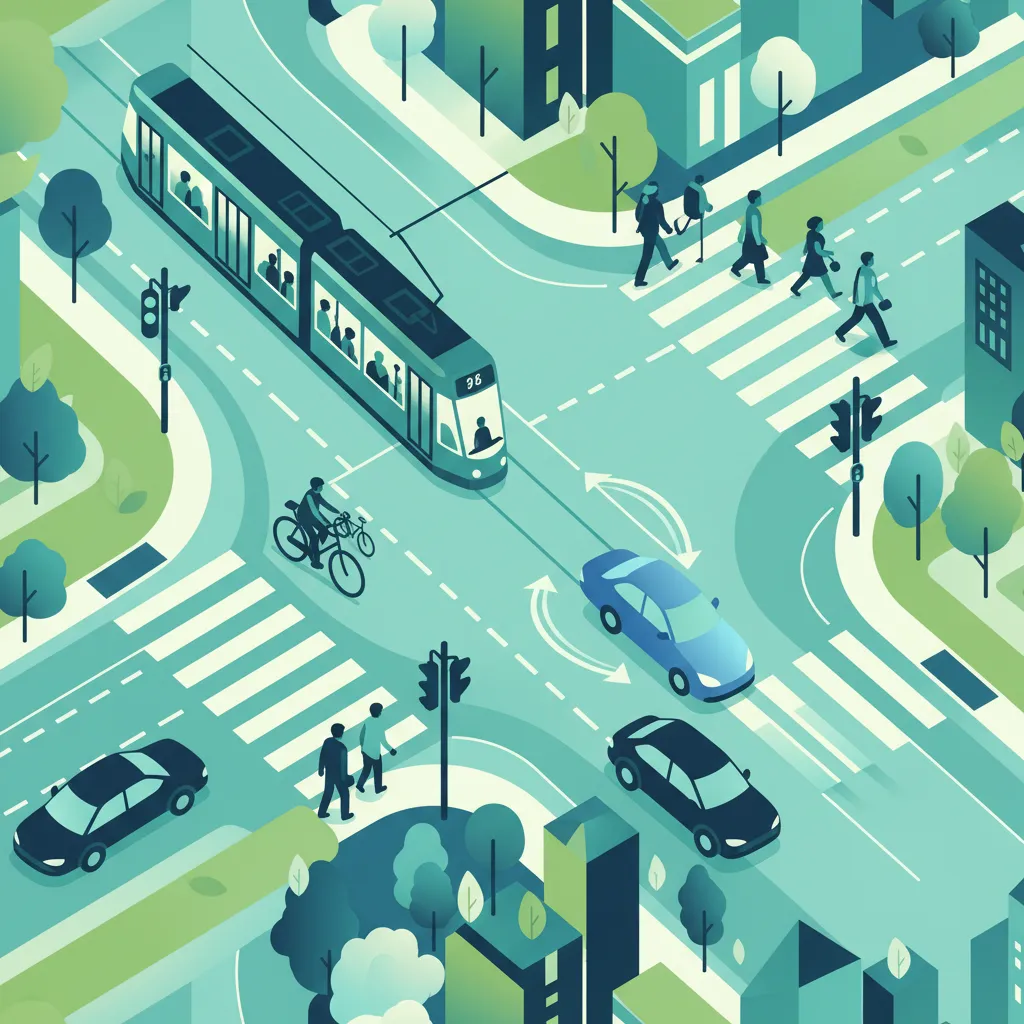
Browse all lessons that make up Priority Rules and Intersections. Each lesson focuses on specific topics, learning objectives, and core concepts, helping you build essential knowledge and follow a clear, structured progression toward your study goals in Sweden.
This lesson explains the foundational right-hand rule (högerregeln), which is the default priority rule at Swedish intersections where no other signs or signals regulate traffic. You will learn that you must always yield to vehicles approaching from your right in such situations. The content clarifies where this rule applies, such as in residential areas and on smaller rural roads, and covers the critical exceptions when signs or other rules take precedence.
This lesson focuses on regulated intersections where priority is determined by signs indicating a main road (huvudled), a duty to yield (väjningsplikt), or a duty to stop (stopplikt). You will learn how to identify which road has priority and your legal obligation to give way to all traffic on that road before proceeding. The lesson covers proper procedures for approaching these junctions, assessing traffic, and entering the main road safely.
This lesson provides a detailed guide to navigating Swedish roundabouts (cirkulationsplatser). Key principles include always yielding to traffic already in the roundabout and choosing the correct lane based on your intended exit. You will learn the specific rules for signalling your intention to exit, how to safely interact with cyclists, and the techniques for maneuvering through multi-lane roundabouts to maintain traffic flow and prevent accidents.
This lesson covers the critical maneuvers of merging and changing lanes. You will learn the correct technique for using an acceleration lane to match the speed of motorway traffic before merging smoothly and safely. The lesson emphasizes the importance of checking mirrors and the blind spot, signaling in good time, and applying the 'zipper principle' (dragkedjeprincipen) where lanes merge to ensure efficient and courteous traffic flow.
This lesson examines a variety of special situations where standard priority rules are modified. You will learn about the 'exit rule' (utfartsregeln) when entering a road from property, your duty to yield to buses indicating a departure from a stop, and the specific rules for pedestrian-only streets (gågata). The content also covers interactions with trams, emergency vehicles, and procedures at railway crossings, highlighting situations that demand maximum vigilance.
Explore high-intent keywords and long-tail search topics learners use when researching Priority Rules and Intersections. These terms reflect how people search for reliable study materials, structured explanations, and unit-level theory preparation support in Sweden.
Find clear answers to the most common questions learners ask about Priority Rules and Intersections. Understand how the unit is organized, what learning goals it supports, and how it contributes to your study progression with structured explanations and practical guidance tailored for learners in Sweden.
Väjningsplikt means you must yield to other traffic, but you don't necessarily have to stop if no one is approaching. Stopplikt, however, requires you to come to a complete stop before proceeding, regardless of traffic. It is a more absolute obligation and is typically indicated by a specific sign and road marking.
The general right-hand rule (Högerregeln) states that if there are no signs or signals indicating otherwise, you must always give way to traffic approaching from your right. However, this rule does not apply on main roads clearly marked with 'main road' signs (Huvudled), in roundabouts, or when specific traffic signals or police directions are present. Always check for signage first.
In Sweden, you must always give way to traffic already in the roundabout when entering, unless signs specifically state otherwise. Once inside, you generally have priority over vehicles entering, but you must still be aware of others and signal your exit clearly. Pedestrians and cyclists often have priority on paths crossing the entry and exit points.
At a T-junction without signs, the Högerregeln generally applies to vehicles on the terminating road (the one ending). If you are on the terminating road and turning right, you yield to traffic from the right. If you are turning left, you yield to traffic coming from the right and also oncoming traffic on the main road. Always prioritize clarity and safety.
If a police officer is directing traffic at an intersection, their signals always override all traffic signs and rules. You must follow the officer's directions precisely, even if they contradict the normal priority rules or signals. Treat the officer's hand signals as you would a green or red light, depending on their instruction.
When merging, you generally need to adapt your speed to the traffic flow and be prepared to yield to vehicles already on the highway. Ensure you have sufficient space and use your turn signal. While not always a strict väjningsplikt, it is a situation where you must be particularly attentive and merge safely without disrupting traffic.
All included lessons
Lessons in Priority Rules and Intersections
See who benefits most from studying Priority Rules and Intersections. This overview explains how the unit supports different learning needs, what level of knowledge is helpful before starting, and how it fits into the overall study path in Sweden.
This unit is essential for all learners preparing for the Swedish Category B driving theory test, especially those who find right-of-way situations confusing. It is also beneficial for drivers new to Sweden seeking to understand local priority conventions and for anyone needing a thorough refresher on intersection rules.

See how Swedish Driving Theory B is structured, with key topics, learning objectives, and a step-by-step path for theory preparation in Sweden.
Explore all units and lessons included in this driving theory course.