
Welcome to the lesson on Sweden's Speed Limit Structure for Category B cars. This lesson, part of the 'Speed Limits and Distance Management' unit, clarifies the fundamental rules governing maximum speeds on Swedish roads. Understanding these limits is crucial for passing your theory test and ensuring safe driving.
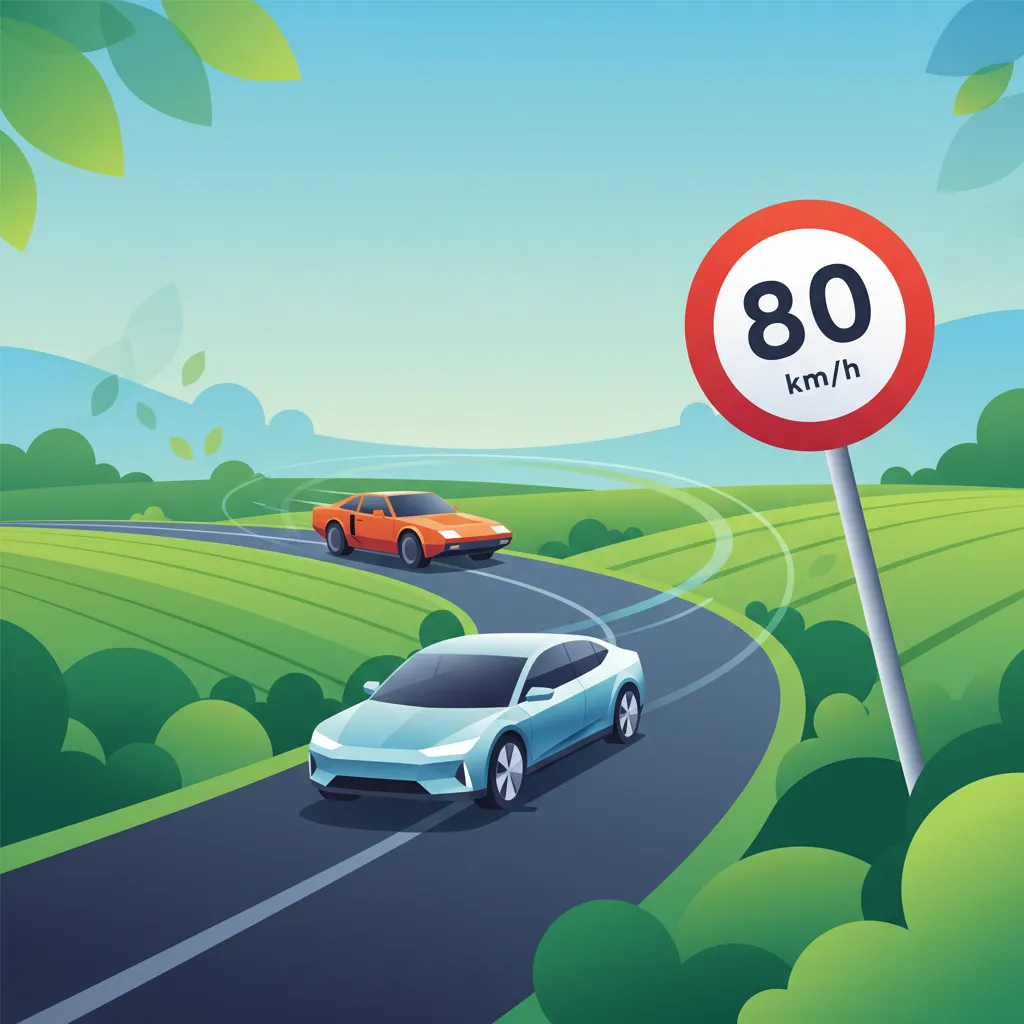
Navigating Sweden's roads safely and legally requires a thorough understanding of its speed limit system. For anyone preparing for the Swedish Driving License Theory Course for Category B Cars, mastering the rules surrounding vehicle speeds is paramount. This lesson provides a detailed exposition of the hierarchical structure of speed limits in Sweden, as defined by the Trafikförordning (Swedish Traffic Regulations), covering everything from default "base speeds" to specific road-type limits and dynamic adjustments.
Driving at the correct speed is not merely about avoiding fines; it is fundamental to road safety, reducing accident severity, and ensuring smooth traffic flow. By understanding how speed limits are set and modified, you can develop risk-aware driving behavior and confidently interpret traffic situations.
Speed limits in Sweden operate on a clear, tiered framework. This system ensures that appropriate speeds are maintained based on the road environment, design, and prevailing conditions. At its core, a baseline speed limit applies when no specific sign is present. This default is then superseded by explicit signage for particular road classes, temporary conditions, or electronic displays.
The logic behind this structure is rooted in safety and physics. Higher speeds are generally permitted on roads designed to safely accommodate them, featuring better geometry, sight distances, and traffic separation. Conversely, lower speeds are enforced in areas with higher potential for conflicts, such as urban centers or near schools. This legal framework provides a clear, enforceable standard, enhancing public awareness and facilitating uniform enforcement.
The most fundamental aspect of the Swedish speed limit system is the baseline speed limit, which applies automatically when no specific speed limit sign is posted. Drivers must infer this limit from their surroundings.
Within areas classified as tätbebyggt område (built-up areas), the default maximum speed limit is 50 km/h. A built-up area is generally characterized by features such as street lighting, permanent buildings situated within 200 meters of the road, or official "city limit" signs. This limit applies to all roads within these areas unless a different speed is explicitly indicated by a sign.
The 50 km/h limit in urban settings is crucial for safety. It reduces the kinetic energy of vehicles, significantly decreasing stopping distances and the severity of potential collisions, especially with vulnerable road users like pedestrians and cyclists.
When driving outside tätbebyggt område, on open country roads or rural routes without specific signage, the default maximum speed limit is 70 km/h. This higher baseline reflects the generally more forgiving road geometry and lower density of potential hazards compared to urban environments.
It's a common misunderstanding to assume a default of 60 km/h everywhere or to confuse the mere presence of street lighting with being in a built-up area. Drivers must actively assess their surroundings to correctly apply the baseline limit if no signs are present. For Category B passenger cars, these baseline rules always apply unless overridden by specific signage.
Speed limit signs are the primary means by which authorities modify the baseline limits. Recognizing and understanding these signs instantly determines the governing speed for the upcoming road segment.
This is the most common speed limit sign. It is a white circular sign with a distinctive red border and the speed number prominently displayed in black. When you encounter this sign, the indicated speed becomes the new legal maximum for the stretch of road it governs, overriding any previously applicable baseline or specific road-class limit. Drivers must continuously scan for these signs and adjust their speed accordingly.
This sign is a white circular disc with a black diagonal line slashing through a number. It signifies the termination of a specific speed limit that was previously indicated. Once you pass this sign, the legal speed limit reverts to the appropriate baseline speed for the area you are in (50 km/h in built-up areas, 70 km/h outside built-up areas) or the next applicable specific limit. A common mistake is to maintain the former higher limit beyond this sign, which can lead to illegal speeding.
This sign, a white circular sign with a black diagonal line, often signifies the end of a series of local restrictions, including speed limits. In certain specific contexts, particularly on some long-distance motorway sections in Sweden, a similar sign (sometimes depicted with an infinity symbol or no number) can indicate that there is no upper speed limit for that stretch. While legally there may be no maximum speed posted, drivers are still obligated to operate their vehicles safely under prevailing conditions. This means adapting speed to weather, traffic density, and road conditions, as exceeding a safe speed can still be considered reckless driving.
Speed limit signs can often be accompanied by supplementary plates. These are small, rectangular plates placed beneath the main sign, providing additional context or conditions. Examples include plates specifying "Vinter" (winter limits), "Skola" (school zones), or specific dates and times when the limit applies. It is crucial to read and understand these plates, as they modify the primary sign's meaning.
On many motorways and major roads, electronic variable-speed signs are used. These LED displays can dynamically show various speed values, adjusting in real-time based on traffic density, accidents, or weather conditions. These variable limits are legally binding and must be obeyed instantly as they appear, overriding any permanent signs for the duration they are displayed.
Beyond the baseline limits, Sweden's road network features specific speed limits tailored to different road classes, designed to match the permissible speed with the road's engineering standards and expected traffic composition.
Swedish motorways (Motorväg) typically have a standard maximum speed limit of 100 km/h. On selected, highly engineered sections, this limit may be raised to 110 km/h where road design and safety assessments permit. However, as noted above, some sections might even have an "unlimited" speed indicated, though driver responsibility for safe operation always remains.
When entering a motorway, always look for the specific speed limit sign. While 100 km/h is common, variations exist, and electronic signs can dynamically change this.
Primary rural roads (Huvudväg) often feature a speed limit of 90 km/h. However, where road geometry, curves, or specific hazards limit safe operation, this might be reduced to 80 km/h even without explicit signage for the entire stretch, especially on older or less developed sections.
Many secondary rural roads have a posted limit of 80 km/h. If no specific sign is posted, the general baseline limit for outside built-up areas (70 km/h) applies.
In residential areas, particularly those designed for shared use or with significant pedestrian activity, speed limits are frequently set at 30 km/h or even lower. These limits are almost always indicated by signs and are crucial for protecting vulnerable road users.
School zones are special cases where a temporary limit of 30 km/h is often enforced during specific hours, usually indicated by supplementary plates showing "Skola" and/or specific timetables. These zones are frequently equipped with flashing lights to draw attention to the reduced speed requirement. Ignoring these temporary limits, particularly when children are present, carries severe penalties due to the heightened risk.
The dynamic nature of road conditions necessitates temporary and variable speed limits to ensure safety and manage traffic flow effectively.
When approaching or driving through areas with road work, speed limits are almost always reduced, typically to 50 km/h or even lower. These limits are indicated by standard speed limit signs, often accompanied by a "Tillfälligt" (temporary) supplementary plate and frequently feature orange/amber backgrounds for increased visibility. These temporary limits are legally binding and must be strictly adhered to for the safety of both workers and drivers.
During adverse weather conditions such as heavy snow, ice, or torrential rain, speed limits may be introduced or dynamically adjusted. These can be displayed on variable electronic signs or indicated by temporary signs with "Vinter" (winter) plates. Regardless of any posted limit, drivers have a legal obligation to adapt their speed to the prevailing weather conditions, reducing it to a safe level even if no specific lower limit is displayed.
As discussed, electronic variable-speed signs are used to adjust limits in real-time. These are particularly common on congested motorways and in urban areas to manage traffic flow, prevent bottlenecks, and respond to incidents or accidents. The displayed speed is mandatory and overrides any static signage until the display changes again.
One of the most critical principles in Swedish traffic law is the adaptation clause. This principle, enshrined in Trafikförordning 3 kap. 5 §, mandates that drivers must always adapt their speed to the prevailing conditions, regardless of the posted speed limit. This includes factors such as:
Failing to adapt your speed to conditions, even if you are below the posted limit, can still result in a charge of reckless driving if it leads to a dangerous situation or accident.
Exceeding the speed limit in Sweden carries serious legal consequences, reflecting the commitment to road safety. Enforcement is carried out through various methods, and penalties are tiered based on the severity of the violation.
Sweden operates a penalty point system called Körkortspoäng. Accumulating points for various traffic offenses can lead to warnings, license suspension, or even revocation. For speeding, the points are typically added as follows:
Accumulating 8 points within a two-year period typically leads to a driving license suspension.
Fines for speeding are tiered according to how much the driver exceeded the posted limit. These amounts are subject to change, so it's always important to refer to the most current regulations.
Generally, exceeding the speed limit by a small margin (e.g., 1-10 km/h) incurs a lower fine, while higher excesses lead to substantially larger fines and an increased likelihood of penalty points, license suspension, or even prosecution for dangerous driving in extreme cases.
Understanding common pitfalls can help new drivers avoid violations:
To ensure full compliance and safety, remember these core principles:
The strict enforcement and clear structure of speed limits in Sweden are underpinned by fundamental principles of physics and extensive road safety research.
Understanding these safety insights reinforces why strict adherence to speed limits and the responsibility to adapt speed are not arbitrary rules, but essential components of safe and responsible driving.
Lesson content overview
Explore all units and lessons included in this driving theory course.
Explore search topics learners often look for when studying Swedish Speed Limit Structure (Vägens hastighetsgränser). These topics reflect common questions about road rules, driving situations, safety guidance, and lesson level theory preparation for learners in Sweden.
Browse additional driving theory lessons that cover connected traffic rules, road signs, and common driving situations related to this topic. Improve your understanding of how different rules interact across everyday traffic scenarios.
Understand how speed limits differ across Swedish urban areas, rural roads, and motorways. This lesson explains the application of default speeds and specific signage to ensure safe driving in various environments according to Swedish traffic law.
This lesson emphasizes that the posted speed limit is a maximum, not a target. You will learn the principles of situational speed adaptation, which involves adjusting your speed based on factors like visibility, road geometry (curves and hills), traffic density, and potential hazards. The lesson covers specific strategies for managing speed in urban environments with pedestrians, on rural roads with hidden entrances, and on motorways to match the flow of traffic.
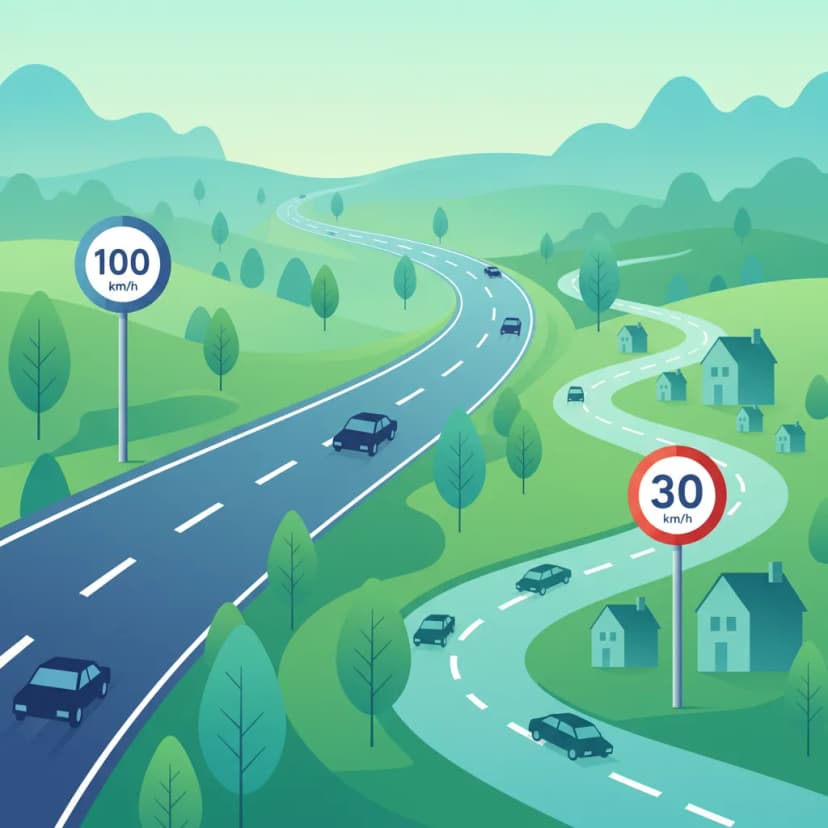
This lesson provides a comprehensive overview of the Swedish national speed limit system. You will learn the default speed limits applicable to different classes of roads, such as 50 km/h in built-up areas and 110 km/h on motorways. It also covers how to identify and comply with special zones, like residential areas (gångfartsområde), school zones, and temporary limits in construction areas, ensuring you always ride at a legal and appropriate speed.

This lesson reinforces the core safety principle of adapting your driving to the prevailing weather conditions. You will learn why you must significantly reduce speed in heavy rain to avoid aquaplaning, how strong crosswinds can affect vehicle stability, and why reduced visibility in fog necessitates slower speeds and greater following distances. The goal is to instill a proactive approach to risk management whenever the weather is less than ideal.
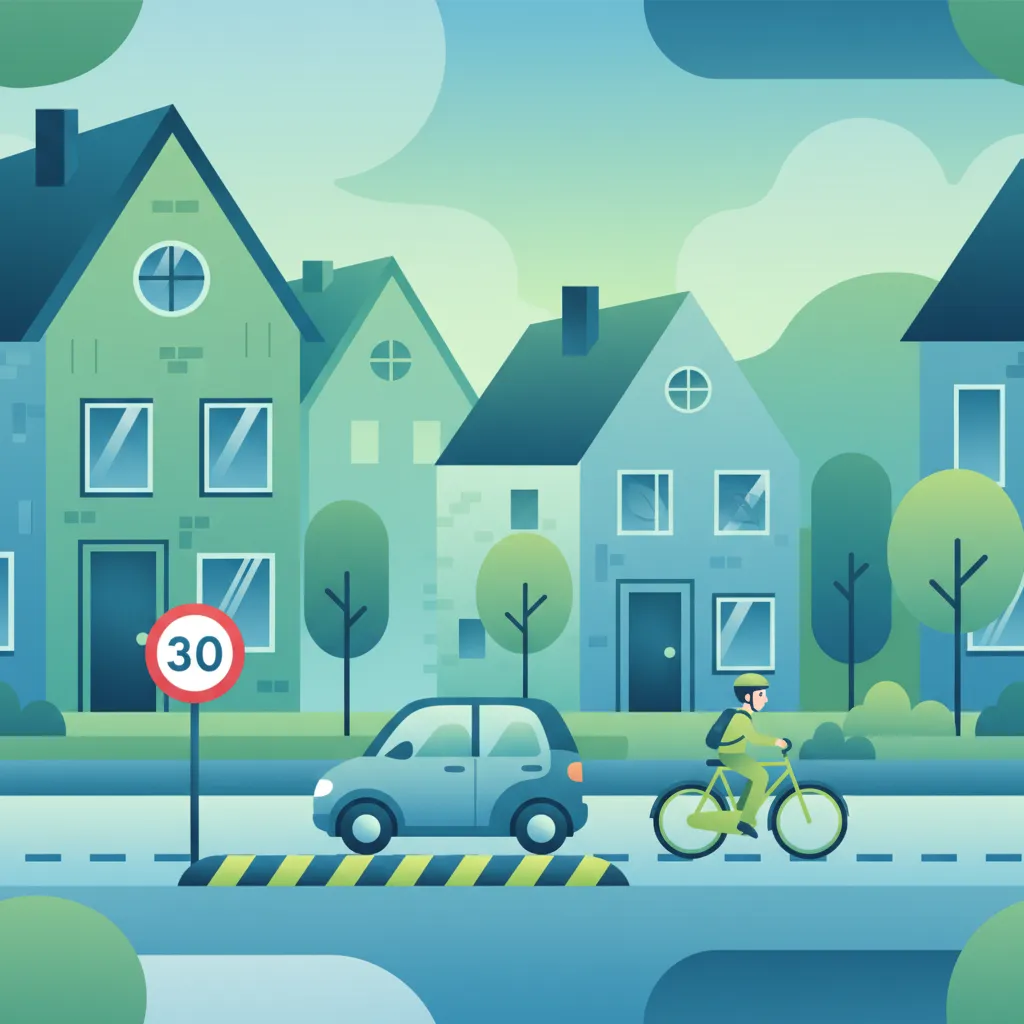
This lesson focuses on the high level of caution required when driving in residential areas. You will learn about the rules for special zones like 'gångfartsområde' (walking speed area) and the need to navigate around speed calming measures like speed bumps. The central theme is anticipating unpredictable behavior from residents, especially children, and managing the risks posed by parked cars that severely limit visibility.

This lesson focuses on the unique demands of managing speed in high-speed environments like motorways. You will learn techniques for maintaining a steady, appropriate speed that matches the flow of traffic, how to perform smooth overtakes, and the importance of increasing your following distance. It also covers physical factors such as managing wind blast and maintaining stability when riding near large trucks, ensuring a safe and controlled high-speed riding experience.
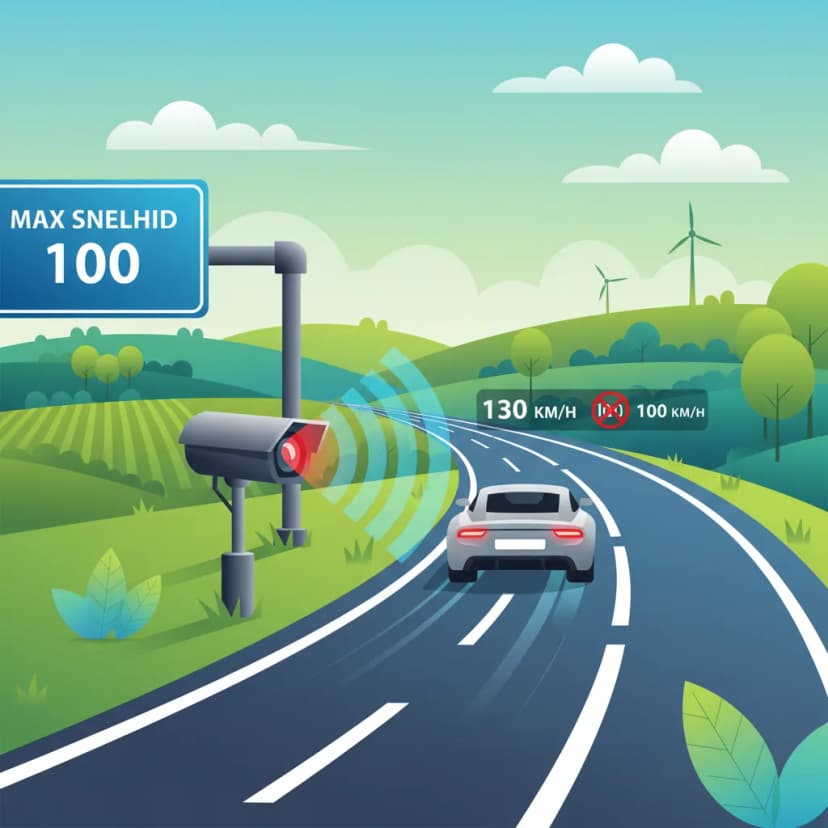
This lesson informs you about the various technologies and methods used for speed enforcement in Sweden, such as fixed and mobile speed cameras and police radar. You will understand the legal framework for speed monitoring and the corresponding penalties for violations, including fines (böter) and the potential for license suspension. This knowledge reinforces the importance of constant speed awareness and adherence to posted limits to ensure both safety and legal compliance.
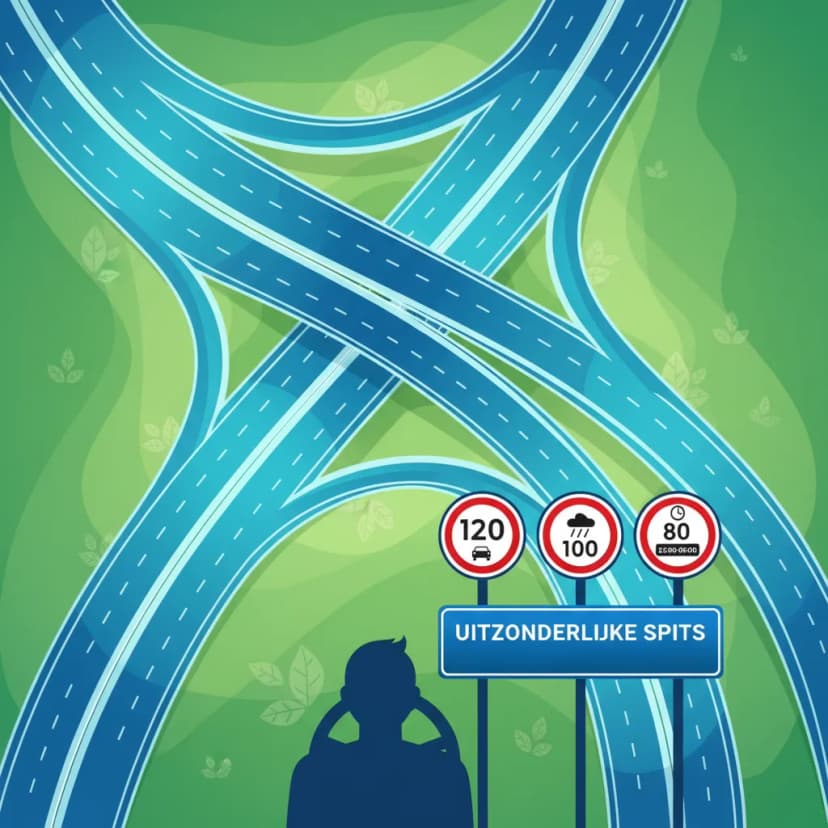
This lesson explains the general speed limit system in Sweden, including the default limits that apply in the absence of specific signs. It covers the standard speeds for built-up areas, roads outside built-up areas, and motorways, clarifying which are relevant to moped riders. Understanding this structure enables riders to determine the correct legal speed even when signs are not immediately visible.

This lesson addresses the specific risks associated with driving on rural roads (landsvägar). You will learn how to manage higher speeds on narrow, winding roads with limited visibility due to curves and hills. The lesson covers procedures for safely overtaking slow-moving agricultural vehicles, managing encounters with oncoming traffic on narrow sections, and being constantly vigilant for wildlife, especially at dawn and dusk.
This lesson teaches the crucial skill of adapting speed to prevailing conditions, emphasizing that the posted speed limit is a maximum, not a target. It covers various scenarios such as rain, fog, heavy traffic, and poor road surfaces, explaining why reducing speed is essential for maintaining vehicle control and safety. The goal is to cultivate a proactive mindset where the rider constantly assesses risk and adjusts their speed accordingly.
This lesson provides a complete guide to motorway driving in Sweden. You will learn the correct procedures for merging from an on-ramp, maintaining proper lane discipline by keeping right unless overtaking, and exiting safely via off-ramps. The content emphasizes the importance of maintaining large safety margins at high speeds, checking blind spots thoroughly before any lane change, and knowing the correct safety procedures in case of a breakdown.
Learn how to adjust your driving speed in Sweden based on road conditions, weather, and visibility. This lesson covers legal requirements and safe practices for speed adaptation in adverse situations, complementing knowledge of standard speed limits.
This lesson reinforces the core safety principle of adapting your driving to the prevailing weather conditions. You will learn why you must significantly reduce speed in heavy rain to avoid aquaplaning, how strong crosswinds can affect vehicle stability, and why reduced visibility in fog necessitates slower speeds and greater following distances. The goal is to instill a proactive approach to risk management whenever the weather is less than ideal.
This lesson teaches the crucial skill of adapting speed to prevailing conditions, emphasizing that the posted speed limit is a maximum, not a target. It covers various scenarios such as rain, fog, heavy traffic, and poor road surfaces, explaining why reducing speed is essential for maintaining vehicle control and safety. The goal is to cultivate a proactive mindset where the rider constantly assesses risk and adjusts their speed accordingly.
This lesson emphasizes that the posted speed limit is a maximum, not a target. You will learn the principles of situational speed adaptation, which involves adjusting your speed based on factors like visibility, road geometry (curves and hills), traffic density, and potential hazards. The lesson covers specific strategies for managing speed in urban environments with pedestrians, on rural roads with hidden entrances, and on motorways to match the flow of traffic.

This lesson teaches the crucial skill of adapting your speed to the dynamic and often congested conditions of urban riding. You will learn to modulate your speed smoothly in response to traffic flow, pedestrian activity, and complex intersections to maintain safety and control. Techniques covered include using engine braking effectively, anticipating the actions of other road users, and selecting a speed that maximizes your reaction time in a high-density environment.

This lesson covers strategies for driving safely when visibility is compromised. You will learn the correct use of different lighting systems: when to use low beams, high beams (helljus), and how to avoid dazzling other drivers. The lesson also explains the specific regulations for using front and rear fog lights and provides techniques for navigating safely in dense fog or heavy precipitation by reducing speed and using the road edge as a guide.
This lesson focuses on the high level of caution required when driving in residential areas. You will learn about the rules for special zones like 'gångfartsområde' (walking speed area) and the need to navigate around speed calming measures like speed bumps. The central theme is anticipating unpredictable behavior from residents, especially children, and managing the risks posed by parked cars that severely limit visibility.

This lesson focuses on strategies to make yourself more visible to other road users, a critical factor in motorcycle safety. You will learn how to use lane positioning strategically to stay out of other drivers' blind spots and to maximize your own line of sight through corners and intersections. The content also covers the effectiveness of high-visibility and reflective clothing, as well as the correct use of lights to ensure you are seen in all conditions.
Find clear answers to common questions learners have about Swedish Speed Limit Structure (Vägens hastighetsgränser). Learn how the lesson is structured, which driving theory objectives it supports, and how it fits into the overall learning path of units and curriculum progression in Sweden. These explanations help you understand key concepts, lesson flow, and exam focused study goals.
In Sweden, the default speed limit is 50 km/h in built-up areas (tätbebyggt område) and 70 km/h outside built-up areas on other roads. These are often referred to as 'base speeds' and apply unless specific signs indicate otherwise.
A built-up area is generally indicated by a sign showing a town or settlement, or by the presence of buildings and street lighting close to the road. The 50 km/h limit typically ends at a sign depicting a crossed-out town name.
For Category B cars, the general speed limits apply. However, trucks, buses, and vehicles with trailers may have lower speed limits, which are often indicated by specific signs or regulations not covered in this basic lesson.
The general speed limit on Swedish motorways (motorväg) is 110 km/h, but this can be extended to 120 km/h on certain stretches indicated by signs. Always look for specific signs as lower limits can also apply.
Speed limit signs are circular with a red border and a black number indicating the maximum speed. Signs for urban areas often have a white background with black numbers and a red border, while motorway signs may use a blue background with white numbers for guidance, but the red-bordered circular sign always indicates the legally binding limit.