
This lesson focuses on Sweden's 'Nolltolerans' policy, addressing the critical rules against driving mopeds under the influence of alcohol or drugs. Understanding these regulations is vital for your AM license theory exam and for ensuring your safety on Swedish roads.
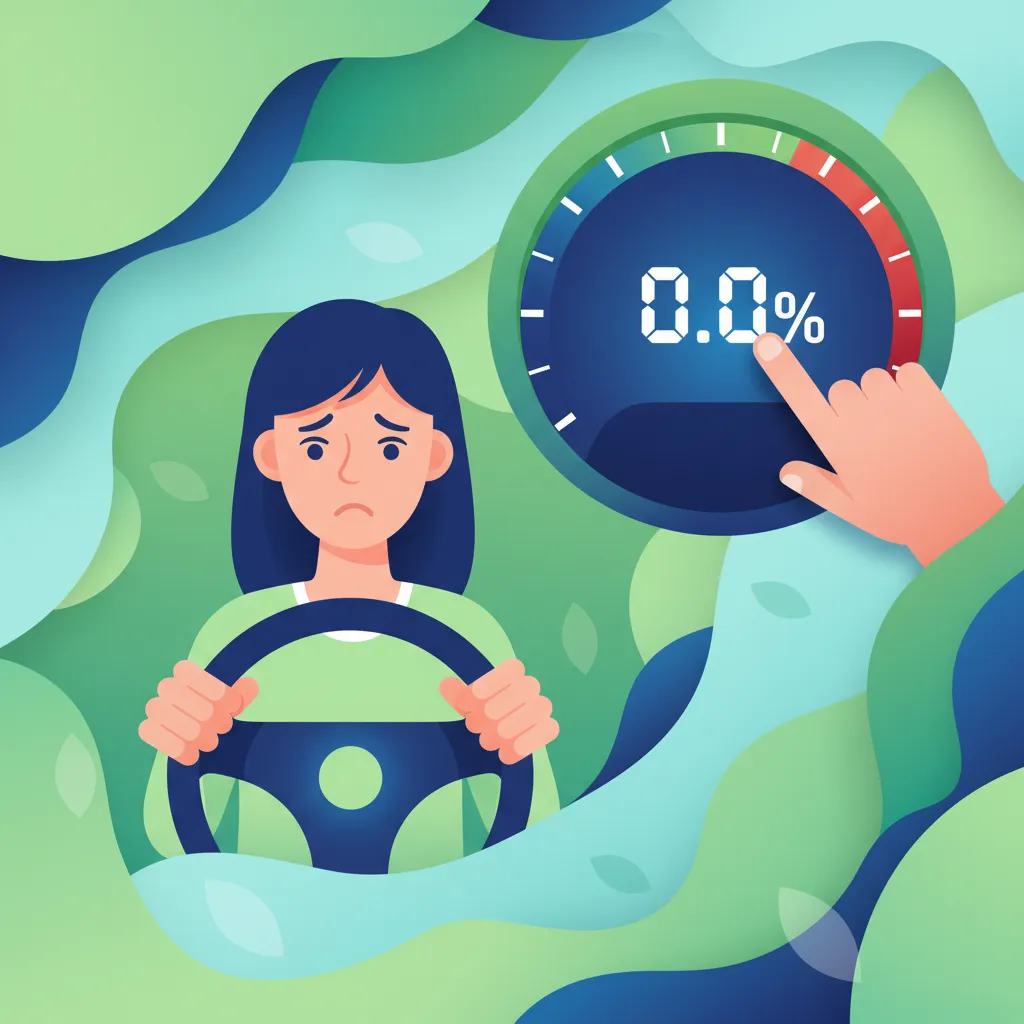
Navigating the roads safely as a Category AM (moped) rider in Sweden demands not only skill and awareness but also strict adherence to the country's stringent laws regarding driving under the influence of alcohol and drugs. Sweden operates under a principle known as 'Nolltolerans' (zero tolerance), which sets exceptionally low legal limits and imposes severe penalties for violations. This lesson, a crucial part of your Swedish Category AM (Moped) Driving License Theory Course, will thoroughly explain these regulations, helping you understand their importance and ensuring you always make responsible decisions on the road.
Impairment, even at seemingly minor levels, dramatically increases the risk of accidents. For moped riders, who are already more vulnerable than occupants of enclosed vehicles, the consequences of impaired riding can be particularly severe. Sweden's strict laws are designed to protect all road users, especially pedestrians, cyclists, and children, who frequently share the same streets and pathways as mopeds. Understanding and respecting these regulations is fundamental to both your safety and the safety of others.
Sweden's legal framework regarding driving under the influence is built upon a core philosophy of Nolltolerans, meaning zero tolerance. This principle dictates that any measurable amount of alcohol or prohibited psychoactive substance in a driver's system while operating a vehicle, including a moped, constitutes a criminal offence. The intent is to remove all ambiguity and discourage any consideration of driving after even minimal consumption.
This approach reflects a proactive safety logic. Even marginal cognitive or motor impairment, often imperceptible to the driver themselves, can significantly reduce reaction time, increase lane deviation, and worsen judgment. These effects are amplified on lightweight mopeds with limited inherent stability, making the rider exceptionally susceptible to errors and accidents. The law's stringent nature aims to foster a culture of complete abstinence from intoxicating substances before riding.
Mopeds, by their nature, offer less protection than cars and require a higher degree of balance and immediate reaction. The inherent instability of a two-wheeled vehicle means that even minor impairments, such as a slight delay in processing visual information or a minor reduction in coordination, can have disproportionately severe consequences. This is why the zero-tolerance principle is particularly vital for moped riders.
Furthermore, mopeds often share road spaces with vulnerable road users, such as pedestrians and cyclists. An impaired moped rider poses an immediate and direct threat to these groups, who have no protective barriers. The law's strictness acts as a critical safeguard for the community, reinforcing the message that safe moped riding demands a clear mind and full physical capability at all times.
The maximum permitted blood alcohol concentration (BAC) in Sweden is 0.02% (or 0.2‰) for all drivers, irrespective of the vehicle type. This limit is among the lowest in the world and applies equally to Category AM moped riders. It means that even a single standard alcoholic drink can potentially push an individual over the legal limit, depending on factors such as body weight, gender, metabolism, and food intake.
The amount of alcohol present in a driver's blood, typically expressed as a percentage or permille (‰). In Sweden, the limit is 0.02% (0.2‰).
The law (specifically Trafikförordning 3 kap., 8 §) explicitly states that no driver may operate a vehicle with a BAC exceeding this threshold. This stringent limit reflects a preventive philosophy: to eliminate the possibility that a driver might rationalize a "small amount" of alcohol as acceptable before riding. It removes ambiguity and reinforces a clear "no-drinking-while-driving" message. Drivers must treat any alcohol consumption as a complete prohibition for riding for several hours afterward.
Common Misunderstanding: Many drivers mistakenly believe they are "under the limit" after just one beer or glass of wine. However, alcohol metabolism varies significantly between individuals. It is safer and legally compliant to consume absolutely no alcohol if you intend to ride a moped.
The zero-tolerance principle extends beyond alcohol to encompass all psychoactive drugs. Sweden's law (Trafikförordning 3 kap., 9 §§) prohibits operating a vehicle while any prohibited substance is present in your system, detectable by a reliable test. This applies not only to illicit substances but also to many prescription medications and even some over-the-counter (OTC) drugs and herbal products that can affect driving ability.
The legal principle prohibiting the operation of a vehicle while any prohibited psychoactive substance, regardless of its legal status, is detectable in the driver's system.
The definition of "prohibited substance" is broad, covering:
The law prevents drivers from relying on assumptions about "low doses" or perceived sobriety. Many drugs can affect perception, reaction time, and decision-making even at trace levels, long after the immediate effects might have worn off. For example, Trafikförordning 3 kap., 9a §§ specifically states that any detectable level of THC (cannabis) in the driver’s system constitutes a DUI offence, regardless of whether the driver feels impaired.
Driving under the influence of alcohol or drugs in Sweden carries serious legal consequences. These penalties are designed to be a significant deterrent, reflecting society's strong stance against impaired driving and its commitment to road safety. Consequences can range from substantial fines and license suspension to penalty points on your record and, in severe cases, imprisonment.
Sweden operates a penalty point system, known as Prövningspoäng, to track driving offenses. For a DUI offense involving alcohol or drugs, 3 penalty points are automatically added to a driver's record (Trafikförordning 6 kap., 12 §§). These points serve as a cumulative deterrent, allowing authorities to assess a driver's fitness to drive over time.
Points assigned to a driver's record for traffic offenses. Accumulating 8 points within a three-year period typically leads to a driving license revocation.
If a driver accumulates 8 penalty points within a three-year period, their driving license will be revoked. This means that a single DUI offense, adding 3 points, puts a new driver significantly closer to losing their license. Repeated offenses can quickly lead to license revocation, demonstrating the system's aim to remove high-risk drivers from the road. Points generally expire after three years if no new offenses occur, but the impact of a DUI can be long-lasting.
Beyond penalty points, driving under the influence can lead to a range of other serious penalties, scaled proportionally to the severity of the offense and any prior history. These penalties are defined under laws such as Brottsbalken (Swedish Penal Code) 3 kap., 5 § and Trafikförordning 3 kap., 9 §§.
Fines (Dagsbot): Fines for DUI are calculated using a "day-fine" system (Dagsbot). This means the amount is based on your personal income, ensuring that the financial penalty is proportional to your ability to pay. The court determines a number of "day-fines," and each day-fine is assigned a monetary value based on your daily income. This system ensures that the penalty has a deterrent effect regardless of the offender's financial situation.
An income-based fine calculation method in Sweden, where the total fine is determined by multiplying a number of "day-fines" by a daily amount based on the offender's income.
License Suspension: For a first DUI offense, a driver can expect their license to be suspended for at least one year. For repeat offenses, the suspension period can be extended to two years or even longer. This temporary withdrawal of driving rights directly impacts a person's mobility and independence, serving as a powerful consequence for endangering public safety.
Imprisonment: In severe cases, especially where the DUI causes injury or death, or for repeat offenders, imprisonment for up to one year may be imposed. This is a measure reserved for situations where the risk posed to public safety is particularly grave or where previous sanctions have failed to deter dangerous behavior.
Swedish police have broad authority to conduct random alcohol and drug testing. Under Polislagen 1974:735, § 3-1, police officers may demand a breath, blood, or urine sample from any driver without prior suspicion of impairment. These random breath tests (RBTs) can occur at roadside checkpoints or during routine traffic stops.
The purpose of RBT is to deter deliberate impairment and ensure widespread compliance with the zero-tolerance laws. Drivers cannot assume they are safe from detection just because they are not exhibiting obvious signs of intoxication. Compliance must be continuous and absolute. Refusal to submit to an RBT is a separate offense and can lead to immediate penalties, often resulting in a fine, penalty points, and potentially being treated as evidence of guilt for the underlying DUI offense.
Refusal to Test: Refusing a legally requested breath, blood, or urine test is a serious matter. It can lead to a separate charge for non-compliance (obstruction), often carrying its own fines and penalty points, and may also be used as grounds to suspect and prosecute for DUI.
The zero-tolerance policy for drugs means that even legally prescribed or over-the-counter medications can lead to a DUI charge if they impair your ability to drive or are detectable and prohibited. It is crucial for moped riders to be fully aware of the potential effects of any substance they consume.
Many prescription medications, while necessary for health, can significantly affect your ability to operate a vehicle safely. These include, but are not limited to, strong pain relievers (opioids like tramadol or codeine), sedatives and anxiolytics (benzodiazepines like diazepam), certain antidepressants, antiepileptics, and muscle relaxants. These drugs can cause drowsiness, dizziness, blurred vision, impaired concentration, and slowed reaction times.
Under Transportstyrelsen föreskrift 2007:13 and Trafikförordning 3 kap., 4 §§, drivers have an obligation to disclose any medication that may affect their driving ability when applying for or renewing a license. In some cases, a physician's certification might be required to confirm your fitness to drive while on certain substances. It is your responsibility to:
Failure to disclose relevant medical information can lead to license revocation, especially if impairment from undisclosed medication contributes to an accident. The law prioritizes public safety, ensuring that all drivers meet the required standards of fitness.
It's a common misconception that because a medication is available without a prescription, it's automatically safe for driving. This is not true. Many over-the-counter (OTC) drugs and herbal supplements contain ingredients that can have psychoactive effects and impair driving performance.
Examples include:
The zero-tolerance principle for drugs means that if a detectable amount of a substance that impairs driving is found in your system, you could face DUI charges. Always exercise caution and consult a pharmacist if you are unsure about the driving implications of any OTC product. Your awareness and responsible choices are key to preventing unintentional violations.
Understanding the nuanced aspects of Sweden's zero-tolerance policy is crucial, as many common assumptions about alcohol and drug consumption are incorrect and can lead to severe legal consequences for moped riders.
One of the most persistent misunderstandings is the belief that "one drink is fine" or that a small amount of alcohol will not put you over the 0.02% BAC limit. This assumption is highly dangerous and frequently leads to violations.
Consider this scenario: A 65 kg individual consumes one standard 33cl beer (approx. 4.5% ABV) over a short period. Depending on their metabolism, hydration, and recent food intake, their BAC could easily exceed 0.02% within 30 minutes to an hour. Since alcohol metabolism is slow and varies, it is nearly impossible for an individual to accurately gauge their own BAC. The only truly safe approach is complete abstinence from alcohol before riding. The "legal driving time" after consumption is also a myth; only time, not coffee or food, will reduce your BAC, and even then, residual alcohol can keep you above the 0.02% limit for several hours.
Another dangerous misconception is that the effects of illicit drugs, particularly cannabis, clear quickly enough to permit driving a moped the next morning. Sweden's zero-tolerance policy for drugs means that any detectable level of a prohibited substance is illegal, regardless of whether you feel "sober."
For example, THC (the psychoactive component in cannabis) can be detectable in blood and urine for much longer than its intoxicating effects last, sometimes for days or even weeks in regular users. If a moped rider smokes cannabis one evening and is stopped for a random drug test the following morning, detectable THC metabolites could result in a DUI charge. The legal consequences are the same as for alcohol, including fines, penalty points, and license suspension. This strict rule serves to eliminate the risk posed by lingering impairment or the difficulty in proving the exact level of intoxication.
While strict adherence to legal limits is mandatory, safe moped riding under the zero-tolerance policy also involves considering how environmental factors and your own physical state interact with any potential impairment. The aim is always to minimize risk, especially when sharing the road with others.
The legal limits for alcohol and drugs do not change based on external conditions, but the risk associated with any level of impairment is significantly magnified under challenging circumstances.
In all these scenarios, while the legal threshold for impairment remains 0.02% BAC or any detectable prohibited drug, the practical effect of even minor impairment becomes far more critical. The zero-tolerance approach ensures that riders are in the best possible condition to handle these complexities.
A fundamental aspect of Swedish traffic law is the protection of vulnerable road users, such as pedestrians, cyclists, and children. These groups have little to no protection in a collision, and the consequences of an accident involving an impaired driver can be catastrophic.
Impaired moped riders are at a higher risk of:
The strict Nolltolerans policy directly addresses this risk by ensuring that moped riders are fully capable of exercising their "Duty of Care" (Lesson 11.1), anticipating hazards, and responding appropriately to the unpredictable movements of vulnerable users. This proactive stance significantly reduces the likelihood of severe accidents and reinforces ethical riding behavior.
Understanding the specific terminology associated with Sweden's alcohol and drug regulations is vital for any Category AM moped rider.
This lesson has provided a comprehensive overview of Sweden's strict alcohol and drug regulations, known as Nolltolerans. As a Category AM moped rider, understanding these laws and their implications is paramount for your safety, the safety of other road users, and for maintaining your driving privileges. Always remember: riding and impairment do not mix.
Lesson content overview
Explore all units and lessons included in this driving theory course.
Explore search topics learners often look for when studying Alcohol and Drug Regulations (Nolltolerans). These topics reflect common questions about road rules, driving situations, safety guidance, and lesson level theory preparation for learners in Sweden.
Browse additional driving theory lessons that cover connected traffic rules, road signs, and common driving situations related to this topic. Improve your understanding of how different rules interact across everyday traffic scenarios.
Understand Sweden's strict 'Nolltolerans' (zero tolerance) laws for alcohol and drug impairment while riding a moped. This lesson details blood alcohol limits and the severe legal penalties for violations, emphasizing safe and sober riding.

This lesson explains the stringent Swedish laws concerning alcohol and driving. You will learn the legal blood alcohol content (BAC) limit, which is 0.2 per mille, and the higher limit of 1.0 per mille that constitutes the more serious crime of 'grovt rattfylleri'. The content details how alcohol impairs judgment, coordination, and reaction time, and outlines the severe legal penalties, including fines, imprisonment, and license revocation.
This lesson explains the system of consequences for breaking traffic laws in Sweden. It details common violations and their associated fines and describes the demerit points system that can lead to a license suspension for repeat offenders. Understanding these consequences is a powerful incentive for riders to adhere to the rules of the road.
This lesson outlines the enforcement measures and penalties for speeding violations in Sweden. It explains the system of fines, how they escalate based on the severity of the offense, and the potential for receiving demerit points on a license. The content serves as a serious reminder of the legal and financial consequences of speeding, reinforcing the importance of adhering to all speed regulations.
This lesson provides a sobering overview of the multifaceted consequences of being convicted of an impaired driving offense. It details the legal penalties, which can range from heavy fines to imprisonment, and the mandatory revocation of the driving license for a set period. The content also touches on the significant non-legal consequences, such as increased insurance costs, potential civil liability for damages, and the profound personal and social impact of causing an accident.
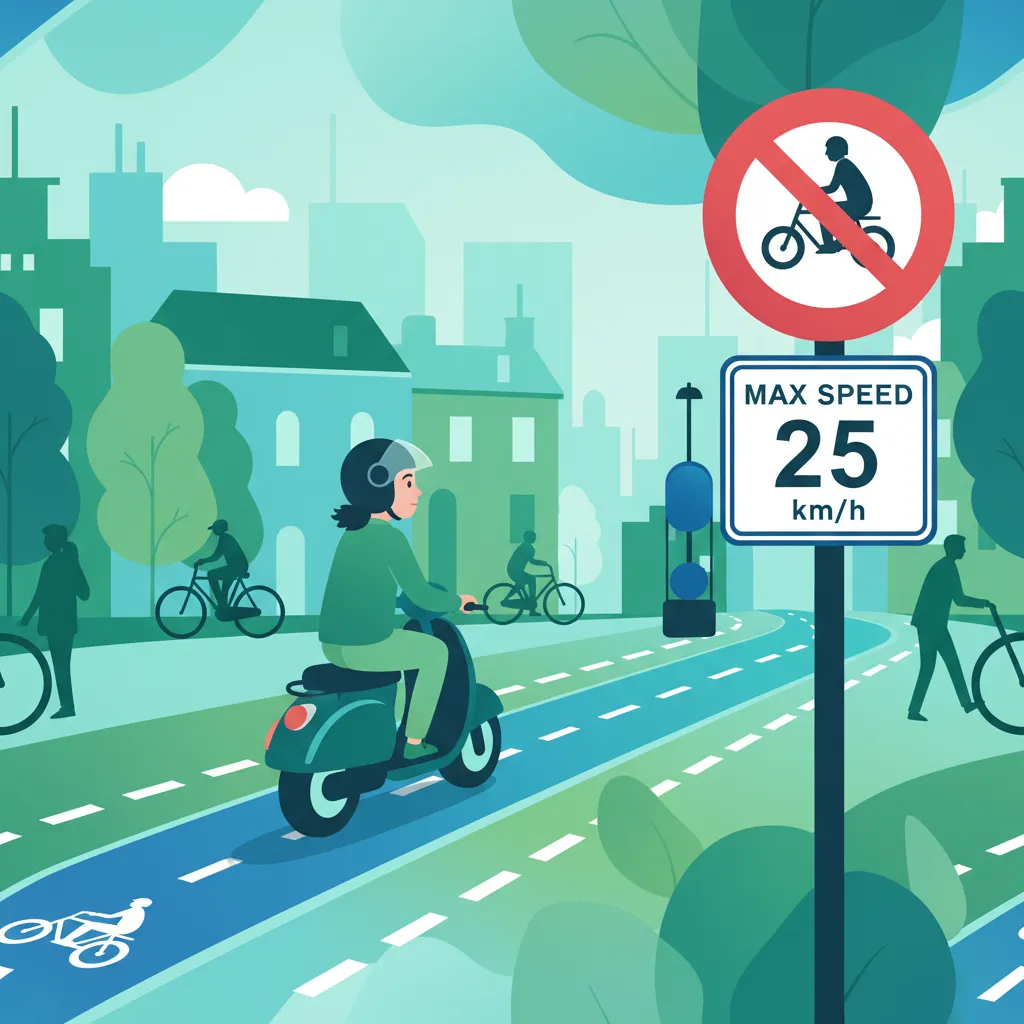
This lesson consolidates the key regulations that apply specifically to moped operation in Sweden. It covers mandatory rules such as speed limits, helmet use, and requirements for vehicle lighting and reflectors. Furthermore, the lesson explains the legal consequences of violations, including the system of fines and potential demerit points, ensuring riders understand their full range of legal responsibilities on the road.
This lesson focuses on the specific speed regulations applicable to Category AM mopeds in Sweden. It emphasizes the absolute maximum legal speed of 45 km/h and explains that riders must always adapt their speed to be lower when conditions require. The content also covers any special, lower speed limits that may apply when riding on designated cycle paths or in shared spaces.
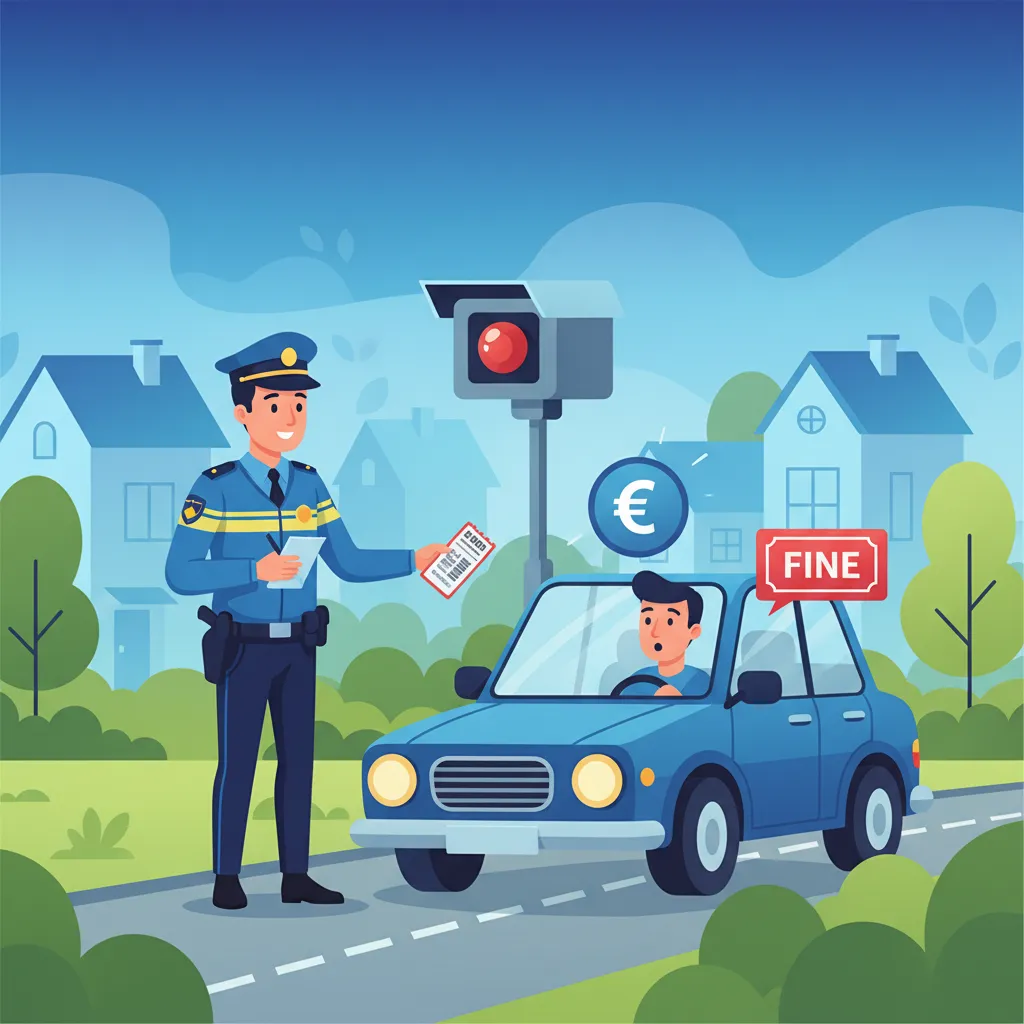
This lesson provides an overview of traffic law enforcement in Sweden, explaining the roles of the police and other authorities. You will learn about the system of penalties for common traffic violations, including the scale of fines (böter) and the conditions under which your license may be suspended. Understanding the legal consequences of unsafe or unlawful riding provides a powerful incentive to always adhere to the rules of the road.
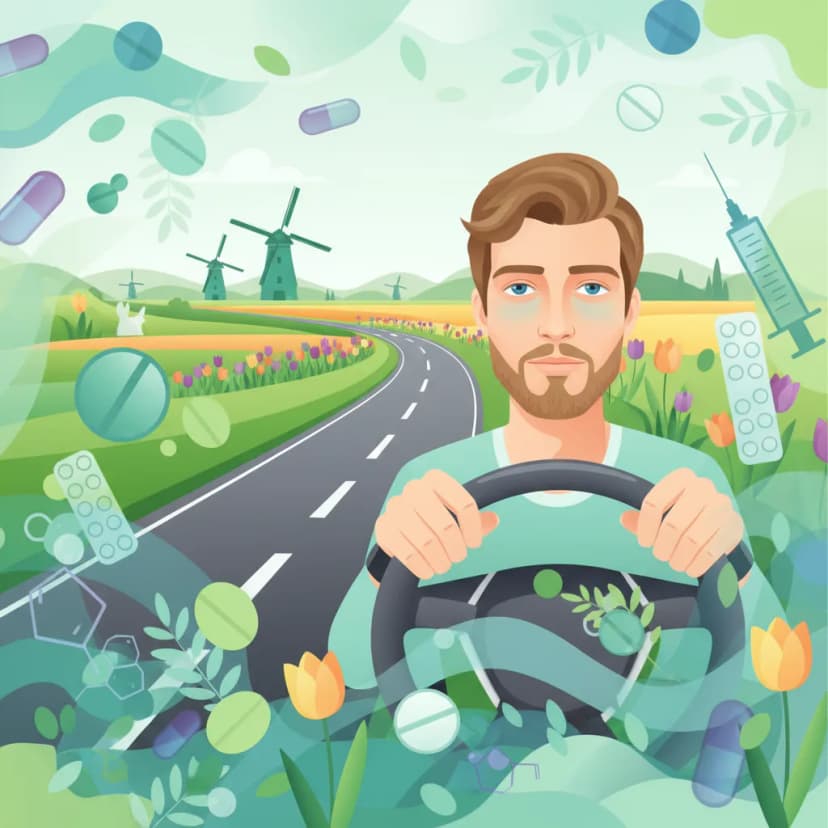
This lesson extends the topic of impaired driving to include medications and illegal drugs. You will learn that there is a zero-tolerance policy for illegal narcotics in traffic. The lesson also highlights the importance of being aware of the side effects of prescribed or over-the-counter medications, particularly those marked with a red warning triangle, and stresses the driver's responsibility to consult a doctor or pharmacist about their fitness to drive.
This lesson focuses on the often-confusing topic of moped parking. It covers how to interpret parking signs, including those indicating prohibitions (Parkeringsförbud), and where to find designated parking spots for two-wheelers. The content provides practical advice on where it is legal to park and how to do so without causing an obstruction, thereby avoiding fines.
This lesson outlines the essential administrative responsibilities of a moped owner and rider. It covers the legal requirement to have valid third-party liability insurance and to ensure the vehicle is properly registered. The content also reminds riders of the documents they must carry with them at all times, such as their driving license and registration certificate.
Explore the significant legal and personal consequences of riding a moped under the influence of alcohol or drugs in Sweden. This lesson emphasizes the importance of clear judgment and reaction times for road safety and legal compliance.
This lesson provides a sobering overview of the multifaceted consequences of being convicted of an impaired driving offense. It details the legal penalties, which can range from heavy fines to imprisonment, and the mandatory revocation of the driving license for a set period. The content also touches on the significant non-legal consequences, such as increased insurance costs, potential civil liability for damages, and the profound personal and social impact of causing an accident.
This lesson explains the stringent Swedish laws concerning alcohol and driving. You will learn the legal blood alcohol content (BAC) limit, which is 0.2 per mille, and the higher limit of 1.0 per mille that constitutes the more serious crime of 'grovt rattfylleri'. The content details how alcohol impairs judgment, coordination, and reaction time, and outlines the severe legal penalties, including fines, imprisonment, and license revocation.
This lesson extends the topic of impaired driving to include medications and illegal drugs. You will learn that there is a zero-tolerance policy for illegal narcotics in traffic. The lesson also highlights the importance of being aware of the side effects of prescribed or over-the-counter medications, particularly those marked with a red warning triangle, and stresses the driver's responsibility to consult a doctor or pharmacist about their fitness to drive.
This lesson covers the legal medical requirements for drivers, which are designed to ensure public safety. You will learn about the specific standards for visual acuity and field of vision, and the requirement to wear corrective lenses if needed. The lesson also explains that drivers have a legal obligation to report certain medical conditions (like epilepsy or severe diabetes) to the Swedish Transport Agency, as they may impact their ability to drive safely.
This lesson focuses on the high level of caution required when driving in residential areas. You will learn about the rules for special zones like 'gångfartsområde' (walking speed area) and the need to navigate around speed calming measures like speed bumps. The central theme is anticipating unpredictable behavior from residents, especially children, and managing the risks posed by parked cars that severely limit visibility.
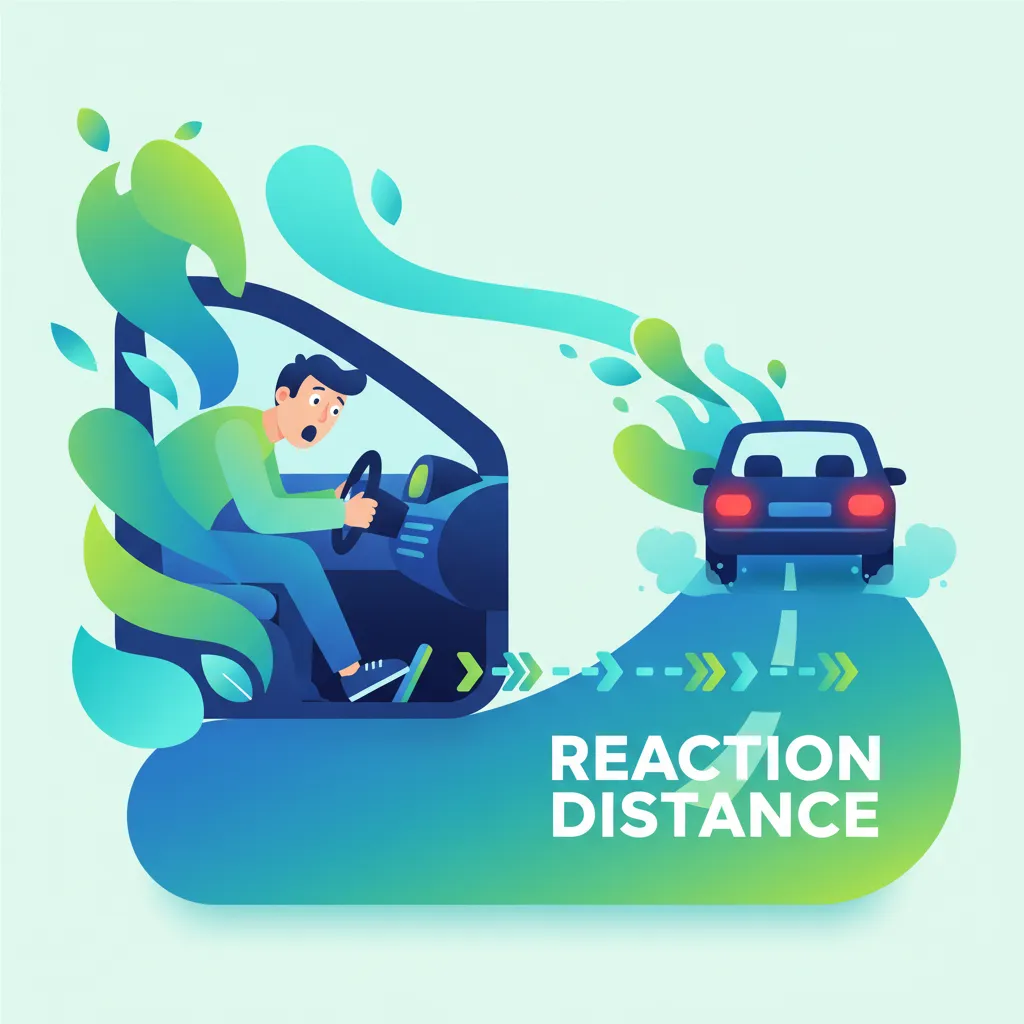
This lesson breaks down the components of the total stopping distance: reaction distance and braking distance. You will learn how your physical and mental state affects reaction time, and how speed, tire condition, and road surface (e.g., ice, rain) influence the distance required to brake to a complete stop. Understanding these physical principles is essential for making safe decisions about speed and following distance in all conditions.
This lesson covers strategies for driving safely when visibility is compromised. You will learn the correct use of different lighting systems: when to use low beams, high beams (helljus), and how to avoid dazzling other drivers. The lesson also explains the specific regulations for using front and rear fog lights and provides techniques for navigating safely in dense fog or heavy precipitation by reducing speed and using the road edge as a guide.
This lesson addresses the significant danger of driving while tired. You will learn to recognize the warning signs of fatigue, such as frequent yawning, difficulty focusing, and heavy eyelids. The content explains that fatigue severely impairs reaction time and decision-making, and discusses the concept of 'microsleep'. The only effective countermeasure is rest, and the lesson emphasizes the importance of planning long trips to include regular breaks.

This lesson reinforces the core safety principle of adapting your driving to the prevailing weather conditions. You will learn why you must significantly reduce speed in heavy rain to avoid aquaplaning, how strong crosswinds can affect vehicle stability, and why reduced visibility in fog necessitates slower speeds and greater following distances. The goal is to instill a proactive approach to risk management whenever the weather is less than ideal.
This lesson introduces the foundational legal concept of 'duty of care,' which requires all road users to act in a way that does not endanger others. It explains that this duty often requires driving at a 'reasonable speed' that may be lower than the posted limit, depending on conditions. This principle encourages a proactive and considerate approach to sharing the road.
Find clear answers to common questions learners have about Alcohol and Drug Regulations (Nolltolerans). Learn how the lesson is structured, which driving theory objectives it supports, and how it fits into the overall learning path of units and curriculum progression in Sweden. These explanations help you understand key concepts, lesson flow, and exam focused study goals.
'Nolltolerans' translates to 'zero tolerance'. For mopeds in Sweden, this means the legal limit for blood alcohol concentration (BAC) is extremely low (0.2 per mille). For most illegal drugs, any detectable amount while driving is illegal. It signifies a strict policy against riding under the influence of alcohol or drugs.
The legal blood alcohol concentration (BAC) limit for Category AM mopeds in Sweden is 0.2 per mille (0.1 mg/l of breath). This is a very strict limit, meaning even a small amount of alcohol can put you over the legal threshold.
Yes, Sweden has strict laws against driving under the influence of drugs. This applies to prescription medications that impair your ability to drive, as well as illegal drugs. Any detectable amount of certain controlled substances in your body while operating a moped can lead to severe penalties.
Violating these laws can result in serious consequences, including substantial fines, suspension or revocation of your moped license, mandatory driving re-education courses, and potentially imprisonment, especially in cases involving high BAC levels or accidents.
You should always exercise extreme caution with any medication that can affect your alertness or driving ability. If a medicine can impair your driving, it's treated similarly to alcohol or illegal drugs. Check the medication's instructions and consult your doctor or pharmacist if unsure. It's best to avoid riding your moped if your ability to do so safely is compromised.