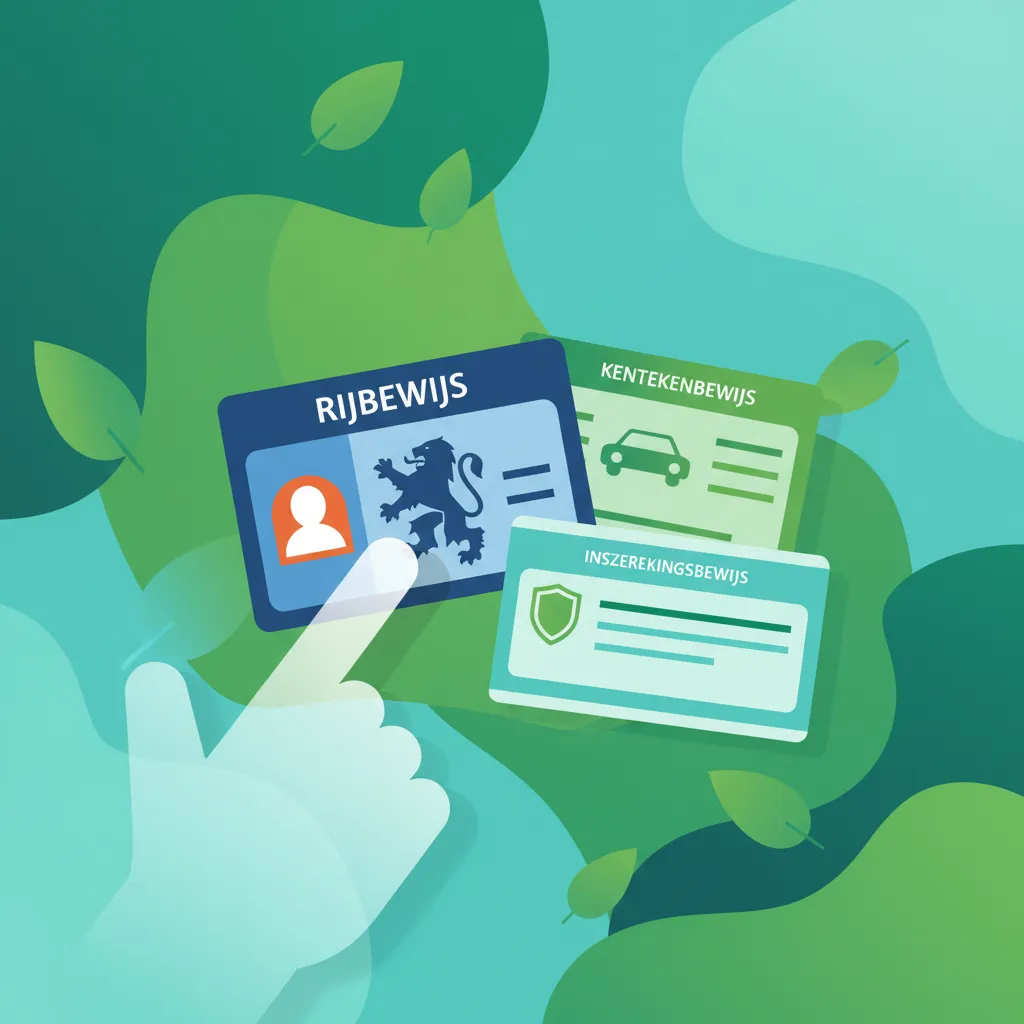
This lesson covers the essential administrative tasks for moped ownership and operation, focusing on legal requirements for documentation, insurance, and registration. Understanding these rules is crucial for responsible riding and passing the AM theory exam, building upon the foundational knowledge from previous units.
Operating a moped in Sweden, whether a Class I (45 km/h) or Class II (30 km/h) vehicle, comes with specific legal responsibilities concerning documentation, insurance, and registration. These administrative obligations are fundamental to ensuring safety, accountability, and financial protection for all road users. Understanding and fulfilling these requirements is not just a legal necessity but a critical aspect of responsible moped ownership and riding.
This lesson outlines the essential administrative framework for Category AM moped riders, covering everything from mandatory third-party liability insurance to vehicle registration and the documents you must carry. Adhering to these rules ensures you can legally operate your moped and avoid significant penalties.
The Swedish state, primarily through Transportstyrelsen (Swedish Transport Agency) and Trafikverket (Swedish Transport Administration), establishes strict guidelines for all vehicles on public roads. These regulations are designed to guarantee that every vehicle is properly identified, is financially protected against potential damages to third parties, and is operated by a competent and licensed individual. For Category AM moped riders, this translates into a clear set of responsibilities regarding their vehicle's status and their own credentials.
Failing to comply with these regulations can lead to severe consequences, including significant fines, penalty points on your driving record, vehicle impoundment, and a substantial financial burden if you are involved in an accident. Proper documentation and insurance are not just bureaucratic hurdles; they are cornerstones of road safety and legal accountability.
One of the most critical legal requirements for moped owners in Sweden is possessing valid third-party liability insurance, known as trafikförsäkring. This insurance is compulsory for all motorized vehicles intended for use on public roads, regardless of their engine size or ownership. Its primary purpose is to provide financial protection to third parties who may suffer bodily injury or property damage due to an accident caused by your moped.
Compulsory insurance in Sweden that covers bodily injury, death, and property damage caused to others by the insured vehicle. It protects victims and ensures financial compensation.
Third-party liability insurance specifically covers damages you cause to others. This includes injuries to pedestrians, cyclists, or occupants of other vehicles, as well as damage to other vehicles, public property, or private property. It does not typically cover damages to your own moped or injuries to yourself, for which you would need additional, optional insurance coverage (such as comprehensive or partial casco insurance).
The fundamental principle behind trafikförsäkring is to protect innocent victims. Without it, a person injured by an uninsured moped might face overwhelming medical bills or property repair costs, with little recourse for compensation. This mandatory insurance ensures that such victims are not left financially vulnerable.
Swedish law sets minimum compulsory coverage limits for trafikförsäkring. These limits are designed to ensure that adequate compensation is available in the event of serious accidents.
Currently, the minimum compulsory coverage amounts are:
These figures are subject to review by Transportstyrelsen, so it is always wise to confirm the latest amounts. While these are the minimums, many insurers offer policies with higher limits or additional benefits, which may provide greater peace of mind and protection.
The requirement for trafikförsäkring applies to all Category AM mopeds, regardless of their specific class (Class I or Class II) or engine displacement. This means even low-power mopeds must be insured. The moment a moped is registered and capable of being used on public roads, it must be insured. A lapse in insurance coverage, even for a single day, makes it illegal to operate the vehicle and can lead to significant penalties.
The continuous nature of this obligation is crucial. You cannot simply insure your moped for periods when you intend to ride it; the policy must be active at all times the vehicle is registered and not formally taken out of traffic (e.g., via temporary deregistration).
Many new riders or owners hold misunderstandings about moped insurance:
Always ensure your trafikförsäkring is renewed before its expiry date. Most insurers will send reminders, but the ultimate responsibility lies with the owner.
Beyond insurance, every moped used on public roads in Sweden must be properly registered in the national vehicle register. This process, known as registrering, links a specific vehicle to a responsible owner, providing authorities with crucial identification and traceability. It ensures that every moped can be uniquely identified, which is vital for law enforcement, accident investigation, and managing vehicle-related data.
The Swedish Vehicle Register (Vägtrafikregistret) is a comprehensive database maintained by Transportstyrelsen. It contains detailed information about all registered vehicles, their owners, and their technical specifications. When your moped is registered, it receives a unique registration number, which is then displayed on physical number plates.
Registration is a prerequisite for legal road use. An unregistered moped cannot be legally operated on public roads. This applies to new mopeds, imported mopeds, and second-hand mopeds where ownership changes.
The Registreringsbevis (registration certificate) is the official document proving that your moped is registered in the Swedish Vehicle Register. This certificate contains essential information about the vehicle, including:
An official document issued by Transportstyrelsen that proves a vehicle is registered in the Swedish Vehicle Register. It contains critical information about the vehicle and its owner.
The Registreringsbevis consists of two parts. Part 1, the smaller section, is typically what you carry with you when riding. Part 2, which contains more sensitive information, should be kept in a safe place, not in the vehicle.
You must always carry Part 1 of your Registreringsbevis with you when riding your moped. Failure to do so can result in fines.
Once your moped is registered, Transportstyrelsen issues unique number plates (registreringsskyltar) displaying its alphanumeric registration identifier. Mopeds typically require two plates: one prominently displayed at the front and one at the rear.
A metal or plastic plate displaying the vehicle's unique registration number, issued by Transportstyrelsen. It must be affixed to the vehicle and be clearly visible.
Regulations for number plates are strict:
Using temporary stickers or homemade plates is illegal. Only officially issued registreringsskyltar are valid.
Every moped, like other motor vehicles, has a unique Vehicle Identification Number (VIN). This 17-character alphanumeric code is assigned by the manufacturer and serves as the moped's individual fingerprint. The VIN is recorded in the Registreringsbevis and is physically stamped or affixed to the moped's frame in a permanent, visible location.
A unique 17-character alphanumeric code assigned by the manufacturer to identify a specific vehicle. It is recorded on the registration certificate and stamped on the vehicle's frame.
The VIN is crucial for:
Tampering with or altering the VIN is a serious criminal offense.
When buying a used moped, always ensure the seller has properly transferred ownership and that you receive the correct part of the Registreringsbevis. Verify the VIN on the moped matches the document.
One of the most frequently enforced rules for moped riders is the obligation to carry specific documents at all times when operating the vehicle on public roads. This allows police officers and other authorized officials to instantly verify your legal entitlement to ride and the moped's legal status.
The primary document you must carry is your valid driving license for Category AM. This license certifies that you have met the necessary competency requirements (age, training, theory, and practical tests) to operate a moped of the corresponding class (AM I for 45 km/h mopeds, AM II for 30 km/h mopeds).
The Swedish driving licence category that authorises the holder to drive mopeds with a maximum design speed of 45 km/h (Class AM I) or up to 30 km/h (Class AM II).
Key points about your AM license:
Riding a moped without a valid Category AM license is a serious offense, equivalent to unlicensed driving, and carries severe penalties.
In addition to your driving license, you must also carry:
These documents must be readily accessible. During a police stop or traffic inspection, you will be expected to present them without delay. Common places to store them include a secure, weather-proof compartment in the moped (e.g., under the seat, in a saddlebag) or in your wallet alongside your driving license.
Sweden has embraced digitalization, and in some cases, electronic proof of documentation is accepted. For example, some insurers provide digital insurance cards, and the Swedish Police Authority may accept digital representations of your driving license through government-approved apps (such as Körkort i Mina Sidor).
Digital versions of required documents (e.g., driving license, insurance proof) that are presented via a government-approved application or a certified electronic format from the insurer.
However, it is crucial to ensure that any electronic proof you present is officially approved and verifiable. A simple photograph of a document on your phone might not be accepted, as it could easily be forged. Always check with your insurer and Transportstyrelsen for the latest guidelines on acceptable digital proofs. When in doubt, carrying the physical documents is the safest option.
Failure to present your valid driving license, registration certificate (Part 1), or proof of insurance when requested by a police officer will result in immediate consequences. The most common outcome is a significant fine.
Beyond the fine, repeated or serious non-compliance might lead to penalty points being added to your driving record or even the impoundment of your moped until proper documentation can be verified.
It's important to distinguish between the legal responsibilities of the moped owner and the moped rider, especially when these two roles are held by different individuals. Both parties have specific obligations that must be met for the moped to be legally operated.
The owner of the moped (the person registered in the Swedish Vehicle Register) holds primary responsibility for the vehicle's legal status. This includes ensuring that:
The owner is held accountable for these aspects, even if they are not the one riding the moped at the time of an infraction.
The rider of the moped has the responsibility to ensure that:
If a rider is operating a moped that is unregistered or uninsured, both the rider (for operating an illegal vehicle) and the owner (for failing to fulfill their obligations) can face penalties.
When you rent a moped, the rental company, as the owner, is responsible for ensuring the vehicle is properly insured and registered. However, as the rider, you still have obligations:
Before taking a rental moped, always confirm that you have received all the necessary paperwork.
The Swedish legal system imposes clear and significant penalties for non-compliance with moped documentation, insurance, and registration rules. These consequences are designed to deter illegal operation and maintain safety on public roads.
As mentioned, forgetting to carry your documents will result in a fine.
These figures are illustrative and can change; always refer to current Transportstyrelsen guidelines.
Beyond monetary fines, certain violations can also lead to the accumulation of penalty points on your driving record. While forgetting a document might incur one point, more serious offenses like riding without a valid license (i.e., you've never had one, or it's been suspended) or with an extremely lapsed insurance can lead to more severe point accumulation. Accruing too many penalty points within a specific period (e.g., two years) can result in your driving license being suspended or revoked.
In serious cases, such as operating an uninsured or unregistered moped, or riding without any valid license, police have the authority to impound the vehicle. This means the moped will be seized and stored at your expense, incurring towing and storage fees. Releasing the moped will require rectifying the underlying legal issue and paying all associated costs. In extreme circumstances, especially involving repeated offenses or dangerous behavior, further legal action, including court proceedings, is possible.
The primary legal frameworks governing moped documentation, insurance, and registration in Sweden include:
These regulations are designed to be comprehensive, covering all aspects of vehicle and driver compliance.
Both insurance policies and, in some cases, registration validity, have periodic renewal requirements:
Lapses in either insurance or updated registration can lead to immediate loss of legal entitlement to operate the moped and subsequent penalties.
Understanding the core rules is one thing; applying them in various real-world contexts is another. While the documentation requirements are generally constant, their practical implications can vary.
In the unfortunate event of an accident, especially one involving another party or injuries, your documentation becomes immediately critical:
The transfer of ownership is a frequent scenario where documentation rules are critical:
Careful adherence to these steps prevents legal and financial complications for both parties.
Legal compliance regarding documentation, insurance, and registration is a cornerstone of responsible moped riding in Sweden. As a Category AM moped rider, your ability to legally operate your vehicle hinges on maintaining valid records and carrying them diligently.
The key takeaways from this lesson are:
By internalizing and consistently applying these administrative responsibilities, you contribute to a safer road environment for everyone and protect yourself from unnecessary legal and financial burdens.
Lesson content overview
Explore all units and lessons included in this driving theory course.
Explore search topics learners often look for when studying Documentation, Insurance, and Registration. These topics reflect common questions about road rules, driving situations, safety guidance, and lesson level theory preparation for learners in Sweden.
Browse additional driving theory lessons that cover connected traffic rules, road signs, and common driving situations related to this topic. Improve your understanding of how different rules interact across everyday traffic scenarios.
Understand the legal framework for moped ownership in Sweden. This lesson details mandatory third-party insurance, vehicle registration procedures, and the essential documents riders must carry, such as their AM licence and registration certificate.
This lesson serves as a summary of the legal requirements for safety equipment in Sweden. It reiterates the mandatory helmet law for both the rider and any passenger. It also touches on the rider's responsibility to ensure the moped itself is legally equipped with functioning lights, brakes, and other essential safety features, linking personal gear with vehicle roadworthiness.
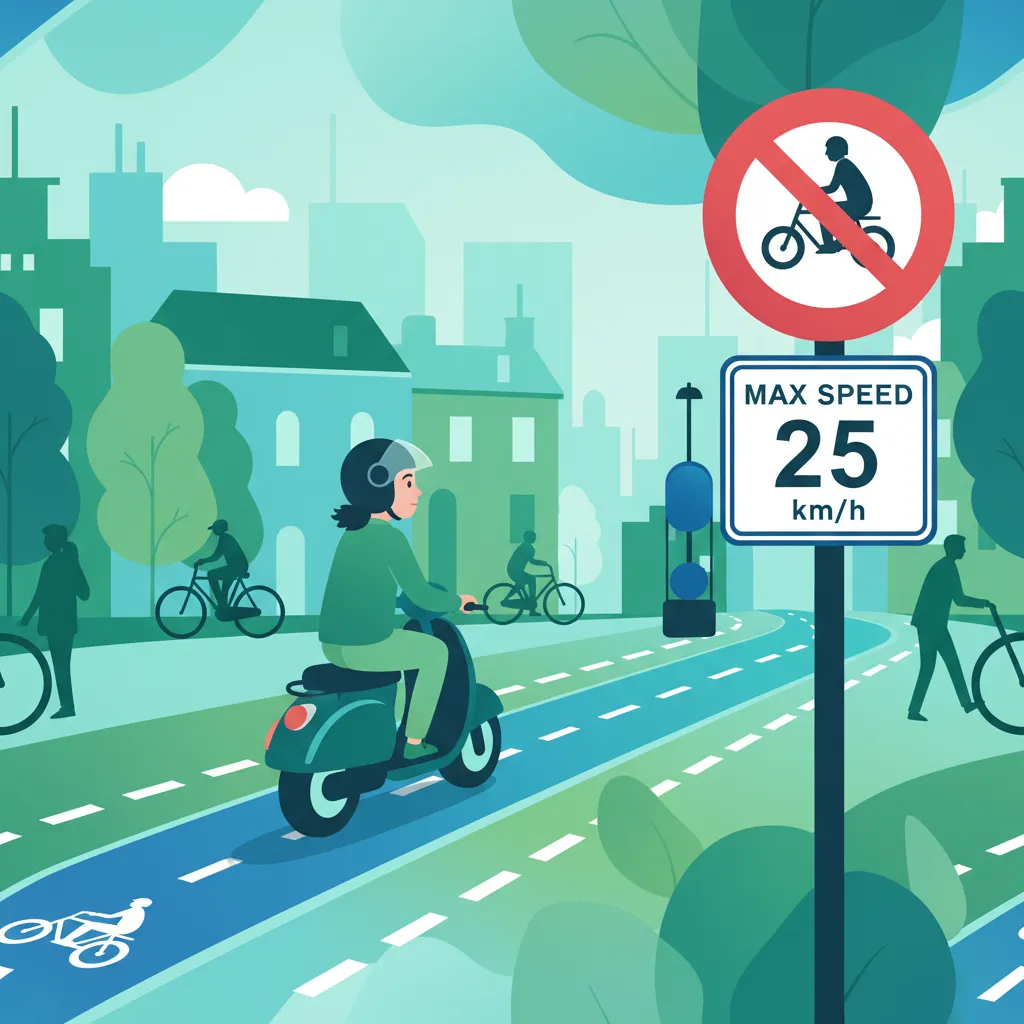
This lesson consolidates the key regulations that apply specifically to moped operation in Sweden. It covers mandatory rules such as speed limits, helmet use, and requirements for vehicle lighting and reflectors. Furthermore, the lesson explains the legal consequences of violations, including the system of fines and potential demerit points, ensuring riders understand their full range of legal responsibilities on the road.
This lesson details the documents you are legally required to carry with you when riding, such as your license and registration certificate. It provides a comprehensive explanation of the mandatory periodic vehicle inspection (besiktning) process in Sweden, outlining what is checked and why it's important for safety. Finally, it reinforces the habit of performing your own pre-ride checks to ensure your motorcycle is always in a safe, roadworthy condition.
This lesson covers the legal requirement to wear a certified helmet while riding a moped in Sweden. It explains how to identify helmets that meet the approved EU standards (e.g., ECE 22.05 marking) and the critical importance of a correct, snug fit. The content also discusses different helmet types and the need to replace a helmet after an impact or after its recommended lifespan.
This lesson clarifies the precise technical parameters that define a Category AM vehicle under Swedish law, including the maximum 50cc engine displacement and 45 km/h speed limit. It explains how these specifications determine which roads mopeds can legally access, distinguishing between urban streets and prohibited motorways. Learners will also understand the importance of vehicle identification and registration documents for ensuring legal compliance.

This lesson explains the process for obtaining the correct category of motorcycle license (Körkort A) in Sweden and the legal necessity of keeping it current. You will learn about the procedures for registering your motorcycle with Transportstyrelsen and the mandatory insurance coverage you must have to legally ride on public roads. Understanding these administrative requirements is the first step to being a fully compliant and responsible vehicle operator.
This lesson teaches the importance of conducting a quick, routine inspection before every ride to ensure the moped is in safe working order. It outlines a simple checklist that includes checking tire pressure (Däck), brake function (Bromsar), and all lights and signals. This proactive habit can prevent mechanical failures that could lead to an accident.
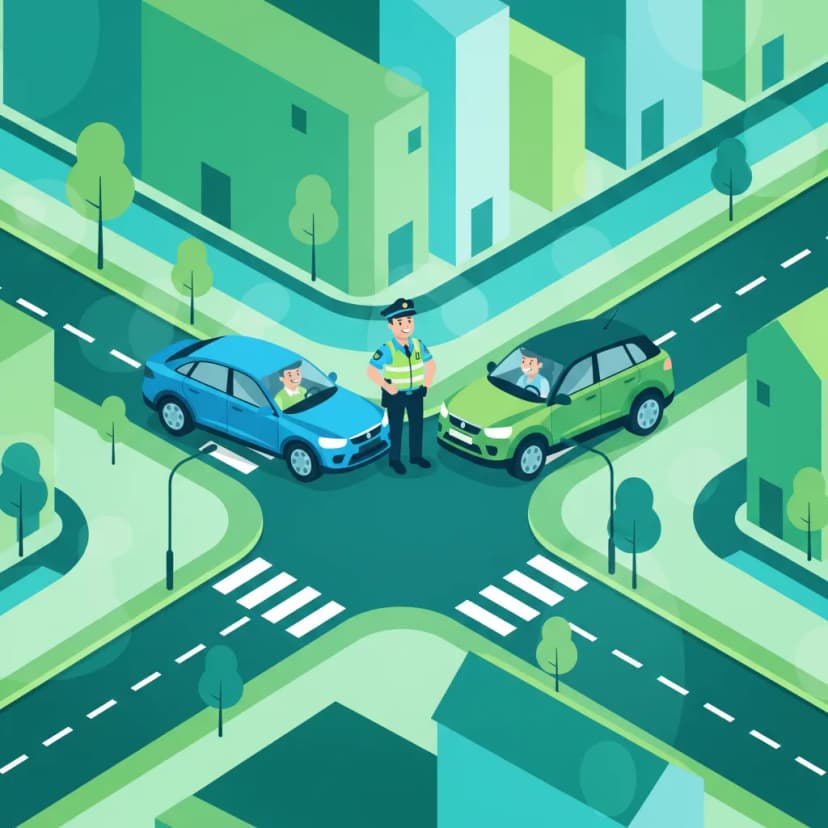
This lesson explains the legal requirements in Sweden for reporting a traffic accident to the police (Polisanmälan). It clarifies in which situations a report is mandatory, such as when there are injuries or significant property damage. The content guides learners on the information they will need to provide for the report and for subsequent insurance claims.
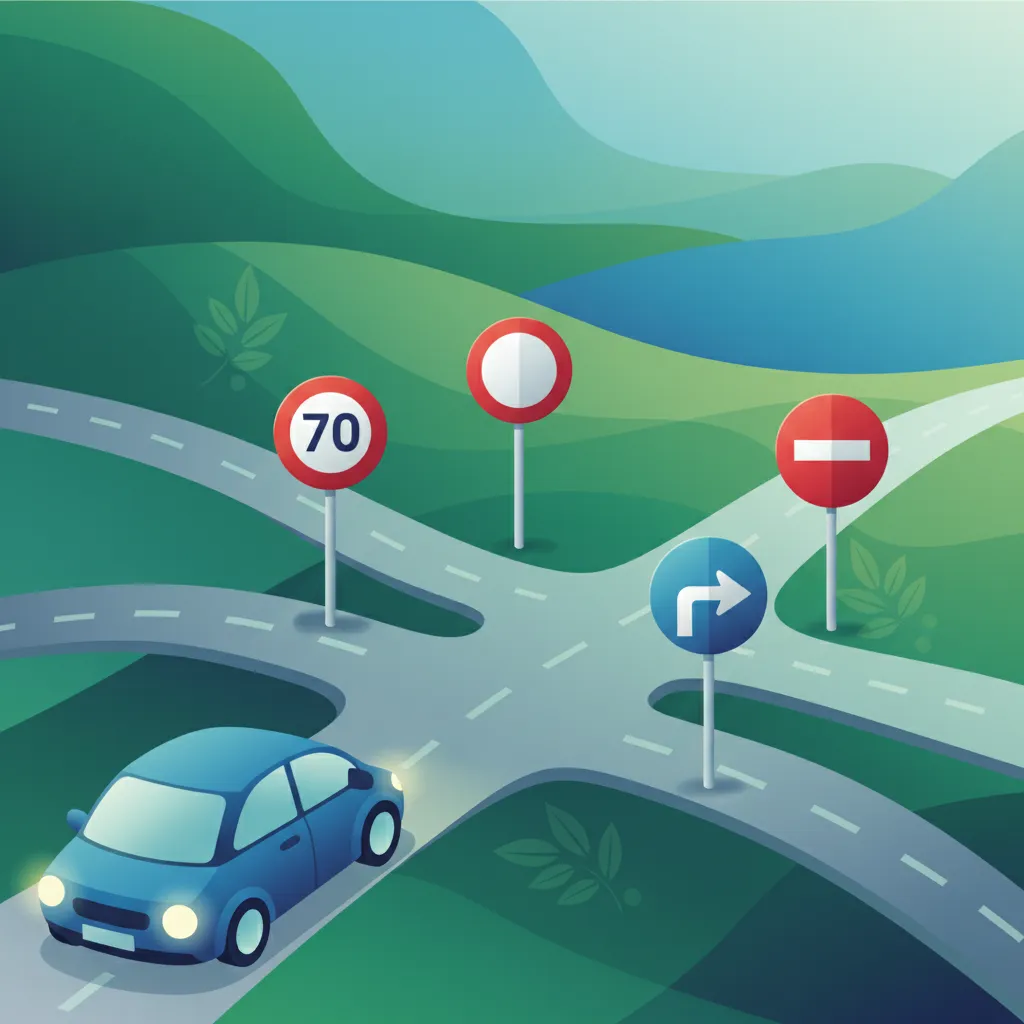
This lesson focuses on regulatory signs (Regulationsskyltar), which issue mandatory instructions and prohibitions that all road users must follow. It details common signs such as speed limits, stop and give way signs, and mandatory direction arrows. Special attention is given to signs directly affecting mopeds, like 'no moped' signs and those indicating designated moped lanes, ensuring riders can navigate legally and safely.

This lesson details the personal eligibility criteria required to obtain a Category AM license in Sweden, starting with the minimum age of 15. It explains the mandatory health assessment, including vision and physical fitness standards, which must be certified by a medical professional. The content also addresses the competency and maturity expectations for young riders, including the role of parental consent in the application process.
Explore the full scope of responsibilities for AM licence holders in Sweden. This covers not just vehicle documents and insurance, but also the rider's general legal obligations and safe conduct on the road, ensuring compliance with Swedish traffic regulations.
This lesson consolidates the key regulations that apply specifically to moped operation in Sweden. It covers mandatory rules such as speed limits, helmet use, and requirements for vehicle lighting and reflectors. Furthermore, the lesson explains the legal consequences of violations, including the system of fines and potential demerit points, ensuring riders understand their full range of legal responsibilities on the road.
This lesson serves as a summary of the legal requirements for safety equipment in Sweden. It reiterates the mandatory helmet law for both the rider and any passenger. It also touches on the rider's responsibility to ensure the moped itself is legally equipped with functioning lights, brakes, and other essential safety features, linking personal gear with vehicle roadworthiness.
This lesson clarifies the precise technical parameters that define a Category AM vehicle under Swedish law, including the maximum 50cc engine displacement and 45 km/h speed limit. It explains how these specifications determine which roads mopeds can legally access, distinguishing between urban streets and prohibited motorways. Learners will also understand the importance of vehicle identification and registration documents for ensuring legal compliance.
This lesson details the personal eligibility criteria required to obtain a Category AM license in Sweden, starting with the minimum age of 15. It explains the mandatory health assessment, including vision and physical fitness standards, which must be certified by a medical professional. The content also addresses the competency and maturity expectations for young riders, including the role of parental consent in the application process.

This lesson clarifies the regulations for operating a moped on cycle paths (Cykelbana) and other shared spaces in Sweden. It explains which types of mopeds are permitted on these paths and the specific rules that apply, such as lower speed limits and the duty to yield to cyclists. The content focuses on safe interaction and communication to ensure peaceful coexistence with other users in these environments.

This lesson moves beyond legal requirements to discuss the importance of ethical and courteous riding. It encourages riders to be patient, considerate of others, and aware of their impact on the community, for example, by minimizing noise. This fosters a positive public image of moped riders and contributes to a safer and more pleasant environment for everyone.
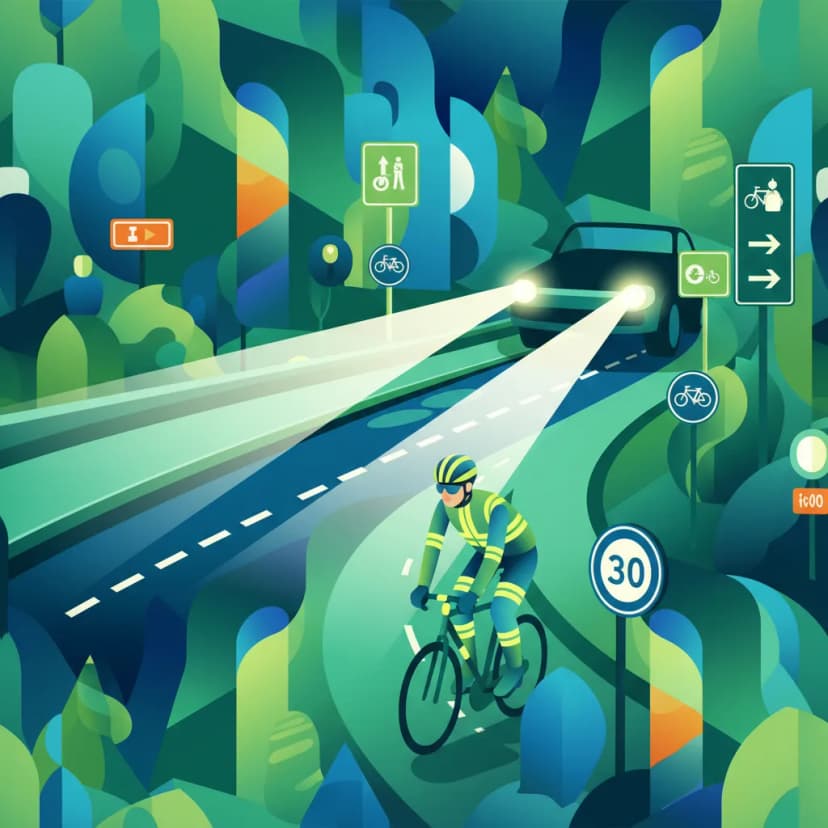
This lesson details the legal requirements for moped lighting in Sweden and provides best practices for riding at night or in low-light conditions. It explains the correct use of high and low beam headlights, the importance of a functioning tail light, and the role of reflectors in being seen. The goal is to ensure the rider is as visible as possible to others and can adequately illuminate the road ahead.
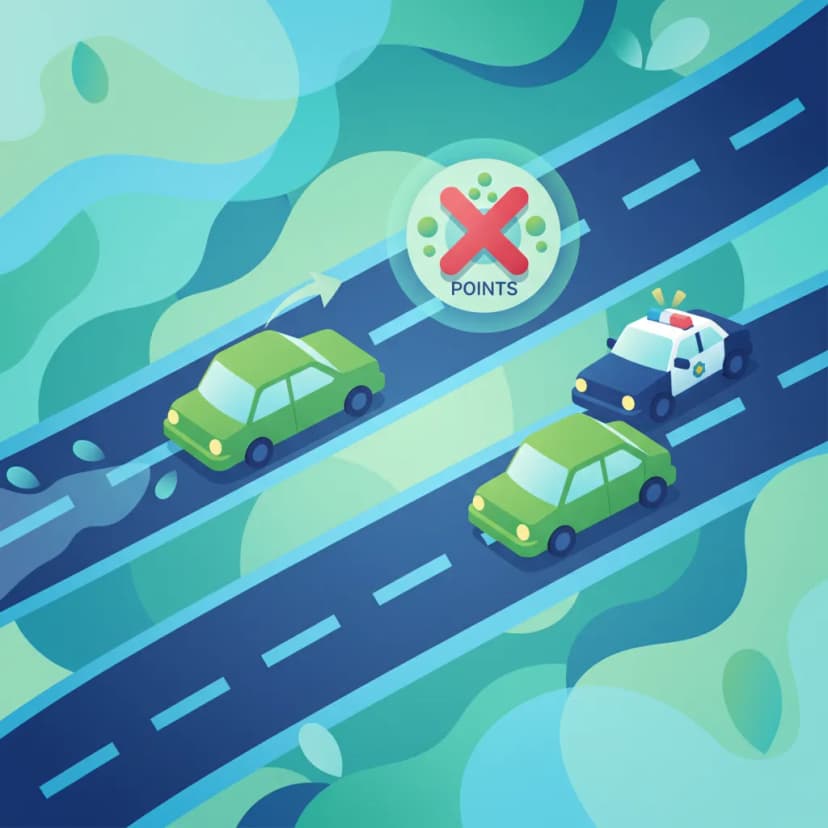
This lesson explains the system of consequences for breaking traffic laws in Sweden. It details common violations and their associated fines and describes the demerit points system that can lead to a license suspension for repeat offenders. Understanding these consequences is a powerful incentive for riders to adhere to the rules of the road.
This lesson covers Sweden's stringent 'Nolltolerans' (zero tolerance) laws regarding driving under the influence of alcohol and drugs. It explains the very low legal blood alcohol limits and the severe penalties for violations, which can include heavy fines, license suspension, and even imprisonment. The message is unequivocal: riding and impairment do not mix.
This lesson teaches the importance of conducting a quick, routine inspection before every ride to ensure the moped is in safe working order. It outlines a simple checklist that includes checking tire pressure (Däck), brake function (Bromsar), and all lights and signals. This proactive habit can prevent mechanical failures that could lead to an accident.
Find clear answers to common questions learners have about Documentation, Insurance, and Registration. Learn how the lesson is structured, which driving theory objectives it supports, and how it fits into the overall learning path of units and curriculum progression in Sweden. These explanations help you understand key concepts, lesson flow, and exam focused study goals.
In Sweden, all mopeds must have a minimum of third-party liability insurance (trafikförsäkring). This insurance covers potential injuries or damages you might cause to others in an accident. It is a legal requirement regardless of whether the moped is used frequently or not.
Yes, you must always carry your valid AM driving license (körkort) with you when operating a moped in Sweden. Law enforcement can ask to see it, and failure to produce it can result in penalties.
The registration certificate is an official document that proves your moped is legally registered with the Swedish Transport Agency (Transportstyrelsen). You should carry this document with you when riding, similar to your driving license, to show proof of legal registration.
Absolutely. Operating a moped without valid third-party liability insurance or with an unregistered vehicle is illegal in Sweden and can lead to significant fines. It's crucial to ensure all administrative requirements are met before riding.
Information regarding your moped's registration, including the registration certificate, can typically be obtained from the seller or through the Swedish Transport Agency (Transportstyrelsen) website, where you can manage your vehicle details.